The recent shutdown of the United States federal government has triggered widespread concern among immigrant advocacy groups, particularly for Caribbean and other immigrant populations. Organizations such as the Haitian Bridge Alliance (HBA) and the New York Immigration Coalition (NYIC) have highlighted the severe consequences of the shutdown, which began after Congress failed to agree on funding. The HBA, based in San Diego, California, expressed grave concerns over delays in asylum hearings, visa and work permit applications, and the exacerbation of the already backlogged immigration court system. Guerline Jozef, HBA’s founder and executive director, emphasized that these disruptions leave families in limbo, prolong detention periods, and increase uncertainty for vulnerable groups like Haitians. She urged leaders to prioritize the dignity and humanity of those affected. Meanwhile, Murad Awawdeh, president of NYIC, criticized the inconsistent handling of immigration courts, which has caused chaos in New York courthouses. He also condemned the Trump administration’s decision to continue Immigration and Customs Enforcement (ICE) operations, including its $170 billion deportation and detention agenda, while essential services for millions of families remain unfunded. Caribbean-American Democratic leaders, including Congresswoman Yvette D. Clarke and Congressman Adriano Espaillat, have blamed the Trump administration and Republicans for the shutdown. Clarke, representing Brooklyn’s 9th Congressional District, accused the administration of undermining affordability and equity in the nation. Espaillat, the first Dominican Republic-American in the House, criticized the White House for freezing funding for critical infrastructure projects like the Gateway Project and Second Avenue Subway, calling it a display of reckless partisanship. The shutdown has left thousands of families in turmoil, with immigrant communities facing heightened threats of raids, deportation, and detention, further destabilizing their lives.
分类: politics
-

UN experts warn Trump’s Gaza peace plan could cause more oppression
In a significant development, a group of 35 United Nations (UN) independent experts issued a stark warning on Friday, asserting that key components of U.S. President Donald Trump’s proposed peace plan for Gaza contravene international law and could exacerbate the oppression of Palestinians. The experts, appointed by the UN Human Rights Council but speaking independently, expressed grave concerns over the 20-point plan, which was unveiled last week and endorsed by Israeli Prime Minister Benjamin Netanyahu. While acknowledging certain positive aspects, such as the call for a permanent ceasefire, the release of unlawfully detained individuals, and increased humanitarian aid, the experts criticized the plan for its broader implications. They highlighted that the proposal’s establishment of a transitional ‘Board of Peace’ chaired by Trump and the introduction of an ‘International Stabilisation Force’ could perpetuate colonial practices and undermine Palestinian self-determination. Additionally, the plan’s provision for a security perimeter within Gaza, which would maintain partial Israeli occupation indefinitely, was deemed ‘absolutely unacceptable.’ The experts also condemned the selective focus on de-radicalization in Gaza, ignoring the prevalence of anti-Palestinian rhetoric in Israel. Furthermore, they criticized the unconditional amnesties offered to Hamas and the lack of accountability for Israeli human rights violations. Emphasizing the need for a just and lawful resolution, the experts insisted that the future of Palestine must be determined by its people, free from external coercion.
-

Dominican government presents five-year achievements
The Dominican government has released its comprehensive report titled ‘Government Management Achievements August 2020 – August 2025,’ detailing significant advancements across multiple sectors. Presented by journalist Félix Reyna, Director of Government Strategy and Communication (Diecom), during a press conference at the National Palace in Santo Domingo, the report highlights progress in health, security, education, housing, and the economy.
Key health indicators show remarkable improvements: life expectancy at birth increased from 73.5 years in 2016 to 75.1 years in 2024, while infant mortality rates dropped by 30.8%. Social security coverage more than doubled, ensuring greater protection for citizens. In the realm of security, the homicide rate fell to 8.3 per 100,000 inhabitants, and femicides decreased to 1.16, attributed to the Comprehensive Citizen Security Strategy, enhanced police recruitment, and operations like ‘Guarantee of Peace.’
Housing initiatives saw the construction of over 15,000 new homes and improvements to nearly 52,000 existing ones, with more than 532,000 individuals receiving property titles, bolstering legal and economic security. Economically, nearly 900,000 people emerged from poverty, GDP per capita grew by over 34% since 2019, and foreign direct investment exceeded US$4.5 billion. Record-breaking exports in agriculture and manufacturing further underscored economic resilience.
Education coverage expanded to over 4.5 million children and youth, with innovative programs in robotics, advanced English, and technical training. Renewable energy capacity tripled to 1,994 MW, while advancements in water access, electrification, and housing enhanced climate resilience. Transparency measures also contributed to a 22.3% increase in the government effectiveness index.
Looking forward, the administration has set ambitious goals for 2028, including raising life expectancy to 77 years, maintaining homicide rates below 8 per 100,000 inhabitants, expanding educational coverage, and ensuring the middle class represents 50% of the population. Additionally, the government aims to increase households with low climate vulnerability to 75%, reinforcing its commitment to sustainable development, resilience, and social equity.
-

PNCR central committee reaffirms confidence in Norton, resigned executive members replaced
In a decisive move, the People’s National Congress Reform (PNCR) Central Executive Committee (CEC) has reaffirmed its unwavering support for party leader Aubrey Norton, dismissing widespread speculation of internal discord following the coalition’s significant defeat in the September 1 general and regional elections. The CEC, in a late-night statement issued after its first post-election meeting, categorically rejected claims of turmoil within the party, emphasizing that the PNCR remains united and focused on rebuilding its political strength. The committee reiterated its full confidence in Norton’s leadership, stating that he will continue to lead the party until the next congress, scheduled for 2026, where internal elections will take place. The statement also highlighted that any change in leadership must adhere to the party’s constitution and can only occur at a duly convened congress. Additionally, the PNCR addressed the recent resignations of two CEC members, Mervyn Williams and Jermaine Figueira, by confirming the appointment of two new members. While the party did not disclose the names of the replacements, sources suggest that Christopher Jones and Egerton David, who secured the 16th and 17th highest votes in the last internal elections, are likely candidates. However, their official acceptance of the roles remains pending. The PNCR’s firm stance underscores its commitment to stability and resilience as it navigates the aftermath of the electoral setback.
-

Home Affairs Minster tells police top brass to tackle corruption, be decisive
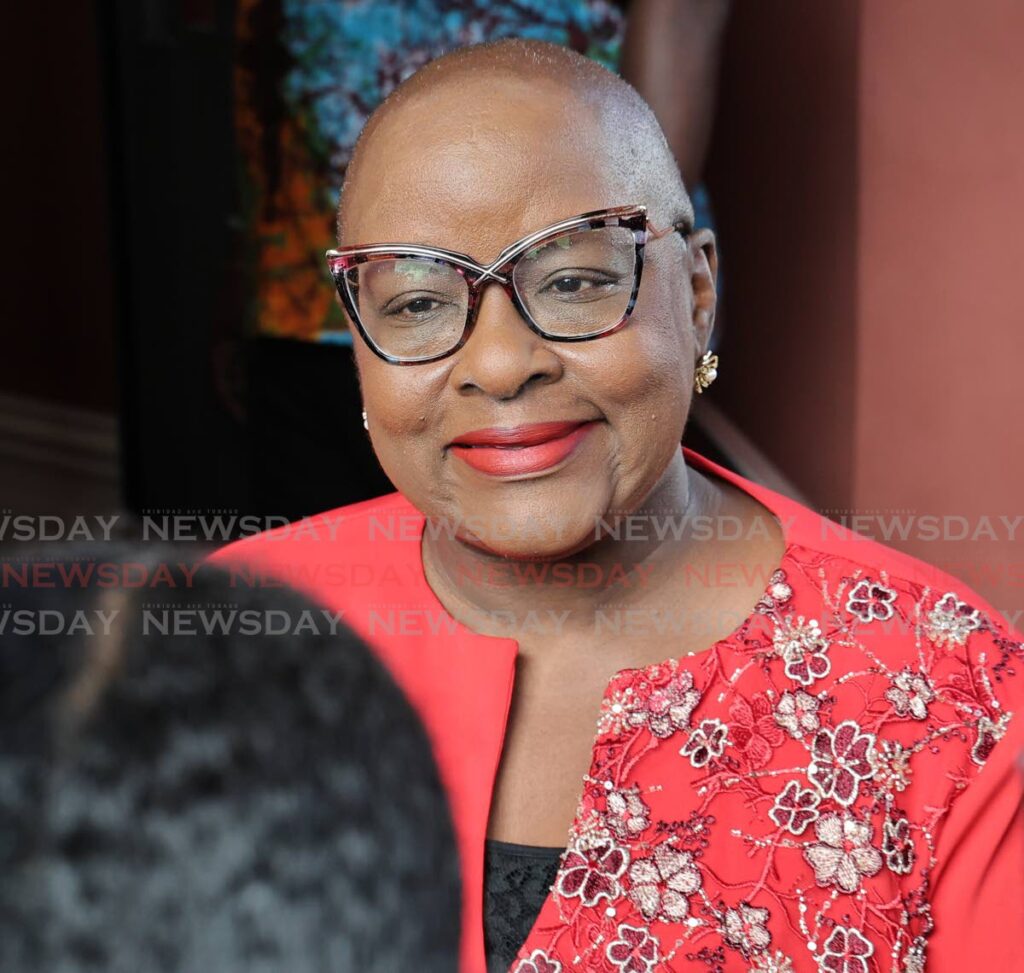
In a stern address to the Guyana Police Force’s executive leadership team and divisional commanders, Home Affairs Minister Oneidge Walrond emphasized the urgent need to eradicate corruption and improve decision-making within the law enforcement agency. The meeting, held on Wednesday, October 1, 2025, saw Minister Walrond deliver a forceful message, urging zero tolerance for misconduct and calling for fearless leadership. ‘Corruption must be dealt with firmly. Show zero tolerance. Do not look the other way. Be fearless in confronting it,’ she stated in a Home Affairs Ministry release. This directive follows a recent scandal at the Cheddi Jagan International Airport, where police officers were caught demanding bribes from a passenger. Despite public outcry, the Guyana Police Force has yet to provide updates on the investigation. Minister Walrond also highlighted the government’s frustration with ineffective leadership, hinting at potential changes to enhance public safety and trust. ‘This is the moment for decisive leadership. The people will not wait, and neither will I,’ she declared. She stressed the importance of discipline, integrity, and accountability, noting that leadership must set the standard. ‘If discipline is weak at the top, it will collapse below. Tighten discipline, strengthen performance, and rebuild trust,’ she added. The Minister acknowledged significant government investments in infrastructure, technology, and training since 2020 but cautioned that resources alone cannot safeguard the institution’s reputation. Addressing emerging challenges such as border security and economic growth, she urged commanders to ensure that resources translate into tangible outcomes, fostering community security and restoring public pride in the police force. Minister Walrond pledged her unwavering support as the Force strives to become a professional, respected, and trusted institution.
-

Abinader highlights dignified work as key to shared prosperity at ILO Meeting
During the inauguration of the 20th American Regional Meeting of the International Labor Organization (ILO) in Punta Cana, President Luis Abinader of the Dominican Republic delivered a compelling address on the critical role of dignified and fair work in fostering shared prosperity. He asserted that economic growth must be channeled into creating better job opportunities, enhancing social mobility, expanding the middle class, reducing poverty, and broadening access to opportunities for all citizens. Abinader framed work as a cornerstone of ‘identity, dignity, and freedom,’ emphasizing that genuine development in Latin America and the Caribbean should be evaluated not solely through economic metrics but also through the lens of workers’ rights and quality of life. He highlighted a pressing issue in the region: nearly half of its 300 million-strong labor force operates informally, lacking social security or essential protections. Additionally, the president showcased the Dominican Republic’s strides in embedding employment as a central pillar of its public policies. He noted that the nation is spearheading economic growth in the region, surpassing the Latin American and Caribbean average growth rate of 1.9%, as projected by the Economic Commission for Latin America and the Caribbean (ECLAC).