分类: politics

  • Ex-Dem Trotman wins St Michael Central nomination as Labour turns up election focus

    Ex-Dem Trotman wins St Michael Central nomination as Labour turns up election focus

    In a decisive political realignment, attorney Tyra Trotman clinched the Barbados Labour Party’s nomination for St Michael Central on Thursday, marking a significant defection from the opposition Democratic Labour Party. The intense internal contest, witnessed by hundreds of fervent supporters at Combermere School, concluded with Trotman securing a commanding victory over Dr. Lynette Holder by 156 votes to 45.

    The outcome signals the BLP’s strategic consolidation ahead of an anticipated general election, with Prime Minister Mia Mottley emphasizing the party’s “depth of talent” while other parties “have to run and look for people.” The transition ceremony featured outgoing Speaker Arthur Holder formally passing the torch after twelve years of service, stating, “I am honoured and privileged to hand over the reins… I know that with the backing from St Michael Central, she shall do well.”

    Holder reflected on the essence of constituent-focused leadership: “Representation has to be about the people of the constituency and not self. As long as you commit yourself to doing good for the people, they will welcome you and vote for you.”

    Prime Minister Mottley framed Trotman’s victory as both a generational shift and a testament to redemption politics. Hailing the newcomer as “a bridge to younger voters,” Mottley referenced Trotman’s public apology for a past social media incident where she criticized potential non-supporters. “If you don’t have second chances in life,” Mottley noted, “people will often not make it.”

    The event doubled as a platform for policy announcements, with Mottley detailing recent accomplishments including extended parental leave, reduced income and land taxes, and capped import duties. She specifically addressed infrastructure commitments in Belle View and The Belle communities, promising long-awaited potable water and sewage systems: “We have done the heavy lifting… that have been long promised to you and that you have never gotten.”

    With Saturday’s Bridgetown nomination expected to complete the BLP’s full slate of 30 candidates, Barbados moves closer to an early election that could determine the nation’s trajectory amid what Mottley described as “challenges externally and domestically.”

  • Bajans turning to Canada as new US visa policy spurs uncertainty

    Bajans turning to Canada as new US visa policy spurs uncertainty

    A recently announced United States policy suspending new green card visas for nationals of 75 countries, including Barbados and most CARICOM member states, is generating minimal concern among Barbadian migrants according to immigration experts. Attorney Samuel Legay revealed to Barbados TODAY that shifting migration patterns have dramatically reduced interest in US permanent residency among Barbadians, with Canada emerging as the overwhelming favorite destination.

    Legay explained that over the past three to four years, Canada’s more accessible immigration system has fundamentally redirected migration flows. “I think more persons want to go to Canada, that’s the thing,” Legay stated. “Canada opened a lot more opportunities, especially for individuals seeking asylum and refugee status.”

    The immigration lawyer noted that most of his recent US-related cases involve Barbadians facing difficulties with American authorities rather than those seeking new immigration opportunities. “Most persons who come to me within the last two or three years are Barbadians who have been deported from the US, had their visitor’s visa denied, or had their visa cancelled,” Legay explained, attributing many problems to overstaying or suspected illegal work activities.

    By contrast, Canada’s approach has created a more welcoming environment. “Canada is a lot more open,” Legay emphasized. “Barbadians are running there a whole lot for refugee status, especially LGBTQ persons from Barbados.”

    The Trump administration’s policy, set to take effect next Wednesday, will temporarily suspend processing of family- and employment-based permanent residence visas while the US State Department reassesses screening procedures and “public charge” rules. The suspension specifically exempts non-immigrant categories including tourist, business, student, and temporary work visas.

    Despite the widespread attention the policy has received, Legay believes many potential migrants are adopting a wait-and-see approach. “I don’t think people have digested that properly as yet, as to what effect it really has,” he commented, noting the absence of widespread concern among his client base.

    The policy affects nearly all CARICOM members, including Antigua and Barbuda, the Bahamas, Belize, Dominica, Grenada, Haiti, Jamaica, Saint Kitts and Nevis, and Saint Lucia. While the measure represents a significant tightening of legal migration channels, its practical impact on Barbadians appears limited given the established trend toward Canadian migration.

    As uncertainty persists around the long-term implications of the US policy shift, Legay anticipates Barbadians will continue focusing their migration plans on alternative destinations until clearer outcomes emerge.

  • China en Canada hervatten samenwerking met nieuw handelsakkoord

    China en Canada hervatten samenwerking met nieuw handelsakkoord

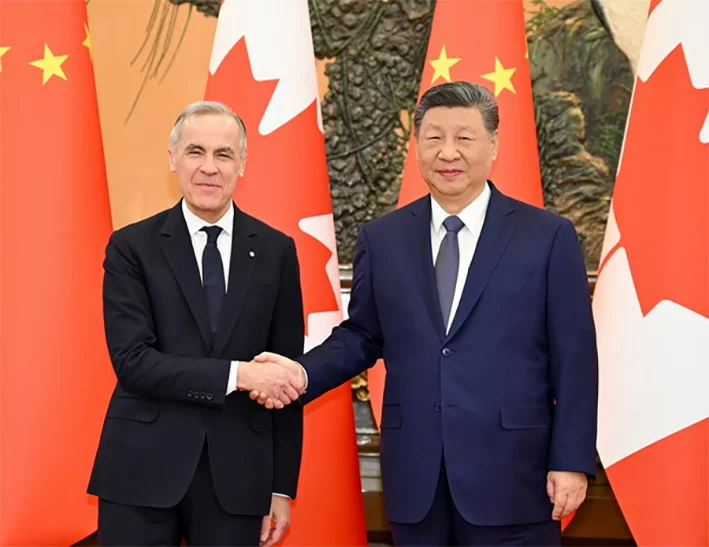
    In a significant diplomatic breakthrough, Canadian Prime Minister Mark Carney and Chinese President Xi Jinping convened at Beijing’s Great Hall of the People on Friday, signaling a profound reset in bilateral relations following years of diplomatic strain. This landmark meeting—marking the first official visit by a Canadian leader to China in eight years—culminated in substantial trade concessions and a mutual commitment to enhanced cooperation.

    President Xi characterized the renewed engagement as opening ‘a new chapter’ in Sino-Canadian relations, referencing ongoing dialogue since October 2023 to restore and expand collaborative efforts. Prime Minister Carney emphasized that strengthened bilateral cooperation could contribute to more robust global governance structures, which he noted face unprecedented pressures. ‘Together we can build upon the best of our past and forge a relationship suited to new global realities,’ Carney stated during the historic meeting.

    The centerpiece of this diplomatic reengagement is a comprehensive trade agreement that dramatically reduces tariffs on key commodities. Canada will permit up to 49,000 Chinese electric vehicles (EVs) to enter its market at a preferential tariff rate of 6.1%—a substantial reduction from the 100% import levy imposed by the previous administration in 2024. This arrangement operates under Most Favored Nation status, though specific duration parameters remain unspecified.

    Conversely, China committed to slashing tariffs on Canadian canola seeds from the current combined rate of 84% to approximately 15%, effective March 1. The agreement additionally eliminates temporary duties on canola meal, lobster, crab, and peas, potentially unlocking nearly $3 billion in new agricultural export opportunities for Canadian farmers.

    Prime Minister Carney articulated Canada’s ambition to become a competitive player in the EV market through knowledge transfer from innovative partners like China. The leaders discussed expanded collaboration in clean energy sectors, including investments in energy storage systems and production infrastructure. Carney further outlined plans to modernize Canada’s energy grids and increase liquefied natural gas (LNG) exports to Asian markets.

    This diplomatic thaw follows years of reciprocal trade restrictions that saw Canada mirror U.S. tariffs on Chinese EVs, steel, and aluminum, while China responded with heavy import duties on Canadian agricultural products. The new arrangements effectively restore pre-conflict tariff structures while incorporating enhanced benefits for both nations.

    Analysts observe that this reconciliation occurs against the backdrop of escalating China-U.S. tensions and Trump’s ‘America First’ policies that adversely affected both Canada and China. While Ottawa maintains its alignment with Washington, this move toward pragmatic economic autonomy may signal to Beijing that economic decoupling from China isn’t inevitable among U.S. allies.

    Carney notably described China as a ‘more predictable and reliable partner’ than the United States in the current complex global landscape. The leaders also found substantial common ground on geopolitical matters including Greenland, indicating broader strategic alignment beyond immediate economic interests.

    This bilateral rapprochement represents a significant development in the evolving global order where U.S.-China rivalry predominates. The agreements create substantial opportunities for economic growth and strengthened bilateral ties as both nations navigate their respective interests within spheres of great power influence.

  • Regering komt burgers tegemoet bij vervallen bereidverklaringen

    Regering komt burgers tegemoet bij vervallen bereidverklaringen

    The Surinamese government has announced significant administrative reforms to address citizen grievances regarding expired land declaration documents. Minister Stanley Soeropawiro of the Ministry of Land and Forest Management (GBB) revealed the implementation of a temporary recovery period for citizens who faced expiration of their ‘bereidverklaring’ (declaration of readiness) due to bureaucratic delays beyond their control.

    Investigation revealed that numerous citizens had fulfilled their obligations correctly and timely, yet encountered expiration of their land documents due to processing delays within administrative channels, including surveyor backlogs and mapping documentation issues. These bureaucratic hurdles forced applicants to restart the entire application process while incurring additional costs.

    While maintaining the statutory six-month validity period for land declarations, the ministry now introduces a one-month recovery window. During this period, legally expired declarations can be administratively processed under strict conditions, exclusively for administrative completion rather than substantive modifications.

    The remedial measure applies exclusively when three conditions are met: the delay must be demonstrably administrative and not caused by the citizen; the term exceedance must remain limited; and the file content must remain substantively unchanged.

    Minister Soeropawiro emphasized that justice and relief for affected citizens form the cornerstone of this policy. ‘When citizens fulfill their obligations correctly but experience delays within the administrative chain, it is unreasonable to hold them accountable. This measure demonstrates our commitment to supporting citizens,’ the minister stated.

    The policy takes immediate effect and remains valid until June 30, 2026, providing temporary relief while the government works on longer-term administrative reforms.

  • UPP’s Joshua Francis excoriates DLP administration

    UPP’s Joshua Francis excoriates DLP administration

    In a blistering critique delivered on Q-95’s ‘Talk on the Block’ program, United Progressive Party (UPP) leader Attorney Joshua Francis declared the ruling Dominica Labour Party (DLP) administration as “tired” and “depleted of any vision,” demanding their removal from power. Francis asserted that from its inception, the DLP leadership prioritized self-interest over public service, resulting in what he described as rampant inequality where government officials became “multi-millionaires” while ordinary citizens struggled with basic necessities.

    The opposition leader challenged Dominican citizens to cease their complacency, emphasizing that political change requires collective action rather than passive acceptance of the status quo. Francis particularly highlighted the severity of economic hardships facing everyday Dominicans, noting his daily encounters with citizens seeking assistance for bills, children’s expenses, and medical costs—what he termed “the bread and butter issues” that remain unaddressed by the current government.

    Francis outlined the UPP’s strategy to intensify grassroots engagement, promising bi-weekly constituency gatherings to directly connect with voters, especially in rural areas with limited media access. He acknowledged the necessity of employing diverse communication methods to spread the party’s message of hope and confidence beyond traditional media channels.

    The UPP leader concluded with a call for unified effort, stating that progress requires Dominicans to “work collectively and wisely” with every citizen having a role in driving national change. Francis vowed relentless opposition efforts leading to the next general election, positioning his party as the necessary alternative to what he characterized as a failed government.

  • Palestinian leader supports national committee to manage Gaza

    Palestinian leader supports national committee to manage Gaza

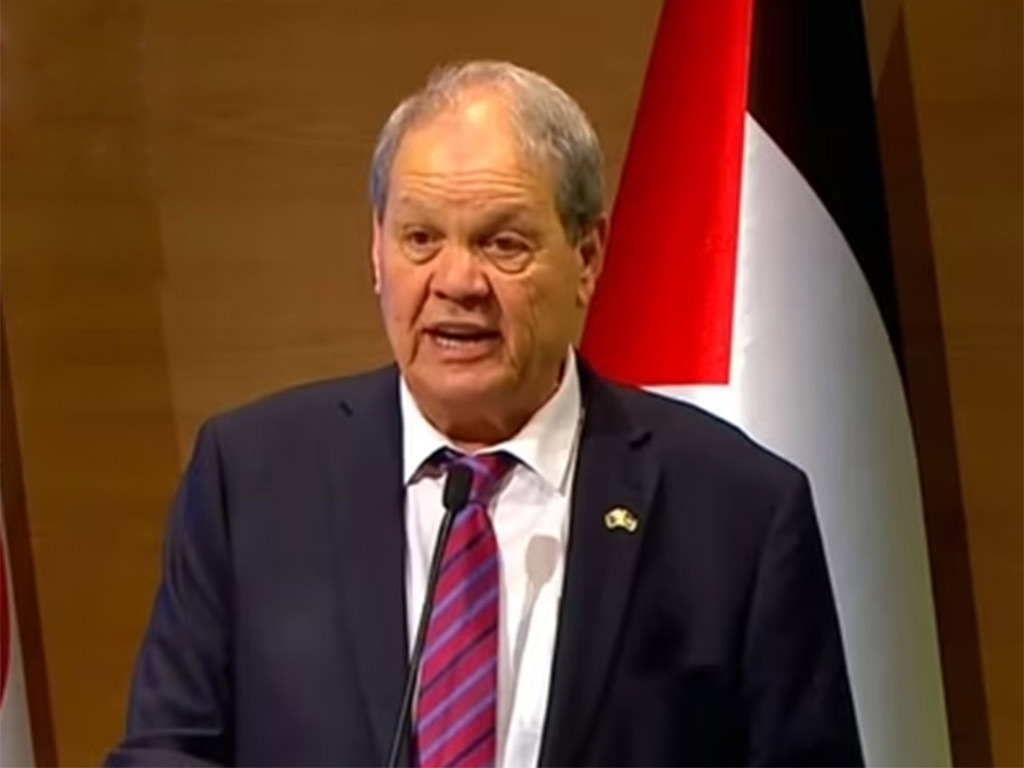
    In a significant political development, senior Palestinian leader Fattouh has formally endorsed a newly established body, expressing his full support and commitment to its success. The announcement positions this entity as a unifying force, receiving backing from across the entire spectrum of Palestinian political factions and parties.

    The composition of the body is notably technocratic, drawing specialists from diverse sectors to address the complex challenges facing Palestinian governance. This move occurs alongside the critical transition into the second phase of a ceasefire agreement in the Gaza Strip, a development welcomed by the Palestinian National Council (PNC) chairman despite ongoing daily Israeli military strikes in the region.

    Emphasizing the geopolitical indispensability of Gaza, Fattouh declared the territory an inseparable component of a future Palestinian state, asserting that no just political resolution to the conflict can be achieved without its inclusion. This stance was echoed by Hamas, the governing authority in Gaza since 2007, which characterized the formation of the new body as a pivotal step toward solidifying the fragile ceasefire and averting a return to the devastating hostilities. The conflict has resulted in a catastrophic humanitarian toll, with over 71,000 fatalities reported in Gaza.

  • Italy outlines Arctic strategy amid US threats

    Italy outlines Arctic strategy amid US threats

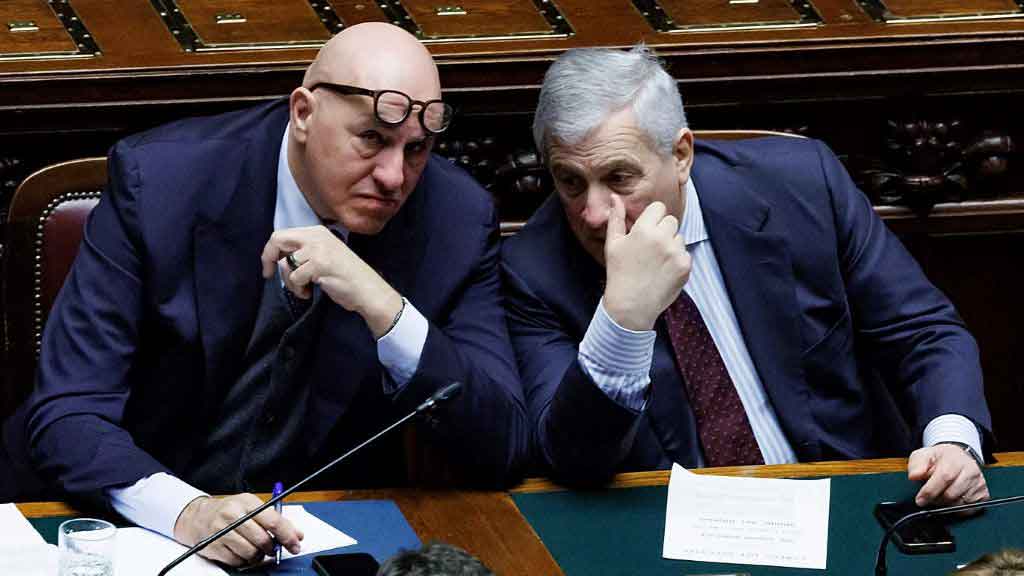
    In a significant diplomatic development, Italian Defense Minister Guido Crosetto and Foreign Minister Antonio Tajani have articulated Rome’s nuanced position on Arctic geopolitics following a high-level meeting at Villa Madama. While explicitly affirming Italy’s recognition of Danish sovereignty over Greenland, the government simultaneously declared its opposition to deploying Italian troops to the region in response to escalating tensions.

    The cornerstone of Italy’s approach is a comprehensive strategic framework focused on security cooperation, scientific research, and sustainable development in the High North. Originally formulated in 2025, this policy document has undergone substantial revisions, expanding by approximately fifty pages to address emerging challenges. Official statements cited growing concerns over Washington’s perceived territorial ambitions regarding Greenland, characterizing these developments as a “clear threat” to regional stability.

    This updated assessment directly informs Italy’s decision to abstain from participating in “Arctic Resistance,” a Danish-proposed military operation designed to counter potential American maneuvers. Despite several European allies, notably France, pledging support for this initiative, Rome maintains that its contributions will align strictly with its multilateral obligations within NATO and the European Union.

    The Italian government emphasizes that Arctic stability constitutes a fundamental component of broader European security architecture and directly impacts the Atlantic Alliance’s strategic interests. Consequently, Italy intends to pursue a calibrated approach—enhancing defensive capabilities through diplomatic channels and research partnerships while avoiding direct military entanglements that could exacerbate tensions.

  • France defends troop deployment to Greenland

    France defends troop deployment to Greenland

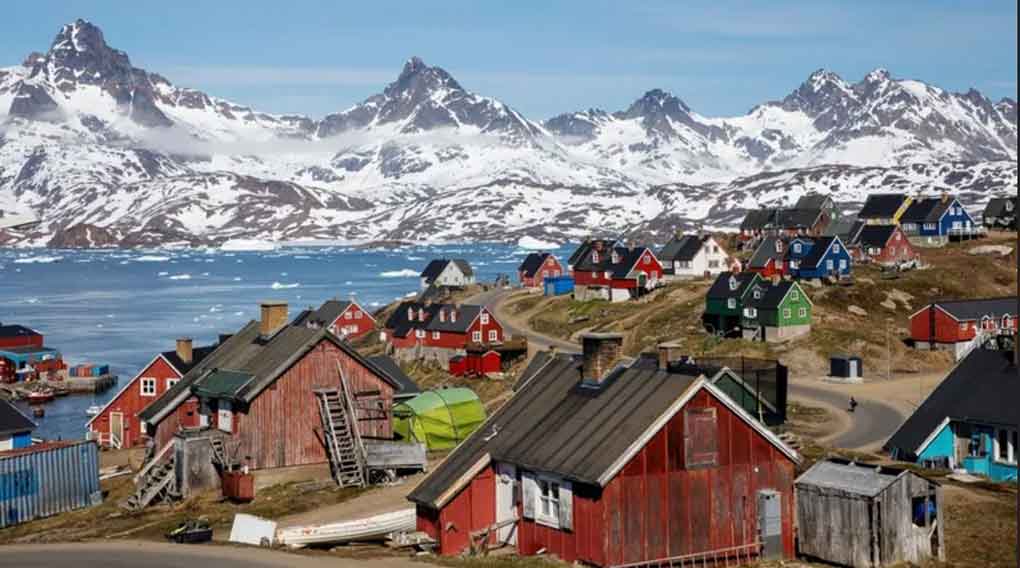
    In a significant strategic maneuver, approximately fifteen French military personnel have been deployed to Danish territory, a region increasingly viewed as the critical Arctic gateway and a zone abundant with natural resources. This initial deployment represents the vanguard of a broader military commitment, with French President Emmanuel Macron pledging to augment this presence imminently through additional naval, air, and land assets.

    The operation, though currently low-profile, is integrated within the broader European ‘Arctic Endurance’ mission, which is formally scheduled to conclude shortly. Downplaying the significance of the initial troop numbers, Alice Rufo, the French Minister Delegate for Veterans Affairs and second-in-command at the Ministry of Defense, emphasized the strategic message over mere numerical strength. In a public statement on Franceinfo, Rufo articulated that the core objective is the ‘effect produced’ during such exercises, clarifying that France’s intent is not to intimidate but to unequivocally demonstrate its resolve and commitment to safeguarding European interests in a region of growing importance.

    This European mobilization occurs against a backdrop of renewed and heightened geopolitical interest in the Arctic. The deployment can be interpreted as a direct response to escalating pressures from other global powers. Notably, since his return to the White House, U.S. President Donald Trump has aggressively prioritized the acquisition of Greenland, a vast island territory of Denmark. To advance this ambition, the Trump administration has recently intensified its rhetoric, citing a spectrum of justifications that include perceived strategic threats from China and Russia in the region, as well as underscoring vital U.S. national security interests, such as maintaining early warning systems for potential missile threats.

  • Spain considers sending troops to Greenland

    Spain considers sending troops to Greenland

    The Spanish government has declared a position of deliberate caution regarding the potential acquisition of Greenland by the United States, opting to withhold a definitive stance until a comprehensive European assessment is complete. Foreign Minister Jose Manuel Albares, in televised remarks, emphasized that Madrid’s official response is contingent upon achieving a “well-defined understanding of the situation” through ongoing coordination with fellow European nations.

    Minister Albares highlighted that the prevailing sentiment among Greenland’s population is a desire to maintain its current sovereign status under Denmark, with a transfer of sovereignty to the U.S. not being a considered option. This aligns with prior comments from Spanish Defense Minister Margarita Robles, who similarly urged prudence while confirming the matter remains under active evaluation by authorities.

    Acknowledging the broader continental concern, Albares confirmed a series of diplomatic engagements are already underway. Spain is actively consulting with European partners to exchange intelligence and align perspectives on the geopolitical implications of U.S. President Donald Trump’s openly stated ambitions to acquire Greenland, which he has suggested could occur “one way or another,” including by purchase or force.

    European capitals are reportedly viewing these developments with significant apprehension. The potential annexation of a vast Arctic territory from a NATO ally is perceived as a move that could fundamentally alter the strategic balance and integrity of the North Atlantic Treaty Organization in its present form. Albares concluded that once all critical information is synthesized from these multilateral discussions, Spain and its partners will proceed with making concrete diplomatic decisions.

  • APNU to table motion for modern copyright legislation

    APNU to table motion for modern copyright legislation

    In a significant legislative move, Guyana’s primary opposition coalition, A Partnership for National Unity (APNU), has announced it will table a parliamentary motion compelling the government to enact modern intellectual property and copyright legislation within a six-month timeframe. The initiative, spearheaded by parliamentarian Nima Flue-Bess, addresses what the party describes as critical deficiencies in the nation’s current creative rights framework.

    During APNU’s weekly press briefing on Friday, Flue-Bess articulated the motion’s dual objectives: first, to establish a special select committee tasked with comprehensively reviewing existing copyright laws, with particular emphasis on identifying gaps in digital rights protection and enforcement mechanisms. Second, the motion mandates extensive consultation with stakeholders across Guyana’s creative industries to ensure new legislation accurately reflects sector-specific needs.

    This legislative push carries historical significance, as both APNU and the ruling People’s Progressive Party Civic (PPPC) had included copyright modernization in their campaign platforms during the 2025 general elections. Guyana currently operates under the British Copyright Act of 1956, inherited upon independence in 1966, which provides limited recourse through private legal action but offers inadequate protection in the digital era.

    Flue-Bess characterized the situation as creating ‘demonstrable hardship for Guyanese creatives,’ noting that the ‘orange economy’ represents a substantially untapped economic growth sector. The proposed legislation aims to facilitate skill monetization for innovators and artists while holding the government accountable for what APNU views as its failure to prioritize comprehensive economic development across all societal segments.

    The motion is expected to undergo debate in the 65-seat National Assembly, where APNU holds 12 seats, setting the stage for potentially significant policy developments in Guyana’s creative and intellectual property landscapes.