分类: politics

  • Regional Leaders Attend Swearing-In of Saint Lucia’s Prime Minister Philip J. Pierre

    Regional Leaders Attend Swearing-In of Saint Lucia’s Prime Minister Philip J. Pierre

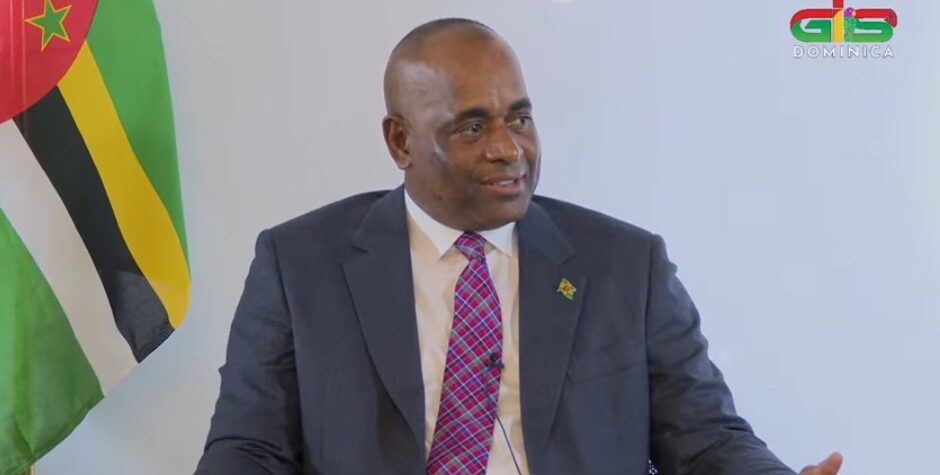
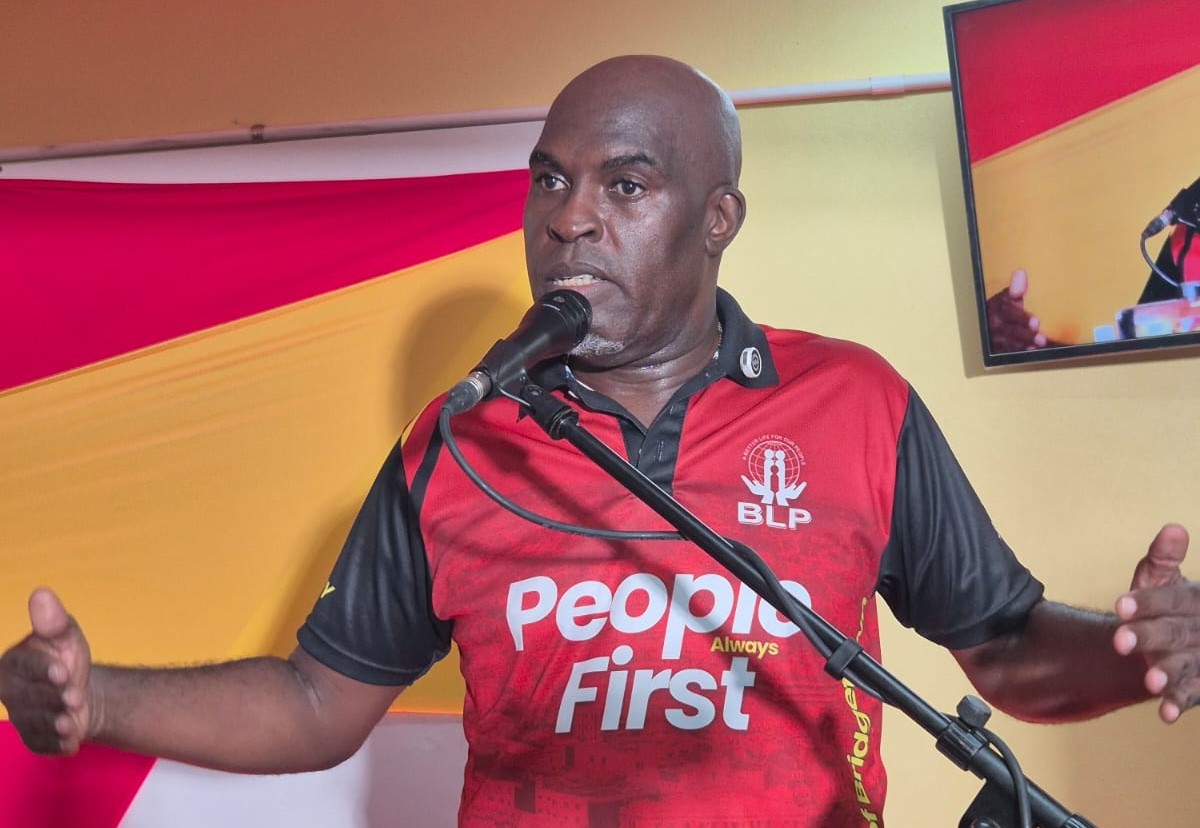
    Saint Lucia witnessed a significant political gathering as Prime Minister Philip J. Pierre formally commenced his second five-year term during a swearing-in ceremony attended by numerous Caribbean leaders. The event brought together prominent regional figures including Prime Ministers Gaston Browne of Antigua and Barbuda, Terrance Drew of St Kitts and Nevis, Dickon Mitchell of Grenada, Mia Mottley of Barbados, and Roosevelt Skerrit of Dominica, alongside St Vincent and the Grenadines’ opposition leader Dr. Godwin Friday.

    In his inaugural address, Prime Minister Pierre expressed profound optimism regarding Saint Lucia’s future trajectory, characterizing the occasion as both humbling and momentous. “I am excited and optimistic about the future of Saint Lucia,” Pierre declared before assembled dignitaries. “I pledge to do my best for the development of my country.”

    The newly sworn-in leader outlined his continued personal oversight of critical government portfolios including finance, national security, justice reform, constituency development, and citizen empowerment initiatives. His concluding invocation of “God bless our island Saint Lucia” underscored the ceremonial significance of the event.

    This inauguration marks the beginning of Pierre’s continued governance amid ongoing economic recovery measures and the advancement of key policy priorities including youth development programs, community infrastructure enhancement, fiscal stability mechanisms, and comprehensive justice system reforms.

  • Niet visumvrij, maar wél een vijfjarenvisum voor Surinamers

    Niet visumvrij, maar wél een vijfjarenvisum voor Surinamers

    The longstanding discussion regarding visa-free travel for Surinamese citizens to Europe continues to linger just beyond reach, presenting an appealing yet currently unattainable prospect. While the idea of seamless travel to Schengen areas remains attractive, the reality dictates that such arrangements require unanimous European Union approval—a complex political undertaking in today’s climate of heightened migration scrutiny and border control concerns.

    Rather than fixating on this distant ideal, a more immediate solution exists within existing frameworks: the underutilized multiple-entry Schengen visa valid for up to five years. This operational mechanism already functions effectively for several third countries including Turkey, India, Qatar, and the United Arab Emirates. Through a graduated approach, successful applicants demonstrating consistent compliance with travel regulations can obtain progressively extended validity periods, ultimately reaching five-year standard visas.

    The United States already exemplifies this model effectively, granting Surinamese tourists five-to-ten year multiple-entry visas that eliminate annual application burdens. Adopting a similar Schengen-compliant framework would yield substantial practical benefits for diverse demographic groups. Families with children in the Netherlands, professionals pursuing continuing education, researchers attending conferences, and business entrepreneurs would all experience reduced administrative overhead and enhanced travel flexibility.

    Contrary to concerns about potential brain drain, extended visa validity does not equate to work or residence rights—these remain subject to separate regulatory procedures. The fundamental migration dynamics remain unchanged by visa duration, though the treatment of travelers would significantly improve, shifting from suspicion toward trust-based engagement.

    The path forward requires diplomatic focus on expanding existing provisions rather than awaiting unanimous EU policy shifts. Netherlands and other Schengen nations already possess the authority to implement these measures structurally. While visa-free travel may eventually materialize, the five-year visa solution remains immediately achievable through strategic advocacy and bilateral dialogue.

  • The dirty side of the 2025 election campaign

    The dirty side of the 2025 election campaign

    The commencement of Saint Lucia’s 2025 general election campaign triggered a 21-day period of intensified political engagement characterized by aggressive messaging, heated debates, and a notable deterioration into personal attacks. The nation’s political landscape, shaped by a winner-take-all electoral system and a deeply adversarial political culture inherited from Westminster, created an environment where personal vilification frequently overshadowed policy discussions.

    Professor Cynthia Barrow-Giles, a distinguished Saint Lucian political scientist, had presciently analyzed this dynamic in her 2010 publication ‘Democracy at Work: A Comparative Study of the Caribbean State.’ Her examination of how electoral systems and political culture shape regional democracy remains remarkably relevant fifteen years later. She argued that this combination inevitably produces “high-stakes elections, skewed parliaments, and a style of politics where personal attacks often overshadow policy.”

    Despite superficial assessments describing the 2025 campaign as proceeding “smoothly,” the rhetorical landscape revealed a different reality. Charges of “corruption,” “criminal” behavior, and being “unfit for office” dominated political discourse across platforms. Particularly disturbing were at least two pro-UWP campaign songs that derogatorily referred to Prime Minister Philip J Pierre as “autistic” and “retarded,” language that sparked cross-party outrage and drew condemnation from advocacy groups including the Helen Association for Persons with Autism.

    The targeting extended beyond political figures to their families. UWP’s Vieux Fort North candidate Calixte Kakal Xavier found himself defending attacks directed at his partner and son rather than addressing policy issues. Female candidates from both major parties faced gender-based questioning rather than evaluations of their competence. Former Prime Minister Allen Chastanet continued to face racially-charged criticism with his “whiteness” routinely used as shorthand for foreignness.

    Significantly, the most virulent attacks frequently originated not from the candidates themselves but from party surrogates, supporters, and unofficial mouthpieces operating outside formal party messaging structures. This phenomenon of “unregulated actors” shaping campaign tone without accountability, as noted by Barrow-Giles, represents a regional pattern in small states’ political cultures.

    The Saint Lucia Labour Party (SLP) centered its campaign on governance achievements, with Prime Minister Pierre emphasizing his administration’s “record” while explicitly rejecting participation in “roro” (local vernacular for rhetorical excess). The party maintained consistent messaging around continuity and stability, bolstered by former UWP figures including Andy Daniel, Edmund Estephane, and Felix Champagne Deterville, who appeared on Labour platforms to condemn UWP leadership, providing the strategic advantage of insider criticism.

    The United Workers Party (UWP) mounted a campaign fueled by large rallies, promises of renewal, and sharp critiques of the Labour administration. Their messaging focused on accusations of mismanagement, rising living costs, and failures in healthcare and law enforcement. A cornerstone of their strategy involved introducing twelve new faces, many political newcomers, which regional pollster Peter Wickham described as an “impressive” rebuild following the party’s devastating 2021 defeat.

    However, this infusion of new talent presented challenges when several candidates faced backlash for controversial remarks. Tommy Descartes’s comment that “gangsters are yellow” and Stephen Fevrier’s remarks about auctioning Olympian Julien Alfred’s shoe required subsequent withdrawals and clarifications, illustrating the tension between political spectacle and substance that Barrow-Giles identified in Caribbean electoral competitions.

    With the election concluded and Prime Minister Pierre preparing to form his new Cabinet, public exchanges have notably diminished. Candidates across the political spectrum have thanked their teams, exchanged congratulations, and acknowledged voter efforts. As the new administration takes shape, attention is expected to shift toward governance and policy, though discussions about campaign rhetoric and its implications for democratic discourse will undoubtedly continue.

  • Maduros alleges that US strikes in Caribbean are about oil, not drug trade clean-up

    Maduros alleges that US strikes in Caribbean are about oil, not drug trade clean-up

    A significant geopolitical dispute has emerged between Venezuela and the United States regarding American military activities in the Caribbean region. Venezuelan President Nicolás Maduro has publicly accused the US of deploying military forces to secure access to Venezuela’s substantial oil reserves, which rank as the world’s largest proven deposits.

    The US State Department has categorically denied these allegations, maintaining that its recent military operations—including airstrikes over the past three months that reportedly resulted in approximately 80 civilian casualties—are exclusively targeting drug trafficking networks. However, critics cited by The Guardian question the effectiveness of these tactics, noting that most narcotics enter the United States through Mexico rather than Caribbean routes.

    Energy experts provide a more nuanced perspective on the situation. Francisco J Monaldi of Rice University acknowledges that oil interests may play a role but argues they cannot be the primary motivation, given Venezuela’s current minimal contribution to global oil production—less than 1% despite its massive reserves. The country’s oil industry has suffered catastrophic decline due to years of mismanagement, international sanctions, and critically insufficient investment.

    The sanctions landscape has been particularly volatile. Former President Donald Trump initially imposed stringent sanctions banning Venezuelan oil imports, which President Joe Biden temporarily lifted in an effort to promote democratic reforms. Following Maduro’s controversial re-election amid allegations of electoral manipulation, Trump reinstated these restrictions.

    This pattern has led some analysts to suggest that regime change rather than oil access might be the ultimate objective, especially considering Trump’s consistent opposition to Maduro and his administration’s alliances with China, Russia, and Iran.

    Venezuela faces monumental challenges in revitalizing its oil sector, including profound political instability and severely deteriorated infrastructure. José Ignacio Hernández, a legal scholar specializing in Venezuela’s energy industry, notes that even with governmental change, international companies would require stability guarantees before committing substantial investments, with US energy giant Chevron positioned to benefit most from any normalization.

    Despite these complex realities, Colombian President Gustavo Petro has aligned with Maduro’s perspective, characterizing recent US military actions as fundamentally “a negotiation about oil” rather than genuine counter-narcotics or democracy promotion efforts.

  • Central Youth for Labour Hails ‘People-Centred’ Budget With Major Focus on Education

    Central Youth for Labour Hails ‘People-Centred’ Budget With Major Focus on Education

    The youth division of Antigua and Barbuda’s ruling Labour Party has enthusiastically endorsed Prime Minister Gaston Browne’s fiscal 2026 budget proposal, characterizing it as a transformative educational investment strategy. The Central Youth for Labour (CYFL) has identified the allocation of $220.1 million to the Ministry of Education, Sports and Creative Industries as the government’s clear commitment to establishing education as the cornerstone of national advancement.

    This substantial financial commitment represents the largest ministerial allocation within the budget framework, signaling what the CYFL describes as the administration’s sustained dedication to enhancing educational accessibility. The youth organization emphasized that this strategic direction resonates with international movements advocating for inclusive, high-quality learning environments across developing nations.

    Statistical evidence reveals remarkable progress in tertiary education participation, with enrollment at the University of the West Indies Five Islands Campus experiencing an eightfold increase—from merely 173 students in 2019 to an anticipated 1,403 by 2025. Despite these gains, the CYFL acknowledged persistent financial challenges facing families regarding examination fees and post-secondary educational expenses.

    The budget introduces several groundbreaking initiatives including fully subsidized tuition at the Antigua & Barbuda College of Continuing Studies commencing 2026, complete government assumption of Caribbean Examination Council (CXC) fees, and an upcoming tuition-free program at UWI Five Islands following campus expansion completion.

    Substantial infrastructure developments are underway at the university campus, featuring a $200 million expansion project that will incorporate advanced laboratories, modernized classrooms, enhanced athletic facilities, and expanded student accommodation. These improvements are projected to establish Antigua and Barbuda as an emerging center for Caribbean higher education.

    The government’s comprehensive educational strategy extends beyond tertiary institutions, evidenced by the construction of the new Five Islands Primary School scheduled to open in January 2027. This demonstrates the administration’s holistic approach to educational enhancement spanning from early childhood development through university-level instruction.

    Prime Minister Browne reaffirmed his government’s unwavering commitment to broadening post-secondary educational access and equipping younger generations with essential skills required for national economic and social development.

  • PM Says Long List of Duty-Free Vehicle Approvals Tied to Opposition MP

    PM Says Long List of Duty-Free Vehicle Approvals Tied to Opposition MP

    The Prime Minister has publicly addressed and justified the significant number of duty-free vehicle import approvals granted to Members of Parliament from opposition parties. This clarification comes amid public scrutiny over the allocation of tax-exempt vehicle privileges to political representatives.

    During a parliamentary session, the PM explained that these approvals are part of established protocols and entitlement systems available to all elected officials, regardless of their political affiliation. The system, designed to facilitate the official duties of parliamentarians, allows for the importation of vehicles without standard customs duties under specific regulatory frameworks.

    The Prime Minister emphasized that the approval process follows strict procedural guidelines and is not influenced by political considerations. This statement serves as a response to emerging questions about potential preferential treatment and aims to maintain transparency in governmental operations.

    This development highlights the ongoing discourse about parliamentary benefits and their perception by the general public. The administration maintains that all allocations are conducted in accordance with existing regulations governing official entitlements for elected representatives.

  • PM Browne Says His Comments About Harold Lovell Were Not Defamatory

    PM Browne Says His Comments About Harold Lovell Were Not Defamatory

    Prime Minister Gaston Browne has publicly defended his right to make critical statements about political opponents within the legislative chamber, specifically addressing recent controversial remarks directed at opposition parliamentarian Harold Lovell. The Prime Minister’s office issued a statement clarifying that his comments were protected under parliamentary privilege and therefore could not be considered defamatory under Antiguan law.

    The controversy emerged following a parliamentary session where Browne made allegations regarding Lovell’s political conduct and decision-making. The Prime Minister asserted that his statements were based on documented evidence and represented legitimate political discourse rather than personal attacks. Constitutional experts have noted that parliamentary privilege provides legal immunity for statements made during official proceedings, though this protection typically extends only to remarks made within the legislative chamber itself.

    This development occurs against a backdrop of increasing political tensions between the ruling Antigua and Barbuda Labour Party and the opposition United Progressive Party. Observers suggest the exchange reflects broader patterns of political rivalry in Caribbean democracies, where parliamentary privilege occasionally becomes a point of contention between governing and opposition parties.

    The Prime Minister’s statement emphasized his commitment to robust political debate while maintaining that his criticisms remained within constitutional boundaries. The opposition has yet to issue an official response to these latest developments regarding the parliamentary exchange.

  • OPINION: Some Reasons Why Saint Lucia Stuck with Mr. Pierre Part I

    OPINION: Some Reasons Why Saint Lucia Stuck with Mr. Pierre Part I

    The Saint Lucian political landscape has delivered a decisive verdict, with Prime Minister Philip J. Pierre’s Saint Lucia Labour Party (SLP) securing a commanding supermajority in the December 1 general elections. This electoral outcome, analyzed through the unique lens of political calypso, reveals a nation largely satisfied with its leadership and deeply skeptical of the opposition. Traditionally a medium for anti-government sentiment, calypso music this season unusually echoed pro-administration views and delivered sharp critiques of the United Workers Party (UWP) and its leader, Allen Chastanet. The resonant lyrics of calypsonian TC Brown, in particular, are seen as having captured the national mood, framing the election as a direct referendum on leadership character and performance.

    The core of the electorate’s decision appears to have hinged on a comparative assessment of the two leaders. Prime Minister Pierre was widely perceived as a humble, rooted, and empathetic figure whose policies—such as raising the minimum wage, liberalizing cannabis laws, and advancing the St. Jude Hospital project—were viewed as tangible benefits for ordinary citizens. His background and demeanor fostered a connection with the populace, positioning him as a leader who genuinely understood their struggles.

    In stark contrast, Allen Chastanet and the UWP campaigned on a platform of visionary infrastructure projects and business acumen, harkening back to a pre-pandemic 2019 as a golden era. However, this message failed to gain traction. Chastanet was persistently portrayed by opponents as divisive, arrogant, and out of touch with the cultural and social fabric of Saint Lucia. Criticisms focused on his policy inconsistencies, unfulfilled promises from his previous term, and a perceived inability to connect with the electorate on a personal level. The UWP’s failure to present a cohesive shadow cabinet further exacerbated sentiments that the party was overly centralized around a flawed leadership.

    Analysts like Dr. Anderson Reynolds suggest that the UWP’s future resurgence is intrinsically tied to moving beyond the leadership of Chastanet and Deputy Guy Joseph, whom the public has shown a clear reluctance to rally behind. The election result, featuring a statistically significant positive swing for the incumbent government—a rarity in the Caribbean for a second-term party—signals a robust vote of confidence in Pierre’s administration. Voters ultimately chose the leader they deemed more trustworthy, caring, and effective, solidifying a new political chapter for Saint Lucia grounded in perceived humility and service over grand, unfulfilled vision.

  • Kamla slams ‘malicious’ PNM over Couva Hospital —  $100m in equipmentnow useless

    Kamla slams ‘malicious’ PNM over Couva Hospital — $100m in equipmentnow useless

    Prime Minister Kamla Persad-Bissessar has publicly condemned the former PNM administration for what she characterized as “malicious neglect” regarding the Couva Children’s Hospital. Speaking at a re-dedication ceremony on Sunday, the Prime Minister revealed that the previous government maintained the state-of-the-art facility shuttered for an entire decade while allowing approximately $100 million worth of medical equipment to deteriorate into obsolescence.

    According to an initial assessment conducted after her administration assumed office, the squandered resources included 217 unused medical devices valued at over $20.68 million still confined to their original packaging. Additionally, ten major radiology systems—featuring advanced 3T MRI and 64-slice CT scanning technology—worth more than $33.5 million had expired beyond functionality. The inventory of losses further encompassed 45 medical items valued at $14.2 million that became obsolete and 225 critical diagnostic and sterilization systems valued at $31.9 million rendered non-functional.

    “This represents not mere bureaucratic delay but deliberate malicious neglect,” Persad-Bissessar asserted. “These resources, funded by taxpayers, could have provided life-saving treatment to countless children throughout these lost years.”

    The legacy of this neglect continues to burden the nation financially. A recent Urban Development Corporation (Udecott) assessment estimates that taxpayers must now allocate $78.2 million to repair and replace the compromised medical equipment and address structural deficiencies identified in a September 17 report. The facility requires comprehensive mechanical, plumbing, electrical, architectural, and structural remediation.

    Despite these challenges, the government has initiated partial operations at the 230-bed hospital. Since November 28, surgical teams from all four regional health authorities have performed 86 same-day procedures, including fistula repairs, varicose vein ablations, breast mass removals, lump extractions, and complex hernia repairs. These initial interventions begin addressing waiting lists that exceed 11,300 cases, including more than 4,600 delayed ophthalmology procedures.

    The hospital has also launched Paediatric Specialist Clinics since December 1, providing care to 16 children who otherwise would have required overseas treatment in specialties including neurology, rheumatology, neonatal care, endocrinology, and cardiology.

    In a significant regional development, Persad-Bissessar announced a partnership with Guyana’s government during the ceremony attended by Keoma Griffith, Guyana’s Minister of Labour and Manpower Planning. This collaboration will facilitate the recruitment of approximately 50 Trinidadian doctors to address staffing needs in Guyana’s expanding healthcare system.

    The South West Regional Health Authority has commenced recruiting 40 additional nurses specifically for the Couva facility. The government plans to gradually introduce full MRI and CT imaging services, cataract and ophthalmology surgeries, and expanded endoscopies in coming months while continuing specialist staff recruitment.

    The re-dedication ceremony also featured acknowledgments of corporate and individual donors, including Trinclean Ltd’s contribution of 60 wheelchairs and Inovaar Marketing Consultancy Agency Limited’s donation of 58,000 medical-grade masks with an additional 8,000 pledged.

    This development occurs against the backdrop of recent revelations before a parliamentary committee that $80 million worth of pharmaceutical drugs expired at Nipdec’s central stores over the past decade, further highlighting systemic issues in the nation’s healthcare infrastructure management.

  • Supreme Court rejects Buchanan’s request for judicial review in St Andrew WC election dispute

    Supreme Court rejects Buchanan’s request for judicial review in St Andrew WC election dispute

    KINGSTON, Jamaica — Jamaica’s Supreme Court has delivered a significant ruling by rejecting a judicial review application from Paul Buchanan, the People’s National Party (PNP) candidate for St Andrew West Central. Buchanan had contested the September 3 general election results, alleging procedural irregularities in his constituency.

    The court’s decision hinged primarily on the expiration of the statutory period for challenging election outcomes, rendering Buchanan’s application legally untenable. Judicial authorities emphasized that while the Constituted Authority remains subject to judicial scrutiny, Buchanan failed to present substantiated grounds for his case.

    The ruling highlighted that election disputes are governed by strict timelines under Jamaican law. Although Buchanan filed within the three-month maximum period permitted by civil procedure rules, the court found his nine-day delay between the Authority’s September 30 determination and his October 8 application demonstrated insufficient urgency. The judgment noted that his constituency-specific complaints did not raise broader constitutional questions that might have justified exceptional consideration.

    This decision reinforces the judicial system’s commitment to procedural discipline in electoral matters and establishes important precedent regarding the timely resolution of election disputes.