分类: politics

  • Ferdie Ferreira’s legacy

    Ferdie Ferreira’s legacy

    The political landscape of Trinidad and Tobago has lost one of its most distinguished voices with the passing of Ferdinand “Ferdie” Ferreira at age 93. A former key advisor to founding Prime Minister Dr. Eric Williams, Ferreira represented a vanishing breed of political thinkers who viewed governance as genuine public service rather than political theater.

    Ferreira’s remarkable journey began humbly on the Port of Spain docks, where his formal education ended at age 14. His political awakening commenced in 1946 as a member of Butler’s Army of Liberation, with his informal education unfolding through vigorous debates at Woodford Square—the renowned open-air university that shaped generations of Trinidadian thinkers.

    Despite his unwavering identification as a PNM loyalist, Ferreira distinguished himself through his uncommon willingness to engage respectfully with opposing viewpoints. He transformed political disagreement into an art form, consistently maintaining civil discourse without descending into rancor or personal attacks. His commitment to principled governance sometimes placed him at odds with his own party, most notably in 1980 when he was expelled from the PNM for questioning Dr. Williams’ demand for undated resignation letters from cabinet members.

    This principled stance led Ferreira to help establish the Organisation for National Reconstruction and later contribute to building the National Alliance for Reconstruction before returning to the PNM fold in 1992 under Patrick Manning’s leadership. Throughout his six decades of political engagement—expressed through columns, letters to editors, and interviews—Ferreira never tempered his advocacy for transparent governance and mutual respect in parliamentary proceedings.

    Even in his final years, he remained an outspoken commentator, challenging political conventions and amplifying dissenting voices within his party. His fearless commentary following the PNM’s April defeat and his balanced assessment of Opposition Leader Pennelope Beckles demonstrated his enduring commitment to honest political discourse.

    The University of Trinidad and Tobago recognized his contributions with an Honorary Doctorate of Humane Letters in 2021, while his published works—including “Political Encounters 1946-2016” and his 2022 autobiography “Portrait of a Patriot”—stand as testaments to his intellectual legacy.

  • PM to MPs, ministers: ‘Brace your back, we have work to do’

    PM to MPs, ministers: ‘Brace your back, we have work to do’

    In a significant address to United National Congress (UNC) supporters during a fundraising Christmas dinner in Couva on December 13, Prime Minister Kamla Persad-Bissessar outlined a demanding roadmap for the coming year. The Prime Minister characterized 2026 as a pivotal period for both the nation and her political party, emphasizing substantial work ahead without detailing specific challenges.

    Reflecting on the UNC’s recent electoral victory on April 28, which ended a decade-long opposition status from 2015 to 2025, Persad-Bissessar acknowledged the loyalty of party members during difficult years marked by ‘intense pressure, hostility and challenges.’ She credited their sustained efforts for enabling the UNC to celebrate its first Christmas as the governing party.

    The Prime Minister reported significant governmental progress within seven months of administration, citing restored ‘seriousness, stability and competence to national decision making.’ She highlighted legislative achievements including crime-fighting measures, enhanced public safety protocols, and institutional reforms aimed at rebuilding trust in state mechanisms.

    While acknowledging bureaucratic delays affecting some initiatives, Persad-Bissessar reaffirmed her commitment to fulfilling the electoral mandate. She specifically addressed previous leadership doubts within party ranks, expressing gratitude to members who maintained support ‘out of conviction and genuine love’ rather than convenience.

    Drawing from biblical teachings on servant leadership, the Prime Minister pledged to continue governing with ‘integrity, courage and care.’ She concluded by urging continued discipline and loyalty from UNC members as Trinidad and Tobago approaches what she described as a decisive period in national development.

  • Attorney warns of ‘troubling risks’ from US military strikes in the region

    Attorney warns of ‘troubling risks’ from US military strikes in the region

    A significant escalation of US military operations in the Caribbean is generating substantial concern among human rights experts and regional analysts who warn of potential catastrophic consequences for Caribbean nations. The deployment, initiated under President Trump’s directive in late August, has already resulted in lethal strikes on suspected drug-smuggling vessels claiming over 80 lives.

    International human rights attorney Jodi-Ann Quarrie emphasizes that while increased military presence might deter criminal elements, the unprecedented scale of militarization poses severe threats to essential economic sectors. “The Caribbean’s heavy dependence on agriculture, shipping, aviation, and tourism creates particular vulnerability,” Quarrie explained. “Once bombing commences, commercial vessels will avoid these waters, flight paths will be rerouted, and fuel access could be severely disrupted.”

    The region’s tourism industry, already fragile following Hurricane Melissa, faces potential collapse if global perception labels the Caribbean as a conflict zone. Quarrie noted that international tourists would likely cancel vacation plans regardless of the actual geographic scope of hostilities, as global media would inevitably broadcast headlines about ‘war in the Caribbean’.

    Legal experts challenge the legitimacy of US military actions, noting a fundamental shift in approach. Previously treating drug smuggling as transnational crime requiring interdiction, evidence collection, and due process, the United States has now reframed it as a non-international armed conflict. This reinterpretation enables lethal strikes without traditional judicial oversight, raising serious human rights concerns regarding due process and presumption of innocence.

    Former Jamaican UN Ambassador Curtis Ward suggests alternative motivations behind the military buildup, including potential regime change objectives in Venezuela. “The US may be planning to remove President Nicolás Maduro, secure control of Venezuela’s substantial oil reserves, or intimidate military leadership into surrendering him,” Ward stated. He characterized the drone strikes as extrajudicial killings without foundation in US or international law.

    The situation creates tangible dangers for local populations, particularly fishing communities operating in affected waters. Ward confirmed that fishermen’s safety concerns are justified given the unpredictable nature of military operations.

    Regional governments face critical decisions regarding collective response. Ward urged Caribbean leaders to advocate for dialogue rather than military confrontation, warning that pursuing narrow national interests over regional cohesion could lead to irreversible fragmentation of Caribbean unity.

  • Fidel Castro, focus of a conference on Cuban history

    Fidel Castro, focus of a conference on Cuban history

    Camagüey, the historic birthplace of the Cuban Constitution, recently hosted a significant academic symposium titled “Fidel Castro: A Life Dedicated to Humanity.” The event convened scholars and prominent public figures who conducted a multidimensional examination of the Commander-in-Chief’s legacy, expanding the discourse beyond national boundaries to encompass universal relevance.

    Maricela Valido, President of the José Martí Cultural Society, articulated the inseparable intellectual connection between Martí’s philosophical framework and Fidel’s revolutionary ideology. “Martí instructs us through historical triumphs to address contemporary challenges—a fundamental principle that Fidel embodied,” Valido asserted, characterizing Castro as a transformative “social educator” whose historical perspective formed the foundation for comprehensive societal development.

    The symposium featured personal reflections from MSc. Marcial Mendoza, who presented an intimate portrait of Castro as “an individual of exceptional human sensitivity.” Mendoza prompted attendees to contemplate how a leader bearing immense governmental responsibilities maintained profound connections with family, children, and comrades throughout his political career.

    Noel Manzanares contributed historical-political analysis, tracing Fidel’s strategic relationship with Camagüey dating to 1953 and examining his early conceptualization of socialist principles. Manzanares highlighted Castro’s January 4, 1959 declaration—”Homeland represents where no citizen suffers exploitation”—as a foundational philosophical statement, emphasizing how his Martí-inspired socialist vision remained resolute following the collapse of European socialist governments.

    Concluding the event, Fernando Manso, President of Cuba’s Union of Historians in Camagüey, emphasized the critical importance of maintaining scholarly forums for examining the Commander-in-Chief’s ideological legacy. Manso asserted that Fidel’s enduring relevance stems from his unique synthesis of globally-oriented strategic thinking, unshakeable political determination, and profound human empathy—qualities that established his leadership both within Cuba and internationally.

  • Policy towards Latin America and crisis with Japan mark China’s week

    Policy towards Latin America and crisis with Japan mark China’s week

    China has formally released its third comprehensive policy document outlining strategic engagement with Latin America and the Caribbean (LAC), emphasizing cooperation free from geopolitical maneuvering during a period of increasing global instability. The announcement was made by Assistant Foreign Minister Cai Wei, who presented the framework centered on building a shared future between China and LAC nations.

    The policy paper explicitly reaffirms Beijing’s opposition to external geopolitical pressures and third-party interference in its relations with Latin American countries, while simultaneously defending China’s longstanding principle of non-interference in the internal affairs of sovereign states.

    Concurrently, diplomatic friction with Japan intensified following incidents involving Chinese naval exercises conducted near Japanese territorial waters. Chinese officials asserted that recent statements by Japan’s Prime Minister regarding potential military intervention in a “Taiwan contingency” constituted a violation of Chinese sovereignty.

    Beijing further issued warnings to the international community about what it characterized as a resurgence of Japanese militarism and the associated regional security risks.

    In domestic policy developments, China’s Central Economic Work Conference convened to assess economic performance projections for 2025 and establish key priorities for 2026, with particular focus on optimizing the balance between domestic supply and demand.

    Separately, China celebrated productive diplomatic dialogue with Germany, highlighting continued efforts to maintain constructive international partnerships amid complex global relations.

  • Antigua and Barbuda Signals Interest in Better Diplomatic Presence in Sweden and Japan

    Antigua and Barbuda Signals Interest in Better Diplomatic Presence in Sweden and Japan

    The twin-island nation of Antigua and Barbuda is strategically advancing its diplomatic agenda by prioritizing enhanced relations with Sweden and Japan. This foreign policy initiative emerged during the 2026 Budget Debate, where Foreign Affairs Minister EP Chet Greene identified these nations as significant partners within the government’s expanding international framework.

    Minister Greene characterized these relationships as ‘standing and developing diplomatic arrangements,’ signaling a deliberate shift toward diversifying the country’s global alliances beyond traditional partnerships. While no new bilateral agreements or diplomatic appointments were formally announced, the minister’s statements positioned both Japan and Sweden as integral components of Antigua and Barbuda’s broader geopolitical strategy.

    Japan maintains its status as a longstanding ally, with Greene emphasizing continued active engagement across trade, development, and diplomatic channels. The relationship represents a stable partnership that the government seeks to further strengthen through enhanced international cooperation.

    Similarly, Sweden features prominently in the nation’s evolving European engagement strategy. Though specific collaborative initiatives remain undefined, Greene’s commentary confirms Sweden’s position within Antigua and Barbuda’s calculated expansion of its diplomatic network across European markets.

    This diplomatic repositioning occurs alongside broader governmental efforts to establish new international postings and visa agreements. The administration increasingly frames foreign policy as a multidimensional tool for economic opportunity, citizen mobility, and national development—particularly crucial for small island states navigating an evolving global landscape.

    While timelines for concrete developments with either nation remain unspecified, Greene’s parliamentary address unequivocally communicates the government’s commitment to extending Antigua and Barbuda’s international reach through strategic partnership diversification.

  • Thorne: Govt ignoring ‘murderously high’ cost of living

    Thorne: Govt ignoring ‘murderously high’ cost of living

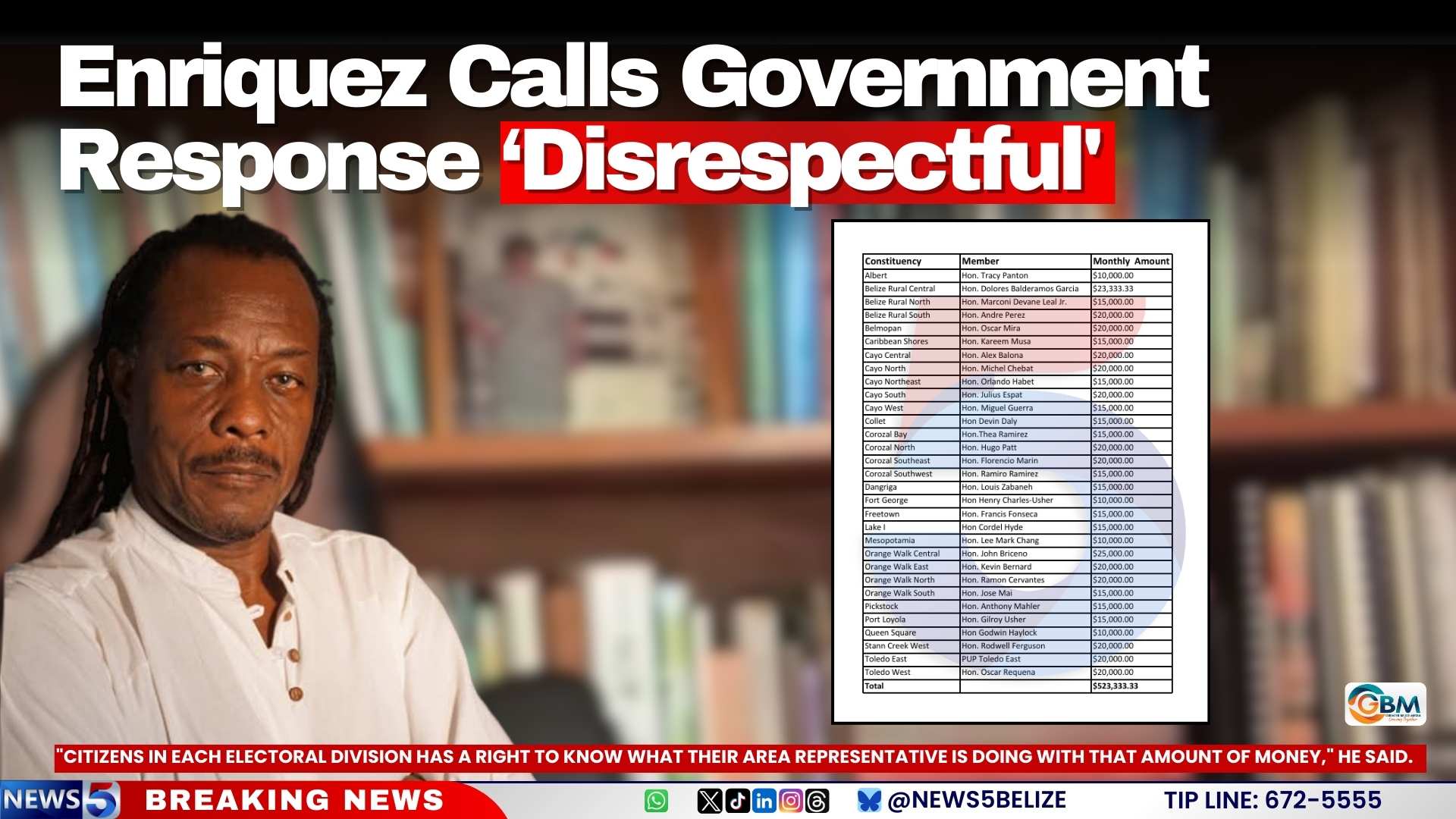
    In a scathing address to Barbados’ House of Assembly, Opposition Leader Ralph Thorne launched a fierce critique against the government’s economic management, accusing officials of ignoring what he described as economically devastating price levels and systematic price gouging practices. Thorne asserted that escalating living expenses are driving countless Barbadian families into severe financial hardship.

    During parliamentary debates on the Economic Diversification and Growth Fund Bill, Thorne challenged the administration’s narrative of economic progress, stating that ordinary citizens remain excluded from purported growth benefits. He emphasized that persistent inflation and continuously rising retail prices consistently outpace wage increases for working-class Barbadians.

    Thorne characterized routine grocery shopping as a ‘nervous exercise’ for households struggling with budgetary pressures. He insisted the government bears direct responsibility for addressing both the tangible economic suffering and widespread consumer anxiety gripping the nation.

    The opposition leader further warned that many Barbadians perceive themselves as victims of unjustified retail mark-ups, demanding the administration ‘educate itself’ about the reality of price gouging experiences throughout the country. Thorne’s comments highlight growing tensions over economic policy as legislators consider new fiscal measures.

  • Rejection of US attacks and threats highlights in Colombia

    Rejection of US attacks and threats highlights in Colombia

    The People’s Confederation of the Western Caribbean (CPCW) has issued a forceful condemnation of recent military operations in Caribbean waters, denouncing both the lethal bombings and a direct threat made by former US President Donald Trump against Colombian leader Gustavo Petro. The statement emerged from the Second Summit of the Peoples of the Western Caribbean, hosted on San Andres Island, which established the CPCW as a regional diplomatic body.

    The Confederation’s declaration highlighted that the aerial bombardments have resulted in approximately 100 extrajudicial fatalities, primarily affecting civilian fishermen whose livelihoods are now jeopardized by ongoing military actions. The CPCW demanded an immediate cessation of all threatening operations and called for comprehensive investigations into the events, accompanied by appropriate sanctions and reparations for victims and affected communities.

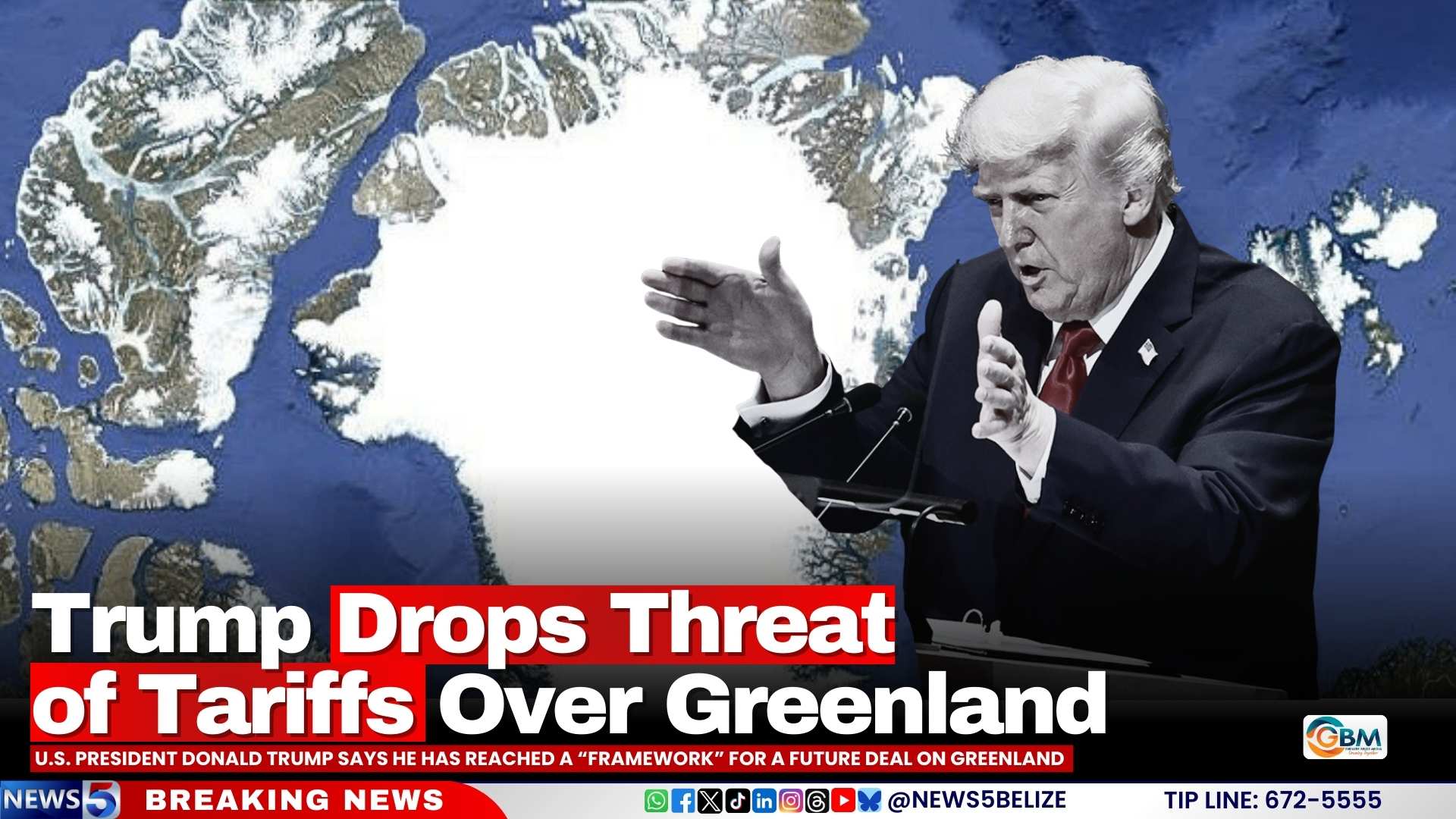
    A significant portion of the statement addressed what it termed ‘unacceptable threats’ against Colombia’s democratically elected president. The Confederation called for absolute respect for President Petro’s physical and moral integrity, referencing direct statements from Donald Trump suggesting Petro would be ‘next’ in line for aggression similar to that directed against Venezuela and its leader Nicolas Maduro.

    In response to these developments, President Petro attributed Trump’s comments to a fundamental misunderstanding of South American realities. The Colombian leader articulated substantive policy disagreements with US approaches toward Palestine, Caribbean relations, Venezuela, and strategies for combating organized crime. Petro particularly challenged the effectiveness of missile strikes against small boat operators, arguing that such tactics primarily impact impoverished fishermen rather than actual drug traffickers who operate luxury vessels near global hubs like Dubai and Madrid.

  • Antigua and Barbuda Expands Visa-Free Travel Access For Citizens

    Antigua and Barbuda Expands Visa-Free Travel Access For Citizens

    The government of Antigua and Barbuda has significantly enhanced global mobility for its citizens through a strategic series of newly finalized visa waiver agreements with multiple nations across Africa and the Middle East. Foreign Affairs Minister EP Chet Greene announced during the 2026 Budget Debate in Parliament that these diplomatic achievements form a core component of the nation’s proactive foreign policy aimed at delivering tangible benefits to its people.

    The newly established arrangements with the United Arab Emirates, Ghana, Kenya, Rwanda, and Benin are designed to eliminate visa requirements, thereby streamlining international travel for Antiguans and Barbudans. Minister Greene emphasized that these agreements extend beyond symbolic diplomacy, serving as practical instruments to foster stronger economic cooperation, boost trade and investment opportunities, and enhance people-to-people connections with these key international partners.

    While specific terms for each bilateral agreement were not disclosed, the minister characterized them as evidence of a foreign policy that prioritizes concrete outcomes for citizens. In a broader context, this initiative aligns with a comprehensive restructuring of the nation’s foreign service apparatus, which includes new diplomatic appointments and adjustments to overseas missions aimed at expanding the country’s international presence.

    Although no new accord was announced with Japan during the parliamentary session, Minister Greene highlighted that existing arrangements with Tokyo remain active and that the government continues to fortify its long-standing relationship with the Asian nation. The administration indicated it will persistently pursue similar visa facilitation agreements as part of its ongoing strategy to deepen diplomatic and economic linkages worldwide.

  • Cuban Foreign Minister disqualifies Nobel Peace Prize Committee

    Cuban Foreign Minister disqualifies Nobel Peace Prize Committee

    Cuban Foreign Minister Bruno Rodriguez has launched a scathing critique of the Nobel Peace Prize selection process, characterizing the prestigious award as a political tool favoring United States allies. Through his official Twitter account, Rodriguez asserted that the Norwegian Nobel Committee members—appointed by a NATO-aligned parliament—systematically transform the prize into recognition for “docile US allies” while simultaneously providing a platform for criticizing governments Washington finds inconvenient.

    The seasoned diplomat drew upon Cuba’s direct experience with over six decades of American economic blockade to question the committee’s consistent exclusion of Cuba’s Medical Brigades from consideration. These medical professionals have received repeated nominations for their humanitarian work worldwide, yet remain unrecognized by the Nobel committee.

    Rodriguez highlighted what he characterized as profound hypocrisy, noting the committee’s silence regarding aggressive US actions against Venezuela while enthusiastically presenting awards that allegedly contradict peace principles. He specifically referenced controversial past laureates including Henry Kissinger, Shimon Peres, and more recent recipients whose recognition coincided with US Secretary of State initiatives that Rodriguez claims promote military intervention in Venezuela.

    The Foreign Minister concluded that such demonstrated “double standard” fundamentally disqualifies the committee from delivering authoritative lectures on democratic values, arguing that the prize has become complicit in actions directly opposed to genuine peacekeeping efforts.