North Eleuthera Member of Parliament Sylvanus Petty has announced his intention to seek re-nomination for his seat, a decision that has sparked mixed reactions within the Progressive Liberal Party (PLP). Petty, who previously declared his departure from frontline politics to focus on family, confirmed his change of heart during a press briefing, stating he has the full backing of Prime Minister Philip Davis. ‘I just spoke to the Prime Minister about 20 minutes ago, so I’m good to go,’ Petty told reporters. However, his decision has left some PLP aspirants feeling ‘disrespected,’ particularly Oscar McPhee, a hopeful candidate who criticized Petty’s performance and accused him of neglecting constituents. McPhee argued that Petty’s return undermines the efforts of other aspirants and fails to address the community’s dissatisfaction. Residents of North Eleuthera have also voiced frustration over ongoing issues such as water, electricity, and internet disruptions, with some expressing reluctance to see Petty return. Despite these concerns, Petty remains confident in his re-election prospects, citing recent government initiatives to improve infrastructure and living conditions. ‘We’re gonna have the same support as we did in the last election,’ he said. ‘So I’m confident that we’re gonna win it.’ Prime Minister Davis is expected to meet with other hopefuls for the constituency soon, as the PLP navigates internal tensions ahead of the upcoming election.
分类: politics
-

Government tables bill aimed at cracking down on migrant smuggling
In a significant move to address migrant smuggling, National Security Minister Wayne Munroe presented the Smuggling of Migrants Bill, 2025, in the House of Assembly. This legislation aims to strengthen The Bahamas’ ability to prosecute traffickers involved in moving people into or out of the country, particularly when Bahamian nationals or interests are implicated. The bill extends jurisdiction to cases occurring both within and outside The Bahamas, covering scenarios where the country serves as a point of origin, transit, or destination for smuggled migrants. Minister Munroe emphasized that the expanded scope ensures local authorities can act against offenders regardless of the location of the crime, provided it involves Bahamian interests. The legislation also enhances enforcement powers at sea, including search, seizure, and arrest, while safeguarding migrant safety and human rights. The bill outlines various human smuggling offenses, such as using fraudulent documents, arranging illegal entry, concealing migrants, and coordinating smuggling operations. Penalties include fines up to $300,000 and imprisonment for up to 15 years, with harsher punishments for cases involving exploitation, violence, or harm to vulnerable groups. The bill also penalizes owners of vehicles, vessels, or aircraft used in smuggling and criminalizes harboring smuggled migrants for financial gain. Additionally, the legislation protects migrants’ rights, ensuring access to basic amenities, consular services, and asylum procedures. Minister Munroe highlighted that this legislation fills a critical gap in national law, aligning with international treaties to combat migrant smuggling effectively.
-

X, Y, Z, shouldn’t matter
Everald Warmington, Member of Parliament for St Catherine South Western, has tabled a motion in Jamaica’s House of Representatives calling for significant amendments to the Representation of the People Act (ROPA), which governs the country’s electoral processes. Warmington, a government MP, proposed eliminating the requirement for voters to mark their ballots with a cross (X) using a black lead pencil, arguing that this rule is outdated and restrictive. He suggested that voters should be allowed to use any implement and make any mark that clearly indicates their choice. Additionally, Warmington advocated for extending voting hours from 7:00 am to 6:00 pm to accommodate modern lifestyles and technological advancements. He also called for a full re-verification of the voters’ list, citing concerns about inflated voter registration numbers and inaccurate turnout statistics. Warmington further proposed amendments to allow election agents to operate closer to polling stations, ensuring they can effectively perform their duties. These reforms aim to enhance the transparency, accessibility, and efficiency of Jamaica’s electoral system. Parliament will decide whether to debate the motion, with the next local government elections scheduled for 2028 and the general election by 2030.
-

Motion passes in Parliament: Douglas and Charles to posthumously receive highest honour on independence day
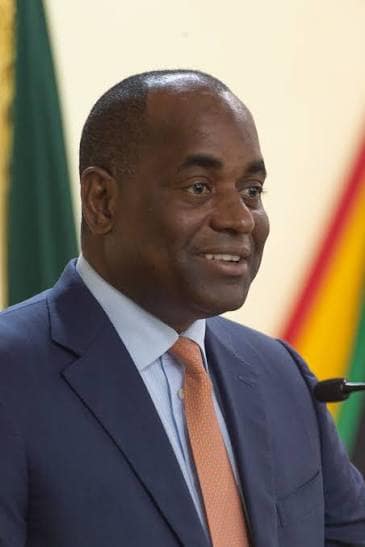
The Parliament of Dominica has unanimously passed a motion to confer the Dominica Award of Honour (D.A.H.), the country’s most prestigious recognition, upon the late Prime Ministers Roosevelt “Rosie” Douglas and Pierre Charles. The motion, introduced by Prime Minister Roosevelt Skerrit, celebrates the enduring legacy of the two leaders, whose visionary leadership and unwavering dedication to social justice, education, and community development have left an indelible mark on the nation. The awards will be presented posthumously during the formal ceremonies marking Dominica’s 47th Independence Anniversary on November 3. Prime Minister Skerrit, addressing the Parliament, highlighted the exemplary service of both leaders, emphasizing their contributions to the advancement of Dominica and the broader Caribbean region. Roosevelt “Rosie” Douglas served as Prime Minister from February 2000 until his untimely death on October 1 of the same year, while Pierre Charles succeeded him, serving from October 3, 2000, until his passing on January 6, 2004. The Dominica Award of Honour stands as a testament to their selfless devotion and distinguished service to the nation and its people.
-

PM announces plans for new police belts, double Youth Economy funding
In a significant move to empower the younger generation, Prime Minister Philip J Pierre announced during this week’s pre-cabinet meeting that the government will double the funding allocated to the Youth Economy Grant program in the upcoming budget. This decision comes on the heels of the initiative’s remarkable success, which has already benefited over 1,000 young Saint Lucians since its inception. The program offers grants of $5,000, coupled with essential training, to aspiring entrepreneurs looking to establish or expand their businesses. Pierre highlighted that the grant component has outperformed the loan scheme administered by the Saint Lucia Development Bank, with ongoing discussions aimed at enhancing the loan program’s effectiveness and accessibility. The Prime Minister also lauded the Youth Economy Agency for its independence, emphasizing that its decisions are made by an impartial board, free from political influence. While acknowledging delays in processing applications due to overwhelming demand, Pierre described the high level of interest as encouraging and reiterated the government’s dedication to streamlining procedures. In a separate development, Pierre addressed concerns over police welfare, revealing that the government has ordered 1,300 specialized belts to replace the uncomfortable gear currently in use. This initiative follows the recent distribution of bulletproof vests, underscoring the administration’s commitment to improving the working conditions of law enforcement officers. The Prime Minister expressed optimism that the new belts, currently in production, will significantly enhance officers’ comfort and efficiency.
-

OP-ED: Caribbean Sea – zone of peace and prosperity, SRC Trading Thoughts
The Caribbean Sea, a vital economic and cultural lifeline for the region, has recently become a focal point of geopolitical tension following a series of US military strikes targeting alleged drug-smuggling operations. Since September 2, 2025, the US Southern Command has conducted four strikes in the southern Caribbean near Venezuela, resulting in at least 21 reported deaths. Washington justifies these actions as part of its broader campaign against ‘narcoterrorism,’ specifically targeting the Venezuelan gang ‘Tren de Aragua,’ which it designated a foreign terrorist organization in February 2025. However, these unilateral actions have sparked outrage and concern across the Caribbean, raising fears of escalating militarization and economic instability. The strikes are deeply intertwined with the deteriorating US-Venezuela relations, which have worsened under successive US administrations. Venezuela’s President Nicolás Maduro has declared a state of emergency, while regional leaders, including Colombia’s President Gustavo Petro, have condemned the US actions. The UN Security Council convened an emergency session on October 10, 2025, but meaningful resolutions remain unlikely due to the US veto power. Critics, including Human Rights Watch, have labeled the strikes as extrajudicial killings and violations of international law, questioning the lack of evidence linking the targeted vessels to drug smuggling. The Caribbean Sea, accounting for 27% of the global ocean economy and 18% of regional GDP, is a critical artery for fisheries, tourism, and shipping. Increased militarization threatens these industries, jeopardizing the region’s economic future. Caribbean nations, historically committed to maintaining the region as a ‘Zone of Peace,’ must unite to resist foreign intervention and preserve their shared patrimony. Diplomatic engagement, supported by regional and international allies, is essential to prevent further escalation and ensure the Caribbean Sea remains a source of prosperity, not conflict.
-

Gajadien: Gratie mag geen politiek instrument worden
Assembly member Asis Gajadien has expressed deep concerns regarding the recent handling of pardon requests submitted to President Jennifer Simons. Gajadien emphasized that the process must be conducted with “utmost care” to safeguard the rule of law and Suriname’s international reputation. He highlighted that Article 109 of the Constitution explicitly requires the president to seek advice from the judge who imposed the sentence or their successor before granting any pardon. “This provision is not a mere formality but a cornerstone of our democratic legal system,” Gajadien stated. “It ensures judicial independence and public trust in fair legal proceedings.” Gajadien further stressed that pardons are exceptional legal remedies, reserved for “extraordinary circumstances involving humanitarian or equity considerations.” He warned against using pardons as political tools or undermining judicial authority. “The manner of application, through political platforms, adds a concerning dimension to this issue,” he noted. Gajadien urged the president to consider not only legal requirements but also societal interests and Suriname’s international credibility when addressing pending pardon requests. He cautioned that premature or inadequately justified pardons could damage the government’s image and send the wrong signal to the international community, which closely monitors Suriname’s commitment to good governance and integrity. “Society deserves the assurance that justice is administered fairly, transparently, and without bias,” Gajadien concluded, calling on the coalition and the president to prioritize the rule of law, social stability, and the moral authority of the office above all else.
-

LETTERS TO THE EDITOR: The mockery of democracy – unmasking the corrupt electoral reform process in Dominica
In the verdant landscapes of Dominica, often hailed as the ‘Nature Isle of the Caribbean,’ the essence of democracy is under severe threat. Prime Minister Roosevelt Skerrit and his Dominica Labour Party (DLP) have maintained a tight grip on power for over two decades, raising concerns about the island’s democratic integrity. The introduction of electoral reforms in 2025, ostensibly aimed at enhancing transparency and fairness, has instead been criticized as a calculated move to entrench the ruling party’s dominance. The sidelining of the Electoral Commission, a constitutionally mandated body designed to ensure free and fair elections, has further fueled accusations of authoritarianism. The reform process, which included the tabling of three key bills in December 2024, was marked by chaos and suppression of dissent. Protesters outside the House of Assembly were met with tear gas and rubber bullets, while inside, debate was stifled by the DLP’s overwhelming majority. The InterAmerican Commission on Human Rights (IACHR) has expressed grave concerns over the lack of public scrutiny and the erosion of voter registration safeguards. The deliberate marginalization of the Electoral Commission and the exploitation of vulnerable citizens for voter harvesting have drawn widespread condemnation. Skerrit’s government, bolstered by passport-sale revenues and international alliances, has been accused of turning state machinery into a partisan tool. The 2022 snap elections, boycotted by the opposition and marked by low turnout, set the stage for this escalation. Skerrit’s relentless pursuit of unfair advantage, coupled with his unfulfilled promises of clean governance, has led to growing calls for accountability. Dominica now stands at a crossroads, with its citizens and international allies urged to take a stand against this erosion of democratic principles. The choice is stark: reclaim democratic birthright or succumb to the twilight of one-man rule.