分类: politics

  • Central Bank: US, Venezuela tensions create economic uncertainty in TT

    Central Bank: US, Venezuela tensions create economic uncertainty in TT

    Escalating military tensions between the United States and Venezuela in the southern Caribbean are creating significant economic uncertainty in Trinidad and Tobago, according to the latest monetary policy report from the nation’s Central Bank. The report, released December 31, 2025, identifies the “fluid geopolitical tension” as a primary contributor to domestic economic instability.

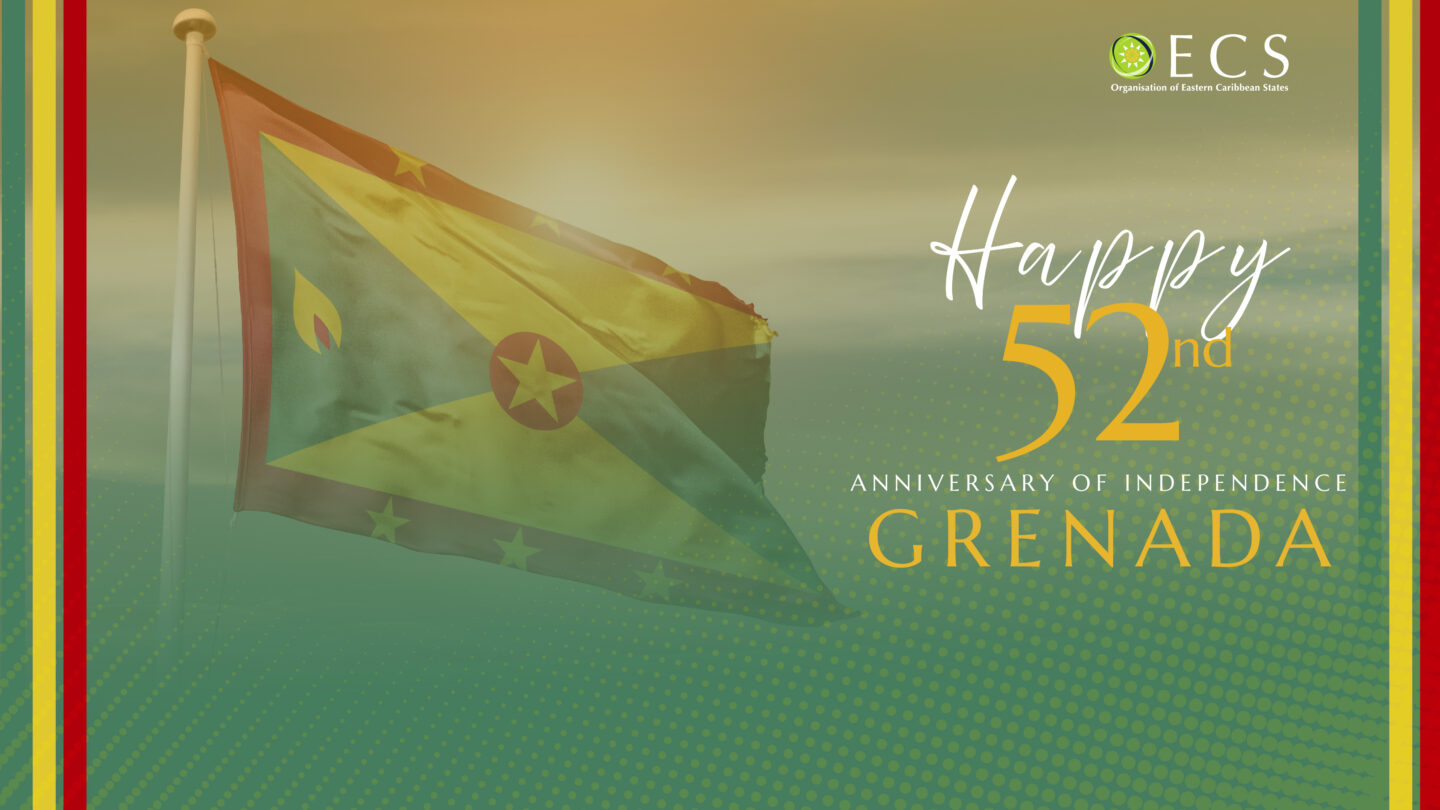
    The military buildup began in August 2025 with the deployment of guided missile destroyers USS Gravely, Sampson, and Jason Dunham to the region. This presence has since expanded dramatically to include the aircraft carrier USS Gerald R. Ford and its strike group, US amphibious assault vessels, the nuclear attack submarine USS Newport News, and elements of the US Marine Corps 22nd Marine Expeditionary Unit (MEU). Notably, this marks the MEU’s first Caribbean engagement since the 1983 invasion of Grenada.

    Trinidad and Tobago has facilitated this military presence by granting the US military indefinite access to Piarco International and ANR Robinson International Airports for transit flights. In November, US Marines established a military radar system at ANR Robinson International Airport.

    Prime Minister Kamla Persad-Bissessar has consistently supported the US deployment, including military strikes on alleged drug vessels that have resulted in at least 107 fatalities across 31 vessels since September 2. This week, President Trump confirmed the destruction of an alleged onshore drug facility via drone strike with CIA involvement.

    The Prime Minister has condemned regional critics of the deployment, asserting that the United States represents Trinidad and Tobago’s sole protector against external threats.

    Economically, the Central Bank reports that growth remains “somewhat tentative” despite increased energy production from two new natural gas fields in the second quarter of 2025. This growth is being partially offset by a non-energy sector losing momentum across multiple sub-sectors, indicating the domestic economy still requires support for sustained recovery.

    International context shows the IMF projecting global output expansion of 3.2% in 2025, marginally down from 3.3% in 2024. While the US economy demonstrates durability despite labor market challenges and elevated inflation, other major economies experience softer growth with persistent inflation.

    Energy markets reflect these uncertain conditions, with West Texas Intermediate crude slipping below $60 per barrel, averaging $59.57 in November and remaining below that threshold in December. This presents challenges for Trinidad and Tobago’s budget, which was pegged against crude oil at $73.25 per barrel and natural gas at $4.25 per mmbtu.

  • PM: 2026 a year of rebuilding, recovery and delivery

    PM: 2026 a year of rebuilding, recovery and delivery

    In her New Year’s Day address, Trinidad and Tobago Prime Minister Kamla Persad-Bissessar unveiled an ambitious governance agenda for 2026, emphasizing economic reconstruction, institutional accountability, and national security enhancement. The Prime Minister characterized the coming year as a pivotal period for tangible delivery across all government ministries and agencies.

    Persad-Bissessar articulated that her administration’s core principle remains “TT first, above all,” asserting that every policy decision and fiscal allocation must directly advance citizen safety, economic prosperity, and national dignity. She mandated all cabinet ministers to demonstrate measurable outcomes, coordinate effectively, and eliminate inefficiency in program execution.

    The government’s 2026 priorities will concentrate on stimulating economic growth through small and medium enterprise support, accelerating public infrastructure development, and strengthening both energy and non-energy sectors to expand employment opportunities. The Prime Minister emphasized that public spending must translate into concrete benefits for citizens.

    Regarding national security, Persad-Bissessar highlighted sustained efforts against violent crime, gang activity, and narcotics trafficking through enhanced international cooperation, particularly with United States authorities. The administration has expanded intelligence sharing, maritime security coordination, and joint operations to disrupt transnational criminal networks and intercept illegal firearms.

    The Prime Minister referenced several legislative achievements including Stand Your Ground and Home Invasion laws designed to protect law-abiding citizens, alongside recently enacted Fireworks and Noise Pollution legislation aimed at safeguarding vulnerable populations.

    Infrastructure improvements and drainage management initiatives have already yielded reduced flooding in multiple communities, while the government has delivered on commitments including the reopening of Couva Children’s Hospital and fulfillment of student laptop programs.

    Persad-Bissessar concluded with New Year’s wishes for safer communities, economic strength, and expanded opportunities for Trinidad and Tobago’s youth, urging national unity and confidence in the nation’s future.

  • New political geography

    New political geography

    The upcoming Tobago House of Assembly (THA) election on January 12, 2026, is poised to serve as a crucial political barometer for Trinidad and Tobago’s transformed political environment. This electoral contest will not only gauge support for Farley Augustine’s emerging Tobago People’s Party (TPP) but also indirectly reflect on Kamla Persad-Bissessar’s United National Congress (UNC) and Penny Beckles’ People’s National Movement (PNM).

    Watson Duke’s December 8 endorsement of the TPP, while politically predictable, raises questions about his current influence. His advocacy for tactical voting to eliminate PNM from Tobago governance echoes broader political strategies gaining traction. Duke asserts that consecutive defeats of PNM—first by the PDP in December 2021 and potentially by the TPP in the upcoming election—would confirm the party’s diminished prospects in Tobago.

    The political rhetoric surrounding ‘Tobago’s interests first’ mirrors the UNC’s ‘Trinidad first’ positioning, which itself reflects the populist nationalism reminiscent of Donald Trump’s ‘America first’ approach. This occurs amid Trinidad and Tobago’s shifting international alignments toward Trump-leaning Latin American nations rather than traditional Caricom partnerships.

    Major political parties demonstrate concerning positions regarding international affairs. The UNC maintains silence on Trump-related matters, the TPP claims ignorance of US political developments, and the PNM operates as if the public has forgotten their decade-long governance.

    The evolving political landscape will face multiple tests throughout 2026. Crime prevention strategies will undergo scrutiny as emergency measures expire and new legislation takes effect. The UNC’s management of Carnival events will reveal administrative capabilities, while mid-year fiscal reviews will test economic management against a five-year development plan potentially influenced by foreign policy decisions.

    Foreign policy orientations and climate crisis responses will increasingly define the nation’s trajectory. While 2025 represented a historic political shift, 2026 may prove even more consequential in determining Trinidad and Tobago’s future direction within this reconfigured political order.

  • NEW YEAR MESSAGE from the Incoming Chair of the Caribbean Community, Hon. Dr Terrance Drew, Prime Minister of St Kitts and Nevis

    NEW YEAR MESSAGE from the Incoming Chair of the Caribbean Community, Hon. Dr Terrance Drew, Prime Minister of St Kitts and Nevis

    Dr. Terrance Drew, Prime Minister of St. Kitts and Nevis, has formally assumed the rotating chairmanship of the Caribbean Community (CARICOM) on January 1, 2026, marking the beginning of his six-month tenure at the helm of the regional organization. In his inaugural New Year address, the incoming Chairman outlined both the historical significance and contemporary imperatives facing the 20-member bloc.

    Drew commenced by acknowledging the contributions of his predecessor, Jamaican Prime Minister Andrew Holness, whose leadership navigated the Community through periods of regional instability. The new Chairman emphasized that CARICOM’s founding principles—established through the 1973 Treaty of Chaguaramas—remain critically relevant in today’s rapidly evolving global landscape. He characterized the organization as a strategic response by visionary predecessors who recognized that vulnerable states required collective strength to address shared challenges.

    The address highlighted CARICOM’s concrete achievements across multiple domains, including expanded regional trade, enhanced labor mobility, strengthened health systems, coordinated disaster response, and influential climate advocacy. Drew particularly emphasized that regional integration has evolved from being merely advantageous to becoming an absolute necessity in an increasingly uncertain world.

    Among the pressing regional priorities identified were the ongoing situation in Haiti, which Drew described as requiring sustained engagement through mechanisms including the Eminent Persons Group and UN Security Council Resolution 2793. He also reaffirmed CARICOM’s commitment to reparatory justice through the established Ten Point Plan, acknowledging the Caribbean’s unique historical experience while celebrating its extraordinary cultural and intellectual contributions to global civilization.

    Addressing recent public disagreements among member states, the Chairman acknowledged that differences are inherent in diverse communities but stressed the importance of managing dialogues with mutual respect and regional responsibility. He framed CARICOM not as a forum avoiding disagreement but as a mechanism for constructively addressing differences while maintaining collective strength.

    Looking forward, Drew announced that St. Kitts and Nevis will host the 50th Regular Meeting of the Conference of Heads of Government from February 24-27, 2026, inviting fellow leaders to engage in substantive discussions on regional priorities. He concluded with a call for renewed commitment to Caribbean unity, stronger institutional coordination, and strategic maturity on the global stage, affirming that CARICOM represents both the identity and aspirations of the Caribbean people.

  • Leftist Mamdani begins first day as New York mayor

    Leftist Mamdani begins first day as New York mayor

    NEW YORK — Zohran Mamdani, a 34-year-old democratic socialist who emerged from relative obscurity to claim America’s most prominent municipal office, was formally inaugurated as New York City’s mayor during a historic ceremony commencing the new year. The swearing-in ceremony occurred precisely at midnight within a decommissioned subway station beneath City Hall, symbolizing both the city’s infrastructure heritage and Mamdani’s grassroots political origins.

    The inauguration events continued Thursday with a ceremonial celebration featuring prominent progressive allies including Senator Bernie Sanders and Congresswoman Alexandria Ocasio-Cortez. The production anticipated approximately 4,000 ticketed attendees with additional public viewing areas accommodating tens of thousands of spectators along Broadway, reflecting Mamdani’s commitment to accessible governance.

    In his initial remarks, Mamdani characterized the mayoralty as “the honor and privilege of a lifetime,” while political analysts immediately began scrutinizing his capacity to implement an ambitious progressive agenda featuring rent stabilization, universal childcare, and fare-free public transportation. The administration’s trajectory appears inevitably intertwined with national politics, particularly given Mamdani’s strained relationship with former President Donald Trump.

    Despite Trump’s previous characterization of Mamdani as a “communist lunatic” and threats to reduce federal funding, the two conducted unexpectedly cordial discussions at the White House in November. Columbia University political analyst Lincoln Mitchell noted the meeting exceeded expectations for Mamdani, though he cautioned about the relationship’s volatility, especially regarding impending immigration enforcement actions.

    The mayor, who has labeled Trump a fascist, has simultaneously pledged to protect immigrant communities, setting the stage for potential jurisdictional conflicts. Mamdani’s oath was administered by New York Attorney General Letitia James, who recently successfully prosecuted Trump for civil fraud, adding another layer of political symbolism to the transition of power.

  • Golding says Opposition will champion transparency, accountability in 2026

    Golding says Opposition will champion transparency, accountability in 2026

    In a comprehensive New Year’s address, Jamaican Opposition Leader Mark Golding outlined a vision of accountable governance and national unity while reflecting on the catastrophic Hurricane Melissa that devastated the nation in 2025. The People’s National Party (PNP) leader emphasized reconstruction with resilience as Jamaica enters 2026, promising intensified parliamentary scrutiny of government operations.

    Golding acknowledged the extraordinary humanitarian response that followed the natural disaster, noting that ‘Jamaicans at home and abroad demonstrated unprecedented generosity through container shipments and relief missions to affected communities.’ He described how citizens rallied behind national colors in ‘a torrent of love, caring and support for our fellow Jamaicans in need.’

    The Opposition Leader highlighted significant electoral gains made by the PNP in the September general elections, where the party gained approximately 100,000 additional votes and doubled its parliamentary representation to 28 seats. ‘This mandate indicates many Jamaicans seek leadership embracing integrity, accountability, and responsive governance,’ Golding stated, adding that the strengthened opposition position enables more forceful scrutiny of government actions.

    Rejecting partisan approaches to disaster recovery, Golding committed to constructive opposition: ‘We have avoided any temptation to make political mileage out of this disaster. We recognize national unity is desired and needed.’ He outlined specific priorities including transparent distribution of relief resources, restoration of critical infrastructure, and expanded mental health support for trauma victims.

    Golding emphasized the dual challenge of physical reconstruction and trust-building, stating: ‘The Jamaica we are striving to rebuild must be one where investment decisions are people-centered, opportunities are accessible to youth and persons with disabilities, women are empowered, the elderly supported, and vulnerable families strengthened.’

    The PNP leader concluded with a personal pledge to prioritize national interest and responsible governance, urging Jamaicans to ‘live with purpose and kindness’ while supporting local businesses and hurricane-affected communities throughout the recovery process.

  • Opposition Demands Answers on Ombudsman Exit

    Opposition Demands Answers on Ombudsman Exit

    A significant political controversy has emerged in Belize following the non-renewal of Ombudsman Major Herman Gilbert Swazo’s contract, which officially expires today, December 31, 2025. The decision has drawn sharp criticism from opposition leaders and raised concerns about governmental transparency.

    The United Democratic Party leader and Opposition Leader Tracy Panton has publicly challenged the government’s silence regarding Swazo’s departure. In an online statement, Panton emphasized the constitutional importance of the Ombudsman’s office, describing it as a critical institution designed to protect citizens from administrative misconduct, power abuse, and state-level injustice. She asserted that the office’s independence and continuity are fundamental pillars of democratic governance and rule of law.

    The development follows recent controversy surrounding Swazo’s handling of a Freedom of Information appeal related to legal fees paid to private attorneys in the government’s redistricting case. Swazo had ruled that portions of this information should be publicly disclosed, a decision the current administration is now challenging in court.

    Swazo revealed he received unexpected notification of his non-reappointment on Christmas Eve via a letter from Cabinet Secretary Stuart Leslie. The communication expressed gratitude for his contributions but made no mention of contract renewal, which Swazo interpreted as definitive termination. Despite the circumstances, Swazo maintained that his actions should not discourage others from advocating for justice and governmental accountability.

  • Lukashenko describes attack on Putin’s residence as terrorism

    Lukashenko describes attack on Putin’s residence as terrorism

    In a significant escalation of diplomatic rhetoric, Belarusian President Alexander Lukashenko has characterized a recent drone assault on a Russian presidential compound as “the most savage terrorism, at the highest state level.” The remarks came during a press briefing where Lukashenko expressed bewilderment about the attack’s motives, questioning “who needs it?”

    The incident, which Russian authorities claim occurred in the Novgorod region, involved an alleged deployment of 91 unmanned aerial vehicles targeting the presidential residence. Russian Foreign Minister Sergey Lavrov directly attributed the attack to Ukrainian forces, marking one of the most serious accusations in recent months.

    Despite the severity of the alleged assault, Lavrov reported that Russian air defense systems successfully intercepted all drones involved, preventing any damage to the presidential compound. The minister’s statement highlighted Russia’s continued military preparedness against what it characterizes as terrorist tactics.

    In a consequential development for international diplomacy, Lavrov indicated that while Russia does not plan to completely abandon negotiation channels with the United States following the incident, Moscow will substantially reassess its position in those talks. This suggests potential hardening of Russia’s diplomatic stance toward Western powers engaged in the Ukraine conflict.

    The allegations emerge against a backdrop of intensified hostilities in the region, with drone warfare becoming increasingly prevalent. Security analysts note that attacks on high-profile political targets represent a dangerous escalation in tactics, potentially altering the conflict’s dynamics.

  • Doumbouya declared winner of presidential elections in Guinea

    Doumbouya declared winner of presidential elections in Guinea

    Guinea’s military leader Mamady Doumbouya has clinched a definitive victory in the nation’s presidential election, according to official provisional results announced by election authorities. Djenabou Toure, Director of the General Directorate of Elections, confirmed that Doumbouya achieved an absolute majority in the first round of voting, eliminating the need for a runoff election.

    The electoral contest featured eight additional candidates, with Abdoulaye Balde of the Democratic Front of Guinea party emerging as the distant runner-up with merely 6.6% of the total vote. Other presidential hopefuls received significantly lower percentages in the final tally.

    Approximately 6.7 million registered voters participated in the landmark election, which was conducted under a radically transformed constitutional framework. This new constitution, ratified in a September referendum, introduced sweeping changes to Guinea’s political system. Most notably, it removed previous restrictions barring military officials from seeking elected office and extended the presidential term from five to seven years.

    Doumbouya, who seized power through a military coup in September 2021 that ousted then-President Alpha Condé, entered the race as the overwhelming favorite. His transition from military ruler to elected president marks a significant political transformation for the West African nation.

    The election occurs against a backdrop of persistent economic challenges. According to World Food Programme data, despite Guinea’s substantial mineral wealth—particularly its extensive bauxite reserves—more than half of the country’s 15 million citizens continue to live below the poverty line, highlighting the economic difficulties facing the incoming administration.

  • STATEMENT: New year message from the incoming chair of the Caribbean Community, Hon. Dr Terrance Drew, Prime Minister of St Kitts and Nevis

    STATEMENT: New year message from the incoming chair of the Caribbean Community, Hon. Dr Terrance Drew, Prime Minister of St Kitts and Nevis

    Dr. Terrance Drew, Prime Minister of St. Kitts and Nevis, has officially assumed the rotating chairmanship of the Caribbean Community (CARICOM) on January 1, 2026, marking the beginning of his six-month tenure leading the regional bloc. In his inaugural New Year address to the Caribbean populace, Dr. Drew outlined his vision for strengthened integration and collective action during a period of global uncertainty.

    The new chairman acknowledged the leadership of his predecessor, Jamaican Prime Minister Andrew Holness, who guided the community through significant regional challenges. Dr. Drew emphasized that regional integration remains essential rather than optional in today’s volatile global landscape, reaffirming CARICOM’s foundational principles established in the 1973 Treaty of Chaguaramas.

    Dr. Drew highlighted CARICOM’s historical achievements, noting how the organization has expanded markets through economic cooperation, facilitated cross-border movement of skills, and advanced functional cooperation in health, disaster response, education, and climate advocacy. He particularly emphasized the region’s disproportionate contributions to global culture, sports, and intellectual thought despite its relatively small size.

    The address addressed several pressing regional issues, including the ongoing situation in Haiti, which Dr. Drew described as requiring sustained regional engagement. He confirmed CARICOM’s continued support through the Eminent Persons Group as Haiti prepares for general elections in 2026 and implements UN Security Council Resolution 2793 regarding gang suppression.

    Dr. Drew also referenced recent public disagreements among member states, acknowledging that while differences are natural in a diverse community, they must be managed with mutual respect and regional responsibility. He stressed that CARICOM was designed as a forum for constructive dialogue where collective strength outweighs individual disagreements.

    The chairman announced that St. Kitts and Nevis will host the Fiftieth Regular Meeting of the Conference of Heads of Government from February 24-27, 2026, inviting fellow leaders to engage actively on priority issues affecting the region’s welfare.

    Concluding with a call to action, Dr. Drew urged Caribbean citizens and leaders to recommit to regional principles, strengthen institutions, and speak with one voice on the global stage to secure the future of Caribbean civilization.