分类: politics

  • Pringle Pushes for Answers on Social Security, Debt and Missing Reports at PAC Meeting

    Pringle Pushes for Answers on Social Security, Debt and Missing Reports at PAC Meeting

    The Public Accounts Committee (PAC), chaired by Opposition Leader Jamale Pringle, convened on Thursday in a tense session that brought critical issues of government debt, statutory compliance, and Social Security transparency to the forefront. The meeting began with procedural clarifications but swiftly escalated into a heated debate over financial accountability. Pringle emphasized the need for the committee’s rules of procedure to be formally presented in Parliament, citing recurring disruptions and strained interactions with government members. The Director of Audit and the Accountant General provided updates on long-standing financial adjustments, including accounts linked to defunct entities like a 19th-century savings bank. While some adjustments could be resolved administratively, others required parliamentary approval, with officials pledging progress by year-end. Pringle warned that delays could perpetuate distortions in the nation’s financial records. Lawmakers expressed frustration over statutory bodies failing to submit audited statements, particularly Social Security, which had only provided management accounts from 2022. The Director of Audit highlighted the lack of independent oversight in managerial accounts, underscoring accountability gaps. Members called for a compliance table to identify chronic offenders since 2010. The committee also scrutinized a $330 million bond issued to Social Security, with Pringle questioning the decade-long freeze on interest payments and whether the arrangement had parliamentary approval. Treasury officials acknowledged the debt as a priority but admitted to inconsistent payments, often relying on asset swaps rather than cash. The status of NAMCO, a state-owned company, was also examined, with audits for 2017–2020 reportedly completed but never tabled in Parliament. Members agreed to address this omission in the next sitting. The session was marked by sharp exchanges between Pringle and government MPs, with accusations of misleading the public and debates over the PAC’s mandate. Pringle argued that the committee was being hindered without full access to accounts, while government members pointed to other parliamentary mechanisms for accountability. Discussions also revealed uncertainties about government investments, with officials admitting documentation gaps. Pringle concluded the meeting by thanking auditors and civil servants for their support but stressed that true oversight depends on timely financial disclosure. He highlighted the live broadcast of the proceedings as a step toward greater transparency in public finances.

  • Ghana welcomes visa-free access into Antigua and Barbuda

    Ghana welcomes visa-free access into Antigua and Barbuda

    In a significant diplomatic development, Ghana’s Minister for Foreign Affairs, Samuel Okudzeto Ablakwa, announced the signing of a visa waiver agreement with Antigua and Barbuda. The agreement, finalized on the sidelines of the United Nations General Assembly, marks the 10th such pact secured by Ghana under Ablakwa’s leadership. The announcement was made via social media on September 25, where Ablakwa expressed gratitude to his counterpart, H.E. E.P. Chet Greene, Minister for Foreign Affairs, Trade and Barbuda Affairs, for his instrumental role in achieving this milestone. The visa waiver is part of the Mahama Administration’s broader strategy to enhance the value of the Ghanaian passport, promote international trade and tourism, and strengthen cultural and economic ties with Caribbean nations. This agreement is expected to facilitate smoother travel for Ghanaians, fostering deeper connections with Antigua and Barbuda while projecting Ghana’s positive image on the global stage.

  • Prime Minister Gaston Browne Urges Justice-Based Climate Action at UN Climate Summit

    Prime Minister Gaston Browne Urges Justice-Based Climate Action at UN Climate Summit

    At the United Nations Climate Summit on Wednesday, Prime Minister Gaston Browne of Antigua and Barbuda delivered a compelling keynote address, urging for an enforceable and equitable transition away from fossil fuels. He emphasized that those who have historically profited from fossil fuel economies must now take responsibility for funding climate justice initiatives. Addressing global leaders and multilateral institutions, Browne highlighted the disproportionate impact of climate change on Small Island Developing States (SIDS), which, despite contributing minimally to global emissions, bear the brunt of its consequences. He called for a system rooted in accountability and justice. Browne reaffirmed Antigua and Barbuda’s support for the Fossil Fuel Treaty initiative, advocating for a structured phase-out of coal, oil, and gas, supported by robust financial and technological transfer mechanisms. He warned that climate change exacerbates vulnerabilities in agriculture, fisheries, infrastructure, and livelihoods, with loss and damage already a daily reality for many small states. Browne stressed that maintaining the 1.5 °C threshold is non-negotiable for the survival of island nations, describing it as a binding scientific, moral, and legal benchmark. He criticized the global financial architecture, arguing that the largest polluters must pay through polluter-pays mechanisms, not charity, to address systemic inequities. Browne pointed out that current climate finance for adaptation, resilience, and loss and damage remains insufficient, with multilateral and international financial institutions failing to respond effectively. He projected that adaptation costs could reach $387 billion annually by 2030, with loss and damage already amounting to hundreds of billions, yet new funding remains scarce. On a national level, Browne outlined Antigua and Barbuda’s National Adaptation Plan (NAP) as a clear roadmap for resilience, with an updated Nationally Determined Contribution (NDC) set to accelerate the country’s green transformation. He urged leaders, financial institutions, development partners, and the private sector to act immediately, treating the 1.5 °C limit as a lifeline and making the polluter-pays principle the foundation of a fair transition.

  • Prime Minister Gaston Browne Calls for Delivery on Development Finance at UN High-Level Summit

    Prime Minister Gaston Browne Calls for Delivery on Development Finance at UN High-Level Summit

    At the First Biennial Summit for a Sustainable, Inclusive, and Resilient Global Economy held at the United Nations Headquarters in New York on September 25, 2025, Prime Minister Gaston Browne of Antigua and Barbuda delivered a compelling address. He urged the international community to transition from rhetoric to tangible action in delivering scaled, fair, and timely financial support, particularly for Small Island Developing States (SIDS).

    Prime Minister Browne highlighted the stark realities faced by SIDS, emphasizing that global economic growth of 2.5–3% and a staggering public debt of US$97 trillion are insufficient to meet development and climate goals. He pointed out that trade fragmentation, financial volatility, and escalating climate disasters are undermining global confidence. For SIDS, the situation is dire: in 2024 alone, climate-related disasters caused an estimated US$7 billion in damages across small islands. With the IPCC predicting sea levels could rise up to one meter this century, and tourism accounting for over 40% of GDP in some islands, SIDS are three times more vulnerable to economic shocks than the global average. Many of these nations carry public debt equivalent to 80–100% of their GDP due to recovery costs and limited access to concessional finance.

    Prime Minister Browne stressed, ‘We cannot keep mortgaging our children’s future merely to survive today. The vision is not missing; the problem is implementation.’ He outlined concrete steps under the Antigua and Barbuda Agenda for SIDS (ABAS), including the establishment of a Debt Sustainability Support Service (DSSS) to restructure debt and channel finance into resilience. The first DSSS transaction is expected to close by March 2026, and beginning in 2026, all new sovereign issuances by Antigua and Barbuda will include climate-resilient debt clauses.

    To unlock finance at the necessary speed and scale, Prime Minister Browne called on international partners to expand concessional and grant finance through Multilateral Development Banks (MDBs) using vulnerability-based access criteria, adopt automatic disaster clauses to pause debt service immediately after catastrophes, standardize state-contingent instruments such as climate-resilient clauses and debt-for-nature swaps, blend finance at scale using guarantees and first-loss capital, and fund pipelines of ready country-owned programs in resilient infrastructure, clean energy, and adaptation.

    Prime Minister Browne concluded by stating, ‘Let us measure success not by communiqués, but by classrooms rebuilt, clinics powered, homes protected, and by debt trajectories bent toward sustainability.’ Antigua and Barbuda has invited MDBs, International Financial Institutions (IFIs), philanthropy, and private capital to partner through blended-finance structures and guarantees, confirming that its pipeline of resilience, clean energy, and adaptation projects is ready for co-financing and rapid execution.

  • Antigua and Barbuda formalise visa waiver agreements with three African countries

    Antigua and Barbuda formalise visa waiver agreements with three African countries

    Antigua and Barbuda has marked a significant milestone in its diplomatic engagements during the 80th Session of the United Nations General Assembly (UNGA) in New York. The Caribbean nation has taken proactive steps to deepen its international relationships, particularly with African countries, by formalizing visa waiver agreements with Ghana, Kenya, and Benin. These agreements, signed by Antigua and Barbuda’s Minister of Foreign Affairs, the Hon. E.P. Chet Greene, aim to enhance mobility, foster collaboration, and strengthen ties between the Caribbean and Africa.

  • Is the UN still beneficial to small countries?

    Is the UN still beneficial to small countries?

    During the 80th session of the UN General Assembly on September 23, 2025, U.S. President Donald Trump openly questioned the effectiveness of the United Nations, echoing sentiments shared by leaders worldwide. While acknowledging the UN’s potential, Trump criticized its inability to address critical global issues, particularly in resolving conflicts like the ongoing crisis in Gaza. His remarks highlighted a growing frustration with the organization’s perceived inefficacy, driven by the dominance of a few powerful states in the Security Council. This imbalance has led to the sidelining of the UN Charter and international humanitarian law, raising concerns about fairness and equity in global governance. The intensification of Israel’s operations in Gaza, coupled with a deepening humanitarian crisis, underscored these criticisms. Meanwhile, global diplomatic responses have broadened, with several nations, including the UK, Canada, and France, recognizing the State of Palestine. Trump argued that such recognition would reward Hamas, while most countries condemned Hamas but affirmed Palestinians’ right to statehood. The divergence extended to climate change, with Trump dismissing it as a ‘con job,’ contrasting sharply with small states’ urgent calls for action. China’s commitment to reducing emissions by 2035 was noted, but the U.S.’s retreat from climate leadership has left a void, allowing other nations to shape global norms. Despite these challenges, small Caribbean states continue to value the UN as a platform for advocacy, though its credibility is strained by uneven rule application and volatile financing. The UN remains indispensable for small states, but its limitations are increasingly apparent.

  • President of Dominica pushes for global accord in a dualistic reality at 80th UNGA

    President of Dominica pushes for global accord in a dualistic reality at 80th UNGA

    In a compelling address at the 80th General Debate of the United Nations General Assembly, Her Excellency Sylvanie Burton, President of Dominica, championed the cause of global solidarity and the rights of small nations to self-determination. Speaking at the UN Headquarters in New York City, President Burton drew a stark comparison between the developed and developing worlds, likening the current global power dynamics to Charles Dickens’ “A Tale of Two Cities.” She emphasized the need for a fairer international system where all countries, irrespective of their size, have an equitable voice in shaping global policies, particularly on pressing issues like climate change and security. President Burton questioned the existing system, asking whether resources and decision-making are truly shared equitably or if power merely perpetuates itself. She also expressed Dominica’s steadfast support for Haiti, advocating for a Haitian-led solution to the country’s crisis and highlighting Haiti’s historical contributions to justice and freedom. Furthermore, President Burton condemned sanctions and interventions, calling for the immediate lifting of unjust embargoes on nations like Cuba and Venezuela. She stressed the importance of respecting the sovereignty of these countries and urged global powers to seek diplomatic solutions to international disputes. President Burton warned against military conflicts in the Caribbean, reaffirming the region as a zone of peace. She concluded her speech by appealing for reforms to ensure small nations have a meaningful role in global decision-making processes, particularly on climate and security issues, and underscored the importance of unity, stating, “We are always stronger, wiser, and better together.”

  • President of the Gabonese Republic arrives in Cuba today

    President of the Gabonese Republic arrives in Cuba today

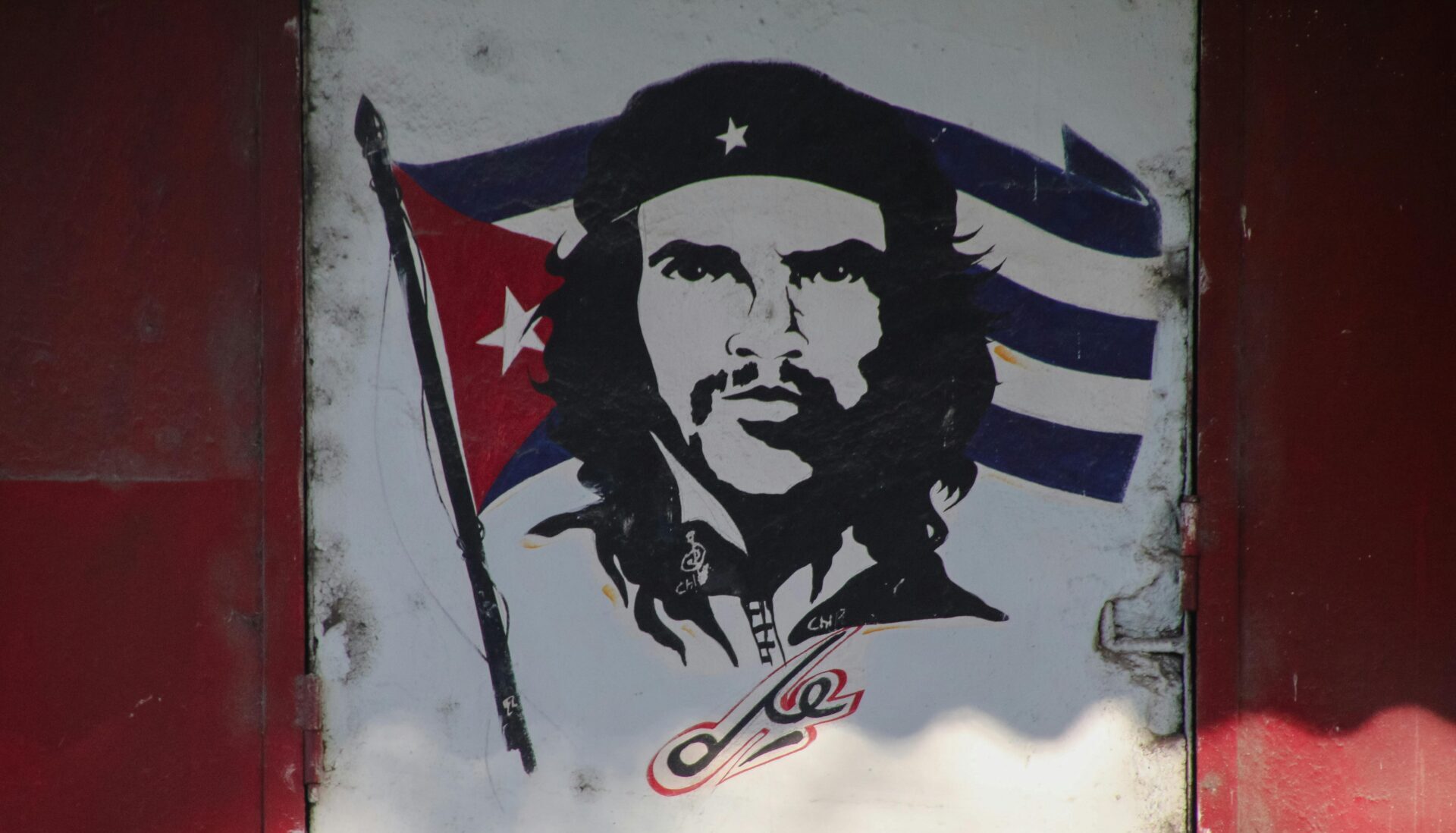
    His Excellency Brice Clotaire Oligui Nguema, President of the Gabonese Republic, has commenced an official visit to Cuba, marking a significant moment in bilateral relations between the two nations. The visit, which began on Friday, September 26, 2025, and will conclude on September 29, underscores the growing diplomatic ties and mutual commitment to fostering cooperation. This marks President Oligui Nguema’s first official trip to Cuba since assuming office in May 2025. During his stay, he is scheduled to engage in high-level discussions with Cuban President Miguel Díaz-Canel Bermúdez. The talks are anticipated to focus on expanding the contractual framework of bilateral relations, reflecting the shared aspirations of both nations to strengthen their partnership. Additionally, President Oligui Nguema will participate in various activities and visit key sites of interest, further solidifying the cultural and diplomatic bonds between Gabon and Cuba.

  • In the midst of the difficult context, we are betting on collective intelligence

    In the midst of the difficult context, we are betting on collective intelligence

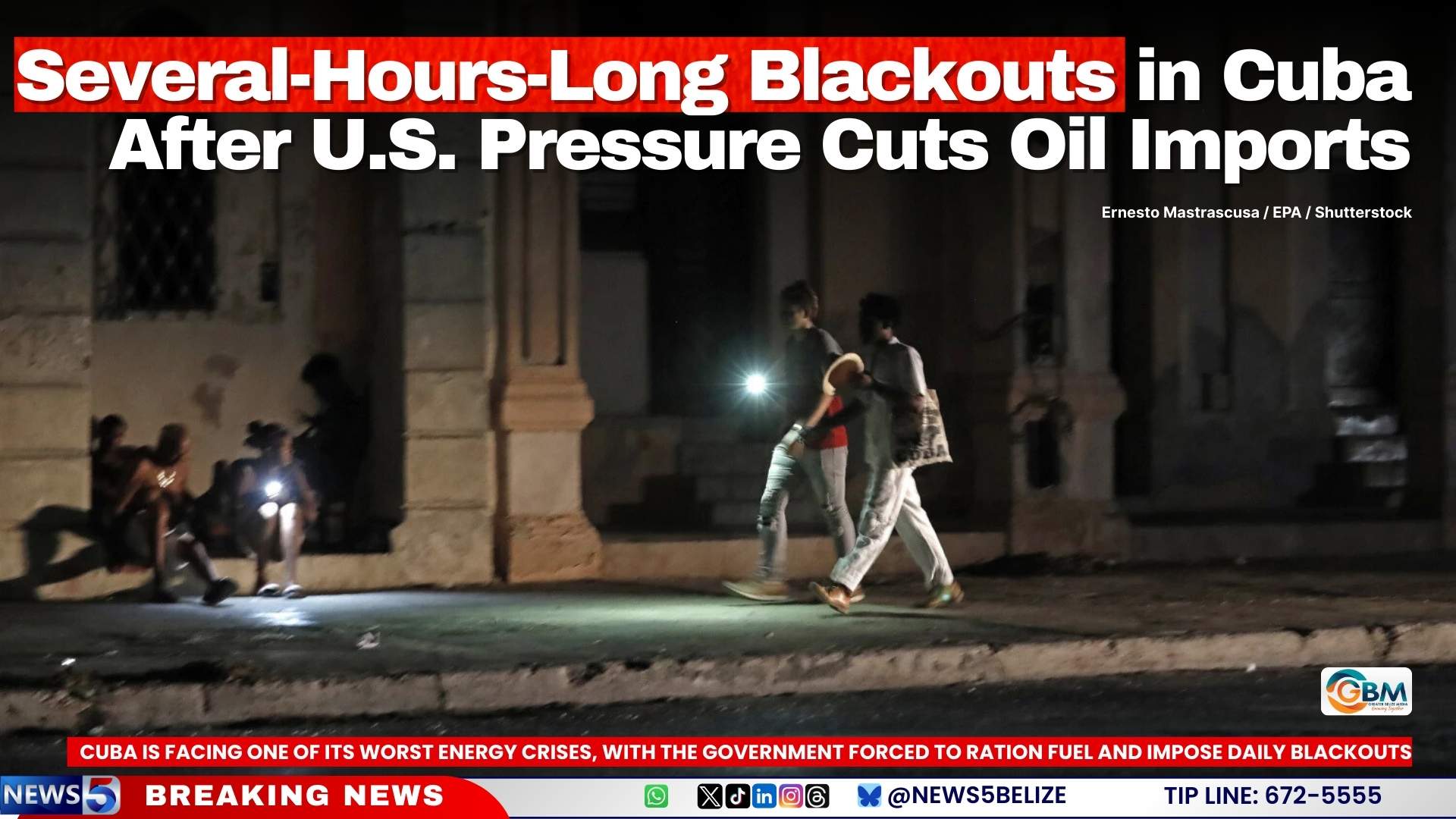
    In a concerted effort to address Cuba’s ongoing energy crisis, President Miguel Díaz-Canel Bermúdez embarked on a comprehensive tour of the nation’s thermoelectric plants. His visit included the Antonio Maceo plant in Santiago de Cuba and the Lidio Ramón Pérez facility in Holguín, where he engaged with executives and workers to assess the recovery of the National Electric System (SEN). The President’s tour comes at a critical juncture, as the country grapples with prolonged blackouts and significant generation deficits.

    At the Renté plant, General Director Jesús Aguilar Hernández provided an update on the facility’s operational status. Despite facing numerous unforeseen outages, the plant is progressing toward stability, particularly with the recent activation of its 70-megawatt (MW) block five following partial maintenance. Units six and three are currently generating 50 MW each, while unit four remains in technical shutdown since 2023. However, a recovery strategy is underway as part of the Government Plan to bolster the SEN. Light maintenance is scheduled for December on units six and three, aiming to enhance the plant’s capacity by year-end.

    President Díaz-Canel emphasized the importance of quality maintenance across all units, including corrective work on block five, to ensure sustained energy recovery. He lauded the tireless efforts of Cuba’s electrical workers, describing their work as ‘heroic’ and ‘intensive.’ The President also highlighted the government’s strategy to strengthen the SEN, which includes expanding thermal and distributed generation and advancing the construction of photovoltaic solar parks. Notably, these solar facilities are already generating over 600 MW during daylight hours, with nearly all planned parks either operational or under construction.

    During his visit to the Lidio Ramón Pérez plant in Felton, President Díaz-Canel was briefed on the facility’s current output of 200 MW, limited by boiler corrosion. Strategies to address these issues and recover block two, damaged by a fire in 2022, were discussed. The President underscored the plant’s strategic importance to eastern Cuba and reiterated the government’s commitment to improving working conditions for employees, including specialized medical care, wage increases, and enhanced safety measures.

    Accompanied by key government officials, President Díaz-Canel’s tour reflects Cuba’s determination to overcome its energy challenges through collective effort and strategic planning.

  • Holness calls for better access to climate financing

    Holness calls for better access to climate financing

    During his speech at the 80th session of the United Nations General Assembly (UNGA) in New York City, Jamaican Prime Minister Andrew Holness emphasized the urgent need for increased climate financing for developing nations, including Jamaica. Holness highlighted the unmet UN pledge of $100 billion annually for climate initiatives and the inadequately funded loss and damage fund established at COP 28. He stressed that developed countries must fulfill their commitments and enhance financial support, acknowledging that adaptation is critical for the survival of small island developing states (SIDS).

    Holness criticized the global financial system as ‘fundamentally flawed,’ noting that it unfairly penalizes reforming economies like Jamaica with high borrowing costs while disregarding their vulnerabilities. Despite Jamaica’s significant progress in reducing its debt-to-GDP ratio from 144% to 62% through disciplined fiscal management, the country remains excluded from concessional financing due to outdated metrics based solely on per capita income.

    The Prime Minister underscored Jamaica’s leadership in climate action, despite limited resources. The nation has committed to achieving net-zero emissions by 2050 and has implemented a national adaptation plan with targeted measures to enhance resilience across key sectors. Additionally, Jamaica is on track to meet its renewable energy target of 50% by 2030. However, Holness warned that these efforts, along with those of other nations, are severely hindered by the lack of predictable access to climate financing. He called for a more equitable and responsive global financial system to support vulnerable countries in their fight against climate change.