分类: politics

  • Henry Gordon, UDP Stalwart and Pastor, Passes Away

    Henry Gordon, UDP Stalwart and Pastor, Passes Away

    Belize’s political and religious communities are mourning the passing of Henry Gordon, a foundational figure who shaped the nation’s democratic landscape while maintaining profound spiritual influence. The former United Democratic Party Secretary General and Senator died on January 5, 2026, leaving behind a legacy spanning decades of public service.

    Gordon’s political career reached its zenith during the critical early-to-mid 1990s period when he served as UDP Secretary General, a tenure that established the organizational foundation for the party’s landmark 2008 electoral triumph. Following this victory, religious institutions including the Council of Churches and Evangelical Association appointed him as their designated Church Senator, recognizing his unique ability to bridge faith and governance.

    His professional journey demonstrated remarkable versatility: from his early role as Chief Meteorologist to his later work as a respected pastor and political strategist. UDP Leader Tracy Panton memorialized Gordon on social media, highlighting his “integrity, commitment, and deep sense of duty to nation-building.”

    The depth of Gordon’s influence became evident through the testimony of his protégé, current Church Senator Louis Wade, who described him as both mentor and ideological compass. Wade recalled how Gordon’s weekly newspaper column “In Search of Truth” and his Krem Radio discussions with intellectuals like Evan X Hyde and Dr. Taeger shaped national discourse through a Judeo-Christian lens.

    “He walked both the halls of power yet maintained a relationship with God,” Wade noted, comparing Gordon to biblical figures who navigated political and spiritual realms simultaneously. Gordon famously carried both the Bible and Belize’s Constitution, asserting they worked synergistically to build a democratic society protecting individual freedoms, religious liberty, and conscience rights.

    Wade committed to continuing Gordon’s tradition of addressing political issues from informed Christian perspectives, acknowledging he was “walking in the giant footsteps” of his mentor whose impact transcended political boundaries and touched countless lives across Belize.

  • Dominica agrees to host third-country refugees under U.S. agreement

    Dominica agrees to host third-country refugees under U.S. agreement

    In a significant diplomatic development, Prime Minister Roosevelt Skerrit of Dominica has confirmed a new bilateral arrangement with the United States concerning refugee processing. The agreement, announced during a press conference, establishes Dominica as a transfer destination for certain refugees when the U.S. is unable to repatriate them to their countries of origin.

    This arrangement emerges from sustained dialogue between the two nations, particularly following the U.S. imposition of partial visa restrictions on Dominican citizens in December 2025. Prime Minister Skerrit characterized the pact as a mutual compromise, underscoring its importance for broader bilateral relations.

    A paramount consideration in the negotiations was national security. Skerrit explicitly stated that meticulous protocols have been established to prevent the transfer of individuals deemed violent or who might pose a threat to Dominica’s security. This safeguard, he noted, was received positively by the U.S. State Department.

    The Prime Minister framed the agreement as a strategic decision made in the interest of the Dominican people. He emphasized that his government’s primary duty is to protect the welfare of its citizens, specifically their continued access to lawful travel, educational opportunities, employment in the U.S., and the maintenance of family ties. This agreement, therefore, is presented as a measure to safeguard these vital interests while fostering governmental cooperation.

    Skerrit concluded that this partnership not only deepens the longstanding relationship with the United States but also solidifies Dominica’s reputation as a willing and reliable international partner.

  • Belize Aligns with CARICOM as Venezuela Faces Political Upheaval

    Belize Aligns with CARICOM as Venezuela Faces Political Upheaval

    In a decisive regional response to Venezuela’s political transformation, Belize has formally aligned its position with the CARICOM Heads of Government following Saturday’s military operations that resulted in the removal of President Nicolás Maduro. The Central American nation, having monitored military buildups in the southern Caribbean for four months, now urges restraint and adherence to international law while calling for constructive dialogue to restore constitutional order reflective of Venezuelan citizens’ will.

    United Nations Under-Secretary-General Rosemary DiCarlo addressed the Security Council, characterizing the situation as developing during “a grave time” following the January 3rd United States military intervention. According to DiCarlo’s assessment, US forces conducted operations across Caracas and northern states including Miranda, Aragua, and La Guaira, though casualty figures remain undetermined.

    President Donald Trump confirmed the “large scale strike against Venezuela, and its leader” via social media, later stating during a press conference that the US would administer the country until “a safe, proper and judicious transition” could be implemented. The ousted Venezuelan government has condemned the action as military aggression and a flagrant violation of the UN Charter.

    Notably, Maduro and his wife Cilia Flores are currently detained in New York facing serious criminal charges brought by US authorities. As Belize reiterates its commitment to maintaining a “Zone of Peace” in the region, the government has confirmed the safe return of all Belizean students previously studying in Venezuela.

    The unfolding crisis raises fundamental questions about regional stability when constitutional norms are challenged, the appropriate extent of CARICOM’s defense of rule of law without exacerbating tensions, and potential ramifications for Belize’s security, economic interests, and diplomatic relations should Venezuela’s turmoil persist.

  • Guyana, US in talks about accepting nationals from third countries

    Guyana, US in talks about accepting nationals from third countries

    Guyana has entered into substantive diplomatic negotiations with the United States concerning the potential acceptance of third-country nationals currently residing in American territory, Foreign Secretary Robert Persaud confirmed on Monday, January 5, 2026.

    The South American nation is actively developing a framework of understanding aligned with its national priorities while supporting U.S. objectives regarding migration management. “Guyana and the USA have been in productive discussions on a framework of understanding which is consistent with our national priorities and needs and supportive of the USA objectives,” Persaud stated in an exclusive interview with Demerara Waves Online News.

    This development follows similar agreements recently confirmed by Caribbean neighbors Antigua and Barbuda and Dominica. The U.S. initiative, first proposed to Caribbean nations and other allied countries in early 2025, seeks international cooperation in addressing complex migration scenarios where individuals cannot be returned to their countries of origin.

    According to Caribbean Media Corporation reports, Dominica’s Prime Minister Roosevelt Skerritt announced his country’s formal agreement with the U.S., emphasizing stringent security provisions. “In our discussions with the State Department there has been careful deliberation of the need to avoid receiving violent individuals or individuals who will compromise the security of Dominica,” Skerritt clarified during a press conference.

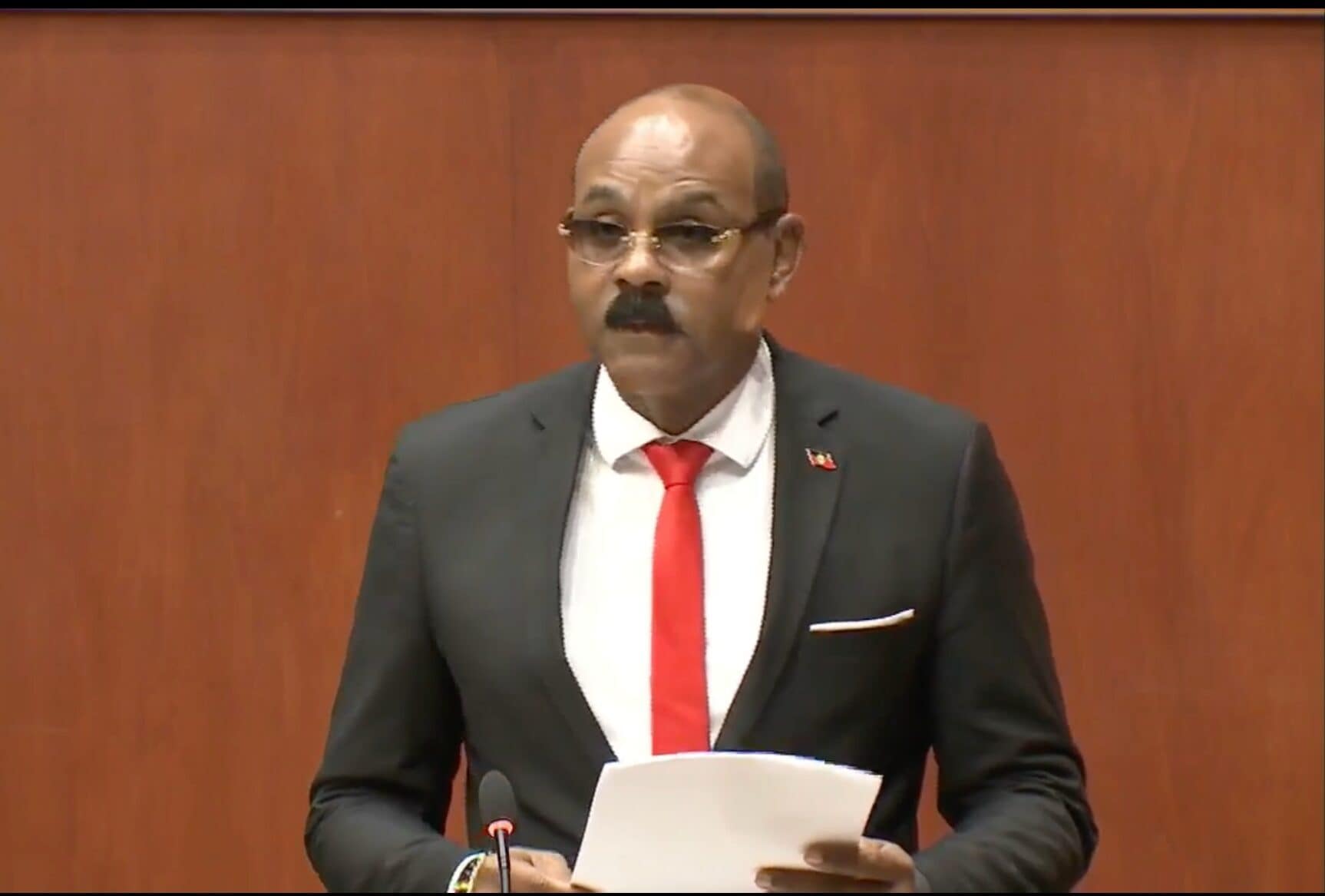
    Antigua and Barbuda’s Prime Minister Gaston Browne indicated his nation would accept approximately ten carefully screened non-criminal refugees possessing skills in local demand. The arrangement maintains full discretionary power for the Caribbean nation to accept or reject any recommended individuals, with the U.S. providing comprehensive biometric data and criminal background information.

    The United States has extended similar invitations to over 100 countries worldwide, seeking to distribute the responsibility for refugee and deportee cases more equitably across the international community. Several Caribbean Community (CARICOM) member states have already participated in this multilateral initiative.

  • Foreign Affairs Minister Says Observer Visa Story Is False and Misleading

    Foreign Affairs Minister Says Observer Visa Story Is False and Misleading

    The Antigua and Barbuda government has issued a formal rebuttal against what it characterizes as a deliberately misleading news report regarding U.S. visa processing. Foreign Affairs Minister E. Paul Chet Greene has unequivocally rejected an article published in the January 5, 2026 edition of the Antigua Observer, which alleged improper cancellation of a student visa despite government assurances.

    According to official statements, direct consultations with U.S. immigration authorities confirmed that the case referenced in the article bore no connection to Presidential Proclamation 10998. Instead, the application was denied under Section 214(b) of standard U.S. immigration law, which pertains to applicant eligibility requirements.

    The Ministry clarified fundamental aspects of U.S. visa processing protocols, noting that preliminary interview approval does not constitute final visa issuance. All applications undergo mandatory post-interview vetting through Washington, D.C., where refusals may occur if statutory criteria remain unmet. Crucially, no visa was ever issued in this instance, and the refusal notice made no reference to the Presidential Proclamation.

    Further investigation revealed that the photograph accompanying the article—purportedly showing a cancelled visa—was completely unrelated. The image actually depicted an H-1B work visa application from India, bearing no connection to either Antigua or student visa processing.

    The Ministry concluded that the article was constructed with malicious intent to falsely suggest that visas approved before January 1, 2026 were not being honored. The government maintains that all validly issued visas continue to be respected and that the newspaper’s claims lack factual foundation.

  • Maduro pleads not guilty to drug trafficking charges in U.S. court

    Maduro pleads not guilty to drug trafficking charges in U.S. court

    In a dramatic courtroom appearance that has sent shockwaves through international diplomatic circles, former Venezuelan President Nicolás Maduro entered a plea of not guilty to multiple narcotics-related charges before U.S. District Judge Alvin Hellerstein on Monday. The proceeding marked an extraordinary development in the long-standing tensions between Washington and Caracas.

    Maduro, who maintained his presidential status throughout the hearing, reportedly declared himself ‘kidnapped’ since his capture by U.S. authorities on January 3. His wife, Cilia Flores, similarly pleaded not guilty as a co-defendant in the case—a notable expansion from the original 2020 indictment that initially targeted only Maduro.

    The charges against the Venezuelan leader are extensive and severe: narco-terrorism, conspiracy to import cocaine into the United States, and weapons violations involving firearms and explosive devices. Federal prosecutors allege Maduro orchestrated a sophisticated drug trafficking network that collaborated with multiple notorious criminal organizations, including Mexico’s Sinaloa and Zetas cartels, Colombian FARC rebels, and Venezuela’s Tren de Aragua gang.

    According to the prosecution’s timeline, Maduro’s involvement in narcotics operations dates back to his tenure in Venezuela’s National Assembly in 2000, continuing through his service as foreign minister and his presidency following Hugo Chávez’s death in 2013.

    The legal proceedings unfolded amid heightened tensions outside the courthouse, where both supporters and opponents of Maduro gathered to express their views during the thirty-minute hearing. The case has sparked immediate controversy within international legal circles, with experts questioning the jurisdictional basis of the U.S. operation and its implications for international law.

    Maduro’s defense is being led by attorney Barry Pollack, while Mark Donnelly represents Flores. The court has scheduled the next hearing for March 17, setting the stage for what promises to be a complex legal battle with significant geopolitical ramifications.

    The United States has consistently regarded Maduro as an illegitimate ruler since his controversial victory in the 2018 elections, which were widely criticized for alleged irregularities. This case represents the most direct confrontation between the Venezuelan government and U.S. judicial authorities to date.

  • Dominica to accept refugees deported from US

    Dominica to accept refugees deported from US

    The Commonwealth of Dominica has formally established a refugee resettlement arrangement with the United States, enabling the transfer of third-country refugees to the Caribbean nation when repatriation to their countries of origin proves unfeasible. Prime Minister Roosevelt Skerrit confirmed the bilateral agreement during a press briefing in Roseau, emphasizing that stringent security protocols would prevent individuals with violent histories or potential security risks from entering Dominica.

    Skerrit characterized the agreement as a strategic diplomatic advancement that strengthens bilateral relations while safeguarding national interests. The arrangement specifically addresses Dominicans’ access to lawful travel, education, employment opportunities, and family connections in the United States. While Skerrit declined to disclose the national origins of prospective migrants, he confirmed that all operational details had been thoroughly negotiated within a memorandum of understanding that reflects Dominica’s security concerns.

    Concurrently, Antigua and Barbuda Prime Minister Gaston Browne vehemently denied opposition claims regarding a separate US arrangement. Contrary to allegations by the United Progressive Party of a secret agreement to accept 100,000 criminal deportees, Browne clarified that his government had consented to review up to ten non-criminal refugees possessing skills deemed valuable to the local economy. The agreement explicitly grants Antigua full discretionary authority regarding individual admissions and includes US provisions of biometric data and criminal background information.

    Browne revealed that over 100 nations received similar invitations from the US government to alleviate refugee processing burdens, with several CARICOM member states already participating in the initiative. Both leaders framed their respective agreements as demonstrations of regional cooperation while maintaining rigorous immigration controls and national security standards.

  • Nicolás Maduro verschijnt kalm in rechtbank New York; pleit onschuldig

    Nicolás Maduro verschijnt kalm in rechtbank New York; pleit onschuldig

    In a dramatic courtroom appearance at Manhattan Federal Court, deposed Venezuelan leader Nicolás Maduro defiantly proclaimed his innocence against serious U.S. charges of narco-terrorism and weapons possession. The proceeding marked an unprecedented legal confrontation between the United States and a former head of state accused of orchestrating international drug trafficking operations.

    Maduro, dressed in a striking blue and bright orange shirt with hands shackled, delivered an impassioned declaration in Spanish asserting his legitimate presidential status and characterizing his detention as an unlawful kidnapping. Throughout the brief but symbolically charged hearing, the ousted leader maintained detailed notes and engaged directly with the court proceedings despite judicial attempts to limit political commentary.

    The session witnessed several tense moments, including when Maduro addressed the packed courtroom instead of simply confirming his identity as requested. “I am the president of Venezuela who has been kidnapped,” he stated calmly. “I was captured in my home in Caracas.” The presiding judge intervened, reminding Maduro that there would be more appropriate times and venues for such political statements.

    Emotional intensity peaked when a spectator launched accusations against Maduro, prompting his self-identification as both “kidnapped president” and “prisoner of war” before court security removed the protester. Meanwhile, defense attorneys for Maduro’s wife, Cilia Flores, indicated she showed signs of possible mistreatment during her arrest.

    Outside the courthouse, polarized demonstrations unfolded with competing chants and banners. Supporters displayed messages reading “USA, hands off Venezuela” while opponents expressed gratitude to President Trump for pursuing legal action.

    The four-count indictment alleges Maduro and his associates collaborated with drug cartels for decades to smuggle thousands of tons of cocaine into the United States while possessing illegal machine guns and heavy weaponry. Legal experts anticipate defense teams will invoke head-of-state immunity arguments, though such defenses have rarely succeeded in comparable historical cases.

    The case represents one of the most significant and complex prosecutions ever brought against a former national leader. With the next hearing scheduled for March 17th, the proceedings have ignited diplomatic tensions as Venezuela’s interim government and China call for sovereignty respect while the United States maintains its commitment to judicial process.

  • GOB Calls for Restraint Following “Removal” of Maduro

    GOB Calls for Restraint Following “Removal” of Maduro

    The Government of Belize has formally responded to the recent United States military intervention in Venezuela that resulted in the capture of President Nicolás Maduro. In an official statement released on January 5, 2026, the Briceño Administration expressed deep concern over the large-scale operation that involved approximately 150 aircraft and reportedly required months of strategic planning.

    Belizean authorities revealed they had been monitoring the gradual military buildup in the southern Caribbean region over the preceding four months, warning that such developments pose significant threats to regional stability. The government aligned its position with the collective stance adopted by the CARICOM Heads of Government Bureau, which had issued its own declaration on January 3 regarding the escalating situation.

    Reaffirming its commitment to international legal frameworks, the statement emphasized Belize’s dedication to the principles enshrined in the United Nations Charter, which it considers fundamental to maintaining global peace and security. Officials called for all involved parties to demonstrate restraint, respect established international laws, and pursue constructive dialogue to peacefully resolve the ongoing crisis.

    The government specifically referenced Belize’s historically cordial and cooperative relationship with Venezuela, expressing hope for a prompt restoration of constitutional order determined by the Venezuelan constitution and the democratic will of its citizens. Additionally, the administration confirmed the safe return of all Belizean students who had been pursuing education in Venezuela, providing reassurance to concerned families and the general public.

    Belize remains engaged with CARICOM member states and other hemispheric nations to coordinate responses as the situation continues to evolve.

  • Skerrit calls for ‘democracy’ and ‘peace’ in Venezuela following President Maduro’s capture

    Skerrit calls for ‘democracy’ and ‘peace’ in Venezuela following President Maduro’s capture

    In his first press conference of the new year, Dominica’s Prime Minister Roosevelt Skerrit addressed the unprecedented capture of Venezuelan President Nicolás Maduro and First Lady Cilia Flores by United States military forces. The January 3rd operation, which involved a large-scale strike on Caracas, resulted in Maduro being transported to the United States to face trial on drugs and weapons charges.

    Prime Minister Skerrit emphasized Dominica’s unwavering commitment to international law principles and the United Nations system. ‘Dominica has always firmly committed to the principles of international law, multilateralism, and the United Nations system,’ Skerrit stated, highlighting the nation’s longstanding respect for sovereignty, territorial integrity, and human dignity.

    The Caribbean leader expressed particular concern for the Venezuelan populace, noting that ‘political developments have real consequences for ordinary citizens, affecting social and economic stability and, in many instances, access to essential services.’ Skerrit called for restraint and actions prioritizing peace and human life protection.

    Addressing regional implications, Skerrit revealed that the military activity in Venezuela initially disrupted flight schedules throughout the Caribbean, causing inconveniences for travelers to Dominica, though operations have since normalized. He emphasized the interconnected nature of Caribbean nations through trade, energy cooperation, and migration, noting that ‘developments in one country inevitably have ripple effects across neighbouring states.’

    While acknowledging his government’s lack of control over the situation, Skerrit expressed hope that Maduro would receive respectful treatment and an impartial hearing. The Prime Minister confirmed Dominica’s continued engagement with CARICOM partners and support for dialogue-based solutions grounded in mutual respect and international norms.

    Skerrit concluded by assuring Dominican citizens that his administration would continue to represent their interests with diligence and careful consideration amidst these regional developments.