分类: politics

  • Dossier houtexport 4: Aangifte in houtzaak niet aangenomen na overleg met OM

    Dossier houtexport 4: Aangifte in houtzaak niet aangenomen na overleg met OM

    In a significant development within Suriname’s ongoing forestry sector controversy, the Public Prosecutor’s Office has refused to register a criminal complaint filed by representatives of the Ministry of Agriculture, Livestock and Fisheries (LVV) and state attorney Diepak Jairam regarding alleged document falsification in timber exports.

    The attempted complaint, targeting officials involved in issuing phytosanitary certificates with incorrect timber designations, was rejected following coordination between the Fraud Department and public prosecutors. Alice Saki, Head of the Fraud Department, engaged in extensive discussions with LVV representatives and made multiple attempts to obtain authorization from the Public Prosecutor’s Office, all of which were ultimately denied.

    According to attorney Jairam’s explanation to Starnieuws, the Public Prosecutor’s Office justified its refusal by considering the matter ‘settled’ due to a previous civil summary proceeding. In that case, the court had ordered the State to issue phytosanitary certificates on a one-time basis. Jairam strongly contests this interpretation, stating: ‘This is not a civil matter but involves potential criminal offenses, specifically the deliberate placement of false designations on authentic international documents.’

    The attorney expressed shock at the refusal, emphasizing that Suriname’s legal system contains no barriers to pursuing criminal prosecution alongside civil proceedings. ‘A civil judgment does not preclude criminal prosecution. On the contrary: when a crime has been committed, it must be investigated,’ Jairam argued, calling it ‘unthinkable’ that a potential criminal case could be averted by invoking a civil ruling.

    In a separate but related development, after intensive negotiations and repeated insistence, authorities granted permission to file a complaint against a specific timber company alleged to have used forged or misleading documentation. This company had initially received approval to treat wood destined for China but subsequently shipped it to India while making alterations to official documents. Notably, this company was not among the six exporters who had filed the summary proceeding against the State.

    Jairam confirmed that further actions are being prepared, including directly addressing the Attorney General. ‘This is a serious matter. We are determined to see this case through to the end,’ the attorney emphasized, indicating that the dossier will be forwarded to the leadership of the Public Prosecutor’s Office.

  • Ali accepts Rodrigues’ explanation about her assets

    Ali accepts Rodrigues’ explanation about her assets

    Guyanese President Irfaan Ali has publicly expressed his full confidence in Tourism, Industry and Commerce Minister Susan Rodrigues, affirming his acceptance of her detailed explanation regarding her acquisition of high-value assets. This endorsement comes amid intensified scrutiny from opposition figures questioning how the minister financed a Florida property valued at over US$500,000 on a government salary.

    President Ali addressed journalists on Saturday, stating that Minister Rodrigues had sufficiently demonstrated the legitimate sources of her wealth. “The minister has demonstrated. I have no question when the minister has demonstrated. Allegations are always made,” the President remarked, dismissing concerns raised by political opponents.

    The controversy emerged when We Invest in Nationhood (WIN) party leader Azruddin Mohamed challenged Rodrigues to account for her property purchases, suggesting possible corruption connections. The minister responded by revealing she had secured a mortgage from AD Mortgage, a US financial institution, and that the property was being rented out to service the loan debt.

    Rodrigues provided documentation showing an outstanding mortgage principal of US$378,000 as of December 31, 2024, though she did not confirm the exact purchase price cited by Mohamed. While denying ownership of three properties as alleged, the minister acknowledged having shares in a company that owns one of the addresses mentioned by the opposition.

    President Ali emphasized that all members of his administration had complied with transparency measures by submitting their asset declarations to the Integrity Commission, contrasting this with what he described as the opposition’s lack of similar accountability.

  • Politic : Me Jean Henry Céant opposes the mediation of Mgr Dumas (letter)

    Politic : Me Jean Henry Céant opposes the mediation of Mgr Dumas (letter)

    In a significant development within Haiti’s ongoing political turmoil, former Prime Minister Jean Henry Céant has formally opposed the mediation efforts proposed by Bishop Pierre André Dumas. The controversy emerged after Bishop Dumas, Vice-President of the Haitian Episcopal Conference and Bishop of Anse-à-Veau-Miragoâne, agreed to lead mediation efforts to prevent potential chaos following the Transitional Council’s mandate expiration on February 7, 2026.

    Céant, who served as Haiti’s acting Prime Minister and currently faces Canadian sanctions, expressed his position through a strongly worded letter dated January 11, 2026. The document, addressed directly to Bishop Dumas and copied to multiple Haitian institutions, outlines Céant’s profound concerns regarding the bishop’s suitability as a neutral mediator.

    The former Prime Minister, identifying himself as a practicing Catholic and former Economic Advisor to the Catholic Church, expressed astonishment and dismay at the bishop’s involvement. Céant referenced a previous incident on March 9, 2024, when Bishop Dumas co-signed a document condemning sanctioned citizens without prior trial, creating what Céant described as a ‘painful rupture’ within the Church community.

    While acknowledging the necessity of mediation in crisis situations, Céant questioned Bishop Dumas’ ability to maintain the neutrality, moral integrity, and detachment essential for credible mediation. The former leader suggested that the bishop’s past political positions effectively place him among stakeholders rather than as an impartial mediator.

    Céant’s letter appeals to members of the Transitional Council to reject the mediation proposal, characterizing it as exclusionary and potentially damaging to institutional credibility. He urged Bishop Dumas to focus instead on his spiritual role as a pastor and man of prayer rather than engaging in political mediation.

    The correspondence concludes with a call for divine guidance during Haiti’s troubled times, maintaining a tone of respect while expressing firm opposition to the bishop’s proposed involvement in the country’s political resolution process.

  • Frente Amplio and Alianza País condemn US actions against Venezuela at Plaza Bolívar event

    Frente Amplio and Alianza País condemn US actions against Venezuela at Plaza Bolívar event

    In a significant display of political solidarity, Dominican organizations Frente Amplio and Alianza País convened a powerful demonstration at Santo Domingo’s Plaza Bolívar on Sunday. The gathering served as a platform to vehemently condemn the United States’ recent actions against Venezuela, which participants characterized as a grave infringement on Venezuelan sovereignty and territorial integrity.

    The event featured a multifaceted program combining cultural expressions and political discourse. Attendees witnessed artistic performances honoring Latin American unity, followed by a solemn floral tribute at the monument to Simón Bolívar, the revered liberator of South American nations. The political dimension culminated with María Teresa Cabrera’s reading of a joint manifesto, later supplemented by closing arguments presented by Dr. Guillermo Moreno.

    Central to the organizations’ critique was the framework of international law established following both World Wars. They emphasized that this legal architecture represents humanity’s hard-won achievement toward ensuring peaceful coexistence among sovereign states while constraining powerful nations from employing force arbitrarily. The groups specifically denounced what they termed the ‘kidnapping’ of Venezuelan President Nicolás Maduro and National Deputy Cilia Flores, characterizing these actions as acts of warfare that demand immediate reversal.

    Beyond immediate concerns, the manifesto articulated a broader geopolitical analysis suggesting that Venezuela’s substantial natural resources represent the true motivation behind international aggression. This perspective framed current events as a resurgence of colonial-era practices in contemporary guise. The organizations forcefully rejected the concept of Latin America and the Caribbean serving as any power’s ‘backyard,’ drawing poignant parallels to the Dominican Republic’s own historical experiences with U.S. military interventions during 1916 and 1965.

    The concluding appeal emphasized preserving the region as a zone of peace while urging the Dominican government to consistently uphold constitutional principles of non-intervention in its foreign policy decisions.

  • Guyana wijst bemiddeling VS over grensgeschil met Venezuela resoluut af

    Guyana wijst bemiddeling VS over grensgeschil met Venezuela resoluut af

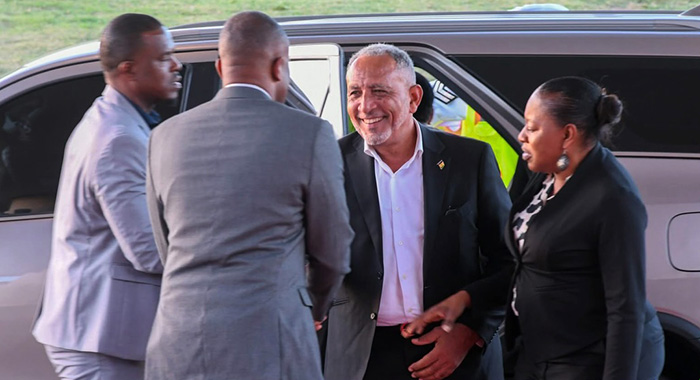
    President Irfaan Ali of Guyana has emphatically declared that his nation will not enter into any diplomatic agreements with the United States or other countries to amicably resolve its longstanding border dispute with Venezuela. The statement, delivered on Saturday during a press briefing following the inauguration of the AC Marriott Hotel near Eugene F. Correia International Airport, underscores Guyana’s unwavering position on territorial sovereignty.

    “My paramount commitment remains ensuring the security of the Guyanese people and safeguarding our borders, territorial integrity, and sovereignty,” President Ali asserted. “These fundamental principles are non-negotiable and will never be compromised.”

    The declaration comes amid growing international speculation that the Trump administration might pressure both nations toward a diplomatic resolution, partially motivated by potential access to oil and gas reserves in the contested Essequibo region. While no formal request has been made by the U.S. government, analysts suggest behind-the-scenes diplomatic maneuvers could be underway.

    Guyana maintains confidence in its legal position before the International Court of Justice, where the validity of the 1899 Arbitral Award forms the cornerstone of its case. Venezuela continues to claim sovereignty over the approximately 160,000-square-kilometer Essequibo territory and adjacent maritime zones, believed to contain substantial petroleum resources.

    President Ali also addressed broader regional security concerns, warning that recent geopolitical developments—including U.S. actions against Venezuelan leadership—could significantly alter the security and democratic landscape throughout Latin America. He emphasized that Guyana must remain vigilant against international criminal networks that exploit geopolitical instability.

    The president highlighted Guyana’s significant achievement in reducing serious crime by 25.5% in 2025—reaching the lowest level in a decade—attributing this success to technological innovations in law enforcement and enhanced community cooperation programs.

  • Diaz-Canel rejects US satements and reaffirms defense of Cuba

    Diaz-Canel rejects US satements and reaffirms defense of Cuba

    Cuban President Miguel Díaz-Canel has issued a forceful response to recent U.S. criticisms, delivering a scathing rebuke via social media that directly addressed remarks from American leadership. The Caribbean leader asserted that those “who commercialize everything, including human lives, lack the moral authority to criticize Cuba in any manner whatsoever.”

    Díaz-Canel characterized recent criticisms against Cuba as hysterical reactions fueled by anger over the nation’s sovereign choice of political model. He addressed those blaming the Cuban Revolution for current economic challenges, stating they should feel ashamed and maintain silence rather than offer uninformed commentary.

    The Cuban president attributed the nation’s economic difficulties directly to six decades of “draconian extreme suffocation measures” imposed by the United States, noting that these restrictions now threaten to intensify further. He emphasized that Cuba remains a free, independent, and sovereign nation that categorically rejects external impositions.

    In a definitive declaration, Díaz-Canel stated: “Cuba does not engage in attacks; it has been under continuous attack from the United States for 66 years. Cuba does not issue threats; it prepares diligently, standing ready to defend the Homeland to the final drop of blood.” The message concluded with the hashtag #CubaIsCourage.

    These statements received extensive coverage across Cuban state media outlets, occurring within a broader context of regional tensions including aggression against Venezuela and escalating threats from the White House toward multiple nations.

  • Paris multinational drive demands freedom for Maduro and Cilia

    Paris multinational drive demands freedom for Maduro and Cilia

    PARIS – In a striking display of international solidarity, dozens of demonstrators gathered at the Esplanade of Human Rights at Trocadero, with the Eiffel Tower providing a symbolic backdrop, to vehemently protest recent US actions against Venezuela. The multinational rally, organized by a coalition of civil society organizations, expressed profound outrage over what participants labeled as unlawful aggression by the Trump administration.

    The demonstration featured a diverse representation from across the globe, including associations representing Argentinians, Bolivians, Colombians, Cubans, Chileans, Ecuadorians, French, Hondurans, Malians, Mexicans, Nigerians, and Peruvians. Participants collectively denounced Washington’s recent measures as flagrant violations of established international legal frameworks.

    Amid a sea of banners, national flags, and impassioned slogans, protesters demanded the immediate release of Venezuelan President Nicolás Maduro, whom they affirmed as the constitutionally legitimate leader of the South American nation. The gathering simultaneously called for respect of Venezuela’s national sovereignty and the fundamental right to self-determination, positioning the defense of these principles as crucial for maintaining peace throughout Latin America, the Caribbean, and the global community.

    Speakers and organizers articulated that the true motivation behind the aggression targets Venezuela’s substantial natural resources—including petroleum, natural gas, gold reserves, and water—rather than purported concerns about drug trafficking or terrorism. The demonstration served as a platform to urge political entities worldwide to transcend partisan positions and unite in condemning what they characterized as a dangerous breach of the United Nations Charter.

    In a related show of support, a separate solidarity event convened at Paris’s historic Place de la Bastille, drawing participation from French political parties, labor unions, and additional civic associations. This gathering echoed the condemnation of US foreign policy while issuing warnings that other sovereign nations might subsequently become targets of the current administration’s expansionist ambitions.

  • Cubans denounce aggression against Venezuela from various provinces

    Cubans denounce aggression against Venezuela from various provinces

    Across multiple Cuban cities, significant public demonstrations have emerged expressing vehement opposition to U.S. foreign policy while demonstrating unwavering solidarity with Venezuela’s government. In Holguín, a substantial gathering convened to demand regional peace and condemn what participants characterized as imperialist intervention in Caribbean affairs.

    According to reports from Granma newspaper, attendees assembled along Avenida de los Libertadores near the monument to Simón Bolívar, launching an international campaign against American leadership. Participants denounced U.S. policies as ‘wars of plunder,’ labeled economic sanctions as ‘genocidal blockades,’ and condemned recent actions as criminal violations of international law.

    The declaration specifically referenced the January 3rd incident involving Venezuelan President Nicolás Maduro and First Lady Cilia Flores, demanding their unimpeded return to Venezuela after what was described as their effective kidnapping by U.S. authorities.

    During emotionally charged proceedings, tribute was paid to thirty-two combatants who reportedly fell defending Venezuelan sovereignty, including seven individuals from Holguín province according to the Cuban News Agency.

    Parallel demonstrations occurred in Camagüey, where military personnel, civilian workers, and soldiers from the local firing range expressed unconditional support for Venezuela’s Bolivarian Republic. The regional newspaper Adelante documented calls for a Latin America free from external interference.

    Adding personal dimension to the political support, employees of Granma Provincial Electricity Company who previously served on internationalist missions in Venezuela voiced their endorsement of the nation’s government and people. They joined in condemning what they characterized as recent military aggression against the Bolivarian nation.

  • Panamanians reject joint military drills with the USA

    Panamanians reject joint military drills with the USA

    Approximately 50 U.S. Marines have commenced joint training operations with Panamanian forces, initiating a controversial military program that runs from today through February 26th. The exercises will take place at two strategic locations: the Jungle Warfare School in Colón province and Captain Noel Rodríguez Naval Base near the capital city.

    This military collaboration has sparked significant opposition from civil society organizations, particularly the National Front for the Defense of Economic and Social Rights (Frenadeso). The group contends that these maneuvers stem from a memorandum of understanding secretly signed between Panama and Washington in April 2025, which they characterize as detrimental to national sovereignty.

    In an official statement obtained by Prensa Latina and endorsed by Frenadeso coordinator Jorge Guzmán, the organization vehemently rejected the notion that these activities represent international cooperation. Instead, they framed the training as outright foreign interference and an act of aggression against Panama’s autonomous governance.

    The memorandum, according to Frenadeso’s analysis, effectively normalizes foreign military presence within Panamanian territory and transforms the nation into a strategic platform for geopolitical operations targeting neighboring countries, particularly Venezuela. These actions are allegedly justified under the pretext of addressing security concerns, migration flows, and narcotics trafficking.

    Frenadeso’s declaration emphatically states: ‘Panama is a sovereign and neutral country, not a ramp for imperial aggression,’ while demanding the immediate termination of all joint military exercises and calling for authentic defense of national independence.

    This development marks an escalation of U.S. military engagement in Panama that began in December 2025, initially justified through anti-drug trafficking initiatives. The increased presence followed concerning statements from former U.S. President Donald Trump regarding potential military intervention to secure the Panama Canal, citing unsubstantiated claims of Chinese influence—allegations consistently denied by officials from both nations.

  • Venezuela denies security alert promoted by the US

    Venezuela denies security alert promoted by the US

    Venezuela’s Ministry of Popular Power for Foreign Affairs has issued a sharp rebuttal to recent statements from the U.S. State Department, denouncing them as constructed falsehoods designed to project an inaccurate image of instability within the South American nation. The comprehensive communiqué presents a counter-narrative of a nation operating in a state of complete normalcy and peace.

    The ministry’s statement categorically asserts that all population centers, transportation networks, communication routes, and security checkpoints are functioning without disruption. Emphasizing sovereign control, the communication clarifies that all weaponry remains exclusively under the command of the Bolivarian Government, which it identifies as the sole entity holding the legitimate monopoly on the use of force.

    Furthermore, the Venezuelan government has used this opportunity to reiterate its unwavering dedication to safeguarding national peace, ensuring institutional stability, and fostering peaceful coexistence among its citizens. This firm response highlights the ongoing diplomatic friction between Caracas and Washington, underscoring a significant divergence in perceived realities regarding Venezuela’s internal security situation.