分类: politics

  • Cabinet Doesn’t Have Full Details of BTL/SpeedNet Deal

    Cabinet Doesn’t Have Full Details of BTL/SpeedNet Deal

    BELIZE CITY – A significant transparency crisis has emerged within the Belizean government regarding the proposed acquisition of telecommunications provider SpeedNet by Belize Telemedia Limited (BTL). Immigration Minister Kareem Musa confirmed to press on Monday that Cabinet members have not received comprehensive briefings on the agreement, despite months of closed-door negotiations.

    The controversy deepened when Opposition Leader Tracy Panton revealed during a Tuesday press briefing that the proposal had never undergone formal Cabinet discussion. More alarmingly, Panton disclosed that the arrangement had not been ‘fully disclosed to the members of the BTL board,’ raising serious questions about governance protocols.

    Although Cabinet convened on Tuesday, reliable sources indicate the matter received only peripheral attention during discussions. Panton challenged the procedural irregularities surrounding the major national decision, emphasizing that while investment remains welcome, it cannot come at the expense of governmental transparency.

    The Opposition Leader highlighted BTL’s constitutional status as a public institution, thereby mandating rigorous public scrutiny of any significant operational changes. ‘At whatever point this country decides that consolidation serves its best interest… it will require certain non-negotiables,’ Panton asserted, adding that ‘the people must decide, not a government, or six people in a room.’

    When questioned whether her position opposed the acquisition itself or merely its opaque handling, Panton clarified her party’s stance: ‘We do not support this deal. We don’t even have information available to us to say yes or no.’ This statement underscores the complete information vacuum surrounding the proposed merger, leaving parliamentarians unable to conduct proper due diligence on the arrangement’s national implications.

  • Somohardjo: OCER-terrein NDP deels uitgegeven in vorige periode

    Somohardjo: OCER-terrein NDP deels uitgegeven in vorige periode

    A significant land management scandal has emerged in Suriname, revealing that a portion of the National Democratic Party (NDP) party grounds operated by Stichting Ontspanningscentrum Eerste Rijweg (OCER) was unlawfully allocated during the previous government term. This finding comes from an official investigation conducted by the Ministry of Land Policy and Forest Management (GBB).

    Assembly Member Bronto Somohardjo, who chairs the GBB’s permanent committee, provided documented evidence to substantiate these claims. The disputed property has been legally leased to OCER since 1991 for social and recreational purposes. According to cadastral maps and official registrations, the allocated parcel was not state-owned domain land but fell entirely within an existing land lease right.

    The Land Survey Service’s conclusion is unequivocal: the allocation was legally incorrect. Somohardjo disclosed that over recent months, he has been approached by hundreds of citizens and organizations who had completely lost confidence in the land management system. These individuals presented concrete cases with requests for official verification of what had actually occurred.

    “These were not mere stories or rumors,” Somohardjo emphasized. “People came forward with documents in hand, stating: ‘Check this for us because we no longer trust the system.’ I take such concerns seriously.”

    The OCER case confirms what many citizens have experienced for years, according to Somohardjo. “If even OCER wasn’t safe, then no one was safe during that period. That’s the harsh reality we must face.” He noted that rules provided no protection, and people who believed their rights were secure could still lose them, causing profound damage to public trust in government.

    However, Somohardjo highlighted that a different approach now prevails. “What matters to me is that complaints today aren’t dismissed. They’re investigated. This isn’t an easy path and progress can be challenging, but it’s the correct approach.”

    The politician pointed out that the GBB ministry has since addressed and resolved multiple stalled cases. Despite significant backlogs and complex problems, progress is being made step by step toward restoring legal certainty.

    “People no longer need to fear that their property might simply disappear,” Somohardjo stated. “Those who come forward today will be heard. As long as I bear responsibility, I will ensure that rules provide protection rather than uncertainty.”

  • More visa suspensions for CARICOM nations – Caribbean Life

    More visa suspensions for CARICOM nations – Caribbean Life

    The United States Department of State has announced comprehensive visa processing suspensions targeting multiple Caribbean Community (CARICOM) member states, marking a significant escalation of immigration restrictions throughout the region. The new measures, set to take effect next Wednesday, expand upon previous visa limitations imposed on Dominican and Antiguan citizens during the previous month.

    This latest policy shift encompasses both temporary visitor visas and permanent residency applications, representing a substantial broadening of restrictions. State Department officials justified the suspensions by asserting that excessive numbers of immigrants from these nations rely on American social security and welfare programs rather than pursuing employment opportunities.

    The affected countries include Antigua, St. Lucia, St. Vincent, St. Kitts, Dominica, Grenada, Jamaica, Barbados, The Bahamas, Haiti, Belize, with additional restrictions extending to Cuba and Brazil. Notably exempt from these sanctions are Suriname, Trinidad and Tobago, and Guyana—nations that have maintained stronger diplomatic alignment with recent US military operations in the Southern Caribbean.

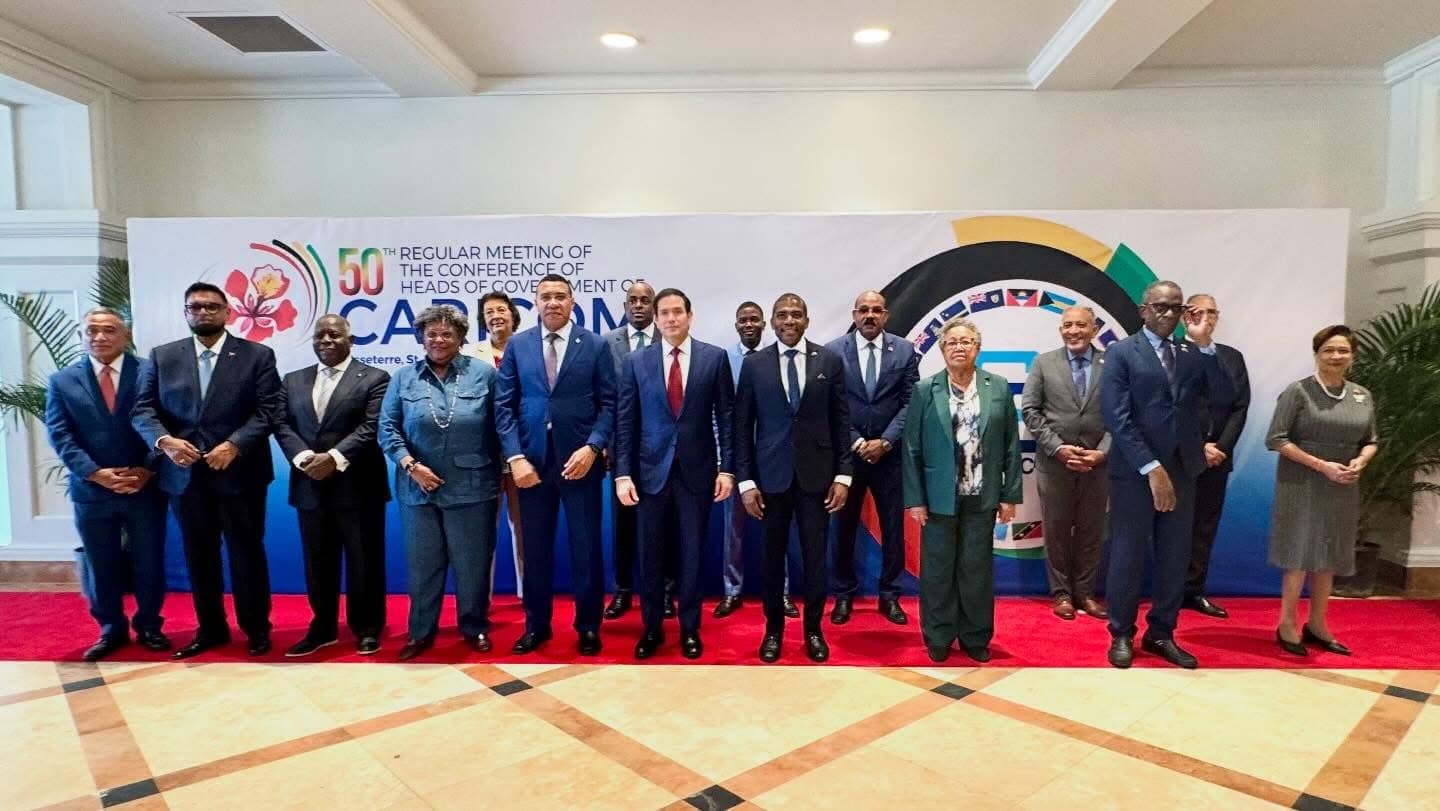
    CARICOM Chairman and St. Kitts Prime Minister Terrance Drew expressed profound skepticism regarding the welfare dependency allegations, characterizing them as inconsistent with decades of documented immigration patterns. “We are currently evaluating the situation at both OECS and CARICOM levels,” stated Drew, noting that while the announcement appeared on social media platforms, formal documentation had not yet been transmitted through official diplomatic channels.

    Simultaneously, Antigua’s Ambassador to the United States, Sir Ronald Sanders, confirmed ongoing diplomatic engagements with US officials. “The government of Antigua and Barbuda continues its representations to relevant United States authorities to secure our removal from restricted listings,” Sanders affirmed, while acknowledging that ultimate immigration decisions remain exclusively within US jurisdiction.

    The visa suspensions have generated considerable concern throughout the Caribbean region, with leaders questioning the factual basis of the welfare dependency claims and examining potential economic impacts of reduced travel mobility between the affected nations and the United States.

  • Dear Pearl, You Said It. We Reported It. (VIDEO)

    Dear Pearl, You Said It. We Reported It. (VIDEO)

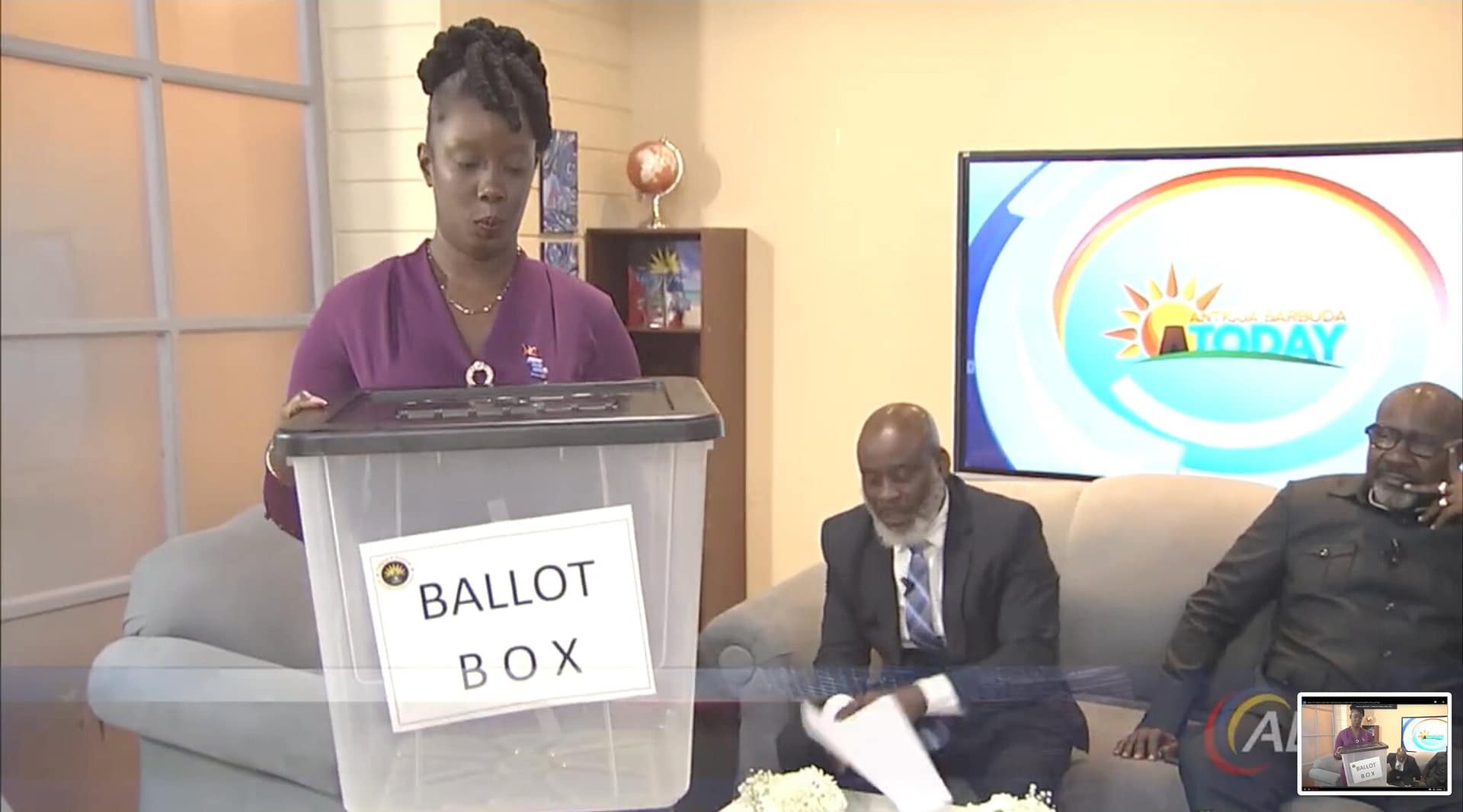
    A political controversy has ignited in Antigua after footage from a United Progressive Party rally featuring Pearl Quinn-Williams circulated widely across social media platforms. The viral video captures Quinn-Williams’ complete podium remarks, which have drawn significant public scrutiny and criticism.

    In a dramatic turn of events, Quinn-Williams has publicly accused Antigua News Room (ANR) of deliberately distorting her rally statements through selective editing and misrepresentation. She maintains that the media outlet’s coverage presented her comments out of proper context, thereby fueling unwarranted backlash.

    The unedited footage, now circulating independently, allows viewers to assess the complete narrative without editorial filtration. This development has sparked broader conversations about media integrity, political communication strategies, and the challenges of maintaining factual accuracy in the digital information age.

    Political analysts note this incident reflects growing tensions between traditional media institutions and public figures who increasingly utilize social media platforms to bypass conventional reporting channels. The situation continues to evolve as both supporters and critics dissect the original remarks and the subsequent allegations of media manipulation.

  • U.S. suspends immigrant visa processing from 75 countries

    U.S. suspends immigrant visa processing from 75 countries

    The United States is implementing an indefinite suspension of immigrant visa processing for citizens from 75 countries effective January 21, significantly expanding the Trump administration’s immigration policy framework. This development, reported by multiple international media outlets, represents one of the most comprehensive immigration restrictions enacted in recent years.

    The suspension specifically targets immigrant visas including employment-based immigration categories, while explicitly exempting non-immigrant visas such as student, tourist, and business travel documents. This distinction ensures that short-term visitors, including those attending the upcoming World Cup events, will remain unaffected by the new measures.

    This policy shift stems from a State Department directive issued last year enhancing scrutiny under the ‘public charge’ provision of immigration law. This longstanding regulatory framework permits immigration officials to deny entry to individuals considered likely to depend on public assistance programs.

    State Department spokesperson Tommy Pigott clarified the administration’s position in an official statement: ‘The Department will exercise its established authority to deem ineligible those potential immigrants who would potentially become public charges and exploit the generosity of American taxpayers. Visa processing from these 75 nations will remain paused while we conduct comprehensive reassessments of immigration procedures to prevent the entry of foreign nationals who might utilize welfare and public benefits.’

    The affected nations span multiple continents, with several countries previously subject to the administration’s expanded travel ban now facing additional restrictions. The comprehensive list includes 27 African nations, 22 Asian countries, 8 European states, 13 North American and Caribbean territories, 3 South American countries, and one Oceanian nation.

    Notably affected countries include Brazil, Colombia, Egypt, Haiti, Somalia, Russia, Nigeria, Pakistan, Saudi Arabia, and Venezuela among others. The policy maintains consistency with the administration’s America First immigration philosophy while generating significant implications for global mobility and international relations.

  • China appoints special representative on SCO affairs

    China appoints special representative on SCO affairs

    China has established a new diplomatic position dedicated to enhancing engagement with the Shanghai Cooperation Organization (SCO), according to Foreign Ministry Spokesperson Mao Ning. The appointment of seasoned diplomat Yan Jietai to this role signals Beijing’s commitment to deepening multilateral cooperation within the Eurasian political, economic, and security alliance.

    Mao emphasized that Ambassador Yan brings substantial diplomatic expertise and specialized knowledge of SCO mechanisms to the position. His appointment will facilitate closer coordination with counterparts across member states, including Russia, India, Pakistan, and Central Asian nations.

    The newly created representative position will focus on implementing consensus agreements reached by SCO leadership, strengthening institutional frameworks, and advancing practical cooperation across multiple domains. These efforts align with China’s broader foreign policy objectives of promoting regional security initiatives and fostering economic development partnerships.

    Mao further elaborated that China’s enhanced engagement through this diplomatic channel aims to contribute significantly to stability throughout the SCO region. The initiative supports the organization’s foundational principles of mutual trust and shared prosperity while advancing the concept of a collective future for member nations. This strategic move occurs amid evolving geopolitical dynamics across Eurasia and demonstrates China’s proactive approach to multilateral diplomacy within important regional organizations.

  • Saint Lucia listed among 75 nations facing US visa processing suspension

    Saint Lucia listed among 75 nations facing US visa processing suspension

    In a significant shift in immigration policy, the United States Department of State has enacted an indefinite suspension of immigrant visa processing for citizens from 75 countries worldwide. The sweeping measure, detailed in an official memorandum dated January 14, specifically targets nations whose citizens have historically utilized public welfare benefits at rates deemed unacceptable by U.S. authorities.

    The policy directive characterizes the suspension as a protective measure to prevent future immigrants from potentially becoming financial burdens on American society. According to the State Department’s announcement on social media platform X (formerly Twitter), the freeze will remain effective until the United States can establish sufficient safeguards to ensure new immigrants will not ‘extract wealth from the American people.’

    Multiple Caribbean nations feature prominently on the affected list, including Saint Lucia, Antigua and Barbuda, Bahamas, Barbados, Belize, Cuba, Dominica, Grenada, Haiti, Jamaica, Saint Kitts and Nevis, and St Vincent and the Grenadines. This development contradicts recent assurances from Saint Lucian leadership—Prime Minister Philip J. Pierre stated during his January 11 New Year’s address that no official communication regarding visa policy changes had been received by his government.

    The suspension falls under the broader ‘public charge’ doctrine, which allows U.S. authorities to deny entry to immigrants considered likely to depend primarily on government assistance. This policy expansion represents one of the most extensive visa restrictions implemented in recent years, affecting a substantial portion of global immigrant visa applicants.

  • Belize Solidarity Group Condemns Attack on Venezuela’s President

    Belize Solidarity Group Condemns Attack on Venezuela’s President

    A diplomatic clarification has emerged following the circulation of an online statement attributed to the ‘Solidarity Group of Belize and Venezuela’ that condemned alleged actions against Venezuelan President Nicolás Maduro. The Venezuelan Embassy in Belize disseminated the declaration, which characterized recent developments as “an attack and capture” constituting “a flagrant violation of international law and fundamental human rights.” The group further described reported casualties as “crimes against humanity.” The statement highlighted decades of bilateral cooperation, specifically referencing the Petrocaribe energy initiative, Operación Milagro healthcare program, and various educational and housing projects that have benefited Belize. It notably referenced Prime Minister John Briceño’s 2022 visit to Caracas as evidence of continuing cooperation across trade, tourism, and energy sectors. However, Belize’s Foreign Minister Francis Fonseca, when contacted by News 5, stated he had not seen the statement and was unfamiliar with the group. In a separate interview on January 7th, Fonseca articulated Belize’s official stance, emphasizing concern over democratic principles in Venezuela. “We’re very concerned whenever there’s any erosion of fundamental principles,” Fonseca stated, adding that Belize is engaging international partners to support a peaceful, people-led resolution in Venezuela that respects constitutional order and self-determination.

  • Trump Wants Greenland

    Trump Wants Greenland

    In a significant geopolitical development, former U.S. President Donald Trump has reignited his administration’s controversial campaign to acquire Greenland, asserting American control over the autonomous Danish territory as essential to national security. Through his Truth Social platform on January 14th, Trump declared the island “vital” to his proposed “Golden Dome” air and missile defense system, stating that “anything less” than U.S. control would be “unacceptable.”

    The push comes amid high-level diplomatic engagements, with Vice President JD Vance and Secretary of State Marco Rubio meeting with officials from both Denmark and Greenland. Both governments have firmly rejected Trump’s overtures, with Greenland’s Foreign Minister Vivian Motzfeldt unequivocally stating: “Greenland does not want to be owned by, governed by or part of the United States.”

    Internal estimates from U.S. officials familiar with planning suggest the acquisition could cost between $500 billion and $700 billion—exceeding half of the Pentagon’s annual budget. Despite the staggering price tag, a senior White House official confirmed that Rubio has been directed to develop a purchase proposal as a “high priority” initiative.

    The situation has triggered diplomatic repercussions beyond U.S.-Danish relations. China responded through Foreign Ministry spokesperson Mao Ning, cautioning against using other countries “as a pretext” to pursue interests in Greenland. Mao emphasized that “China’s activities in the Arctic are aimed at promoting peace, stability, and sustainable development” and that all countries’ rights to conduct lawful Arctic activities “should be fully respected.”

    Meanwhile, Denmark has strengthened its military presence in Greenland in coordination with NATO allies, while protests have erupted in Copenhagen with demonstrators chanting “Greenland is for Greenlanders” outside the U.S. embassy. The territory already hosts a small U.S. military base under a 1951 agreement, but Trump maintains that without American control, Russia or China would eventually dominate the region, vowing “one way or another, we’re going to have Greenland.”

  • Dominicans blame CBI for US travel woes

    Dominicans blame CBI for US travel woes

    A controversial United States immigration policy requiring citizens from Dominica and Antigua and Barbuda to post bonds reaching $15,000 for entry has triggered substantial backlash across the Eastern Caribbean. The measure, implemented last week, has been met with widespread criticism from residents who view it as both economically prohibitive and diplomatically contentious.

    Multiple sources speaking with St. Lucia Times indicated the development aligned with anticipated international trends. Many cited the United Kingdom’s 2023 revocation of visa-free access for Dominican travelers as a precursor to heightened examination of the region’s Citizenship by Investment (CBI) programs. This perspective suggests that increased scrutiny from Western nations was inevitable given growing concerns about due diligence and security protocols within these economic citizenship schemes.

    A Roseau resident and mother of two expressed vehement criticism, stating: ‘The consequences of unchecked greed are now evident. The UK’s visa restrictions should have served as an urgent warning for our government to implement reforms. While the CBI program generated revenue, it has ultimately damaged our international standing and created these travel barriers.’

    Beyond diplomatic concerns, the practical implications of the bond requirement have drawn sharp focus. The substantial financial demand effectively prevents many Dominican families from visiting relatives in the United States, severing important cultural and familial connections. A local business owner emphasized: ‘This policy disproportionately targets Dominicans with legitimate family ties. Many have parents, children, or extended family in the U.S., making integration natural should they choose to migrate. The bond amount is completely unaffordable for most citizens.’

    Additional criticism emerged from a Dominican national residing in Antigua, who characterized the U.S. as acting like a ‘bully’ while simultaneously condemning mismanagement of the CBI program. The individual warned: ‘The very program that provided economic benefits may now cause severe repercussions, particularly if the European Union follows with Schengen visa restrictions. What value does citizenship hold if the passport becomes ineffective for travel?’

    There are growing calls for the Dominican government to immediately strengthen oversight mechanisms and due diligence processes within its CBI program to restore international confidence and potentially reverse these damaging travel restrictions.