分类: politics

  • Joanne Smith Sworn In as Member of the Industrial Court

    Joanne Smith Sworn In as Member of the Industrial Court

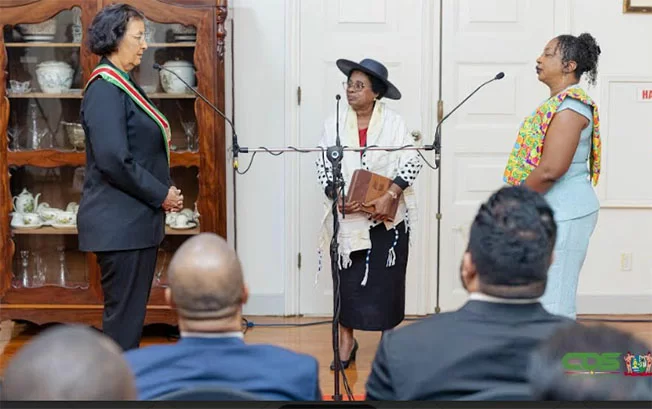
    In a dignified ceremony held at Government House today, Ms. Joanne Smith was officially sworn in as a member of the Industrial Court. The oath of office was administered by Governor General Sir Rodney Williams, signifying Smith’s formal induction into the tribunal. The Industrial Court plays a pivotal role in adjudicating industrial and employment disputes, ensuring fairness and justice in labour relations. The event was attended by Smith’s family and friends, who gathered to celebrate her appointment. This milestone underscores the court’s ongoing commitment to maintaining equitable labour practices and resolving workplace conflicts effectively. Smith’s addition to the tribunal is expected to further strengthen its capacity to address complex industrial issues with impartiality and expertise.

  • LETTER: Beyond Restitution: A National Conversation Continues

    LETTER: Beyond Restitution: A National Conversation Continues

    In a recent address, Hon. E.P. Chet Greene emphasized the urgent need for systemic reforms in Antigua and Barbuda following a high-profile corruption scandal that siphoned millions from the national treasury. The scandal has sparked a vital national conversation, highlighting the maturity of the country’s democracy as citizens and officials alike engage in meaningful dialogue. While some have politicized the call for restitution, others recognize its necessity in addressing prosecutorial limitations in recovering public funds. A legal expert’s intervention further underscored the importance of this discourse, reinforcing Greene’s warnings about the broader implications of the scandal. The question now is: What comes next after restitution? Greene argues that restitution is merely the starting point for a comprehensive national reset. The return of stolen funds, though crucial, addresses only a symptom of a deeper issue—the lack of personal responsibility and national consciousness. This scandal, while devastating, presents an opportunity to transition from outrage to action. Greene outlines five critical steps to rebuild the nation’s governance framework: 1. **Legislative Overhaul**: Strengthening laws such as the Integrity in Public Life Act, introducing a Freedom of Information Act, and enacting a Whistleblower Protection Act. 2. **Fortifying Financial Controls**: Implementing real-time audits, digitizing procurement processes, and ensuring transparency in financial management. 3. **Cultivating Accountability**: Establishing mandatory performance reports for public officials and enforcing consequences for negligence or malfeasance. 4. **Fostering Civic Education**: Integrating civic responsibility into school curricula and public discourse to combat corruption at its roots. 5. **Establishing a Permanent Anti-Corruption Framework**: Creating an independent Anti-Corruption Agency to ensure ongoing prevention, investigation, and public education. Greene concludes that the path forward is challenging but essential to building a nation where such systemic failures are impossible. The choice is clear: Will Antigua and Barbuda be defined by its scandal or by the reforms that emerge from it? The reset begins now, and it begins with collective action.

  • Venezuela verklaart premier Trinidad en Tobago persona non grata

    Venezuela verklaart premier Trinidad en Tobago persona non grata

    Venezuela has declared Trinidad and Tobago’s Prime Minister, Kamla Persad-Bissessar, persona non grata, escalating tensions between the neighboring nations over the presence of U.S. military forces in the Caribbean. The Venezuelan National Assembly approved the sanction on Tuesday, officially barring Persad-Bissessar from entering the country. In response, the Prime Minister dismissed the move, stating, ‘Why would they think I’d want to go to Venezuela?’ in an interview with AFP.

    The two countries, separated by a narrow 11-kilometer bay, have seen relations deteriorate due to recent U.S. military activities in the region. Persad-Bissessar is one of the few Caribbean leaders openly supporting the U.S. military buildup and its strikes on alleged drug trafficking vessels. Following the first missile strike on September 2, she remarked, ‘Like most people in my country, I’m glad the U.S. Navy is successful in its mission. I have no sympathy for drug traffickers; the U.S. military should kill them all, violently.’

    This stance has clashed with Venezuela’s government, which condemned the U.S. actions as ‘illegal and utterly immoral military threats’ during the United Nations General Assembly. Legal experts warn of potential violations of international law, comparing the strikes to extrajudicial executions. To date, at least 13 attacks have targeted 14 vessels, primarily small boats, resulting in an estimated 57 deaths. The identities and involvement of those killed in drug trafficking remain unconfirmed.

    The declaration of Persad-Bissessar as persona non grata marks the latest escalation in bilateral tensions. Reports suggest Trinidad and Tobago is considering mass deportations of undocumented migrants, many of whom are Venezuelan. This follows Venezuelan President Nicolás Maduro’s suspension of a key gas agreement with Trinidad and Tobago, citing the island’s reception of a U.S. warship as a provocation.

    Maduro accused Persad-Bissessar of transforming her country into ‘an aircraft carrier for the American empire against Venezuela.’ The Pentagon has stationed seven warships, a submarine, drones, and fighter jets in the Caribbean, with an additional warship in the Gulf of Mexico. The intensity of U.S. strikes has increased recently, with six attacks occurring in just one week, extending to the Eastern Pacific near Colombia and Caribbean waters off Venezuela.

    Analysts view these military actions as part of the Trump administration’s efforts to pressure and destabilize Maduro, who was re-elected in 2023 in a vote the U.S. labeled fraudulent. Despite international criticism, Persad-Bissessar continues to support the U.S. actions, emphasizing her preference for drug traffickers to be ‘blown to pieces’ rather than inflict violence in her own country.

  • Nek-aan-nekrace bij parlementsverkiezingen in Nederland

    Nek-aan-nekrace bij parlementsverkiezingen in Nederland

    Approximately 13.4 million Dutch citizens are eligible to cast their votes today in the early parliamentary elections for the 150-seat House of Representatives. These elections, triggered by the collapse of the Schoof cabinet in June this year, are being hailed as one of the most unpredictable and consequential in recent history. The outcome will shape the future governance of the Netherlands, influencing critical issues such as migration, purchasing power, housing shortages, climate policy, healthcare, and the nation’s international role within Europe and NATO. Polls indicate a tight race among major parties, including PVV, D66, GroenLinks-PvdA, CDA, and VVD, with many voters still undecided. The complexity of forming a coalition is unprecedented, as no single party is projected to come close to securing the 76-seat majority required in the House of Representatives. High voter turnout is anticipated, driven by a significant number of undecided voters and a widespread belief that “something truly is at stake.” Political analysts suggest that this election could herald a fundamental shift in the country’s direction, depending on the coalition that emerges. Preliminary results are expected late Wednesday evening, with initial projections shortly after polls close at 9:00 PM local time.

  • Opposition Leader welcomes Nov. 27 election date

    Opposition Leader welcomes Nov. 27 election date

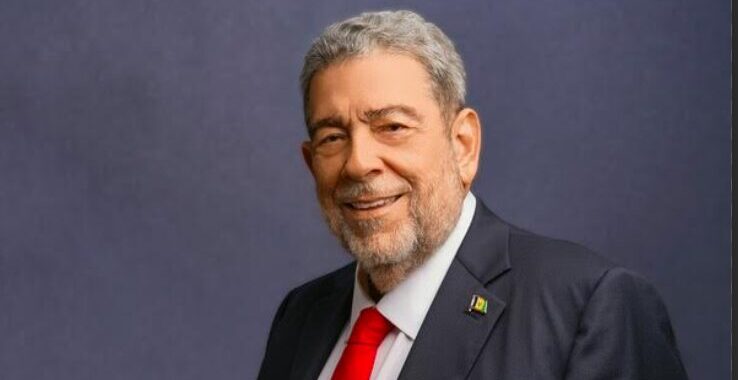
    The political landscape in St. Vincent and the Grenadines has intensified with the announcement of the general election date, set for Thursday, November 27. Opposition Leader Godwin Friday, head of the New Democratic Party (NDP), welcomed the news with a play on words, noting that the following day, Friday, holds significance both as his surname and as a potential turning point for the nation. The announcement was made by Prime Minister Ralph Gonsalves during a rally for his ruling Unity Labour Party (ULP) in Kingstown, where he also declared the immediate dissolution of Parliament and set November 10 as nomination day. Friday, addressing his supporters in Calliaqua, emphasized the importance of the upcoming election, framing it as a critical choice for the country’s future. He criticized the current government as ‘tired and out-of-touch,’ advocating for a shift toward economic development centered on tourism, agriculture, the blue economy, and innovation. The election comes shortly after the nation celebrated its 46th anniversary of independence, adding a layer of historical significance to the political contest. Both leaders are gearing up for a fierce campaign, with Gonsalves aiming for an unprecedented sixth term and Friday seeking to unseat him after a failed attempt in 2020.

  • “We will also emerge victorious from this new challenge”

    “We will also emerge victorious from this new challenge”

    In a significant address this Tuesday, Army General Raúl Castro Ruz, a pivotal figure in the Cuban Revolution, conveyed a message to the National Defense Council. Castro highlighted his ongoing oversight of the measures implemented to counteract the impacts of Hurricane Melissa. He expressed his approval of the Council’s diligent efforts and the high level of preparedness achieved. Castro stressed the importance of sustained vigilance and strict discipline during both the hurricane and the subsequent recovery period. Furthermore, he voiced his unwavering belief in the nation’s ability to triumph over this latest challenge, reinforcing his confidence in the resilience and unity of the Cuban people.

  • Politic : The Government mobilized in response to Hurricane Melissa

    Politic : The Government mobilized in response to Hurricane Melissa

    In a proactive response to the impending threat of Hurricane Melissa, the Haitian government has launched a comprehensive emergency plan to safeguard its citizens. On October 28, 2025, the National Emergency Operations Center (COUN) convened a press conference during the 27th annual ‘Tuesdays of the Nation’ event to disseminate critical safety guidelines, particularly targeting residents in the vulnerable Southern Peninsula region. Hurricane Melissa, classified as a Category 5 storm, is advancing at 15 km/h, with wind gusts peaking at 295 km/h and projected rainfall exceeding 42 cm. These severe conditions pose significant risks of flooding, landslides, and river overflow. Under the leadership of Prime Minister Alix Didier Fils-Aimé, the National Committee for Risk and Disaster Management (CNGRD) has implemented urgent measures to mitigate the storm’s impact. The government has activated the Emergency Relief Fund (ERF) in affected areas, established operational reception centers, pre-positioned hygiene and food supplies, and initiated cash transfers via mobile money accounts to assist vulnerable families. A coordinated effort involving multiple ministries—Public Works, Transport and Communications, Economy and Finance, Social Affairs and Labor, Environment, Agriculture, and Public Health—is underway to minimize casualties and property damage.

  • Symmonds: Accelerate shift from fossil fuels amid rising regional tensions

    Symmonds: Accelerate shift from fossil fuels amid rising regional tensions

    Barbados’ Minister of Foreign Affairs and Foreign Trade, Kerrie Symmonds, has emphasized the urgent need for the nation to expedite its transition away from fossil fuels, citing escalating geopolitical tensions in the southern Caribbean as a critical driver. Speaking during a parliamentary debate on the Barbados National Energy Company (Transfer and Vesting of Assets) Bill, Symmonds highlighted the potential catastrophic consequences of conflicts in the region, particularly between Venezuela and the United States. He warned that any military escalation could disrupt energy supply routes and destabilize the Petrocaribe agreement, which has historically provided Caribbean nations with oil on favorable terms. Symmonds stressed that Barbados must take control of its energy future to mitigate the risks posed by volatile global oil prices and geopolitical instability. He referenced recent Central Bank data, noting that fuel import costs had fluctuated dramatically, from $538.5 million in the first half of 2024 to $262.5 million in the same period of 2025. Such unpredictability, he argued, underscores the necessity of reducing reliance on fossil fuels. The minister outlined the government’s broader strategy to consolidate national energy assets, streamline investments, and accelerate the adoption of renewable technologies. This includes transitioning the island’s 110,000 privately owned vehicles and public transport systems to electric and hybrid models. Symmonds highlighted progress in the public transport sector, with 89 electric buses now operational and 35 more on the way. He also emphasized the need for government support to help private operators transition to greener alternatives, including through concessionary financing. Symmonds concluded by asserting that Barbados must emancipate itself from the vulnerabilities of the international petroleum market to ensure a sustainable and secure energy future.

  • Gonsalves Sets November 27 Date for St. Vincent and the Grenadines General Election

    Gonsalves Sets November 27 Date for St. Vincent and the Grenadines General Election

    Prime Minister Ralph Gonsalves has officially declared that the citizens of St. Vincent and the Grenadines will cast their votes on November 27 to determine the nation’s next government. The announcement was made during the Unity Labour Party’s (ULP) “Labour Strong Rally” held at Richmond Hill. Gonsalves confirmed that Parliament was dissolved on October 28, with Nomination Day scheduled for November 10. While the ULP’s five-year term officially concludes this month, the Constitution allows the current administration to remain in office until February 2026. This election marks a pivotal moment for the country as voters prepare to decide the future leadership and direction of their nation.

  • Gonsalves announces Nov. 27 general election

    Gonsalves announces Nov. 27 general election

    St. Vincent and the Grenadines is gearing up for a pivotal general election on November 27, as announced by Prime Minister Ralph Gonsalves during the Unity Labour Party’s (ULP) “Labour Strong Rally” at Richmond Hill. The 15-seat Parliament was dissolved on October 28, with Nomination Day scheduled for November 10. This election marks the second time Vincentians will vote in a November general election since universal adult suffrage was introduced in 1951. The ULP, led by Gonsalves, will remain in office for three weeks beyond its five-year term, although the Constitution permits the government to stay in power until February 2026 before calling an election. Gonsalves, who has been Prime Minister since 2001, has previously announced election dates at the Richmond Hill Playing Field in 2005 and 2015. The ULP has secured five consecutive terms, with the 2020 election resulting in a 9-6 majority, despite losing the popular vote for the first time since 1998. The opposition New Democratic Party (NDP), led by Godwin Friday, is making its second bid for power, focusing on everyday issues and promising to double public assistance payouts and reduce VAT. The election campaign has officially begun, with both parties vying for voter support. Gonsalves has pledged to transform St. Vincent and the Grenadines into a “first-world country of a special type” within 15 years, while the NDP emphasizes immediate improvements in public services and infrastructure. The election outcome will determine the country’s direction for the next five years and beyond.