分类: politics

  • Desperate times call for decisive action

    Desperate times call for decisive action

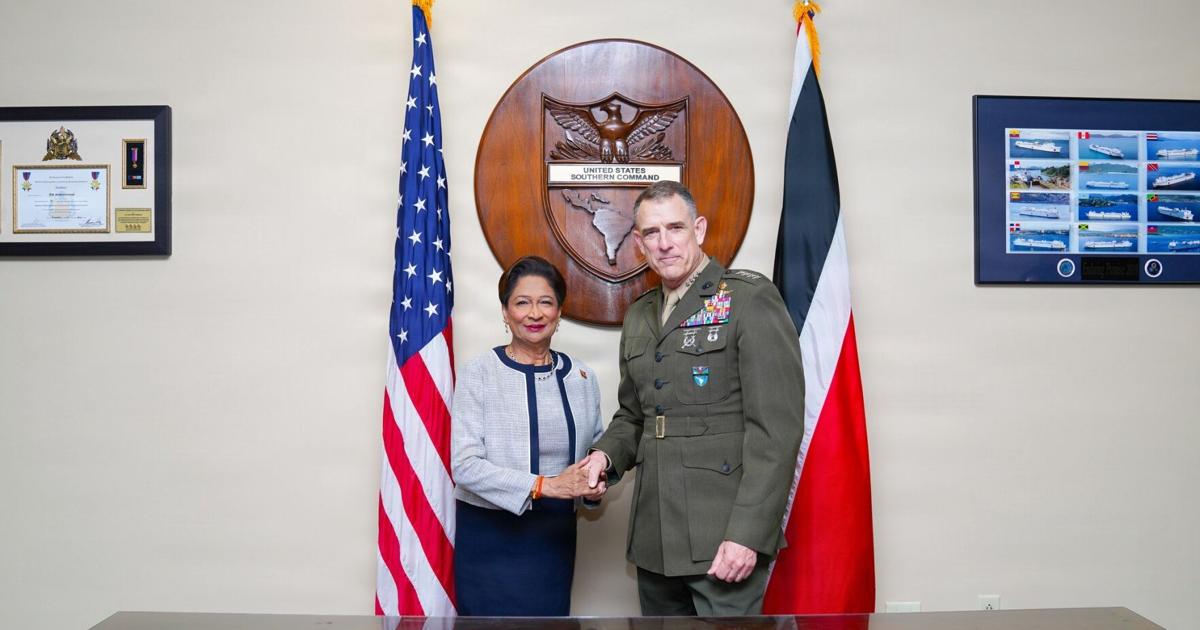
    The deployment of US warships in Caribbean waters, including one docked at the Port of Spain, has ignited a heated debate over regional security and the fight against the drug trade. While the US frames its actions as necessary to protect its citizens and the wider region from the scourge of narcotics, local voices have raised concerns about the implications of such military presence. The Antilles Episcopal Conference has issued a strongly worded letter condemning these actions and advocating for peace, questioning the long-term consequences of militarized interventions. In a region historically plagued by gang violence and the devastating effects of the drug trade, the arrival of US forces has been met with mixed reactions. Some view it as a decisive step toward curbing the narcotics epidemic, while others fear it undermines the Caribbean’s identity as a ‘zone of peace.’ The USS Gravely’s presence, however, sends a clear message to narco-terrorists that the region is no longer undefended. This development comes amid a broader call for unity and action against the drug trade, which has long ravaged communities and corrupted institutions. The Vatican has consistently condemned drug-related activities, with Pope Francis emphasizing that addiction is an evil that demands unyielding resistance. Yet, the Caribbean’s struggle against the narcotics economy remains fraught with challenges, including complicity and inaction. As the region grapples with these issues, the question remains: Can decisive action, even if led by external forces, bring about the peace and justice that decades of prayer and advocacy have sought?

  • FNM ‘in it to win it’ for by-election

    FNM ‘in it to win it’ for by-election

    The Free National Movement (FNM) has officially announced its decision to contest the upcoming by-election in Golden Isles, ending weeks of speculation. Party leader Michael Pintard confirmed that Brian Brown, a long-time community advocate, will represent the FNM for the seat vacated by the late Vaughn Miller of the Progressive Liberal Party (PLP). The by-election, scheduled for November 24, has intensified political rivalries, with both parties vying for voter support. Pintard expressed confidence in Brown’s candidacy, citing his eight years of dedicated service in the constituency and his understanding of residents’ concerns under the Davis administration. The PLP has nominated Darren Pickstock, who recently resigned from the Senate to focus on the campaign. Pintard criticized the PLP for what he described as last-minute efforts to address local issues, including road paving and home repairs, accusing them of attempting to ‘buy’ votes. Brown, a Golden Isles resident, dismissed criticisms of his community involvement, emphasizing his ongoing efforts and commitment to the area. Political analysts suggest that a loss for the FNM could undermine Pintard’s leadership and weaken the party’s prospects in future general elections. However, Pintard remains optimistic, asserting that the FNM is ‘in it to win it’ and is the best choice for Golden Isles and the nation.

  • Browne questions government’s deferral of questions

    Browne questions government’s deferral of questions

    During the Senate session on October 29, Dr. Amery Browne, Leader of Opposition Business, raised concerns over the government’s lack of clarity regarding the deferral of several questions on the Senate’s order paper. Browne questioned whether a two-week deferral was being sought for inquiries directed at Homeland Security Minister Roger Alexander, who was absent from the session. He noted that alternative options, such as having another minister respond, were also available. Browne, who previously served as Leader of Government Business, has utilized both approaches in the past. Darrell Allahar, the current Leader of Government Business, acknowledged Browne’s points and requested deferrals for questions to Alexander and Defence Minister Wayne Sturge. The inquiries to Alexander, filed by Opposition Senator Faris Al-Rawi, pertained to virtual court hearings at police stations, while Sturge’s question focused on safety measures at high-risk beaches. Additionally, Attorney General John Jeremie was unable to provide a timeline for the presentation of the government’s official legislative agenda, citing incomplete preparations. The session also saw PNM deputy leader Sanjiv Boodhu sworn in as a temporary opposition senator, replacing Foster Cummings, who was absent due to illness.

  • Residents back plan to split constituency in West GB and Bimini

    Residents back plan to split constituency in West GB and Bimini

    Residents of Bimini and West Grand Bahama are expressing strong support for the Constituency Commission’s proposal to divide their combined constituency, a move they believe is long overdue. The commission is reportedly recommending the creation of two new constituencies by separating Killarney and West Grand Bahama from Bimini, with the proposal expected to be presented to the Prime Minister shortly. The current West Grand Bahama and Bimini constituency, which has over 6,000 registered voters, has faced criticism for merging two islands with distinct challenges and priorities since its formation after the 1997 general election. Many Bimini residents feel their island has been neglected, with resources and political attention disproportionately focused on Grand Bahama. Lorrick Roberts, a Bimini resident, emphasized the need for Bimini to have independent political representation, citing issues such as stalled airport upgrades and a sharp increase in boat fees that have negatively impacted tourism. Oral Ellis, another resident, suggested that pairing Bimini with the Berry Islands would provide a fairer balance. James Vega, a West Grand Bahama resident, echoed the sentiment, stating that one Member of Parliament cannot effectively serve two islands. Deputy Prime Minister Chester Cooper, a member of the Boundaries Commission, recently highlighted the commission’s progress in ensuring equity among constituencies. If approved, the move would restore Bimini’s status as a separate constituency, a change many residents argue should have been implemented years ago.

  • CoP defends recommendation for SoE extension

    CoP defends recommendation for SoE extension

    Commissioner of Police Allister Guevarro has emphasized the necessity of extending the current State of Emergency (SoE) to effectively dismantle criminal networks in Trinidad and Tobago. Speaking on October 29, Guevarro highlighted the significant progress made since the SoE was first implemented on July 18, but cautioned that criminal elements remain adaptable and persistent. He recommended a further extension to ensure long-term stability, stressing that the final decision rests with Parliament. Prime Minister Kamla Persad-Bissessar confirmed on October 27 that Guevarro had formally advised the government to extend the measure. The government has scheduled a parliamentary debate for October 31 to discuss the proposed extension. While the government does not require opposition support to approve an additional three-month extension in the Lower House, any period beyond that would necessitate a three-fifths majority. The initial SoE was declared in response to a surge in murders and intelligence reports of planned attacks by criminal networks, targeting senior government officials, judiciary members, law enforcement officers, and prison personnel. Under the SoE, the police and Defence Force have been granted enhanced powers to arrest suspects and conduct searches. Guevarro clarified that his recommendation is based solely on internal security assessments and not influenced by regional tensions involving Venezuela and the United States.

  • ‘People starting to turn to babash’ – Dhanpaul questions benefits of higher alcohol duties

    ‘People starting to turn to babash’ – Dhanpaul questions benefits of higher alcohol duties

    During a Senate debate on October 27, Opposition Senator Vishnu Dhanpaul and Independent Senator Anthony Vieira, SC, raised critical questions regarding the proposed increases in duties on alcohol and tobacco in Trinidad and Tobago’s 2025/2026 budget. The motions aimed to implement these duties, which Finance Minister Davendranath Tancoo estimated could generate approximately $800 million in revenue. However, Dhanpaul expressed skepticism about achieving this target, citing historical data from 2017 when a 20% increase in alcohol taxes led to a revenue drop from $900 million to $700 million. He also highlighted potential structural issues, such as increased smuggling and consumption of harmful products, as well as the cultural impact on traditions like Christmas and Carnival. Dhanpaul criticized the lack of a clear link between the tax hikes and public health benefits, noting that revenues would likely go directly into the Consolidated Fund rather than health initiatives. Vieira echoed these concerns, emphasizing the absence of stakeholder consultation and the adverse effects on businesses, tourism, and low-income earners. He warned that the sudden implementation of higher duties could disrupt cash flows, breach supply contracts, and make Trinidad and Tobago one of the most expensive destinations in the Caribbean for alcohol consumption. Both senators argued that the measures could erode social traditions and harm the hospitality sector, particularly small businesses and neighborhood bars. In contrast, Minister Kennedy Swaratsingh defended the tax hikes as part of a caring government’s efforts to uplift the poor and vulnerable, estimating potential health sector savings of $260 million.

  • Venezuela declares Trinidad and Tobago’s prime minister persona non grata

    Venezuela declares Trinidad and Tobago’s prime minister persona non grata

    Venezuela has officially declared Trinidad and Tobago’s Prime Minister Kamla Persad-Bissessar as persona non grata, escalating tensions between the two nations over US military operations in the Caribbean Sea. The Venezuelan National Assembly voted unanimously on Tuesday to impose the sanction, barring Persad-Bissessar from entering the country. This decision comes amid a heated dispute between Venezuelan President Nicolas Maduro and Persad-Bissessar, who has openly supported the US military’s anti-drug trafficking campaign in the region.

    Persad-Bissessar, one of the few Caribbean leaders to endorse the US military presence, has praised the deployment of US naval forces and their operations targeting alleged drug traffickers. In a statement on September 2, she expressed her approval of the US mission, stating, ‘I have no sympathy for traffickers; the US military should kill them all, violently.’ This stance has drawn sharp criticism from Maduro’s government, which has condemned the US strikes as ‘illegal and completely immoral.’ Venezuelan Foreign Minister Yvan Gil Pinto reiterated this position at the United Nations General Assembly, accusing the US of posing a military threat to Venezuela.

    The US military campaign, which has included at least 13 strikes on 14 maritime vessels, has resulted in an estimated 57 deaths. However, no concrete evidence has been provided to link the victims to drug trafficking. Legal experts have raised concerns about potential violations of international law, comparing the strikes to extrajudicial killings.

    The diplomatic rift deepened this week as Trinidad and Tobago considered a mass deportation of undocumented migrants, primarily Venezuelans, following Maduro’s decision to suspend a major gas deal with the island nation. Maduro accused Persad-Bissessar of turning Trinidad and Tobago into ‘an aircraft carrier of the American empire against Venezuela.’ The US has deployed seven warships, a submarine, drones, and fighter jets to the Caribbean, intensifying its operations near Venezuelan waters. Observers speculate that the Trump administration is using military pressure to destabilize Maduro’s government, which the US has labeled as illegitimate following his re-election last year.

    Despite the controversy, Persad-Bissessar remains unwavering in her support for the US campaign, emphasizing her commitment to combating drug trafficking in the region.

  • NIA Cabinet Engages Media in Special Press Conference on Proposed Destiny SSZ Project

    NIA Cabinet Engages Media in Special Press Conference on Proposed Destiny SSZ Project

    The Nevis Island Administration (NIA) Cabinet convened a special press conference on October 28, 2025, to discuss the proposed Destiny Special Sustainability Zone (SSZ) Project, a significant development planned for the island’s south coast. The event, attended by media representatives from St. Kitts and Nevis, underscored the NIA’s commitment to transparency and democratic engagement. Premier Mark Brantley, who also serves as Minister of Tourism and Foreign Investment, highlighted the media’s crucial role in disseminating accurate information to the public. He emphasized that the government has conducted numerous stakeholder consultations to ensure inclusivity and transparency. During the conference, Cabinet Minister Spencer Brand presented a detailed overview of the project, covering aspects such as design, marina development, and anticipated economic benefits. Journalists raised questions on various topics, including investor due diligence, land sales, profit-sharing, and infrastructure investment. Premier Brantley clarified that no formal agreement has been signed with developers, countering negative rhetoric surrounding the project. He reiterated the NIA’s dedication to consulting widely with diverse groups, including business leaders, church officials, and the general public, to ensure the project aligns with the best interests of Nevisians. Upcoming consultations with youth and local contractors are planned as part of the ongoing effort to gather comprehensive feedback.

  • Gonsalves announces elections in St Vincent-Grenadines, going for sixth consecutive term

    Gonsalves announces elections in St Vincent-Grenadines, going for sixth consecutive term

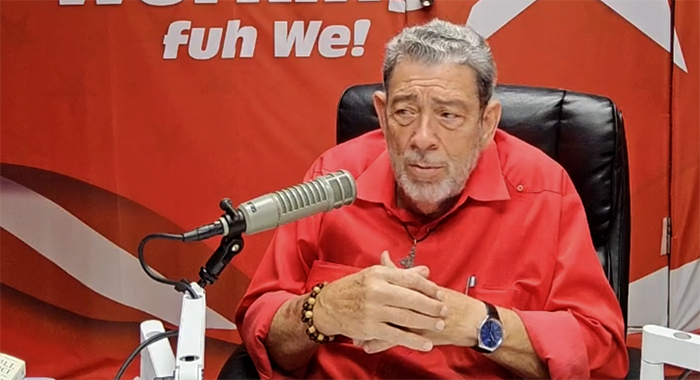
    St. Vincent and the Grenadines is gearing up for a pivotal general election on November 27, as announced by Prime Minister Ralph Gonsalves during the Unity Labour Party’s (ULP) “Labour Strong Rally” at Richmond Hill. This marks a significant moment in the nation’s political landscape, with Gonsalves, who has been at the helm since March 28, 2001, aiming to extend his party’s historic tenure. The ULP, under his leadership, has secured five consecutive five-year terms, most recently in 2020 with a 9-6 majority. The dissolution of parliament’s 15 seats on October 28 has officially set the stage for the electoral process. Gonsalves emphasized the importance of a free and democratic choice between the ULP and the opposition New Democratic Party (NDP), led by Godwin Friday. This election is only the second since 1951 to be held in November, highlighting its rarity in the country’s electoral history. While the ULP will remain in power for three weeks beyond its constitutional term, the constitution permits the government to stay in office until February 2026 before a new election is mandated. Gonsalves previously extended his term by a week before the 2010 election. Friday, making his second bid for prime minister, has proposed a Citizen by Investment (CBI) programme to boost national revenue, a policy the ULP has historically opposed.

  • Thorne: Govt masking worsening hardship with ‘pretty talk’

    Thorne: Govt masking worsening hardship with ‘pretty talk’

    Opposition Leader Ralph Thorne has launched a scathing critique of the Mia Mottley administration, accusing it of employing ‘pretty talk’ to create ‘illusions of prosperity’ while many Barbadians grapple with economic hardships. During a heated debate in the House of Assembly over the Barbados National Energy Company (Transfer and Vesting of Assets) Bill, Thorne highlighted the growing disparity between the government’s confident rhetoric and the stark realities faced by citizens. He argued that despite ministers’ claims of economic progress, the benefits are not translating into tangible improvements in the lives of families, small businesses, and street vendors. Thorne urged lawmakers to witness the struggles firsthand by visiting Swan Street, where vendors are fighting to survive rather than thrive. He dismissed the government’s narrative of national prosperity as a ‘cruel joke,’ emphasizing that the people of Barbados are enduring significant suffering. Thorne also criticized the administration’s reliance on buzzwords like ‘sustainable,’ ‘resilient,’ and ‘whole-of-country approach,’ which he described as empty slogans devoid of substance. He warned that the government’s refusal to acknowledge the hardships faced by citizens risks deepening public apathy and eroding trust in leadership. Thorne concluded that speeches alone cannot alleviate the economic pressures weighing on Barbadians, calling for more concrete actions to address their struggles.