分类: politics

  • Fair Trading Commission director grilled over delays in pharmaceutical probe

    Fair Trading Commission director grilled over delays in pharmaceutical probe

    In a tense parliamentary hearing on December 2, Fair Trading Commission (FTC) Executive Director Bevan Narinesingh faced rigorous interrogation from Public Administration and Appropriations Committee (PAAC) Chairman Jagdeo Singh regarding the commission’s perceived inaction on potential anti-competitive practices within the pharmaceutical industry.

    Speaker Singh, visibly frustrated throughout the proceedings, challenged Narinesingh on what he characterized as the FTC’s ‘lethargic’ response to serious allegations of monopolistic behavior in drug supply and distribution. The confrontation centered on the commission’s failure to utilize its statutory powers under the Fair Trading Act despite receiving formal complaints and documentation since September 2024.

    Singh methodically outlined the FTC’s broad investigative authority, particularly emphasizing Section 9 provisions that empower the commission to act on its own initiative without requiring formal complaints. ‘Anti-competitive behavior in a marketplace is among the highest public-interest concerns needing protection,’ Singh asserted, receiving agreement from Narinesingh before pressing further on the commission’s inaction.

    The hearing revealed that despite a September 6, 2024 letter from a private business association raising competition concerns, the FTC’s response consisted primarily of information requests rather than initiating formal investigations. Singh questioned why the commission hadn’t invoked Section 8 powers to compel document production from suspected entities instead of placing the burden on complainants to obtain sensitive corporate records.

    Narinesingh defended the FTC’s approach, citing ongoing evidence gathering through meetings with Health Ministry officials in December 2024 and consultations with the Pharmacy Board. However, when pressed for documentation of these meetings, he could not immediately produce minutes or formal reports.

    The exchange intensified when Singh referenced the FTC’s December 13, 2024 public statement acknowledging that concerns ‘may require further examination.’ The chairman demanded concrete actions beyond letter-writing and meetings, to which Narinesingh cited public notices inviting input through digital channels.

    A critical moment emerged when Narinesingh revealed the FTC had determined ‘sufficient grounds’ for investigation by June 17, 2025 but claimed inability to proceed due to the commission’s board being dissolved since May. Singh challenged this justification, questioning where the Fair Trading Act circumscribes the executive director’s authority based on board availability.

    The session concluded with Singh issuing comprehensive directives for the FTC to provide all relevant documentation, including internal communications, meeting minutes, and task assignments, before adjourning until January 26 for further review.

  • Emotions run high in SYG senate debate

    Emotions run high in SYG senate debate

    The Trinidad and Tobago Senate witnessed profoundly emotional deliberations on December 2nd during the debate over the controversial Home Invasion (Self-Defence and Defence of Property) Bill, 2025. Government Senator Brian Baig delivered a heart-wrenching testimony detailing his personal experience as a home invasion survivor, visibly trembling as he addressed the chamber.

    Senator Baig recounted how the traumatic event permanently altered his psychological state, revealing he still wakes daily at 3 AM—the hour preceding the incident—haunted by the fear that intruders remain in his home. The senator described implementing extensive security measures including alarms, round-the-clock security personnel, and guard dogs to restore his family’s sense of safety. Baig further shared the devastating story of his aunt who was murdered during another home invasion, with her throat slit ‘from ear to ear’ while his uncle, a heart patient, was bound to a chair.

    Despite the emotional appeal, opposition Senator Faris Al-Rawi expressed reservations about the legislation’s practical effectiveness. While acknowledging the bill was ‘heading in the right direction,’ Al-Rawi questioned whether the proposed law would actually assist victims in real-time crisis situations. He raised significant concerns regarding the exclusion of approximately 230,000 squatters lacking lawful property possession, the treatment of common areas in housing developments, and the application to institutional dwellings like children’s and geriatric homes.

    Independent Senator Dr. Desiree Murray highlighted additional ambiguities, noting the legislation potentially conflates domestic disputes with armed invasions by labeling known acquaintances as ‘home invaders.’ She warned this blurring of distinctions could lead to disproportionate use of lethal force in situations already covered by existing laws. The debate revealed deep divisions between the emotional imperative for enhanced self-defense protections and practical concerns about legal precision and unintended consequences.

  • Haiti moves closer to staging fresh elections

    Haiti moves closer to staging fresh elections

    Haiti’s transitional government has achieved a critical breakthrough by formally adopting a long-awaited electoral law, marking the most substantial progress toward presidential elections since 2016. This legislative move establishes the legal foundation for restoring democratic governance in the Caribbean nation following years of political instability and severe gang violence.

    The Transitional Presidential Council (TPC), established in April 2024 to steer Haiti through its crisis, approved the legislation alongside the council of ministers. Frinel Joseph, one of two non-voting observers on the nine-member council, characterized the development as “a decisive turning point in the transition” through his official social media communication on Monday.

    Despite this procedural advancement, the adoption process revealed significant internal divisions. Three of the council’s seven voting members deliberately absented themselves from the crucial meeting in an apparent attempt to block the legislation’s passage. Their absence failed to prevent adoption, though the law must still be published in Haiti’s official gazette to attain full legal status.

    The TPC faces mounting challenges beyond internal discord. Some members allegedly seek to leverage the electoral timeline to extend their authority beyond the February 2026 transition deadline and remove incumbent Prime Minister Alix Didier Fils-Aimé. Meanwhile, human rights advocates have expressed concerns about the legislation’s insufficient eligibility safeguards, citing criticisms of the draft proposal circulated before Monday’s vote.

    Haiti’s last presidential election occurred in 2016 when Jovenel Moïse achieved victory among 27 candidates. His July 2021 assassination—which injured his wife and involved former Colombian soldiers—remains unresolved in Haitian courts despite ongoing proceedings in the United States.

    Political analysts caution that while the electoral law constitutes necessary progress, Haiti’s path to legitimate elections remains fraught with institutional challenges and security obstacles that could undermine democratic restoration.

  • Other benefits of US/TT alliance

    Other benefits of US/TT alliance

    In a compelling defense of Trinidad and Tobago’s growing partnership with the United States, Dr. Errol N. Benjamin outlines significant strategic benefits emerging from the bilateral cooperation. The commentary, originally published as a letter to Newsday, highlights three pivotal advantages: the removal of tariffs on agricultural inputs like fertilizer, recognition as a key coalition partner in combating narcotics trafficking from Venezuela, and positioning the nation at the forefront of US security concerns in the region.

    The analysis emphasizes how President Donald Trump’s acknowledgment of TT’s role in anti-trafficking operations, combined with historical US investment in the country’s energy sector through companies like Shell, establishes foundation for continued American involvement in developing oil and gas reserves. Additionally, Prime Minister Kamla Persad-Bissessar’s high-profile meeting with General Dan Caine, Chairman of the Joint Chiefs of Staff, signifies elevated security collaboration that places Trinidad and Tobago prominently on Washington’s strategic radar.

    Dr. Benjamin notes the influential role TT plays in regional dynamics, with numerous Latin American nations reportedly following its lead in supporting US counter-narcotics initiatives. This leadership position potentially grants TT preferential status in American foreign policy considerations for the Caribbean.

    Despite these advantages, the author expresses concern over domestic criticism directed at the government’s alliance with the US. Anti-Trump activists and ideologues have disparaged the partnership, with some labeling the nation as a ‘lackey’ and criticizing high-level visits from US officials. Dr. Benjamin characterizes the alliance as fundamentally military in nature, noting that associated developments—including warship port calls in Trinidad, US personnel and aircraft presence in Tobago, and installation of military equipment like radar systems—represent expected components of such cooperation. The commentary concludes by urging critics to adopt a more open-minded perspective toward the strategic benefits of the US partnership, leaving final judgment to readers’ critical assessment.

  • Saint Lucians vote in general election

    Saint Lucians vote in general election

    Citizens of Saint Lucia are participating in a decisive democratic exercise today as polls open nationwide for the island’s general elections. This electoral process will establish the Caribbean nation’s political leadership and policy trajectory for the forthcoming five-year term.

    Voting commenced at dawn across all constituencies, with enthusiastic voters forming substantial queues at numerous polling stations even before official opening times. The election sees incumbent Prime Minister Philip J. Pierre, who spearheaded the Saint Lucia Labour Party (SLP) to a commanding 13-4 parliamentary majority in 2021, attempting to secure a renewed mandate from the electorate.

    The primary opposition challenge emerges from the United Workers Party (UWP), directed by former Prime Minister Allen Chastanet. The UWP seeks political redemption after suffering a significant reduction to merely two legislative seats during the previous electoral contest.

    Prime Pierre formally initiated the electoral timeline on November 9, designating December 1 as polling day and November 21 for candidate nominations. The dissolution of Parliament occurred on November 10, facilitating an uninterrupted campaign period.

    This electoral confrontation represents a fundamental choice for Saint Lucian voters between political continuity under the current administration or a return to governance by the previously ruling party. Campaign discourse has centered on critical national concerns including economic development strategies, youth employment initiatives, public security measures, healthcare system improvements, and infrastructure modernization projects.

  • St. Lucians take it to the polls today

    St. Lucians take it to the polls today

    The Eastern Caribbean nation of St. Lucia commenced voting operations on Monday as citizens cast their ballots in a closely watched general election that will determine the country’s political trajectory. The electoral contest pits incumbent Prime Minister Philip J. Pierre’s St. Lucia Labour Party (SLP) against Allen Chastanet’s United Workers Party (UWP) in a democratic exercise that has captured regional attention.

    Prime Minister Pierre, 71, strategically called the election nearly a year before the constitutional deadline, expressing confidence that his administration would not only retain but potentially expand upon the 13-seat majority secured in the 2021 elections. In his final pre-election address via social media, Pierre emphasized collective progress and democratic participation: “The only way to ensure continued progress for all is to put the X next to the STAR,” referencing his party’s symbol.

    Opposition Leader Allen Chastanet, 65, mounted a spirited campaign focused on regional political trends and national unity. Addressing supporters in Choiseul during the final rally, Chastanet highlighted the electoral successes of other center-right parties across the Caribbean, noting particularly the recent victories of “yellow” affiliated parties in Trinidad and Tobago and St. Vincent and the Grenadines.

    Both leaders invoked divine blessing for the nation throughout their campaigns, with Chastanet specifically calling for “peace, wisdom and protection” during the voting process. The election represents a critical juncture for St. Lucia’s development agenda, with both parties presenting distinct visions for economic growth, social development, and regional integration within the CARICOM framework.

    The electoral process unfolded under careful observation, with citizens determining whether to continue Pierre’s administration or return Chastanet, who previously served as prime minister from 2016 to 2021. The outcome will significantly influence St. Lucia’s policy direction on tourism development, infrastructure projects, and foreign relations within the hemisphere.

  • Koning Willem-Alexander: Geschiedenis niet uit de weg, dit bezoek markeert een nieuw hoofdstuk

    Koning Willem-Alexander: Geschiedenis niet uit de weg, dit bezoek markeert een nieuw hoofdstuk

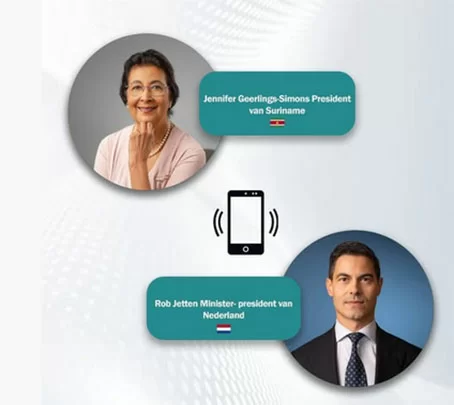
    In a significant diplomatic address at the Presidential Palace in Paramaribo, King Willem-Alexander of the Netherlands emphasized the profound historical significance of his state visit to Suriname, marking the first Dutch royal visit in 47 years. The monarch explicitly called for confronting the shared colonial past between the two nations, including the painful legacy of slavery and turbulent post-independence periods.

    The King characterized the visit as a pivotal opportunity to renew and deepen bilateral relations based on mutual respect and equality. He acknowledged the emotional weight of the moment, particularly for the hundreds of thousands of Dutch citizens with Surinamese roots, while noting that his grandparents’ visit in 1978 provided historical context for the current diplomatic engagement.

    ‘We will not avoid history, including its painful elements such as slavery,’ declared Willem-Alexander. ‘We intend to engage in dialogue with descendants for whom this carries deep meaning.’ The monarch praised the courage required for both nations to confront their complex shared history, describing this honest reckoning as the foundation for a shared future.

    Beyond historical reconciliation, the visit agenda includes strengthening cooperation in governance, independent judiciary, and democratic institutions—areas the King described as fundamentally connecting both nations. The program also features engagements with young entrepreneurs and students, focusing on skills development for sustainable economic growth.

    Willem-Alexander expressed admiration for Suriname’s cultural richness, expressing regret that the three-day visit wouldn’t permit comprehensive exploration from the Waterkant to the upper Suriname River. The King concluded by thanking President Jennifer Geerlings-Simons for the warm reception, setting a positive tone for the subsequent diplomatic meetings.

  • Suriname en Nederland tekenen drie samenwerkingsdocumenten

    Suriname en Nederland tekenen drie samenwerkingsdocumenten

    In a landmark diplomatic event, Suriname and the Netherlands have signed three significant agreements marking a new chapter in their bilateral relations. The signing ceremony took place at the Presidential Palace in Paramaribo, where President Jennifer Simons presided over the proceedings during the Dutch royal couple’s state visit—the first by a Dutch head of state in over four decades.

    The comprehensive agreements include:
    1. A Joint Declaration formalizing the outcomes of bilateral discussions between Foreign Ministers
    2. A Statement of Intent on educational cooperation between both nations
    3. A financing agreement between Invest International and Suriname’s Ministry of Public Works for the Suriname River dredging project

    President Simons characterized the visit as “historic” and “a strategic moment to modernize the relationship,” emphasizing that the renewed partnership would be built on principles of equality, mutual trust, and future-oriented collaboration. The discussions involved multiple cabinet members from both nations, covering areas of shared interest including education, tourism, justice, security, and public health.

    Notably, both countries committed to addressing the historical consequences of colonialism and slavery within the Surinamese context, making this a structural component of their new bilateral framework. Several additional documents remain in negotiation, including a Memorandum of Understanding on socio-economic cooperation and a detailed policy roadmap with clear timelines.

    The state visit program continues with political-institutional meetings at the National Assembly and Court of Justice, followed by engagements focused on economic diplomacy and socio-cultural exchange. Key sectors highlighted for cooperation include logistics, dredging, tourism, ports, energy, and technological collaboration.

    President Simons expressed optimism that the visit would create lasting memories of Surinamese hospitality while generating new impulses for building stronger nations and peoples.

  • President Simons ontvangt koning Willem-Alexander en koningin Máxima

    President Simons ontvangt koning Willem-Alexander en koningin Máxima

    PARAMARIBO – In a significant diplomatic engagement, King Willem-Alexander and Queen Máxima of the Netherlands were formally received by Surinamese President Jennifer Geerlings-Simons at the Presidential Palace on Monday morning. The royal visit, which marks a new chapter in bilateral relations, included an extensive Dutch delegation comprising four ministers and senior officials.

    The arrival ceremony featured a full military honor guard, with both the Dutch and Surinamese national anthems performed—a symbolic gesture underscoring mutual respect between the two nations. Following protocol, schoolchildren presented ceremonial greetings to the distinguished guests, after which official photographs were captured on the palace steps.

    A private meeting ensued between President Simons, her spouse Glenn Geerlings, and the Dutch royal couple. This was followed by a traditional exchange of gifts and the signing of the Republic of Suriname’s guestbook by the Dutch delegation.

    The discussions centered on enhancing bilateral cooperation, with several agreements scheduled for formal signing later in the day. Both delegations are expected to issue a joint press statement outlining the concrete outcomes of these diplomatic talks, which aim to foster deeper political and economic collaboration between Suriname and the Netherlands.

  • Tight contest expected as St Lucians go to the polls

    Tight contest expected as St Lucians go to the polls

    Citizens of St. Lucia are casting their votes today in a consequential general election that will determine the island nation’s political direction for the coming years. The electoral contest presents a direct confrontation between Prime Minister Phillip J Pierre’s incumbent St. Lucia Labour Party (SLP) and Allen Chastanet’s opposition United Workers Party (UWP), both seeking divine blessing and public mandate.

    Prime Minister Pierre, 71, called this election nearly twelve months ahead of the constitutional deadline, demonstrating confidence in his party’s ability to maintain or potentially expand its current parliamentary majority of 13 seats secured in the July 2021 elections. In his final pre-election message, Pierre emphasized collective progress and continuity, urging voters to ‘hold the line’ and continue the journey his administration began.

    Opposition leader Allen Chastanet, 65, seeks redemption for his party’s previous electoral defeat and his own tenure as prime minister. Campaigning under the symbolic ‘yellow wave’ sweeping Caribbean politics, Chastanet referenced recent opposition victories in Trinidad and Tobago and St. Vincent and the Grenadines as harbingers of potential change. His campaign emphasizes hope, unity, and renewed leadership for national development.

    The electoral landscape features 44 nominated candidates alongside eight independent contenders, though political analysts anticipate a straightforward contest between the two dominant parties. Notably, two former UWP members turned independent candidates—Richard Frederick and Stephenson King—face heightened challenges in retaining their seats despite their current alignment with the ruling SLP.

    With 180,000 registered voters, electoral officials report significant late registration activity following the November 9 election announcement, particularly among youth voters. Chief Elections Officer Herman St Helen maintains confidence in the electoral process’s integrity, promising free and fair proceedings under the observation of international teams from CARICOM and the Organization of American States.