分类: politics

  • Immigration Staff Pulled From Across Belize to Keep Benque Border Open for Easter

    Immigration Staff Pulled From Across Belize to Keep Benque Border Open for Easter

    As one of Belize’s busiest cross-border travel periods for the Easter holiday gets underway, authorities have moved swiftly to avoid a shutdown of the key western Benque Viejo border crossing after a sudden wave of staff absences that officials suspect is a coordinated organized action, not coincidental illness.

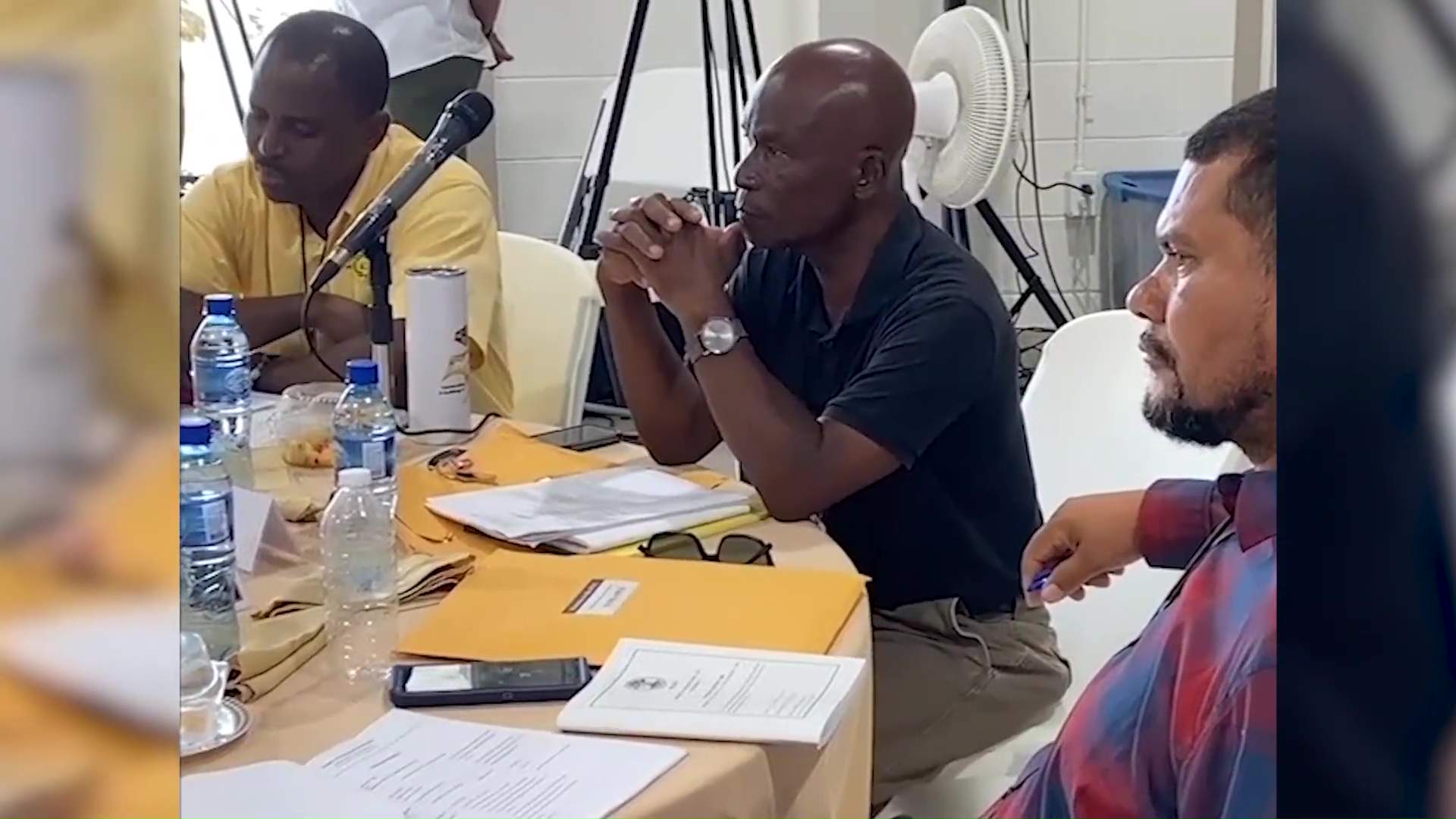
    In comments to reporters this week, Tanya Santos, Chief Executive Officer of Belize’s Immigration Department, confirmed that 10 immigration officers at the Benque checkpoint called in sick across the first two days of the week. Only a small number of the absent officers submitted formal certified medical documentation to justify their leave, raising immediate red flags for leadership.

    Santos noted that the timing of the mass absence is highly suspicious, coming just ahead of the peak Easter travel window when cross-border traffic surges to its highest annual levels. To rule out broader public health or environmental factors, she personally checked with other government agencies that operate out of the same border facility, and confirmed none of those teams reported any unusual spikes in sick leave.

    If the absences do prove to be a coordinated action by officers pushing for changes to workplace policies, Santos emphasized that the protest action is misplaced. “If it is that it is a coordinated action, then unfortunately it would be very much misguided on their part because if there are grievances, there are procedures that need to be followed,” she said.

    To prevent any disruption to border operations that would leave thousands of holiday travelers stranded, the immigration ministry launched an emergency redeployment, pulling experienced officers from entry and exit points across the entire country. The pool of replacement staff includes officers posted as far south as Punta Gorda and staff assigned to Philip Goldson International Airport, all reassigned to the Benque crossing to fill the gap.

    On Thursday, Santos was joined by Lawrence Thompson, Director of Border Management and Immigration Services, for an on-site visit to the border. The pair personally thanked the reassigned officers for stepping up during the crisis, awarding each a small token of appreciation for their flexibility. Many of the officers who came in to cover the gap had already been scheduled for Easter holiday leave, but agreed to postpone their time off to keep the crossing running.

    “Many of them who would have been taking their holidays, but they decided to come and stand with us and make sure that the Belizean people and the travelling public will still be able to move freely without any problems here at the border,” Santos explained.

    Thompson sought to reassure the public that the incident has been contained, with no threat to either operational continuity or national security. “Regardless of the incident that had transpired with the officers calling in sick, we are ensured that the operation of the border is maintained and the national security interest is also maintained,” he said.

    Officials did acknowledge that travelers should prepare for extended wait times during peak travel hours over the Easter weekend, due to the already high volume of cross-border traffic that comes with the holiday period. That said, all five of the border’s immigration processing booths are fully staffed and operating normally, with all travelers being processed in line with standard border protocols.
  • PROBATION QUESTIONS

    PROBATION QUESTIONS

    A landmark piece of criminal justice reform is sparking robust debate across Trinidad and Tobago, after the nation’s Senate voted unanimously Wednesday to advance the Probation of Offenders (Amendment) Bill 2026, which aims to reframe the country’s punishment-focused system around rehabilitation instead of incarceration. The bill now moves to the House of Representatives for floor debate, bringing competing perspectives from criminologists, opposition lawmakers, and government officials to the forefront of national conversation.

    Justice Minister Devesh Maharaj laid out the government’s case for the legislation during Senate remarks, outlining two core benefits: reducing severe overcrowding in the country’s overburdened prisons and cutting hundreds of millions in unnecessary taxpayer spending on extended incarcerations. Maharaj added that the reform also offers a second chance for eligible offenders, allowing qualifying individuals to seal their court records and remove the persistent barriers that prevent former convicts from securing stable employment and travel visas.

    Leading criminologists have broadly praised the reform as a long-overdue shift in approach, but many have raised urgent questions about whether Trinidad and Tobago currently has the infrastructure and institutional capacity to deliver on the policy’s promises. Criminologist Akinee Harry, who has studied the nation’s criminal justice system for years, called the bill “a progressive step forward” that could cut prison overcrowding and give non-violent offenders a legitimate path to reintegrate into society if rolled out correctly. But Harry stressed that successful probation programs depend on three non-negotiable pillars: robust monitoring frameworks, well-trained probation officers, and consistent post-release follow-up — none of which he says are currently scaled to meet the demand of a nationwide expanded system.

    Harry also flagged gaps in the support services required for meaningful rehabilitation, including accessible mental health counseling, structured job placement programs, and sustained community-based reintegration initiatives. “Rehabilitation cannot happen in isolation; it has to be supported socially and economically,” Harry explained. Noting that the country already uses limited electronic monitoring through its existing Electronic Monitoring Unit, Harry questioned whether authorities can expand these systems to serve a larger probation population. He concluded that while the legislation holds significant promise, its long-term success will hinge on sustained government investment in infrastructure and independent accountability mechanisms.

    Fellow criminologist Dr. Randy Seepersad echoed Harry’s support for the reform, adding that Trinidad and Tobago has long suffered from a dysfunctional partial probation system that has left minor offenders trapped in cycles of incarceration. For years, Seepersad explained, a probation department has existed within the Ministry of Homeland Security (formerly the Ministry of National Security), but it has never been fully funded or activated. As a result, people charged with petty offenses are often held in pre-trial detention for months or even years at a time, exposing low-risk offenders to harmful prison environments where they come into contact with hardened criminals.

    This approach, Seepersad argued, carries far-reaching harm for both offenders and their families: extended incarceration disrupts stable employment, severs critical family ties, and pushes households dependent on a single income into economic instability. Most damagingly, he noted, placing minor offenders in crowded prisons exposes them to pro-criminal and pro-violence social networks, increasing the likelihood that they will reoffend after release. “There’s so much that is negative about imprisoning people that really pushes people into a life of crime,” Seepersad said, arguing that incarceration should only be used as a last resort for low-risk offenders. He called the proposed reforms “long overdue”, noting that a well-functioning probation system could break the cycle of recidivism, ease prison overcrowding, and redirect law enforcement resources to violent crime.

    Not all stakeholders have supported the bill, however. Opposition Senator Sanjiv Boodhu, deputy political leader of the People’s National Movement, slammed the timing of the legislation as deeply contradictory, noting that the government is currently operating a national state of emergency to address a surge in violent crime. Boodhu argued that the emergency measures have already suspended civil liberties in the name of combating violent crime, but lawmakers are now being asked to advance a bill that would allow eligible convicts to be released from prison earlier than current sentencing guidelines allow.

    Boodhu tied his criticism to a high-profile recent killing: the murder of Joseph Sutton and his 11-month-old son in their St. James home earlier this week, in which Sutton is alleged to have been a witness in an ongoing criminal case. “The government is blowing hot and cold,” Boodhu told reporters outside Parliament. “On the one hand, you have a state of emergency that is completely ineffective and we’re here today arguing a Bill that seeks to allow convicts to go free earlier… where is the policy direction of this government as it relates to the most important factor, national security?” He called on the government to prioritize long-overdue legislation to protect witnesses and improve the country’s low crime detection and prosecution rates, arguing that those gaps are far more critical to reducing violent crime than early offender release.

  • Prime Minister Drew urges integrity and discipline as Customs Officers graduate CCLEC training

    Prime Minister Drew urges integrity and discipline as Customs Officers graduate CCLEC training

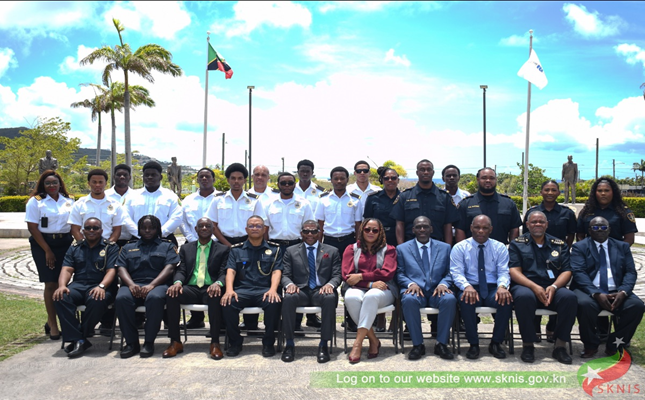
    BASSETERRE, Saint Kitts – On April 2, 2026, a new cohort of Caribbean customs officers crossed a key professional threshold during a graduation ceremony at National Heroes Park, marking their successful completion of the Junior Officers Basic Training Course organized by the Caribbean Customs Law Enforcement Council (CCLEC). Addressing the graduating class, Saint Kitts and Nevis Prime Minister and Minister of National Security Dr. Terrance Drew extended formal congratulations to the new officers while laying out a clear call for ethical, principled service to the nation and the broader Caribbean region.

    Drew opened his remarks by commending both the graduates for their dedication through the intensive training program and the Saint Kitts and Nevis Customs and Excise Department for its consistent investment in building professional capacity for border management. He highlighted that the regional collaborative framework behind the CCLEC training embodies a core principle for small island nations across the Caribbean: that pooling collective resources creates greater strength and impact than individual nations working alone. “As small countries, territories within the region, it is best if we bring all of our resources together because together we will have more and together we will reach further,” Drew told the audience. “And this course demonstrates that and is built on that principle that we espoused as Caribbean people.”

    While the prime minister recognized the technical skills the officers gained through their coursework, he stressed that technical proficiency alone is not enough to build a successful career in customs enforcement. For Drew, the true measure of an officer’s success lies in their personal character, core values, and commitment to ethical decision-making, even when faced with temptation.

    He issued a blunt warning to the graduating class that corruption attempts are an inevitable part of the job: “There are people who are going to call you and offer you big money… and ask you to compromise the law and your integrity for personal gain. That will happen to you.” Drew added that ethical challenges are not always overt; subtle pressures, from emotional appeals from friends or family to implicit personal biases, can also skew decision-making and erode public trust. “All these, point… not to the technical aspect of the course… but to your own personal development. What are your values, your core values? Those are the principles that will definitely determine if you become a successful customs officer or you become one of those who is known to be compromised,” he said.

    Drew closed his remarks by encouraging graduates to hold fast to principles of fairness and discipline in every interaction, regardless of the pressures they face. “What I’ve seen here tells me that you have started off on an excellent footing,” the prime minister said. “Stay true to yourself and to your principles and have the courage to stand up when it is challenging.”

    His address reinforced the non-negotiable role that customs officers play in protecting national borders, regulating legitimate trade, and upholding public confidence in government institutions, reminding the new cohort that integrity and discipline must remain the foundation of every aspect of their service.

  • Azan calls for urgent action after man falls through Easington bridge

    Azan calls for urgent action after man falls through Easington bridge

    KINGSTON, Jamaica — A fatal accident on Easington bridge has ignited sharp criticism of the Jamaican government’s infrastructure management, with opposition road affairs spokesperson Richard Azan demanding immediate corrective action. On Friday, a local man lost his life after falling into a large, unaddressed hole in the deteriorating crossing, a tragedy Azan calls a preventable failure of governmental responsibility.

    In an official statement released following the incident, Azan argued that the death has reignited long-simmering questions about the ruling administration’s flagship Accelerated Bridge Programme. According to Azan, the initiative has repeatedly fallen short of its commitments to deliver critical repair work across the parish of St. Thomas, leaving high-risk structures like Easington bridge unrepaired for months.

    “This is a profound failure of duty,” Azan stated in the release. “A Jamaican is dead because we allowed a known hazard to remain open to pedestrian traffic. I am angry and deeply saddened by this completely avoidable loss. The Government must stop issuing empty promises and start issuing work orders. Every day of delay puts another life at risk.”

    Azan explained that with no safe alternative crossing routes available to local residents, the community had no choice but to continue using the damaged bridge despite its well-documented structural flaws. That unnecessary gamble, he emphasized, has now ended in death.

    The opposition spokesperson laid out two clear demands for the government: first, to table a full, transparent parliamentary disclosure of all infrastructure funding allocated and spent in the region since Hurricane Melissa hit, and second, to install a safe temporary crossing for Easington without further holdup.

    “No more excuses. No more waiting. Repair the bridge or build a safe passage. Honour the dead by protecting the living,” Azan added. He closed his statement by extending sincere condolences to the deceased man’s family and loved ones as they grieve their loss.

  • US human rights group condemns ‘unlawful’ US strike on boat in the Caribbean

    US human rights group condemns ‘unlawful’ US strike on boat in the Caribbean

    A recent U.S. military strike against a vessel in the Caribbean Sea that left four people dead has drawn sharp rebuke from one of the country’s leading independent human rights organizations, which is calling for an immediate end to the covert lethal operation campaign. Human Rights Watch (HRW), a New York-based global human rights monitoring group, issued the condemnation Friday, arguing that the fatal attack is far from an isolated mistake — it is the latest example of a years-long pattern of unlawful extrajudicial killing carried out by U.S. forces outside recognized war zones.

    Details of the strike were first released by U.S. Southern Command (Southcom), the Miami-headquartered military command responsible for operations across Latin America and the Caribbean, in a March 25 statement. According to the command’s official account, the lethal kinetic operation targeting the vessel was ordered by Marine General Francis L. Donovan, head of U.S. Southern Command, and carried out by the joint task force branded Southern Spear. The target vessel, Southcom claimed, was linked to officially designated terrorist groups, was traveling along well-documented narcotics smuggling corridors in the Caribbean, and was actively engaged in drug trafficking operations at the time of the strike. The command confirmed four male individuals described as “narco-terrorists” were killed in the action, and added that no U.S. military personnel were injured during the operation.

    The attack marked the 47th lethal strike conducted by the U.S. military in counter-narcotics operations across the Caribbean and Pacific oceans, a campaign that has now claimed the lives of 163 people since its launch, according to data compiled by HRW. Sarah Yager, the organization’s Washington D.C. director, emphasized that the steady drumbeat of these strikes has created a systemic pattern of illegal force that has gone largely unexamined by the public and policymakers.

    “These strikes aren’t one-off incidents, they’re part of a pattern of using military force where the law does not permit it, over and over again,” Yager said. “The fact that these strikes have faded from public attention does not make these violations any less grave or unlawful.”

    HRW’s legal argument centers on a clear distinction laid out in international law between military operations in active armed conflict and civilian law enforcement actions. The organization stresses that the U.S. is not involved in any formal armed conflict with drug trafficking organizations operating in the Caribbean or Pacific, which means no suspected traffickers qualify as legitimate military targets under international legal standards. Outside of a declared armed conflict, the deliberate use of lethal force is only legally permissible when it is strictly necessary to defend against an immediate threat to human life. To date, the U.S. government has not released any public evidence demonstrating that any of the 163 people killed in these strikes posed an imminent lethal threat to anyone, HRW says, meaning the killings amount to unlawful extrajudicial executions.

    The organization is calling on the sitting Trump administration to take immediate action to address the pattern of abuse: first, to halt the entire campaign of extrajudicial lethal strikes immediately, and second, to launch a full accountability process that includes investigating the unlawful killings, conducting formal assessments of harm to the victims and their surviving families, and providing appropriate legal and financial redress for the violations committed.

  • Gov’t hands over land titles to Rastafari Coral Gardens Benevolent Society

    Gov’t hands over land titles to Rastafari Coral Gardens Benevolent Society

    ST JAMES, Jamaica — On Good Friday, April 3, a landmark moment of reckoning and repair unfolded in St James, as Jamaican senior officials formally transferred full legal ownership of two parcels of land to the Rastafari Coral Gardens Benevolent Society (RCGBS), delivering long-awaited state restitution for the 1963 Coral Gardens incident that targeted the local Rastafari community.

    Deputy Prime Minister and Minister of National Security and Peace Dr. Horace Chang led the handover ceremony, joined by Olivia Grange, Minister of Culture, Gender, Entertainment and Sport. The event was held on the newly transferred plots in Albion, St James, to mark the annual commemoration of the 1963 Coral Gardens Atrocity Against Rastafari.

    In his remarks to attendees, Dr. Chang — who also serves as Member of Parliament for St James North Western — clarified that the official titles for Lots 84A and 84B grant full legal ownership rights exclusively to the RCGBS. This transfer secures the community’s unconditional right to occupy, manage, and develop the property in line with its own priorities and cultural needs. The land is designated to function as a purpose-built, secure community space for Rastafari elders, designed to support the group’s unique cultural and social requirements.

    “This is a critical step forward. We are not erasing our history, nor are we rewriting it,” Dr. Chang emphasized. “We must carry our history with us, but we also have the responsibility to move forward and build a better, more just future from that history. That is exactly what this handover represents.” He also praised the sustained advocacy of RCGBS leadership over decades, specifically highlighting Ras Lewis Brown for his organizing and advocacy work, and Sistha Pamela Rowe-Williams for her consistent communication and unwavering commitment to the group’s core goals.

    Dr. Chang also acknowledged the critical work of the National Land Agency (NLA), led by CEO and Commissioner of Lands Cheriese Walcott, which oversaw the completion of all required legal processes to ensure the transfer was legally sound and permanent. He added that the Jamaican government looks forward to continued collaboration with the RCGBS in future initiatives.

    For her part, Minister Grange framed the handover as evidence of the government’s deepening commitment to addressing the longstanding harms inflicted on the Rastafari community. She reported that to date, more than $130 million has been distributed to the RCGBS Trust Fund to support survivors of the 1963 atrocity, with an additional $12 million deposited into the fund in recent weeks. Grange also noted that the government has provided ongoing financial support for the temporary Rastafari elders’ home in Norwood, while a permanent facility that meets the community’s specific cultural and dietary requirements is being developed.

    Grange emphasized that the land transfer marks a major milestone in a national reparations process that launched in 2017, when Prime Minister Andrew Holness issued a formal public apology on behalf of the Jamaican state and committed to a comprehensive program of reparations and restoration for the Rastafari community. Led by Grange’s ministry, the initiative has focused on redressing the intergenerational harms of the Coral Gardens incident through three core pillars: direct financial support, formal state recognition of the Rastafari community, and tangible reparative action such as this land transfer.

    Speaking on behalf of the Rastafari community, Brown reflected on the 60-plus year journey that led to the handover, from the first public testimonies of brutality by surviving elders, to the formal establishment of the RCGBS as a recognized advocacy body, and ultimately to high-level negotiations with government leadership at Jamaica House. He expressed sincere gratitude to Dr. Chang for guiding the community through complex legal requirements and for championing the group’s 13-point policy recommendations to the Jamaican government.

    Even as he celebrated the milestone, Brown stressed that the work toward full reparative justice remains unfinished. He called on members of the community to remain unified and persistent in building a more equitable and secure foundation for future generations of Rastafarians in Jamaica.

  • Saint Kitts and Nevis advances bold vision for sustainable energy future with launch of its Green Energy Transition Project

    Saint Kitts and Nevis advances bold vision for sustainable energy future with launch of its Green Energy Transition Project

    On April 2, 2026, the Federation of Saint Kitts and Nevis entered a transformative new phase in its pursuit of energy sovereignty and environmental sustainability with the official launch of the Green Energy Transition Demonstration Project. The launch ceremony, hosted at the St. Lucia Conference Room of the St. Kitts Marriott Resort in the capital Basseterre, gathered a cross-section of key stakeholders, international partners, and leading technical experts united by a shared goal of reshaping the Caribbean nation’s energy ecosystem.

    In his keynote address at the event, Minister Konris G. Maynard — who oversees the portfolios of Public Infrastructure, Energy and Utilities, Domestic Transport, Information, Communication, Technology and Post — framed the initiative as far more than an infrastructure development, emphasizing its far-reaching implications for national resilience, public welfare, and long-term prosperity.

    “This project is not simply about installing new energy hardware,” Maynard explained. “It is about fundamentally transforming how we conceptualize, generate, store and manage energy to deliver consistent, affordable service to all our people. Today’s launch confirms the national direction we have set: one that prioritizes robust energy systems designed to drive climate resilience, environmental sustainability and inclusive long-term economic growth. In this work, it is critical that we not only introduce cutting-edge emerging technologies, but also integrate and steward them to meet the evolving needs of our energy and electricity sector. This demonstration project directly advances that mission.”

    At its core, the initiative will deploy an innovative microgrid system at the St. Kitts Electricity Company (SKELEC) Transmission and Distribution Facility. The system integrates three advanced components: solar photovoltaic power generation, utility-scale battery energy storage, and intelligent, data-driven energy management technology. Officials project that the system will strengthen overall grid stability, reduce service disruptions to end-users, and create a flexible framework to scale up renewable energy adoption across both islands of the federation.

    Maynard stressed that urgent investment in resilient energy infrastructure is not a policy choice for small island developing states (SIDS) like Saint Kitts and Nevis — it is an existential necessity. On the front lines of accelerating climate change, the nation regularly faces climate impacts that disrupt energy systems, while volatile global fossil fuel prices expose its economy to unpredictable external shocks outside its control.

    “It is essential. It is a must. We are on the front lines of climate change. We face volatile fuel prices and external shocks beyond our control. Strengthening our energy systems, making them smarter, more flexible, and more resilient is one of the most important investments we can make in our future,” Maynard said. “Imagine if Saint Kitts and Nevis ran entirely on renewable energy today. We would never need to worry about sudden spikes in household electricity costs.”

    The minister also highlighted the foundational role of the longstanding collaborative partnership between Saint Kitts and Nevis and the Republic of China (Taiwan), noting that the project is a tangible outcome of the two parties’ shared commitment to climate action, innovative development, and mutual respect.

    Beyond physical infrastructure, the project includes a deliberate focus on building local workforce and institutional capacity. Through targeted training programs and ongoing technical exchange, the initiative ensures that the specialized knowledge and skills required to operate and maintain these advanced energy systems will stay within the federation, supporting long-term self-sufficiency.

    Looking forward, Maynard positioned the demonstration project as the first step in a sweeping national energy transformation that will cement Saint Kitts and Nevis’ reputation as a regional leader in just clean energy transition. He pointed to SKELEC’s recent call for proposals for a landmark 50-megawatt solar photovoltaic and battery energy storage project planned for the Basseterre Valley Aquifer as the next major milestone in this journey, expressing confidence in the nation’s progress.

    “Our goal is a future where every citizen has access to reliable, affordable, sustainable energy — a future we are building together through intentional, collective, confident action,” Maynard added.

    For the small Caribbean nation, the launch of the Green Energy Transition Demonstration Project marks a bold, forward-thinking step that aligns energy security, price affordability, and environmental stewardship to deliver tangible improvements to the quality of life for all residents of Saint Kitts and Nevis.

  • Appeal Court quashes 50-year sentence

    Appeal Court quashes 50-year sentence

    After more than four and a half decades behind bars for a 1978 high-profile murder, a Caribbean appellate court has overturned a controversial 50-year prison sentence imposed on Peter Matthews, ordering an emergency new sentencing hearing before a senior High Court judge over a critical legal error that undermined decades of judicial proceedings.

    The core of the case dates back to 1978, when four-year-old Roslyn Lucas was found dead at her St James Providence Estate home following a sexual assault. Matthews was ultimately convicted of the child’s murder in 1984, originally handed a death sentence that was commuted to life imprisonment in 1994. In a 2025 resentencing proceeding, High Court Justice Maria Busby Earle-Caddle issued a fresh 50-year term. Calculating the 46 years, eight months and 25 days Matthews had already served in pre-trial and post-conviction custody, the original resentencing left just over three additional years of prison time to complete. Alongside the sentence, the judge mandated psychological evaluation, participation in targeted rehabilitation programs including the cognitive behavioral initiative Thinking for Change and adult literacy courses, and post-release probation supervision.

    But the three-justice appellate panel – led by Justices Nolan Bereaux, Maria Wilson and Geoffrey Henderson – ruled last week that the entire 2025 resentencing process was fundamentally invalid. The fatal flaw? The lower court failed to correctly and conclusively establish Matthews’ age at the time of the 1978 killing, a detail with profound legal consequences for the case.

    In her written ruling, Justice Wilson emphasized that the sentencing judge had a clear obligation to adjourn proceedings to resolve the age question before issuing a new sentence, given how central the detail was to Matthews’ legal classification. “It is very unfortunate that the resentencing judge did not find it appropriate to adjourn her decision until she was able to resolve the age of the appellant,” Wilson wrote, noting that the error carried “very serious” consequences for a man who had already spent most of his life in incarceration.

    New evidence accepted by the appellate court – an official birth certificate – confirms Matthews was born on July 14, 1961, meaning he was only 17 years old when the crime occurred. Under the law in effect in 1978, this classification made him a child offender, a status that carried strict legal protections: people under the age of 18 could not lawfully be sentenced to death. Because his original 1984 death sentence was unlawful on its face, every subsequent legal proceeding that flowed from that sentence – including the 1994 commutation to life imprisonment and the 2025 resentencing – was also legally invalid.

    The appellate court described the case as highly unusual and legally unprecedented in its complexity. “This is a case where the sentence of death was unlawfully imposed on the appellant,” the court’s ruling noted.

    Matthews’ defense team, led by attorneys Joseph Sookoo and Abigail Roach, had long argued that their client should have been sentenced from the start as a minor offender. This classification would drastically lower the applicable sentencing range, require a court to prioritize rehabilitation over punitive sentencing, and mandate regular periodic review of Matthews’ incarceration to assess his readiness for release.

    Representatives of the state, led by attorney Wayne Rajbansie, initially challenged the authenticity of the newly submitted birth certificate in written legal filings. However, during oral arguments before the appellate court, Rajbansie withdrew the challenge and conceded that the birth certificate was valid, confirming that the original 1984 death sentence was indeed unlawful.

  • One Year After Hijacking, Airport Security Overhauled

    One Year After Hijacking, Airport Security Overhauled

    It has been 12 months since the 2025 Tropic Air hijacking, a national crisis that laid bare critical, life-threatening security gaps across all of Belize’s municipal airports. What began as a tragedy that left the public shaken and distrustful of domestic air travel has now evolved into a sweeping push for institutional reform, with a complete restructuring of airport security operations entering its final phase this week.

    At the heart of this transformation is Vinay Bhojwani, the current General Manager of the Belize Airports Authority, who has prioritized closing the vulnerabilities that allowed the 2025 hijacking to occur. In an interview, Bhojwani outlined the sweeping upgrades the authority has rolled out across all of the country’s aerodromes. “We’ve definitely made a lot more improvements in terms of security,” he said. “I know that before there was a question whether the security implementation was up to par and met international standards. However, this time around we made sure that we went through the proper channels, the proper avenues to engage proper security that are qualified to takeover at all of our aerodromes.”

    The upgrades stretch far beyond just increased personnel, Bhojwani confirmed: more than 100 new high-resolution surveillance cameras are currently being installed across airport premises, creating full coverage to monitor all public and restricted areas for potential threats.

    Unlike the unvetted contracting processes that drew widespread criticism after the hijacking, this overhaul has followed strict competitive bidding rules. As of this week, all national municipal airport security operations are officially under the management of Security Alliance, a private firm that already holds the trusted contract to protect the U.S. Embassy in Belize. This marks the first time in Belize’s history that a fully vetted, experienced professional security company is responsible for the safety of domestic air travel.

    Narda Garcia, CEO of Belize’s Ministry of Civil Aviation, noted that the contracting process followed all required public protocols. “They have gone through the process. They tendered, they advertised, and they tendered out. And I think the board has arrived at a decision of contracting a company that has all, has filled all the requirements that were put out there,” Garcia explained.

    This sweeping reform did not materialize immediately. In the chaotic days immediately following the April 2025 hijacking, the Belize government relied on emergency temporary measures, deploying armed officers from the Belize Police Department to all aerodromes to stabilize the system and calm public fear. Nigel Carter, Director of Civil Aviation, recalled that immediate intervention required domestic airlines to implement basic baseline safeguards that had been missing before the attack. “The Government of Belize deployed police officers to all aerodromes,” Carter said. “The CEO in the ministry consulted with the domestic airlines and we asked or required them to put in place basic security measures, passenger screening, bag screening and so forth.”

    The 2025 hijacking, which occurred on Holy Thursday, exposed not just security gaps, but deep flaws in the government’s contracting and oversight process. In the weeks after the attack, public controversy erupted when it was revealed that months before the hijacking, authorities had awarded security contracts to two firms, I-Security and Four Diamond Security, neither of which had any prior experience protecting airport operations. Thea Garcia-Ramirez, the former General Manager of the Belize Airports Authority, told reporters she had raised procedural concerns about the contracts before the attack. “I was sick. So when it came to me I advised that maybe it would be better for legal counsel to look over the contract, which would be basic and standard procedure,” Garcia-Ramirez said. “I am unaware if that was done, but when I came back those contracts were signed and on my table.”

    That lack of proper oversight and screening allowed the hijacker to board a Tropic Air domestic flight without detection, thanks to minimal passenger and bag screening and inconsistent oversight across the country’s municipal airstrips. Today, Bhojwani says the core mission of the Belize Airports Authority is non-negotiable: to ensure such a catastrophic security breach never happens again.

    Bhojwani, who took on his role after the hijacking to lead the reform effort, noted that preventing a repeat attack has been his top priority from day one. “I know it was definitely a turn of events. No one saw it coming. However, I knew that in this position I was more than capable enough to be able to make that change. So something like that doesn’t happen again. And that has been my number one priority since entering into the position,” he said. “Coming up on the one year anniversary, of course it’ll still be at the forefront of a lot of people’s minds. Especially after that time, I know everyone was a bit timid when it comes to flying and different things like that. However, my goal is to change a narrative. We’re making sure that there’s a security presence there to help you feel safe and they’re actually very good at communicating with people as well.”

    One year on, the public memory of the Tropic Air hijacking and the fear it sparked still lingers for many Belizeans. But alongside those scars, the crisis has spurred long-overdue institutional change, creating a far more tightly monitored, accountable and secure system for domestic air travel across the country. This report from Shane Williams was produced for News Five.

  • Cabinet Weighs People’s Constitution Committee’s Recommendations

    Cabinet Weighs People’s Constitution Committee’s Recommendations

    On April 2, 2026, one of the most significant constitutional reform processes in Belize in recent decades has reached a make-or-break turning point, as the country’s Cabinet enters the final stages of reviewing a landmark set of proposals from the People’s Constitution Commission (PCC).

    This week, cabinet ministers received a full technical briefing on the independent review of the PCC’s recommendations, marking the first formal update on the commission’s proposals ahead of the government’s official stance on potential changes to Belize’s national constitution. With discussions intensifying and high-stakes decisions just weeks away, the process is now moving at a clear pace to meet a legally mandated timeline.

    Indigenous Affairs Minister Dr. Louis Zabaneh, who is leading the government’s coordination on the reform effort, laid out the steps the administration has taken to date to evaluate the proposals. “We have now held four formal meetings with the former chairs of the PCC,” Dr. Zabaneh confirmed in an on-record briefing. “We have also held separate consultations with stakeholder groups that expressed dissenting opinions on the commission’s proposals, and we have worked in close coordination with the Attorney General’s Ministry throughout the entire process.”

    To ensure the technical and legal soundness of the recommendations, the government contracted independent constitutional law experts from the United Kingdom to conduct a thorough third-party review of the PCC’s proposals. That review has now been completed, and Dr. Zabaneh shared the full findings with Cabinet during its most recent meeting.

    Looking ahead, the Cabinet has scheduled an all-day retreat in the third week of April to conduct a line-by-line review of every recommendation, with the goal of finalizing the government’s official position. By law, the administration is required to present its final decision to the House of Representatives by early May, leaving a tight timeline for deliberations.

    This report is a full transcript of an evening television news broadcast, with Kriol language statements transcribed using a standardized spelling system where applicable.