分类: politics

  • Bramble rejects Gonsalves’ claim that SVG’s diplomats would become passport salespeople

    Bramble rejects Gonsalves’ claim that SVG’s diplomats would become passport salespeople

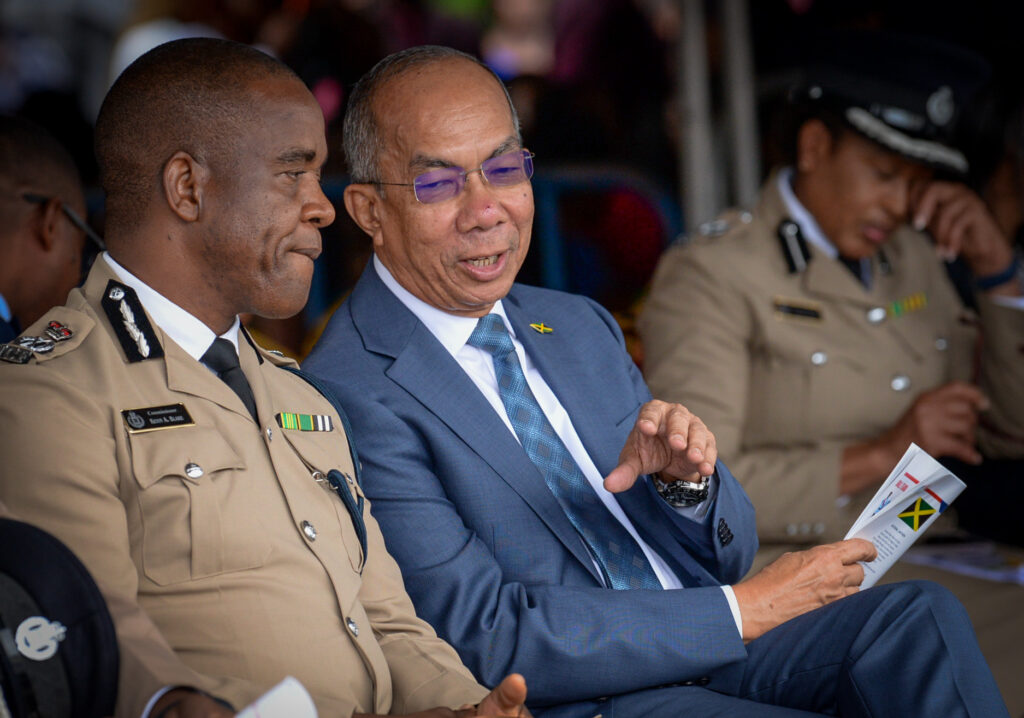
    A heated political debate has erupted in St. Vincent and the Grenadines following the newly elected government’s proposal to integrate economic diplomacy with its planned Citizenship by Investment (CBI) programme. The controversy began when Opposition Leader Ralph Gonsalves characterized the initiative as transforming diplomatic personnel into “roving passport salespersons” during Tuesday’s parliamentary budget debate.

    Foreign Minister Fitz Bramble issued a stern rebuke to his predecessor’s comments, expressing profound disappointment in the veteran politician’s characterization of the government’s foreign policy repositioning. The exchange represents the first major parliamentary confrontation since the New Democratic Party’s landslide victory in November’s general election, where they secured 14 of 15 parliamentary seats.

    Prime Minister Godwin Friday’s EC$1.9 billion budget, presented Monday, outlines a strategic shift from traditional diplomacy toward “economic statecraft” – using diplomatic channels to advance growth, investment, and fiscal resilience. The administration frames this approach as essential for addressing the economic vulnerabilities of a small island developing state, particularly the high costs of climate resilience and limitations of traditional debt financing.

    The government’s proposed CBI programme, scheduled for mid-2026 launch, explicitly distances itself from what Friday termed “revenue-at-all-costs” models. Instead, it positions itself as a “sovereign capital mobilisation strategy” with stringent integrity safeguards, including mandated investment floors, residency requirements, multi-layered background screening, and continuous due diligence throughout the citizenship lifecycle.

    All CBI proceeds would be channeled through the legislatively established St. Vincent and the Grenadines Investment Fund (SVGIF), with strict protocols directing resources toward climate-resilient infrastructure, social development, and debt reduction rather than recurrent spending.

    Gonsalves, however, maintained his longstanding opposition to CBI programmes, comparing their economic impact to “cocaine addiction” for nations that become dependent on this revenue stream. The former prime minister warned of impending regulatory crackdowns from major Western nations and potential balance of payments crises within the Eastern Caribbean Currency Union.

    The opposition leader advocated for regional collaboration with international financial institutions to develop adjustment packages anticipating what he believes is the inevitable decline of CBI programmes across the Caribbean.

  • DEA announces restructuring of personnel in the Dominican Republic

    DEA announces restructuring of personnel in the Dominican Republic

    ARLINGTON, Virginia – The U.S. Drug Enforcement Administration has initiated a significant operational reshuffle of its personnel stationed in the Dominican Republic following allegations of professional misconduct currently under federal investigation. This strategic repositioning emerges from an internal agency review aimed at preserving operational integrity while maintaining bilateral counter-narcotics cooperation.

    In an official communiqué, the DEA characterized the move as a precautionary administrative measure designed to strengthen supervisory protocols and accountability mechanisms. The agency explicitly clarified that this reorganization does not constitute a reduction of its operational footprint in the Caribbean nation, but rather represents a structural realignment under enhanced compliance standards.

    Personnel previously deployed to the Santo Domingo field office are being temporarily reassigned during the ongoing investigation. The DEA emphasized that this transitional phase will not impair collaborative anti-drug initiatives with Dominican authorities, noting that Administrator Anne Milgram has personally coordinated with the U.S. Ambassador to ensure an orderly transition process.

    The agency highlighted the Dominican Republic’s critical geopolitical significance as a Caribbean logistics hub and praised the longstanding partnership with the country’s National Directorate for Drug Control (DNCD). This collaboration has produced substantial results in recent years, including major cocaine seizures and the disruption of transnational criminal syndicates operating in the region.

    The DEA concluded its statement by affirming that the investigated conduct represents isolated incidents rather than institutional practice, reiterating its commitment to professional standards, transparency, and the rule of law in all international operations.

  • Speaker delays ruling as Leacock-Gonsalves ‘movie’ replays in Parliament

    Speaker delays ruling as Leacock-Gonsalves ‘movie’ replays in Parliament

    A contentious atmosphere enveloped the parliamentary session on Thursday as Speaker Ronnia Durham-Balcombe deferred her ruling on a point of order raised by Opposition Leader Ralph Gonsalves. The dispute originated from a remark made by Deputy Prime Minister St. Clair Leacock during the 2026 Budget debate, which Gonsalves deemed unparliamentary and demanded retraction.

    Gonsalves asserted that upon entering the chamber, he overheard Leacock making a derogatory comment directed at him. He promptly raised a point of order, urging the Deputy Prime Minister to apologize. “I am sure in your reading that that is not Parliamentary language to refer to someone,” Gonsalves addressed the Speaker. “I think he would wish to do ‘mea culpa’ and say that I am sorry about that and move on.”

    While Speaker Durham-Balcombe acknowledged some merit in Gonsalves’ objection, characterizing the comment as an epithet, Leacock declined to apologize or retract his statement. Instead, he referenced previous parliamentary exchanges, stating, “The last time this movie played, my response was ‘the imps’ appear.” This defiance prompted Gonsalves to threaten leaving the session, declaring Parliament “a complete joke.”

    The tension was compounded by an earlier procedural conflict where Gonsalves raised another point of order against Minister Laverne Gibson-Velox for reading her speech verbatim, contrary to Standing Orders 33(9). The Speaker overruled this objection, revealing she had granted the minister special permission to read her presentation.

    Speaker Durham-Balcombe subsequently admonished Gonsalves for his conduct, stating his reactions were “above and beyond” and warning that his behavior breached parliamentary decorum. She indicated she would delay her ruling on the initial point of order, exercising her authority to deliberate further.

    Gonsalves defended his actions, emphasizing his commitment to maintaining parliamentary standards and expressing concern over perceived leniency toward government members. The session concluded with unresolved tensions, scheduled to resume Friday morning with Prime Minister Godwin Friday expected to conclude debate on the EC$1.9 million fiscal package.

  • Gonsalves doubts VAT-free shopping generated $28m in sales

    Gonsalves doubts VAT-free shopping generated $28m in sales

    A significant political dispute has erupted in St. Vincent and the Grenadines regarding the economic impact of the nation’s inaugural VAT-Free Shopping Day. Opposition Leader Ralph Gonsalves has vehemently contested Prime Minister Godwin Friday’s declaration that the December 19, 2025 event generated EC$28 million in sales, dismissing the initiative as merely a political “gimmick” with minimal substantive benefits for working citizens.

    During Monday’s 2026 Budget Address before Parliament, Prime Minister Friday, who also serves as Finance Minister, announced that the Inland Revenue Department had documented substantial consumer activity totaling EC$28 million during the tax-free shopping event. The Prime Minister characterized the initiative as “successful and well-received” while emphasizing its “tangible benefits to consumers and the wider economy.”

    However, Gonsalves delivered a forceful rebuttal during his response to the Budget Speech on Tuesday, challenging the veracity of the reported figures. The Opposition Leader declared his intention to personally confront the Comptroller of Inland Revenue regarding the EC$28 million turnover claim, stating he would “contest it vehemently.” Gonsalves criticized the program’s restrictive framework, noting specific exemptions including vehicle purchases and restaurant/hotel dining that limited the initiative’s practical impact.

    Employing detailed fiscal analysis, Gonsalves presented alternative calculations based on historical VAT collection data. He referenced his party’s previous administration projections of EC$159 million in VAT revenue for 2025, with actual 2024 collections reaching EC$130.2 million. Through mathematical extrapolation, Gonsalves determined that average daily turnover would approximate EC$4 million under normal circumstances—far below the government’s reported EC$28 million figure.

    The Opposition Leader further questioned the methodology behind the revenue assessment, suggesting that consumer spending patterns likely shifted substantially in the days surrounding the VAT-free event rather than representing genuine economic stimulation. He cited Barbados’ experience with similar initiatives, noting that country reported losses of BDS$3 million despite having triple the population and fewer purchasing restrictions.

    This fiscal debate occurs within the broader context of the New Democratic Party’s first budget presentation since ending the Unity Labour Party’s 27-year governance period on November 27. Parliament continues deliberations on the proposed EC$1.9 billion budget amid these contentious economic claims.

  • Regering staat achter hervorming rechterlijke macht; benadrukt constitutionele zorgvuldigheid

    Regering staat achter hervorming rechterlijke macht; benadrukt constitutionele zorgvuldigheid

    Suriname’s government has expressed cautious support for proposed judicial reforms while emphasizing the need for constitutional alignment and practical implementation. Justice Minister Harish Monorath addressed the National Assembly on Thursday, outlining the administration’s careful approach to restructuring the judicial system.

    Minister Monorath characterized the proposed legislation as touching upon fundamental aspects of state governance rather than routine policy adjustments. “These reforms reach the core of our constitutional structure,” Monorath stated, emphasizing that any changes must be continuously evaluated against constitutional principles, separation of powers doctrine, and practical executability.

    Regarding the establishment of a third judicial instance, the minister acknowledged the importance of enhanced legal development and protection while highlighting critical considerations. “We must thoroughly examine personnel capacity, financial implications, and organizational structure,” Monorath explained, noting that new judicial bodies create permanent state burdens and require sufficient qualified personnel.

    The proposal to establish a college of prosecutors-general received similar scrutiny. Monorath stressed the necessity for clear demarcation of authority and responsibility within the Public Prosecutor’s Office, which occupies a unique position within the state apparatus. Structural changes must not create ambiguity regarding hierarchy, accountability, or command relationships.

    Monorath emphasized the crucial balance between reform and institutional stability, noting that judicial stability remains essential for legal certainty and citizen/investor confidence. The minister underscored that legislation must be both legally sound and administratively workable.

    The government consequently adopted a prudent approach: supporting judicial modernization and strengthening while prioritizing constitutional consistency, financial viability, and practical implementation. According to Monorath, all modifications should contribute to a stronger, more transparent, and independent legal system rather than responding to incidental events or temporary tensions.

    Following the minister’s address, VHP parliamentarians Krishna Mathoera and Mahinder Jogi criticized what they characterized as the government’s passive stance toward initiative laws. They emphasized shared responsibility that cannot be delegated, noting that the executive branch ultimately implements adopted legislation. The assembly adjourned after the minister’s responses, with sponsors expected to present amendments based on discussions during the second round.

  • Material aid sent by Mexico arrives in Havana

    Material aid sent by Mexico arrives in Havana

    In a significant demonstration of international solidarity, Mexican Navy vessels Papaloapan and Isla Holbox docked at Havana’s port on Thursday morning carrying substantial humanitarian aid for the Cuban people. The shipment, comprising essential food supplies, toiletries, and cleaning products, represents the Mexican government’s concrete response to Cuba’s ongoing economic challenges.

    Cuban President Miguel Díaz-Canal Bermúdez publicly acknowledged the gesture via social media, characterizing the assistance as emblematic of “the solidarity, friendship, and exemplary history of sovereignty and respect for the rights of others that distinguish Mexico.” His statement underscored the deep historical ties between the two nations.

    Betsy Díaz Velázquez, Cuba’s Minister of Domestic Trade, personally oversaw the reception of the aid and expressed profound gratitude to Mexican President Claudia Sheinbaum, the Mexican government, and its citizens. “We feel accompanied by Mexico, by its humanity, its solidarity, and its brotherhood,” she stated during the arrival ceremony.

    The minister specifically recognized the coordinated efforts of multiple Mexican institutions including the Ministry of the Navy, the Ministry of Foreign Affairs, the Embassy, and the Office of the Presidency in facilitating the complex logistical operation. She emphasized the particular importance of this assistance given the “intensified attempt to suffocate us” through tightened U.S. economic sanctions.

    This humanitarian delivery occurs against the backdrop of strengthened U.S. restrictions under the economic blockade, which Cuban officials describe as increasingly detrimental to civilian welfare. The Mexican government’s aid shipment not addresses immediate material needs but also serves as a diplomatic statement reinforcing Mexico’s independent foreign policy and commitment to South-South cooperation.

    The distribution mechanisms for the received supplies will be managed through Cuba’s domestic trade networks, ensuring the aid reaches populations most affected by current economic pressures.

  • Column: Wanneer een wet klopt, maar moreel ontspoort

    Column: Wanneer een wet klopt, maar moreel ontspoort

    A controversial compensation law passed in November 2024 has placed Suriname’s Prosecutor General among the highest-paid public officials in the nation, earning a staggering net monthly salary exceeding SRD 1 million (approximately USD 27,000). The legislation, championed by Asis Gajadien (VHP) and Geneviévre Jordan (ABOP) and enacted under President Chan Santokhi’s administration, has sparked widespread criticism for its timing and provisions.

    The Judicial Position Act establishes that the Prosecutor General’s base compensation reaches 95% of the presidential salary. However, this figure represents merely the foundation for additional benefits rather than a true cap. The law’s critical feature is its definition of ‘compensation’ as an aggregate of base salary, allowances, and reimbursements.

    Article 31 further compounds this structure by granting annual 5% increments based not on years served in current position, but on total tenure within the judicial system. For the current Prosecutor General—with six years in role but over forty years in judicial service—this translates to exponential salary growth rather than measured experience recognition.

    Beyond these provisions, tax-free allowances can reach 150-170% of base compensation, creating a system where officials technically remain under the 95% threshold while substantially exceeding it in practice. This design emerges as particularly controversial given its implementation during nationwide austerity measures that saw subsidy reductions, tax increases, and repeated government calls for public sacrifice.

    The disparity has drawn sharp criticism from Assembly Member Poetini Atompai (NPS), who has demanded full governmental transparency regarding the judicial compensation structure and its burden on national finances. He rightly questions the proportionality, reasonableness, and executive accountability in this arrangement.

    Critics argue that the Dutch ‘Balkenende norm’—which establishes the prime minister’s salary as the absolute maximum for public officials—offers a more transparent alternative that prevents creative legislative constructions. The current system, while legally sound, represents a failure of legislative responsibility when laws become mathematically clever but socially indigestible.

    In a nation where nurses, teachers, and pensioners face genuine economic hardship, this judicial compensation model threatens to erode public trust in the justice system. The law requires immediate revision to prevent the moral derailment of Suriname’s judicial institutions and restore faith in governmental fairness.

  • LVV doet aangifte wegens onbevoegde beheersdaden op terreinen in Tibiti

    LVV doet aangifte wegens onbevoegde beheersdaden op terreinen in Tibiti

    The Ministry of Agriculture, Livestock, and Fisheries (LVV) in Suriname has initiated legal proceedings against unauthorized occupation of state-owned lands in the Tibiti region of Para district. The contested forestry territories were officially allocated to the ministry for agricultural purposes by the government in March 2023.

    During an inspection at kilometer 99 in the Tibiti area, ministry officials encountered workers who claimed to be operating under instructions from two individuals identified as R.M. and K.J. The workers asserted they had received authorization from the son of former LVV Minister Parmanand Sewdien, though the legal validity of such permission remains unclear.

    Through a formal legal notice delivered by attorney Deepak Jairam, the ministry has demanded the immediate evacuation of the premises from K.J. The document emphasizes that no authorization has been granted to any parties for activities on these parcels, except to a company responsible for installing an irrigation system for an official agricultural project.

    LVV Minister Mike Noersalim confirmed to Starnieuws that significant investments have been made on the property, including equipment, a drip irrigation system, and solar panels valued at approximately €40,000. The Dutch company that executed and delivered these projects has reportedly not yet received payment. Additionally, the site contains a cultivated passion fruit (markoesa) plantation.

    The ministry has indicated that if evidence emerges of damage to state property, additional charges for destruction and/or theft will be filed. This incident has reignited concerns regarding the management and supervision of state lands designated for agricultural development. Local police have documented the case and are conducting an investigation into the matter.

  • APNU excludes WIN from Region Four council committees- Manickchand

    APNU excludes WIN from Region Four council committees- Manickchand

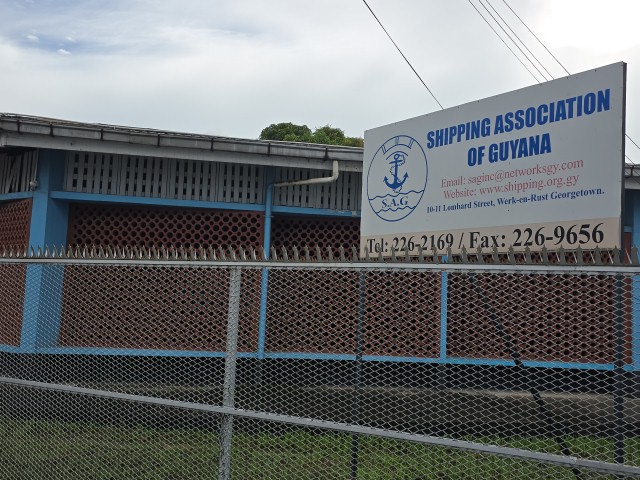
    In a significant political development within Guyana’s Region Four (Demerara-Mahaica) governance structure, the A Partnership for National Unity (APNU) has excluded its coalition partner We Invest in Nationhood (WIN) from representation on crucial council committees. Local Government and Regional Development Minister Priya Manickchand disclosed this exclusion during Thursday’s parliamentary session while addressing budgetary estimates.

    The revelation emerged when WIN councillor Tabita Sarabo-Halley questioned why only APNU and People’s Progressive Party Civic representatives were appointed to sectoral committees. Minister Manickchand clarified that APNU’s Chief Whip failed to submit any WIN nominations when invited to propose committee members. ‘I’m advised that in this particular instance, no names were submitted from your collection. The APNU Chief Whip failed to submit any names from WIN when they were asked to submit names,’ she stated.

    The minister speculated that APNU might have determined WIN lacked sufficient capacity or expertise, though she emphasized that the two parties must resolve the matter internally. This exclusion marks a notable fracture in the opposition alliance, particularly significant since APNU unexpectedly lost its historical control of Region Four in last September’s elections, securing only nine seats compared to PPPC’s seventeen and WIN’s eight seats.

    APNU parliamentarian Ganesh Mahipaul attempted to secure a commitment for parliamentary-style proportionality in committee formations but was unsuccessful. Minister Manickchand maintained that appointments must follow legal guidelines rather than political proportionality models, noting that committee members are conventionally selected based on expertise and ability to serve regional interests, with the exception of procurement committees which fall under the National Procurement and Tender Administration Board’s jurisdiction.

  • Abinader to visit U.S., Chile and France in March

    Abinader to visit U.S., Chile and France in March

    SANTO DOMINGO – The Dominican Presidency unveiled on Thursday an extensive international itinerary for President Luis Abinader, marking a significant month of diplomatic engagements across the Americas and Europe throughout March. This strategic tour underscores the nation’s proactive approach to strengthening bilateral relations and engaging with global economic governance.

    The President’s first diplomatic stop will be in the United States, where he is scheduled to participate in a high-profile regional summit convened by U.S. President Donald Trump in Miami on March 7th. The assembly, as detailed in an official government communiqué, is designed to foster dialogue on pressing matters of mutual regional and international concern.

    Following his North American engagement, President Abinader will journey to Santiago, Chile, for a three-day visit from March 10th to 12th. The central purpose of this leg is his official attendance at the presidential inauguration of Chile’s President-elect, José Antonio Kast. The agenda also includes a dedicated bilateral meeting between the two leaders to discuss avenues for enhanced cooperation between their nations.

    Concluding this diplomatic tour, President Abinader will travel to Paris, France, on March 24th and 25th. The European visit features a pivotal meeting with French President Emmanuel Macron. Furthermore, the Dominican leader will actively participate in high-level assemblies of the Organisation for Economic Co-operation and Development (OECD), highlighting the country’s commitment to engaging with critical international economic policy forums.