分类: politics

  • Police take precautionary action after US military strike in Venezuela

    Police take precautionary action after US military strike in Venezuela

    In response to escalating regional tensions following the US military intervention in Venezuela, the Trinidad and Tobago Police Service (TTPS) has implemented comprehensive security protocols to ensure national stability. The operation resulted in the apprehension of Venezuelan President Nicolás Maduro and First Lady Cilia Flores during early morning operations on January 3.

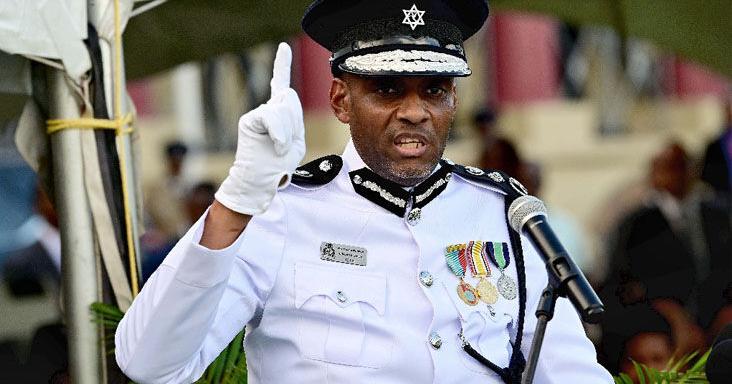
    Commissioner of Police Allister Guevarro confirmed through an official press release that law enforcement agencies are maintaining vigilant surveillance of developing situations. The TTPS has activated strategic operational measures designed to anticipate potential risks while maintaining public confidence during this period of geopolitical uncertainty.

    Visible security enhancements include the cordoning of critical infrastructure areas in Port of Spain. Metal barricades now restrict access to the Police Administration Building at the intersection of Sackville and Edward Streets, demonstrating the force’s proactive approach to organizational readiness.

    Police authorities emphasize that these measures represent precautionary steps rather than emergency responses. The implemented protocols aim to ensure service continuity and operational stability should regional developments directly impact Trinidad and Tobago.

    Commissioner Guevarro reiterated the importance of public cooperation, stating: ‘Citizen vigilance coupled with responsible information sharing constitutes a fundamental component of national resilience.’ The public is encouraged to maintain calm, monitor official communication channels, and report suspicious activities to law enforcement agencies promptly.

  • Starmer says UK will ‘shed no tears’ over US seizing Maduro

    Starmer says UK will ‘shed no tears’ over US seizing Maduro

    LONDON — British Prime Minister Keir Starmer has declared the United Kingdom’s firm alignment with United States policy toward Venezuela, stating that Britain “sheds no tears” over the downfall of Nicolás Maduro’s administration. The announcement came during a press briefing on Saturday where Starmer outlined his government’s position on the evolving political situation in the South American nation.

    Starmer confirmed that high-level discussions between UK and US counterparts regarding Venezuela’s political future are scheduled to occur in the coming days. These diplomatic exchanges will focus on coordinating international efforts to ensure a stable transition of power in Caracas.

    “The United Kingdom has consistently advocated for democratic transition in Venezuela,” Starmer stated. “We have never recognized Maduro as the legitimate president and therefore view the conclusion of his regime without regret.”

    Emphasizing Britain’s commitment to international legal frameworks, the Prime Minister added: “This morning I reaffirmed my government’s dedication to upholding international law. Our objective remains a secure and peaceful transfer of power to a legitimate administration that truly represents the will of the Venezuelan people.”

    The British position signals a continuation of the previous UK government’s stance toward Venezuela, maintaining pressure on the Maduro government while supporting opposition movements seeking democratic reform. This development occurs amid increasing international scrutiny of Venezuela’s political trajectory and human rights record.

  • Government eyes placing parts of electricy grid underground

    Government eyes placing parts of electricy grid underground

    In a significant address at the JPS Hunt’s Bay Power Plant, Jamaican Prime Minister Andrew Holness announced the initiation of high-level Cabinet discussions with Jamaica Public Service Company (JPS) to underground critical portions of the nation’s electricity infrastructure. This strategic move forms the cornerstone of a comprehensive effort to transform Jamaica’s power grid into a storm-resilient system capable of withstanding future climate challenges.

    The Prime Minister’s declaration came during a ceremony marking the deployment of 175 specialized utility vehicles—including bucket trucks, diggers, and pole trailers—to accelerate restoration efforts in communities still without power since Hurricane Melissa struck on October 28, 2025. This latest addition brings the total fleet of recovery vehicles to 247, substantially enhancing operational capacity during the critical final phase of restoration.

    Holness framed the crisis as an opportunity for transformative change, emphasizing that mere restoration would be insufficient. “The opportunity comes when we look at the poles we are putting up and say: How do we put up stronger poles? How do we introduce microgrids? How do we put some of our lines underground?” he stated, revealing that preliminary cost assessments have already been presented to the government.

    While acknowledging the substantial financial investment required, the Prime Minister presented a compelling economic argument for resilience, questioning: “What is it that we lose by not having resilience in the grid?” He detailed how prolonged outages cripple hospitals, security services, businesses, and overall economic activity, justifying the government’s approach to treating electricity as an essential public good.

    This perspective underpinned the administration’s controversial decision to facilitate a US$150-million loan to the privately-owned JPS, which Holness defended as necessary for protecting public interest. He explicitly separated this emergency financing from ongoing license renegotiations with the utility company, assuring citizens that their interests would be safeguarded in both processes.

    Current restoration statistics indicate approximately 90% of the island has regained power, with the hardest-hit parishes reaching nearly 70% recovery—a pace Holness described as creditable compared to international benchmarks following major storms.

    The Prime Minister linked these recovery efforts to broader economic resilience, citing recent Planning Institute of Jamaica data showing over 5% growth in the last quarter. He characterized resilience as the product of deliberate policy choices rather than chance, stating: “It requires planning, and therefore, the reason why you are seeing the economy displaying resilience is because the government that you elected took decisions that contributed to that outcome.”

    As restoration enters its final phase, Holness committed to prioritizing citizenship over cost-benefit calculations, envisioning a rebuilt Jamaica that emerges stronger than before. The strategy specifically targets strengthening critical corridors in western Jamaica and Kingston to ensure faster recovery when future storms inevitably strike.

  • US strikes Venezuela, captures Maduro and his wife

    US strikes Venezuela, captures Maduro and his wife

    In an unprecedented military operation early Saturday, the United States executed a large-scale strike in Venezuela resulting in the capture and extraction of President Nicolás Maduro and his wife. President Donald Trump announced the mission via social media, confirming that the Venezuelan leader was apprehended at his residence within the Fort Tiuna military compound and transported via the U.S.S. Iwo Jima to face criminal prosecution in New York.

    The Justice Department unsealed a comprehensive indictment accusing Maduro of orchestrating a corrupt regime that systematically leveraged state power to facilitate international drug trafficking. The document alleges direct collaboration between Maduro’s government and violent narco-terrorist organizations to flood American markets with cocaine, enriching Venezuela’s political and military elite through criminal enterprise.

    International reaction was swift and critical. The United Nations expressed profound alarm, characterizing the intervention as a dangerous violation of international law that establishes a concerning precedent for sovereign nations. China’s Foreign Ministry issued a forceful condemnation, denouncing the operation as hegemonic aggression that violates Venezuela’s sovereignty and threatens regional stability.

    President Trump defended the operation during television appearances, acknowledging minor U.S. casualties and helicopter damage while celebrating the mission’s success. He dismissed congressional criticism about constitutional authorization, labeling Democratic opponents as ‘weak, stupid people’ while asserting the operation’s necessity. The administration simultaneously imposed temporary airspace restrictions over Puerto Rico due to security concerns stemming from the Venezuelan military activity.

    In subsequent remarks, Trump revealed previously undisclosed proposals to Mexican President Claudia Sheinbaum regarding U.S. military action against cartels, suggesting continued regional security interventions might be forthcoming. The White House has commenced planning for Venezuela’s political future, with Trump emphasizing significant U.S. involvement in determining the country’s post-Maduro governance structure.

  • Civil society group to protest US attack on Venezuela

    Civil society group to protest US attack on Venezuela

    Civil society organizations in Trinidad and Tobago are mobilizing for a demonstration outside the US Embassy in Port of Spain on January 4th, denouncing what they characterize as an illegal military intervention in Venezuela. The protest comes in response to US forces’ capture of Venezuelan President Nicolás Maduro and his wife Cilia Flores during a large-scale operation on January 3rd.

    Movement for Social Justice (MSJ) leader David Abdulah issued a forceful statement condemning the action as “a gross violation of national sovereignty” that contravenes international law and the UN Charter. The coalition labeled the operation “an act of imperialism” designed to assert US hegemony throughout Latin America and the Caribbean.

    The groups particularly criticized Prime Minister Kamla Persad-Bissessar’s administration for its alleged complicity in facilitating US military activities in the region. They pointed to several concerning developments: her government’s support for US military deployment in the Southern Caribbean initiated last August, establishment of a US radar system at Tobago’s ANR Robinson International Airport, and granting unlimited transit permissions to US military aircraft at Trinidad’s major airports.

    While Persad-Bissessar asserted that Trinidad and Tobago is “not a participant in any of these ongoing military operations,” she reiterated her longstanding refusal to recognize Maduro as Venezuela’s legitimate leader. This position contrasts sharply with most CARICOM nations, which have collectively advocated for maintaining the Caribbean as a zone of peace and opposed US military action against alleged narco-trafficking operations.

    The Prime Minister recently questioned CARICOM’s reliability as a security partner while affirming that the United States represents Trinidad and Tobago’s sole credible protector against external threats.

  • Regime change by force in Venezuela

    Regime change by force in Venezuela

    In a dramatic escalation of tensions, United States military forces initiated a covert operation in Venezuela during the early hours of Saturday, resulting in the capture of President Nicolás Maduro. The intervention began with precision airstrikes targeting key Venezuelan military installations including La Guaira port, Higuerote airport, La Cariota airport, and the Fuerte Tiuna military complex. Notably, the country’s critical oil infrastructure remained untouched throughout the operation.

    Eyewitnesses reported explosions illuminating the night sky over Caracas as military helicopters patrolled the capital. The strategic strikes appear to have served as a diversion for the primary objective: the extraction and detention of President Maduro, who was transported with his wife, Cilia Flores, to the USS Iwo Jima naval vessel.

    The operation culminates years of mounting pressure on Maduro’s administration, which faced indictment by U.S. authorities in 2020 on multiple charges including corruption and drug trafficking. The State Department had previously offered a $50 million reward for information leading to his arrest or conviction.

    Following the military incursion, Attorney General Pam Bondi declared that Maduro would face ‘American justice on American soil in American courts.’ With Maduro’s capture, constitutional power has transferred to Vice President Delcy Rodríguez, who was swiftly sworn in as interim leader.

    The action represents a significant evolution from previous U.S. military interventions in the region, notably the 1989 Operation Just Cause in Panama which required several days to capture General Manuel Noriega. That operation drew widespread international condemnation and resulted in substantial civilian casualties.

    This intervention occurs against the backdrop of a newly articulated ‘Trump Corollary’ to the Monroe Doctrine, which advances a doctrine of American preeminence and flexible realism as pillars of foreign policy. During a recent press conference, President Trump explicitly connected the operation to Venezuela’s substantial oil reserves, suggesting the newly installed leadership would cooperate with U.S. economic interests.

  • Spain rejects Israel’s intention to expel NGOs

    Spain rejects Israel’s intention to expel NGOs

    The Spanish government has issued a formal diplomatic condemnation against Israel’s systematic targeting of humanitarian organizations operating in Palestinian territories. Through an official statement released by its Foreign Ministry, Madrid denounced Israel’s controversial practice of requiring NGOs to register, only to subsequently revoke their operational licenses and expel them from the region.

    This regulatory crackdown has significantly impacted both Spanish and international aid groups, effectively crippling their capacity to address what Spain describes as a ‘humanitarian catastrophe’ in Gaza. The measures directly hinder the delivery of essential supplies and services to Palestinian civilians facing extreme deprivation.

    The Spanish statement further contextualized these actions within Israel’s broader legislative offensive against humanitarian operations. Reference was made to the recent Knesset-approved law authorizing the termination of electricity and water supplies to UNRWA facilities while simultaneously stripping the agency of its diplomatic immunities and operational privileges.

    Madrid expressed profound alarm regarding the compounded severity these decisions impose on Gaza’s already dire humanitarian landscape. The government emphasized that these policies will have devastating consequences for civilian populations throughout the Occupied Palestinian Territories.

    Concluding with a firm diplomatic demand, Spain urged Israeli authorities to immediately reverse these ‘unacceptable decisions’ that obstruct life-saving humanitarian operations. The appeal specifically highlighted the need to protect vulnerable refugee populations across Gaza, the West Bank, and the broader Middle East region who rely on international aid for survival.

  • DRC begins two-year term on UN Security Council

    DRC begins two-year term on UN Security Council

    The Democratic Republic of Congo has officially commenced its term as a non-permanent member of the United Nations Security Council, marking its first return to the powerful diplomatic body in over three decades. Foreign Minister Therese Kayikwamba Wagner characterized this development as a profound responsibility rather than an accolade, emphasizing the nation’s dedication to international peace and security during a video address.

    This ascension to the Security Council occurs amid significant domestic security challenges within the DRC, including ongoing instability and external aggression. Minister Wagner expressed gratitude to all UN member states for their confidence in the Central African nation’s capabilities, acknowledging the timing as particularly symbolic given the country’s current circumstances.

    The diplomatic mission will prioritize conflict prevention and resolution, with particular focus on African continent security issues. The minister articulated the nation’s approach would be grounded in principles of multilateral cooperation, respectful dialogue, and strict adherence to international legal obligations.

    Minister Wagner explicitly framed the Security Council position as “a mission, not a reward,” underscoring the DRC’s commitment to defending fundamental international principles including state sovereignty, territorial integrity, and the established framework of international law. The country previously held Security Council membership during the 1982-1983 and 1990-1991 periods, bringing historical perspective to its current term.

  • Maldives expresses interest in strengthening ties with Cuba

    Maldives expresses interest in strengthening ties with Cuba

    Marking the 67th anniversary of the triumph of the Cuban Revolution, Maldivian Foreign Minister Moosa Zameer has articulated a clear vision for enhanced cooperation between the Maldives and Cuba. In a formal diplomatic communiqué addressed to his Cuban counterpart, Bruno Rodríguez Parrilla, Minister Zameer extended warm congratulations on behalf of both the Maldivian government and its citizens, recognizing the occasion as Cuba’s ‘Liberation Day.’

    The correspondence served as a platform to reaffirm the enduring diplomatic partnership between the two nations. Minister Zameer explicitly expressed his intent to fortify the existing bilateral and multilateral collaboration in the years ahead, underscoring a mutual commitment to international solidarity. The message concluded with formal assurances of the Minister’s highest regard and esteem for his Cuban colleague.

    The foundation for this modern partnership was established on January 29, 1977, when diplomatic relations were first formalized. For nearly five decades, the relationship has been defined by a consistent pattern of strong diplomatic alignment and reciprocal support across numerous international forums and development initiatives, fostering a relationship built on shared principles and mutual respect.

  • Venezuela: Maduro houdt VS olijftak voor

    Venezuela: Maduro houdt VS olijftak voor

    In a striking diplomatic overture, Venezuelan President Nicolás Maduro has proposed comprehensive dialogue with the United States regarding narcotics enforcement while offering American energy corporations expanded access to Venezuela’s substantial petroleum reserves. The unexpected conciliatory message was delivered during a New Year’s Day broadcast on state television, filmed within a militarized zone of Caracas.

    Maduro characterized Venezuela as a “brother nation” to the United States and referenced his November exchange with President Donald Trump, noting the American leader had formally acknowledged his presidency during their communication. This represents a notable tonal shift from Venezuela’s previous stance toward Washington amid escalating bilateral tensions.

    The televised interview featured Maduro demonstratively driving a vehicle with his wife Cilia Flores seated in the rear—a gesture analysts interpreted as projecting confidence despite recent reductions in his public appearances following U.S. threats of military intervention.

    Washington has recently intensified its Caribbean military presence while accusing Maduro’s administration of presiding over a “narco-state” and threatening regime change. The Venezuelan leader has consistently denied these allegations, maintaining that U.S. hostility stems from desires to control Venezuela’s extensive oil reserves and rare earth mineral deposits.

    Maduro’s proposal specifically mentioned readiness to accommodate investments from American energy giants like Chevron, stating: “Venezuela is prepared to accept U.S. investments wherever and whenever they choose to proceed.” Regarding narcotics cooperation, he emphasized: “If they seriously wish to discuss agreements to combat drug trafficking, we are prepared for that conversation.”

    This development occurs against the backdrop of increased U.S. naval deployments in the Caribbean and follows Maduro’s Christmas-season admonition that Trump should focus primarily on domestic challenges rather than Venezuelan affairs.