分类: politics

  • Ancestors’ Day : The Nation bows before the memory of its founding heroes (video)…

    Ancestors’ Day : The Nation bows before the memory of its founding heroes (video)…

    Port-au-Prince, Haiti – January 2, 2026: In a powerful display of national reverence, Haiti’s transitional government leadership gathered at the Museum of the Haitian National Pantheon (MUPANAH) to commemorate Ancestors’ Day, honoring the revolutionary figures who secured the nation’s independence 222 years ago.

    Prime Minister Alix Didier Fils-Aimé led the solemn wreath-laying ceremony alongside Laurent Saint-Cyr, President pro tempore and Coordinator of the Transitional Council, accompanied by presidential advisors Smith Augustin, Frinel Joseph, Edgard Leblanc Fils, and Emmanuel Vertilaire. The event drew prominent military and civil officials including Lieutenant General Derby Guerrier, Commander-in-Chief of the Armed Forces, and Vladimir Paraison, Acting Director General of the Haitian National Police.

    The ceremony represented more than symbolic remembrance—it served as a reaffirmation of Haiti’s foundational principles of liberty, sovereignty, and historical continuity. In his address, Prime Minister Fils-Aimé characterized the event as “a political act of remembrance” that demonstrates the state’s “unwavering commitment to the cardinal values of liberty, national sovereignty, justice, and human dignity.”

    A significant development in this year’s commemoration was the unprecedented recognition of female independence fighters. Laurent Saint-Cyr specifically highlighted women’s contributions to the liberation struggle, marking the first official January 2nd tribute to heroines including Abdaraya Toya (Victoria Montou), Sanite Bélair, Catherine Flon, Suzanne Simone Baptiste Louverture, and Marie-Jeanne Lamartinière. This initiative, championed by Secretary General Marie Élisabeth Régine Joseph Haddad, reflects the administration’s commitment to advancing women’s leadership roles.

    The ceremony transitioned to Villa d’Accueil for formal honors, featuring culturally significant performances and photographic exhibitions showcasing emblematic figures of Haiti’s emancipation struggle. Minister of National Education Antoine Augustin provided historical context, detailing the achievements of both celebrated and lesser-known independence heroes.

    Against the backdrop of contemporary challenges, the government framed this tribute as both a moral compass and a call to collective action, urging citizens to draw inspiration from their ancestors’ sacrifice for national reconstruction and a more prosperous future.

  • GRA officials to be arrested for allegedly aiding Azruddin Mohamed in transfer of vehicles

    GRA officials to be arrested for allegedly aiding Azruddin Mohamed in transfer of vehicles

    Multiple officials from the Guyana Revenue Authority (GRA) are facing imminent arrest for their alleged involvement in facilitating illegal vehicle transfers for prominent businessman and political figure Azruddin Mohamed. The tax authority announced on Friday, January 2, 2026, that several employees conspired to illegally process 11 vehicle transfers between November 27 and December 5, 2025.

    The investigation uncovered systematic violations of both vehicle transfer protocols and Anti-Money Laundering regulations. According to GRA’s statement, the same employees conducted off-premises vehicle examinations, approved transfer documents, and processed payments while bypassing standard procedures. The scheme showed patterns of coordination, with many transferees sharing addresses in Republic Park, Atlantic Gardens, and Hill Top, Timehri regions.

    The scandal involves luxury vehicles and represents a significant breach of public trust. GRA has warned that all participants in these alleged illegal activities will face full prosecution under the law. International partners have been notified as investigations continue to unfold.

    This development compounds the legal troubles for Mohamed, who leads the main opposition party We Invest in Nationhood (WIN). He is currently contesting a United States extradition request related to an 11-count Grand Jury indictment for alleged mail fraud, wire fraud, and money laundering. Previous domestic cases against Mohamed regarding tax evasion on imported luxury vehicles, including a Lamborghini, were discontinued in Guyanese courts.

    The Revenue Authority has encouraged public reporting of illicit activities through dedicated hotlines, promising confidentiality and potential rewards under the Customs Act provisions.

  • ABLP St John’s Rural East branch pledges support for government leadership in New Year message

    ABLP St John’s Rural East branch pledges support for government leadership in New Year message

    In a significant show of political solidarity, the St John’s Rural East division of Antigua and Barbuda’s ruling Labour Party has publicly reinforced its endorsement of the nation’s leadership cadre. The declaration emphasizes continued confidence in the administration’s governance despite confronting substantial economic headwinds and external pressures affecting the Caribbean region.

    Carl A. Christopher, presiding chairman of the SJRE ABLP branch, articulated this position through a New Year’s communiqué addressed to party constituents. His message highlighted the nation’s forward momentum despite prevailing conditions of economic volatility, escalating living expenses, and broader regional challenges.

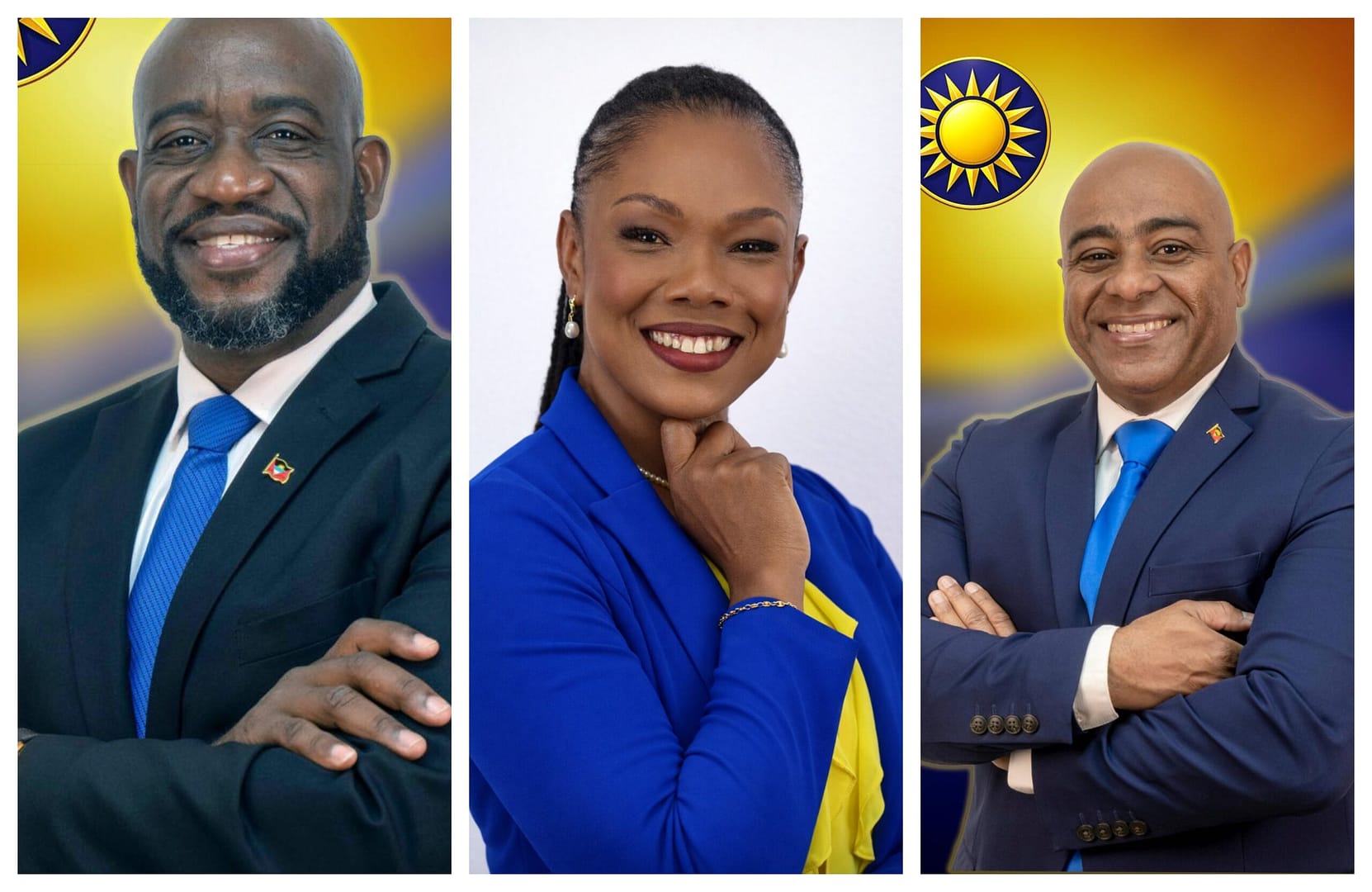
    Christopher specifically reiterated unwavering organizational support for both local parliamentary representative Maria Browne and Prime Minister Gaston Browne. He credited their leadership with consistently safeguarding the interests of the working population and maintaining stability during uncertain times.

    The chairman’s correspondence additionally served as a rallying cry for continued political engagement, urging party members to maintain discipline and unity throughout the coming year. Christopher extended personal wishes for health and prosperity to all members and their families.

    This reaffirmation of support occurs as the governing ABLP administration continues to prioritize economic resilience and social development programs. These initiatives are being advanced against a complex backdrop of international financial instability and regional economic difficulties that have characterized the post-pandemic recovery period.

  • Antiguan Diplomat Conrod C. Hunte elected to chair prestigious United Nations body

    Antiguan Diplomat Conrod C. Hunte elected to chair prestigious United Nations body

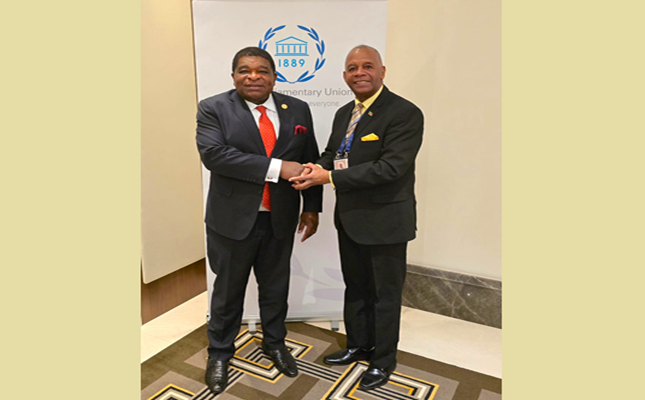
    In a significant development for international governance, veteran Antiguan diplomat Conrod C. Hunte has been elected to chair the United Nations Joint Inspection Unit (JIU), the organization’s sole independent external oversight body. The election occurred during the Unit’s Winter Session on December 3rd in Geneva, where Inspector Hunte assumed leadership alongside Vice-Chair Mohanad Al-Musawi of Iraq.

    This appointment marks a pivotal moment for the JIU as it approaches its 60th anniversary. Ambassador Hunte brings nearly forty years of multilateral experience to the position, including previous roles as Antigua and Barbuda’s Deputy Permanent Representative to the UN in New York and Permanent Representative to the International Renewable Energy Agency. His extensive background includes chairing both the Group of 77 and China in the UN Fifth Committee and the Alliance of Small Island States at UNFCCC conferences.

    Since joining the JIU in 2023, Inspector Hunte has already made substantial contributions through focused reviews of major UN agencies including the Food and Agriculture Organization and the UN Environment Programme. He has authored critical reports on governance structures within UNDP/UNFPA/UNOPS, UNICEF, and UN-Women, while co-authoring groundbreaking research on preventing sexual exploitation across the UN system.

    The JIU’s mandate under Hunte’s leadership will continue to focus on optimizing resource allocation, enhancing administrative efficiency, and identifying best practices throughout the UN system. Ambassador Walton Webson, Antigua and Barbuda’s Permanent Representative to the UN, celebrated the election as both a national pride and regional achievement, highlighting Hunte’s career-long dedication to strengthening accountability within international institutions.

  • Socialist Party of Peru celebrates Cuban Revolutionary anniversary

    Socialist Party of Peru celebrates Cuban Revolutionary anniversary

    The People’s Socialist Party (PSP) of Cuba has issued a stark assessment of Latin America’s political climate, characterizing the region as experiencing profoundly dark times marked by intensified imperial measures. According to the party’s anniversary statement, these actions aim to encircle not just physical territories but also the ideological spheres of popular thought, hope, and collective consciousness.

    The statement, released to commemorate another year of the Cuban Revolution, framed the occasion not merely as a historical milestone but as a testament to sustained resistance and moral victory. It emphasized that the Cuban people continue to demonstrate unwavering resolve in the face of unprecedented challenges.

    While acknowledging that Cuba’s journey has never been without difficulty, the PSP highlighted that current conditions present uniquely formidable obstacles. Despite this, the revolutionary fervor that ignited 67 years ago remains undiminished, serving as a continuous pulse driving present-day struggles.

    The party invoked Che Guevara’s vision, asserting that the revolutionary dream actively fuels the development of a new societal model built upon ethics, solidarity, and historical commitment. Cuba stands resilient, the statement affirmed, maintaining its dignity while resisting what it described as an inhumane economic blockade and a coordinated media campaign designed to isolate the nation globally.

    Countering this isolation, the PSP highlighted Cuba’s internationalist legacy—sharing revolutionary gains through education, healthcare, and scientific advancement dedicated to public welfare. This solidarity, characterized as substantive action rather than empty rhetoric, was crystallized in Fidel Castro’s principle: ‘Homeland is Humanity.’

  • Dominican organizations reiterate support for Cuba

    Dominican organizations reiterate support for Cuba

    International leftist organizations have issued coordinated statements commemorating the anniversary of the Cuban Revolution while simultaneously condemning United States foreign policy toward several Latin American nations. The United Left Movement (MIU) delivered a formal communication to Cuban President Miguel Diaz-Canel recognizing January 1, 1959, as a historically significant date that represents political liberation and independence achievements.

    The message coincides with the centennial celebration of Fidel Castro’s birth (1926-2016), whose legacy was characterized as fundamentally humanist, integrationist, and anti-imperialist. The MIU statement emphasized that Castro’s ideological principles continue to direct Cuba’s contemporary resistance movements and innovative approaches to national sovereignty challenges.

    A substantial portion of the communication addressed the ongoing U.S. economic, commercial, and financial embargo against Cuba, which the movement labeled as both inhumane and inconsistent with prevailing international opinion. The statement noted that the blockade contradicts the expressed will of most United Nations member states who have repeatedly voted against its continuation.

    The MIU further acknowledged the considerable sacrifices made by the Cuban population in defending national sovereignty and reaffirmed its “friendship and fraternal relations” with Cuba’s Communist Party, government institutions, and citizens.

    Separately, the Central Coordination of the Caamanista Movement endorsed these sentiments while expanding its criticism to include U.S. policies toward Venezuela, Nicaragua, Mexico, and Colombia. The Dominican Popular Movement separately characterized the Cuban Revolution as the most consequential revolutionary movement within the region and arguably across the global stage.

  • Maduro Says He’s Ready to Talk With the U.S. “Wherever and Whenever”

    Maduro Says He’s Ready to Talk With the U.S. “Wherever and Whenever”

    Venezuelan President Nicolás Maduro has publicly declared his readiness to engage in diplomatic discussions with United States officials “wherever and whenever” they choose. This unexpected overture was delivered during a nationally televised address on Venezuelan state media this Thursday.

    The announcement arrives amidst escalating tensions between the two nations. According to a New York Times report, Venezuelan authorities have taken at least five American citizens into custody in recent months. U.S. officials under the Trump administration interpret these detentions as strategic maneuvers to gain diplomatic leverage.

    Maduro’s conciliatory statement follows unconfirmed reports of a military incident involving U.S. forces. President Donald Trump previously asserted that American military assets targeted a Venezuelan dock facility allegedly connected to narcotics trafficking. Subsequent intelligence suggests the operation may have been conducted by the Central Intelligence Agency utilizing drone technology, which—if verified—would represent the first acknowledged U.S. military action within Venezuelan territory.

    When questioned about the alleged strike, Maduro remained noncommittal, indicating the matter “could be discussed in a few days.”

    This diplomatic development occurs against the backdrop of intensified U.S. naval operations in the Caribbean and eastern Pacific regions. Over the past quarter, American forces have interdicted multiple vessels suspected of transporting illicit narcotics.

    Maduro has consistently rejected allegations of his government’s involvement in drug trafficking operations, characterizing the U.S. anti-narcotics campaign as a pretext for regime change and attempted control over Venezuela’s substantial petroleum reserves. The situation further deteriorated in December when U.S. authorities seized two oil tankers and pursued another, citing violations of international sanctions. Venezuela’s government has condemned these actions as acts of “international piracy.”

  • Government eyes placing parts of electricy grid underground

    Government eyes placing parts of electricy grid underground

    In a significant address at the JPS Hunt’s Bay Power Plant, Jamaican Prime Minister Andrew Holness announced the initiation of high-level Cabinet discussions with Jamaica Public Service Company (JPS) to underground critical portions of the nation’s electricity infrastructure. This strategic move forms the cornerstone of a comprehensive effort to transform Jamaica’s power grid into a storm-resilient system capable of withstanding future climate challenges.

    The Prime Minister’s declaration came during a ceremony marking the deployment of 175 specialized utility vehicles—including bucket trucks, diggers, and pole trailers—to accelerate restoration efforts in communities still without power since Hurricane Melissa struck on October 28, 2025. This latest addition brings the total fleet of recovery vehicles to 247, substantially enhancing operational capacity during the critical final phase of restoration.

    Holness framed the crisis as an opportunity for transformative change, emphasizing that mere restoration would be insufficient. “The opportunity comes when we look at the poles we are putting up and say: How do we put up stronger poles? How do we introduce microgrids? How do we put some of our lines underground?” he stated, revealing that preliminary cost assessments have already been presented to the government.

    While acknowledging the substantial financial investment required, the Prime Minister presented a compelling economic argument for resilience, questioning: “What is it that we lose by not having resilience in the grid?” He detailed how prolonged outages cripple hospitals, security services, businesses, and overall economic activity, justifying the government’s approach to treating electricity as an essential public good.

    This perspective underpinned the administration’s controversial decision to facilitate a US$150-million loan to the privately-owned JPS, which Holness defended as necessary for protecting public interest. He explicitly separated this emergency financing from ongoing license renegotiations with the utility company, assuring citizens that their interests would be safeguarded in both processes.

    Current restoration statistics indicate approximately 90% of the island has regained power, with the hardest-hit parishes reaching nearly 70% recovery—a pace Holness described as creditable compared to international benchmarks following major storms.

    The Prime Minister linked these recovery efforts to broader economic resilience, citing recent Planning Institute of Jamaica data showing over 5% growth in the last quarter. He characterized resilience as the product of deliberate policy choices rather than chance, stating: “It requires planning, and therefore, the reason why you are seeing the economy displaying resilience is because the government that you elected took decisions that contributed to that outcome.”

    As restoration enters its final phase, Holness committed to prioritizing citizenship over cost-benefit calculations, envisioning a rebuilt Jamaica that emerges stronger than before. The strategy specifically targets strengthening critical corridors in western Jamaica and Kingston to ensure faster recovery when future storms inevitably strike.

  • US strikes Venezuela, captures Maduro and his wife

    US strikes Venezuela, captures Maduro and his wife

    In an unprecedented military operation early Saturday, the United States executed a large-scale strike in Venezuela resulting in the capture and extraction of President Nicolás Maduro and his wife. President Donald Trump announced the mission via social media, confirming that the Venezuelan leader was apprehended at his residence within the Fort Tiuna military compound and transported via the U.S.S. Iwo Jima to face criminal prosecution in New York.

    The Justice Department unsealed a comprehensive indictment accusing Maduro of orchestrating a corrupt regime that systematically leveraged state power to facilitate international drug trafficking. The document alleges direct collaboration between Maduro’s government and violent narco-terrorist organizations to flood American markets with cocaine, enriching Venezuela’s political and military elite through criminal enterprise.

    International reaction was swift and critical. The United Nations expressed profound alarm, characterizing the intervention as a dangerous violation of international law that establishes a concerning precedent for sovereign nations. China’s Foreign Ministry issued a forceful condemnation, denouncing the operation as hegemonic aggression that violates Venezuela’s sovereignty and threatens regional stability.

    President Trump defended the operation during television appearances, acknowledging minor U.S. casualties and helicopter damage while celebrating the mission’s success. He dismissed congressional criticism about constitutional authorization, labeling Democratic opponents as ‘weak, stupid people’ while asserting the operation’s necessity. The administration simultaneously imposed temporary airspace restrictions over Puerto Rico due to security concerns stemming from the Venezuelan military activity.

    In subsequent remarks, Trump revealed previously undisclosed proposals to Mexican President Claudia Sheinbaum regarding U.S. military action against cartels, suggesting continued regional security interventions might be forthcoming. The White House has commenced planning for Venezuela’s political future, with Trump emphasizing significant U.S. involvement in determining the country’s post-Maduro governance structure.

  • Civil society group to protest US attack on Venezuela

    Civil society group to protest US attack on Venezuela

    Civil society organizations in Trinidad and Tobago are mobilizing for a demonstration outside the US Embassy in Port of Spain on January 4th, denouncing what they characterize as an illegal military intervention in Venezuela. The protest comes in response to US forces’ capture of Venezuelan President Nicolás Maduro and his wife Cilia Flores during a large-scale operation on January 3rd.

    Movement for Social Justice (MSJ) leader David Abdulah issued a forceful statement condemning the action as “a gross violation of national sovereignty” that contravenes international law and the UN Charter. The coalition labeled the operation “an act of imperialism” designed to assert US hegemony throughout Latin America and the Caribbean.

    The groups particularly criticized Prime Minister Kamla Persad-Bissessar’s administration for its alleged complicity in facilitating US military activities in the region. They pointed to several concerning developments: her government’s support for US military deployment in the Southern Caribbean initiated last August, establishment of a US radar system at Tobago’s ANR Robinson International Airport, and granting unlimited transit permissions to US military aircraft at Trinidad’s major airports.

    While Persad-Bissessar asserted that Trinidad and Tobago is “not a participant in any of these ongoing military operations,” she reiterated her longstanding refusal to recognize Maduro as Venezuela’s legitimate leader. This position contrasts sharply with most CARICOM nations, which have collectively advocated for maintaining the Caribbean as a zone of peace and opposed US military action against alleged narco-trafficking operations.

    The Prime Minister recently questioned CARICOM’s reliability as a security partner while affirming that the United States represents Trinidad and Tobago’s sole credible protector against external threats.