分类: politics

  • Top cop: No reported incidents in Tobago for THA polls

    Top cop: No reported incidents in Tobago for THA polls

    Tobago’s House of Assembly elections concluded without incident on January 12, thanks to comprehensive security oversight led by Police Commissioner Allister Guevarro and Deputy Commissioner Suzette Martin. The top brass of the Trinidad and Tobago Police Service (TTPS) personally supervised electoral operations across the island, implementing strategic measures to ensure public safety and electoral integrity.

    Commissioner Guevarro conducted inspections at multiple key stations including Scarborough, Charlotteville, and Roxborough, engaging directly with station commanders and frontline officers. His visits focused on assessing policing requirements specific to the electoral context and providing operational guidance. He was accompanied by Assistant Commissioners of Police Earl Elie and Collis Hazel during these critical assessments.

    The TTPS executed widespread officer deployments throughout Tobago with the dual objective of maintaining orderly electoral proceedings and safeguarding all citizens, stakeholders, and institutions involved. In a post-election statement via social media, the police service highlighted its commitment to facilitating a smooth and incident-free democratic process.

    Commissioner Guevarro publicly commended Tobagonians for their exemplary conduct throughout the voting exercise, noting the absence of any significant disturbances or security breaches. The successful security operation demonstrates the TTPS’s capacity to manage large-scale democratic events while maintaining public order.

  • TPP trounces PNM 15-0 in THA elections

    TPP trounces PNM 15-0 in THA elections

    In an unprecedented electoral triumph, the Tobago People’s Party (TPP) led by Chief Secretary Farley Augustine secured a comprehensive victory in the Tobago House Assembly elections on January 12, capturing all 15 contested seats. The decisive win marks a significant political shift in the island’s governance, completely eliminating opposition representation from the People’s National Movement (PNM).

    The TPP declared victory shortly after 9 pm, surpassing their previous 14-1 seat achievement in the 2021 elections. The outcome was particularly devastating for PNM’s Kelvon Morris, who lost his Darrel Spring/Whim constituency by a narrow margin of 17 votes after previously winning by just three votes in 2021.

    PNM Tobago leader Tracy Davidson-Celestine announced her resignation following the crushing defeat, stating her support for “transition to new leadership” while confirming the party would seek recounts in several marginal constituencies. The resignation came amidst a atmosphere of stunned disbelief within PNM ranks, which had maintained hope until late evening that Morris might retain his seat.

    This victory continues the TPP’s remarkable electoral trajectory. In the 2021 THA polls, the party’s predecessor organization (PDP) secured 58% of votes (16,932 votes) compared to PNM’s 41% (11,942 votes). The trend continued in the 2025 general election where TPP captured two parliamentary seats with 55% of votes cast (13,857 votes versus PNM’s 11,000 votes).

    The campaign featured intense debate around both local and national issues. Critical discussion points included the controversial placement of a US military radar at ANR Robinson Airport, substantial increases in traffic fines, and rising late fees for driver’s permits. The THA’s procurement of ambulances also emerged as a significant campaign topic, with the PNM criticizing the $18 million expenditure for 12 vehicles.

    Augustine had previously made headlines by vowing to personally “mash up” the US radar installation if evidence emerged it had assisted American operations against Venezuelan leadership. The PNM campaign attempted to raise concerns about potential Trinidad-style closures of Cepep and URP programs, allegations that Augustine dismissed as fearmongering tactics.

    Despite the overwhelming defeat, Davidson-Celestine praised PNM’s “excellent candidates” and acknowledged democratic processes while urging supporters not to “lose hope in the PNM and do not lose hope in Tobago.” She noted the party had detected significant voter dissatisfaction during campaigning that ultimately failed to translate into electoral support.

    The electoral process involved 42 candidates competing across 15 constituencies, with TPP and PNM contesting all seats while the Innovative Democratic Alliance fielded 11 candidates and Unity of the People presented one candidate. The Elections and Boundaries Commission reported no voting irregularities despite minor confusion among some voters regarding polling station locations.

    This electoral restructuring followed the EBC’s creation of three new seats in 2021 (Lambeau/Lowlands, Darrel Spring/Whim and Mt St George/Goodwood) to prevent recurrence of the previous 6-6 deadlock that had paralyzed the assembly. Boundary adjustments in Mason Hall North/Moriah and Mason Hall South/Bagatelle further refined the electoral landscape ahead of the January 12 poll.

  • PNP mourns death of Ambassador Curtis Ward

    PNP mourns death of Ambassador Curtis Ward

    KINGSTON, Jamaica — Jamaica’s political and diplomatic communities are mourning the passing of Ambassador Curtis Ward, who died Sunday night at his residence in Maryland, United States. The prominent intellectual and diplomat was celebrated for his exceptional contributions to Jamaica’s foreign policy discourse and international engagement.

    The People’s National Party (PNP) issued an official statement expressing profound grief over the loss, characterizing Ward as both a distinguished patriot and an influential voice within Jamaica’s diplomatic circles. Opposition Spokesperson on Foreign Affairs, Senator Donna Scott-Mottley, led the tributes, emphasizing Ward’s unique ability to contextualize complex global developments within appropriate historical and geopolitical frameworks.

    According to Senator Scott-Mottley, Ambassador Ward possessed remarkable analytical capabilities that made intricate international matters accessible to broader audiences. His expertise proved particularly valuable during periods of heightened global instability and uncertainty, where his insights consistently enriched public debate and informed high-level policymaking processes.

    “He represented a reliable source of thoughtful analysis on virtually any international subject,” Senator Scott-Mottley noted. “One could always reach out to him for clear explanations and profound understanding of global dynamics that strengthened Jamaica’s position in international affairs.”

    The late ambassador was remembered as a committed patriot who dedicated his life to serving Jamaica with exceptional distinction both domestically and internationally. His career exemplified meaningful public service, with his scholarly approach and principled engagement leaving an indelible mark on Jamaica’s diplomatic landscape.

    Senator Scott-Mottley concluded that while Ambassador Ward’s passing creates a significant void within Jamaica’s intellectual and diplomatic community, his legacy of service, scholarship, and principled engagement will continue to guide and inspire future generations. The People’s National Party extended heartfelt condolences to Ambassador Ward’s wife Sonia, along with his family, friends, colleagues, and all those touched by his work and wisdom.

  • Mohit: Social Development was stagnant under Cox

    Mohit: Social Development was stagnant under Cox

    In a sharp rebuttal to her predecessor’s assertions, Minister of the People, Social Development and Family Services Vandana Mohit has publicly denounced claims that the ministry operated flawlessly under previous leadership. The January 12th statement directly addresses what Mohit characterizes as “misleading and factually unfounded” comments from former minister Donna Cox regarding the ministry’s operational status during her tenure.

    Mohit accused Cox of engaging in historical revisionism, stating that such remarks are “politically motivated and dangerously disconnected from reality.” The minister presented counter-evidence highlighting that social services grants for January 2026 were successfully processed and disbursed by January 1st, contradicting narratives suggesting otherwise.

    The current administration inherited significant systemic challenges including entrenched backlogs, obsolete operational systems, fragmented processes, and inadequate inter-agency coordination, according to Mohit. She emphasized that the previous government’s portrayal of perfect functionality ignores documented evidence of delayed grant payments, operational inefficiencies, and administrative strain that were subsequently acknowledged by that same administration.

    Mohit suggested that Cox’s comments reflect “a troubling indulgence in revisionist nostalgia rather than an honest engagement with facts” and indicated that the former minister appears “hypnotized by the sustained momentum of reform work” currently underway. The ministry has reportedly achieved measurable progress in key service areas, moving from stagnation to demonstrable improvement within months.

    Notable accomplishments include dramatically reducing the backlog of senior citizens’ pension payments through strategic interventions involving direct engagement with the National Insurance Board and the Ministry of Finance. These efforts resolved emergency issues that potentially threatened timely disbursement systems.

    The ministry reaffirmed its commitment to protecting Trinidad and Tobago’s most vulnerable citizens while ensuring social support services are delivered with fairness, transparency, and punctuality.

  • TPP leaders denounce election violence

    TPP leaders denounce election violence

    A disturbing outbreak of violence has marred the final hours of campaigning for Tobago’s House of Assembly (THA) elections, exposing heightened political tensions on the island. The incident, captured on video and widely circulated, depicts a physical altercation between supporters of the Tobago People’s Party (TPP) and the People’s National Movement (PNM) along Milford Road in Bon Accord on January 11th.

    The confrontation reportedly began as a verbal argument outside the campaign office of PNM candidate Dominque Kerr around 1 pm. Video evidence shows an elderly woman adorned in TPP regalia engaged in a heated exchange with another individual wearing PNM colors and holding a party flag. The situation rapidly deteriorated into a physical brawl, with the TPP supporter allegedly brandishing a knife while PNM supporters retaliated by striking her with their flags and delivering kicks.

    TPP leader and THA Chief Secretary Farley Augustine characterized the event as ‘unfortunate’ and acknowledged its deviation from Tobago’s traditional political culture, where ‘heavy picong and verbal jabs’ are customary. He confirmed the injured supporter received medical attention and that the matter was reported to the Trinidad and Tobago Police Service (TTPS) for investigation. While condemning violence unequivocally, Augustine contextualized the incident within what he described as an increasingly ‘testy’ and ‘ferocious’ political landscape that has evolved over the past five years.

    TPP Deputy Leader Dr. Faith Brebnor, who spoke with the injured supporter, echoed the sentiment of regret while appealing for greater discipline among the electorate. ‘I want to call for us to be a little more disciplined, for us to remember that all of we is Tobagonians and that after today, we need to live here peacefully,’ she stated following her vote at the Belle Garden Multipurpose Facility. Regarding potential legal recourse, Dr. Brebnor indicated that party lawyers are reviewing the incident and will support whatever course of action the victim chooses to pursue.

  • OPINION: Caribbean Justice – No Appeals No Juries No Preliminary Inquiries

    OPINION: Caribbean Justice – No Appeals No Juries No Preliminary Inquiries

    The United Kingdom’s justice system faces unprecedented transformation under Justice Secretary Lammy’s controversial proposals, which critics argue dismantle centuries-old legal protections. These developments occur against a backdrop of severe prison overcrowding and growing social unrest, with the Labour government opting to eliminate fundamental judicial processes rather than address root causes.

    The abolition of jury trials and appeal rights represents the latest step in a gradual erosion of legal safeguards, following the earlier removal of preliminary inquiry proceedings. Legal experts warn this approach targets symptoms rather than causes, as sustainable solutions must originate within communities, schools, and families.

    Amid speculation regarding Lammy’s political ambitions—whether challenging Starmer for leadership or undermining the current government—the proposed reforms raise alarming parallels to authoritarian practices. Recent Caribbean maritime assassinations and police misconduct cases involving officers like Wayne Couzens and David Carrick demonstrate the dangers of expanding street-level judicial power without adequate oversight.

    The trajectory suggests further radical changes may follow, including lowered criminal responsibility ages, incarceration of children in high-security facilities, reduced tribunal access, and potentially even reinstatement of capital offenses. This progression toward carceral extremism contrasts sharply with parallel developments that see pardons for severe offenders and sentence reductions for politically connected individuals.

    The implications extend beyond mainland Britain to Overseas Territories, which face imposition of contradictory policies regarding same-sex relationships and marijuana use despite cultural differences. This colonial-style oversight persists despite the recent Post Office scandal that devastated hundreds of wrongfully convicted individuals, highlighting the critical importance of appellate review.

    While most Caribbean nations have achieved independence from colonial governance, they now face new challenges requiring regional solidarity against external pressures, including American geopolitical incursions. The cyclical nature of these justice reforms suggests concerning patterns rather than meaningful progress.

  • Iran dreigt terug te slaan als de VS aanvalt

    Iran dreigt terug te slaan als de VS aanvalt

    Iran’s political leadership issued stark warnings on Sunday, threatening military retaliation against American bases and Israeli territories if provoked, as the nation grapples with its most significant anti-government demonstrations since 2022. Parliamentary Speaker Mohammad Baqer Qalibaf, a former Revolutionary Guard commander, declared that “occupied territories (Israel) and all US bases and ships will become our legitimate targets” in response to any external attack.

    The unrest originated on December 28th as economic protests against soaring prices but has rapidly evolved into direct opposition against the clerical establishment that has ruled since the 1979 Islamic Revolution. Iranian authorities have accused the United States and Israel of instigating the turmoil, with Police Chief Ahmad-Reza Radan confirming intensified security operations against what he termed “rioters.

    Human rights organization HRANA has documented 116 fatalities, primarily protesters but including 37 security personnel, though comprehensive verification remains challenging due to government-imposed internet restrictions. State television broadcast footage of dozens of body bags at a Tehran morgue, attributing the casualties to “armed terrorists” allegedly responsible for the violence.

    Israeli security officials confirmed elevated alert status amid potential US intervention scenarios, while maintaining that the protests represent an internal Iranian matter. The military establishment stated readiness to respond “with force if necessary” while monitoring developments defensively.

    The protests occur against a complex geopolitical backdrop, with Iran still recovering from last year’s twelve-day war with Israel that involved brief US intervention targeting nuclear facilities. Regional analysts note Tehran’s weakened position following setbacks to allies like Hezbollah since Hamas-led attacks on Israel in October 2023.

    President Masoud Pezeshkian utilized a televised interview to frame the unrest as foreign-engineered destabilization, pleading with families to prevent youth participation with what he characterized as “terrorists who behead people and kill others.” Simultaneously, he promised governmental willingness to address economic grievances.

    Social media circulated videos showing substantial nighttime gatherings in Tehran’s Punak district, where protesters drummed on bridge railings and metal objects in apparent defiance, while other footage captured massive crowds marching through streets with synchronized chanting. State television counter-programmed with funeral processions in western cities for security forces killed during the unrest.

  • WIN rides on western nations’ calls for Opposition Leader

    WIN rides on western nations’ calls for Opposition Leader

    Guyana’s principal opposition faction, We Invest in Nationhood (WIN), is capitalizing on mounting international pressure from Western powers to secure parliamentary recognition for its leader, Azruddin Mohamed. The political standoff centers on the delayed election of an Opposition Leader, a constitutional requirement that remains unfulfilled more than four months after September’s general elections.

    WIN issued a formal statement demanding that Speaker of the National Assembly Manzoor Nadir convene a meeting of the 29 opposition parliamentarians to resolve the leadership impasse. The party asserts that Mohamed, whose coalition secured 109,075 votes, represents the legitimate choice of the electorate and must be permitted to assume his constitutional role.

    The diplomatic community has intensified pressure on Guyana’s political institutions, with British and Canadian high commissioners alongside European Union and United States ambassadors collectively urging the appointment of an Opposition Leader as essential to democratic functionality. These interventions occurred within a critical 72-hour window preceding WIN’s statement.

    Complicating the political calculus are serious legal challenges facing Mohamed and his father, Nazar “Shell” Mohamed, both subjects of United States extradition proceedings related to alleged mail fraud, wire fraud, and money laundering charges. A committal hearing is currently underway in a magistrates court.

    WIN alleges that the ruling People’s Progressive Party (PPP) intentionally obstructs the opposition leadership process, fearing Mohamed’s potential to introduce rigorous legislative scrutiny and his perceived resistance to political influence. The party contends that Guyana’s democracy suffers from unprecedented parliamentary inactivity, with only one assembly session convened since the elections.

    President Irfaan Ali has dismissed allegations of governmental interference as “absolutely ridiculous,” maintaining that the selection of opposition leadership remains exclusively the concern of opposition parliamentarians. His comments, delivered during a public engagement in Ogle, East Coast Demerara, emphasized administrative non-involvement in the opposition’s internal decisions.

  • Bouva: Diplomatie moet tastbare resultaten opleveren voor Suriname

    Bouva: Diplomatie moet tastbare resultaten opleveren voor Suriname

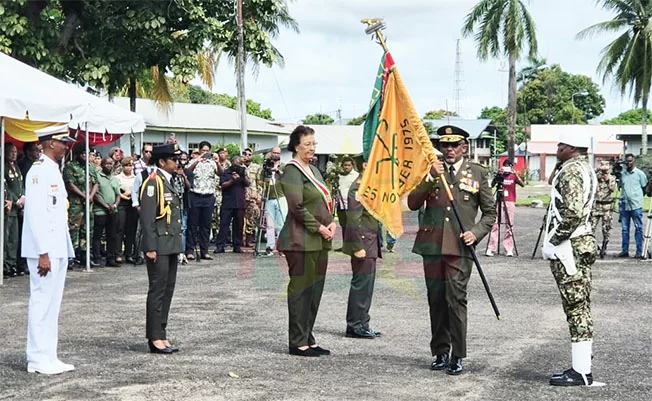
    Suriname’s Foreign Minister Melvin Bouva has issued a compelling mandate for diplomatic reform, declaring that diplomacy must transcend ceremonial functions to deliver concrete policy results and measurable societal benefits. The declaration came during the closing ceremony of the Suriname Diplomatic Course 2025, where certificates were awarded to 60 participants—35 attending physically and 25 via online platforms.

    Minister Bouva, overseeing Foreign Affairs, International Trade, and Cooperation, articulated a vision where diplomatic missions must actively serve as instruments for economic growth, investment attraction, climate financing, and regional stability. The minister emphasized that in an evolving global landscape, diplomats must pivot from traditional protocol duties to becoming active agents of national development.

    The comprehensive training program, administered by the Suriname Diplomatic Institute (SDI), equipped participants with essential skills in diplomatic protocol, negotiation techniques, economic diplomacy, and cultural relations. Dean Silochana Achthoven-Bhaghoe confirmed the curriculum addressed Suriname’s strategic positioning within international organizations.

    Foreign Affairs Director Miriam Mac Intosh characterized the course as an intensive preparation for diplomatic service, urging graduates to continuously invest in professional development. Trainer Rose-Ann Franklin highlighted critical competencies including protocol adherence, analytical capabilities, professional presentation, and precise reporting—emphasizing that diplomats serve as Suriname’s eyes and ears abroad.

    Minister Bouva concluded with a performance-oriented challenge: certification represents not an endpoint but a commitment to project initiation and execution. The new diplomatic corps must bridge the gap between international engagement and tangible national progress.

  • Het Venezolaanse leger heeft de sleutel tot de toekomst van het land in handen

    Het Venezolaanse leger heeft de sleutel tot de toekomst van het land in handen

    Following the dramatic capture of Venezuelan President Nicolás Maduro by U.S. special forces, the Bolivarian National Armed Forces (FANB) confronts a pivotal moment that will determine Venezuela’s political future. The military operation, which extracted Maduro from Fort Tiuna—the nation’s largest military complex—has exposed significant vulnerabilities in Venezuela’s defense capabilities and created a power vacuum that demands strategic decision-making.

    For nearly three decades, the FANB served as the primary power broker for the Chavez and Maduro regimes, receiving extensive political appointments including ministerial positions, governorships, and control over state enterprises in exchange for enforcing authoritarian rule. This symbiotic relationship transformed Venezuela into a security state where military authority superseded civilian institutions.

    The current interim government under Delcy Rodríguez, despite enjoying support from the Trump administration, requires military backing to maintain stability. President Trump’s selection of Rodríguez over opposition leader María Corina Machado reflects calculated recognition that only a candidate acceptable to military leadership can navigate this transition.

    Military commanders now face compelling incentives to negotiate: the demonstrated superiority of U.S. military technology creates vulnerability to further interventions, while maintaining political influence requires accepting previously unthinkable concessions. These include distancing from narcotrafficking allegations, accepting U.S. energy companies’ control over Venezuelan oil resources, reducing repression of civilian populations, and fully supporting Rodríguez’s interim government.

    The military’s cooperation essentially means endorsing U.S.-Venezuela agreements that would establish a stabilization framework similar to American partnerships with military regimes in Egypt, Pakistan, and Thailand. Resistance risks triggering additional U.S. military actions that would further erode the military’s credibility and exacerbate Venezuela’s political and social instability.

    With limited options, the FANB’s leadership must choose between preserving some political influence through cooperation or facing complete marginalization through confrontation. Their decision will ultimately determine whether Venezuela’s transition occurs through negotiation or continued conflict.