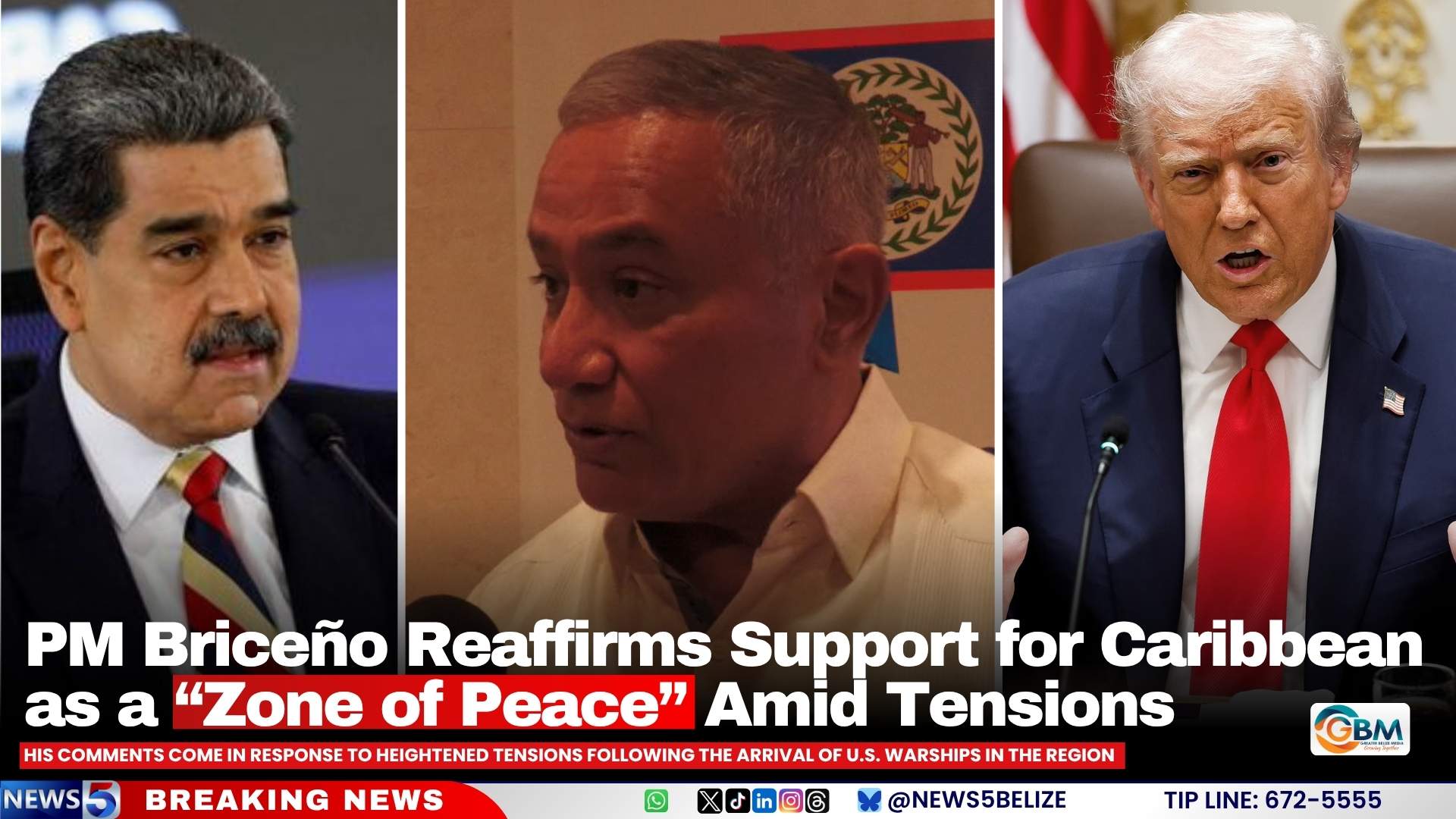
Prime Minister John Briceño of Belize has reaffirmed the nation’s unwavering commitment to preserving the Caribbean as a ‘zone of peace,’ aligning with the collective stance of CARICOM Heads of Government. This declaration comes amid escalating tensions fueled by increased U.S. military presence near Venezuela and Trinidad and Tobago. Briceño emphasized the importance of regional unity, stating, ‘The Caribbean is a zone of peace, and we must do everything to maintain it.’ He highlighted Venezuela as a key partner and Trinidad and Tobago as a valued member of CARICOM. The Prime Minister’s remarks were prompted by recent developments, including the arrival of U.S. warships in the region and reports of strikes on suspected drug vessels. Briceño condemned attacks on fishing boats, acknowledging the possibility of drug-related activities but stressing the need for lawful and peaceful resolutions. On October 18, 2025, CARICOM leaders, excluding Trinidad and Tobago, issued a statement endorsing the Caribbean as a Zone of Peace. The statement advocated for dialogue and peaceful conflict resolution while reinforcing cooperation against narcotrafficking and the illegal trade of small arms and light weapons within the framework of international law.
分类: politics
-
Prime Minister Unaware of Possible BTS Strike
Belize Prime Minister John Briceño has expressed unawareness of a potential strike by the Belize Tax Service (BTS) employees, despite growing concerns over the government’s plan to transition the BTS into a semi-autonomous entity known as the Statutory Authority Revenue Agency (SARA). The proposed reform aims to enhance efficiency and accountability in tax administration, but it has reportedly sparked discontent among BTS staff.
When questioned about the strike rumors, Briceño responded, ‘Well, you’re giving me news. I’m not aware of it.’ He emphasized that while workers have the right to protest, his administration would seek clarification from relevant authorities. ‘As I always say, it is your right as a citizen that if you want to strike or not, that’s on them,’ the Prime Minister stated.
Briceño defended the SARA initiative, highlighting its potential to improve public service delivery and strengthen oversight. ‘What is important behind SARA is to be able to move it into a semi-autonomous body and provide better service to our citizens,’ he explained. ‘And also to hold accountable the employees who provide that service. That’s very important for us.’
The Public Service Union (PSU), representing BTS employees, had previously written to the Prime Minister, expressing concerns about the transition’s impact on national revenue and member welfare. However, over a month after their initial letter, the union claims to have received no acknowledgment or response. As of now, Briceño has not confirmed whether discussions with the PSU have taken place.
-

Counting the cost: Overseas travels of Prime Minister Dickon Mitchell
Since taking office in June 2022, Grenada’s Prime Minister Dickon Mitchell has redefined the nation’s foreign policy approach, emerging as one of the Caribbean’s most internationally active leaders. Over the past four years, Mitchell has embarked on 51 overseas trips, averaging two per month, with an estimated 408 days spent abroad—nearly one-third of his tenure. This unprecedented level of engagement for a Small Island Developing State (SIDS) with a population of just 123,000 reflects a strategy of continuous global visibility, positioning Grenada as an investment-ready micro-state. However, this diplomatic ambition comes at a significant financial and administrative cost. Each trip, involving a six-member delegation, costs between US$35,000 and $45,000, cumulatively amounting to approximately US$1.8 to $2.3 million. Critics argue that such expenditures could have been redirected to domestic priorities like healthcare or education, while supporters highlight the potential for securing global financing and partnerships. Beyond the financial impact, Mitchell’s frequent absences have slowed inter-ministerial coordination and delayed critical policy decisions, raising questions about the balance between international diplomacy and domestic governance. As Grenada navigates these challenges, the debate centers on whether the Prime Minister’s global outreach demonstrably advances national interests or strains limited resources.
-

Skerrit hails freedom of movement as a dream come true.
In a landmark decision, the Caribbean nations of Barbados, Belize, St Vincent and the Grenadines, and Dominica have collectively embraced full freedom of movement for their citizens, a move hailed by Dominica’s Prime Minister Roosevelt Skerrit as a ‘dream come true.’ Speaking at the Barbados Labour Party’s 86th Annual Conference in Queen’s Park, Skerrit emphasized the historic significance of this initiative, describing it as a pivotal step toward regional unity and opportunity. ‘History has turned the page,’ Skerrit declared, highlighting that this decision fulfills long-held aspirations of Caribbean leaders and citizens alike. He underscored the profound impact of the policy, framing it not merely as a legislative change but as a testament to the region’s shared vision of connection, progress, and dignity. ‘It means a Barbadian and a Dominican can live and work across each other’s shores with dignity, rights, and a sense of belonging,’ Skerrit explained. He further illustrated the practical benefits, noting that professionals like nurses and masons can now pursue opportunities across borders without bureaucratic hurdles. This development, Skerrit asserted, represents the culmination of decades of promises under CARICOM and the Treaty of Chaguaramas, embodying the vision of ‘one region, one people, one destiny.’ He praised Barbados’ Prime Minister Mia Amor Mottley for her leadership in advancing the initiative and extended an open invitation to Barbadians to contribute to Dominica’s growth. Skerrit concluded by emphasizing the transformative potential of unity, stating, ‘Free movement, education, and resilience are not just policies—they are engines of opportunity that empower families, businesses, and the entire region.’
-

OP-ED: The Caribbean united in promoting agricultural development and prosperity in the Americas
On November 4, Brasilia will host a pivotal meeting of the Americas’ agriculture ministers, including representatives from the 14 Caribbean Community (CARICOM) nations, to elect a new Director General for the Inter-American Institute for Cooperation on Agriculture (IICA). This election is critical for shaping the future of agricultural policies, particularly in areas like biotechnology, life sciences, information technology, data science, robotics, engineering, and artificial intelligence. These advancements aim to reconcile the dual objectives of boosting productivity and ensuring sustainability. Agriculture must increasingly secure food, energy, and fiber supplies, generate employment, and foster rural development, thereby contributing to social stability and governance. The IICA has undergone significant repositioning over the past eight years, gaining widespread recognition across the Americas and beyond. The new Director General will need to spearhead efforts to develop and implement technological, policy, and institutional solutions to address the challenges of feeding a growing population with healthy and sustainable diets, while also generating income and employment, especially for vulnerable populations. Dr. Muhammad Ibrahim, an agricultural scientist and candidate from Guyana and CARICOM, emphasizes the need for humility, transparency, and technical expertise in leading IICA. The 2025 Conference of Ministers of Agriculture is expected to be a milestone in consolidating the Americas’ role in global food security. The projected increase in the global population to 10 billion by 2050 necessitates a significant boost in food production, highlighting the responsibility of the Americas, a continent with a diverse agricultural landscape. IICA’s mission is to transform this diversity into complementarity, fostering development and prosperity through soil recovery, smart intensification, strong family farming, loss reduction, and innovation.
-

Senior Magistrates Are Being Transferred
The Judicial and Legal Services Commission (JLSC) of Belize has addressed public concerns regarding the recent relocation of senior magistrates across the country. In an official statement, the JLSC clarified that these transfers are standard procedures, aligned with Regulation 128 of the Judicial and Legal Services Regulations. Typically, magistrates are reassigned after completing a two-year tenure in a specific location. While most transfers occur between July and August, exceptions are made when urgent needs arise. The Commission emphasized that these relocations aim to enhance the efficiency and fairness of justice delivery in district courts, while also providing mentorship to junior officers. The JLSC reiterated its commitment to upholding the Rule of Law, promoting good governance, and improving access to justice for all Belizeans. These measures are part of a broader strategy to ensure that judicial services remain accessible and effective across the nation.
-

Venezuela Accuses T&T of U.S.-Backed Military Provocation
Tensions in the Caribbean have reached a boiling point as Venezuela has accused Trinidad and Tobago of orchestrating a U.S.-backed military provocation. The allegations come in the wake of the USS Gravely, a U.S. Navy destroyer, docking in Port of Spain for joint training exercises with Trinidad and Tobago’s Defence Force. The exercises, scheduled from October 27 to October 30, are part of Washington’s broader campaign against drug trafficking and organized crime in the region. Venezuela has condemned these activities as a ‘hostile provocation,’ alleging that Trinidad and Tobago is collaborating with the CIA to instigate a conflict in the Caribbean. Venezuelan officials claim to have captured mercenaries and suggest that a false-flag operation is being staged to justify military action against Venezuela. In response, Trinidad and Tobago’s Ministry of Foreign and CARICOM Affairs has vehemently denied the accusations, emphasizing that the USS Gravely’s visit aims to bolster efforts against transnational crime and enhance humanitarian partnerships. The government reiterated its commitment to regional peace and its positive relationship with the Venezuelan people. The situation escalated further when the Pentagon deployed the USS Gerald R. Ford, the world’s largest aircraft carrier, to the region. The U.S. has also authorized CIA operations targeting Venezuela and imposed sanctions on Colombian President Gustavo Petro, accusing him and Venezuelan President Nicolás Maduro of being ‘narcoterrorists,’ though no concrete evidence has been publicly disclosed. Reports indicate that U.S. forces have destroyed at least 10 suspected drug boats, resulting in 43 fatalities, including two Trinidadian men who were killed in a strike on a vessel that departed Venezuela in mid-October. Families of the victims have denied any involvement in drug trafficking. Venezuela asserts that the U.S. is using the pretext of an ‘armed conflict’ with narco-terrorists as a cover for regime change, aiming to oust President Nicolás Maduro and install a U.S.-backed leader.
-
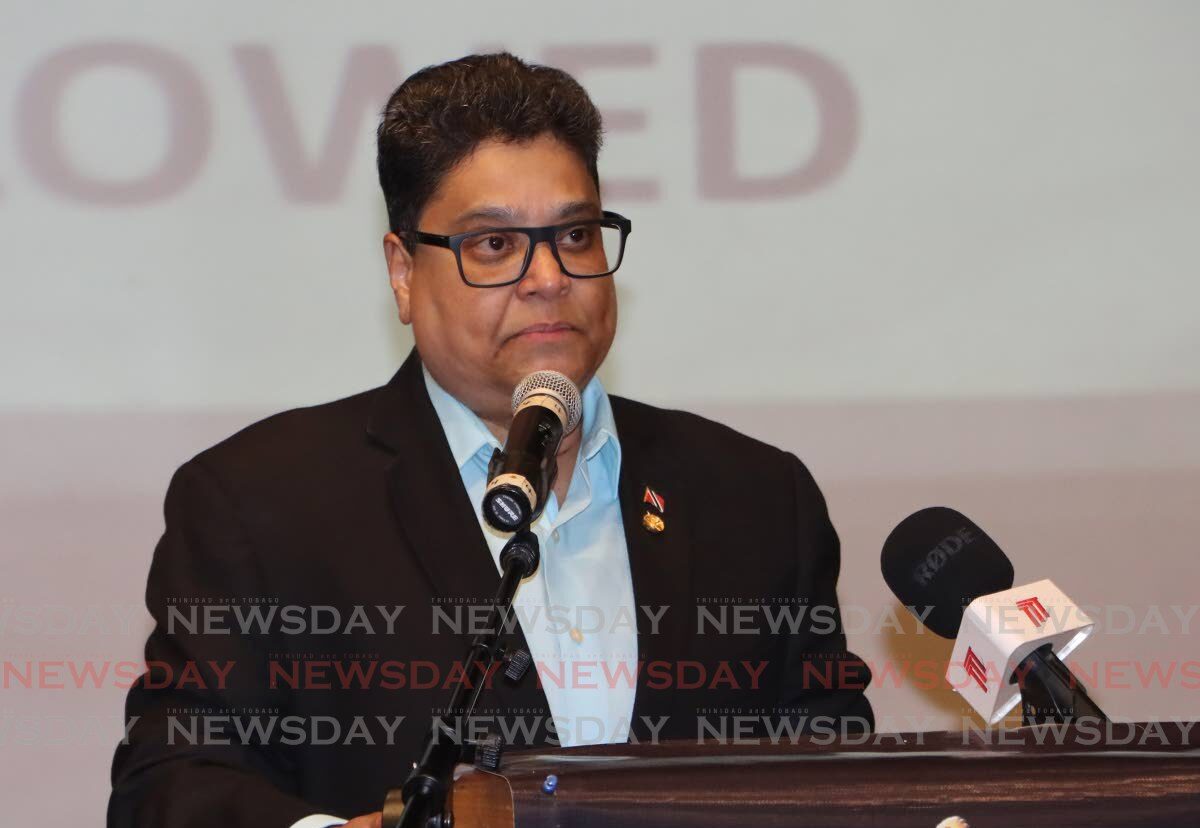
Appeal Court brings together ‘bail for murder’ appeals
The Court of Appeal in Trinidad and Tobago has consolidated several pending appeals challenging key provisions of the Bail (Amendment) Act 2024, which significantly altered the bail process for individuals charged with murder. The amendment removed the presumption in favor of bail, requiring accused persons to demonstrate exceptional circumstances to secure release. The Act was introduced to tighten bail restrictions for serious offenses, particularly murder. At a hearing on October 27, Justices Gillian Lucky, Mira Dean-Armorer, and Carla Brown-Antoine highlighted the divergent interpretations of the amended law by High Court judges. To ensure judicial consistency, the appellate panels agreed to hear all related appeals together in early 2026. Justice Lucky emphasized the importance of this issue, noting that attorneys for appellants will have access to submissions from other cases and may file additional arguments by November 30. She also urged lawyers to review the Hansard record, as one of the appeal questions was initially raised in Parliament by the then-opposition. The Chief Justice approved the consolidation of cases, and several legal bodies, including the Public Defenders’ Department, the Law Association, the Criminal Bar Association, and the Office of the Attorney General, will be invited to contribute as interested parties. The Bail (Amendment) Act 2024 was enacted following the Privy Council’s 2022 ruling in Akili Charles, which deemed the previous blanket denial of bail for murder accused unconstitutional. The amended law permits judges to grant bail if exceptional circumstances are proven, imposes a 120-day restriction on bail for serious offenses, and mandates a five-year review of its operation. Courts have since grappled with interpreting Section 5 of the Act, particularly whether it allows bail applications after 180 days in custody or one year without trial without requiring proof of exceptional circumstances. The state maintains that the amendment does not create an automatic right to bail but merely allows applications after a specified period, still requiring exceptional circumstances. Justice Lucky stressed the need for a consistent judicial approach, asking, ‘What is the correct test to be applied?’ Additionally, three appeals against convictions and sentences for various offenses were withdrawn during the hearing, with the judges affirming the convictions and ordering that sentences commence from the dates of conviction. A fourth appeal was also withdrawn.
-

Independent Senator Attzs: Budget falls short of people-centred goals
Independent Senator and economist Dr. Marlene Attzs has raised significant concerns about Trinidad and Tobago’s 2025/2026 national budget, stating that it lacks critical details and may fail to achieve its people-centered objectives. Speaking during the Senate budget debate on October 27, Attzs acknowledged the budget’s ‘Trinidad and Tobago first’ approach as commendable but emphasized that fairness must be the guiding principle in evaluating its policies and priorities. She argued that a credible budget must go beyond good intentions and address pressing issues such as crime, foreign exchange shortages, and rising debt. Attzs highlighted the absence of a target debt-to-GDP ratio and questioned the government’s plan to borrow $18.96 billion, particularly the shift toward foreign borrowing, which could increase costs and exchange risks. She also criticized the closure of social programs like Cepep and URP, which provided employment and environmental benefits, and questioned whether the $475 million unemployment fund in the budget adequately replaces them. Attzs stressed the need for fiscal responsibility and sustainability, warning that borrowing to fund consumption could burden future generations. She called for a comprehensive national employment strategy that includes former Cepep and URP workers.
-

UNC Senator: Healthcare for children, real jobs for adults
In a spirited defense of the current administration’s policies, Dr. Natalie Chaitan-Maharaj, Parliamentary Secretary in the Ministry of the People, Social Development and Family Services, asserted that the government has significantly outperformed its PNM predecessor in addressing the needs of Trinidad and Tobago’s citizens. Speaking during the Senate budget debate on October 27, Chaitan-Maharaj highlighted a series of initiatives aimed at improving social welfare and economic stability. She criticized the former government for its failure to open the Couva Children’s Hospital for a decade and for voting against the Children’s Life Fund, sarcastically noting that their solution was to decriminalize cannabis for personal use. Chaitan-Maharaj also condemned the PNM for canceling the baby milk grant, a program introduced by the previous UNC government to aid single mothers in distress. She emphasized the current government’s commitment to the most vulnerable, citing the establishment of the National Therapeutic and Resource Centre (NTRC) to provide free therapy for disabled individuals on a larger scale than before. The Parliamentary Secretary accused the PNM of dismantling key educational programs, including the school laptop initiative and reducing allocations for school transport and scholarships. She revealed that the school textbook grant had plummeted from $133 million under the UNC to $33 million under the PNM, and the national school feeding program had seen a drastic reduction in daily meals provided. Chaitan-Maharaj also pointed out the decline in foreign exchange reserves from US$11.4 billion in 2015 to US$5.4 billion under the PNM. She defended the government’s budget projections based on oil and gas prices, dismissing claims of a hidden deficit as baseless fear-mongering. The bank levy and electricity surcharge were justified as measures targeting high earners to fund social programs without burdening the vulnerable. Chaitan-Maharaj announced the replacement of Cepep, URP, and reforestation programs with recruitment drives aimed at providing real job opportunities. She also highlighted the allocation of $5 million to establish a Women’s Health Fund to address period poverty, accompanied by educational programs on menstrual health. The Parliamentary Secretary concluded by outlining an ambitious pipeline of projects for fiscal 2026, all aligned with the National Child Policy, aimed at creating a safer and more empowered future for every child in Trinidad and Tobago.