分类: politics

  • Venezuela: acting president recalls meeting with UAE envoy

    Venezuela: acting president recalls meeting with UAE envoy

    Venezuelan President Nicolás Maduro has announced the receipt of a significant diplomatic communication from the United Arab Emirates, emphasizing solidarity and enhanced cooperation between the two nations. The development emerged from a high-level meeting at Miraflores Palace, Venezuela’s presidential headquarters, where officials from both countries convened to strengthen their longstanding diplomatic relationship.

    According to an official statement released through presidential channels, President Maduro characterized the communication as a substantive message conveying unity and mutual support from both the Emirati government and its citizens. The discussions primarily centered on expanding investment opportunities across multiple sectors within the South American nation, building upon diplomatic relations that have been maintained for over five decades.

    The bilateral meeting produced commitments to advance joint projects specifically designed to promote economic development and improve welfare conditions for both populations. Venezuelan officials highlighted that the dialogue focused on creating frameworks for sustainable development and mutual economic benefit.

    Venezuela’s delegation included several key government figures: Vice President for Economic Affairs Calixto Ortega, Foreign Minister Yván Gil, and Minister for Ecological Mining Development Héctor Silva. Their participation underscored the comprehensive nature of the talks, which addressed economic, diplomatic, and resource development cooperation.

    The engagement represents a continued effort by both nations to deepen their international partnership despite global economic challenges, with particular attention to investment frameworks that support Venezuela’s development objectives while creating opportunities for Emirati economic involvement.

  • Duguid defends govt and HOPE project amid corruption claims

    Duguid defends govt and HOPE project amid corruption claims

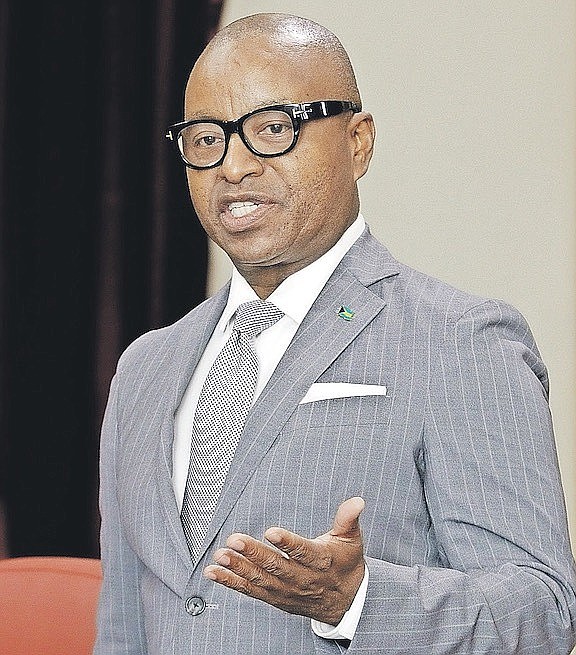
    In a fiery session of Barbados’ House of Assembly on Tuesday, Senior Minister Dr. William Duguid delivered a vehement rebuttal against corruption allegations leveled by Opposition Leader Ralph Thorne regarding the government’s HOPE Housing Project. The senior official dismissed the claims as “absolute nonsense” and “bold-faced poppycock” during heated exchanges that culminated in a parliamentary vote to correct a procedural error concerning land allocation.

    The controversy emerged as legislators voted to rescind an earlier resolution approving the transfer of two land parcels at Sargeant’s Village, Christ Church, which Dr. Duguid attributed to an “administrative error” in the previously passed version. The minister, who holds a senior position in the Prime Minister’s Office, specifically addressed Mr. Thorne’s assertion that $60 million in state funds had improperly benefited private individuals, declaring these allegations entirely unfounded.

    Dr. Duguid mounted a robust defense of the state housing program, which targets low-income residents through developments at Vespera Gardens in St. James, Concordia in St. Philip, and Pool in St. John. “HOPE has done a fantastic job,” the Christ Church West MP asserted, adding that “there have been no infelicities, as far as I am concerned.”

    The former housing minister challenged the opposition leader to substantiate his claims, particularly regarding the allegation that “Cabinet took up $60 million of taxpayers’ money… to enrich private individuals.” Dr. Duguid provided clarification on the Pool development, explaining that while a contract was initially signed for 1,000 housing units, the HOPE board had only approved the purchase of 50 units. He emphasized that despite subsequent ratification of the larger contract, “not one cent” was actually disbursed.

    Citing the Auditor General’s report on HOPE, Dr. Duguid noted the assessment concluded the organization had “achieved modest returns on its programmes” without any findings of corruption or failure. However, the infrastructure minister acknowledged the administration had made mistakes while pursuing aggressive housing policies to address growing demand.

    Dr. Duguid contextualized the housing challenges by referencing natural disasters that disrupted construction efforts, noting that Hurricane Elsa and Hurricane Beryl had destroyed hundreds of homes across Barbados. The government consequently diverted resources from affordable housing initiatives to emergency repairs, addressing approximately 1,400 damaged properties at a cost of millions originally allocated for housing development.

    “We are not perfect. Perfection is for the divine; people will make mistakes, and this, from what I can see, was an administrative error,” Dr. Duguid conceded in his closing remarks to the parliamentary assembly.

  • St George North voters give mixed marks to MP Moore

    St George North voters give mixed marks to MP Moore

    As speculation intensifies regarding a potential early general election, constituents in St George North have delivered a nuanced assessment of their first-term representative, Toni Moore. The General Secretary of the Barbados Workers’ Union has garnered generally favorable feedback from residents, though significant concerns persist regarding infrastructure and political engagement.

    During recent ground assessments in the central parish, Moore received acknowledgment for her efforts in addressing critical social needs. Multiple residents confirmed tangible improvements in housing assistance and repair programs, particularly noteworthy given Moore’s lack of ministerial portfolio. Several homes throughout the constituency have undergone substantial reconstruction through government initiatives facilitated during her term.

    However, this praise exists alongside growing frustration over deteriorating road conditions. Residents in Flat Rock and surrounding areas report severe infrastructure degradation, attributing the damage to increased heavy truck traffic. The situation has reached critical levels, with vehicle damage becoming commonplace for local drivers.

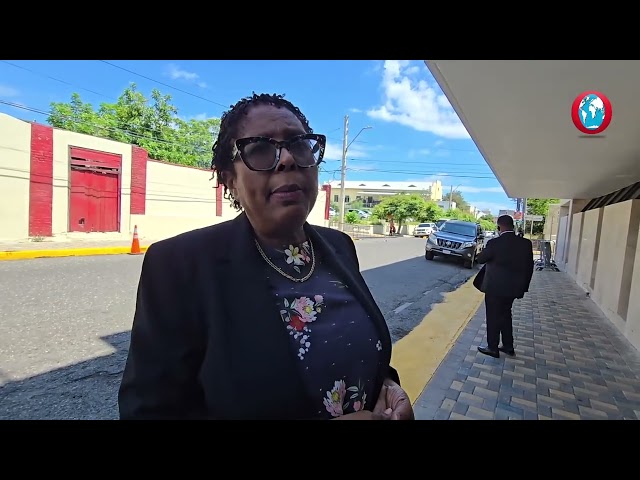
    The political sentiment reveals deeper complexities regarding constituent-representative relationships. While some seniors express satisfaction with Moore’s performance and predict she will retain her seat, others describe profound disconnection from the political process. A segment of the electorate reports disillusionment with political figures generally, citing insufficient engagement and perceived inequities in government assistance distribution. This has led some residents to consider abstaining from voting entirely, highlighting challenges in political representation beyond infrastructure issues.

  • Azille says MPs are competing with ordinary citizens for government contracts

    Azille says MPs are competing with ordinary citizens for government contracts

    A significant controversy has emerged in the realm of government procurement, with allegations surfacing that elected officials are improperly leveraging their positions to secure state contracts. According to recent statements, Members of Parliament are actively participating in the competitive bidding process, effectively placing them in direct competition with private citizens and small business owners for government business opportunities.

    This development raises profound questions about the integrity of public procurement systems and the potential for conflicts of interest. The practice, if substantiated, suggests an uneven playing field where those in positions of power may enjoy unfair advantages in accessing government tenders. Such dynamics could potentially undermine principles of transparent governance and equitable economic participation.

    The implications extend beyond mere competition, touching upon fundamental issues of governance ethics and public trust. When elected representatives engage in commercial activities with the government they oversee, it creates potential ethical dilemmas and perceptions of preferential treatment. This situation warrants careful examination of existing regulatory frameworks governing the conduct of public officials and their involvement in government contracting processes.

    Stakeholders across the political and economic spectrum are calling for greater transparency in how government contracts are awarded and more stringent disclosure requirements for elected officials with business interests. The allegations highlight the ongoing challenge of maintaining clear separation between public service and private commercial interests in democratic systems.

  • Lovell says PM Browne will not sue the U.S Law Firm because the lawyer is also Trump’s Attorney

    Lovell says PM Browne will not sue the U.S Law Firm because the lawyer is also Trump’s Attorney

    In a significant political development, Prime Minister Gaston Browne of Antigua and Barbuda has formally decided against pursuing litigation against a prominent United States law firm. The decision comes despite the firm’s legal representation of former U.S. President Donald Trump, creating a complex diplomatic scenario.

    According to statements from political rival Harold Lovell, PM Browne has consciously chosen to avoid legal confrontation with the American legal entity. This resolution demonstrates careful consideration of international relations and the potential implications of challenging a firm with such high-profile political connections.

    The situation originated from previously undisclosed legal matters between the Antiguan government and the U.S.-based firm. While specific details remain confidential, the involvement of Trump’s personal attorney adds layers of political sensitivity to what might otherwise be considered routine legal proceedings.

    Political analysts suggest this decision reflects strategic diplomacy by the Browne administration, potentially avoiding unnecessary tension with U.S. political entities. The choice demonstrates measured statesmanship in navigating the complex intersection of international law, diplomacy, and global politics.

    The development has sparked discussions within Caribbean political circles about balancing national interests with the complexities of international legal relationships, particularly when involving figures with significant global influence.

  • Watts Questions Government Secrecy Over U.S. Refugee Deal

    Watts Questions Government Secrecy Over U.S. Refugee Deal

    Algernon Watts, Member of Parliament for St. George, has launched a comprehensive critique of the Antiguan government’s proposed refugee and deportee arrangement with the United States, raising fundamental questions about transparency, fiscal responsibility, and national sovereignty. During a virtual rally organized by the United Progressive Party, Watts articulated multiple concerns regarding the agreement’s formulation and potential implementation.

    The parliamentarian highlighted the conspicuous absence of preliminary briefings, parliamentary discourse, or public consultation before the arrangement’s disclosure. Watts emphasized that citizens only became aware of the agreement post-factum, characterizing the government’s communication as a ‘confession after the fact’ rather than transparent governance.

    Watts specifically referenced the Prime Minister’s acknowledgment of months-long correspondence with the U.S. State Department, questioning why these negotiations remained concealed. ‘If you must assert something wasn’t intended to be secret, its handling inevitably suggests otherwise,’ Watts contended. ‘You cannot conceal matters and then introduce them surreptitiously.’

    The MP challenged governmental assurances regarding case-by-case evaluations, an annual cap of ten individuals, and criminal exclusions, arguing that verbal commitments without written frameworks provide inadequate protection. ‘Numerical limits do not constitute strategy, and slogans cannot replace substantive safeguards,’ Watts stated. ‘Blind trust, particularly when extended to habitual prevaricators, falls short of coherent national policy.’

    Watts warned that opaque decision-making erodes public trust and fosters social fragmentation, particularly within small communities. ‘When determinations occur behind closed doors, the immediate casualty is civic confidence,’ he observed. ‘This vacuum becomes filled with speculation, apprehension, and ultimately, societal division.’

    The legislator posed practical questions regarding housing, medical screening, long-term healthcare, and trauma counseling for potential arrivals, questioning whether financial burdens would shift to citizens and already strained public services. ‘Without comprehensive planning, the weight falls upon ordinary citizens, overextended clinics, social workers, and communities where working-class Antiguans already struggle,’ Watts asserted.

    Regarding accountability, Watts questioned responsibility protocols for potential mishaps, noting that consequences would manifest locally rather than in Washington. He further cautioned about precedent-setting implications, suggesting that initial limits could expand without public consent through exception proliferation.

    Connecting to broader bilateral concerns, Watts referenced recent U.S. visa restrictions and proposed bond requirements affecting Antiguans, juxtaposing these with the current arrangement’s potential pressures. He demanded full disclosure of draft memoranda, legal authority, cost allocations, and administrative responsibilities, while urging written commitments against cap expansion without parliamentary approval and public consultation.

    Watts clarified that his position reflects pro-national interest rather than anti-migrant sentiment, concluding: ‘Antigua and Barbuda constitutes neither warehouse nor storage facility. Cooperation must be predicated on earned consent through governance conducted in daylight, not secrecy.’

  • Senator Quinn Williams urges training of local nurses before Cuban repatriation

    Senator Quinn Williams urges training of local nurses before Cuban repatriation

    In a strongly-worded address during a United Progressive Party virtual rally, Senator Pearl Quinn Williams has challenged the government’s healthcare staffing strategy, demanding substantial investment in domestic nursing education before proceeding with the repatriation of Cuba’s medical contingent. The senator articulated deep concerns about the administration’s approach to replacing experienced Cuban medical professionals with healthcare workers from Ghana without establishing a robust local foundation first.

    Williams emphasized that the Cuban medical brigade, having provided years of invaluable service to Antigua and Barbuda’s public health infrastructure, should remain during an extended transition period to ensure continuity of care while local candidates receive comprehensive training. She highlighted multiple unaddressed considerations in the proposed transition, including potential language barriers, the necessity for foreign replacements to familiarize themselves with the local healthcare system, and the critical question of how patient services would be maintained during the gap between personnel changes.

    The senator proposed a strategic reallocation of resources, suggesting that funds currently designated for foreign healthcare workers should be redirected toward supporting local trainees and expanding medical scholarship programs. She advocated for a phased approach where the Cuban medical professionals would only be repatriated after sufficient numbers of qualified local healthcare workers are prepared to assume their responsibilities, characterizing this as a more sustainable and citizen-focused model for healthcare system reform.

    Williams’ commentary extended beyond the immediate personnel concerns to address broader systemic challenges within the public health sector, noting severe operational strains resulting from staffing deficits, insufficient resources, and financial limitations at the Ministry of health.

  • Pringle blames visa restrictions affecting Antiguans squarely at the feet of PM Gaston Browne

    Pringle blames visa restrictions affecting Antiguans squarely at the feet of PM Gaston Browne

    In a sharply worded critique, Opposition Leader Jamale Pringle has placed direct responsibility for the United Kingdom’s visa restrictions on Antiguan citizens at the feet of Prime Minister Gaston Browne. The political confrontation centers on diplomatic relations between Antigua and Barbuda and the UK, with Pringle asserting that Browne’s governance approach has triggered the stringent visa requirements currently affecting Antiguans seeking to travel to Britain.

    The controversy emerges against the backdrop of the UK’s evolving immigration policies toward Caribbean Commonwealth nations. Pounding his critique, Pringle highlighted how the visa constraints have created substantial hurdles for Antiguans pursuing educational opportunities, family visits, and business engagements in the United Kingdom. The opposition leader characterized the development as a diplomatic failure that demands immediate governmental accountability.

    Pringle further contended that Browne’s administration has neglected crucial bilateral discussions that might have prevented the imposition of stricter travel requirements. This diplomatic stance, according to Pringle, has left Antiguans disproportionately affected compared to citizens from other Caribbean territories who enjoy more favorable travel arrangements with the UK.

    The escalating tension underscores deeper political divisions within Antigua and Barbuda’s parliamentary landscape, with the opposition mounting pressure on the sitting government to address what they term as ‘diplomatic mishandling’ of international relations. The visa issue has now evolved into a significant point of political contention, potentially influencing future bilateral discussions between the two Commonwealth nations.

  • Modern Family Court Division among AG’s initiatives

    Modern Family Court Division among AG’s initiatives

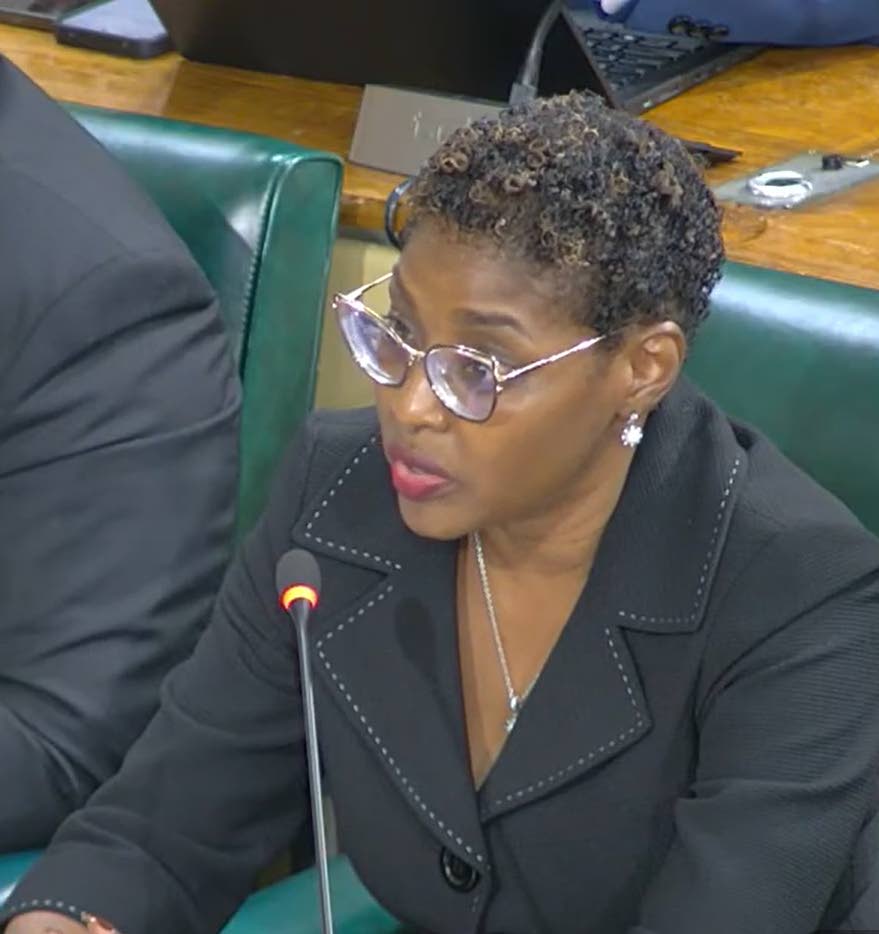
    In her inaugural address marking the opening of the 2026 legal year, Attorney General Louise Mitchell unveiled a comprehensive suite of judicial reforms centered on family welfare and child protection. The landmark announcement included the establishment of a unified Family Court Division, merging jurisdiction from the Family Court, Magistrates Court, and High Court into a consolidated framework for family proceedings.

    Mitchell emphasized the New Democratic Party government’s commitment to prioritizing familial challenges since assuming office in November 2025. “This administration has made history by establishing the first dedicated ministry for family affairs, under the leadership of Honourable Laverne Gibson-Velox,” Mitchell declared before the High Court assembly.

    The Family Court Division will specialize in resolving custody disputes, divorce proceedings, and child welfare cases through a streamlined approach. Mitchell stressed the division’s foundational principle: “Our judicial focus must prioritize the best interests of children and dependents, ensuring their rights remain central to all legal determinations.

    Significantly, Mitchell’s chambers have completed the Children Care Regulations 2026—draft legislation designed to operationalize the long-dormant Children (Care and Adoption) Act of 2010. For fifteen years, the absence of implementing regulations has created critical gaps in child protection, resulting in children entering state care without formal orders and parents lacking legal procedures for relinquishing parental rights.

    The new regulations establish judicial authority to issue child-specific welfare orders, create a registered network of approved foster parents, and implement standardized assessment protocols for foster care placements. “These measures will ensure foster placements receive proper oversight aligned with safeguarding standards,” Mitchell explained.

    The attorney general announced forthcoming consultations with legal professionals for feedback, affirming the government’s commitment to stakeholder engagement. “We shall embrace consultation wherever possible,” Mitchell noted, referencing advice from “someone very wise: never be afraid to consult.”

    Additional reforms include partnerships with the Bar Association and Ministry of Education for public legal education initiatives, mediation awareness programs, and commercial registry modernization. Mitchell identified duplication in domestic company registries as an anomaly requiring consolidation, pledging to amend the Companies Act to reduce excessive penalties hindering business competitiveness.

    Reflecting on her initial six weeks in office, Mitchell characterized the period as “exciting” and demonstrated the administration’s determination to transform Vincentian judicial infrastructure.

  • LETTER: Viral Trumpism Cannot Infect the Cuban Internationalism

    LETTER: Viral Trumpism Cannot Infect the Cuban Internationalism

    The enduring legacy of Cuban internationalism, rooted in the revolutionary principles of 1959, continues to shape global healthcare diplomacy despite unprecedented economic challenges. Following the revolution that overthrew the Batista regime, Cuba confronted severe healthcare disparities and mass emigration of medical professionals reluctant to serve under a socialized system. This crisis prompted the revolutionary government to initiate massive medical training programs, transforming the nation into an unexpected medical powerhouse.

    The internationalist vision, championed by revolutionary figures like Argentinian physician Ernesto ‘Che’ Guevara, evolved into systematic policy through decades of consistent implementation. Guevara’s sacrifice in Bolivia and medical missions across Africa exemplified Cuba’s commitment to global liberation struggles beyond mere symbolic solidarity. Today, this tradition manifests through extensive medical education programs hosting thousands of international students—particularly from developing nations—and the deployment of Cuban healthcare professionals to over 60 countries worldwide.

    Remarkably, these achievements occur despite the continuous economic and financial blockade that has constrained Cuba’s resources for generations. The nation’s ability to maintain both domestic healthcare excellence and international medical assistance represents a extraordinary case study in resilience and ideological commitment.

    Recent criticisms from the Trump administration regarding Cuba’s medical missions have been met with strong rebuttals from beneficiaries of Cuban medical internationalism. The contrast between Cuba’s COVID-19 response—including the deployment of medical brigades to pandemic hotspots—and the struggles of wealthier nations has highlighted the continuing relevance of Cuba’s alternative model of international cooperation. This ongoing commitment to medical solidarity continues to define Cuba’s unique position in global health diplomacy, challenging conventional paradigms of international development assistance.