分类: politics

  • Trump threatens to invoke Insurrection Act over Minnesota protests

    Trump threatens to invoke Insurrection Act over Minnesota protests

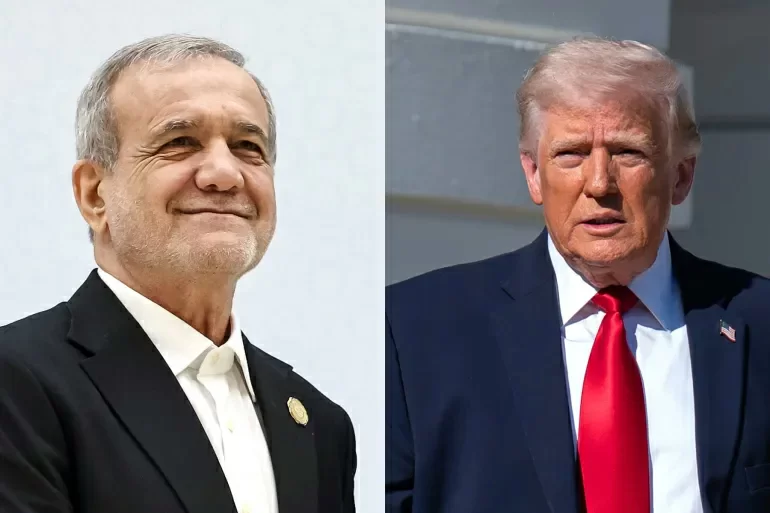
    MINNEAPOLIS, United States – Escalating tensions between federal authorities and Minnesota protesters have prompted President Donald Trump to threaten deployment of military forces under the 19th-century Insurrection Act. The unprecedented warning follows two separate incidents where federal immigration agents discharged their weapons in Minneapolis, resulting in one fatality and one injury this week.

    The political confrontation intensified Thursday as Trump utilized his social media platform to accuse Minnesota’s Democratic leadership of permitting ‘professional agitators and insurrectionists’ to target Immigration and Customs Enforcement (ICE) personnel. The President explicitly warned that failure to restore order would trigger implementation of the rarely used statute, last invoked during the 1992 Los Angeles riots.

    Minnesota Governor Tim Walz countered with vehement criticism, describing federal operations as ‘a campaign of organized brutality against the people of Minnesota.’ In a video address Wednesday night, Walz detailed numerous violent incidents including broken windows, dragged pregnant women, and the January 7 killing of 37-year-old Renee Good. The governor urged peaceful protests while demanding the immediate cessation of what he termed federal ‘occupation.’

    The crisis deepened Wednesday evening when an ICE agent shot and injured a Venezuelan immigrant during an apprehension attempt. According to Minneapolis Police Chief Brian O’Hara, the shooting occurred during a physical struggle, with two additional individuals subsequently attacking the federal agent with household implements. All three individuals are now in custody, with the shooting victim hospitalized for non-life-threatening leg injuries.

    Homeland Security Secretary Kristi Noem declined to speculate on Trump’s potential invocation of the Insurrection Act when questioned outside the White House Thursday, stating merely that ‘It’s his constitutional right’ to utilize such measures.

    The controversy extends beyond street-level confrontations. Newly released data reveals ICE recorded 30 detention fatalities in 2025, setting a tragic agency record. A Washington Post investigation indicates the forthcoming homicide declaration regarding 55-year-old Cuban immigrant Lunas Campos, whose preliminary cause of death was identified as asphyxia due to neck and chest compression.

    White House officials remained defiant amid mounting criticism. Senior adviser Stephen Miller accused Minnesota authorities of deliberately inciting ‘violent insurrection,’ while press secretary Karoline Leavitt asserted media complicity in the escalating violence. The administration continues to pursue its aggressive immigration agenda despite numerous court challenges and mass protests organized under the anti-authoritarian mantra ‘No Kings.’

  • Pinder: “Don’t hold your breath” on return to frontline politics

    Pinder: “Don’t hold your breath” on return to frontline politics

    Ryan Pinder, the former Attorney General of The Bahamas, has officially concluded his four-year tenure and announced his departure from frontline politics. Speaking at the opening ceremony for Legal Year 2026, Pinder clarified to journalists that his departure represents a natural expiration of his term rather than a resignation from office.

    Reflecting on his unexpected appointment in September 2021, Pinder revealed that Prime Minister Philip ‘Brave’ Davis’s invitation to serve as the nation’s top legal officer came as a complete surprise. He described accepting the position as an unparalleled professional opportunity that he felt compelled to accept despite the challenges it would entail.

    Pinder characterized his service as Attorney General as both the most rewarding professional experience of his career and an immensely demanding undertaking. He acknowledged that the legal system had faced extraordinary pressures during his tenure, including emerging crime patterns, heightened regulatory complexities, and growing public expectations for judicial efficiency.

    ‘The past legal year has presented significant challenges,’ Pinder noted. ‘Our legal institutions have been tested by unprecedented demands, with progress often occurring gradually rather than through immediate transformation.’

    The former Attorney General emphasized that ensuring accessible justice remains a fundamental priority, noting that procedural delays and systemic inefficiencies have tangible impacts on citizens’ lives. His office implemented an ambitious legislative agenda, introducing over 100 pieces of primary and subsidiary legislation with support from the Law Reform and Revision Commission.

    Significant government initiatives highlighted included comprehensive land reform measures, the finalization of updated firearms legislation, and revisions to the Penal Code. Pinder particularly emphasized the importance of the Conditional Release of Offenders Parole Bill, advocating for rehabilitative approaches to criminal justice that facilitate successful reintegration of incarcerated individuals into society.

    ‘We firmly believe that providing rehabilitation frameworks and supporting the transition of formerly incarcerated persons back into community life represents both morally sound policy and practical benefit to the nation,’ Pinder stated. ‘This approach offers deserving individuals a structured opportunity for redemption while promoting broader social stability.’

  • Venezuela’s Machado says she ‘presented’ Trump with Nobel medal

    Venezuela’s Machado says she ‘presented’ Trump with Nobel medal

    WASHINGTON, United States – In an unprecedented political maneuver, Venezuelan opposition leader Maria Corina Machado presented her Nobel Peace Prize medal to U.S. President Donald Trump during a White House meeting on Thursday. The symbolic gesture aimed at winning Trump’s support came after the American leader had previously expressed that he deserved the award for his self-proclaimed efforts in conflict resolution.

    The meeting occurred against the backdrop of complex geopolitical shifts following the January 3rd U.S. military operation that deposed Venezuelan leader Nicolas Maduro. Despite Machado’s democratic credentials, Trump has notably thrown his support behind Delcy Rodriguez, Maduro’s former vice president, who now leads an interim government conditional on her adherence to Washington’s directives, particularly regarding access to Venezuela’s substantial oil reserves.

    Machado, 58, addressed reporters outside the U.S. Capitol following her legislative meetings, characterizing the medal presentation as ‘recognition for [Trump’s] unique commitment with our freedom.’ The status of the Nobel medal remained unclear after their private discussion, compounded by the Norwegian Nobel Committee’s stipulation that prizes are non-transferable.

    The diplomatic landscape grew increasingly complex as Rodriguez delivered Maduro’s state of the nation address to Venezuela’s parliament while the deposed leader remains incarcerated in New York on drug trafficking charges. Rodriguez asserted her government’s readiness for diplomatic confrontation with Washington, stating they were ‘not afraid to confront them diplomatically, through political dialogue.’

    Concurrently, U.S. forces seized a sixth oil tanker as part of efforts to control Venezuela’s energy sector, while the first U.S.-brokered oil sale worth approximately $500 million was finalized. Rodriguez announced planned reforms to Venezuela’s oil legislation, though specifics remained undisclosed.

    The White House acknowledged Machado as a ‘remarkable and brave voice’ for Venezuelans but provided no timeline for potential elections. The administration did welcome Rodriguez’s release of dozens of political prisoners, though hundreds reportedly remain detained.

    Meanwhile, Cuba honored 32 soldiers killed during the operation that toppled Maduro, including members of his protection team, in a ceremony attended by revolutionary leader Raul Castro, highlighting the ongoing regional repercussions of Venezuela’s political transformation.

  • Upkeep pilot scores high marks from corporations

    Upkeep pilot scores high marks from corporations

    All fourteen municipal corporations participating in Trinidad and Tobago’s government-initiated Public Spaces Maintenance Program have reported exceptionally positive outcomes, with many requesting additional workforce allocations. Local Government Minister Khadijah Ameen confirmed the widespread approval following a January 14 stakeholder meeting, indicating strong productivity metrics across all regions.

    The innovative pilot scheme, approved by the Cabinet, employs workers directly through the Ministry of Local Government rather than traditional contractors. These workers have been deployed to regional corporations to execute maintenance operations encompassing recreation facilities, educational institutions, roadside verges, and cemetery grounds. Although school maintenance typically falls outside the ministry’s jurisdiction, corporations strategically utilized these resources to address pressing infrastructural needs.

    Minister Ameen revealed that municipal authorities provided detailed progress reports quantifying cleared acreage and square meters, demonstrating measurable achievements. Beyond workforce expansion requests, corporations submitted minor requisitions for tools and protective equipment, while proposing administrative process refinements.

    A significant recommendation emerged regarding flood mitigation strategies. Corporations proposed deploying manual labor during dry seasons to clear watercourses and drainage systems, potentially reducing seasonal flooding impacts. This proactive approach would complement existing flood-mitigation equipment programs.

    The ministry maintains continuous communication with participating corporations and will compile a comprehensive report for Cabinet review. With approximately 200 workers currently engaged, the program represents a governmental shift from transient “make-work” initiatives toward sustainable employment models that provide decent wages while eliminating intermediary contractors.

    Minister Ameen emphasized the dual benefit of cost efficiency and direct worker compensation achieved by removing political intermediaries and contractor layers. Program expansion remains contingent upon Cabinet approval and funding availability following the successful pilot evaluation.

  • DRC: MONUSCO reaffirms commitment to peace efforts

    DRC: MONUSCO reaffirms commitment to peace efforts

    In a high-level meeting at the African Union City on Tuesday, MONUSCO’s strategic director, Van de Perre, and Congolese President Felix Tshisekedi addressed the escalating security crisis in eastern Democratic Republic of Congo. The discussions centered on the deteriorating humanitarian situation, threats to civilian populations, and implementation pathways for UN-mandated ceasefire protocols.

    The dialogue occurred against the backdrop of MONUSCO’s suspended withdrawal from the DRC. Initially scheduled for 2024 following the Congolese government’s request, the peacekeeping mission halted its departure due to worsening security conditions in conflict-ridden eastern provinces. The UN Security Council subsequently extended MONUSCO’s mandate through December 2024 with renewed strategic priorities.

    According to an official statement released via MONUSCO’s X profile on Wednesday, both parties analyzed the practical implementation of UNSC Resolution 2773, which demands an immediate and unconditional ceasefire. Van de Perre explicitly reiterated the mission’s commitment to defending Congolese sovereignty, territorial integrity, and national unity amid the ongoing crisis.

    The extended mandate focuses on three core objectives: civilian protection in deployment zones, achievement of Resolution 2773’s 2025 targets, and institutional stabilization through strengthened governance structures. This diplomatic engagement highlights the complex balance between respecting national sovereignty and maintaining international peacekeeping presence during active conflict.

  • Russia accuses EU of supporting rebellion attempt in Iran

    Russia accuses EU of supporting rebellion attempt in Iran

    Russian Foreign Ministry spokeswoman Maria Zakharova has launched a scathing critique against the European Union, accusing the bloc of openly endorsing anti-government activities within Iran through its dual approach of sanctions and human rights rhetoric. Speaking during a Wednesday broadcast on Radio Sputnik, Zakharova characterized the EU’s simultaneous imposition of sanctions against Tehran while advocating for freedom of expression and assembly as an act of profound cynicism.

    The Russian diplomat posed a rhetorical question that underscored her government’s position: ‘What level of cynicism must one possess—and this constitutes, in reality, a frontal and open assault—to arrive at such contradictory conclusions?’ Her remarks highlighted what Moscow perceives as fundamental hypocrisy in Western foreign policy.

    Zakharova further asserted that the EU’s current policy framework effectively amounts to overt support for rebellion against the Iranian government. She contended that this approach represents a deliberate dismantling of established international legal frameworks through the application of what Russia considers illegal pressure tactics. The spokeswoman’s comments reflect growing tensions between Moscow and Western powers over appropriate approaches to international diplomacy and intervention.

    This diplomatic confrontation emerges against the backdrop of ongoing protests in Iran and the West’s response to Tehran’s internal policies. Russia’s alignment with Iran and its vocal opposition to Western interventionism signals a continuing consolidation of anti-Western alliances in international geopolitics.

  • Italy Highlights Cuba’s firm resistance to US aggression

    Italy Highlights Cuba’s firm resistance to US aggression

    In a penetrating geopolitical analysis, Italian economist and Network of Communists leader Luciano Vasapollo identifies Cuba as a persistent target of US imperialism due to its symbolic significance as an alternative societal model. The defense of Cuba, he argues, extends beyond military and diplomatic dimensions into a continuous multi-front conflict encompassing economic, cultural, symbolic, and social domains.

    Vasapollo, who co-founded the Italian chapter of the Network of Intellectuals in Defense of Humanity, contends that the escalating US aggression toward Cuba—particularly alongside concurrent attacks on Bolivarian Venezuela—represents neither historical coincidence nor temporary foreign policy divergence. This coordinated offensive against both nations instead exposes the fundamental character of the current geopolitical phase: imperial forces targeting regions where experiments in solidarity-based cooperation, social planning, and regional integration present viable alternatives to financial capital’s global market dominance.

    The analyst emphasizes that these nations face retaliation precisely because they have successfully challenged hemispheric hegemony despite internal contradictions and operational challenges. By constructing frameworks of cooperative solidarity, socially-oriented planning, and regional integration, they have established practical alternatives to the global capitalist market structure.

    This aggressive escalation, Vasapollo concludes, represents the logical manifestation of capitalism’s organic crisis. Drawing from Italian Marxist philosopher Antonio Gramsci’s theoretical framework, he characterizes this as a system that can no longer maintain control through ideological hegemony and increasingly relies on coercive measures to preserve its dominance.

  • China defends international law against US stance

    China defends international law against US stance

    In a striking diplomatic contrast, China has positioned itself as a defender of the international legal order while responding to recent statements from former US President Donald Trump that questioned the authority of global governance frameworks. Foreign Ministry spokesperson Mao Ning articulated Beijing’s firm position during a press briefing, emphasizing that international law remains an indispensable mechanism for peaceful dispute resolution among nations.

    The Chinese spokesperson presented a comprehensive vision of global governance centered on multilateral cooperation, stating that upholding international legal principles is fundamental to preserving international fairness and justice. This stance serves as a direct counterpoint to what Chinese officials characterize as unilateral and aggressive actions by the United States against sovereign nations including Venezuela and other countries that diverge from Washington’s strategic interests.

    Mao Ning further elaborated that major global powers bear special responsibility in demonstrating respect for the authority of international law and faithfully implementing their obligations under various international agreements. This perspective was reinforced by Chinese Foreign Minister Wang Yi, who emphasized that the sovereignty and security of all nations must receive comprehensive protection within the framework of international law.

    The emerging philosophical divide occurs against the backdrop of intensifying global debates regarding the future of multilateralism and the international system established following World War II. Beijing has explicitly rejected the concept of any single nation acting as the ‘world’s policeman’ or assuming the role of international judge, instead advocating for a collective approach to global governance through established international institutions and legal frameworks.

  • OP-ED: CARICOM faces a unity-defining moment

    OP-ED: CARICOM faces a unity-defining moment

    The Caribbean Community (CARICOM) confronts a severe foreign policy challenge following recent US military operations in Venezuela, exposing deep divisions among its 14 sovereign member states. Since September 2025, American military actions in the region have triggered contrasting responses that threaten the bloc’s cohesion.

    CARICOM leadership now navigates complex pressures stemming from the revived ‘Donroe Doctrine’ and concurrent US policy demands toward member nations. The organization faces the formidable task of formulating a unified foreign policy response to the Trump administration’s renewed emphasis on spheres of influence and strategic competition.

    Two distinct camps have emerged within CARICOM. Barbados exemplifies the traditional foreign policy approach, with Prime Minister Mia Amor Mottley delivering a blunt assessment of the January 3 US military action in Venezuela. Her position aligns closely with UN Secretary-General António Guterres, who termed the intervention ‘a dangerous precedent’ that risks regional instability and violates international norms.

    Conversely, Trinidad and Tobago has pursued a markedly different course, emphasizing regional peace concerns while simultaneously reaffirming commitment to Washington’s intervention logic. The nation’s prominent role in ‘Operation Southern Spear’ has raised eyebrows within CARICOM, particularly as US interventionism appears resurgent in Latin America and the Caribbean.

    The crisis unfolds against broader geopolitical shifts, with the United States withdrawing from numerous international organizations and treaties it previously established. This retreat from multilateralism particularly concerns CARICOM members, who rely heavily on UN-based international law and multilateral frameworks to protect their interests as small states.

    The upcoming Fiftieth Regular Meeting of CARICOM Heads of Government assumes critical importance as members seek common ground. While some unity exists on certain US policy aspects—such as hosting deported migrants—the fundamental question remains whether the bloc can overcome its divisions during this unity-defining moment.

    Dr. Nand C. Bardouille of The University of the West Indies observes that CARICOM leadership recognizes the summit represents a test the regional grouping cannot afford to fail, given the high stakes for Caribbean sovereignty and international law principles.

  • French PM faces two no-confidence motions

    French PM faces two no-confidence motions

    The French government confronts simultaneous no-confidence motions from opposing political flanks as agricultural discontent escalates over the EU-Mercosur trade agreement. The left-wing La France Insoumise (LFI) and far-right National Rally (RN) parties separately introduced measures to challenge Prime Minister Élisabeth Borne’s administration, though both initiatives face probable defeat due to lack of cross-party support.

    Political analysts indicate neither motion will secure the required 289 votes in the 577-seat National Assembly, with both the Socialist Party and conservative Republicans explicitly rejecting alignment with either political extreme. Current projections suggest maximum support of approximately 200 votes, insufficient to topple the government.

    The motions center on President Emmanuel Macron’s handling of the EU-Mercosur trade pact, which has sparked substantial farmer protests across France. While Macron ultimately opposed the agreement—with France casting a dissenting vote last week—opposition parties argue this stance emerged from domestic pressure rather than genuine policy conviction.

    Evidence suggests Macron previously indicated support for the trade initiative during November meetings in Belém, Brazil, creating perception inconsistencies that have fueled political criticism. The agreement, scheduled for formal signing in Asunción, Paraguay, has drawn fierce opposition from French agricultural sectors fearing unfair competition from South American producers.

    Hundreds of farmers escalated protests this week, entering Paris with tractors to demonstrate against the trade deal. Agricultural groups announced planned demonstrations outside the European Parliament in Strasbourg on January 20th, maintaining pressure on both French and EU authorities regarding the controversial agreement.