分类: politics

  • War in the Middle East: latest developments

    War in the Middle East: latest developments

    The ongoing Middle East conflict has entered a critical phase with escalating military engagements and complex diplomatic developments. In Israel, opposition leader Yair Lapid launched a severe critique against the government’s security strategy, accusing leadership of creating a ‘security disaster’ by deploying forces across multiple fronts without adequate resources or coherent planning. Lapid’s televised statement echoed concerns previously raised by military chief Lieutenant General Eyal Zamir regarding the army’s stretched capabilities.

    Military casualties continue to mount with the Israeli army confirming another soldier killed in southern Lebanon, bringing the total to four fatalities since Hezbollah initiated rocket attacks on March 2 in retaliation for Iran’s supreme leader’s death.

    International institutions are mobilizing response measures, with the World Bank announcing preparedness to deliver immediate financial assistance at scale to emerging markets affected by the conflict’s economic repercussions. The institution pledged combined financial relief, policy expertise, and private sector support for regional recovery.

    Hezbollah maintains its denial of operations in Kuwait despite the Gulf nation’s reports of additional arrests allegedly connected to the Iran-backed group. Meanwhile, concerning reports emerge from Tehran where Iranian security forces are reportedly recruiting children as young as 12 to staff checkpoints and perform military duties, according to a Revolutionary Guards official.

    US President Donald Trump continues his characteristically combative diplomacy, denying desperation in seeking an Iranian deal while simultaneously claiming Tehran is ‘begging’ for negotiations. Trump asserted Iranian concessions including allowing oil tankers through the Strait of Hormuz as a diplomatic ‘present,’ while also floating the possibility of seizing Iranian oil assets similar to Venezuelan arrangements.

    The security situation in Tehran remains tense with residents reporting aerial activity and explosions, though specific targets remain unconfirmed. Regional diplomacy continues as Iraq condemned targeting of Gulf states and Jordan following their joint statement demanding Baghdad prevent attacks originating from its territory.

  • ‘We trust in the US legal system,’ Maduro’s son tells AFP

    ‘We trust in the US legal system,’ Maduro’s son tells AFP

    CARACAS, Venezuela – In a striking display of defiance amid ongoing legal proceedings, Nicolas Maduro Guerra, son of ousted Venezuelan president Nicolas Maduro, has publicly characterized his parents’ capture by U.S. forces as an illegitimate “kidnapping” operation. The lawmaker, commonly known as “Nicolasito,” expressed measured confidence in the American judicial system while simultaneously condemning the circumstances surrounding the case.

    Speaking to international media from the Venezuelan capital, Maduro Guerra articulated a paradoxical position: “We maintain trust in the legal framework of the United States,” he stated, before immediately qualifying that trust by noting the proceedings were “tainted by fundamental illegitimacy from their inception due to the military capture of a democratically elected head of state.”

    The controversial apprehension occurred three months prior when American commandos executed a nighttime raid on the Maduro compound in Caracas, resulting in the detention of both Nicolas Maduro and his wife Cilia Flores. The couple currently remains incarcerated at a Brooklyn detention facility while facing multiple serious charges including narco-terrorism conspiracy and weapons violations.

    Hundreds of loyal supporters gathered in Caracas’ central square, where a massive screen broadcast live coverage of the New York court proceedings. The crowd erupted in chants of “Freedom for Cilia and Nicolas!” as Maduro Guerra invoked principles of international law, asserting his father possessed “universal immunity” as an elected leader.

    The dramatic capture operation effectively removed the strongman who had governed Venezuela since 2013, significantly altering the political dynamics of the oil-rich nation and bringing it under increased American influence. President Donald Trump indicated additional charges against Maduro might be forthcoming, though provided no specific details regarding these potential cases.

    Maduro himself has adopted the designation of “prisoner of war” and entered not guilty pleas to all four counts leveled against him, setting the stage for a protracted legal battle with profound implications for international relations and diplomatic protocols regarding foreign leaders.

  • Leacock holds ‘frank’ talks in Taiwan about hospital delay

    Leacock holds ‘frank’ talks in Taiwan about hospital delay

    St. Vincent and the Grenadines’ Deputy Prime Minister St. Clair Leacock has confirmed holding substantive talks with Taiwanese officials regarding significant construction delays plaguing the Arnos Vale hospital project, a major infrastructure initiative funded through Taiwanese financial assistance. The high-level discussions occurred during Leacock’s official diplomatic visit to Taipei last week.

    Addressing the media in Kingstown upon his return, Deputy PM Leacock revealed the project is now approximately twelve months behind its original completion schedule. The delay has worsened since his New Democratic Party (NDP) assumed governance in November 2025, at which point the project was already eight months behind.

    The hospital’s development is financed by a substantial US$125 million loan agreement secured from Taiwan in 2024 by the preceding Unity Labour Party (ULP) administration. A significant portion of these funds, approximately US$78 million, was specifically allocated for the medical facility’s construction.

    Initially conceptualized as a 134-bed acute referral hospital, the project was awarded to Overseas Engineering & Construction Co. (OECC), a Taiwanese construction firm. The groundbreaking ceremony in October 2024 set an ambitious 32-month completion timeline. While the ULP government planned to retain maternity and pediatric services at Kingstown’s Milton Cato Memorial Hospital, the current NDP government has committed to integrating these specialized wards into the new Arnos Vale facility, effectively transforming it into a comprehensive general hospital.

    During the Taipei meetings, Leacock’s delegation engaged with Taiwan’s Department for Overseas Investment Development Corporation, a government-backed entity specializing in international infrastructure development and economic cooperation. The department, through its subsidiary OECC, plays a pivotal role in executing infrastructure projects within Taiwan’s diplomatic partner nations.

    The Deputy Prime Minister characterized the dialogue as “frank but fruitful,” emphasizing both parties reached a clear mutual understanding regarding project perspectives and the NDP government’s unwavering commitment to delivering a cutting-edge medical facility to the Vincentian populace. The goal remains completion as close to, or even ahead of, the adjusted timeline.

    While withholding specific details, Leacock confirmed his participation in critical meetings involving health ministry officials, project consultants, and the construction contractors. He stressed the government forcefully communicated the necessity of resolving all outstanding issues to eliminate delays and expedite progress. The urgency stems not merely from political sensitivity but from the fundamental right of citizens to access affordable, available, and modern healthcare infrastructure.

    Taiwanese consultants acknowledged certain challenges and are expected to visit St. Vincent shortly for continued discussions with the Health Minister and Prime Minister to address pressing project urgencies. Leacock’s delegation included key government figures, underscoring the mission’s importance: Shevern John, Minister of Social Welfare and Community Empowerment; Lavern King, Minister of State for Education and Digital Transformation; and the Deputy PM’s wife, Margaret Leacock.

  • Roseau City Council elections show strong turnout in most wards, with Ward Three lagging

    Roseau City Council elections show strong turnout in most wards, with Ward Three lagging

    Final results from the Roseau City Council elections have unveiled significant disparities in civic participation across the city’s four electoral districts. While three wards demonstrated robust voter engagement exceeding 10% turnout, Ward Three recorded a strikingly low participation rate that diverged from the overall pattern.

    In Ward One, 488 ballots were cast, constituting 10.33% of eligible voters, with male voters (57.17%) outnumbering females (42.83%). Ermine Royer emerged victorious with 208 votes, closely followed by Moeshia Joseph with 194 votes.

    Ward Two witnessed the second-highest participation citywide, with 542 voters representing 11.62% of the electorate. Female voters predominated at 54.42%, while Paloma Mark secured a commanding lead with 305 votes against Henry Jno Baptiste’s 233.

    The most concerning statistics emerged from Ward Three, where merely 119 voters—a meager 4.8% of eligible constituents—participated in the democratic process. Women comprised over two-thirds of the voters in this district, with Quincy Angol receiving 91 votes and Michael Moreau obtaining 74.

    Ward Four recorded the highest absolute voter count with 583 ballots cast, equivalent to 11.64% turnout. Female participation again exceeded male participation (53.69% versus 46.3%), and Lucy Belle Matthew achieved a decisive victory with 418 votes.

    The Electoral Office characterized overall civic engagement as generally strong, noting that three of four wards surpassed the 10% participation threshold. However, officials acknowledged Ward Three’s anomalously low turnout as a notable exception requiring further analysis to understand the underlying causes of voter disengagement in that specific district.

  • Benjamin Appeals for Trust in Bid to Represent St. Mary’s North, Pledges Community-Focused Leadership

    Benjamin Appeals for Trust in Bid to Represent St. Mary’s North, Pledges Community-Focused Leadership

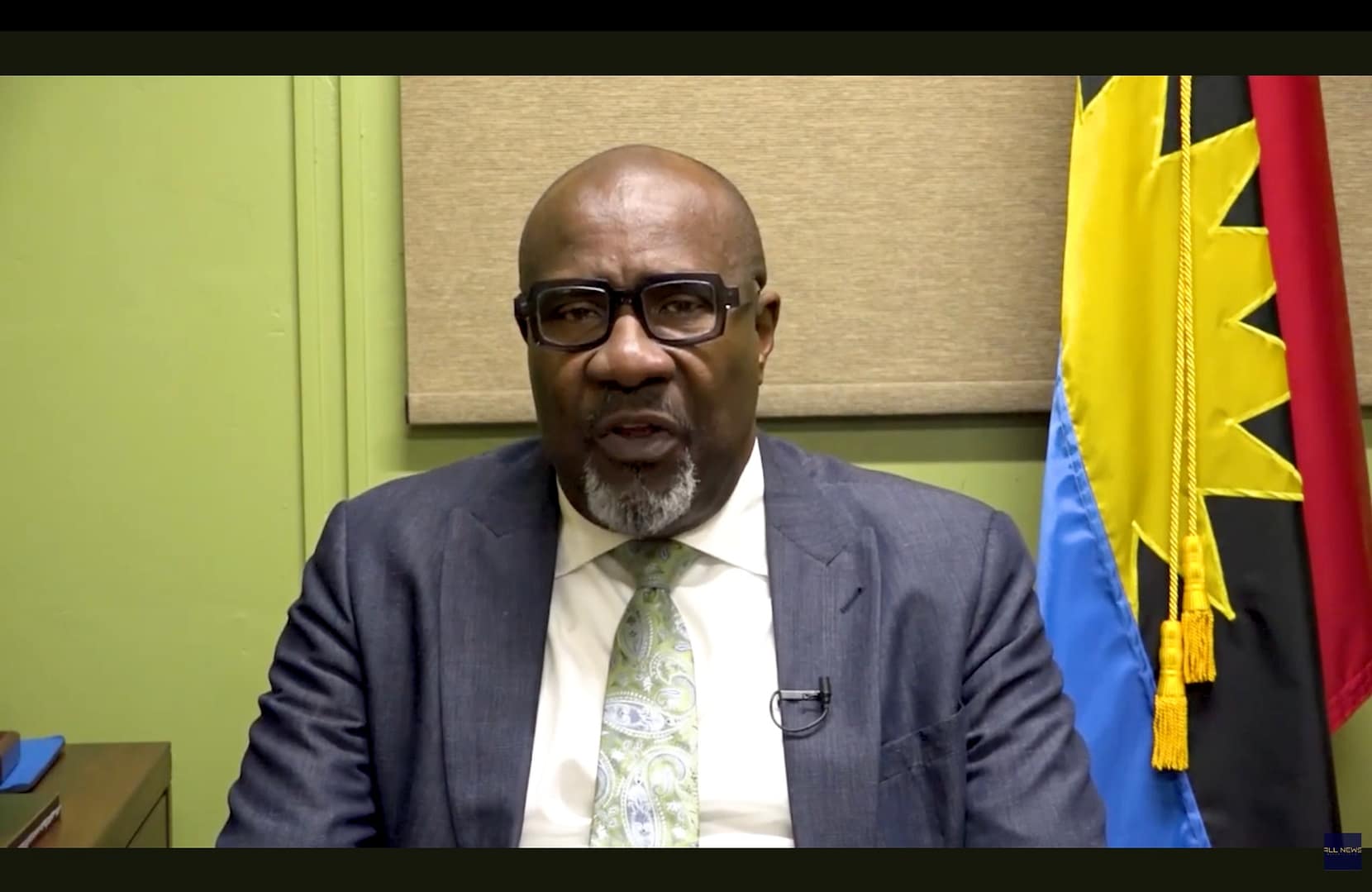
    In a formal address to constituents, Dr. Philmore Benjamin has officially launched his electoral campaign as the Antigua and Barbuda Labour Party’s representative for St. Mary’s North. The candidate opened with a tribute to outgoing representative Sir Molwyn Joseph, acknowledging his decades of public service and developmental contributions to the constituency.

    Dr. Benjamin reported having conducted extensive grassroots outreach across multiple communities within the electoral district, actively listening to constituent concerns and aspirations. His campaign promises a governance model centered on collaborative engagement with both residents and community leaders to ensure equitable development distribution.

    The candidate’s platform prioritizes four key policy areas: youth empowerment initiatives, housing improvement programs, enhanced social support systems, and future-ready community infrastructure. Dr. Benjamin emphasized his dual commitment to addressing hyperlocal needs while maintaining alignment with national development objectives.

    In his closing appeal, the parliamentary candidate requested constituent trust and electoral support, framing the election as an opportunity to forge a unified path toward improved prospects for future generations through concerted leadership and shared vision.

  • Benjamin Sets Out Development Plan for St. Mary’s North, Targeting Jobs, Housing and Youth Support

    Benjamin Sets Out Development Plan for St. Mary’s North, Targeting Jobs, Housing and Youth Support

    As Antigua and Barbuda approaches its general elections, Dr. Philmore Benjamin, the Antigua and Barbuda Labour Party (ABLP) candidate for St. Mary’s North, has committed to delivering dynamic, community-focused leadership and accelerated development for the constituency. Positioning himself as the standard-bearer of continuity, Dr. Benjamin highlighted the substantial advancements in employment, infrastructure, and social welfare achieved nationally under Prime Minister Gaston Browne’s administration.

    Dr. Benjamin’s campaign platform is built upon a foundation of actionable priorities designed to foster inclusive growth. Central to his agenda is a dedicated focus on youth empowerment initiatives, aiming to create sustainable opportunities for the next generation. He has also championed the cause of enhanced housing solutions and the fortification of social support systems to uplift vulnerable demographics. A key pillar of his vision involves cultivating climate-resilient and economically robust communities capable of navigating future challenges.

    In his public appeals, Dr. Benjamin has called for electoral unity, framing the upcoming vote as a critical juncture for the region. “Through collective effort, resolute governance, and a definitive strategy, we can propel St. Mary’s North into a new era of prosperity and expanded opportunity,” he stated, encouraging constituents to endorse his candidacy to maintain the trajectory of progress.

  • UPP urges supporters to register as voter drive extended

    UPP urges supporters to register as voter drive extended

    With political tensions escalating in preparation for an approaching general election, the United Progressive Party (UPP) has launched a comprehensive voter mobilization initiative. The party is urgently directing its supporters to confirm their registration status while highlighting newly extended operational hours at registration facilities.

    The UPP’s internal communication to members reveals that registration units have significantly expanded their accessibility, now operating from early morning through evening on weekdays with additional weekend availability. This strategic enhancement aims to accommodate diverse schedules and maximize voter preparedness.

    Emphasizing the pivotal nature of the upcoming election, the party’s message stresses that ‘every vote will matter’ in determining the political outcome. The notice explicitly warns against procrastination while underscoring the fundamental importance of electoral participation in all constituencies.

    Beyond individual registration efforts, the UPP is encouraging a community-wide approach, urging supporters to facilitate registration processes for family members and others within their social networks. This grassroots strategy is characterized as essential for achieving broad electoral engagement.

    This development occurs against a backdrop of intensified political mobilization across multiple parties, with voter readiness emerging as a potentially decisive factor in the election’s ultimate results. The UPP’s concerted effort reflects the growing recognition that registration numbers could directly influence electoral success.

  • Danilo Medina and U.S. Ambassador hold meeting on Dominican political situation

    Danilo Medina and U.S. Ambassador hold meeting on Dominican political situation

    In a significant diplomatic engagement, former Dominican Republic President Danilo Medina convened with United States Ambassador Leah Francis Campos to address the nation’s current political landscape and reinforce democratic governance frameworks. The high-level discussion unfolded at the Santo Domingo headquarters of the Dominican Liberation Party (PLD), marking a pivotal moment in bilateral political relations.

    The extended two-hour dialogue featured comprehensive exchanges regarding institutional strengthening and democratic values, with Ambassador Campos being accompanied by senior embassy officials while Medina was joined by PLD Secretary General Johnny Pujols. This meeting represents the continuation of strategic efforts to enhance cooperation between Dominican political leadership and United States diplomatic channels.

    In a symbolic conclusion to the proceedings, the PLD delegation presented Ambassador Campos with a curated collection of literary works by Professor Juan Bosch, the party’s founding intellectual and former Dominican president. This gesture underscored the cultural and historical dimensions of the bilateral relationship while emphasizing shared democratic principles.

  • Statement from the Hon. Dr. Terrance Drew, CARICOM Chair and Prime Minister of St. Kitts and Nevis / reappointment of the Secretary-General of CARICOM

    Statement from the Hon. Dr. Terrance Drew, CARICOM Chair and Prime Minister of St. Kitts and Nevis / reappointment of the Secretary-General of CARICOM

    In a significant move ensuring regional leadership continuity, the Caribbean Community (CARICOM) has confirmed the reappointment of Dr. Carla Barnett as its Secretary-General for a second term. The decision was formally ratified during the Fiftieth Regular Meeting of the Conference of Heads of Government, convened from February 24-27, 2026, in St. Kitts and Nevis.

    The announcement was made public on March 25, 2026, by the Hon. Dr. Terrance Drew, Prime Minister of St. Kitts and Nevis and current CARICOM Chair. The reappointment received the required majority support from CARICOM Heads of Government, demonstrating strong regional consensus for Dr. Barnett’s continued stewardship.

    Dr. Barnett’s second term is scheduled to commence in August 2026, extending her leadership of the regional body that represents approximately sixteen million citizens across fifteen Member States and six Associate Members. CARICOM, established on July 4, 1973, through the Treaty of Chaguaramas (later revised in 2001), stands as one of the developing world’s most successful integration models.

    The organization operates through four fundamental pillars: economic integration, foreign policy coordination, human and social development, and security cooperation. The CARICOM Secretariat, the Community’s principal administrative organ headquartered in Georgetown, Guyana, facilitates these objectives under the Secretary-General’s leadership.

    CARICOM’s vision centers on creating an integrated, inclusive, and resilient Community driven by knowledge, excellence, innovation, and productivity. The organization strives to function as a unified competitive force globally while ensuring citizens’ security, guaranteed human rights, social justice, and shared prosperity across economic, social, and cultural dimensions.

  • St. Kitts and Nevis Co-Sponsors Historic UN Resolution on Transatlantic Slave Trade

    St. Kitts and Nevis Co-Sponsors Historic UN Resolution on Transatlantic Slave Trade

    ABUJA, NIGERIA – March 25, 2026 – In a historic move toward global justice and historical reckoning, St. Kitts and Nevis has emerged as a co-sponsor of a groundbreaking United Nations resolution that formally recognizes the transatlantic slave trade as the most severe crime against humanity. The announcement came from Prime Minister Hon. Dr. Terrance Drew during his keynote address at the Afri-Caribbean Investment Summit in Nigeria’s capital.

    Prime Minister Drew revealed that Ghanaian President His Excellency John Mahama is leading the initiative, presenting the resolution to the UN General Assembly on March 25th. The resolution represents a monumental step in addressing historical injustices that have shaped the modern world.

    “St. Kitts and Nevis stands firmly behind this crucial initiative,” declared Dr. Drew. “Our nation proudly co-sponsors this resolution, and we await with great anticipation its passage through the United Nations.”

    The Prime Minister emphasized the resolution’s significance as a unifying force between African and Caribbean nations, marking a new era of coordinated diplomatic advocacy on the global stage. He framed the effort as part of a broader movement toward justice, reconciliation, and collective political action between regions with shared historical experiences.

    Demonstrating unwavering commitment to the cause, Dr. Drew asserted that even if the resolution faces initial obstacles, the coalition would persist: “Should it not pass today, we will continue our efforts until it succeeds.”

    The initiative reflects growing diplomatic alignment between Africa and the Caribbean, extending beyond economic cooperation to include shared advocacy for historical recognition and narrative shaping within international institutions. This collaboration represents a significant development in post-colonial diplomacy and the global movement for reparative justice.