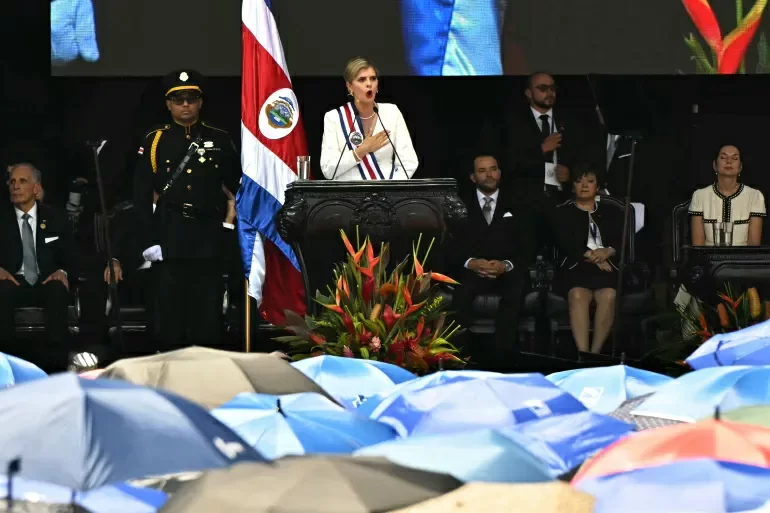
During a ceremonial address to Trinidad and Tobago’s Parliament welcoming India’s top diplomat, Prime Minister Kamla Persad-Bissessar has confirmed that New Delhi has fully fulfilled all development commitments made during Prime Minister Narendra Modi’s 2025 visit to the Caribbean nation, marking a major milestone in the deepening strategic partnership between the two countries.
India’s Minister of External Affairs Subrahmanyam Jaishankar arrived in Port of Spain this week for a two-day official working visit, accompanied by a senior diplomatic delegation. The trip comes on the heels of Modi’s landmark July 2025 tour, which produced a suite of bilateral agreements and memoranda of understanding (MOUs) focused on cross-sector development cooperation.
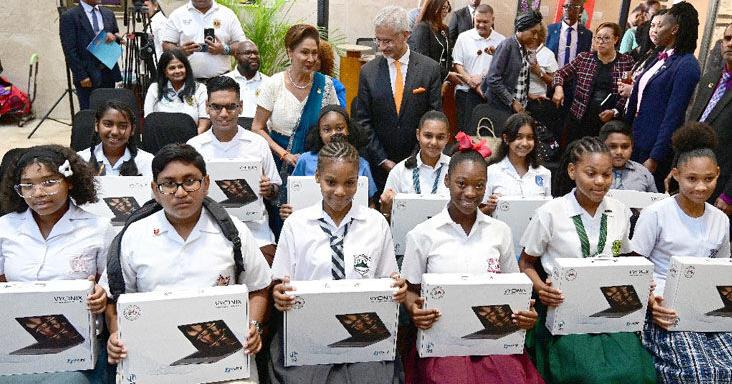
In her address to lawmakers, Persad-Bissessar highlighted that every pledge made during Modi’s visit has been translated into tangible action for Trinidad and Tobago’s people. Among the completed commitments is a donation of 2,000 laptops pledged to support the government’s national secondary school device distribution programme; all units have already arrived in the country and are scheduled for official rollout across all seven of Trinidad and Tobago’s educational districts. A prosthetic limb outreach initiative launched with Indian support has already delivered life-changing care to more than 800 local citizens, and on the second day of Jaishankar’s visit, the two leaders will formally open the new National Prosthetics Centre in Penal — a permanent, locally based facility built with Indian assistance.
Additional pledged aid is set to arrive in the coming weeks, including 20 haemodialysis units to expand critical care access and two purpose-built sea ambulances designed to boost the country’s maritime emergency response capacity and overall healthcare delivery. In Couva, India has also provided grant financing and technical equipment to establish a new agro-processing facility at Brechin Castle, a project Persad-Bissessar said embodies both nations’ shared commitment to advancing agricultural modernization and strengthening regional food security.
Beyond development aid, bilateral economic ties have already grown substantially, with annual two-way trade now surpassing $1.2 billion. Persad-Bissessar noted that the partnership holds massive untapped potential for further expansion across key sectors including agriculture, healthcare, finance, tourism, infrastructure development, and non-energy exports. Trinidad and Tobago has also moved to deepen alignment with India’s global cooperation agenda, formally joining the India-led Global Biofuels Alliance and Coalition for Disaster Resilient Infrastructure. India’s global leadership in digital innovation, the prime minister added, has opened new avenues for joint work on digital transformation, artificial intelligence, archival modernization, and renewable energy deployment.
Jaishankar’s visit, Persad-Bissessar emphasized, builds directly on the foundation laid during Modi’s 2025 trip, which inaugurated a new era of strategic partnership between the two nations. The current visit is designed to move forward the dozens of initiatives and frameworks agreed during that historic engagement, which already cover areas ranging from diplomatic training and pharmaceutical cooperation to community-focused Quick Impact Projects. These existing agreements have established formal cooperation frameworks for public sector capacity building, public health standard-setting, youth development, cultural exchange, and grassroots community projects.
During Wednesday’s parliamentary session, the prime minister also noted the profound historical and cultural context of Jaishankar’s visit, which comes just ahead of Trinidad and Tobago’s annual commemoration of Indian Arrival Day. The holiday honors the legacy of the first indentured laborers who journeyed from India to Trinidad and Tobago starting in 1845, a chapter of history that has shaped the deep people-to-people bonds between the two countries.
Persad-Bissessar reflected that the bilateral relationship is rooted not only in modern diplomacy but also in the shared experience of colonial exploitation. “India endured centuries of British colonial occupation and economic extraction, while enslaved Africans were simultaneously trafficked across the Atlantic. After Emancipation, indentured labourers from India were also effectively trafficked to our country under exploitative imperial labour systems,” she said. “Though they were distinct in form, both experiences formed part of the wider system of colonial exploitation, brutal, coerced labour and human displacement.” Yet from this shared history of hardship, she added, communities across Trinidad and Tobago turned struggle into endurance, survival, and nation-building: descendants of indentured laborers, alongside descendants of enslaved Africans and all other national communities, have shaped the country’s modern economic, cultural, and democratic identity.
To cap the first day of the visit, Persad-Bissessar and Jaishankar signed six new bilateral MOUs expanding cooperation across priority areas: Economic and Financial Cooperation, to strengthen bilateral investment and trade flows; Tourism Cooperation, to grow bilateral tourism and deepen people-to-people connections; Digital Archival Cooperation, to modernize national heritage preservation systems; Quick Impact Projects, to support grassroots community development initiatives; Solar-PV Energy Cooperation, to advance Trinidad and Tobago’s national renewable energy targets; and a partnership to revive the Chair of Ayurveda at The University of the West Indies, strengthening collaboration in education, traditional medicine, and cultural exchange.