分类: politics

  • US strike on alleged drug-smuggling boat kills two in Pacific — military

    US strike on alleged drug-smuggling boat kills two in Pacific — military

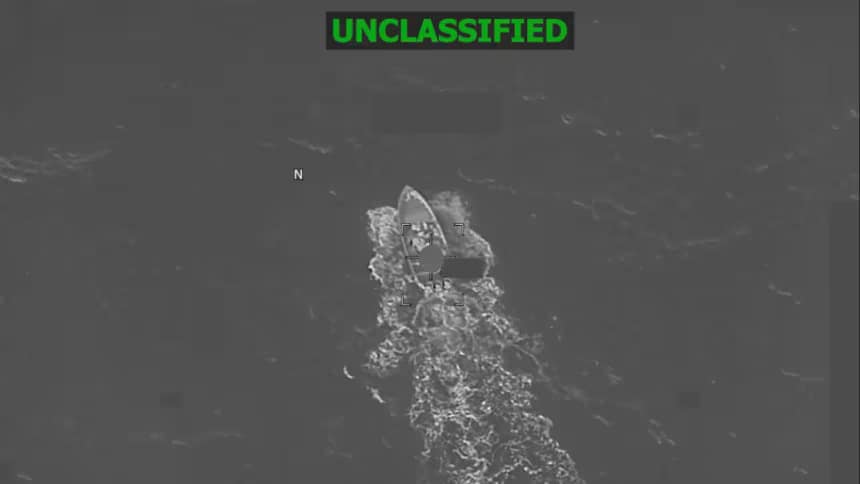
    The United States military has confirmed conducting a targeted strike in the eastern Pacific Ocean on Thursday, resulting in the deaths of two individuals identified as suspected drug traffickers. This operation marks the latest escalation in Washington’s controversial counter-narcotics initiative that has now claimed at least 128 lives since its inception.

    The Trump administration launched this aggressive campaign in early September, characterizing it as a necessary military response to what officials term ‘narco-terrorist’ networks operating from Venezuelan territory. Despite these assertions, administration representatives have yet to present conclusive evidence demonstrating the drug trafficking involvement of the targeted vessels, raising significant legal and ethical questions about the operations’ expansion from Caribbean waters into the Pacific basin.

    US Southern Command articulated the justification for Thursday’s operation through an official statement on social media platform X, asserting that ‘intelligence confirmation indicated the vessel was transiting established narco-trafficking corridors in the Eastern Pacific and actively participating in narcotics operations.’ The command further noted that no American military personnel sustained injuries during the mission.

    This incident represents the second publicly acknowledged strike in the region since the January 3rd apprehension of Venezuelan President Nicolás Maduro, who had previously accused the United States of using anti-drug operations as pretext for regime change initiatives. Maduro currently faces narcotics and weapons charges in New York after being transported by US forces, with the leader entering a plea of not guilty.

    The legal landscape surrounding these operations grew more complex last week when relatives of two Trinidadian nationals killed in a 2025 strike filed a wrongful death lawsuit against the US government. This landmark case constitutes the first legal challenge to the Trump administration’s missile strike policy in Caribbean and Pacific waters, potentially establishing significant precedents regarding extraterritorial military actions and accountability mechanisms.

  • Mexico to send food aid to Cuba while seeking end to oil siege — Sheinbaum

    Mexico to send food aid to Cuba while seeking end to oil siege — Sheinbaum

    MEXICO CITY — In a significant diplomatic maneuver, Mexican President Claudia Sheinbaum announced on Friday that her administration will dispatch humanitarian assistance to Cuba while simultaneously engaging in delicate negotiations with the United States regarding potential circumvention of the American oil blockade against the Caribbean nation.

    The announcement comes amid escalating tensions following US President Donald Trump’s declaration to economically isolate communist Cuba by cutting off its oil supplies, accompanied by threats of imposing tariffs on any country attempting to assist Havana. The island nation, grappling with a severe energy crisis, has historically depended on subsidized petroleum from Venezuela, whose leadership was recently destabilized by US intervention.

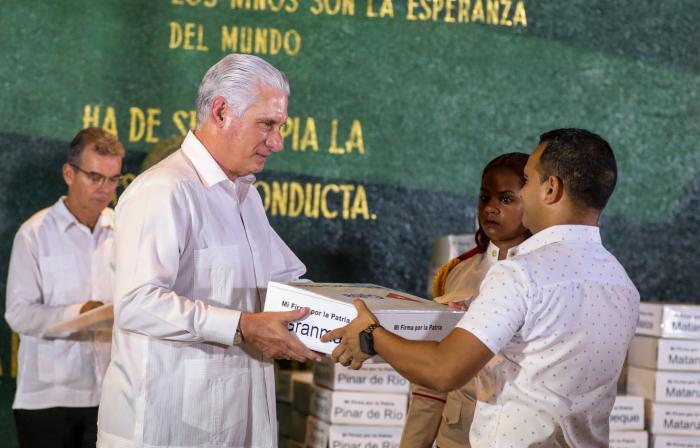
    President Sheinbaum revealed that Mexico is preparing to send essential supplies consisting primarily of food items and other requested materials, with shipment expected no later than Monday. Simultaneously, Mexican diplomats are engaged in ongoing discussions with Washington to explore avenues for resuming oil exports without triggering sanctions against Mexico.

    According to data released by state-owned petroleum company Pemex, Mexico’s oil sales to Cuba amounted to $496 million in 2025, representing less than one percent of the company’s total production. Pemex maintains that these shipments serve exclusively humanitarian purposes amid Cuba’s worsening energy emergency.

    The US pressure campaign threatens to exacerbate Cuba’s power generation capabilities, with fuel shortages already causing significant blackouts across the island. In a contrasting approach, the US State Department disclosed on Thursday the allocation of $6 million in direct aid to Cuban citizens through Catholic Church channels, building upon previous assistance totaling $3 million distributed via similar mechanisms.

  • Cuba adopts urgent measures to address energy crisis

    Cuba adopts urgent measures to address energy crisis

    HAVANA, Cuba—Confronting a severe energy shortage exacerbated by intensified US sanctions, the Cuban government has unveiled a sweeping package of emergency measures designed to conserve dwindling fuel reserves. The drastic steps include mandating a four-day work week for all state-owned enterprises, imposing stringent restrictions on fuel sales, and scaling back inter-provincial transportation services.

    Deputy Prime Minister Oscar Perez-Oliva Fraga, addressing the nation via state television, attributed the crisis directly to Washington’s policies. He outlined the government’s strategy to prioritize essential services and critical economic operations while maintaining national development objectives. ‘Our primary focus is to safeguard the vitality of our nation and ensure the continuity of fundamental services for our population,’ Fraga stated, emphasizing that available fuel would be allocated to protect indispensable activities.

    The comprehensive contingency plan extends beyond the public sector. Educational institutions will operate on reduced schedules, with universities decreasing mandatory in-person attendance. The tourism industry, a vital source of foreign currency, will see selective closures of establishments. These conservation efforts aim to redirect scarce resources toward sustaining food production, maintaining electricity generation, and preserving foreign exchange-earning sectors.

    This energy emergency unfolds against the backdrop of a six-year economic crisis in the Caribbean nation of 9.6 million people, which has labored under a comprehensive US economic embargo since 1962. Recent weeks have witnessed escalating pressure from Washington, including the cessation of oil deliveries from Venezuela—Havana’s key regional ally—following the US rejection of President Nicolas Maduro’s administration.

    Further compounding the crisis, President Donald Trump recently signed an executive order authorizing tariffs against nations supplying oil to Cuba. This move effectively terminated Mexico’s oil exports to the island, which had commenced in 2023, under threat of US trade penalties. The resulting petroleum deficits have brought Cuba’s power generation infrastructure to the brink of collapse, with electrical plants struggling to maintain basic service.

    The historical tensions between the two nations have reached new heights, with Cuban officials accusing the Trump administration of attempting to ‘strangle’ the island’s economy. While power outages and fuel shortages have been recurrent challenges in recent years, current conditions have deteriorated dramatically. Despite the escalating crisis, Cuban President Miguel Diaz-Canel has expressed willingness to engage in diplomatic dialogue with the United States, but only under conditions of mutual respect and without external pressure on Cuba’s sovereign governance.

  • US urges new three-way nuclear deal with Russia and China

    US urges new three-way nuclear deal with Russia and China

    GENEVA, Switzerland — The United States has formally proposed trilateral nuclear disarmament negotiations involving Russia and China following the expiration of the New START treaty on Thursday. This development marks the first time in decades that the world’s leading nuclear powers operate without formal arms control agreements, raising global concerns about a potential new arms race.

    Speaking at the UN Conference on Disarmament in Geneva, Under-Secretary of State for Arms Control Thomas DiNanno characterized the expired treaty as containing ‘fundamental flaws’ that failed to address contemporary security challenges. ‘Serial Russian violations, expanding global stockpiles, and structural deficiencies in New START’s design and implementation compel the United States to advocate for a new framework addressing current threats rather than those of a previous era,’ DiNanno stated.

    The American diplomat particularly emphasized concerns about China’s nuclear program, noting that ‘China’s entire nuclear arsenal operates without limits, transparency, declarations, or controls’ despite its rapid expansion. This assessment was immediately challenged by Chinese Ambassador Shen Jian, who maintained that ‘China’s nuclear capabilities remain substantially inferior to those of the US and Russia’ and reaffirmed Beijing’s position against participating in current disarmament negotiations.

    Russian Ambassador Gennady Gatilov introduced additional complexity to the proposed talks by demanding the inclusion of NATO nuclear powers France and Britain in any future negotiations. Moscow’s position reflects its view that NATO’s collective nuclear alliance status necessitates broader participation in arms control discussions.

    The expiration of New START, which previously limited both the US and Russia to 1,550 deployed nuclear warheads each, has created a strategic vacuum in global nuclear arms control. The Trump administration rejected a Russian proposal to extend the existing treaty for one year, instead calling for a ‘new, improved and modernized agreement’ that would address what officials describe as New START’s limitations in upholding both American strategic deterrence and extended deterrence commitments to allies.

  • GG to deliver Throne Speech at ceremonial opening of Parliament Feb 12

    GG to deliver Throne Speech at ceremonial opening of Parliament Feb 12

    Jamaica’s political landscape prepares for a significant milestone as the ceremonial opening of Parliament is scheduled for Thursday, February 12, 2026, at Gordon House. The proceedings will commence at 11:00 am, marking the official beginning of the 2026 legislative session with traditional pomp and circumstance.

    The highlight of the event will feature Governor General Sir Patrick Allen delivering the highly anticipated Throne Speech during a joint parliamentary sitting. This address serves as the constitutional foundation for the government’s legislative priorities and policy direction for the upcoming parliamentary year, outlining the administration’s vision and key initiatives.

    Following the morning ceremonies, the House of Representatives will reconvene at 2:00 pm for a crucial legislative function—the formal tabling of the 2026/2027 Estimates of Expenditure. This document represents the government’s detailed spending blueprint for the forthcoming fiscal year, setting the stage for subsequent budgetary debates.

    The day’s events will incorporate time-honored traditions including the meticulous inspection of the Guard of Honour and the grand arrival procession of state officials, parliamentarians from both legislative chambers, and distinguished dignitaries. This ceremonial spectacle symbolizes the continuity of democratic governance and constitutional monarchy within Jamaica’s political framework.

  • Violence-ridden Haiti in limbo as transitional council wraps up

    Violence-ridden Haiti in limbo as transitional council wraps up

    PORT-AU-PRINCE, Haiti — Haiti’s Presidential Transitional Council (CPT) is concluding its two-year mandate this Saturday without having achieved its primary objective of restoring stability to the violence-plagued Caribbean nation. The council’s departure leaves the country facing what many describe as a worsening institutional crisis with no clear resolution in sight.

    The transitional body, established with international backing to guide Haiti toward democratic governance, has been plagued by internal divisions, corruption allegations, and political infighting. Multiple council members attempted to oust U.S.-backed Prime Minister Alix Fils-Aime, further complicating the already challenging political landscape.

    Former Prime Minister Jean-Michel Lapin expressed profound disappointment, stating the nation appears to be ‘back to square one.’ Civil society representatives have labeled the CPT a ‘complete failure,’ accusing members of prioritizing personal interests over national recovery.

    The security situation remains catastrophic, with criminal gangs controlling approximately 90% of the capital city. United Nations data reveals nearly 6,000 fatalities and over 2,700 injuries attributed to gang violence in 2025 alone. The violence has displaced approximately 1.4 million Haitians, representing 10% of the population.

    Compounding the crisis, nearly half of Haiti’s population—approximately 6 million people—faces acute food insecurity, including 1.2 million children under five years old.

    International actors, particularly the United States, have reinforced support for Prime Minister Fils-Aime. Secretary of State Marco Rubio emphasized ‘the importance of his continued tenure as Haiti’s Prime Minister to combat terrorist gangs and stabilise the island.’ The U.S. has sanctioned two CPT members and a minister accused of supporting gangs, while deploying three warships to Haitian waters.

    Despite the challenges, Haitian security forces have recently intensified anti-gang operations in central Port-au-Prince, destroying the residence of notorious gang leader Jimmy ‘Barbecue’ Cherizier. These operations receive support from UN forces and private security contractors.

    In a rare positive development, Haiti’s national football team has qualified for the 2026 World Cup, marking their first appearance in the tournament since 1974.

  • Trump sparks fury with video depicting Obamas as monkeys

    Trump sparks fury with video depicting Obamas as monkeys

    WASHINGTON — A social media post by former President Donald Trump featuring manipulated imagery of Barack and Michelle Obama portrayed as monkeys has ignited widespread condemnation from Democratic leaders and civil rights advocates. The controversial video, shared on Trump’s Truth Social platform late Thursday, incorporates a one-second clip of the Obamas with their faces superimposed on primate bodies within a longer segment promoting debunked election conspiracy theories.

    The White House press team defended the post as an innocuous internet meme depicting Trump as the ‘King of the Jungle’ with Democratic figures as characters from The Lion King, dismissing criticism as ‘fake outrage.’ This characterization was immediately rejected by prominent Democrats including California Governor Gavin Newsom, whose office demanded universal Republican condemnation of what they termed ‘disgusting behavior.’

    The incident revives scrutiny of Trump’s historical engagement with racially charged rhetoric, notably his promotion of the ‘birther’ conspiracy theory questioning Obama’s citizenship during the previous administration. Since returning to office, Trump has intensified his use of AI-generated visual content to mock political opponents, including previous fabricated videos showing Obama in prison attire and racially stereotypical depictions of Black congressional leader Hakeem Jeffries.

    Analysts note this episode aligns with the administration’s systematic dismantling of Diversity, Equity, and Inclusion (DEI) initiatives across federal agencies and military institutions. The current administration has terminated numerous civil rights-era programs designed to address historical discrimination, while military academies have removed educational materials examining America’s legacy of racial inequality.

    The video quickly garnered thousands of engagements on Trump’s platform, demonstrating the continued potency of provocative content within his political base despite widespread condemnation from historians and former administration officials who predict this incident will further cement Trump’s legacy as a divisive figure in American racial politics.

  • Long Island FNM rift over candidate

    Long Island FNM rift over candidate

    A significant political schism has emerged within the Free National Movement (FNM) on Long Island, where senior constituency association members are openly advocating for sitting MP Adrian Gibson to run as an independent candidate. This development follows the party leadership’s controversial decision to deny Gibson ratification in favor of Dr. Andre Rollins as their official candidate for the upcoming general election.

    Maurice Minnis, a council representative for the Long Island Constituency Association, revealed that local supporters are actively encouraging Gibson to contest the election outside the party structure. They argue the leadership’s decision disregarded both their unanimous endorsement of Gibson and established party protocols that allow constituency groups to submit preferred candidates.

    The constituency association had formally endorsed Gibson months earlier through a letter signed by numerous senior officers and prominent party figures, including former Director of Education Iris Pinder and former MPs Lawrence Cartwright and Sylvia Scriven. The signatories cited Gibson’s record of advocacy and representation as justification for their support.

    Ms. Pinder, who served as Gibson’s campaign manager in two previous elections, characterized the ratification process as fundamentally flawed and potentially predetermined. She noted that during candidate presentations, Rollins failed to specifically mention Long Island in his remarks, while other prospective candidates presented detailed plans for the constituency.

    The controversy is further complicated by Gibson’s ongoing legal situation. He has faced criminal charges since 2022, with the case remaining unresolved in the courts. While party leadership appears to view this as an electoral liability, Gibson’s supporters maintain the principle of ‘innocent until proven guilty’ should prevail, especially given the four-year duration without resolution.

    Contrasting perspectives emerged regarding local support. While Minnis claimed overwhelming backing for Gibson at public meetings, Long Island Chief Councillor Ian Knowles suggested many residents actually support Dr. Rollins. Knowles acknowledged Gibson’s past performance but emphasized the unresolved court case presents a significant obstacle to his candidacy.

    The deepening rift threatens to split the FNM vote on Long Island, potentially altering the electoral dynamics in the constituency. Both factions appear entrenched in their positions, setting the stage for a potentially divisive political battle that could have implications beyond this single constituency.

  • Minnis calls for bipartisan end to ‘free’ healthcare

    Minnis calls for bipartisan end to ‘free’ healthcare

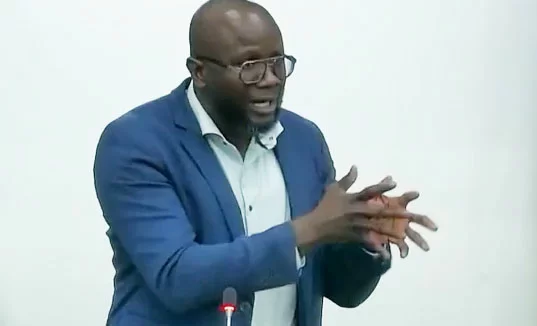
    A critical debate over the sustainability of Bahamas’ public healthcare system has emerged in the House of Assembly, with former Prime Minister Hubert Minnis delivering a stark warning about the financial viability of free medical services. The prominent political figure asserted that the current minimal cost structure for Bahamian healthcare is fundamentally unsustainable, identifying partisan politics as the primary obstacle to meaningful reform.

    Dr. Minnis’s address followed Health Minister Michael Darville’s endorsement of concerning assessments from medical professionals. Minister Darville had previously acknowledged Consultant Physicians Staff Association president Charelle Lockhart’s warnings about escalating demand overwhelming the publicly funded system. “Reality is health care is an expensive business,” Darville conceded, emphasizing that citizens must eventually recognize that comprehensive medical services cannot remain entirely free of charge.

    The former Prime Minister seized this admission to highlight a persistent pattern in Bahamian politics, noting that reform initiatives consistently collapse when opposing parties disown policies they privately acknowledge as necessary. “Minister, you made a very important statement,” Minnis responded. “You know it cannot be free. I know it cannot be free, right? But if we make it political, when you say people have to pay, and then I’m in opposition, oh no, no, no, people do not need to pay, the healthcare system cannot advance.”

    Dr. Minnis proposed a bipartisan approach to healthcare financing, insisting that critical services including health, education, and security must transcend political divisions. However, he established clear conditions for public financial contributions, demanding robust accountability mechanisms before asking citizens to pay. “Don’t ask me to pay when my money go through a safe and disappear,” he cautioned, emphasizing the need for transparent financial management and allocation of resources toward systemic improvement rather than administrative overhead.

    This exchange revives a longstanding discussion that previously surfaced during Dr. Minnis’s administration, when officials including former Health Minister Dr. Duane Sands acknowledged the impossibility of sustaining quality healthcare without greater patient contributions. Historical data from 2018-2019 indicated approximately 87 percent of public hospital patients were not contributing through fees, creating significant financial pressure on government resources. Previous proposals to increase collection of legally mandated fees while protecting destitute patients ultimately stalled without implementation.

  • Former Turks and Caicos premier found guilty over bribery charges

    Former Turks and Caicos premier found guilty over bribery charges

    In a landmark ruling that concludes one of the most significant legal proceedings in the modern history of the Turks and Caicos Islands, the territory’s former Premier Michael Misick, his brother Thomas Chalmers “Chal” Misick, and former Lands Minister McAllister “Piper” Hanchell were found guilty on multiple corruption charges Wednesday.

    The verdict, delivered by Justice Rajendra Narine following a four-hour public hearing in Providenciales, marks the culmination of a ten-year judicial process that exposed systemic corruption at the highest levels of government. The case centered on a sophisticated scheme where senior officials allegedly received substantial bribes and illicit benefits in exchange for granting developers preferential access to government-owned land at significantly reduced prices during a period of intensive resort development.

    According to court findings, the corruption network involved tens of millions of dollars in financial transactions, luxury real estate, and other perks connected to controversial land deals across multiple islands. Justice Narine determined that the defendants engaged in bribery, conspiracy to defraud both the Crown and the Turks and Caicos government, and violated the Proceeds of Crime Ordinance.

    Evidence presented during the trial revealed that former Premier Misick knowingly accepted inducements including a multimillion-dollar loan, a luxury villa, and exclusive credit card access that financed millions in personal spending. In return, he provided favorable concessions and Crown land to developers. The judge concluded that these benefits were intentionally accepted as compensation for corrupt official acts.

    Former Minister Hanchell was convicted of accepting bribes connected to land transactions on Salt Cay and West Caicos, while Chal Misick was found guilty on multiple counts of money laundering related to covering scheme-associated debts and expenses. The court rejected defense arguments that Hanchell’s personal wealth made corruption implausible.

    This verdict follows a broader investigation that previously led Britain to suspend self-governance in the territory from 2009 to 2012 after a commission of inquiry discovered widespread abuse of power. The prosecution successfully argued that the corruption was intrinsically linked to resort developments, particularly on Salt Cay, where extensive Crown lands were transferred or leased at discounted rates to developers who received concessions reserved for local inhabitants despite not qualifying for such status.

    All three convicted individuals remain on bail with increased amounts and are prohibited from leaving the country pending sentencing scheduled for May 4. Prosecutors announced intentions to seek confiscation of tens of millions of dollars in assets connected to the corruption scheme.