分类: politics

  • Bouva: Staatsbezoek Nederland zal intens en inhoudelijk zijn

    Bouva: Staatsbezoek Nederland zal intens en inhoudelijk zijn

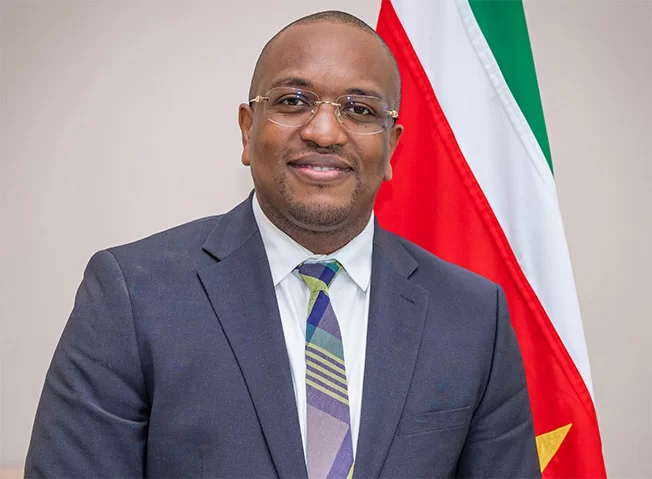
    The upcoming state visit of King Willem-Alexander and Queen Máxima to Suriname represents a strategic opportunity to fundamentally modernize the relationship between the two nations, according to Foreign Minister Melvin Bouva. In an exclusive interview with Starnieuws, Minister Bouva emphasized that the visit extends far beyond ceremonial formalities, serving instead as a platform to establish new agreements, unlock economic opportunities, and achieve diplomatic clarity.

    The significance of the visit is underscored by the substantial Dutch delegation, comprising over 20 individuals including five cabinet ministers, approximately 15 leading corporate executives, and some 30 journalists. This composition, Bouva noted, demonstrates the Netherlands’ commitment to substantive engagement rather than symbolic diplomacy, with focused attention on identifying concrete sectors and investment prospects.

    Three key pillars structure the ambitious agenda: political-administrative cooperation featuring meetings with President Jennifer Simons and judicial bodies; an economic and socio-economic component highlighting business visits and sector presentations in logistics, dredging, tourism, and energy; and environmental sustainability initiatives including visits to joint climate projects.

    Minister Bouva confirmed that several sensitive historical issues will be openly addressed, including the processing of colonial legacy and slavery, access to restricted Dutch archives, visa policy concerns, and the frozen €19 million bank assets. The visit will simultaneously produce tangible outcomes through the signing of multiple declarations of intent covering educational cooperation, dredging and port investments via donation agreements, and diplomatic priority agreements between foreign ministries.

    While acknowledging the complex nature of some ongoing negotiations requiring further dialogue in 2026, Bouva characterized the preparations as highly advanced. He framed the visit as a pivotal moment to rebuild the bilateral relationship on foundations of mutual respect—carefully addressing historical burdens while focusing forward on opportunities in education, health, technology, and tourism. The royal delegation is scheduled to arrive at Johan Adolf Pengel International Airport Sunday evening, where they will be formally welcomed by Minister Bouva.
  • PNH : Development of the Strategic Development Plan (2026-2030)

    PNH : Development of the Strategic Development Plan (2026-2030)

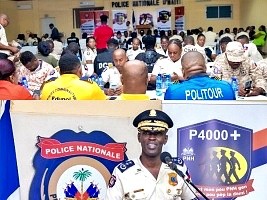
    Haiti’s National Police (PNH) has initiated a comprehensive internal consultation process to formulate its next strategic development blueprint for the 2026-2030 period. Under the leadership of Acting Commander-in-Chief Vladimir Paraison, the police force convened a special workshop this week engaging officers across all ranks and grades in critical dialogue.

    The collaborative forum enables PNH personnel to actively contribute to institutional assessment by identifying organizational strengths and vulnerabilities. Participants are providing direct input regarding operational requirements, proposing innovative ideas, and helping establish priority reforms crucial for enhancing the police service’s performance metrics and overall effectiveness.

    International partners demonstrated substantial support for this institutional modernization effort, with representatives from the United Nations Development Programme (UNDP-Haiti) and the United Nations Integrated Office in Haiti (BINUH) attending the workshop. The Secretary of State for Public Security also participated in the proceedings, underscoring governmental endorsement of the planning initiative.

    This inclusive methodology represents a significant advancement toward constructing a more contemporary and capable National Police institution. The resulting strategic framework aims to equip Haiti’s primary law enforcement agency with the necessary tools and protocols to effectively confront both immediate and emerging public security challenges throughout the next five-year implementation phase.

  • Suriname, Guyana preparing for Joint Border Commission meeting

    Suriname, Guyana preparing for Joint Border Commission meeting

    The neighboring South American nations of Suriname and Guyana are intensifying diplomatic efforts to convene a crucial Joint Border Commission meeting before the conclusion of 2025. This development follows high-level discussions between officials from both countries, signaling a renewed commitment to bilateral cooperation.

    Suriname’s outgoing Ambassador to Guyana, Liselle Blankendal, confirmed that preparatory work is underway for the seventh session of the border commission. “We are striving to hold the 7th border commission meeting before year-end,” Blankendal stated during a press briefing, revealing that Suriname’s commission chair has already initiated engagement with Guyanese counterparts to determine optimal timing.

    The diplomatic momentum stems from the September 2025 meeting between Guyanese President Irfaan Ali and Suriname’s newly elected President Jennifer Geerlings-Simons in Nickerie, Suriname. During this initial presidential encounter, both leaders reached a consensus that commission co-chairs should meet “as soon as possible” to facilitate the full border commission assembly.

    Parallel diplomatic channels are being activated through foreign ministry officials. Guyanese Foreign Affairs Minister Hugh Todd disclosed plans for bilateral discussions with his Surinamese counterpart during the upcoming Caribbean Community (CARICOM) Council of Foreign Ministers meeting scheduled for December in Georgetown. The agenda encompasses multiple cooperation areas, including the Strategic Dialogue Cooperation Platform—particularly relevant following Suriname’s recent governmental transition.

    Minister Todd elaborated that working groups have maintained engagement across several critical domains: “We’re progressing on multiple fronts including the Corentyne River Bridge project, agricultural cooperation, border commission matters, and fishing licenses.” He emphasized the target of concluding substantive discussions by year-end, while acknowledging potential extension into early 2026 should coordination requirements dictate.

    Ambassador Blankendal, a career diplomat, provided technical insights into the commission’s preparatory work, noting that relevant historical documents have undergone comprehensive review with subsequent reporting to both foreign ministries. The proposed procedural framework involves initial talks between commission chairs preceding the full joint session.

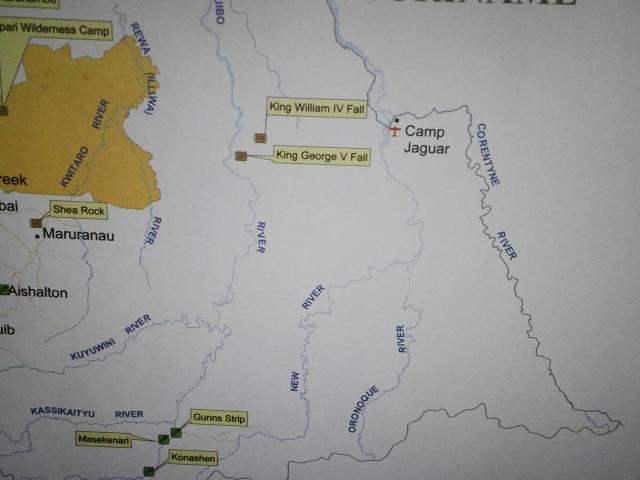
    When questioned regarding potential discussions about the New River Triangle—a 6,000-square-mile territory in southeastern Guyana—the Surinamese envoy indicated the commission’s comprehensive mandate: “The border commission addresses all matters pertaining to that sphere. Our primary focus remains identifying constructive pathways forward.”

  • Politic : A modern airport for Cap

    Politic : A modern airport for Cap

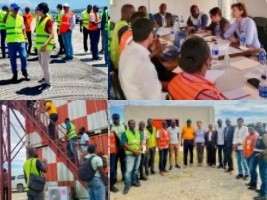
    Haiti’s northern region moves closer to enhanced aviation infrastructure as Public Works Minister Raphaël Hosty convened a high-level progress review meeting for the Cap-Haitien International Airport (AICH) rehabilitation project. The strategic session, hosted at COAMCO Haiti S.A. headquarters, brought together critical stakeholders including World Bank representatives, project management teams, and technical experts from the Ministry of Public Works.

    The comprehensive discussions focused on evaluating current construction milestones, addressing potential implementation challenges, and synchronizing efforts among all participating entities. Minister Hosty emphasized the dual priority of maintaining strict timeline adherence while ensuring compliance with international aviation standards throughout the rehabilitation process.

    Following the administrative meeting, Minister Hosty conducted an onsite inspection tour of the airport’s operational facilities, including the runway and control tower infrastructure. The control tower has been identified for imminent renovation as part of the comprehensive modernization initiative targeting enhanced safety protocols and operational efficiency.

    The Minister expressed measured optimism regarding project advancements, specifically acknowledging the World Bank’s sustained financial and technical partnership. This infrastructure modernization represents a critical developmental asset for northern Haiti, expected to stimulate economic growth, boost tourism potential, and facilitate social development through improved regional connectivity.

    The airport transformation project aligns with broader national efforts to upgrade Haiti’s transportation network and strengthen economic resilience through strategic infrastructure investments.

  • Sanctions against Petro’s presidential campaign rock Colombia

    Sanctions against Petro’s presidential campaign rock Colombia

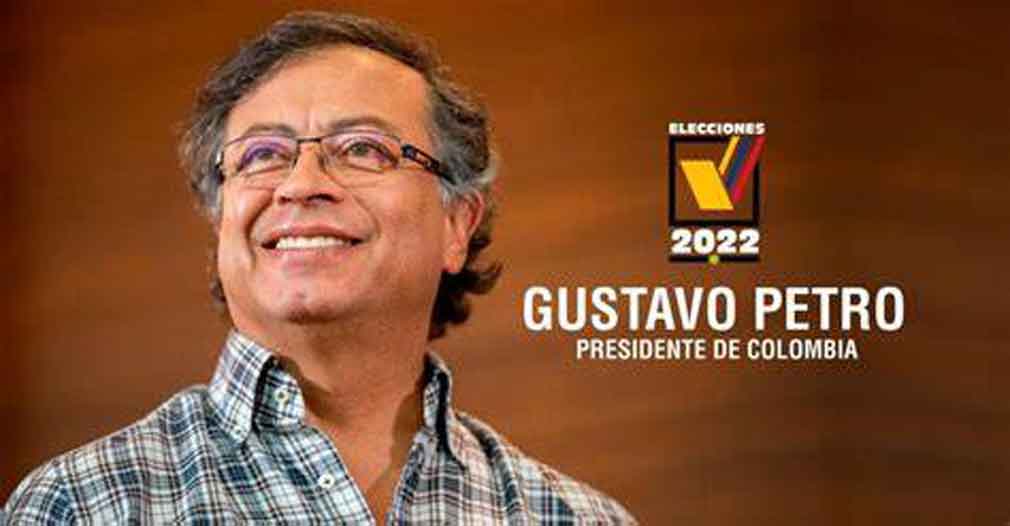
    Colombian President Gustavo Petro has launched a vehement condemnation of the National Electoral Council’s (CNE) decision to sanction his 2022 presidential campaign, framing it as a politically motivated assault on democratic institutions. The electoral authority imposed penalties for alleged campaign finance violations, including exceeding spending limits and accepting funds from unauthorized sources.

    The sanctions targeted key figures from Petro’s campaign apparatus: manager Ricardo Roa, treasurer Lucy Mogollon, and auditor Maria Soto. Both the Patriotic Union (UP) and Petro’s Colombia Humana party also faced financial penalties from the regulatory body.

    In a forceful response delivered through his social media channels, President Petro dismissed the allegations as entirely “fabricated,” asserting that “campaign spending limits never existed” in the manner described by the CNE. He characterized the ruling as an offensive orchestrated by Colombia’s traditional political establishment specifically designed to prevent his coalition, the Historical Pact movement, from obtaining formal legal status as a political party.

    The president escalated his rhetoric further, describing the electoral council’s actions as constituting a “violent attack” against both the Colombian Constitution and the American Convention on Human Rights. He turned coup allegations back on his critics, stating: “They were talking about a coup d’etat on my part, but it is corruption that is carrying it out. They want a dictatorship of corruption.”

    Adding another layer to the controversy, Petro highlighted during a nationally televised address that one of the CNE judges involved in determining the sanctions simultaneously serves as legal counsel for Federico Gutierrez, the current mayor of Medellín and Petro’s former presidential rival who remains a vocal government opponent. The president maintains this dual role fundamentally compromises the principle of impartial arbitration in electoral matters.

  • Pakistan reaffirms support for Palestinians, condemns Israel’s crimes

    Pakistan reaffirms support for Palestinians, condemns Israel’s crimes

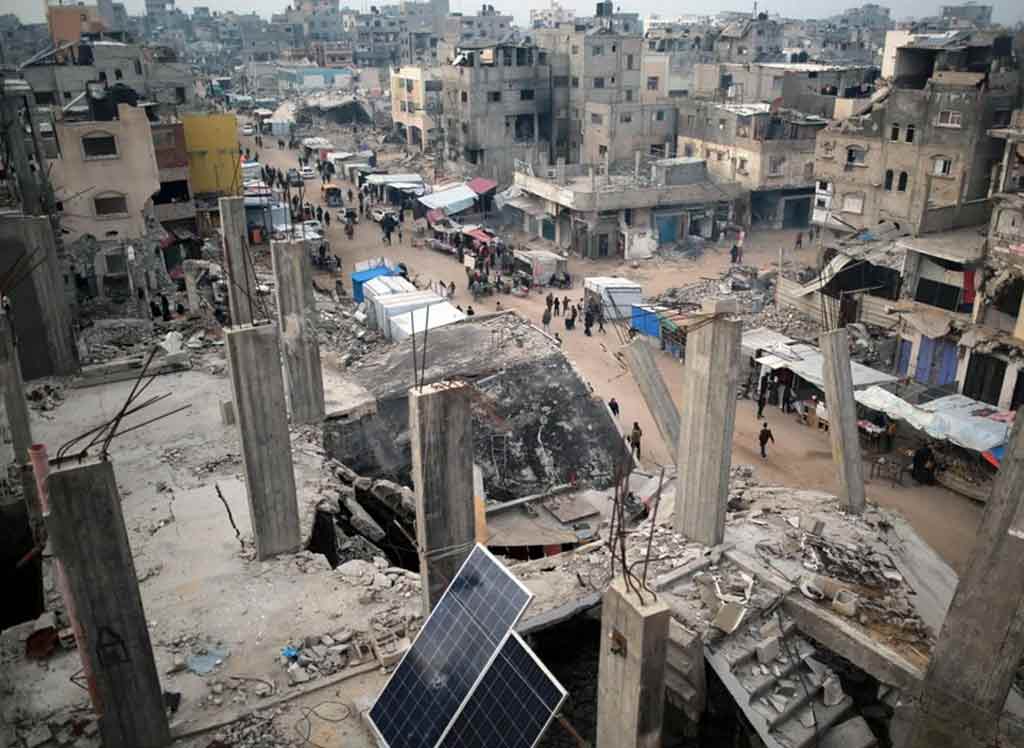
    Pakistan’s highest leadership has issued a powerful condemnation of Israel’s military operations in Gaza, with both President Asif Ali Zardari and Prime Minister Shehbaz Sharif characterizing the conflict as one of the most severe humanitarian catastrophes of modern times. In coordinated statements, the Pakistani leaders articulated their nation’s unequivocal position on what they described as systematic atrocities against Palestinian civilians.

    President Zardari framed Pakistan’s support within the context of universal humanitarian principles, emphasizing that the country’s stance is rooted in fundamental values of human dignity, fairness, and justice. ‘Pakistan has consistently denounced the brutal actions perpetrated by Israeli occupation forces in Gaza,’ Zardari stated, noting that Pakistani diplomats have vigorously advocated for Palestinian rights across all international platforms, including the United Nations.

    The President further committed to sustaining ‘comprehensive political, diplomatic, humanitarian, and moral assistance’ to the Palestinian population, characterizing them as ‘brothers and sisters’ in need of global solidarity.

    Prime Minister Sharif echoed these sentiments, describing the Palestinian ordeal as ‘one of the most devastating human tragedies of the contemporary era.’ He praised the resilience of Gaza’s inhabitants, stating that their perseverance ‘demonstrates the indomitable human spirit in the relentless pursuit of justice and liberation.’

    Sharif outlined Pakistan’s diplomatic approach, affirming commitment to a ‘just, comprehensive, and enduring resolution’ to the Palestinian-Israeli conflict based on relevant United Nations Security Council and General Assembly resolutions. The Prime Minister concluded by affirming Pakistan’s solidarity with ‘the Palestinian struggle, their resilience, and their legitimate aspirations for freedom, dignity, and sustainable peace.’

  • Palestine condemns the demolition of homes in refugee camp

    Palestine condemns the demolition of homes in refugee camp

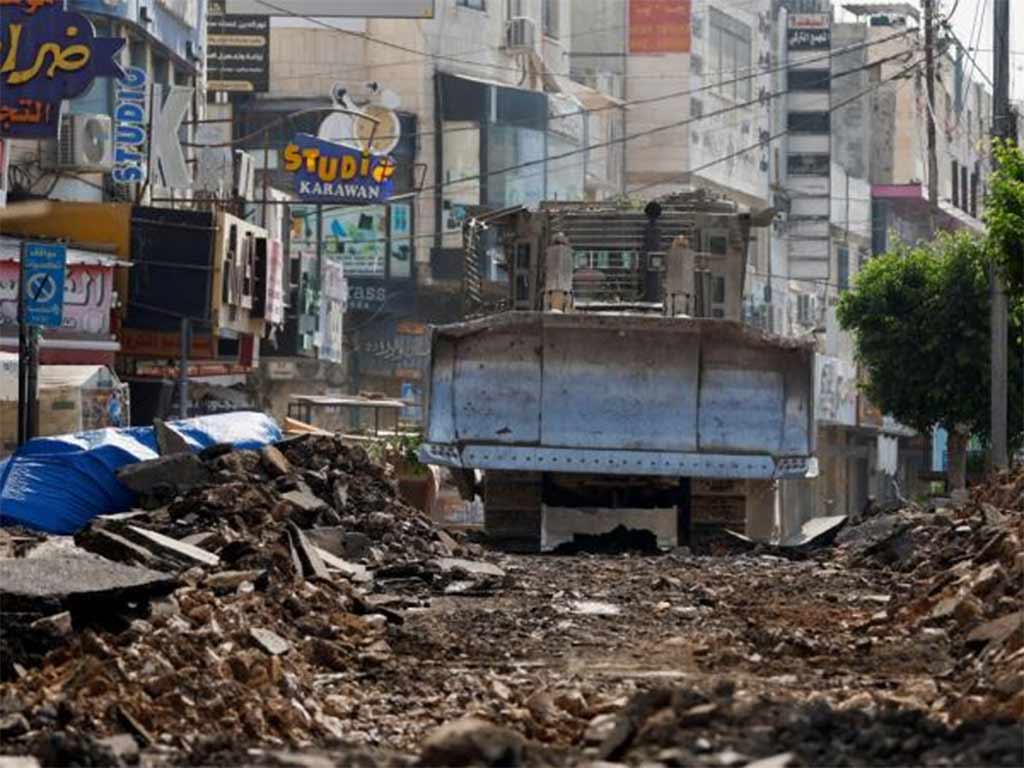
    The Palestine Liberation Organization’s Department of Refugee Affairs has issued a stern condemnation of what it describes as a systematic campaign to forcibly displace Palestinian populations from their ancestral territories. According to the organization’s statement, this strategy aims to permanently resolve the refugee status issue while negating the longstanding right of return, which it claims forms part of a broader initiative to solidify control and effectively annex the West Bank, including East Jerusalem.

    The department provided specific evidence of this alleged campaign, noting that since the initiation of military operations in the northern West Bank earlier this year, hundreds of residential structures in refugee camps have been partially or completely demolished. These destruction operations have reportedly compelled thousands of Palestinian families to abandon their homes and communities, creating a humanitarian crisis with profound implications for regional stability.

    From a legal perspective, the PLO agency characterized these actions as constituting clear violations of international humanitarian law and the United Nations Charter, amounting to what it defined as war crimes. The statement further criticized the international community for its perceived silence and inaction in the face of these developments, suggesting that the absence of meaningful deterrence or consequences has emboldened the Israeli government under Prime Minister Benjamin Netanyahu to continue its alleged violations of international norms and laws.

    The department concluded that the ongoing operations by what it termed ‘the occupying State’ fundamentally undermine prospects for security and stability throughout the region, creating conditions that could potentially escalate existing tensions and conflict dynamics.

  • Russia foretells a hard situation in Ukraine due to corruption

    Russia foretells a hard situation in Ukraine due to corruption

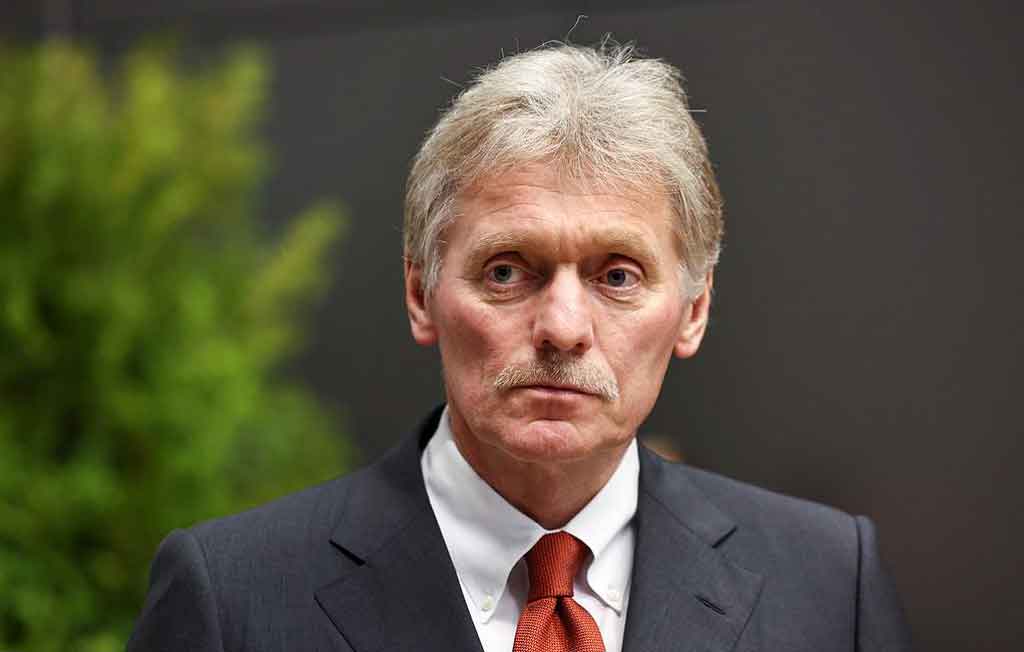
    The Kremlin has characterized Ukraine’s political situation as “extremely difficult” with predictably negative consequences, though Russian officials acknowledge the full ramifications remain unpredictable. Kremlin spokesman Dmitry Peskov made these remarks during an interview with Rossiya 1 television channel, specifically commenting on the corruption investigation targeting Ukraine’s presidential administration.

    The political turbulence intensified when Ukraine’s National Anti-Corruption Bureau (NABU) confirmed conducting searches at the residence of Andriy Yermak, head of Ukraine’s Presidential Office. According to Financial Times reports, these investigative procedures connect to an ongoing corruption probe within Ukraine’s energy sector.

    The scandal has triggered significant upheaval within President Volodymyr Zelensky’s inner circle. Shortly after the searches, Yermak submitted his resignation, which President Zelensky promptly accepted. This development places Yermak among several high-ranking officials who have either resigned or been dismissed recently, including Justice Minister German Galushchenko and Energy Minister Svetlana Grinchuk.

    Peskov characterized the corruption scandal as fundamentally destabilizing to Ukraine’s political framework, suggesting it is “shaking the political system of that country from all sides.” The remarks from Moscow come amid continued tensions between Russia and Ukraine, with the Kremlin closely monitoring internal developments within its neighbor’s political establishment.

    The series of resignations and investigations signal significant internal challenges for the Ukrainian government as it continues to navigate both domestic governance issues and ongoing geopolitical tensions with Russia. The corruption probe specifically targeting the energy sector suggests particular vulnerabilities within this strategic industry.

  • Angola: 300 prisoners granted pardon for 50 years of independence

    Angola: 300 prisoners granted pardon for 50 years of independence

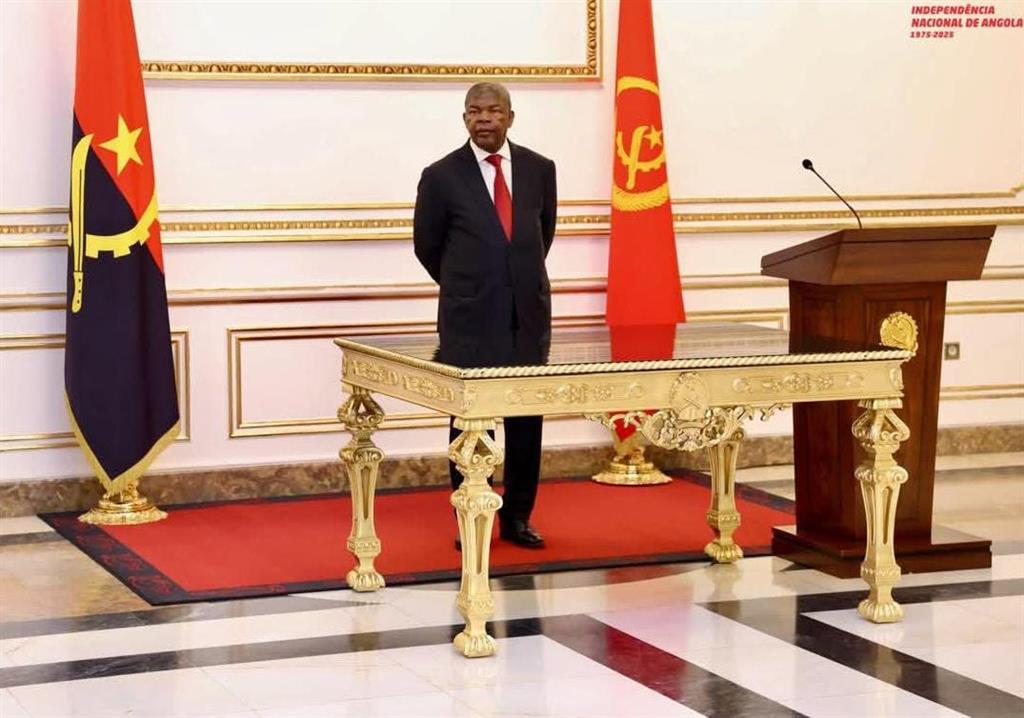
    In a landmark move commemorating five decades of sovereignty, Angola’s presidential administration has issued its most substantial clemency decree of the year. The executive order, released on Tuesday, strategically aligns with the nation’s Liberation Day observances on November 11th—the historic date marking Angola’s emancipation from colonial rule.

    The presidential proclamation emphasized that this humanitarian initiative directly supports national objectives of fostering social harmony, leniency, and fraternal unity during the golden jubilee independence celebrations. The carefully structured amnesty program specifically targets incarcerated individuals who have demonstrated exemplary behavioral rehabilitation and present no discernible threat to public safety, facilitating their reintegration into familial and community structures.

    This represents the third institutional pardon enacted in 2025, significantly surpassing the earlier amnesty granted to 51 individuals at the year’s commencement. The escalating scale of clemency measures reflects the government’s commitment to restorative justice principles while honoring the symbolic importance of the nation’s semicentennial independence milestones. Correctional authorities have begun implementing comprehensive screening protocols to identify eligible beneficiaries based on stringent behavioral and risk-assessment criteria.

  • Cuba commemorates the International Day of Solidarity with Palestine

    Cuba commemorates the International Day of Solidarity with Palestine

    Senior Cuban officials have issued forceful declarations of support for Palestinian sovereignty, aligning with global observances of the International Day of Solidarity with the Palestinian People. Through official communications on social media platform X, Cuban leadership articulated an unequivocal endorsement of Palestine’s claim to statehood within pre-1967 borders, with East Jerusalem as its designated capital.

    The statements included severe condemnation of Israeli military operations in Gaza, with Cuban officials employing the term ‘genocide’ to characterize Israel’s actions. The rhetoric further accused the ‘Zionist regime’ of conducting what was described as ‘extermination operations’ in the contested territory.

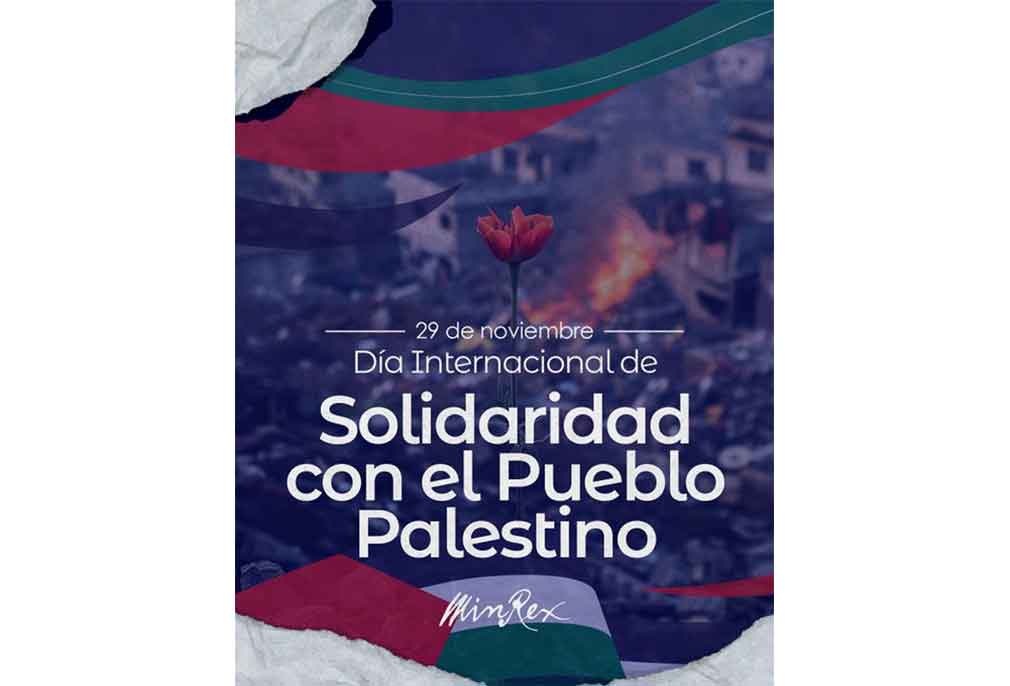
    This demonstration of solidarity coincides with the annual United Nations observance held every November 29th, a date commemorating the 1947 UN General Assembly resolution that initially proposed the establishment of two independent states within the Palestinian mandate. Roberto Morales, Organization Secretary of the Central Committee of the Communist Party of Cuba, explicitly commemorated this historical context while reaffirming Cuba’s perpetual alliance with the Palestinian cause.

    The International Day of Solidarity has been recognized for 48 consecutive years, serving as a platform for nations to express diplomatic positions on one of the world’s most protracted geopolitical conflicts. Cuba’s latest pronouncements reinforce its longstanding foreign policy orientation toward the Israeli-Palestinian conflict, emphasizing Palestinian self-determination and harsh criticism of Israeli military tactics.