分类: politics

  • Senator Sinckler defends political parties as vital to democracy

    Senator Sinckler defends political parties as vital to democracy

    In a passionate address to Barbados’ Upper House, Government Senator and Foreign Affairs Minister Chris Sinckler delivered a robust defense of political parties as fundamental institutions for democratic stability and social progress. The debate centered on the Constitutional Amendment Bill, which proposes triggering by-elections when parliamentarians resign, are expelled, or defect from their parties.

    Senator Sinckler challenged emerging narratives that minimize the significance of political organizations, warning that diminishing their role could dangerously undermine the nation’s political framework. He articulated that while parties lack formal constitutional recognition, they represent crucial mechanisms for national development rather than loosely organized entities.

    ‘It proves dangerously contradictory to lament declining institutional respect while simultaneously weakening the very structures that maintain political order,’ Senator Sinckler asserted during Friday’s session. He highlighted the sophisticated candidate selection processes employed by modern parties, including interviews, screenings, and psychological evaluations, demonstrating their structured approach to political representation.

    The senior minister situated his argument within broader Caribbean historical context, identifying political parties as ‘seminal institutions’ driving social transformation since the 1930s. He referenced the post-1937 riots era and subsequent labor movements as pivotal moments when party structures emerged from trade unions to advance working-class interests.

    Senator Sinckler credited political organizations with facilitating Barbados’ middle-class expansion and creating professional opportunities across sectors. ‘The social mobility we currently enjoy stems largely from political parties’ efforts,’ he emphasized, rejecting arguments that constitutional silence regarding parties diminishes their practical importance.

    Responding to Senator Canon John Rogers’ characterization of parties as disorganized groups, Sinckler expressed measured disagreement, maintaining that these institutions have systematically shaped Barbados’ development trajectory. He concluded that constitutional technicalities should not override parties’ demonstrated contributions to nation-building.

  • Senator Rogers warns against ‘power grab’

    Senator Rogers warns against ‘power grab’

    In a stirring address to Barbados’ parliamentary chamber, Independent Senator Reverend Dr. John Rogers issued a stark warning against proposed constitutional amendments that would penalize ‘floor crossing’ by elected officials. The clergyman-lawmaker characterized the legislative move as a potential ‘power grab’ that could fundamentally undermine the nation’s democratic foundations by transferring excessive authority to political parties.

    Senator Rogers identified Section 45(1)(h) of the proposed constitutional changes as particularly problematic. This provision would automatically vacate the seat of any parliamentarian who either voluntarily leaves their party or faces expulsion from it. Rogers argued this effectively grants ‘ghost institutions’—political parties not formally recognized by the constitution—the power to override the will of voters who elected their representatives.

    The senator drew a crucial distinction between candidates and representatives, emphasizing that ‘political parties present candidates to the electorate, but once chosen, these individuals become representatives of the people.’ He revealed that both the Parliamentary Reform Commission and Constitutional Reform Commission had previously endorsed maintaining the status quo, viewing the right to cross the floor as essential for a robust democratic opposition.

    Rogers referenced the 2003 Commonwealth Latimer House Principles, which caution against penalizing floor crossing as potentially infringing on parliamentary independence. He warned the chamber to consider future scenarios where less benevolent leadership might exploit such provisions, quoting biblical scripture: ‘There arose a Pharaoh who did not know Joseph.’

    As an alternative approach, Senator Rogers advocated for exploring voter recall legislation that would empower constituents—rather than party machinery—to determine whether a representative who changed affiliations should remain in office. He concluded that representatives should maintain the right to be ‘cantankerous’ without fear of automatic expulsion, cautioning against creating the perception of ‘an elite political class who look after themselves.’

  • EXCLUSIVE: Govt lawyer accuses Brent Thomas of delaying court case over 2022 arrest

    EXCLUSIVE: Govt lawyer accuses Brent Thomas of delaying court case over 2022 arrest

    A legal confrontation between the Barbados government and Trinidadian entrepreneur Brent Thomas has intensified as both parties exchange accusations regarding delays in resolving a high-stakes lawsuit concerning Thomas’s unlawful detention and extradition in 2022. Government attorneys assert that Thomas and his legal representatives bear responsibility for prolonging the proceedings, while the businessman advocates for an expedited out-of-court settlement.

    Senior legal counsel Roger Forde, representing the Barbadian administration, contends that the plaintiff’s legal team has failed to advance the case despite filing initial claims. “They filed a claim and they haven’t followed through on it,” Forde stated exclusively to Barbados TODAY. “The ball is in their court. They have not even submitted a qualified claim.”

    Thomas, however, presents a contrasting perspective from his residence in Port of Spain. The licensed firearms dealer maintains that Barbados authorities should pursue settlement negotiations to avoid protracted litigation. “I think that we have to come back to Barbados and be dragged through the courts to waste time for the settlement, rather than just simply have a discussion and come to some sort of settlement,” Thomas expressed during an exclusive telephone interview.

    The dispute originates from October 2022, when Barbadian law enforcement officers detained Thomas during his transit through Barbados for medical treatment abroad. The government has subsequently acknowledged that police personnel acted unlawfully in apprehending the businessman and facilitating his return to Trinidad based on arrest warrants that Trinidad and Tobago authorities later dropped entirely.

    Thomas has outlined specific information demands from Barbadian officials, including clarification regarding who initiated contact with Barbadian authorities, which officials authorized police intervention and aircraft transportation, and whether state representatives were adequately informed about relevant legal protocols before executing the controversial arrest.

    The incident gained regional prominence when Trinidad and Tobago’s Prime Minister Kamla Persad-Bissessar characterized the arrest as a kidnapping during a CARICOM Summit address. Barbados Prime Minister Mia Mottley vehemently rejected this characterization, denouncing it as a “scurrilous lie” and emphasizing that Trinidad police had presented legitimate arrest warrants to their Barbadian counterparts.

    This legal standoff continues to unfold as both nations navigate the diplomatic implications of the cross-border law enforcement operation and subsequent judicial proceedings.

  • Senate backs govt move to curb MPs switching sides in Parliament

    Senate backs govt move to curb MPs switching sides in Parliament

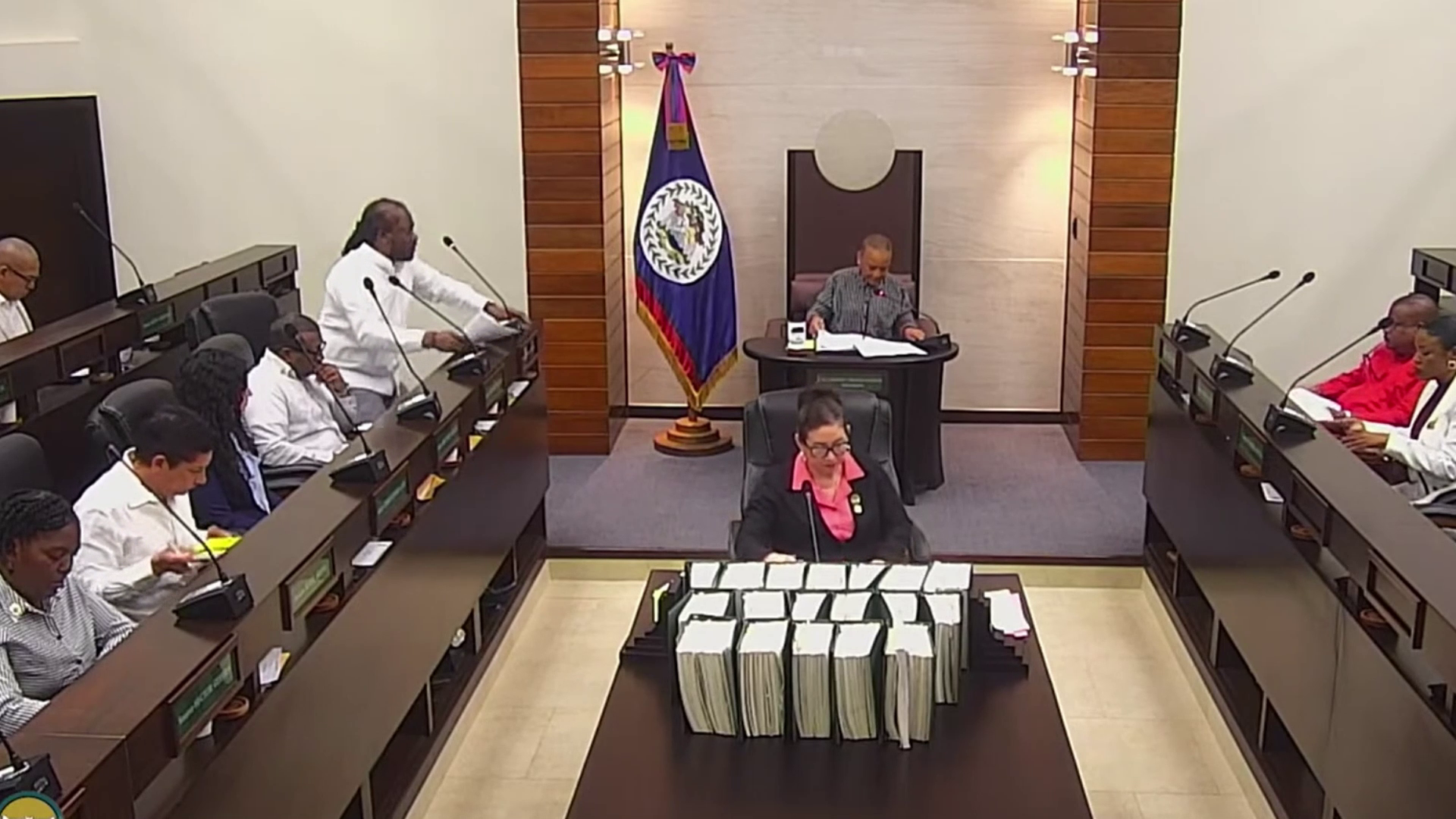
    The Barbados Senate has enacted a historic constitutional reform that fundamentally alters parliamentary dynamics by prohibiting elected officials from switching political affiliations without triggering immediate by-elections. The controversial Constitution (Amendment) Bill passed with overwhelming support on Friday evening, receiving 15 votes in favor against only three dissenting voices in the Upper Chamber.

    This landmark legislation represents the first formal entrenchment of political parties within Barbados’ post-Independence Constitution, marking a significant departure from traditional parliamentary conventions. The amendment specifically targets the practice of ‘crossing the floor’ – where parliamentarians defect from their elected party to join opposition benches without seeking fresh electoral mandates.

    The voting pattern revealed complex political alignments, with four of seven independent lawmakers supporting the government’s position. Opposition Senators Ryan Walters and Karina Goodridge joined independent Senator Reverend Canon Dr. John Rogers in casting dissenting votes, expressing concerns about potential constraints on parliamentary freedom and representative rights. Two independents, Dr. Kenneth Connell and Ryan Forde, abstained from the final vote.

    Prime Minister Mia Mottley elevated this constitutional change as a primary governmental priority following her February 11 re-election victory, which secured her Barbados Labour Party all 30 seats in the lower chamber. This move occurred despite recommendations from two independent blue-ribbon panels – the Constitutional Review Commission and Parliamentary Reform Commission – that had previously affirmed parliamentarians’ right to cross the floor based on the constitutional principle that electors choose representatives rather than parties.

    Senator Lisa Cummins, Leader of Government Business, defended the legislation during closing debates, asserting that ‘nothing in this legislation prevents persons from having freedom of association’ or prevents dissent within parliamentary proceedings. Deputy Speaker Senator Elizabeth Thompson articulated the government’s perspective, comparing the requirement to household rules: ‘The Barbados Labour Party is making it clear that if you want to exist outside of our political structure, no problem – let the public endorse you again as their parliamentary representative.’

    Senator Forde, despite ultimately abstaining, acknowledged the complexity of the issue, stating that while the amendment ‘is not 100 percent wrong nor is it 100 percent right,’ Barbados must ‘make improvements that protect us all’ while maintaining progress toward national rejuvenation.

    The amendment effectively eliminates the possibility of opposition voices emerging in the House of Assembly without formal by-elections, fundamentally reshaping Barbados’ political landscape for future parliamentary sessions.

  • US Agency gives green flag to St. Kitts Citizenship Programme  – WIC News

    US Agency gives green flag to St. Kitts Citizenship Programme  – WIC News

    In a significant diplomatic development, the United States Financial Crimes Enforcement Network (FinCEN) has formally withdrawn its 2014 advisory against St. Kitts and Nevis’ Citizenship by Investment Programme. The withdrawal, effective February 2, 2026, marks a substantial vote of confidence in the Caribbean nation’s reformed governance framework.

    Chairman Calvin St Juste, overseeing the revitalized programme, confirmed that the Citizenship Unit has been restructured as a statutory body with an independent Board of Governors. This institutional transformation has strengthened accountability mechanisms and regulatory independence, directly addressing previous concerns about oversight vulnerabilities.

    The original advisory (FIN-2014-A004) had highlighted potential risks associated with economic citizenship programmes. In response, St. Kitts and Nevis implemented comprehensive reforms including enhanced multi-layered due diligence protocols, mandatory applicant interviews, advanced biometric verification systems, and alignment with global anti-money laundering and counter-terrorism financing standards.

    The programme has also established deeper collaboration with international law enforcement agencies, improving information sharing and security coordination. Notably, upcoming 2026 reforms will introduce a mandatory ‘genuine link’ requirement, compelling applicants to demonstrate substantive connections through physical presence, economic activity, or national development engagement.

    St Juste emphasized that the government treated the advisory with utmost seriousness, implementing sustained reforms that have now received international validation. The removal signifies that the corrective measures have effectively addressed previous concerns while establishing a robust framework for continued operational excellence.

  • Washington Signals Bigger Role in Caribbean Affairs

    Washington Signals Bigger Role in Caribbean Affairs

    In a significant diplomatic development, the United States has formally indicated its intention to deepen engagement with Caribbean nations. The announcement followed the conclusion of the fiftieth CARICOM Heads of Government meeting in Saint Kitts and Nevis, where U.S. Secretary of State Marco Rubio’s unexpected presence generated considerable attention among regional leaders.

    Belize’s Prime Minister John Briceño, in exclusive post-meeting revelations, disclosed that closed-door discussions centered on three critical areas: migration patterns, transnational criminal networks, and regional development initiatives. The high-level dialogue marks a notable shift in Washington’s foreign policy priorities toward the Caribbean basin.

    During bilateral talks, Prime Minister Briceño delivered an urgent security appeal to Secretary Rubio, highlighting the escalating threat posed by Mexican cartels expanding southward into Belizean territory. The Prime Minister specifically identified the Caborca Cartel as having established operational presence along Belize’s northern border with Mexico’s Quintana Roo region.

    “Our nation faces unprecedented vulnerability to narco-trafficking operations,” Briceño stated. “We require immediate assistance in equipment provision, intelligence sharing, and specialized training rather than delayed support that might arrive too late to prevent fundamental transformation of our society.”

    While addressing travel concerns following recent security advisories for Mexico, Briceño emphasized that cross-border relations remain strong despite security challenges. He advised cautious travel practices while reaffirming Mexico’s status as a vital regional partner.

    The Secretary of State’s personal attendance at the CARICOM gathering signals the Trump administration’s renewed focus on Latin American and Caribbean affairs, with diplomatic sources suggesting this engagement represents a strategic counterbalance to growing extra-hemispheric influence in the region.

  • Learning From Jamaica’s Anti‑Gang Playbook

    Learning From Jamaica’s Anti‑Gang Playbook

    The recently concluded CARICOM meeting exposed significant fractures within the regional bloc while simultaneously fostering cooperation on critical security matters. Belize’s Prime Minister John Briceño revealed his nation’s intention to seek Jamaica’s expertise in combating escalating gang violence, following candid discussions with Jamaican leader Dr. Andrew Holness.

    Prime Minister Briceño disclosed to News Five that Jamaica’s successful strategies in tackling gang-driven violence present a valuable model for Belize. “Prime Minister Holness was remarkably frank during our caucus,” Briceño stated. “He emphasized the critical importance of addressing gang issues before they become entrenched and powerful enough to resist intervention.”

    The Belizean leader indicated plans for potential knowledge-exchange missions, saying, “We would probably want to send our people to Jamaica or if I can go myself to examine their approach, particularly how they’ve equipped police with appropriate technology and resources for effective crime fighting.”

    Meanwhile, the summit witnessed notable tensions as Trinidad and Tobago’s Prime Minister Kamla Persad-Bissessar delivered sharp criticism of CARICOM’s solidarity mechanisms. She accused the bloc of failing to support member states during crises, specifically referencing her country’s standoff with Venezuela, and announced Trinidad’s withdrawal from support of CARICOM’s free-movement agenda.

    Prime Minister Briceño offered a robust rebuttal to these claims, asserting that Persad-Bissessar’s criticism was “one hundred percent wrong.” He detailed multiple instances of regional support for both Trinidad and Guyana regarding the Venezuela border disputes, emphasizing CARICOM’s consistent backing of established treaties and boundaries.

    The humanitarian crisis in Cuba emerged as another focal point, with leaders addressing the island’s severe food shortages and the impact of U.S. sanctions. Despite divergent viewpoints on approaching Havana’s leadership, CARICOM members unanimously agreed that both the United States and Cuba must engage in dialogue. The bloc has committed to pooling resources to deliver urgent food assistance to Cuban citizens and has offered to serve as an impartial mediator between the longstanding adversaries.

  • Anti-defection bill: Senator warns against silencing MPs

    Anti-defection bill: Senator warns against silencing MPs

    Barbados opposition Senator Karina Goodridge issued a stark warning during Friday’s parliamentary session, asserting that proposed constitutional amendments preventing MPs from switching political parties risk undermining fundamental democratic freedoms. The legislation, designed to trigger automatic by-elections for defecting representatives, faced rigorous scrutiny as the senator articulated concerns about its potential to suppress internal dissent and empower party leaders to silence critics.

    Drawing upon Shakespearean wisdom, Senator Goodridge—leader of the Friends of Democracy party—contended that perception shapes reality, emphasizing that the amendment must be evaluated against Barbados’ existing constitutional safeguards. She meticulously referenced Chapter 3, Section 11 of the Bill of Rights, which guarantees every citizen’s entitlement to fundamental rights and freedoms regardless of political opinions.

    The senator specifically highlighted subsection (d), protecting freedom of conscience, expression, assembly, and association, arguing that parliamentarians should enjoy these rights without restriction. She further cited Section 21, which explicitly prohibits hindering individuals’ rights to associate with political parties or form associations for interest protection.

    Senator Goodridge questioned the legislation’s urgency, asking whether Barbados truly suffers from significant political instability or merely reacts to isolated instances of floor-crossing. She characterized the move as seemingly rushed and lacking proper justification, despite government assertions that the bill ensures political stability and democratic integrity.

    The opposition leader expressed particular concern about potential abuse mechanisms, warning that expelled members could face weaponization of the legislation by their former parties. While acknowledging the need for political accountability, she maintained that the bill requires substantial refinement to avoid vagueness, conflicts, and ambiguities that might infringe upon constitutional rights.

  • All the changes in the National Police and the Armed Forces ordered by Luis Abinader

    All the changes in the National Police and the Armed Forces ordered by Luis Abinader

    President Luis Abinader of the Dominican Republic has enacted sweeping structural reforms within the nation’s security apparatus through two significant executive actions. Decrees 133-26 and 135-26 mandate comprehensive personnel changes across both the National Police and Armed Forces, signaling a substantial reorganization of the country’s defense and law enforcement leadership.

    The National Police undergoes transformative leadership shifts with General Esteban Figuereo García appointed as the new Deputy Director General, replacing General Juan Hilario Guzmán Badía whose previous appointment under Decree 582-23 has been formally revoked. Simultaneously, General Ernesto Rafael Rodríguez García assumes the critical role of Inspector General, charged with oversight and accountability functions.

    A notable restructuring occurs within internal affairs, where General Werner Manuel Núñez Quezada has been relieved from his position as Director of Internal Affairs. Colonel Francisco Amparo Gómez Polanco receives promotion to general rank and immediate appointment to fill this vital internal oversight role.

    Further promotions elevate six colonels to general rank: Jorge Miguel Perdomo Sena, Antonio del Carmen de los Santos, César G. Ares Montás, Ángel M. García Jaime, Gabriel Ant. de los Santos García, and Edgar Ramón Arnoud Vólquez. Concurrently, several senior officers including Generals Julio C. Betances Hernández, Rufino Ant. Contreras Ruiz, Pedro E. Cordero Ubri, Latif M. Mahfoud Rodríguez, and Francisco J. Torres Dotel transition to honorable retirement with full state pensions as mandated by Police Organic Law 590-16.

    The Armed Forces experience parallel transformations under Decree 135-26, which authorizes promotions and retirements in accordance with constitutional provisions and Law 139-13, the Organic Law of the Armed Forces. Six colonels ascend to Brigadier General within the Dominican Army: Guillermo Jiménez Arciniega, Oscar L. Ares Gómez, Gustavo Reyes Morales, Jhojany Ramón de Jesús Suriel Otañez, Ignacio Arquímedes Morel Brito, and Manuel José Matos y Matos.

    Specialized promotions include Colonel Tomás Rafael Brache Ovalles to Medical General, Pilot Colonel Richard V. Sierra Rodríguez to Pilot General, and Naval Captain Aramis Alexandro Céspedes Aybar to Rear Admiral.

    Eleven high-ranking officers enter honorable retirement: Major General Julio César A. Hernández Olivero; Brigadier Generals José Martín Muñoz Jiménez, Catalino Acosta Piantini, Rodolfo Reynoso Green, Germán Alejandro Rosario Pérez, Vicente Mota Medina, and Rafael Eugenio Reyes Castillo; Vice Admiral Samuel Ogaris Jiménez Lorenzo; Rear Admiral Julio Ángel Morales; along with Brigadier Generals (Pilot) Fernando Rafael Hernández Calcaño and (Paratrooper) Juan Manuel Puig Hernández.

    These executive actions represent a strategic overhaul of Dominican Republic’s security infrastructure, introducing fresh leadership, recognizing distinguished service through promotions, and implementing planned retirements in strict adherence to established legal frameworks.

  • Senator warns against ‘self‑serving’ constitutional changes

    Senator warns against ‘self‑serving’ constitutional changes

    In a scathing parliamentary address, Opposition Senator Ryan Walters has launched a vehement critique against Prime Minister Mia Mottley’s administration, accusing the government of exploiting its legislative majority to enact constitutional changes that serve partisan interests rather than public good. The condemnation follows the House of Assembly’s passage of a bill restricting parliamentarians’ ability to cross the floor, a move Walters characterized as fundamentally undemocratic.

    Speaking during Friday’s Senate session, Walters articulated what he described as growing discontent among both intellectual circles and ordinary citizens regarding the government’s legislative trajectory. He asserted that the administration’s priorities have systematically shifted from addressing citizen needs toward consolidating political power through constitutional manipulation.

    Walters identified a concerning pattern of constitutional amendments following each of the administration’s electoral landslides, tracing this trend to 2018 when qualification requirements were modified to accommodate two additional party members in the Senate. The senator employed a tennis metaphor—’30-love’—to emphasize the government’s three consecutive sweeps of all House seats in 2018, 2022, and 2026, expressing astonishment that constitutional alteration consistently became the first order of business after each victory.

    The current amendment before the Senate, which limits MPs’ ability to change party affiliation, represents the latest iteration of this pattern. Walters noted that a similar attempt failed in 2022 following that year’s election victory, only to be reintroduced in the current legislative session.

    Adding significant weight to Walters’ criticisms, the Barbados Bar Association issued a formal rebuke highlighting its exclusion from the legislative process. The Association’s Friday press release described the bill’s introduction without legal consultation as ‘a troubling disregard for established democratic norms and expert legal guidance.’ Walters emphasized that these concerns transcend partisan politics, reflecting a genuine erosion of democratic safeguards and growing alienation between the government and vital national institutions.