分类: politics

  • President Xi noemt India en China ‘goede buren, vrienden en partners’

    President Xi noemt India en China ‘goede buren, vrienden en partners’

    In a significant diplomatic gesture, Chinese President Xi Jinping characterized India and China as “good neighbors, friends and partners” during his Republic Day message to Indian President Droupadi Murmu. This statement underscores the remarkable thaw in bilateral relations between the two Asian powers following nearly four years of heightened border tensions and economic restrictions.

    The diplomatic reconciliation traces back to October 2024 when President Xi and Prime Minister Narendra Modi held their first formal bilateral meeting in five years during the BRICS summit in Kazan, Russia. This breakthrough encounter set the stage for subsequent confidence-building measures, including India’s August 2025 participation in the Shanghai Cooperation Organisation summit in Tianjin where Modi reaffirmed commitments to improved relations.

    Despite the deadly 2020 border clashes that claimed at least twenty Indian and four Chinese soldiers’ lives—which prompted India to ban TikTok and restrict Chinese investments—bilateral trade demonstrated remarkable resilience. Cross-border commerce continued expanding throughout the tensions, surpassing $130 billion in 2025 even as both nations navigated additional US tariff impositions on their goods.

    The reconciliation process has yielded concrete outcomes: October 2025 marked the announcement of resumed direct flights after a five-year suspension, while Reuters reports indicate pending relaxations of Chinese investment restrictions in India. President Xi’s metaphor of “the dragon and elephant dancing together” captures the evolving dynamic between these civilizational neighbors who now appear determined to transcend historical complexities.

    While persistent border issues require continued diplomatic attention, both nations demonstrate renewed commitment to expanding exchanges and addressing mutual concerns. According to China’s Xinhua News Agency, these developments carry profound significance for maintaining and promoting global peace and prosperity, positioning India and China as increasingly influential power blocs across Asia and beyond.

  • Chanona Warns Democracy Needs Real Engagement

    Chanona Warns Democracy Needs Real Engagement

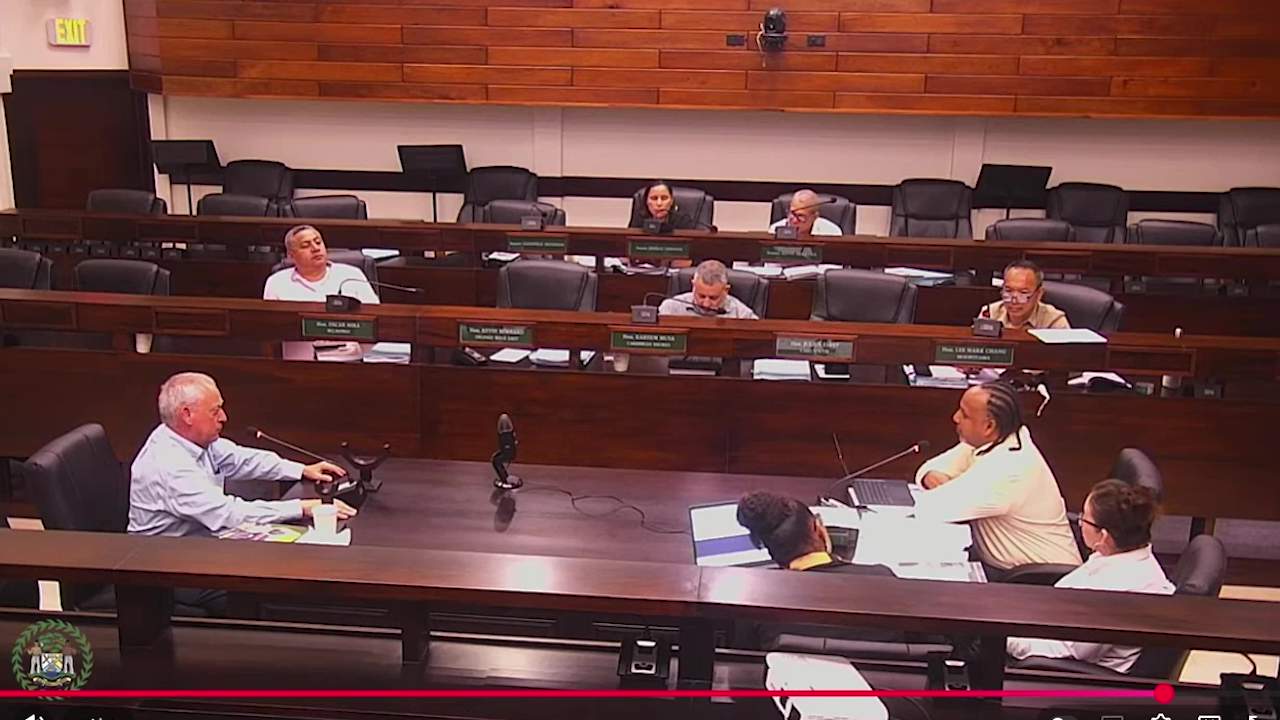
    In a significant political intervention, Belizean Senator Janelle Chanona has issued a stark warning about the fragility of democratic institutions, emphasizing that genuine public engagement represents the fundamental bedrock of the nation’s governance system. Her statement arrives amid mounting scrutiny of the proposed BTL–Speednet merger, positioning public consultation as far more than procedural formality.

    Senator Chanona articulated that authentic public consultation must embody three core principles: complete transparency, broad inclusivity, and timely implementation that allows citizen input to materially influence policy outcomes. She contends that this approach produces more robust legislation by incorporating diverse lived experiences, identifying potential implementation challenges proactively, and potentially generating innovative solutions through collective deliberation.

    The senator’s warning carried particular gravity regarding the consequences of excluding public participation. Chanona asserted that such exclusion not only diminishes public trust in governing institutions but simultaneously strengthens entrenched special interests. This dangerous combination, she cautioned, progressively weakens democratic foundations while fostering widespread political cynicism among the citizenry.

    Citing concerning global democratic regression where authoritarian regimes now numerically surpass democracies, Chanona reminded Belizeans that democratic systems require active protection rather than passive assumption. Her central thesis maintains that placing meaningful public consultation at the heart of national decision-making processes represents the most effective mechanism for safeguarding Belize’s freedoms and enhancing its democratic resilience against contemporary threats.

  • Unequal Slices: The Hidden Disparities in Belize’s Constituency Funds

    Unequal Slices: The Hidden Disparities in Belize’s Constituency Funds

    A groundbreaking investigation into Belize’s Constituency Development Fund has exposed severe transparency gaps and alarming financial disparities across electoral divisions. The program, established in October 2021 by Prime Minister John Briceño’s administration, was designed to provide structured monthly allocations to area representatives for community development projects including infrastructure repairs, educational support, sports facilities, and public space maintenance.

    Social activist Jerry Enriquez initiated the transparency probe through formal Freedom of Information requests to the Office of the Prime Minister after growing concerns about accountability mechanisms. His inquiry sought detailed documentation including expenditure reports, vouchers, and audit records. The government’s response proved dramatically inadequate—a mere one-page document outlining basic allocation amounts without any substantive accountability documentation.

    The investigation revealed striking inequities in fund distribution. While all constituencies receive monthly allocations theoretically based on voter population, the per-capita distribution varies drastically. Stann Creek West, represented by Rodwell Ferguson, receives $20,000 monthly but must serve 10,922 voters—resulting in a mere $1.83 per capita. Conversely, Belize Rural Central, represented by Dolores Balderamos Garcia, receives $23,000 monthly for only 7,833 voters—amounting to approximately $3.00 per capita.

    Prime Minister Briceño originally promised rigorous accountability measures, stating “Full records must be maintained as the program will be subject to audit.” However, with annual allocations exceeding $600 million collectively, the absence of transparent reporting mechanisms raises serious concerns about fiscal responsibility and equitable distribution of public resources across Belize’s constituencies.

  • Belize City Mayor Defends Salary Increase Request

    Belize City Mayor Defends Salary Increase Request

    A contentious proposal to raise compensation for Belize City’s mayor and councilors has been formally rejected by the national government, maintaining current salary levels amid growing economic pressures. The request, initially submitted in 2025, represented the council’s effort to align municipal compensation with industry standards following an extensive external review.

    Mayor Bernard Wagner defended the proposal, explaining that the initiative stemmed from a comprehensive analysis conducted by consulting firm Salient Group in 2024. The study revealed significant disparities between municipal employees and their private sector counterparts, particularly in positions involving janitorial services, grounds maintenance, and public space management. Following these findings, the council implemented substantial raises for lower-tier staff as part of a new collective bargaining agreement ratified in 2025.

    The proposed raises for elected officials marked the next phase of this compensation restructuring effort. Council members conducted comparative research examining remuneration packages in similar municipalities and industries, concluding that their current compensation lagged considerably behind comparable positions.

    However, the timing of the request drew sharp criticism from Opposition Leader Tracy Taegar-Panton, who characterized it as ill-considered given current economic challenges including rising living costs and increased property taxes. Ultimately, Prime Minister Dean Barrow’s administration exercised its statutory authority to block the salary adjustments, leaving the compensation structure unchanged for Belize City’s leadership team.

    The rejection highlights ongoing tensions between municipal and national governments regarding fiscal autonomy and resource allocation, particularly during periods of economic constraint.

  • US President Trump pulls immigration chief out of Minnesota after second fatal ICE shooting

    US President Trump pulls immigration chief out of Minnesota after second fatal ICE shooting

    MINNEAPOLIS – The Trump administration has initiated a comprehensive review of law enforcement protocols following the second fatal shooting of a U.S. citizen by federal agents in Minneapolis within weeks. The latest incident occurred Saturday when Border Patrol agents shot and killed Alex Jeffrey Pretti, an intensive-care nurse, during an altercation that has generated conflicting accounts between federal and local authorities.

    Federal officials, including Homeland Security Secretary Kristi Noem, assert that Pretti was ‘brandishing’ a firearm, justifying the use of lethal force. However, Minneapolis officials and video evidence analyzed by The New York Times suggest Pretti was holding a mobile phone rather than a weapon when agents opened fire. The Times’ forensic analysis indicates no visual evidence of Pretti drawing a weapon before being pinned on the sidewalk.

    Pretti’s family confirmed he legally owned a handgun with a concealed carry permit, though they stated he was not known to carry it regularly. Minnesota law permits public carrying of firearms with proper authorization, adding complexity to the jurisdictional dispute.

    The incident has exposed deepening tensions between state and federal enforcement agencies. President Trump acknowledged the conflict following a conversation with Governor Tim Walz, noting they were ‘on a similar wavelength’ regarding resolution strategies. In response, the administration announced the reassignment of Customs and Border Patrol leadership from Minnesota, with veteran official Tom Homan appointed to oversee operations.

    This shooting follows the January 7th death of Renee Good, another Minneapolis resident fatally shot by immigration agents during an attempted departure from a scene. The back-to-back incidents have intensified scrutiny of federal law enforcement tactics and intergovernmental coordination in immigration enforcement operations.

  • Security : Laurent Saint-Cyr and the PM reiterate the State’s support for the FAd’H

    Security : Laurent Saint-Cyr and the PM reiterate the State’s support for the FAd’H

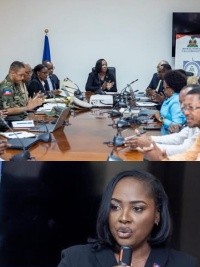
    Port-au-Prince, January 26, 2026 – In a significant demonstration of governmental solidarity, Haiti’s transitional leadership conducted a high-profile visit to Armed Forces headquarters to reinforce state backing for military operations against rampant gang violence. Laurent Saint-Cyr, President pro tempore and Coordinator of the Transition Council, led the delegation alongside Prime Minister Alix Didier Fils-Aimé and Defense Minister Jean Michel Moïse. The high-level delegation engaged in extensive discussions with Armed Forces Commander-in-Chief Lieutenant-General Derby Guerrier, Deputy General Jean Jonas, and senior military officials. During the strategic meeting, Saint-Cyr emphatically praised the military’s professionalism and disciplinary standards while emphasizing their crucial role in national stabilization efforts. He articulated the government’s unwavering commitment to modernizing Haiti’s military infrastructure, stating that national recovery remains unattainable without a robust and respected military institution. The Transition Council coordinator specifically highlighted the necessity of absolute political neutrality within armed forces to maintain public trust and international credibility. Prime Minister Fils-Aimé concurrently declared the administration’s determined focus on enhancing operational, logistical, and human resource capacities within military structures. The Prime Minister characterized the security crisis as an absolute priority that is fundamentally interconnected with national unity objectives and institutional stability. Both leaders reiterated their commitment to restoring state authority across all territories while maintaining strict adherence to constitutional principles and rule of law protocols.

  • ULP gov’t covered up true situation in Southern Grenadines — journalist

    ULP gov’t covered up true situation in Southern Grenadines — journalist

    A veteran journalist with extensive experience covering the Southern Grenadines has revealed a startling disparity between political narratives and on-ground reality following Hurricane Beryl’s devastation. Lyf Compton, a media professional with three decades of experience, accompanied the new government’s delegation to assess reconstruction progress and discovered conditions dramatically different from previous official accounts.

    Compton, who works for the state-owned Agency for Public Information, made more than ten visits to the region under the previous Unity Labour Party (ULP) administration. His most recent assessment with Housing Minister Andrew John and Southern Grenadines Representative Terrance Ollivierre uncovered persistent humanitarian challenges that contradict earlier government claims of successful reconstruction.

    The islands of Canouan, Mayreau, and Union Island—where Hurricane Beryl damaged or destroyed over 90% of buildings on July 1, 2024—continue to host residents living in temporary tents despite the approaching hurricane season. Compton observed numerous structures that remain incomplete shells without internal fittings, doors, or windows, rendering them uninhabitable despite exterior appearances.

    The journalist’s revelations come after Vincentian voters ended the ULP’s 25-year governance in November 2024, granting 14 of 15 parliamentary seats to the New Democratic Party (NDP). Compton now describes the new administration’s task as “monumental,” noting that approximately 700 displaced residents remain in government-funded rental accommodations on St. Vincent at a monthly cost of nearly EC$1 million.

    Infrastructure concerns extend beyond housing, with main jetties and wharves requiring urgent attention. Compton noted that some docking facilities appear structurally compromised and might collapse if confronted by large vessels.

    Funding challenges compound the reconstruction effort. While the government delegation included World Bank representatives, potentially indicating international funding avenues, Compton expressed skepticism about financial resources. The proposed citizenship-by-investment program faces significant implementation hurdles, and the journalist acknowledged the constraints of St. Vincent’s developing economy.

    Compton highlighted additional complications including land ownership disputes, absentee property owners, and landlords using hurricane damage as justification for long-desired evictions. These factors create complex barriers to comprehensive reconstruction that extend beyond mere construction capabilities.

    The journalist emphasized that his experience demonstrates the critical importance of independent verification of political claims, stating: “Perception is something else. You need to go out and investigate and see things for yourself.”

  • Senator Chanona: ‘Public Consultation Strengthens Democracy’

    Senator Chanona: ‘Public Consultation Strengthens Democracy’

    BELIZE CITY – In a significant address addressing democratic processes, Senator Janelle Chanona has emphasized the critical importance of substantive public consultation in national decision-making. The remarks come amid mounting concerns regarding Belize Telemedia Limited’s proposed acquisition of Speednet/SMART, a transaction that would fundamentally transform the nation’s telecommunications landscape.

    Senator Chanona, representing NGO interests, articulated that authentic consultation must constitute a genuine two-way dialogue rather than perfunctory engagement. She stressed that elected officials must actively listen to and thoroughly consider stakeholder perspectives before reaching irreversible determinations that affect public interests.

    The senator further highlighted journalism’s vital role in democratic oversight, noting that media platforms frequently become essential channels for public discourse when formal consultation mechanisms prove inadequate. She cautioned against the problematic pattern where consultation only occurs amidst emerging scandals, by which point public trust has already been substantially eroded.

    Addressing criticisms that consultation impedes governance, Chanona firmly rejected assertions that public engagement is unnecessarily costly, time-consuming, or constitutes personal attacks on officials. Her position aligns with recent statements by Dr. Louis Zabaneh characterizing consultation as “the heart of our modern democracy.”

    This philosophical stance gains practical significance as major Belizean institutions including the Belize Chamber of Commerce and Industry and the National Trade Union Congress of Belize demand suspension of binding decisions until comprehensive consultations are finalized. Both organizations have emphasized transparency necessities and warned against precipitous actions regarding the telecommunications consolidation.

  • UPP praises government’s Agricultural Land Lease, scrutinizes terms

    UPP praises government’s Agricultural Land Lease, scrutinizes terms

    In a significant political development on January 26, 2026, the United Progressive Party (UPP) has extended conditional support to the Dominican government’s newly announced Agricultural Land Lease Facility. Under the leadership of attorney Joshua Francis, the opposition party acknowledged the potential merits of the program designed to facilitate young farmers’ access to agricultural land at dramatically reduced costs.

    The groundbreaking initiative, championed by Agriculture Minister Hon. Roland Royer as “a doorway to food security and economic growth,” offers agricultural parcels at a symbolic lease rate of just EC$1.00 per acre annually during an initial five-year term, with provisions for renewal. This unprecedented pricing structure represents a deliberate strategy to eliminate financial barriers that traditionally prevent youth from entering the agricultural sector.

    Despite endorsing the concept’s fundamental principles, UPP leader Francis issued a comprehensive critique regarding the program’s implementation framework. In an official party release, Francis questioned whether the initiative constitutes a genuine economic development strategy or merely represents political maneuvering to bolster support for the ruling Dominica Labour Party.

    “Access to land is only the first step,” Francis emphasized. “Without adequate training, resources, and market access, we risk setting up our young farmers for failure rather than success.”

    The UPP’s analysis identified six critical areas requiring immediate governmental clarification and commitment:

    1. Technical Education: The necessity for structured agricultural education programs covering modern farming techniques, soil management, pest control, and sustainable practices, alongside available extension services and expert mentorship.

    2. Resource Allocation: Financial and material support mechanisms for initial farming activities, including seeds, fertilizers, equipment, and irrigation systems that remain prohibitively expensive for new entrants.

    3. Market Security: Pre-arranged sales channels through agreements with local retailers, hospitality establishments, and export partners to guarantee produce distribution.

    4. Income Bridging: Support systems during cultivation periods when crops mature, addressing both personal and operational expenses.

    5. Infrastructure Development: Commitments to essential infrastructure including farm access roads, water supply systems, and post-harvest facilities.

    6. Risk Mitigation: Insurance options and disaster relief programs specifically designed to protect against Dominica’s vulnerability to hurricanes and tropical storms.

    Francis highlighted historical precedents where well-intentioned programs failed due to inadequate planning and execution. He urged the government to present a detailed implementation blueprint addressing these concerns before encouraging young farmers to participate.

    The UPP reaffirmed its commitment to agricultural development as fundamental to Dominica’s food security, rural enterprise growth, economic resilience, and employment generation. Expressing willingness to collaborate constructively with government and stakeholders, Francis called for active engagement with farmers’ associations and agricultural experts to develop a comprehensive support framework that ensures the Land Lease Facility becomes a genuine catalyst for positive transformation rather than another missed opportunity.

    The party concluded by reiterating its dedication to policies fostering economic growth, social justice, and sustainable development for all Dominican citizens.

  • Kentish Alleges Delegate Disqualification Undermined UPP St George Primary, Vows Political Comeback

    Kentish Alleges Delegate Disqualification Undermined UPP St George Primary, Vows Political Comeback

    In a stunning revelation, former United Progressive Party (UPP) hopeful Jermaine Kentish has publicly detailed the strategic miscalculations and alleged institutional manipulation that led to his decisive defeat in the St George Constituency branch primary. The January 19th, 2026 election at Potters Primary School saw only 13 members cast votes, with Kentish receiving just 2 votes against Kelton Dalso’s 9 and Kem Riley’s 2.

    Kentish disclosed that his campaign strategy involved a tactical delay in delegate registration, designed to prevent opponents from gauging his support base and to eliminate opportunities for party leadership to influence his delegates. This approach was born from bitter experience during his 2020 primary showdown with incumbent MP Algernon ‘Serpent’ Watts, where despite registering over 60 delegates and investing thousands of dollars, he secured only 22 of 96 votes cast—a outcome he attributes to behind-the-scenes manipulation by party power brokers.

    Determined to avoid repeating history, Kentish registered more than thirty individuals in the final week before the primary, supplemented by approximately twenty additional committed supporters. So confident was he of victory that he arrived at the event in a three-piece suit with a pre-rehearsed victory speech.

    However, the political landscape shifted dramatically when party officials Jason Mannix and Chaku Waku Symester disqualified the majority of voters days before and during the primary night, citing a previously unknown rule requiring financial membership status from two weeks prior to voting—a regulation none of the candidates had been aware of and which hadn’t been enforced during the 2020 primary.

    Kentish contextualized these events within what he describes as a predetermined outcome, referencing a New Winthorpes Primary School event three months earlier where sitting MP Watts and party leaders including Mr. Pringle had already introduced Kelton Dalso as their preferred candidate for St George.

    Despite the setback, Kentish concluded with a defiant message to the UPP establishment, declaring his resilience and unwavering determination to continue his political journey, using the metaphorical language of overcoming adversity and emerging stronger.