分类: politics

  • Laos and the UN deepen collaboration on sustainable development

    Laos and the UN deepen collaboration on sustainable development

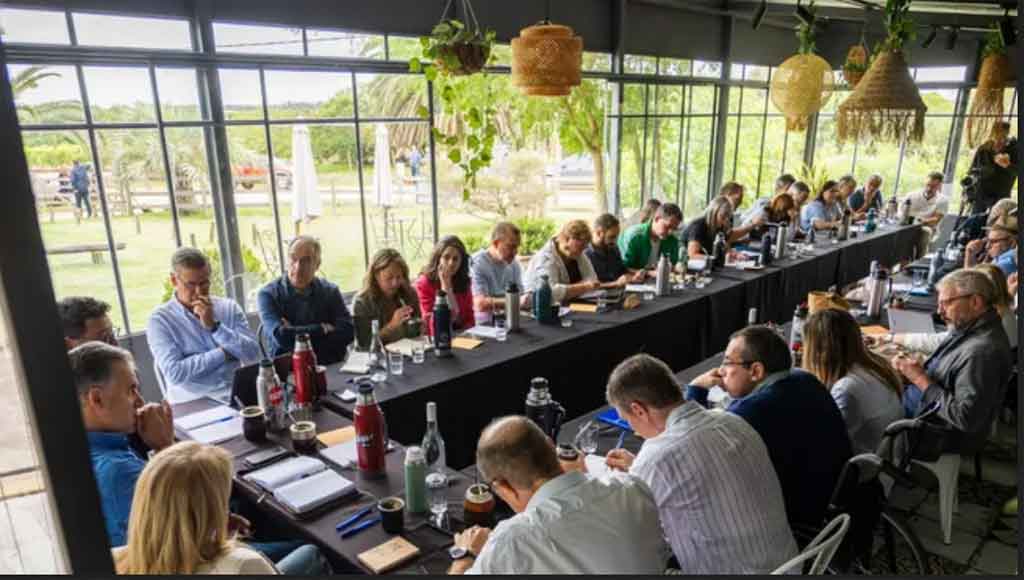
    Vientiane hosted a high-level strategic dialogue this week, convening national leaders and international development partners to mark a significant milestone in their collaborative efforts. Prime Minister Sonexay Siphandone presided over the assembly, which brought together senior government ministers, diplomatic corps representatives, key development partners, and youth delegates.

    The gathering served as a platform to evaluate past accomplishments and chart future cooperative endeavors. Deputy Foreign Minister Anouparb Vongnorkeo addressed attendees, highlighting how the commemoration provided crucial momentum for assessing joint achievements while reinvigorating strategic alliances. He specifically acknowledged the substantial contributions of UN agencies across multiple development sectors, noting their instrumental role in enhancing living standards, poverty reduction initiatives, environmental conservation measures, and national preparation for sustainable transition.

    Following extensive deliberations, both parties established a reinforced framework for deepened cooperation. The new agreement specifically targets enhanced collaboration in climate resilience infrastructure, access to emerging technologies, and sustainable financing mechanisms. Additionally, the pact emphasizes strengthened support mechanisms for nations facing particular vulnerability to economic and environmental challenges.

    United Nations Resident Coordinator Bakhodir Burkhanov outlined the partnership’s renewed priorities, emphasizing that the revitalized collaboration would concentrate on human capital development through educational and capacity-building programs. The initiative further commits to expanding accessible basic services including healthcare, clean water, and sanitation infrastructure across Lao communities.

  • Palestinian party calls on the world to support Gaza and its people

    Palestinian party calls on the world to support Gaza and its people

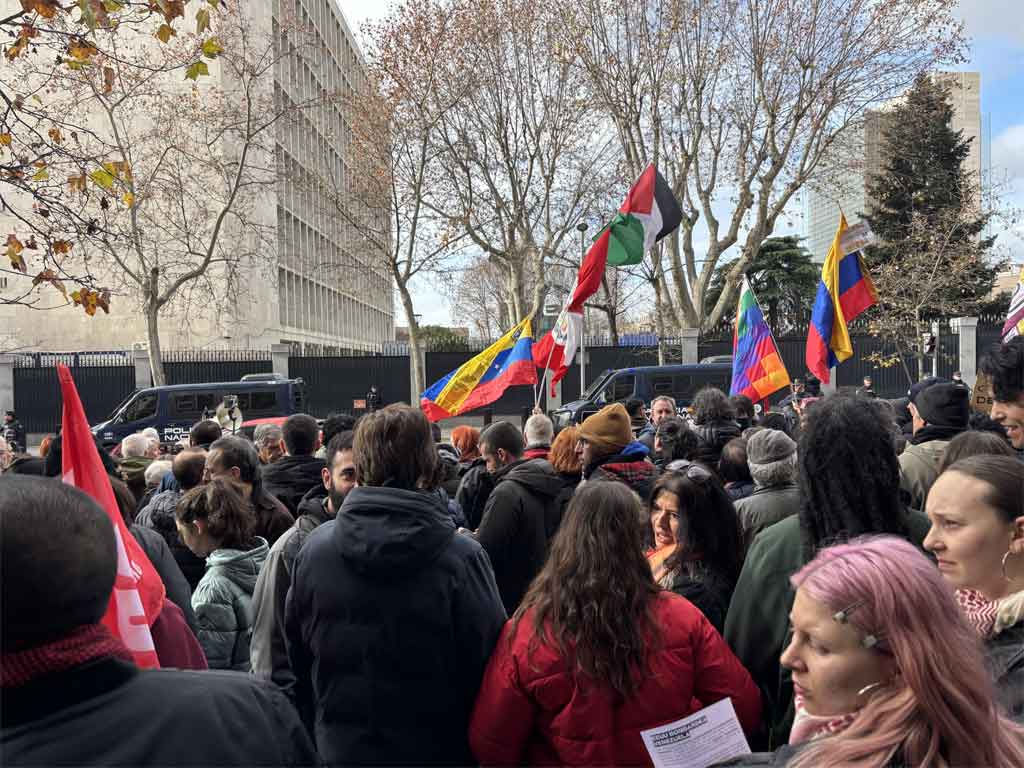
    A prominent left-wing political organization has issued a forceful appeal for the reactivation of international solidarity movements in support of Palestinian civilians. The Popular Front for the Liberation of Palestine (PFLP) called for intensified global pressure to compel Israeli authorities to immediately cease military operations, unconditionally open all border crossings, and ensure the unimpeded flow of humanitarian assistance into the Gaza Strip.

    The faction’s statement highlighted the rapidly deteriorating humanitarian situation throughout Palestinian territories, including Gaza, the West Bank, and East Jerusalem. The group attributed this crisis to what it described as persistent violations by Israeli forces, creating increasingly perilous conditions for the civilian population.

    Furthermore, the PFLP strongly condemned what it characterized as escalating human rights abuses and the worsening circumstances faced by Palestinian detainees in Israeli prisons. The organization emphasized the urgent need to expand worldwide grassroots campaigns aimed at stopping arms transfers to Israel and pressuring defense contractors involved in weapons sales to the country.

    The statement serves as both a condemnation of current conditions and a strategic call to action for international organizations, governments, and civil society groups to intervene through diplomatic pressure and arms embargo initiatives.

  • Rumours of war and kinetic strikes

    Rumours of war and kinetic strikes

    Amid escalating regional tensions, Trinidad and Tobago’s Prime Minister Kamla Persad-Bissessar finds herself at the center of a complex geopolitical balancing act involving the United States and Venezuela. The diplomatic landscape has intensified following the recent visit of General Dan Caine, Chairman of the US Joint Chiefs of Staff, to the Diplomatic Centre in Port of Spain on November 25.

    The core of the controversy stems from the Trump administration’s aggressive stance toward Venezuela, framed as a counter-narcotics operation but widely perceived as a politically motivated regime change initiative. Prime Minister Persad-Bissessar has drawn criticism for appearing to endorse the US position that President Nicolás Maduro’s removal is fundamentally about drug trafficking—a narrative most regional analysts consider disingenuous.

    The situation reveals deeper complexities in Caribbean governance and security policy. Trinidad has maintained a nearly continuous state of emergency throughout the year, with authorities claiming success in reducing crime rates. However, this approach has normalized emergency governance while failing to address root causes of drug demand and supply.

    The article presents a critical examination of the flawed ‘war on drugs’ paradigm, noting that despite decades of enforcement-focused policies since Nixon’s 1971 declaration, drug demand has actually increased. The commentary argues that targeting supply without addressing demand creates an endless cycle of violence and enforcement that ultimately proves ineffective.

    Regional claims of the Caribbean being a ‘zone of peace’ are contrasted with stark realities: Jamaica’s historically high murder rates and Trinidad’s escalating violence until recent emergency measures. The persistence of large drug caches despite US ‘kinetic strikes’ on suspected trafficking vessels further undermines official narratives of success.

  • Ameen: Police probing URP ‘ghost-gang’, payments after audit

    Ameen: Police probing URP ‘ghost-gang’, payments after audit

    The Trinidadian government has launched a comprehensive crackdown on systemic corruption within the Unemployment Relief Programme (URP), with Minister of Rural Development and Local Government Khadijah Ameen confirming multiple police interventions and detentions. The investigation has uncovered a sophisticated ‘ghost gang’ scheme involving fraudulent personnel records and unauthorized payments.

    Minister Ameen revealed that law enforcement authorities have detained several individuals for questioning, with some found in possession of multiple fraudulent identification cards. Speaking after the appointment ceremony for the Boundaries of the Municipalities Committee at Kent House, Port of Spain, the minister disclosed that some of those apprehended have known gang affiliations, indicating deeper criminal networks infiltrating the welfare program.

    The corruption cleanup began with the termination of all 928 workers previously listed on URP payrolls, many of whom were found to be nonexistent or even residing outside Trinidad and Tobago. ‘When we assumed office, we encountered 928 workers on paper,’ Minister Ameen explained. ‘Termination notices were issued to all, though some were untraceable while others appeared solely to collect their dismissal documentation.’

    Of the original workforce, 130 legitimate public servants have been successfully integrated into the Local Government Ministry and reassigned to municipal corporations across the nation. The minister addressed pending one-month termination payments, emphasizing that all gratuity distributions must undergo standard auditing procedures to ensure proper financial oversight.

    Minister Ameen defended the payment delay as standard protocol for any ex-gratia payments, noting that similar audits occurred during her tenure as councilor and chairman. She stressed that the process follows established public service protocols managed by independent auditing departments rather than political officials.

    The current administration has accused previous governments of wasting millions through the poorly managed program, prompting comprehensive audits and criminal investigations. The restructuring initiative began on September 10 with immediate terminations and compensatory payments, though the exact scale of the dismissals remains undisclosed.

  • PM happy with passage of stand-your-ground bill

    PM happy with passage of stand-your-ground bill

    In a decisive legislative move, Trinidad and Tobago’s House of Representatives has approved the Home Invasion (Self-Defence and Defence of Property) Bill 2025, marking a significant escalation in the nation’s criminal justice policies. Following an extensive nine-hour parliamentary session, the government secured passage with 23 votes in favor, overcoming unified opposition from ten dissenting MPs.

    Spearheaded by Attorney General John Jeremie, the legislation establishes home invasion as a distinct criminal offense carrying severe consequences. Standard convictions now mandate penalties of up to 20 years imprisonment and fines reaching $500,000 TT dollars. The framework incorporates aggravated provisions that elevate punishments to 25 years incarceration and $750,000 fines for perpetrators identified as gang members, organized crime participants, or those committing offenses in the presence of children, seniors, or vulnerable individuals.

    A cornerstone of the legislation eliminates the duty to retreat for homeowners, explicitly authorizing residents to use or threaten force against intruders. The statute further recognizes justified deadly force when residents demonstrate honest belief in imminent threat of death, severe bodily harm, or sexual assault.

    Prime Minister Kamla Persad-Bissessar celebrated the passage on social media platform X, asserting the legislation prioritizes law-abiding citizens’ rights while delivering an unequivocal message that residential violations will not be tolerated. The Prime Minister expressed disappointment that opposition members voted against what she characterized as critical public safety legislation.

    Attorney General Jeremie framed the bill as part of a comprehensive crime reduction strategy, citing alarming statistics showing homicides increased from 420 in 2015 to 624 in 2024, with serious crimes rising from 825 to nearly 1,000 per 100,000 residents. Defense Minister Wayne Sturge emphasized the psychological dimension during debates, stating the legislation aims to instill fear in criminals while empowering homeowners with enhanced self-defense rights.

    The bill now proceeds to the Senate for final legislative approval before becoming law.

  • PNM Tobago wants disclosure on US military presence in Tobago

    PNM Tobago wants disclosure on US military presence in Tobago

    Tobago’s political landscape has been rattled by escalating concerns over unexplained United States military activities at the ANR Robinson International Airport, prompting demands for full governmental transparency. The controversy emerged on November 26 when residents reported being awakened by the thunderous departure of a US military aircraft at approximately 5:53 AM, with the unexpected event also disturbing local wildlife.

    The situation intensified when Prime Minister Kamla Persad-Bissessar and Tobago Chief Secretary Farley Augustine provided conflicting accounts regarding the military presence. While the Prime Minister characterized the operations as mere ‘roadworks’ associated with the new airport development, Augustine initially claimed awareness only of a refueling stop by a US Air Force craft, expressing no knowledge of troop deployments.

    Further complicating matters, eyewitnesses reported spotting equipment resembling advanced radar systems typically utilized by the US Marine Corps, fueling additional speculation about the nature of the military activities. This discovery has raised particular concern given the ongoing geopolitical tensions between the United States and Venezuela in the region.

    The PNM Tobago Council, led by Minority Leader Kelvon Morris, has taken a firm stance against what they describe as secretive operations conducted without proper consultation or transparency. During a press conference held adjacent to the new airport terminal, Morris revealed he had been inundated with calls from concerned citizens demanding answers about potential military installations.

    Former Chief Secretary Ancil Dennis amplified these concerns, accusing both central government and Tobago House of Assembly leadership of engaging in clandestine activities that bypass proper democratic processes. Dennis emphasized the need for Tobagonians to unite in expressing their discomfort with the situation and demand greater accountability from their representatives.

    The emerging controversy occurs against the backdrop of upcoming THA elections, with the PNM Tobago Council preparing to challenge Augustine’s Tobago Peoples Party, adding political dimensions to the escalating transparency dispute.

  • Gonsalves loses St Vincent and the Grenadines election

    Gonsalves loses St Vincent and the Grenadines election

    In a historic political shift for the Caribbean nation, St Vincent and the Grenadines has elected its first new prime minister in over two decades. The ruling Unity Labour Party (ULP), led by veteran leader Ralph Gonsalves, suffered a decisive defeat in Thursday’s general election, ending his remarkable 23-year tenure.

    The opposition New Democratic Party (NDP), under the leadership of Dr. Goodwin Friday, achieved a commanding parliamentary majority by securing at least 11 of the nation’s 15 parliamentary constituencies according to reports from the St Vincent Times. This outcome represents a dramatic reversal from the 2020 election when the ULP maintained control despite losing the popular vote.

    Gonsalves, aged 79, ranked among the world’s longest-serving democratically elected leaders since assuming office in 2001. His defeat concludes one of the most enduring political administrations in Caribbean history and marks a significant generational transition in Vincentian politics.

    The incoming administration, led by Dr. Friday as the nation’s seventh prime minister since gaining independence in 1979, has proposed substantial policy changes. These include establishing a citizenship-by-investment program to boost national revenue and reconsidering diplomatic relations with Taiwan in favor of strengthening ties with mainland China—a significant departure from the ULP’s longstanding positions.

    National attention now turns to how the NDP administration will address the country’s economic and social challenges while implementing its proposed policy initiatives in this new political era.

  • ‘Zero intention of stepping down’

    ‘Zero intention of stepping down’

    Bahamian Ambassador-at-Large Rick Fox has publicly declared his intention to retain his diplomatic position despite Foreign Affairs Minister Fred Mitchell’s directive for unsupportive diplomats to step down. The confrontation emerged following Fox’s revelation of his political ambitions while serving in his official role.

    In an exclusive interview with The Tribune, Fox redirected attention toward what he identifies as the nation’s paramount challenge: pervasive voter apathy. He invoked the perspective of respected PLP Leader Sean McWeeney KC, emphasizing that The Bahamas now operates under a ‘minority state of mind’ rather than majority rule. Fox argued that electoral disengagement has effectively decided the past three elections and poses a critical threat to the 2026 General Election.

    Foreign Minister Mitchell had previously intensified his stance on ambassadorial conduct, suggesting that diplomats unable to fully endorse the government’s mandate should recognize ‘what must be done.’ Although Mitchell abstained from naming Fox specifically, the remarks clearly responded to the former NBA star’s simultaneous diplomatic service and political campaigning.

    Fox confirmed he remains undecided regarding his political trajectory, currently evaluating potential constituencies and weighing whether to run as an independent candidate or align with an established party. He expressed his commitment to assembling a coalition of like-minded Bahamians dedicated to national progress, emphasizing forward-looking strategies rather than retrospective analysis.

  • Kamla, Beckles congratulate Godwin Friday, St Vincent’s new prime minister

    Kamla, Beckles congratulate Godwin Friday, St Vincent’s new prime minister

    The Caribbean political landscape has witnessed a seismic shift as Dr. Godwin Friday secured a decisive victory in St. Vincent and the Grenadines’ general election, ending the 24-year administration of Dr. Ralph Gonsalves. The November 27th polls resulted in an extraordinary 14-1 parliamentary majority for Friday’s New Democratic Party (NDP), signaling a profound transformation in the nation’s governance.

    Regional leaders have unanimously extended congratulations to the prime minister-elect while acknowledging Gonsalves’ enduring legacy. Trinidad and Tobago’s political leadership demonstrated cross-party unity in their responses. Opposition Leader Kamla Persad-Bissessar heralded the outcome as a triumph of democratic principles, stating on social media that citizens had ‘upheld the highest ideals of democracy.’ Government counterpart Pennelope Beckles similarly recognized the election as reflecting the people’s will and affirming regional democratic vitality.

    The transition marks a significant moment in Caribbean politics, particularly given Gonsalves’ prominent role in regional affairs. The outgoing leader had been a vocal opponent of US military deployment in the Southern Caribbean—a position that found support from Persad-Bissessar despite her general endorsement of anti-narcoterrorism operations.

    Jamaican Prime Minister Andrew Holness paid tribute to Gonsalves’ ‘long and dedicated service,’ noting his advocacy for deeper regional cooperation and integrated Caribbean community development. ‘His passion for regionalism and unwavering belief in collective action have shaped important conversations across our community,’ Holness remarked.

    St. Lucia’s Prime Minister Philip Pierre and Grenada’s Dickon Mitchell government both emphasized the historical significance of the democratic transition. Mitchell’s administration expressed anticipation for strengthened bilateral relations, characterizing the victory as opening ‘a new era of progress and development’ for the Vincentian people.

    Friday, who entered parliament in 2001 representing Northern Grenadines and assumed opposition leadership in 2016, now faces the task of steering the nation toward renewed prosperity while navigating complex regional dynamics and international relationships.

  • Politicking over substance

    Politicking over substance

    PORT OF SPAIN – Trinidad and Tobago’s House of Representatives has passed the landmark Home Invasion (Self-Defence and Defence of Property) Bill following a remarkably brief and politically charged debate that lasted merely half an hour. Attorney General John Jeremie concluded the contentious legislative session just before midnight on November 26 with the traditional parliamentary phrase, “With those few words, Mr Speaker, I beg to move,” which critics found ironically appropriate given the superficial nature of the discussions.

    The United National Congress (UNC) administration secured passage of the bill with a clear majority of 23 votes in favor against 10 oppositions, including support from both Tobago representatives. Despite the comfortable margin, the legislative process revealed concerning gaps in substantive deliberation. Rather than presenting comprehensive justifications for the stand-your-ground provisions or detailing enforcement mechanisms, the debate degenerated into political point-scoring.

    The new legislation represents a significant departure from existing self-defense laws by permitting homeowners to use deadly force when they “honestly believe” such action is reasonably necessary to protect their property. This subjective standard has raised alarms among legal experts who note that it contradicts established principles of reasonable action and proportionality in self-defense cases.

    Critics have drawn parallels between the proposed law and the country’s controversial police use-of-force policies, which have historically resulted in numerous unchallenged fatalities. The legislation’s success will ultimately depend on public comprehension and responsible implementation rather than legal technicalities, making the government’s failure to adequately explain the bill particularly concerning.

    The legislation now moves to the Senate, where stakeholders hope for more thorough scrutiny of provisions that could fundamentally alter property rights and self-defense standards in Trinidad and Tobago.