分类: politics

  • Dominican Congress approves 2026 budget report without salary adjustment

    Dominican Congress approves 2026 budget report without salary adjustment

    SANTO DOMINGO – After five days of intensive deliberations, a bicameral congressional commission has greenlit the 2026 budget framework, notably excluding the historically mandated salary indexing mechanism that adjusts wages for inflation. This controversial decision has ignited immediate backlash from opposition leaders who contend it erodes worker purchasing power and violates established fiscal regulations.

    The commission’s president, Francisco Javier Paulino, verified that the current budget proposal contains a specific clause suspending obligatory discussions on wage adjustments. Vice-Chair Senator Pedro Tineo elaborated that despite considerable public discourse, no political bloc formally presented a motion addressing salary indexing during committee sessions, leading to the report’s approval through majority consensus.

    Opposition legislators mounted swift resistance to the omission. PLD representative Charlie Mariotti declared intentions to contest the decision during upcoming full chamber debates and threatened constitutional litigation against the budget legislation. Mariotti asserted that eliminating salary indexing constitutes both a violation of worker rights and a breach of the nation’s tax code, which has mandated inflation-adjusted wages since 1992.

    Senator Edward Espiritusanto of Fuerza del Pueblo simultaneously criticized the budget’s disproportionate emphasis on operational expenditures, characterizing its investment allocations as fundamentally inadequate. His party has pledged to oppose final ratification.

    The proposed budget, amounting to RD$1.744 trillion (approximately 20.1% of GDP), now advances to both legislative chambers for decisive voting. This exclusion of inflation-based salary adjustments is poised to trigger extensive debates regarding economic equity and statutory compliance, potentially reshaping public confidence in the nation’s fiscal governance structures.

  • US, Guyana agree to “expand” military cooperation

    US, Guyana agree to “expand” military cooperation

    In a significant strategic development, the United States and Guyana have formally agreed to enhance their military partnership through a newly signed Statement of Intent. The agreement was finalized during high-level talks at Guyana’s State House on December 9, 2025, between Guyanese President Irfaan Ali and senior US defense officials.

    The US delegation included Patrick Weaver, Senior Advisor to the Secretary of War, and Joseph Humire, Acting Assistant Secretary of War for Western Hemisphere Affairs. The meeting produced a framework for expanded joint military operations that maintains full respect for both nations’ sovereignty and legal systems.

    President Ali characterized the agreement as part of an ‘evolving process’ within Washington’s broader ‘Southern Spear’ security strategy—a new hemispheric initiative focusing increased attention and resources on Caribbean Community (CARICOM) nations and Western Hemisphere allies. The arrangement reinforces existing cooperation mechanisms like the Shiprider Agreement, which authorizes US security personnel to pursue and intercept drug trafficking vessels in Guyanese waters.

    When questioned about potential US troop deployments in Guyana, President Ali emphasized the collaborative nature of the partnership, describing it as a regional response to criminal elements exploiting Caribbean airspace and waterways. The Guyanese leader indicated that further discussions on enhanced cooperation levels would continue in coming months, potentially leading to more formal defense arrangements.

    The diplomatic engagement occurred alongside Guyana’s strengthening ties with international partners committed to combating transnational crime. President Ali reiterated his nation’s dedication to regional security during the opening of Grenada’s Honorary Consulate in Guyana, highlighting the shared responsibility to create a safer Caribbean for future generations.

  • Cuba defends full dignity for all

    Cuba defends full dignity for all

    On December 10th, as the international community observes Human Rights Day commemorating the 1948 adoption of the Universal Declaration, Cuba has articulated its distinctive perspective on human rights implementation amidst contemporary global challenges. The Caribbean nation positions itself as a defender of human dignity despite facing what it describes as a “genocidal blockade” from the United States.

    Cuba’s constitutional framework, particularly Article 41 of its 2019 Constitution, formally recognizes the “enjoyment and exercise of human rights as inalienable, imprescriptible, indivisible, universal, and interdependent.” This legal foundation underpins what Cuban authorities characterize as extensive achievements in social development despite economic constraints imposed by decades of American sanctions.

    The article highlights several global concerns that allegedly compromise human rights worldwide, including media-covered conflicts such as Israel’s actions against Palestinians, rising neo-fascist tendencies, climate change effects, and increasing inequality attributed to neoliberal globalization. Additionally, it references “imperial threats” against Venezuela under the pretext of combating drug trafficking.

    According to the perspective presented, UN Special Rapporteur Alena Douhan recently noted that US coercive measures “limit the State’s ability to develop public policies, undermine the rights to food and dignified life, hinder academic exchanges, and affect the supply of energy, drinking water and medicines.”

    Despite these challenges, Cuba maintains its commitment to building “an independent, sovereign, socialist, democratic, prosperous, and sustainable nation” through citizen participation in government programming. The nation positions itself as willing to share decades of experience in human development areas including health, science, education, and culture.

    The ideological foundation draws from both historical revolutionary leader Fidel Castro’s maxim describing the Cuban Revolution as “an aspiration for social justice within the fullest freedom and the most absolute respect for human rights” and independence hero José Martí’s vision of making “the worship by Cubans of the full dignity of man” the first law of the republic.

  • El Toque and its crude economic manipulation algorithm

    El Toque and its crude economic manipulation algorithm

    Cuban authorities have presented compelling evidence identifying digital platform El Toque as a sophisticated instrument of economic warfare against the nation, directly funded and coordinated by the United States government. The revelation came through an extensive investigation featured on the television program ‘Razones de Cuba,’ which exposed the platform’s operations and its key personnel.

    According to Raúl Capote, a former State Security agent, El Toque represents a dual-pronged attack targeting both Cuba’s economy and the consciousness of its citizens. The investigation identified 18 central figures within El Toque’s operations, including Gretel Valladares Carbonell (alias ‘Filo’), who managed funds from USAID and the National Endowment for Democracy distributed by the US State Department. Notably, Katia Sánchez Martínez serves simultaneously as El Toque’s community manager and an employee of the U.S. Embassy in Havana, demonstrating direct coordination.

    The platform’s current leadership consists of four individuals: José Hassan (the public face who confessed to receiving U.S. funding), Eloy, Alejandro, and Ana Lidia—described as the operational mastermind. Internal power struggles have reportedly intensified following these disclosures.

    Academic analysis from University of Havana experts Raúl Guinovart Díaz and Yubán Gutiérrez Quintanilla dismantled El Toque’s purported technical sophistication. Their examination revealed that the platform’s algorithm for calculating informal exchange rates employs elementary statistical methods—primarily the median—rather than complex econometric models. The methodology involves processing data from just four Telegram groups that contribute over half of the sample, making the system highly susceptible to manipulation.

    The investigation documented numerous methodological flaws, including duplicate message counting, identical text structures suggesting automated generation, and simultaneous equivalent posts across different groups. These manipulations directly impact Cuba’s economy by distorting prices, promoting inflation, encouraging speculation, and discouraging remittances through official channels—particularly damaging amid the ongoing economic blockade.

    Experts concluded that El Toque operates through data selection manipulation rather than algorithmic complexity, essentially reverse-engineering results to match predetermined outcomes. This practice artificially creates market volatility through the economic phenomenon of overshooting, where prices react excessively to manufactured expectations.

    The Cuban government maintains that El Toque represents a modern manifestation of hybrid warfare, combining media manipulation with economic destabilization tactics previously deployed against Chile, Nicaragua, and Venezuela. Foreign Minister Bruno Rodríguez Parrilla initially brought these allegations before the United Nations on October 29, initiating an international campaign to expose the platform’s true nature as a weapon of unconventional economic war against the Cuban people.

  • Jose Mai Sets the Record Straight After Shocking Cabinet Departure

    Jose Mai Sets the Record Straight After Shocking Cabinet Departure

    In an exclusive interview with News Five, José Abelardo Mai, the recently departed Minister of Agriculture and Orange South Area Representative, has publicly addressed the circumstances surrounding his abrupt resignation from Prime Minister Briceño’s Cabinet on November 17th. The political shockwave, which followed weeks of intense social media speculation and serious allegations, is now being countered by Mai’s detailed account.

    Mai categorically refuted the viral claims linking him to criminal activities and the alleged abduction of Joseph Budna, dismissing them as a politically orchestrated smear campaign designed to tarnish his reputation. He expressed particular dismay at the online ridicule, including the Prime Minister’s ‘horse tale’ anecdote, which fueled a wave of memes and public mockery.

    The former minister presented a contrasting narrative to the political scandal, attributing his sudden departure to a critical and chronic spinal condition requiring immediate surgical intervention. Mai detailed a history of spinal issues, specifying severe deterioration at the L5-S1 level where the disc has ‘dried up,’ alongside herniated discs at L3 and L4. He revealed that his resignation letter explicitly requested to be relieved of his ministerial duties to seek medical attention, a fact he claims was inaccurately represented.

    When confronted with questions about the timing and skepticism surrounding his health claims, Mai remained resolute, stating his priority is his personal well-being, his family, and his constituents, rather than convincing critics. He admitted the situation carries a degree of irony, recalling his own past criticisms of former Prime Minister Dean Barrow’s back problems while in opposition.

    Despite his firm stance, Mai acknowledged the personal toll the scandal has taken on his loved ones, though he maintains a stoic public facade. He confirmed he is actively seeking medical advice, with consultations pointing to potential surgeries in Guatemala, Houston, or Germany, but no final decision or schedule has been set.

    Concluding his defense, Mai asserted he is not evading scrutiny and is prepared to defend himself in a court of law if necessary. He accused his detractors of bullying and spreading baseless gossip, affirming his choice to disengage from social media negativity and focus his energy on his recovery and constituency work.

  • Jose Mai Rejects Cartel Allegations, Addresses Safety & Budna Case

    Jose Mai Rejects Cartel Allegations, Addresses Safety & Budna Case

    In his first extensive interview since resigning from government, former Belizean minister José Abelardo Mai has vehemently denied three serious allegations that have circulated following his departure from office. The prominent political figure directly addressed claims of cartel connections, safety concerns, and involvement in the abduction case of Joseph Ryan Budna, categorically rejecting all accusations as unfounded.

    Mai characterized the allegations as media-driven fabrications, stating: “One or two media houses have nothing but allegations. If any credible evidence existed, it would have been presented already. I have committed no wrongful or illicit acts, and no evidence exists to prove otherwise.”

    When questioned about potential cartel threats, Mai responded with emphatic denial: “Absolutely not, sir. I possess no knowledge of cartel members nor any desire to know them. Based on reports from Mexico, these organizations engage in horrific activities including extortion, beatings, and torture against Belizean travelers. Responsible media should understand the dangers of repeatedly mentioning these dangerous individuals.”

    The former minister elaborated on his deliberate avoidance of any criminal associations: “These matters present grave life-threatening risks. I maintain conscious distance from such elements and can state unequivocally that I have never knowingly established contact with cartel members. Naturally, criminals don’t identify themselves openly, but to my certain knowledge, no such connections exist.”

    Mai challenged his accusers to produce substantiating evidence while defending his conduct during and after his ministerial service. The interview raises critical questions about verification standards in media reporting, the timing of these allegations, and potential political motivations behind their dissemination.

  • After Sudden Exit, José Mai Rejects Budna Abduction Claims

    After Sudden Exit, José Mai Rejects Budna Abduction Claims

    In a striking development within Belizean politics, former Agriculture Minister José Abelardo Mai has issued a forceful denial of allegations connecting him to the abduction of journalist Joseph Budna. The incident, which occurred outside the Orange Walk Police Station where Budna was reportedly assaulted and forcibly taken, has sparked widespread speculation about potential state involvement.

    Mai, who resigned from his ministerial position in November 2025 amid growing suspicion, addressed the allegations directly during a recent media interaction. He characterized the accusations circulating on social media and public forums as not only false but deliberately provocative and disrespectful.

    “I must disregard the incessant noise in the public domain and various Facebook allegations,” stated Mai. “While some criticisms are expected given the political climate—I myself frequently opposed the UDP during my time in Opposition—certain individuals have crossed into profoundly offensive territory with these unfounded claims.”

    When questioned specifically about his potential connection to Budna’s extraction, Mai responded unequivocally: “No, sir. To my knowledge, Mr. Budna was a reporter who interviewed me on one occasion. I have never been involved in any capacity with that matter.”

    The case continues to generate significant public interest, with many observers noting the concerning implications for press freedom and political transparency in Belize. The resignation of a high-ranking official followed by such serious allegations has created a complex political scenario that remains unresolved.

  • After Sudden Exit, José Abelardo Mai Eyes Political Comeback

    After Sudden Exit, José Abelardo Mai Eyes Political Comeback

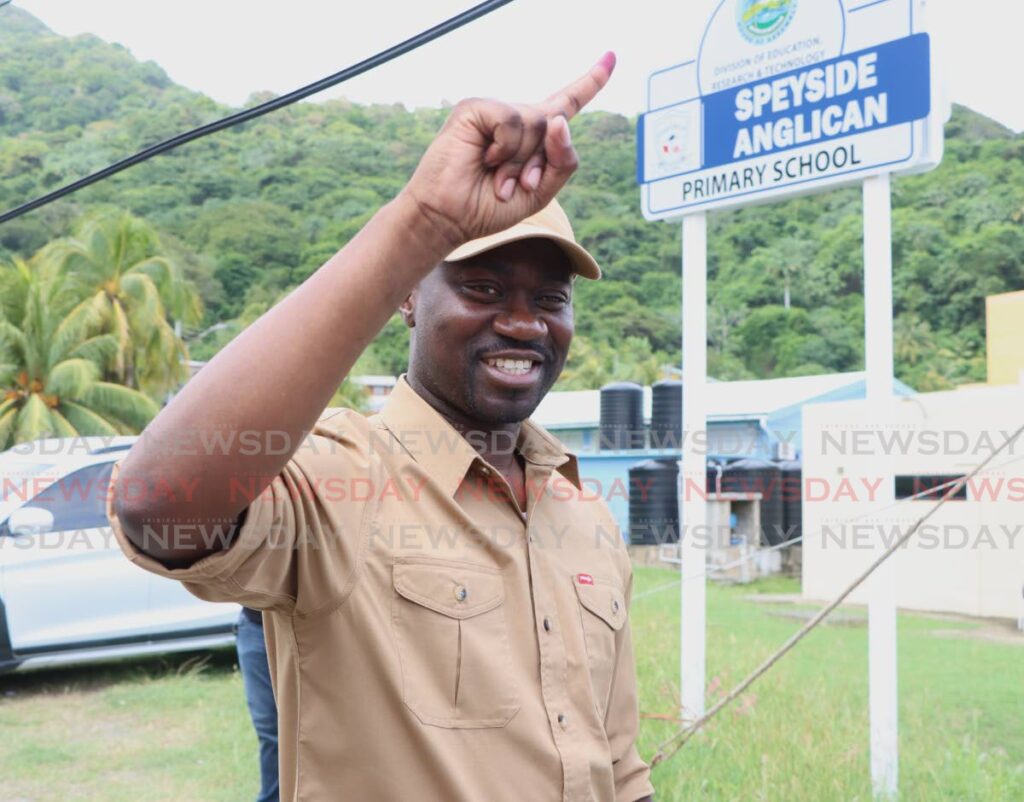
    In a surprising turn of events, former Agriculture Minister José Abelardo Mai has indicated he may reverse his decision to leave electoral politics despite recently stepping down from government office. The political veteran revealed his reconsideration during an interview at Compassion Primary School in Yo Creek Village on December 9, 2025.

    Mai disclosed that medical professionals have projected a recovery timeline of five to six months, followed by two to three months of therapy, provided no complications arise. While initially planning to depart from political life due to health considerations, the former minister acknowledged that recent interactions with constituents have prompted him to reassess this decision.

    “I had decided maybe not to run again, but I’m having second thoughts now,” Mai confessed. “I’ve been out there a few days. My constituents know me. I’ve been in politics for 20 years.”

    The seasoned politician emphasized the disconnect between online criticism and ground-level support, noting that face-to-face encounters with voters have provided a renewed sense of purpose. He specifically addressed social media commentary, asserting that “90% of those comments on Facebook are not my voters,” indicating his intention to focus instead on his actual constituency.

    Mai’s potential comeback comes despite acknowledging previous discussions with the Prime Minister and cabinet secretary about his recovery timeline, which could see him returning to public life within a year if his health progresses favorably. The former minister highlighted his humble beginnings and long-standing connection to the community as factors that continue to draw him toward public service.

  • Tracy Panton Questions PM’s Account, Offers Well Wishes to José Mai

    Tracy Panton Questions PM’s Account, Offers Well Wishes to José Mai

    BELIZE CITY – United Democratic Party leader Tracy Panton has publicly questioned Prime Minister John Briceño’s justification for the sudden dismissal of cabinet minister José Mai, while simultaneously extending well-wishes for his alleged health concerns.

    During a press conference at UDP headquarters on December 9, 2025, Panton expressed widespread public skepticism regarding the official explanation provided for Mai’s removal from government. The opposition leader stated that most Belizeans remain unconvinced by the Prime Minister’s account of the cabinet reshuffle, which reportedly involved health-related reasons.

    “No Belizean believes the kind of justification that the Prime Minister provided on the revocation of Jose Mai’s appointment as a minister of government,” Panton asserted, highlighting the sudden nature of the dismissal that caught both the public and political observers by surprise.

    The UDP leader noted that the Governor General had formally revoked Mai’s cabinet appointment, but the circumstances surrounding this political development remained unclear until government officials were compelled to address the situation. Panton referenced cryptic official statements suggesting either a horseback riding accident or another unusual medical incident as potential explanations.

    Despite her skepticism about the government’s narrative, Panton emphasized that her party extends genuine concern for Mai’s welfare: “If indeed Mr. Mai needs medical attention, he can be assured of our thoughts and prayers.”

    The political controversy emerges as Belize approaches its high tourism season, with recent reports indicating visitor declines in popular destinations like Ambergris Caye, adding economic concerns to the current political tensions.

  • New Chapter for UDP As Taegar‑Panton Unveils Reform Agenda

    New Chapter for UDP As Taegar‑Panton Unveils Reform Agenda

    In a significant political development, the United Democratic Party (UDP) has embarked on a transformative journey under its newly elected leadership. Tracy Taegar-Panton, recently appointed as party leader, marked this new chapter by convening the UDP’s first press conference at their official headquarters on Youth for the Future Drive—a symbolic departure from their previous temporary premises on Euphrates Avenue.

    The event, held on December 9, 2025, signaled a deliberate shift from recent internal turbulence as Panton unveiled an ambitious reform agenda designed to revitalize the party’s structure and public standing. Addressing supporters and media representatives, the UDP leader emphasized that the reform initiative represents not merely a response to past difficulties but rather a strategic blueprint for future growth and effectiveness.

    Panton identified several critical areas requiring immediate attention, including constitutional ambiguities, inadequate committee operational standards, and public disputes that have compromised the party’s credibility. She acknowledged the existence of a ‘democratic deficit’ within the organization where members frequently felt marginalized in decision-making processes.

    The newly announced reform program aims to establish transparent procedures, standardized operating rules for all committees, and mechanisms to ensure broader member participation. Panton extended an open invitation to all Belizeans to participate in what she characterized as a national movement toward renewed political engagement, emphasizing that the future of both the UDP and Belize itself depends on collective effort and shared commitment.