分类: politics

  • PM John Briceño Labels Budna a “Monster”

    PM John Briceño Labels Budna a “Monster”

    Belize Prime Minister John Briceño has vehemently denied any governmental connection to the controversial abduction of convicted criminal Joseph Budna, while simultaneously characterizing the imprisoned man as a “monster” whose extensive criminal history has been largely ignored by media outlets. During a candid interview on Open Your Eyes, the national leader addressed the August 23rd incident that occurred near the Orange Walk Central police station within his own constituency, where Budna was forcibly taken before ultimately being transferred to a Guatemalan prison.

    Briceño confronted allegations that law enforcement personnel orchestrated what Budna himself has termed a state-sanctioned crime. When questioned about the incident’s occurrence within his electoral district, the Prime Minister drew parallels to historical criminal activities in previous administrations’ territories, asserting that constituency location shouldn’t imply personal responsibility for every unlawful act.

    The Prime Minister utilized the platform to highlight what he perceives as selective public outrage, recounting Budna’s alleged involvement in multiple serious offenses including the accidental killing of a sixteen-year-old and sexual assaults against young boys. Briceño expressed frustration that media attention has focused predominantly on the abduction rather than the victim’s previous criminal actions.

    Additionally, Briceño refuted claims by Opposition Leader Tracy Panton that he receives daily security briefings, clarifying that he only obtains weekly updates from National Security Director Ambassador del Cid. The Prime Minister further stated that reviewing surveillance footage of the kidnapping falls outside his official purview, emphasizing that the investigation remains solely with police authorities and the Director of Public Prosecutions.

    Briceño concluded by affirming that any individuals with proven involvement in the abduction would face legal consequences, while maintaining that his administration must allow law enforcement professionals to conduct their investigation without political interference.

  • Cox: 2026 Budget not forward-looking financial plan

    Cox: 2026 Budget not forward-looking financial plan

    Grenada’s Upper House witnessed a contentious debate on December 10th regarding the 2026 Estimates of Revenue and Expenditure, revealing starkly contrasting perspectives on the nation’s economic direction. Opposition Leader Norland Cox delivered a scathing critique, characterizing the budget document as lacking vision and merely recycling unfulfilled promises rather than presenting a forward-looking financial strategy.

    Cox, a former Infrastructure Minister, asserted that Grenada is experiencing “disaster-driven reconstruction spending” financed through short-term passport sales and long-term borrowing rather than genuine economic transformation. He challenged the government’s growth narrative, arguing that post-Hurricane Beryl reconstruction—which caused damage equivalent to 16.7% of GDP—drives temporary recovery rather than sustainable development. “This growth is not due to structural productivity gains. Grenada is growing only because it first fell,” Cox emphasized during his Senate address.

    The opposition leader highlighted concerning declines in agricultural output, with nutmeg production falling 51%, mace by 33%, and cocoa by 9% despite hurricane recovery efforts. He pointed to systemic challenges facing farmers, including labor shortages, high costs, and inadequate technical support, arguing that resilience alone cannot substitute for comprehensive agricultural policy.

    Contrasting this assessment, Government Business Leader Adrian Thomas defended the budget, presented under the theme “Towards Vision 75: Powering Progress Through People’s Participation and Innovation.” Thomas described the financial plan as reflective of Grenada’s collective dream, envisioning shared prosperity through people-centered development, innovation, and equity.

    The budget, initially presented to the Lower House on December 1st, has become a focal point for broader discussions about economic sustainability and transparency. Cox accused the government of obscuring the struggles of key sectors while celebrating limited growth, warning that confusing temporary rebuilding with genuine economic strength risks misleading both leadership and citizens.

    The Senate debate underscores deepening political divisions regarding economic strategy as Grenada continues its recovery from natural disasters while seeking to establish sustainable development pathways beyond crisis-response financing.

  • Cuba FM denounces declaration of new border between Gaza and Israel

    Cuba FM denounces declaration of new border between Gaza and Israel

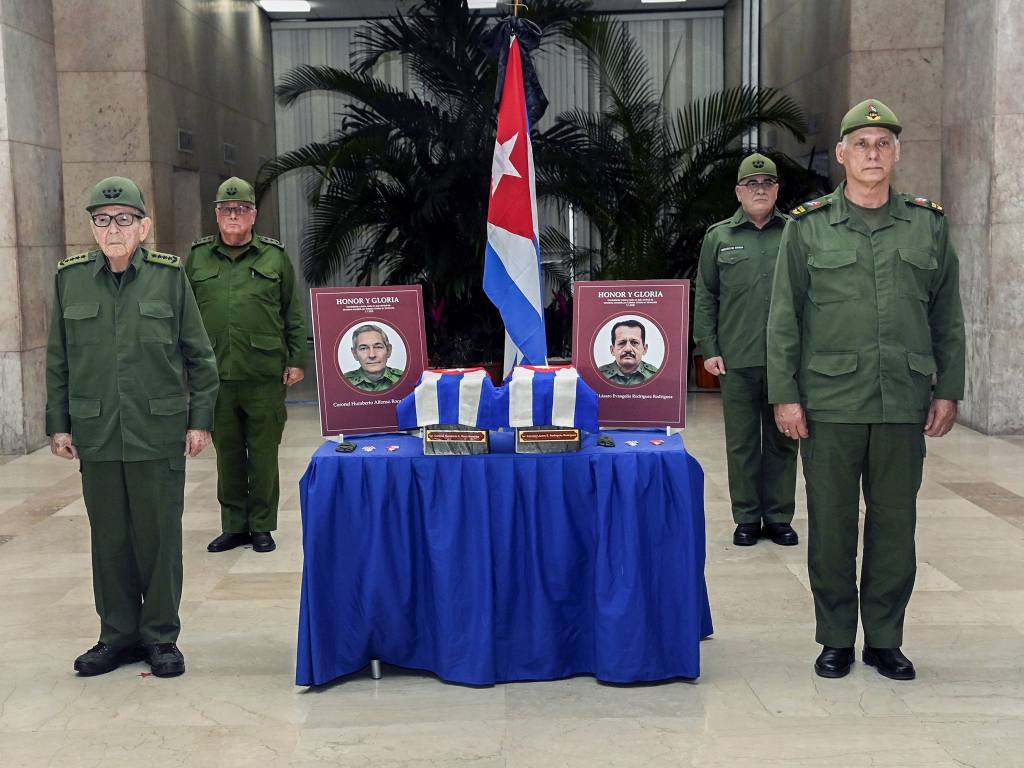
    The Palestinian Authority has issued a formal condemnation of Israel’s unilateral declaration establishing a provisional ceasefire demarcation—termed the ‘yellow line’—as the new boundary separating the Gaza Strip from Israeli territory. In an official statement disseminated through social media channels, a senior Palestinian representative characterized this move as a severe breach of both the recently brokered ceasefire accord and established principles of international law. The declaration frames the Israeli government’s actions as constituting yet another manifestation of what it describes as the ‘genocidal character’ of the occupying power’s ongoing operations against Palestinian civilians. This development introduces a new point of contention in the already fragile post-ceasefire environment, potentially undermining diplomatic efforts to stabilize the region. The designation of this security line as a permanent border represents a significant shift in the territorial status quo that could have profound implications for future negotiations concerning Palestinian sovereignty and territorial integrity.

  • STATEMENT: DFP condemns ‘environmental atrocity’ in Deux Branche; calls for immediate halt to quarry operations

    STATEMENT: DFP condemns ‘environmental atrocity’ in Deux Branche; calls for immediate halt to quarry operations

    Bernard Hurtault, Political Leader of the Dominica Freedom Party (DFP), has issued a scathing condemnation of the government’s handling of mining operations in the Deux Branche area, accusing authorities of systematic failure in environmental oversight. The statement highlights what Hurtault describes as “brazen” operations by a foreign construction company with apparent government complicity, suggesting that official guardrails against reckless state action have been deliberately dismantled.

    The DFP leader questioned the conspicuous silence from key regulatory bodies including the Environmental Health Department and Ministry of Forestry, Wildlife, and Parks, noting the absence of any institutional voice from an elected government tasked with safeguarding the nation’s natural resources. In response to what he termed “deafening silence,” Hurtault declared the party’s alignment with citizen protests against the ongoing environmental degradation.

    Government responses defending the project by citing completed environmental assessments were dismissed as “defensive posturing” and “textbook examples” of prioritizing illusions over outcomes. Hurtault emphasized that environmental impact assessments become meaningless when recommended mitigation measures are ignored or when projects proceed despite clear ecological warnings.

    The statement raised fundamental questions about accountability in Dominica’s rule-of-law society, suggesting that the company’s operations with government backing imply either primitive governance standards or deliberate evasion of accountability. The DFP explicitly rejected this notion, demanding immediate public release of the original Environmental Impact Assessment (EIA) and calling for complete cessation of open-pit mining in Deux Branche pending independent review.

    Hurtault warned against box-ticking exercises and demanded concrete action plans, describing current operations as “nothing short of an environmental catastrophe.” The party leader condemned the philosophical approach that means justify ends, particularly in the context of building an international airport for eco-tourism while simultaneously presenting visitors with silted rivers, stripped hillsides, and dying forests. The statement concluded with a call to build the nation on principles respecting human dignity, life, and the natural environment that makes Dominica unique.

  • Organizations alert ILO to deterioration of rights in Ecuador

    Organizations alert ILO to deterioration of rights in Ecuador

    Ecuador’s compliance with international indigenous rights standards has come under rigorous examination by the International Labour Organization’s Commission of Experts. Despite having ratified ILO Convention 169—a landmark treaty designed to transform historical state-indigenous relations by moving beyond assimilation policies toward substantive equality—the implementation of these rights remains critically deficient in complex scenarios involving indigenous communities and the state.

    A coalition comprising trade unions, agricultural representatives, indigenous groups, and human rights organizations has expressed grave concerns regarding systematic rights violations. These organizations document how Ecuador has progressively restricted the scope of mandatory prior consultation processes while simultaneously authorizing extensive extractive projects in mining, oil, hydroelectric, and agro-industrial sectors without adequate consultation. Additionally, the government has enacted legislation directly impacting indigenous territories without proper democratic engagement with affected communities.

    This deterioration of indigenous rights unfolds within a broader context of political turmoil. The nation recently experienced a month-long national strike protesting President Daniel Noboa’s economic and security measures, met with significant police and judicial repression against social leaders. Further complicating the political landscape, Ecuadorian voters rejected President Noboa’s proposal for a constituent assembly to draft a new constitution during a November 16 popular consultation.

    The converging organizations now hope the ILO’s review will serve as a catalyst to strengthen rather than diminish collective rights, urging the Ecuadorian government to align its practices with the transformative principles embedded in Convention 169.

  • U.S. Fighter Jets Circle Near Venezuela

    U.S. Fighter Jets Circle Near Venezuela

    In a development amplifying diplomatic strains, United States military aircraft executed strategic maneuvers near Venezuelan territorial waters on Tuesday. Two F/A-18 Super Hornet fighter jets were tracked conducting circular flight patterns over the Gulf of Venezuela, approximately 20 nautical miles from the coastline near Maracaibo, the nation’s second-largest metropolitan area.

    Aviation monitoring platforms documented the advanced fighter aircraft maintaining their position for approximately forty minutes. According to a U.S. defense official who spoke with media outlets, the operation was characterized as a routine training exercise. However, the mission’s geographical positioning and timing have drawn international scrutiny.

    Preceding the Super Hornets’ arrival, flight radar data indicated the presence of an EA-18G Growler aircraft performing similar circuits just north of Venezuela’s maritime border. The Growler represents a specialized electronic warfare platform capable of intelligence gathering, radar signal detection, and electronic countermeasures.

    Military analysts suggest the coordinated deployment of these aircraft types indicates potential intelligence-gathering operations targeting Venezuelan defense systems. The combination allows simultaneous electronic surveillance capabilities with combat-ready air support if required.

    This aerial activity occurs against a backdrop of heightened military presence in the Caribbean region. Satellite imagery analysis has identified at least nine U.S. naval vessels operating nearby, including the USS Gerald Ford, the world’s largest aircraft carrier. Additionally, the United States has reactivated a previously decommissioned airbase in Puerto Rico, where runway infrastructure has been upgraded to accommodate advanced F-35 fighter squadrons.

    The Trump administration maintains that its increased regional presence targets narcotics trafficking networks, alleging Venezuelan leadership’s involvement—a claim consistently denied by President Nicolás Maduro. The Venezuelan government counters that Washington seeks to orchestrate a resource grab for the nation’s substantial oil reserves and engineer governmental overthrow.

  • Heading to the US? Be Prepared to Hand Over 5 Years of Your Online Life

    Heading to the US? Be Prepared to Hand Over 5 Years of Your Online Life

    The United States is poised to implement stringent new digital screening measures for international visitors under a proposed policy change from U.S. Customs and Border Protection (CBP). Announced on December 10, 2025, the initiative would mandate travelers from visa-waiver countries to disclose five years of social media history as part of enhanced security protocols.

    Under the forthcoming regulations, applicants through the Electronic System for Travel Authorization (ESTA) must provide comprehensive digital footprints including all social media handles utilized over the previous five-year period. The requirements extend to submitting verified phone numbers, email addresses, and detailed personal information regarding immediate family members. Additionally, travelers will be required to upload a contemporary facial photograph for biometric verification purposes.

    This policy shift represents a significant escalation from previous voluntary social media disclosure options introduced in 2016. The mandatory implementation specifically targets visitors seeking entry for periods under 90 days from the 42 nations participating in the Visa Waiver Program. Authorities indicate the measures will become effective December 15, 2025, pending final approval.

    The enhanced screening framework emerges as part of broader border security initiatives under the Trump administration, reflecting increased scrutiny of digital backgrounds in immigration assessment. Notably, the policy does not affect travelers from non-waiver countries such as Belize, who continue to require traditional B1/B2 visa applications without social media disclosure mandates.

  • PNM stalwart ‘Ferdie’ Ferreira dies

    PNM stalwart ‘Ferdie’ Ferreira dies

    The political landscape of Trinidad and Tobago has been diminished by the passing of Ferdinand “Ferdie” Ferreira, a foundational figure within the People’s National Movement (PNM) and former key advisor to the nation’s inaugural Prime Minister Dr. Eric Williams. Ferreira passed away on Thursday at the age of 93, leaving behind a legacy of profound political service.

    Opposition Leader and PNM political head Pennelope Beckles-Robinson confirmed the news in a heartfelt tribute shared on her official Facebook page. Her statement, issued on December 11th, framed Ferreira’s death not just as a party loss, but as a national moment of reflection. “As we mourn the passing of Ferdinand ‘Ferdie’ Ferreira,” she wrote, “we take solace in knowing that a life lived in service, integrity and devotion is honoured by God Himself.” She described him as now being “at rest, free from the cares of this world and embraced by the everlasting peace of our Heavenly Father.”

    Beckles-Robinson, who serves as the Member of Parliament for Arima, elaborated on Ferreira’s immense historical significance. Born in 1932 on Dundonald Street in Port of Spain, Ferreira was revered as one of the nation’s preeminent political archivists. His expertise was unparalleled; he was one of the few individuals who could speak with definitive authority on the entire arc of Trinidad and Tobago’s political evolution. His deep knowledge encompassed the PNM’s founding principles, its philosophical underpinnings, and its intricate history, as well as the broader political narrative of the nation, spanning both the pre-colonial and post-colonial eras. His death, she noted, represents a “profound loss” for the country’s institutional memory and political heritage.

  • UNC 28 no match for PNM 13

    UNC 28 no match for PNM 13

    For the second time in recent weeks, Trinidad and Tobago’s parliamentary proceedings have descended into acrimony as the ruling United National Congress (UNC) government abruptly terminated debate on the Finance Bill 2025, effectively silencing opposition voices. The controversial move last Friday prevented several members of the opposition People’s National Movement (PNM) from contributing to crucial financial discussions, marking a significant departure from established parliamentary conventions.

    The traditional practice in such debates involves the chief whip formally indicating speaking arrangements to the government business leader, with this information typically communicated to the Speaker of the House, Jagdeo Singh. The unilateral closure of debate while opposition members remained prepared to speak represents what critics are calling a dangerous erosion of democratic norms.

    This incident mirrors similar tactics employed during the 2025/2026 budget debate approximately one month ago, suggesting a pattern of behavior that contradicts the UNC’s previous commitments to transparency and accountability while in opposition. Political analysts note that these actions fundamentally undermine the very democratic principles that propelled the UNC into power.

    The government’s apparent reluctance to subject its financial policies to opposition scrutiny has raised questions about its confidence in handling economic matters. Despite holding a commanding majority of 28 Members of Parliament versus the PNM’s 13, the UNC appears increasingly defensive when confronting opposition financial expertise.

    Notable PNM figures including Colm Imbert (Diego Martin North/East), Brian Manning (San Fernando East), Stuart Young (Port of Spain North/St Ann’s West), Marvin Gonzales (Arouca/Lopinot), and Dominic Romain (Malabar/Musica) have consistently demonstrated superior preparedness in financial debates, frequently exposing what critics describe as governmental “political chicanery” during finance committee meetings.

    The ongoing parliamentary tensions suggest that meaningful political discourse has shifted from the parliamentary floor to what correspondent Harry Partap characterizes as “the trenches out there,” indicating diminished expectations for fair procedural treatment from the Speaker’s chair.

  • $200,000 income tax break

    $200,000 income tax break

    In a groundbreaking legislative move, the Jamaican Cabinet has sanctioned amendments to the Income Tax Act, enabling employers to provide tax-exempt honorarium payments of up to $200,000 to employees impacted by Hurricane Melissa. This initiative, the first of its kind in the nation’s history, establishes a permanent policy framework for future natural disasters.

    Finance Minister Fayval Williams announced the policy during a House of Representatives session, explaining that the amendment creates “a relief support regime that allows for non-taxable treatment of disaster relief honorarium” during officially declared disaster periods. The payments can be distributed in single or multiple installments until March 31, 2026.

    The decision comes in response to Hurricane Melissa’s devastating impact on Jamaica’s southwestern parishes on October 28, where the Category 5 storm caused approximately US$8.8 billion in damage, destroyed homes and businesses, and claimed at least 45 lives.

    Minister Williams highlighted critical gaps in the existing tax framework, noting that current legislation lacks “a structured mechanism through which temporary disaster relief payments from employers to employees are exempt from income tax” and contains no “statutory provision where disaster relief payments may be accorded non-taxable status on a consistent or system-wide basis.”

    The new provisions specifically require that qualifying payments must be strictly for personal recovery and household welfare needs, completely disconnected from employment services, performance metrics, or compensation arrangements. This narrowly targeted approach ensures the exemption supports only those facing abrupt income loss or essential needs deprivation.

    To maintain fiscal integrity, the program includes several safeguards: payments are limited to cash disbursements (excluding in-kind benefits that might be construed as taxable emoluments), subject to ministerial caps, and restricted to active disaster declaration periods. Employers must report all payments through monthly payroll submissions to Tax Administration Jamaica and maintain detailed documentation justifying each disbursement.

    Interestingly, the government anticipates positive secondary economic effects from the measure. By increasing disposable income and short-term purchasing power for affected individuals, the policy is expected to stimulate demand within the formal economy, potentially offsetting revenue losses through increased consumption tax (GCT) collections.

    The legislation represents a significant shift from previous temporary measures toward a structured, statutory approach for disaster response, balancing worker support with maintenance of Jamaica’s income tax system principles.