分类: politics

  • Private Sector Commission prefers non-legal regulation of campaign financing

    Private Sector Commission prefers non-legal regulation of campaign financing

    In a significant development for Guyana’s electoral integrity, the nation’s foremost business consortium has proposed a novel approach to campaign finance regulation that stops short of immediate legislation. The Private Sector Commission (PSC), chaired by Captain Gerry Gouveia Jr., has released its comprehensive election observer report following the September 1 general and regional elections, calling for structured national dialogue rather than statutory mandates.

    The PSC’s position paper emphasizes a methodical examination of international best practices through a specialized working group. This proposed body would scrutinize disclosure requirements, reporting timelines, expenditure ceilings, and oversight mechanisms tailored to Guyana’s unique political environment. Notably, the commission explicitly stated that it “does not advocate a specific legislative design at this stage,” instead favoring the development of “fair, transparent, and enforceable standards” through consensus-building.

    This stance emerges amid decades of international observer missions consistently highlighting the absence of campaign finance legislation. Current regulations under the Representation of the People Act require parties to report expenses to the Chief Elections Officer, yet compliance remains nonexistent without stipulated penalties.

    The commission’s position aligns remarkably with the ruling People’s Progressive Party Civic (PPPC) and opposition A Partnership for National Unity’s parent party, both of which historically resisted donor disclosure mandates. The PSC further contended that government officials’ media appearances during official duties should not constitute political campaigning, asserting that any resultant advantage merely reflects “the benefit of incumbency.”

    However, the report acknowledged concerns regarding state-owned media’s electoral role, noting that using public broadcast platforms for partisan advantage “directly compromises electoral fairness”—a matter the commission recommends addressing in future elections without providing specific remedies.

    The PSC’s recommendations have sparked discussions about the organization’s perceived alignment with the incumbent administration, even as it attempts to navigate the complex terrain of political finance reform through collaborative rather than coercive means.

  • CCJ rules on Belize case, offers clarification on when courts can overlook a company’s separate legal identity

    CCJ rules on Belize case, offers clarification on when courts can overlook a company’s separate legal identity

    In a definitive judgment with far-reaching implications for corporate law across the Caribbean, the Caribbean Court of Justice (CCJ) has unanimously reversed a controversial appellate decision from Belize. The December 10, 2025, ruling in Beth Clifford and Beltway Investment Group Inc v LCW Investments, LLC reaffirms the foundational legal principle of corporate separateness.

    The case stemmed from a 2017 real estate development agreement between LCW Investments and Green Development Partners Ltd (GDP), a company directed and solely owned by Beth Clifford. The contract stipulated that LCW would purchase land and fund construction, with all payments directed to another Clifford-controlled entity, Beltway Investment Group Inc. After LCW paid substantial sums but received neither land titles nor the completed property, it terminated the contract and sued GDP, Beth Clifford, and Beltway.

    While Belize’s High Court correctly limited damages to GDP—the sole contracting party—the Court of Appeal controversially pierced the corporate veil. It held Ms. Clifford and Beltway jointly liable with GDP, citing ‘impropriety’ in the corporate structures and the transaction’s nature, despite acknowledging neither was a party to the original contract.

    The CCJ’s bench, comprising Justices Rajnauth-Lee, Barrow, Jamadar, Ononaiwu, and Eboe-Osuji, systematically dismantled this reasoning. The court emphasized that disregarding a company’s separate legal personality is an exceptional remedy reserved for demonstrable abuse or misuse of the corporate form—a threshold unmet in this case. There was no evidence Clifford had misused GDP’s corporate identity for fraudulent purposes. Regarding Beltway, the court found it acted as a lawful payment conduit per the contract, with no misappropriation of funds alleged.

    Consequently, the CCJ reinstated the High Court’s judgment, absolving Clifford and Beltway of liability and awarding them costs. This precedent reinforces statutory corporate protections, providing crucial certainty for investors and businesses operating within CCJ member states by curbing judicial overreach in veil-piercing.

  • New Cabinet to be sworn in Friday

    New Cabinet to be sworn in Friday

    Prime Minister Philip J. Pierre is poised to unveil his reconfigured ministerial team on Friday, December 12, following his Saint Lucia Labour Party’s decisive electoral victory on December 1. The announcement comes one week after Pierre’s formal swearing-in ceremony on December 5, which marked the beginning of his second consecutive term in office.

    In a significant restructuring of governmental responsibilities, Prime Minister Pierre has incorporated two additional ministries into his already extensive portfolio. Beyond maintaining his crucial roles as Minister for Finance, National Security and Justice, he will now directly oversee the newly established Ministry of Constituency Development and the Ministry of People Empowerment. This expansion of executive authority demonstrates Pierre’s hands-on approach to governance and his emphasis on grassroots development.

    The fate of the Youth Economy portfolio, which Pierre personally managed during his initial term, remains uncertain. Political observers are monitoring whether this ministry will be assigned to another cabinet member or integrated within the broader framework of the People Empowerment ministry. This decision will signal the administration’s prioritization of youth development programs.

    Notably, Pierre’s first-term government comprised 13 elected parliamentarians who all received ministerial appointments, supplemented by two independent candidates who were granted full ministerial status despite their non-party affiliation. Two unsuccessful Saint Lucia Labour Party candidates were appointed to junior ministerial positions in that administration.

    Entering his second term with strengthened parliamentary presence, Pierre now commands the support of 14 elected party members alongside the two independent representatives, potentially allowing for more diverse ministerial appointments while maintaining the government’s legislative majority.

  • Government Unveils Bold 2026 Agricultural Vision: Infrastructure, Food Security, and Agro-Industrial Growth

    Government Unveils Bold 2026 Agricultural Vision: Infrastructure, Food Security, and Agro-Industrial Growth

    ST. JOHN’S, ANTIGUA AND BARBUDA – In a landmark move to revolutionize its agricultural sector, the government of Antigua and Barbuda has unveiled a comprehensive strategic agenda during the 2026 Budget Debate. Minister of Agriculture, Lands, Fisheries and the Blue Economy Anthony Smith Jr. presented an ambitious blueprint designed to achieve national food sovereignty, enhance food security, and comprehensively revitalize farming, livestock production, and agro-industrial operations across the twin-island nation.

    The cornerstone of this transformative initiative involves significant infrastructural investments. A pivotal development is the establishment of a dedicated heavy-duty equipment division within the Ministry. This division will directly facilitate large-scale land clearing, construction of vital farm access roads, and the creation of irrigation ponds and dams, thereby modernizing agricultural infrastructure and reducing dependency on costly food imports.

    In a direct effort to curb the country’s substantial $175 million annual expenditure on imported livestock products, the government has committed funds to construct two new state-of-the-art abattoirs. One facility will be dedicated to poultry processing, while the other will handle small ruminants and pork. Concurrently, the existing beef processing facility is slated for major upgrades to meet higher standards.

    Further enhancing productivity, a nationwide deployment of solar-powered farm lighting systems is planned. This initiative aims to extend viable farming hours into the night, thereby increasing output and improving the economic viability of farming as a sustainable profession.

    Beyond primary production, the strategy includes developing two specialized hubs: an Agro-Industrial Park at Diamonds and an Agro-Eco Park at Christian Valley. These parks are designed to integrate agriculture with light manufacturing, advanced packaging, and eco-tourism, fostering value-added production, encouraging innovation, and boosting export capacity.

    Minister Smith emphasized that these measures are critically aligned with the government’s commitment to insulating the nation from global supply chain disruptions. He positioned agriculture not merely as an economic activity but as a fundamental pillar of long-term national sustainability and sovereignty. The minister firmly stated that these are not abstract policy pledges but concrete, fully-funded investments destined to provide lasting stability, expand domestic production capacity, and fuel broader economic growth.

  • Fernandez Says Antigua Preparing for Critical Aviation Audit, Notes Category 1 Depends on ECCAA-Wide Compliance

    Fernandez Says Antigua Preparing for Critical Aviation Audit, Notes Category 1 Depends on ECCAA-Wide Compliance

    Antigua and Barbuda is mobilizing resources for a crucial international aviation assessment scheduled for January 2024, with Tourism and Civil Aviation Minister Charles ‘Max’ Fernandez emphasizing the nation’s preparedness to defend its current safety standing while pursuing elevated Category 1 status. The minister’s address during the Budget Debate revealed coordinated efforts between the Ministry of Civil Aviation’s Air Transport Licensing Board and the Eastern Caribbean Civil Aviation Authority (ECCAA) to align with International Civil Aviation Organization (ICAO) standards.

    Minister Fernandez articulated the complex reality that Category 1 certification—a coveted designation that would expand the country’s air transport opportunities—remains contingent upon collective compliance across all Eastern Caribbean Civil Aviation Authority member states. This regulatory interdependence means Antigua’s individual advancements, however significant, cannot secure the higher rating without uniform adherence to safety protocols throughout the OECS bloc.

    The expansion of VC Bird International Airport’s operations has intensified the urgency for enhanced safety and security measures. Fernandez acknowledged historical understaffing issues while detailing current government initiatives addressing personnel training, operational upgrades, and infrastructure modernization. A landmark $50 million runway rehabilitation project and digital transformation program demonstrate concrete steps toward aviation system enhancement.

    Despite demonstrated progress, the minister maintained a cautiously optimistic tone, recognizing that the January audit represents both a challenge and opportunity. The outcome will directly impact Antigua’s aviation competitiveness and its appeal to international carriers, making regulatory alignment and systemic preparedness critical priorities for the nation’s transportation future.

  • Government Approves $41M in CABI Home-Concession Applications for 2025; Programme Now Tops $900M Since Launch

    Government Approves $41M in CABI Home-Concession Applications for 2025; Programme Now Tops $900M Since Launch

    The Antigua and Barbuda government has authorized EC$41 million in housing concessions for 2025 through its flagship Construct Antigua and Barbuda Initiative (CABI), pushing the program’s total value beyond EC$900 million since its inception. Tourism and Investment Minister Charles “Max” Fernandez revealed these figures during the Budget Debate, highlighting CABI’s role as a cornerstone of the nation’s home-ownership strategy.

    The 2025 approvals will facilitate the construction of 120 new homes for first-time buyers, with all recipients receiving significant concessions. Minister Fernandez emphasized that these figures represent exclusively CABI-approved units and do not include developments under separate housing schemes like Central Housing or other subsidized programs.

    Launched in 2011, CABI has dramatically exceeded its original scope, now boasting over 1,500 approved homes nationwide. Fernandez credited continuous program reforms for enhancing both its reach and effectiveness. “We met the program. But we make it better,” he stated, underscoring the government’s commitment to refining the initiative.

    Beyond mere construction numbers, Fernandez stressed CABI’s profound social value in enabling homeownership for citizens who would otherwise face prohibitive market barriers. The program specifically targets first-time Antiguan and Barbudan homeowners, providing them with unprecedented opportunities to acquire property.

    Notably, all CABI-approved homes must comply with elevated resilience and sustainability standards, reflecting government mandates for climate-resistant construction. Minister Fernandez pointed to recent regional disasters as catalysts for these strengthened building requirements, ensuring new infrastructure can withstand environmental challenges.

    Concluding his address, Fernandez framed CABI’s mission in broader terms: “It’s not just about building houses, it’s about building a future,” positioning the program as both an economic catalyst and social empowerment tool for the nation’s citizens.

  • Barbadian PM Mia Mottley named in Forbes’ 100 Most Powerful Women

    Barbadian PM Mia Mottley named in Forbes’ 100 Most Powerful Women

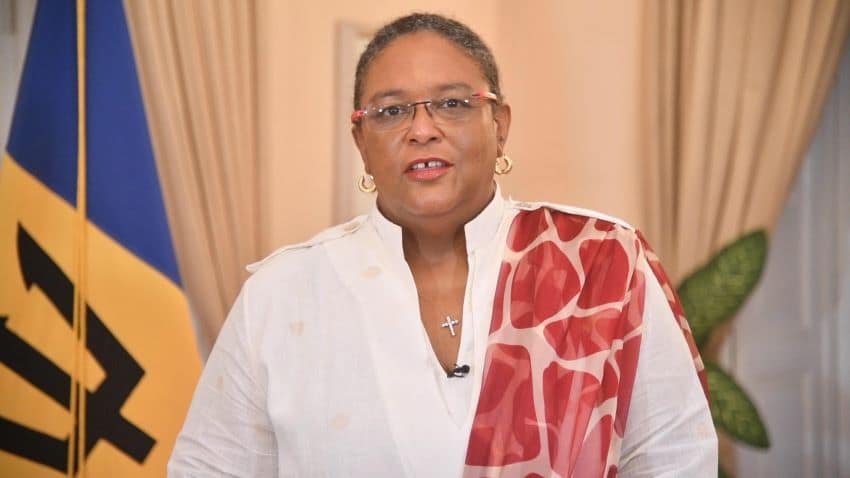
    Barbadian Prime Minister Mia Mottley has achieved another international milestone with her inclusion in Forbes’ 2025 World’s 100 Most Powerful Women ranking, securing the 99th position among global leaders spanning politics, business, and philanthropy. The prestigious recognition underscores her growing influence on the world stage.

    Forbes specifically highlighted Mottley’s climate advocacy, diplomatic prowess, and transformative leadership during Barbados’ constitutional evolution. Her profile details her historic 2018 election as Barbados’ first female prime minister and her subsequent emergence as a vocal climate activist, particularly referencing her impassioned 2021 United Nations General Assembly address demanding urgent environmental action.

    The publication noted her 2021 designation as a United Nations Environment Programme ‘Champion of the Earth for Policy Leadership’ and her instrumental role in Barbados’ transition to a parliamentary republic that same year, which formally ended the British monarchy’s ceremonial governance.

    Mottley joins an elite group of global power brokers including top-ranked European Commission President Ursula von der Leyen, European Central Bank chief Christine Lagarde, and Japanese Prime Minister Sanae Takaichi. The Forbes ranking, now in its 22nd year, assesses candidates through four key metrics: financial resources, media presence, tangible impact, and spheres of influence. This year’s cohort represents 17 nations wielding approximately $37 trillion in economic power and influencing over one billion people worldwide.

    Her political journey began decades earlier with her 1994 appointment as Minister of Education, Youth Affairs and Culture, establishing the foundation for her subsequent regional and international prominence. Forbes emphasized that Mottley’s consistent appearance on major global rankings solidifies her status as the Caribbean’s most visible political figure, renowned for her uncompromising stance on climate justice, economic reform, and global equity.

  • Pirates of the Caribbean

    Pirates of the Caribbean

    In a significant escalation of hemispheric policy, the Trump administration has executed an unprecedented maritime seizure by capturing a Venezuelan oil tanker in Caribbean waters. This action directly implements the White House’s recently announced security strategy advocating renewed enforcement of the Monroe Doctrine to restore American dominance in the Western Hemisphere.

    The December 10 seizure occurred amid mounting international pressure regarding the administration’s controversial program of lethal strikes against vessels allegedly involved in drug trafficking. Administration officials justified the tanker interception by claiming involvement in transporting sanctioned oil to Iran, though President Trump remained ambiguous about the disposition of the confiscated cargo.

    Venezuelan authorities condemned the operation as “an act of international piracy,” characterizing it as both alarming and predictable given recent U.S. posturing. The incident appears strategically timed to redirect attention from potential war crimes allegations toward technical debates regarding maritime law and sanctions enforcement.

    The administration’s narrative has shifted noticeably from initial justifications centered on combating “narco-terrorism” toward emphasizing Iran’s regional influence and sanctions compliance. This rhetorical evolution coincides with longstanding suspicions that the administration ultimately seeks regime change in Caracas or control over Venezuela’s substantial oil reserves.

    Regional implications deepened when Trinidad and Tobago’s Prime Minister Kamla Persad-Bissessar attempted to deflect moral questions about possible citizen casualties from U.S. boat strikes by focusing instead on issues of vessel registration and piracy definitions. Her simultaneous acknowledgment that newly installed U.S. radar infrastructure in Tobago assists in detecting Venezuelan sanction-busting activities reveals deeper involvement in U.S. sanctions enforcement than previously acknowledged.

    These developments effectively draw Caribbean nations into the escalating confrontation between the Maduro regime and Republican Party foreign policy objectives. Analysts anticipate further escalation as President Trump faces mounting domestic pressures, including ongoing controversies surrounding his administration’s handling of the Jeffrey Epstein scandal.

  • Government to launch programme to clean public spaces, insists it’s not Cepep

    Government to launch programme to clean public spaces, insists it’s not Cepep

    The Trinidad and Tobago government is set to launch an innovative pilot program for maintaining public spaces within days, according to Minister of Rural Development and Local Government Khadijah Ameen. The initiative explicitly distances itself from the previous CEPEP framework while addressing similar community maintenance needs.

    The program, scheduled to operate from December 15, 2025, through March 13, 2026, will focus on comprehensive upkeep of cemeteries, recreational facilities, community centers, school grounds, and various public areas. This confirmation follows the emergence of a leaked Cabinet document that initially revealed the program’s operational timeline and ministerial oversight.

    Minister Ameen emphasized the fundamental differences between the new initiative and the previous CEPEP structure, which saw thousands of workers terminated following the recent change in government after general elections. The United National Congress administration had signaled intentions to overhaul the program upon assuming power.

    In an official media release dated December 11, Ameen characterized the program as “a fresh, results-driven initiative designed to strengthen manpower at Municipal Corporations.” The ministry will directly hire workers, a structural change that Ameen states “removes political intermediaries and eliminates ghost gangs” that plagued the previous system.

    The new framework incorporates rigorous operational protocols including proper attendance documentation, performance verification mechanisms, and enhanced financial controls. Teams will be strategically assigned to Municipal Corporations with the objective of delivering “tangible, measurable work” to communities while ensuring workers receive fair compensation without political intermediation or criminal influences previously associated with CEPEP operations.

  • Pinder: FNM had ‘asylum bill’ ready to be tabled in 2021

    Pinder: FNM had ‘asylum bill’ ready to be tabled in 2021

    In a heated Senate session, Attorney General Ryan Pinder launched a sharp critique against the Free National Movement (FNM), accusing the opposition party of adopting a contradictory position on the recently passed Smuggling of Migrants Bill. Pinder revealed that the FNM had previously developed comprehensive asylum legislation during their administration, directly contradicting their current opposition stance.

    The controversial legislation, which cleared the House of Assembly without opposition support earlier this week, received Senate approval amid intense debate. Pinder defended the bill’s provisions, emphasizing that it specifically targets human smuggling networks rather than establishing asylum frameworks.

    FNM leader Michael Pintard has vowed to repeal the legislation if elected prime minister, a promise that Pinder characterized as politically disingenuous. The Attorney General presented evidence showing the Minnis administration’s 2021 draft Nationality Immigration and Asylum Bill, which included detailed asylum eligibility criteria, refugee unit establishment, and asylum seeker rights protections.

    Pinder disclosed that upon assuming office, the Davis administration encountered the FNM’s drafted asylum legislation ready for parliamentary tabling. The current government rejected this proposed bill, consistent with their policy position on asylum matters.

    Opposition senators dismissed Pinder’s revelations as irrelevant to the current debate, with FNM senator Reuben Rahming labeling the arguments as ‘misleading’ and former Cabinet Minister Darren Henfield questioning the document’s authenticity since it was never formally presented to parliament.

    The Attorney General remained steadfast, presenting Cabinet documentation indicating the previous administration had requested a final draft of their asylum legislation. Pinder concluded that the opposition lacks consistent policy commitment and moral standing on migration issues, asserting they are unprepared for governance.

    Regarding the newly passed legislation, Pinder clarified that it maintains existing state authority under the Immigration Act while enhancing tools to combat criminal smuggling operations that exploit vulnerable migrants.