分类: politics

  • Thorne: Govt undermining civil service independence

    Thorne: Govt undermining civil service independence

    In a sweeping critique delivered before the House of Assembly, Opposition Leader Ralph Thorne launched a vehement condemnation of the Mia Mottley administration’s appointment practices, alleging systematic erosion of institutional independence within Barbados’ civil service and judiciary.

    Thorne articulated profound concerns regarding the government’s propensity for installing departmental heads and even judicial figures on limited three to four-year contractual terms. He characterized this approach as a form of political interference that fundamentally compromises the autonomy of public servants. The practice, he contended, creates an environment where senior appointees prioritize contract renewal over providing impartial, objective counsel to political leadership.

    While acknowledging the Public Service (Appointments) Bill as a ‘noble’ legislative measure that would secure permanent positions for over 2,000 civil servants—including 1,170 temporary workers—and facilitate more than 900 promotions, Thorne maintained that the public service remains in a state of significant turmoil. He suggested the timing of this legislation appeared strategically aligned with impending general elections rather than genuine administrative reform.

    The opposition leader detailed widespread frustration throughout the public service hierarchy, attributing this discontent to the government’s policy of ‘planting’ contract-based personnel at senior departmental levels. Thorne emphasized that the historical integrity of Barbados’ civil service rested upon security of tenure, which enabled public officers to deliver independent advice without employment insecurity. He starkly contrasted traditional appointments ‘by status’ with the current administration’s contractual approach, which he believes undermines established public service traditions.

    Thorne delivered a pointed reminder to civil servants that their employment exists independently of Cabinet members, stating ministers are not their employers but rather policy directors. He issued a direct caution to government ministers against operational interference within departments, urging them to ‘stay out of the people’s places of work.’

    Expanding his critique beyond administrative structures, Thorne addressed systemic issues in education and law enforcement. He reported that teachers across the island experience severe burnout, noting educators frequently assume surrogate parental roles by providing lunch for students. Thorne challenged the government’s economic prosperity narrative, asserting that in a genuinely ‘buoyant’ economy with seventeen consecutive growth quarters, no child should attend school hungry.

    Regarding law enforcement, Thorne acknowledged the government’s introduction of substantial detective allowances but warned this measure has created problematic divisions between detectives and uniformed officers within the Barbados Police Service, potentially undermining operational cohesion.

  • ‘Lies, Lies and Statistics’: Senator Brown Casts Doubt on Budget Numbers

    ‘Lies, Lies and Statistics’: Senator Brown Casts Doubt on Budget Numbers

    In a striking address to the Upper House, Opposition Senator Alex Brown has launched a rigorous critique against the government’s 2026 budgetary accounting methods, casting serious doubt on the authenticity of presented fiscal figures. During the heated budget debate proceedings, Senator Brown drew parallels between the government’s financial representations and the thematic warnings of a notable publication titled ‘Lies, Lies and Statistics,’ suggesting that numerical data can be strategically arranged to distort economic realities.

    Brown fundamentally challenged the administration’s declaration of a budget surplus, contending that the calculations deliberately excluded substantial interest payments from expenditure tallies. ‘The revenue and expenditure estimates superficially indicate a surplus,’ Brown stated, ‘but subsequent documentation reveals omitted interest obligations that fundamentally alter the fiscal picture.’ He maintained that incorporating these concealed costs would effectively eliminate the purported surplus entirely.

    Leveraging his professional background in hotel management, the senator illustrated how budgetary frameworks can be engineered to reclassify expenses, thereby presenting artificially favorable outcomes. This practice, he noted, mirrors accounting techniques occasionally employed within private sector operations.

    Additionally, Brown raised alarms regarding the administration’s borrowing strategy, observing that the actual financing requirements significantly surpassed initially disclosed projections. Emphasizing Parliament’s constitutional duty to ensure fiscal transparency, the senator urged colleagues to conduct meticulous scrutiny of all borrowing and financing arrangements, concluding with a call for rigorous independent verification of all governmental financial disclosures.

  • PM Skerrit says U.S. travel ban is a surprise since Dominica has complied with U.S. requirements

    PM Skerrit says U.S. travel ban is a surprise since Dominica has complied with U.S. requirements

    Prime Minister Roosevelt Skerrit of Dominica has expressed profound surprise regarding the United States’ recent decision to impose entry restrictions on Dominican citizens. The measure, enacted through a presidential proclamation signed on December 16, 2025, by President Donald Trump, cites national security concerns and weaknesses in foreign identity-management systems as justification.

    During a live radio interview on DBS Radio, PM Skerrit clarified that while his government respects U.S. sovereignty, the rationale behind the decision appears contradictory. The U.S. government specifically cited Dominica’s Citizenship by Investment (CBI) program lacking a residency requirement as a primary concern. However, Skerrit revealed that Dominica had recently enacted comprehensive legislation on October 15, 2025, that explicitly establishes residency requirements—a framework developed with direct input and approval from various U.S. government departments, including the Treasury Department and the U.S. Embassy in Barbados.

    The Prime Minister disclosed that immediate contacts with U.S. officials yielded further surprise, as Embassy and State Department contacts indicated they had no prior formal information about the restrictions and were themselves surprised by the White House’s action. Skerrit characterized this development as a potential miscommunication between different branches of the U.S. government.

    Skerrit emphasized his administration’s commitment to resolving the matter through diplomatic channels, with formal communications being sent to seek clarification and urge reconsideration. He simultaneously urged calm among Dominican citizens, assuring them that his government would maintain transparency throughout the process.

    The Prime Minister also highlighted the critical importance of the CBI program to Dominica’s economic resilience, noting its essential role in funding disaster recovery efforts following Tropical Storm Erika, Hurricane Maria, and the COVID-19 pandemic, as well as financing vital infrastructure projects including hospitals, schools, and roads. He contextualized Dominica’s program within global practices, noting that many developed nations maintain similar investment migration programs.

    Skerrit concluded by expressing confidence that through continued dialogue, the situation could be resolved, emphasizing that if the stated reason is indeed the residency requirement, it has already been addressed with U.S. cooperation and approval.

  • Failure to comply with PAC summons can amount to contempt of Parliament

    Failure to comply with PAC summons can amount to contempt of Parliament

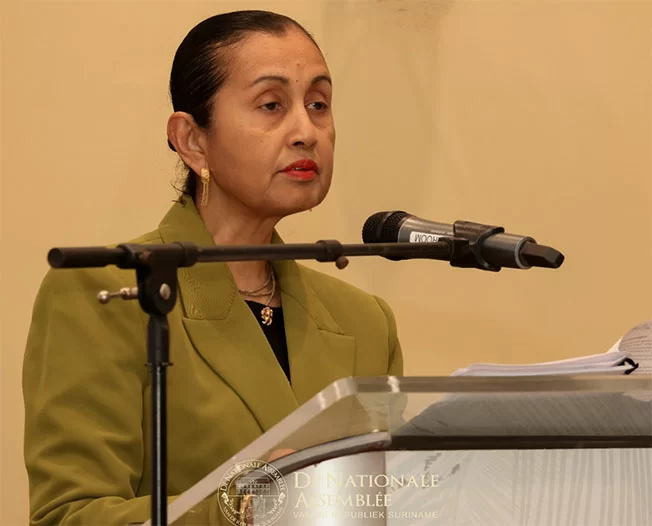
    Grenada’s Public Accounts Committee (PAC) Chairman Emmalin Pierre has issued a stern warning that public officials failing to comply with parliamentary summonses will face serious consequences for breaching parliamentary authority. The declaration came during an awareness seminar held on December 16, 2025, attended by audit department officials and statutory body directors.

    Pierre emphasized that non-compliance with lawful summonses or document requests constitutes a serious violation not just against the committee but against the Parliament of Grenada itself. The opposition leader, who assumed her position in February 2025, stressed that the PAC’s fundamental duty involves safeguarding the Audit Department’s independence while ensuring it receives adequate resources to fulfill its mandate.

    The recently conducted seminar aimed to clarify institutional roles, minimize misunderstandings, and foster collaborative relationships rather than confrontational dynamics. This initiative followed PAC members’ participation in specialized training at the UK Parliament in July 2025, demonstrating the committee’s commitment to international best practices in governmental oversight.

    Pierre articulated that effective oversight of public funds requires practical implementation beyond theoretical frameworks, necessitating professional and respectful relationships that preserve the Auditor General’s autonomy. She urged participants to view PAC recommendations as improvement tools rather than criticism, emphasizing the critical importance of timely information sharing and constructive responses to audit findings.

    The committee’s work ultimately centers on maintaining public trust, with Pierre noting that citizens directly experience the consequences of weak accountability systems. Strong oversight mechanisms, she argued, build democratic confidence and enhance service delivery effectiveness across government institutions.

    The PAC comprises cross-parliamentary representation including Kate Lewis-Peters and Dr. Clarice Modeste from the Lower House, alongside Salim Rahaman and Roderick St Clair from the Upper House, forming a five-member body dedicated to financial accountability and governance oversight.

  • OP-ED: Immigration restrictions on nationals from Antigua and Barbuda and Dominica – An analysis of crime rates, CBI program security, and ethical considerations

    OP-ED: Immigration restrictions on nationals from Antigua and Barbuda and Dominica – An analysis of crime rates, CBI program security, and ethical considerations

    A recent policy proclamation by the United States government imposing entry restrictions on nationals from Antigua and Barbuda and Dominica has sparked significant debate regarding its empirical foundation and ethical implications. Issued on December 16, 2025, and justified on national security grounds, this measure faces mounting scrutiny from immigration experts and ethicists alike.

    Extensive criminological research demonstrates that immigrants from Caribbean nations consistently exhibit lower crime rates than native-born U.S. citizens. Comprehensive studies reveal immigrant incarceration rates significantly below those of U.S.-born individuals, with undocumented immigrants showing conviction rates 26–61% lower for serious crimes including homicide. While specific data on Antiguan and Dominican nationals is limited due to small diaspora populations, aggregated Caribbean immigrant statistics align with these broader trends, showing substantially lower incarceration and conviction rates compared to native-born Americans.

    The Citizenship by Investment (CBI) programs operated by Antigua and Barbuda and Dominica incorporate multilayered security protocols that exceed many standard visa requirements. Both nations mandate rigorous background checks through Interpol, World-Check, and third-party international vetting firms. Antigua and Barbuda requires certified documents, police certificates, and enhanced due diligence fees ranging from US$7,500–$8,500 for main applicants. Dominica has implemented mandatory interviews since 2024 alongside sophisticated vetting procedures, with primary applicant fees set at US$7,500. These programs maintain substantial rejection rates for high-risk applicants, demonstrating proactive risk management.

    Ethical considerations present further challenges to nationality-based restrictions. Philosophical frameworks emphasize the violation of equal moral worth when policies discriminate based on arbitrary birth circumstances rather than individual risk assessment. Such measures echo historical exclusions rooted in racial and ethnic prejudice, conflicting with fundamental human rights principles. From a moral perspective, collective punishment of entire nationalities for hypothetical risks contradicts religious imperatives of hospitality and presumes guilt by association—a fundamental violation of justice principles.

    Legal experts note that legitimate restrictions require proportionate, evidence-based justification. The absence of data indicating higher criminality among Antiguan or Dominican nationals undermines claims of necessity under international law standards. The sophisticated due diligence mechanisms within CBI programs further negate security rationales for blanket restrictions.

    The comprehensive analysis concludes that empirical evidence, security protocols, and ethical frameworks all fail to support nationality-based entry restrictions. Policy recommendations emphasize individualized assessment approaches that respect human dignity while maintaining security through evidence-based methods rather than collective stigma.

  • Honduras sees no end in sight to the post-election crisis

    Honduras sees no end in sight to the post-election crisis

    Honduras faces a deepening electoral crisis after the National Electoral Council (CNE) decisively rejected a comprehensive recount of all presidential ballots. The contentious decision emerged from a majority vote that dismissed appeals from two major political parties seeking to examine 19,167 disputed votes.

    The tripartite CNE, composed of representatives from Honduras’ dominant political forces—the right-wing National Party (PN), the right-wing Liberal Party (PL), and the left-wing ruling Liberty and Refoundation Party (Libre)—reached an impasse during its latest plenary session. PL magistrates Ana Hall and Cossette López formally challenged the recount motion presented by Libre council member Marlon Ochoa, who cited substantial evidence of voting record irregularities.

    According to suspended preliminary results from the electoral authority, PN candidate Nasry Asfura—known for his alignment with former U.S. President Donald Trump—maintains a narrow lead with 40.54% of the vote. Trailing closely behind is Salvador Nasralla of the PL party with 39.19%. Both Nasralla and Libre have jointly accused the National Party of attempting electoral fraud and have demanded a nationwide recount.

    The electoral process has been paralyzed for several days amid these allegations. Most notably, Libre candidate Rixi Moncada, who led pre-election polls before the November 30 vote, now sits in third position with just 19.29% of counted ballots, adding further controversy to the unresolved electoral outcome.

  • ICAP condemns U.S. naval blockade against Venezuela

    ICAP condemns U.S. naval blockade against Venezuela

    Cuba’s Institute of International Relations (ICAP) has issued a forceful condemnation of recent US measures against Venezuela, characterizing them as an unlawful application of what they term the ‘Trump Corollary’ to the Monroe Doctrine. The institute asserts that this policy shift has been formally embedded within US foreign policy documentation, including the National Security Strategy for the Americas.

    In an official statement, the Cuban institution dismissed Washington’s justifications regarding counter-narcotics operations and anti-terrorism efforts as mere ‘facade’ arguments. ICAP maintains these pretexts conceal illegitimate intentions that pose significant threats to both regional stability and global peace. The organization further denounced the naval blockade maneuver as a form of ‘hybrid warfare’ that deliberately escalates tensions toward potential military confrontation.

    The underlying objectives, according to ICAP, include the appropriation of Venezuela’s substantial natural resources and the application of coercive pressure against a sovereign nation. The statement reaffirms Cuba’s ‘unwavering solidarity’ with President Nicolas Maduro’s administration and the Venezuelan people, while issuing an urgent appeal to international stakeholders.

    ICAP specifically calls upon social movements, parliamentary bodies, national governments, and global organizations to unanimously reject what they characterize as a ‘rude imperial act’. The institute advocates for widespread mobilization to defend national sovereignty, maintain peace, and uphold the fundamental principles enshrined in the United Nations Charter. The statement concludes with emphatic declarations: ‘No naval blockade! No to imperialist looting! Hands off Venezuela!’

  • PM Skerrit offers Dominica’s mediation between US and Venezuela, to maintain zone of peace

    PM Skerrit offers Dominica’s mediation between US and Venezuela, to maintain zone of peace

    Prime Minister Roosevelt Skerrit of Dominica has formally extended his nation’s diplomatic services to mediate escalating tensions between the United States and Venezuela. During his year-end press conference, the Caribbean leader positioned Dominica as a neutral intermediary capable of facilitating dialogue between the conflicting parties.

    Skerrit emphasized the Caribbean region’s vulnerability to external shocks, stating that military conflict would have devastating consequences for all regional economies. “We have always maintained that the Caribbean should be a zone of peace,” Skerrit declared. “Any thought of military actions in the Caribbean should be reconsidered. We believe that dialogue and diplomatic channels represent superior approaches to resolving differences.”

    The Prime Minister highlighted Dominica’s existing friendly relations with both nations and referenced previous successful mediation efforts. “Dominica is a good friend of both the United States and Venezuela,” he noted. “We have worked together as an intermediary in the past and stand prepared to do so in this current situation.”

    Skerrit specifically addressed U.S. President Donald Trump, acknowledging his previous negotiation successes in global conflicts and urging continued diplomatic engagement. This development comes amid reported U.S. military buildup in the Caribbean Sea under the pretext of anti-drug trafficking operations—a move that Caracas interprets as direct aggression aimed at overthrowing President Nicolás Maduro’s government.

    According to international media reports, tensions have intensified following President Trump’s accusations that Maduro’s administration facilitates drug trafficking and drives mass migration from Venezuela to the United States. Prime Minister Skerrit’s intervention represents a significant diplomatic initiative from a Caribbean nation to prevent further escalation in regional tensions.

  • Lula advocates for dialogue as Venezuela-US tensions escalate

    Lula advocates for dialogue as Venezuela-US tensions escalate

    President Luiz Inácio Lula da Silva of Brazil has undertaken a discreet diplomatic initiative to mediate between the United States and Venezuela, advocating for peaceful negotiations over military confrontation. During a cabinet meeting, Lula disclosed details of his recent telephone discussion with former U.S. President Donald Trump, where he emphasized that diplomatic engagement represents a more effective and economically viable approach than armed conflict.

    While Venezuela was not explicitly named during the conversation, Brazilian government officials confirmed that the Venezuela situation was a central topic in both Lula’s discussion with Trump and his earlier December communication with Venezuelan President Nicolás Maduro. The Brazilian leader expressed serious concerns about Washington’s escalating military and economic pressure on Caracas and offered Brazil’s confidential assistance in facilitating a negotiated resolution to the ongoing crisis.

    Brazil’s conciliatory stance emerges in sharp contrast to the current reality in Venezuela, where international sanctions and blockades have significantly intensified. These measures have profoundly impacted Venezuela’s oil exports, which constitute the nation’s primary revenue source. The United States maintains unilateral control over Venezuelan oil operations, implementing restrictions that limit Caracas’ access to global markets and reinforce what Venezuelan authorities characterize as deliberate economic strangulation.

    The Maduro administration condemns these measures as exacerbating Venezuela’s severe social and economic crisis, warning that the blockade intensifies resource scarcity and hampers the country’s ability to import essential goods including food, medicines, and other critical supplies necessary for civilian welfare.

  • Senate Minority Leader Says Budget Needs Clearer Protection for the Vulnerable

    Senate Minority Leader Says Budget Needs Clearer Protection for the Vulnerable

    During Tuesday’s Senate deliberations on the Appropriation Bill, Minority Leader David Massiah delivered a pointed critique of the government’s 2026 budgetary framework, asserting its fundamental inadequacy in protecting society’s most vulnerable segments. The opposition leader contended that while the fiscal plan contains certain commendable components, it critically lacks comprehensive safeguards for low-income households, workers, and other at-risk demographics.

    Massiah challenged the government’s fiscal narrative, questioning its relevance to citizens experiencing economic hardships, particularly when accounting for national debt obligations. “The government’s fiscal narrative depends on a surplus that disappears the moment debt repayments are included,” he stated, warning that this accounting approach potentially overstates the budget’s actual capacity to protect those in greatest need.

    The senator emphasized the absence of clearly articulated strategies for household income support and social protection mechanisms, raising serious concerns about how projected economic growth would tangibly benefit vulnerable populations. From a labor policy perspective, Massiah found key pronouncements within the budget insufficiently substantiated, particularly those directly affecting workers and families.

    While acknowledging some positive provisions within the estimates, Massiah maintained that they collectively fail to establish the necessary foundation for ensuring long-term socioeconomic security. He called for stronger, more targeted policy measures to prevent vulnerable groups from being marginalized within broader economic planning frameworks, urging legislators to evaluate the budget beyond superficial headline figures.

    Concluding his address, Massiah reinforced the Senate’s constitutional responsibility to rigorously scrutinize whether national budgets genuinely serve those most in need, as debate on the 2026 budget continues in the Upper House.