分类: politics

  • Briceño Responds to Hypocrisy Charges Over Supplementary Allocations

    Briceño Responds to Hypocrisy Charges Over Supplementary Allocations

    Belizean Prime Minister John Briceño is confronting serious allegations of governmental hypocrisy regarding his administration’s handling of public finances. The controversy emerged when supplementary revenue appropriation bills were presented to parliament after expenditures had already been made—a practice strikingly similar to those that Briceño’s opposition party previously challenged in court during Dean Barrow’s administration.

    This fiscal approach mirrors the very scenario that prompted Briceño to initiate legal proceedings against the previous government, resulting in a Supreme Court ruling that declared approximately $1.3 billion had been spent without proper parliamentary authorization. As lead claimant in that case, Briceño’s current position creates apparent contradictions that opposition critics are highlighting.

    The Prime Minister has vigorously rejected accusations of double standards, maintaining that the circumstances differ significantly. Briceño explained that the delayed budgetary approvals resulted from transitional challenges following elections and administrative reorganization rather than intentional disregard for proper procedure.

    According to Briceño, the matter only came to his attention in September when alerted by the Financial Secretary. He emphasized that corrective measures were implemented promptly upon discovery, with supplementary budgets submitted to address both current and outstanding allocations. While acknowledging the procedural delay, Briceño maintains his administration acted responsibly by rectifying the situation within months rather than years.

  • No Increase for JPAC, PM Considers Cutting Senators’ Stipend

    No Increase for JPAC, PM Considers Cutting Senators’ Stipend

    In a significant development concerning governmental fiscal oversight, Prime Minister John Briceño has indicated that the Joint Public Accounts Committee (JPAC) will not receive increased funding in the upcoming budgetary cycle. This announcement comes amidst escalating demands for enhanced scrutiny of public expenditures and raises fundamental questions about resource allocation within Belize’s parliamentary framework.

    The JPAC, which underwent substantial structural enhancements under the current administration, now incorporates senatorial participation and wields expanded authority to summon high-ranking public officials. Initially championed as a cornerstone accountability mechanism, the committee’s operational efficacy is now under examination due to resource constraints.

    Prime Minister Briceño, while defending his government’s commitment to transparency through institutional reforms, emphasized the reality of finite budgetary resources across all government sectors. In a notable escalation of fiscal scrutiny, the Prime Minister openly questioned the compensation structure for senators, specifically highlighting annual stipends approximating $16,000. Briceño suggested these payments warrant reconsideration, particularly given the increased frequency of monthly meetings.

    This fiscal position emerges against a backdrop of recent political turbulence, including multiple cabinet reshuffles that have prompted questions about governmental stability. The Prime Minister’s comments signal a broader austerity approach that may redefine resource distribution within legislative operations, potentially affecting oversight capabilities and parliamentary remuneration simultaneously.

  • Dominican Republic to issue 9.4 million new national ID cards; First to be delivered to Abinader in January 2026

    Dominican Republic to issue 9.4 million new national ID cards; First to be delivered to Abinader in January 2026

    SANTO DOMINGO – In a landmark development for national infrastructure, the Dominican Republic’s Central Electoral Board (JCE) has revealed comprehensive plans for the nation’s first integrated identity and voter registration system. The official rollout will commence with a ceremonial presentation of the inaugural card to President Luis Abinader on January 26, 2026—a date symbolically chosen to coincide with the birthday of national hero Juan Pablo Duarte. The event is scheduled to take place at the JCE’s main auditorium.

    JCE President Román Andrés Jáquez Liranzo provided detailed technical and operational insights, noting that the ambitious project entered its development phase in December 2024. The initiative has a monumental target: the nationwide issuance of approximately 9.4 million dual-purpose identity and electoral cards. The mass public registration process for this new document is slated to begin on April 8, 2025.

    The new card represents a significant technological leap. Constructed from a durable nine-layer polycarbonate composite, it is engineered to remain functional for over a quarter of a century. A key security enhancement is the adoption of sophisticated laser engraving technology, which replaces conventional printing methods. This advanced technique drastically improves the card’s resistance to forgery, tampering, and general wear.

    Eligibility for the card is structured by demographic. The full electoral and identity card will be mandatory for all citizens aged 18 and above. A distinct, identity-only version will be allocated to specific groups: minors between the ages of 16 and 18, active-duty members of the armed forces and national police, and foreign residents who are legally registered in the country. This stratified approach aims to streamline identification processes while bolstering national security and electoral integrity.

  • USA : Congress adopts a law on transparency in criminal collusion in Haiti

    USA : Congress adopts a law on transparency in criminal collusion in Haiti

    WASHINGTON—In a significant move targeting organized crime networks in Haiti, the United States Congress approved the Haiti Criminal Collusion Transparency Act (CCTA) on December 17, 2025. The legislation was passed as a component of the broader national defense authorization bill, signaling heightened American engagement with Haiti’s security crisis.

    The groundbreaking law mandates the U.S. administration to deliver a comprehensive report to congressional oversight committees within 180 days of enactment. This document must identify Haiti’s most influential criminal organizations, their leadership structures, and critically, their alleged connections to elite political and business figures within Haitian society.

    Following the submission of this report, the legislation requires implementation of substantial sanctions within a 90-day window. These measures include the immediate freezing of assets and revocation of U.S. visas for individuals identified as participating in or supporting criminal collusion. The presidential authority extends to seizing all property and financial interests belonging to sanctioned persons if those assets are situated within American jurisdiction, transferred to U.S. institutions, or controlled by American entities—including foreign branches of U.S.-based corporations.

    This provision effectively bars designated individuals from conducting any financial transactions involving American financial institutions or assets, creating a powerful economic disincentive for criminal cooperation.

    The CCTA additionally implements stringent immigration restrictions. Those sanctioned under the act become automatically inadmissible to the United States and are prohibited from obtaining any category of visa or entry documentation. For individuals already in possession of valid U.S. visas, the legislation mandates immediate revocation, concurrently invalidating any other travel authorizations they may hold.

    The completed legislation has been forwarded to the White House for consideration by President Trump, whose signature would enact it into law.

  • PM Briceño on Belize Parliament: “We Argue… Then Hug and Talk Like Friends”

    PM Briceño on Belize Parliament: “We Argue… Then Hug and Talk Like Friends”

    In a striking demonstration of contrasting legislative conduct, Belizean Prime Minister John Briceño has highlighted his nation’s parliamentary decorum following violent clashes in Mexico’s Congress. The Belizean leader emphasized that while political debates in his country’s House of Representatives can become intense, they consistently conclude with mutual respect and camaraderie among lawmakers.

    The commentary came in response to disturbing events in Mexico City on December 18, 2025, where physical altercations erupted during deliberations concerning transparency oversight reforms. Legislative proceedings devolved into chaos as opposition members occupied the podium, resulting in documented incidents of hair-pulling, shoving, and other physical confrontations.

    The controversial Mexican legislation proposes restructuring the capital’s transparency watchdog, INFO CDMX, by eliminating its autonomous status and transferring its functions to the executive branch. The governing Morena party maintains this reorganization will enhance operational efficiency, while opposition figures contend it substantially undermines governmental accountability mechanisms.

    Prime Minister Briceño, addressing journalists, articulated Belize’s political philosophy: “Our parliamentary exchanges may feature vigorous disagreement, but once concluded, we embrace as colleagues and converse as friends.” The leader further questioned the necessity of physical confrontation in political discourse, stating, “Ultimately, we are all Belizeans united in national service.”

    The Belizean PM’s remarks emerged alongside domestic political tensions, including recent accusations against opposition figures, yet maintained focus on the fundamental distinction between passionate debate and physical violence in democratic governance.

  • ULP candidates file petitions against Friday, Bramble’s election

    ULP candidates file petitions against Friday, Bramble’s election

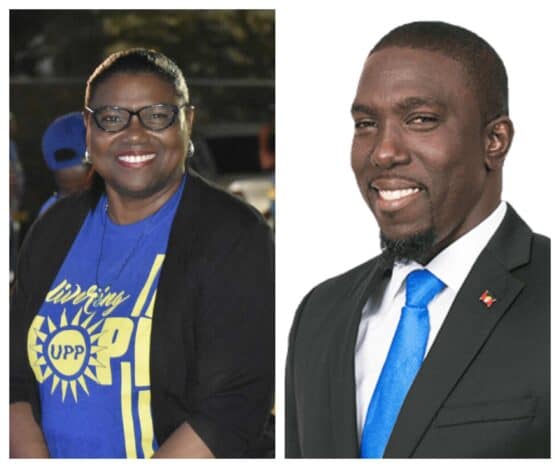
    In a significant political development, St. Vincent and the Grenadines’ opposition Unity Labour Party (ULP) has initiated legal proceedings contesting the parliamentary eligibility of two senior government figures. On Friday, the party filed formal election petitions questioning the validity of Prime Minister Godwin Friday’s representation for Northern Grenadines and Foreign Minister Fitz Bramble’s position as East Kingstown MP.

    The petitions, formally submitted by ULP candidates Carlos Williams (Northern Grenadines) and Luke Browne (East Kingstown), center on constitutional provisions regarding foreign allegiance. The challenge specifically cites Section 26(1) of the nation’s Constitution, which prohibits individuals ‘under any acknowledgement of allegiance, obedience or adherence to a foreign power or state’ from holding parliamentary office.

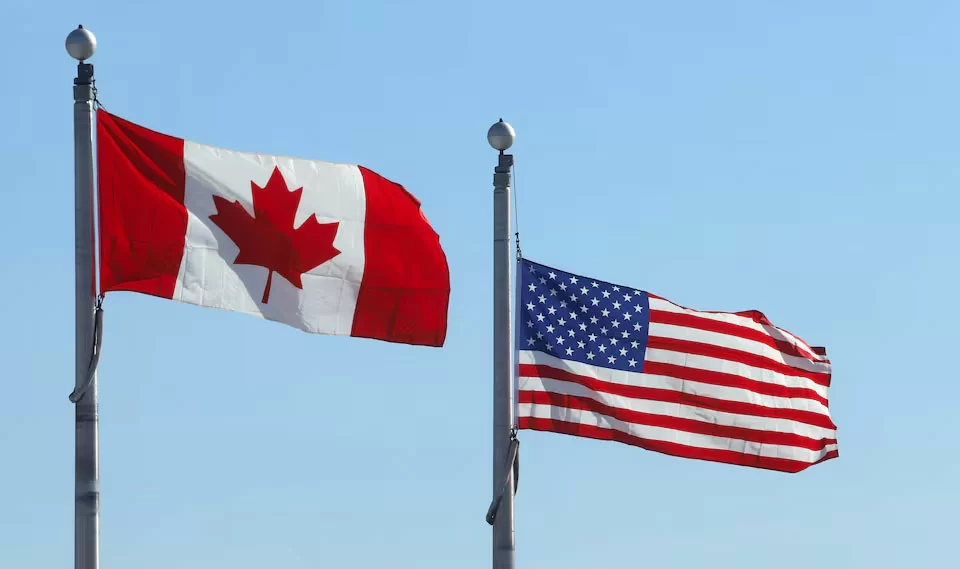
    The core argument maintains that both Friday and Bramble hold Canadian citizenship, which constitutes voluntary allegiance to a foreign state. The documentation notes that both politicians applied for and obtained Canadian citizenship voluntarily, subsequently using Canadian passports. This, according to the petitioners, creates an automatic constitutional disqualification despite their electoral victories in the November 27 general election.

    The controversy predates the recent polls, with formal objections being lodged during the nomination process on November 10. Pre-election notices circulated in media outlets warned constituents that voting for either candidate would constitute ‘a wasted vote’ due to their purported ineligibility.

    Legal opinion appears divided on the matter. Prominent Vincentian jurist Linton Lewis, though previously associated with the ruling New Democratic Party, has supported the validity of the challenge. Conversely, legal scholar Jason Haynes contends that the SVG Constitution contains peculiar provisions allowing Commonwealth citizens to contest elections, suggesting the challenge might ultimately fail.

    The outcome of these proceedings could significantly impact the nation’s political landscape, potentially affecting both the premiership and foreign ministry positions.

  • “I’m not sick”- Jagdeo

    “I’m not sick”- Jagdeo

    Guyana’s Vice President Bharrat Jagdeo has publicly refuted widespread speculation about his health, explicitly denying claims that he is battling cancer. The senior official broke his unusual six-week silence from press engagements to directly address growing public conjecture about his physical condition.

    “No! I am not ill. I have not been diagnosed with cancer,” Jagdeo stated emphatically during his December 18, 2025 press conference when questioned by Demerara Waves Online News. The Vice President’s extended absence from his characteristic weekly marathon press briefings—which typically span three to four hours—had fueled rumors throughout November and December that he might be suffering from either prostate or throat cancer.

    Despite the circulation of social media conspiracy theories, including one alleging an impersonator named “Delip” had been paid to represent him, Jagdeo affirmed his authentic presence at recent governmental functions. Documentary evidence showed his participation in cabinet meetings, community council gatherings, and the launch of the Christmas village throughout the period of speculation.

    The political leader referenced the recent honor of having the US$260 million Bharrat Jagdeo Demerara River Bridge named after him during its October inauguration. While notably absent from the ceremonial crossing event, Jagdeo maintains President Irfaan Ali’s continued confidence, having been described repeatedly as a key architect of modern Guyana’s development and the President’s trusted “confidante.”

  • No cash grant promise broken; more cash grants coming but “you have to earn too”- Jagdeo

    No cash grant promise broken; more cash grants coming but “you have to earn too”- Jagdeo

    Guyana’s Vice President Bharrat Jagdeo has firmly refuted claims that his administration broke a promise to distribute cash grants before Christmas 2025. During a press briefing on Thursday, Jagdeo presented his party’s election manifesto to demonstrate that no specific pre-holiday payout commitment had been made.

    The Vice President explained that no funds have been allocated in the Treasury for such disbursements, emphasizing that implementing the cash transfer program would require parliamentary approval and several months of preparation. He recalled that earlier this year, the government needed five months to execute a similar program, which encountered challenges including attempted system exploitation.

    Jagdeo characterized President Irfaan Ali’s previous comments about potential Christmas payments as humorous remarks rather than policy commitments. “Jocularly, the President said if you’re good people… and this is what they are building their campaign on,” he stated, referencing opposition claims from We Invest in Nationhood (WIN) and A Partnership for National Unity (APNU).

    The Vice President confirmed that cash grants of GY$100,000 would be distributed following the approval of the 2026 National Budget early next year, with projected costs exceeding GY$60 billion. However, he cautioned citizens against developing dependency on government transfers, emphasizing that “You got to earn too. Cash grants should help supplement what you have.”

    Jagdeo outlined broader social programs including soft loans and grants for small business development through a planned US$200 million development bank, financial support for housing programs, and community improvement initiatives. He revealed plans for over GY$800 billion in housing investments for hundreds of thousands of families over the next five years, alongside increased support for children, pensioners, and workers.

  • PM Briceño Sets 2026 Agenda for Workers with NTUCB

    PM Briceño Sets 2026 Agenda for Workers with NTUCB

    In a significant development for Belize’s labor landscape, Prime Minister John Briceño has established a comprehensive 2026 agenda through constructive dialogues with the National Trade Union Congress of Belize (NTUCB). The December 15 meeting yielded multiple governmental commitments addressing both labor concerns and broader governance issues.

    The administration pledged to advance the Occupational Safety and Health Bill to its second reading during Parliament’s inaugural 2026 session. Additionally, the government will proceed with the Whistle-blowers Bill upon completion of final stakeholder consultations and aims to conclude the national redistricting process by year’s end.

    Substantial anti-corruption measures formed another critical component of the agreed agenda. The government committed to advancing Campaign Finance Legislation, enhancing enforcement capabilities under the Civil Asset Recovery and Unexplained Wealth Act, and bolstering the operational capacity of oversight institutions including the Integrity Commission and Ombudsman’s office. An investigation into potential non-disclosure of audited financial statements by statutory bodies will also be initiated.

    Regarding international labor standards, both parties agreed to review pending International Labor Organization conventions. The Prime Minister further committed to convene a meeting with utility unions before January 2026 concludes.

    Prime Minister Briceño characterized the negotiations as productive, noting that while governmental and union perspectives sometimes differ, both parties engaged in good faith negotiations resulting in meaningful agreements. To maintain this constructive dialogue, the Office of the Prime Minister and NTUCB will institute quarterly meetings commencing March 2026, establishing a formal mechanism for addressing worker concerns proactively.

  • US Technical Assistance Field Team supports Grenada’s Maritime Security

    US Technical Assistance Field Team supports Grenada’s Maritime Security

    A specialized team from the United States Southern Command has arrived in Grenada this week to provide crucial technical assistance for repairing maritime assets utilized by the Royal Grenada Police Force Coast Guard. This deployment responds to an official request from the Grenadian government under the framework of the Caribbean Basin Security Initiative Technical Assistance Field Team (CBSI-TAFT) program.

    The technical assistance mission brings together a multidisciplinary team of U.S. Coast Guard and Army engineers and logistics experts who are collaborating directly with their Grenadian counterparts. This cooperative engagement highlights the ongoing security partnership between the two nations and demonstrates Grenada’s proactive approach to maintaining regional security capabilities.

    Grenada has established itself as a valuable partner for the United States in Caribbean security matters. The current technical assistance visit represents the latest in a series of collaborative efforts aimed at enhancing maritime security operations and counter-trafficking capabilities throughout the region. These joint initiatives contribute to creating a safer Caribbean environment while reinforcing the enduring diplomatic and security relationship between the United States and Grenada.

    The maritime asset repair program forms part of broader regional security cooperation efforts that address shared challenges and promote operational readiness. Both nations have expressed mutual appreciation for the opportunity to work collaboratively on these security enhancements, recognizing the importance of maintained and fully operational maritime resources for effective law enforcement and border protection operations.