分类: politics

  • Beckles: PM behaving like a dictator

    Beckles: PM behaving like a dictator

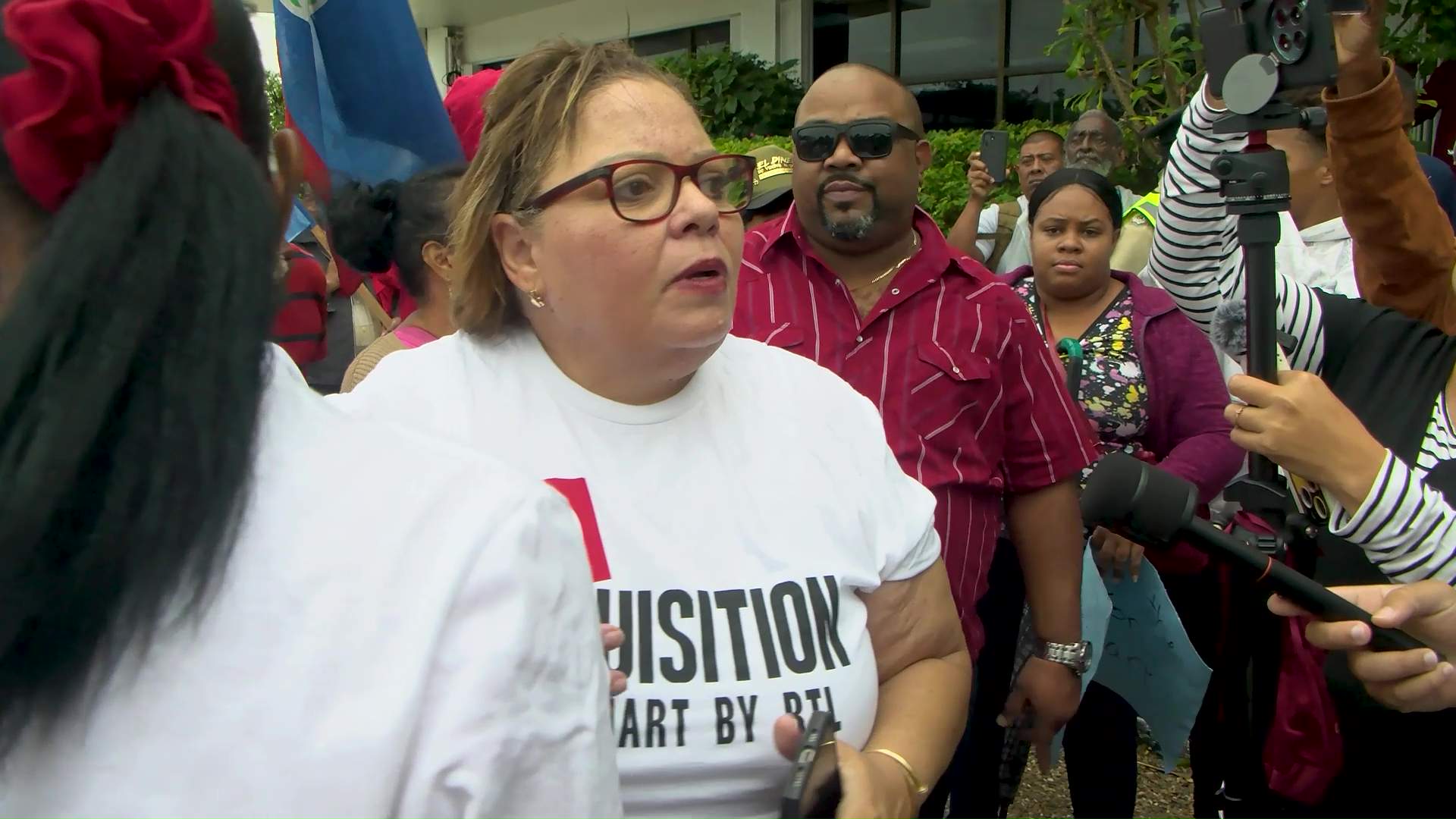
    Trinidad and Tobago’s political landscape is embroiled in a heated controversy surrounding the undisclosed establishment of US military infrastructure on sovereign soil. Opposition Leader Pennelope Beckles has launched scathing criticisms against Prime Minister Kamla Persad-Bissessar, accusing her of exhibiting dictatorial tendencies through evasive responses regarding American military presence in Tobago.

    The core of the dispute centers on a sophisticated G/ATOR radar system developed by Northrop Grumman, a prominent US defense contractor specializing in advanced military technology including stealth aircraft and unmanned drones. This multi-role detection system, capable of identifying aerial threats from missiles to drones, became operational at the ANR Robinson International Airport in November alongside supporting US Marine facilities.

    Beckles, who also serves as Political Leader of the People’s National Movement, condemned the Prime Minister’s dismissive attitude toward legitimate public inquiries. During a December 21 press engagement, Persad-Bissessar exhibited visible irritation when questioned about the military infrastructure, characterizing these national security concerns as ‘nonsense’ and a waste of her time.

    The Opposition Leader highlighted concerning inconsistencies in the government’s narrative, noting that Tobagonian leadership including Chief Secretary Farley Augustine maintained no prior knowledge or consultation regarding the military installation. This lack of transparency extends to the National Security Council, where key regional representatives claim exclusion from critical decision-making processes.

    Beckles, drawing from her diplomatic experience as Trinidad’s former UN ambassador, emphasized the fundamental principles of international law and CARICOM solidarity that previous administrations had consistently upheld. She expressed grave concerns about the Prime Minister’s simultaneous defense of US military actions while criticizing regional partners for questioning these developments.

    The escalating confrontation underscores deeper tensions regarding national sovereignty, governmental accountability, and the proper channels for democratic oversight. Beckles reiterated that no elected leader stands above public scrutiny, emphasizing that transparency remains non-negotiable when concerning matters of national security and international military cooperation.

  • JCC warns: Caricom indispensable to Trinidad and Tobago economy

    JCC warns: Caricom indispensable to Trinidad and Tobago economy

    A significant diplomatic and economic debate has emerged in Trinidad and Tobago regarding the country’s relationship with the Caribbean Community (Caricom). The Joint Consultative Council for the Construction Industry (JCC) has issued a strong warning that the Caricom market remains indispensable for TT’s economic stability and diversification efforts.

    JCC President Fazir Khan emphasized in a December 23 media release that Trinidad and Tobago must reject any notion of prospering without Caricom’s support. This statement came in response to recent criticisms from Prime Minister Kamla Persad-Bissessar, who characterized Caricom as fractured and an ‘unreliable partner’ while indicating TT’s pursuit of partnerships beyond the region.

    The Prime Minister had previously asserted that Caricom members had supported Venezuela against the United States in the latter’s anti-drug trafficking initiatives, specifically mentioning that Antiguans were ‘bad-mouthing’ the US, resulting in additional visa restrictions for that country.

    In a counter-argument, Gaston Browne responded via Facebook on December 21, challenging the characterization of Caricom as unreliable. He highlighted that Caricom represents TT’s second-largest export market after the United States, with substantial economic benefits. ‘In 2024 alone,’ Browne noted, ‘TT earned more than US $1.1 billion in foreign exchange from trade with Caricom, comprising approximately US $784.7 million in domestic exports and US $501.3 million in re-exports to Caricom states.’

    Khan supported this perspective, indicating that Caricom accounts for roughly ten percent of all global exports from Trinidad and Tobago and an even more significant portion of non-energy exports. Excluding petroleum and petroleum products, exports to Caricom reached over US$560 million in a recent benchmark year, representing approximately one quarter of all intra-regional exports—the largest share held by any member state.

    For the domestic construction industry, this regional demand translates into critical employment opportunities for technicians, engineers, contractors, and professional consultants who would otherwise face limitations within the local market. Khan warned that any disruption to this relationship could result in hundreds of millions of US dollars in potential annual export losses, particularly affecting non-energy sectors that are still establishing themselves in extra-regional markets.

    When questioned on December 22 about whether withdrawal from Caricom was under consideration by herself or the Cabinet, Persad-Bissessar stated, ‘Withdrawal from Caricom has not been discussed by Cabinet.’ She additionally expressed that she was not concerned about any economic impact resulting from the current Caricom divide.

  • Morris: PNM-run THA will remove US radar

    Morris: PNM-run THA will remove US radar

    A contentious US military radar installation at ANR Robinson International Airport has emerged as a central issue in Tobago’s upcoming January 12 House of Assembly elections. Minority Leader Kelvon Morris has pledged that his PNM party will remove the surveillance equipment if elected to power.

    During a December 22 political rally in the Glamorgan/Belle Garden district, Morris declared: “We are going to move that radar as soon as the PNM becomes the next administration of Tobago.” The radar system, manufactured by American defense contractor Northrop Grumman, is a sophisticated G/ATOR system capable of detecting unmanned aerial systems, cruise missiles, and various artillery.

    The installation has sparked significant controversy since Prime Minister Kamla Persad-Bissessar initially claimed on November 26 that US Marines were in Tobago to assist with road construction near the airport. She later acknowledged the radar’s true purpose in combating drug trafficking, explaining that secrecy was maintained for national security reasons.

    Morris, who is contesting the Darrel Spring/Whim constituency, has sharply criticized Chief Secretary Farley Augustine’s evolving stance on the matter. Augustine initially stated he received assurances from central government that the radar wouldn’t be used by the US to attack other nations, but later expressed that given the authority, he would neither install the radar nor permit US military access to the airport.

    The PNM leader accused Augustine of compromising Tobago’s interests, suggesting he had “sold his voice for UNC financing” through various material incentives. Morris framed the radar issue as a matter of survival rather than partisan politics, warning residents that the installation could make Tobago a military target in potential conflicts between the US and nations like Venezuela.

    He particularly condemned TPP member Certica Williams-Orr’s characterization of the radar as a “Christmas gift” to residents, countering that it represents instead a “gift of death” that jeopardizes Tobago’s security. The central government maintains authority over the installation as national security falls under the Sixth Schedule items beyond THA jurisdiction.

  • European Commission confident in Mercosur agreement

    European Commission confident in Mercosur agreement

    The European Commission has expressed unwavering confidence in finalizing the landmark trade agreement with South American bloc Mercosur, despite a significant postponement of the signing ceremony originally scheduled for this past weekend in Brazil. The delay pushes the conclusive action to early next year.

    Addressing the setback, European Commission spokesperson Olof Gill outlined the revised procedural roadmap. The immediate plan involves intensifying discussions with EU member states before reigniting negotiations with Mercosur nations at the start of the new year. Gill emphasized a continued sense of urgency, stating, ‘The expectation now is to discuss the matter with the member states and to address it with the same urgency in the new year with the aim of finalizing the agreement as quickly as possible.’

    Highlighting the extensive history of the negotiations, which have spanned a quarter-century, Gill downplayed the significance of a delay lasting mere weeks. He affirmed the Commission’s belief that a successful conclusion is ultimately achievable, framing the postponement as a minor hurdle in a much longer journey.

    The path to ratification, however, remains fraught with opposition. A primary obstacle stems from widespread protests by European farmers. Their central demand calls for the strict application of ‘Mirror Clauses.’ This policy would require all agricultural imports from Mercosur nations—including Brazil, Argentina, Paraguay, and Uruguay—to adhere to the exact same environmental, sanitary, and animal welfare standards mandated for producers within the EU’s 27 member states. This condition aims to level the competitive playing field and prevent cheaper imports produced under less stringent regulations from undermining European farmers.

  • China criticizes US unilateral harassment tactics against Venezuela

    China criticizes US unilateral harassment tactics against Venezuela

    China has issued a firm diplomatic rebuke against the United States following Washington’s interception of another Venezuelan oil tanker near the South American nation’s coastline. Foreign Ministry spokesman Lin Jian articulated Beijing’s position during a press briefing, emphasizing China’s consistent opposition to what it characterizes as illegal unilateral sanctions.

    ‘The Chinese government maintains unwavering opposition to unilateral sanctions that lack proper foundation in international legal frameworks and have not received authorization from the United Nations Security Council,’ Lin stated unequivocally. The spokesman further reinforced China’s stance against any measures that undermine the fundamental principles established in the UN Charter, particularly those compromising national sovereignty and security interests.

    Lin’s remarks highlighted China’s support for Venezuela’s autonomous rights in pursuing international partnerships. ‘Venezuela possesses the legitimate right to independently develop mutually beneficial cooperative relationships with other sovereign states,’ he affirmed. The spokesman expressed confidence that global actors would recognize and endorse Venezuela’s efforts to protect its lawful national interests through appropriate diplomatic channels.

    The incident represents the latest escalation in tensions between Washington and Caracas, with China positioning itself as a defender of multilateralism and state sovereignty. Beijing’s statement aligns with its broader foreign policy approach that challenges what it perceives as American overreach in international affairs, particularly regarding resource sovereignty and economic independence.

  • China shocked by Japan’s statements on nuclear weapons

    China shocked by Japan’s statements on nuclear weapons

    China’s Foreign Ministry has issued a stern condemnation of recent political statements emerging from Japan, characterizing them as a direct challenge to the established international framework. Spokesperson Lin Jian declared that such pronouncements represent an open provocation against the post-World War II international order and fundamentally undermine the global nuclear non-proliferation regime.

    Lin emphasized Japan’s specific obligations as a non-nuclear-weapon state and signatory to the Treaty on the Non-Proliferation of Nuclear Weapons (NPT), stating the country must strictly adhere to its international commitments against accepting, manufacturing, or possessing nuclear weapons. The spokesperson highlighted concerning patterns, noting that numerous former Japanese officials have publicly claimed the nation possesses the technical capability to develop nuclear arms.

    Further escalating concerns, Lin revealed that Japan has been manufacturing and stockpiling plutonium materials in quantities that significantly exceed reasonable civilian nuclear energy requirements. This accumulation, coupled with provocative political rhetoric, suggests a coordinated push toward remilitarization by right-wing factions within Japan’s political landscape.

    The diplomatic warning extended to recent statements on Taiwan by Japanese Prime Minister Sanae Takaichi, which Beijing views as particularly dangerous and destabilizing. These developments occur against a backdrop of deteriorating bilateral relations and growing apprehension from Beijing regarding Japan’s apparent shift toward militarization. The Chinese government asserts that these actions threaten regional and international stability while jeopardizing collective global non-proliferation efforts.

  • Rejection grows in Italy against the aggressive escalation by the US

    Rejection grows in Italy against the aggressive escalation by the US

    Prominent Italian economist Luciano Vasapollo, serving as leader of Italy’s Network of Communists, has issued a strong condemnation of what he characterizes as American “acts of piracy” targeting Venezuelan oil tankers. In statements published by Il Faro di Roma newspaper, Vasapollo denounced recent actions authorized by former U.S. President Donald Trump against Venezuelan maritime assets as manifestations of “pure colonialism.”

    Vasapollo, who also co-founded the Italian chapter of the Network of Intellectuals in Defense of Humanity, highlighted several solidarity initiatives supporting the Bolivarian Republic government. He specifically referenced a significant gathering in Rome that attracted hundreds of young activists expressing support for Venezuela.

    The December 19th event, organized at the Patriotic Action Group headquarters through a collaboration between the Network of Communists and left-wing youth organizations Cambiare Rotta and Alternative Student Opposition (OSA), served as a platform for criticizing American foreign policy. During the meeting, Vasapollo articulated his perspective that these actions represent “an attempt to dominate Global South countries, treating them as slaves.”

    The gathering featured notable diplomatic presence, including María Elena Uzzo, head of Venezuela’s diplomatic mission in Italy, who participated in the solidarity event. Vasapollo’s comments reflect growing international criticism of U.S. sanctions policy toward Venezuela and increasing European left-wing opposition to American intervention in South American affairs.

  • NODS to lead emergency preparedness during CHOGM

    NODS to lead emergency preparedness during CHOGM

    In preparation for the upcoming Commonwealth Heads of Government Meeting (CHOGM), Antigua and Barbuda’s National Office of Disaster Services (NODS) has been designated as the lead agency for comprehensive emergency management planning. The disaster response organization will implement robust contingency measures to address potential natural disasters and security incidents throughout the international gathering.

    The agency’s comprehensive preparedness strategy includes establishing coordinated inter-agency response protocols, maintaining advanced public safety communication infrastructure, and implementing detailed medical evacuation plans. Specialized readiness teams will be strategically positioned at all major summit venues to provide immediate on-site support during the presence of visiting international dignitaries and government leaders.

    Government authorities emphasize that these enhanced preparedness measures demonstrate the nation’s commitment to ensuring seamless security and emergency response capabilities during this high-profile diplomatic event. The multi-layered approach integrates natural disaster management with security incident protocols, creating a unified response system specifically designed for the unique requirements of hosting an international summit of this magnitude.

    The coordinated effort represents one of the most comprehensive emergency preparedness initiatives undertaken by the Caribbean nation, reflecting the serious commitment to ensuring both delegate safety and uninterrupted proceedings during the important Commonwealth meeting.

  • STATEMENT : Christmas and New Year message from Honourable Roosevelt Skerrit Prime Minister of the Commonwealth of Dominica

    STATEMENT : Christmas and New Year message from Honourable Roosevelt Skerrit Prime Minister of the Commonwealth of Dominica

    In his annual Christmas message to the nation, Prime Minister Roosevelt Skerrit of the Commonwealth of Dominica reflected on the country’s significant achievements throughout 2025 while outlining an optimistic vision for the upcoming year. Addressing citizens both domestically and abroad, the Prime Minister emphasized the season’s core values of compassion, humility, and service to others as fundamental to the national character.

    Prime Minister Skerrit characterized 2025 as a period of determined effort and meaningful progress despite global economic uncertainties, climate challenges, and geopolitical instability. The government’s implementation of a revised minimum wage policy stood as a landmark achievement, designed to protect working families and restore dignity to labor. Additionally, the removal of Value Added Tax and customs duties on essential food items provided substantial cost-of-living relief for households across the island nation.

    The administration continued its comprehensive investment strategy across critical sectors including housing, healthcare, education, and infrastructure development. These initiatives form part of a broader vision to build a resilient and opportunity-rich society. Significant advancements in the International Airport Project marked another milestone, with the transformative infrastructure development expected to enhance tourism, trade, and global connectivity while creating employment opportunities for hundreds of citizens.

    Environmental sustainability remained a key consideration in national development plans, with the government affirming its commitment to balancing economic progress with ecological preservation. The Prime Minister specifically acknowledged the contributions of various sectors including agriculture, fishing, public service, healthcare, education, law enforcement, and private enterprise, recognizing them as the nation’s backbone.

    Special attention was directed toward the Dominican diaspora, whose continued support and investment were described as invaluable to national development. The government reaffirmed its dedication to creating opportunities for youth through education, skills training, entrepreneurship programs, and meaningful employment initiatives.

    Looking ahead to 2026, the administration promised continued investments, further reforms, and enhanced focus on improving quality of life for all citizens. While acknowledging inevitable challenges, the Prime Minister expressed confidence in the nation’s collective resilience and shared destiny. The message concluded with seasonal greetings and blessings for health, hope, and prosperity in the coming year.

  • US pursuing third oil tanker linked to Venezuela, official says

    US pursuing third oil tanker linked to Venezuela, official says

    Tensions between the United States and Venezuela have reached new heights as the US Coast Guard engages in active pursuit of another oil tanker in international waters near Venezuela. This development marks the third such incident this month, following the seizure of two Venezuelan-flagged oil tankers by US authorities.

    According to US officials, Sunday’s pursuit targets a ‘sanctioned dark fleet vessel’ allegedly participating in Venezuela’s illegal sanctions evasion operations. The vessel in question is reportedly flying false flags and remains under judicial seizure order. Washington maintains that Venezuela utilizes oil revenues to finance drug-related criminal activities, while Caracas has condemned the seizures as outright ‘theft and kidnapping.’

    The escalation follows President Donald Trump’s recent order establishing a naval blockade against sanctioned oil tankers attempting to enter or leave Venezuelan waters. Venezuela, which possesses the world’s largest proven oil reserves, has accused the Trump administration of attempting to plunder its natural resources.

    While US authorities haven’t officially confirmed details of Sunday’s operation, the pattern of enforcement continues. Saturday’s seizure involved a Panamanian-flagged tanker boarded by specialized tactical teams in international waters. Although not on the US Treasury’s sanctioned vessels list, the ship was transporting ‘sanctioned PDVSA oil’ according to US officials. Maritime records indicate the vessel previously sailed under Greek and Liberian flags over the past five years.

    The Venezuelan government has vowed that ‘these acts will not go unpunished’ and intends to file formal complaints with the UN Security Council and other multilateral organizations. Venezuela’s economic stability heavily depends on oil export revenues, making these seizures particularly damaging.

    Recent weeks have witnessed increased US military presence in the Caribbean Sea, including deadly strikes on alleged Venezuelan drug-smuggling vessels that resulted in approximately 100 casualties. The US has additionally imposed sanctions on relatives of President Nicolás Maduro and businesses associated with what it terms his ‘illegitimate regime.’

    Secretary of State Marco Rubio emphasized that ‘the current status quo with the Venezuelan regime is intolerable for the United States,’ signaling the administration’s determination to alter the dynamic. These statements drew sharp criticism from Venezuela’s foreign minister, who accused Rubio of pushing for ‘regime change.’

    Notably, the US military has faced growing congressional scrutiny over the vessel strikes, as no public evidence has been provided confirming drug trafficking activities aboard these ships. The Trump administration has further accused Maduro of leading a designated terrorist organization called Cartel de los Soles, allegations which the Venezuelan president consistently denies.