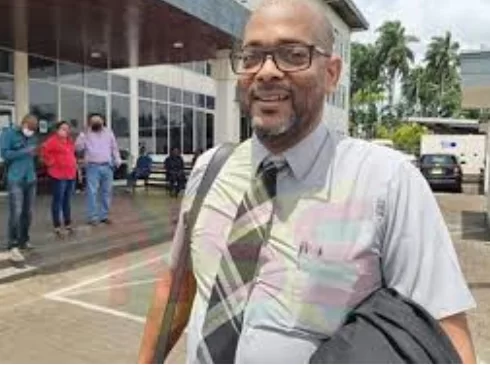
Former Surinamese Minister of Finance and Planning, Gillmore Hoefdraad, continues to challenge his prosecution, even after the Court of Justice declared his case inadmissible. The court ruled on Friday that his prosecution was lawful, following his indictment by the National Assembly in August 2020. Hoefdraad, who fled the country, was sentenced in absentia to 12 years in prison and a fine of SRD 500,000 for his involvement in a high-profile corruption scandal at the Central Bank of Suriname. The Public Prosecutor’s Office also sought a criminal investigation to determine if Hoefdraad unlawfully benefited from his actions, though no progress has been made since his conviction. Hoefdraad’s legal advisor, Murwin Dubois, argues that international jurisprudence, particularly the principle of Ne Bis in Idem—which prohibits double jeopardy—could favor Hoefdraad. Dubois cites cases where the Inter-American Court of Human Rights ruled in favor of defendants under similar circumstances. The case has drawn international attention, especially after Interpol refused to assist in Hoefdraad’s extradition, citing political motivations behind the prosecution. Interpol’s decision highlighted procedural flaws and the lack of original legislation justifying the extradition request. Hoefdraad’s legal team now seeks international avenues to address the legality of his prosecution, as domestic courts have dismissed his appeals.
分类: politics
-
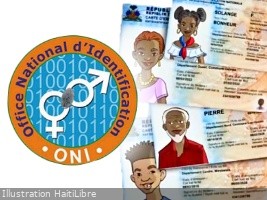
Security : Presentation and authentication measures of the biometric National Identification Card
In a significant move to bolster regional security and combat cybercrime and transnational crime, Haiti’s National Identification Office (ONI), in collaboration with the Organization of American States (OAS), hosted a high-level discussion and information session this week at the Oasis Hotel. The event, attended by members of the diplomatic and consular corps accredited to Haiti, focused on the technical features and authentication process of the new Unique National Identification Card (CINU).
Led by Reynold Guerrier, Director General of the ONI, the session aimed to enhance the ability of consular missions to detect fraudulent identity documents, which are frequently submitted during visa applications or administrative procedures at foreign offices. The initiative is particularly critical for countries heavily impacted by Haitian migration, including Brazil, Mexico, Colombia, the Dominican Republic, the United States, the Bahamas, and Spain. Representatives from the People’s Republic of China and Japan, a major institutional supporter of the ONI, also participated.
During the session, Guerrier detailed the advanced security features of the biometric National Identity Card (NIC), which includes an electronic chip storing fingerprints, facial recognition data, and iris scans. The card also incorporates a QR code and a 2D barcode, making it highly resistant to forgery. Constructed from durable polycarbonate, the card is valid for 10 years. A live demonstration enabled diplomats to differentiate between genuine and counterfeit documents, while technical materials were distributed to aid their identification and verification processes.
This initiative underscores Haiti’s commitment to modernizing its identification system and strengthening international cooperation in the fight against identity fraud and transnational crime.
-
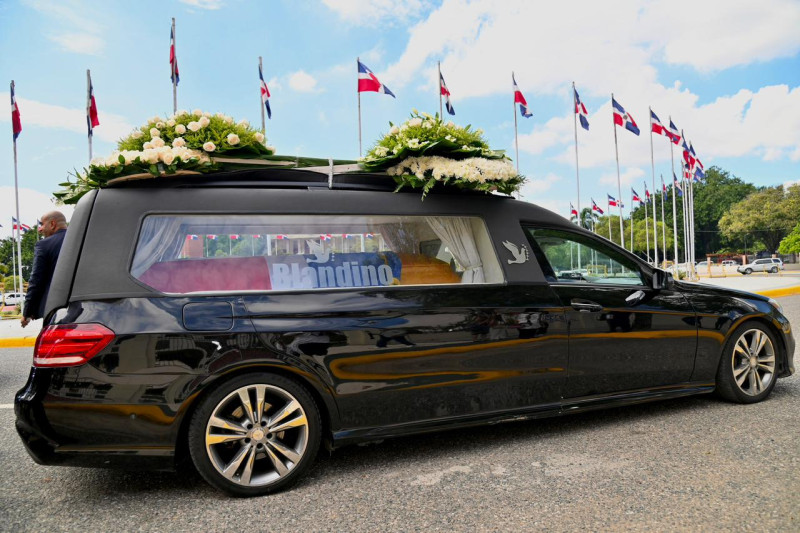
Flags in front of the National Congress do not fly at half-mast despite national mourning
In the wake of the passing of esteemed politician Vicente Sánchez Baret, President Luis Abinader declared this Saturday a day of official mourning. However, a notable deviation from protocol has sparked controversy: the flags at the Centro de los Héroes fountain were not lowered to half-mast, as mandated by Decree 608-25. This decree explicitly requires the National Flag to be flown at half-mast on military and public buildings across the nation during the mourning period. The oversight occurred as the coffin of the late senator was being transported from the National Congress, where President Abinader and congressional members paid their respects. The flags surrounding the fountain, a symbolic site in front of the National Congress, remained fully raised, directly contravening the executive order. Vicente Sánchez Baret, who served as senator for the Sánchez Ramírez province during three separate terms (1986-1990, 1994-1998, and 1998-2002), was widely revered for his unwavering commitment to honesty, transparency, democracy, and social justice. His legacy is particularly cherished in his home province, where he championed national development and equitable progress. Survived by his wife, Yadira Henríquez, former director of the Presidency’s Social Plan, and their three children—Flory, Yessika, and Vicente Sánchez Henríquez, the current representative for District 1 of the National District—Sánchez Baret’s contributions to public service remain a beacon of integrity and dedication.
-
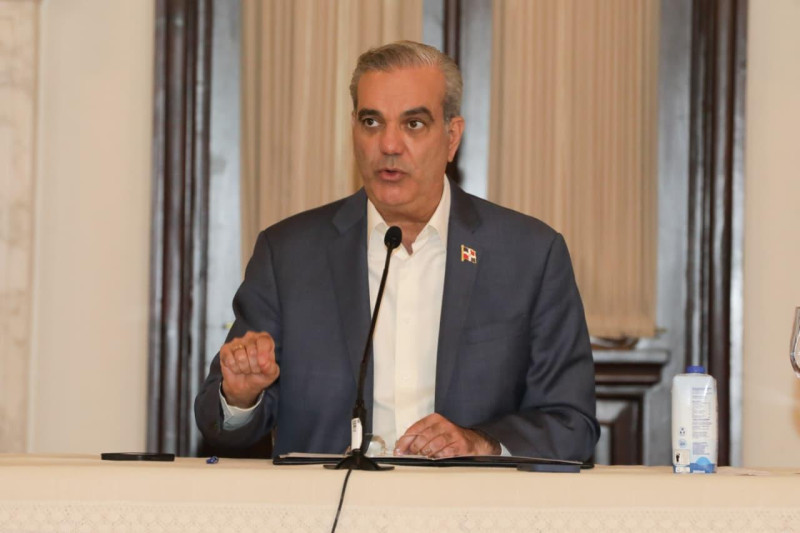
Abinader downplays controversy over exclusions and absences from the Summit of the Americas
Santo Domingo, DR—President Luis Abinader addressed the growing controversy surrounding the exclusion of Venezuela, Nicaragua, and Cuba from the upcoming Summit of the Americas, set to take place in Punta Cana during the first week of December. During a radio interview on Friday, Abinader downplayed the situation, attributing the tensions to political and ideological divisions. He emphasized that such exclusions are not unprecedented and expressed hope for the summit’s success despite the absences of leaders from Mexico and Colombia, who withdrew in protest. Abinader reiterated the Dominican Republic’s commitment to dialogue, democracy, and human rights as the core principles of the summit. The decision to exclude the three nations, announced in September, mirrors the stance taken at the 2022 summit in Los Angeles, where they were labeled as dictatorial regimes. Mexican President Claudia Sheinbaum and Colombian President Gustavo Petro publicly criticized the exclusion, with Petro stating, ‘Dialogue does not begin with exclusions.’ Abinader responded to Sheinbaum’s remarks with a cryptic ‘No comments,’ while reaffirming the summit’s focus on fostering unity and cooperation among the majority of attending nations.
-
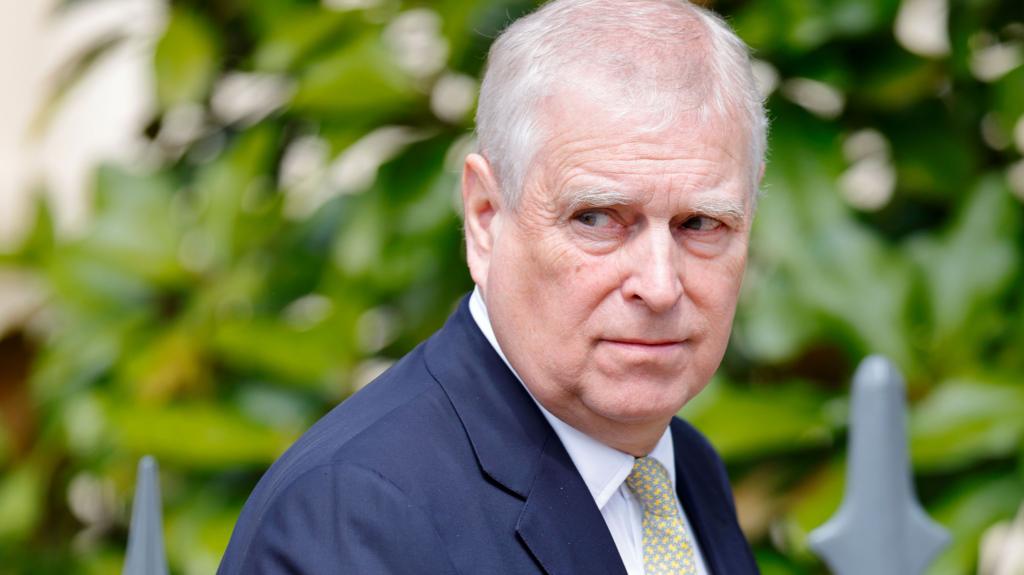
Prince Andrew gives up royal titles after string of scand
In a significant development within the British Royal Family, Prince Andrew has announced his decision to relinquish the use of his royal titles, including the Duke of York, following discussions with King Charles III. The announcement, made on Friday, marks a pivotal moment in the prince’s tumultuous journey, which has been marred by controversies and legal battles.
-
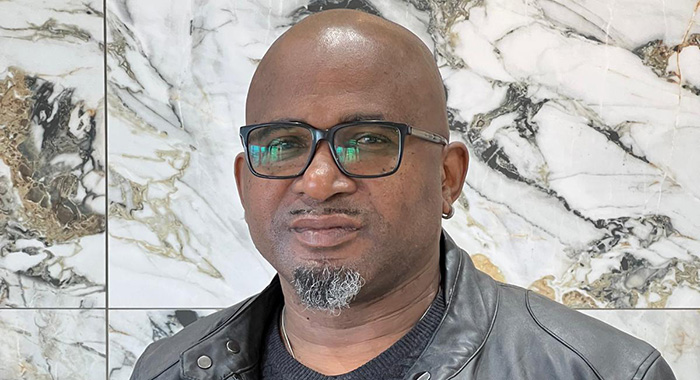
Fitz is right back where he belongs
In a candid reflection on the state of diplomatic relations between St. Vincent and the Grenadines (SVG) and Canada, entrepreneur and construction worker Marlon Bute has expressed his relief at the departure of Fitz Huggins, the former consul general to Canada. Bute, who is deeply committed to self-employment and entrepreneurship, emphasizes the importance of skill acquisition for young people, urging them to learn trades that can ensure both sustenance and prosperity. He sees immense potential for SVG to benefit from Canada’s wealth, innovation, and investment opportunities, but laments that this potential was squandered under Huggins’ leadership. Bute criticizes Huggins for prioritizing political loyalty and self-promotion over fostering meaningful economic partnerships. Instead of attracting substantial Canadian investments, Huggins focused on soliciting donations of corned beef, sardines, and outdated vehicles, which Bute describes as environmentally reckless and symbolically representative of a failed diplomatic vision. The importation of gas-guzzling, decommissioned vehicles, he argues, not only burdens SVG’s fragile environment but also contradicts the nation’s calls for climate action. Bute calls for a more coherent and forward-thinking foreign policy, emphasizing that diplomatic postings should serve as instruments for national development rather than rewards for party loyalty. With Huggins’ departure, Bute hopes for a new era of SVG-Canada relations, led by a capable and visionary diplomat who can unlock the untapped potential of this partnership. He concludes by thanking Canada for ending Huggins’ tenure, marking a long-overdue step toward progress.
-

Make Suriname Shine: diplomatieke opleiding van start
The Ministry of Foreign Affairs, International Trade, and Cooperation (BIS) officially inaugurated the Suriname Diplomatic Course 2025 on Friday, marking the start of an intensive training program for aspiring diplomats and consular staff. Organized by the Suriname Diplomatic Institute (SDI), the initiative is part of a broader strategy to enhance the nation’s diplomatic capabilities.
Miriam Mac Intosh, Director of Foreign Affairs, emphasized that the program focuses on equipping participants with strategic knowledge and skills essential for navigating a complex international landscape. Key areas of training include international relations, negotiation techniques, protocol, cultural sensitivity, and crisis management. “Diplomats must stay abreast of geopolitical developments and represent their country with precision,” she stated.
Minister Melvin Bouva highlighted that the training signifies a new phase in the professionalization of Suriname’s diplomacy. He referenced the foreign policy outlined in President Jennifer Simons’ recent annual address, which prioritizes active, assertive, and economically focused diplomacy. “Diplomats are not mere messengers; they are strategists and bridge-builders. Their mission remains to make Suriname shine,” Bouva asserted.
Additionally, he underscored the importance of strengthening Suriname’s international standing on critical issues such as climate policy, digitalization, cybersecurity, and migration. Bouva also highlighted Suriname’s unique advantage as a carbon-negative country, positioning it as a leader in global environmental efforts.
-
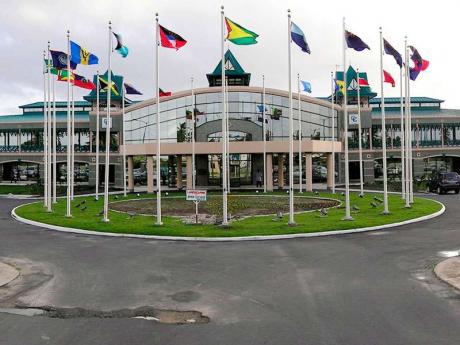
CARICOM leaders, except Trinidad, speak out on US military build-up in Caribbean
Amid heightened security concerns, leaders of the Caribbean Community (CARICOM) have voiced their stance on the United States’ military build-up in the region, emphasizing the need for adherence to international law. The discussions took place during a virtual meeting held on Thursday, where CARICOM Heads of Government reiterated their commitment to combating narcotrafficking and the illegal trade of small arms and light weapons, which pose significant threats to the region. While Trinidad and Tobago chose to reserve its position, other leaders reaffirmed the Caribbean as a zone of peace, stressing the importance of dialogue and peaceful conflict resolution. Guyana’s President Irfaan Ali expressed support for both regional peace and the fight against transnational crimes, including narco-trafficking. Meanwhile, Trinidad and Tobago’s Prime Minister Kamla Persad-Bissessar openly endorsed US military operations targeting narco-terrorists, which have resulted in the destruction of several boats and fatalities in international waters. The US Embassy in Trinidad and Tobago has advised the public to avoid all US government facilities through the weekend due to a heightened state of alert, coinciding with the Hindu festival of Deepavali. CARICOM remains committed to assisting in achieving regional security objectives.
-

PM Says Government Will Repair Its Own Derelict Buildings
Prime Minister Gaston Browne has unveiled a significant initiative aimed at urban renewal and beautification across Antigua. During a parliamentary debate on the Tax Administration and Procedure (Amendment) Bill 2025, Browne emphasized the government’s commitment to restoring its own derelict buildings as part of a broader effort to enhance community aesthetics and enforce property upkeep standards. The Prime Minister stated that the Cabinet had unanimously agreed to prioritize the repair and repurposing of government-owned properties in poor condition, setting a precedent for private property owners to follow. Browne argued that the government must ‘lead by example’ in maintaining public spaces and infrastructure. The initiative is part of a comprehensive urban renewal drive that also addresses abandoned lots, derelict houses, and unkempt government facilities. The goal is to foster cleaner, safer, and more livable neighborhoods while ensuring accountability among both public and private property owners. Browne defended the property tax amendment, which grants authorities enhanced powers to tackle chronic neglect and dereliction, dismissing opposition claims that the bill is overly harsh. He clarified that the legislation targets long-term defaulters and abandoned properties, not ordinary homeowners. This move underscores the government’s dedication to improving the nation’s physical landscape and promoting compliance with property maintenance regulations.
-

Trinidad and Tobago reserves position as CARICOM reaffirms Caribbean as Zone of Peace
The Heads of Government of the Caribbean Community (CARICOM), with the exception of Trinidad and Tobago, have unanimously reaffirmed their dedication to preserving the Caribbean as a Zone of Peace. This declaration comes amidst heightened US military presence in the region, including the deployment of eight warships, a nuclear-powered submarine, and fighter jets, as well as a request to Grenada for the installation of radar and other equipment. Trinidad and Tobago, however, has reserved its position on the matters discussed during the recent meeting.