分类: politics

  • PM: Trinidad and Tobago’s future does not depend on Venezuela gas

    PM: Trinidad and Tobago’s future does not depend on Venezuela gas

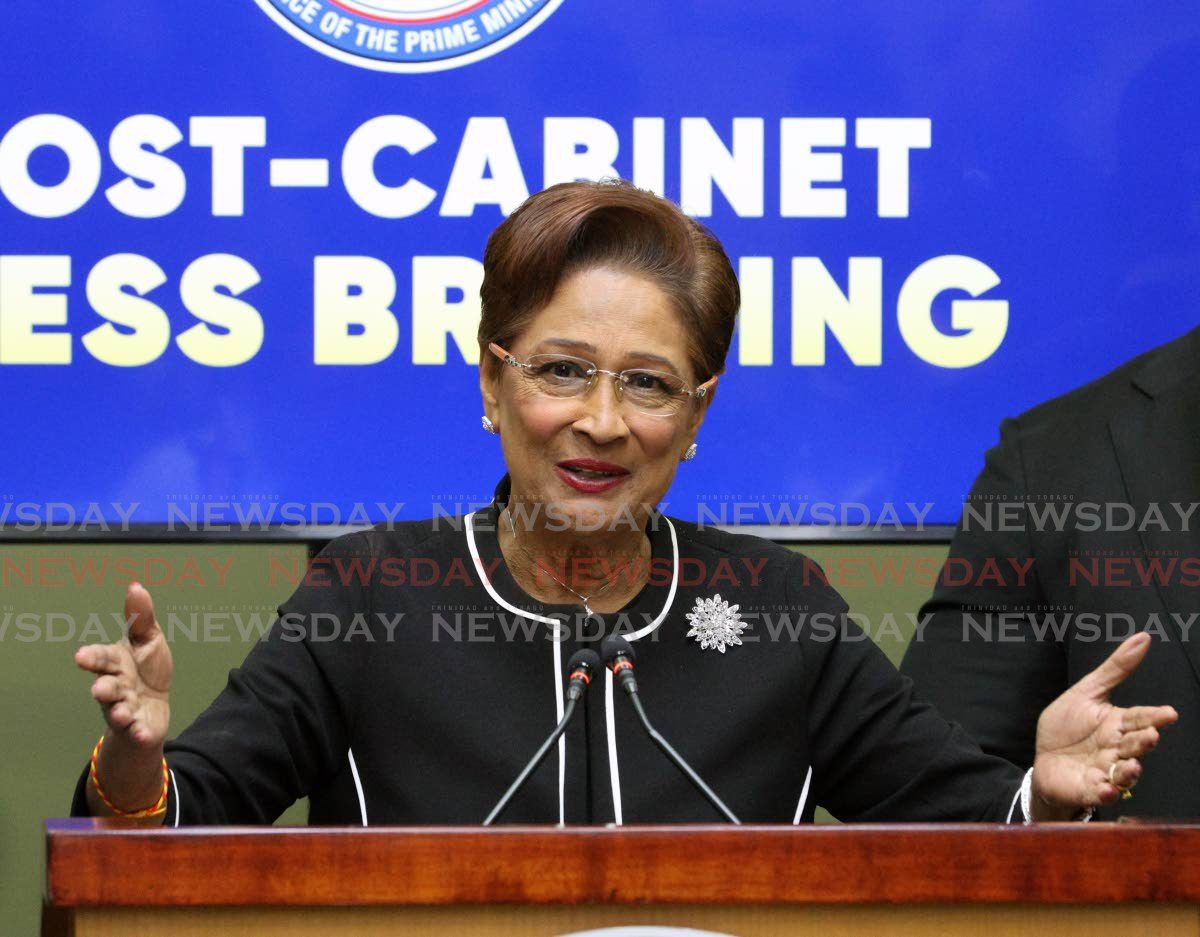
    Prime Minister Kamla Persad-Bissessar of Trinidad and Tobago (TT) remains resolute in the face of Venezuela’s proposal to suspend all gas agreements between the two nations. Speaking to Newsday via WhatsApp on October 27, Persad-Bissessar emphasized that TT’s economic future does not hinge on Venezuela, citing robust plans to diversify the economy across energy and non-energy sectors. She dismissed concerns over Venezuela’s actions, stating, “We are not susceptible to any blackmail from the Venezuelans for political support.”

    Persad-Bissessar also addressed the ongoing fight against drug cartels, vowing that no external entity, including Venezuela, the opposition PNM party, or Caricom, would pressure her government into retreating. She expressed frustration over gang violence fueled by illegal drugs and arms trafficking, which has terrorized TT citizens. Despite these tensions, she reaffirmed that TT maintains peaceful relations with Venezuela.

    The proposed suspension of gas agreements was announced by Venezuelan Vice President and Oil Minister Delcy Rodríguez via state media Telesur. Rodríguez cited “hostile and aggressive actions” by TT, including alignment with the US’s “warrior agenda,” as reasons for the move. She referenced a recent incident involving a group allegedly linked to the CIA, accusing TT of enabling a “false-flag operation” to frame Venezuela. Rodríguez asserted that suspending the agreements was necessary to protect Venezuelan sovereignty.

    TT’s Ministry of Foreign and Caricom Affairs dismissed Rodríguez’s allegations as unfounded, clarifying that the presence of the USS Gravely, an American destroyer, in TT waters was part of a routine joint training exercise with the TT Defence Force. The ministry emphasized that the visit was consistent with longstanding regional security partnerships and denied any provocation.

    Political analyst Dr. Anthony Gonzales warned that unresolved tensions could escalate, urging TT to engage in proactive diplomacy to reassure Venezuela. He stressed the importance of avoiding involvement in the geopolitical struggle between the US and Venezuela, recommending dialogue to diffuse the situation. Former foreign affairs minister Winston Dookeran echoed this sentiment, emphasizing the necessity of diplomacy.

    Historically, TT and Venezuela have maintained a complex relationship centered on energy cooperation, with multiple gas agreements and joint projects. However, the current tensions highlight the fragility of this partnership amid broader geopolitical pressures.
  • Maduro suspends energy agreements with Trinidad and Tobago

    Maduro suspends energy agreements with Trinidad and Tobago

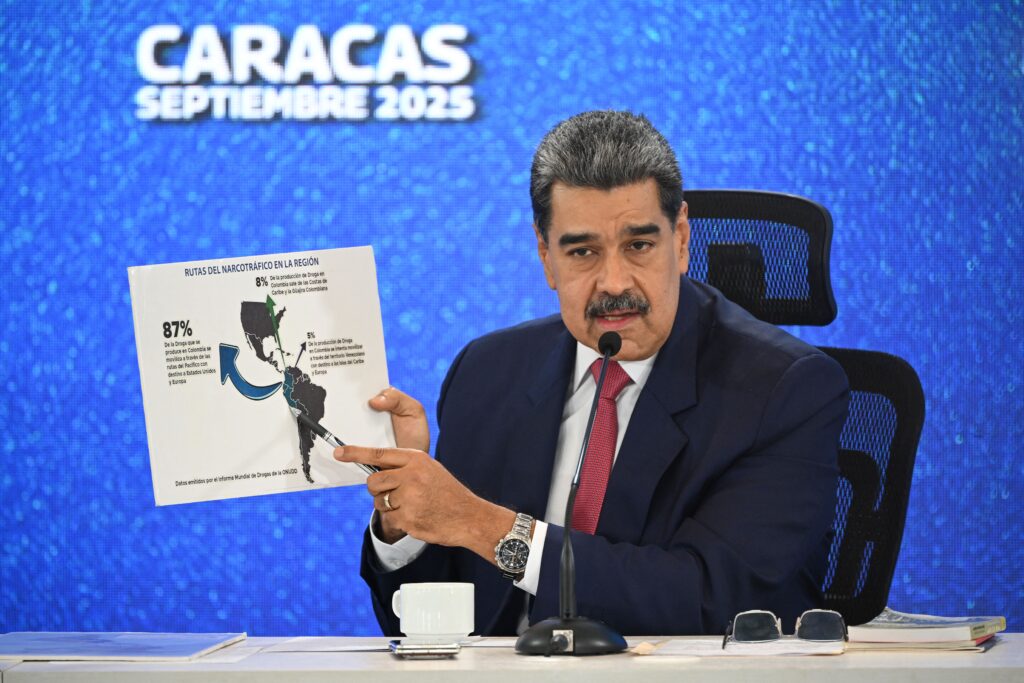
    In a significant diplomatic move, Venezuelan President Nicolas Maduro has declared the immediate suspension of energy agreements with Trinidad and Tobago. This decision follows a formal proposal from Vice President Delcy Rodríguez to halt the Energy Cooperation Framework Agreement with Port of Spain. Maduro, during his weekly television broadcast, accused Trinidad and Tobago of serving as a strategic outpost for the United States, compelling him to terminate decade-old treaties. He claimed that Trinidad and Tobago had exhausted its gas reserves before Venezuela could assist under the agreement. However, Trinidad and Tobago’s Prime Minister Kamla Persad-Bissessar dismissed the suspension, asserting that her country’s economic and energy strategies remain independent of Venezuela. The two nations initially agreed to jointly explore gas reserves in 2018, but the project has been hindered by U.S. sanctions on Venezuela. U.S. Secretary of State Marco Rubio recently expressed support for Trinidad’s Dragon gas proposal but emphasized measures to prevent significant benefits to Maduro’s government. The Dragon gasfield is estimated to hold 119 billion cubic meters of gas. Meanwhile, escalating tensions in the Caribbean have seen increased U.S. military presence, including a nuclear-powered submarine and reconnaissance aircraft, targeting alleged Venezuelan-backed drug traffickers. Venezuela has denied these accusations, labeling U.S. actions as a threat to regional peace. Trinidad and Tobago has openly supported the U.S. operations, with Persad-Bissessar advocating for violent measures against traffickers. Venezuelan Foreign Minister Yvan Gil Pinto condemned the U.S. military threat as illegal and immoral during a United Nations General Assembly address.

  • Pickstock resigns from Senate

    Pickstock resigns from Senate

    In a surprising turn of events, Senator Darron A. Pickstock has announced his immediate resignation from the Senate, just days after being confirmed as the Progressive Liberal Party’s candidate for the Golden Isles by-election. The decision, communicated in a letter dated October 28, 2025, to Senate President LaShell Adderley, was described as the result of “much reflection and prayer.” Pickstock emphasized his desire to shift his focus to grassroots service, stating, “I believe my next chapter is to serve closer to the people, to be on the ground working with families, small businesses, and young people who want to see change that they can touch and feel.”

    The by-election, scheduled for November 24, was necessitated by the passing of former MP Vaughn Miller. In his resignation letter, Pickstock reflected on his tenure in the Senate as one of the “greatest honors” of his life. He expressed gratitude to Prime Minister Philip “Brave” Davis for his trust and to his Senate colleagues for their unwavering support. Pickstock also lauded Senate President Adderley for her leadership, crediting her faith and humility as sources of inspiration.

    Reaffirming his dedication to national progress, Pickstock concluded, “I remain committed to building a Bahamas where hard work opens doors, opportunity is within reach, and faith continues to light our path forward.” His resignation marks a significant shift in his political career, as he prepares to engage more directly with constituents in the upcoming by-election.

  • Appeal Court brings together ‘bail for murder’ appeals

    Appeal Court brings together ‘bail for murder’ appeals

    The Court of Appeal in Trinidad and Tobago has consolidated several pending appeals challenging key provisions of the Bail (Amendment) Act 2024, which significantly altered the bail process for individuals charged with murder. The amendment removed the presumption in favor of bail, requiring accused persons to demonstrate exceptional circumstances to secure release. The Act was introduced to tighten bail restrictions for serious offenses, particularly murder. At a hearing on October 27, Justices Gillian Lucky, Mira Dean-Armorer, and Carla Brown-Antoine highlighted the divergent interpretations of the amended law by High Court judges. To ensure judicial consistency, the appellate panels agreed to hear all related appeals together in early 2026. Justice Lucky emphasized the importance of this issue, noting that attorneys for appellants will have access to submissions from other cases and may file additional arguments by November 30. She also urged lawyers to review the Hansard record, as one of the appeal questions was initially raised in Parliament by the then-opposition. The Chief Justice approved the consolidation of cases, and several legal bodies, including the Public Defenders’ Department, the Law Association, the Criminal Bar Association, and the Office of the Attorney General, will be invited to contribute as interested parties. The Bail (Amendment) Act 2024 was enacted following the Privy Council’s 2022 ruling in Akili Charles, which deemed the previous blanket denial of bail for murder accused unconstitutional. The amended law permits judges to grant bail if exceptional circumstances are proven, imposes a 120-day restriction on bail for serious offenses, and mandates a five-year review of its operation. Courts have since grappled with interpreting Section 5 of the Act, particularly whether it allows bail applications after 180 days in custody or one year without trial without requiring proof of exceptional circumstances. The state maintains that the amendment does not create an automatic right to bail but merely allows applications after a specified period, still requiring exceptional circumstances. Justice Lucky stressed the need for a consistent judicial approach, asking, ‘What is the correct test to be applied?’ Additionally, three appeals against convictions and sentences for various offenses were withdrawn during the hearing, with the judges affirming the convictions and ordering that sentences commence from the dates of conviction. A fourth appeal was also withdrawn.

  • Independent Senator Attzs: Budget falls short of people-centred goals

    Independent Senator Attzs: Budget falls short of people-centred goals

    Independent Senator and economist Dr. Marlene Attzs has raised significant concerns about Trinidad and Tobago’s 2025/2026 national budget, stating that it lacks critical details and may fail to achieve its people-centered objectives. Speaking during the Senate budget debate on October 27, Attzs acknowledged the budget’s ‘Trinidad and Tobago first’ approach as commendable but emphasized that fairness must be the guiding principle in evaluating its policies and priorities. She argued that a credible budget must go beyond good intentions and address pressing issues such as crime, foreign exchange shortages, and rising debt. Attzs highlighted the absence of a target debt-to-GDP ratio and questioned the government’s plan to borrow $18.96 billion, particularly the shift toward foreign borrowing, which could increase costs and exchange risks. She also criticized the closure of social programs like Cepep and URP, which provided employment and environmental benefits, and questioned whether the $475 million unemployment fund in the budget adequately replaces them. Attzs stressed the need for fiscal responsibility and sustainability, warning that borrowing to fund consumption could burden future generations. She called for a comprehensive national employment strategy that includes former Cepep and URP workers.

  • UNC Senator: Healthcare for children, real jobs for adults

    UNC Senator: Healthcare for children, real jobs for adults

    In a spirited defense of the current administration’s policies, Dr. Natalie Chaitan-Maharaj, Parliamentary Secretary in the Ministry of the People, Social Development and Family Services, asserted that the government has significantly outperformed its PNM predecessor in addressing the needs of Trinidad and Tobago’s citizens. Speaking during the Senate budget debate on October 27, Chaitan-Maharaj highlighted a series of initiatives aimed at improving social welfare and economic stability. She criticized the former government for its failure to open the Couva Children’s Hospital for a decade and for voting against the Children’s Life Fund, sarcastically noting that their solution was to decriminalize cannabis for personal use. Chaitan-Maharaj also condemned the PNM for canceling the baby milk grant, a program introduced by the previous UNC government to aid single mothers in distress. She emphasized the current government’s commitment to the most vulnerable, citing the establishment of the National Therapeutic and Resource Centre (NTRC) to provide free therapy for disabled individuals on a larger scale than before. The Parliamentary Secretary accused the PNM of dismantling key educational programs, including the school laptop initiative and reducing allocations for school transport and scholarships. She revealed that the school textbook grant had plummeted from $133 million under the UNC to $33 million under the PNM, and the national school feeding program had seen a drastic reduction in daily meals provided. Chaitan-Maharaj also pointed out the decline in foreign exchange reserves from US$11.4 billion in 2015 to US$5.4 billion under the PNM. She defended the government’s budget projections based on oil and gas prices, dismissing claims of a hidden deficit as baseless fear-mongering. The bank levy and electricity surcharge were justified as measures targeting high earners to fund social programs without burdening the vulnerable. Chaitan-Maharaj announced the replacement of Cepep, URP, and reforestation programs with recruitment drives aimed at providing real job opportunities. She also highlighted the allocation of $5 million to establish a Women’s Health Fund to address period poverty, accompanied by educational programs on menstrual health. The Parliamentary Secretary concluded by outlining an ambitious pipeline of projects for fiscal 2026, all aligned with the National Child Policy, aimed at creating a safer and more empowered future for every child in Trinidad and Tobago.

  • PM: Caricom unreliable, chose Venezuela over Trinidad and Tobago

    PM: Caricom unreliable, chose Venezuela over Trinidad and Tobago

    In a recent televised statement on Crimewatch, Trinidad and Tobago (TT) Prime Minister Kamla Persad-Bissessar expressed her dissatisfaction with Caricom, accusing the regional body of favoring Venezuela over TT. Her remarks came shortly after Venezuelan Vice President Delcy Rodriguez announced that Venezuela would cease energy collaboration with TT, citing alleged aggression due to the presence of a US anti-narcotics fleet in the region. Persad-Bissessar dismissed these claims, asserting that TT does not rely on Venezuelan gas and has diversified its economy through energy and non-energy projects. She also emphasized that TT would not be used as a US military base, despite ongoing joint training exercises with the US aimed at enhancing internal security. The Prime Minister further criticized Caricom for its perceived unreliability, particularly in addressing TT’s challenges with drug trafficking, gang violence, and human trafficking. She also announced plans to extend the state of emergency (SoE) initially declared in July, citing a significant reduction in the murder rate. Meanwhile, Barbados Prime Minister Mia Mottley condemned US military actions in the region, labeling them as extra-judicial killings and calling for adherence to international law. Persad-Bissessar concluded by offering support to TT students in Jamaica affected by Hurricane Melissa and mobilizing aid for the island nation.

  • Prime Minister announces SoE extension on TV show

    Prime Minister announces SoE extension on TV show

    Prime Minister Kamla Persad-Bissessar of Trinidad and Tobago has announced plans to extend the country’s state of emergency (SoE), citing recommendations from the Commissioner of Police. The announcement was made during an interview on the prime-time TV programme *Crime Watch* hosted by Ian Alleyne on October 27. The current SoE, initially declared on July 18 and extended on July 28, was set to expire on October 28. A parliamentary motion to extend it further has been scheduled for debate on October 31, requiring a three-fifths majority in both the House of Representatives and the Senate. The SoE grants law enforcement expanded powers, including the authority to arrest suspects without bail and conduct searches of public and private premises. Additionally, several prisoners have been relocated from the Maximum Security Prison to military bases. The extension comes amid heightened regional tensions, particularly between the United States and Venezuela, though the Prime Minister denied any direct connection to these geopolitical issues. Separately, an unverified document circulating on social media suggests a new policy to detain illegal immigrants at the Immigration Detention Centre in Aripo as part of a potential mass-deportation exercise. The authenticity of the document remains unconfirmed. The Prime Minister also reiterated that Trinidad and Tobago would not serve as a base for U.S. military operations in the region, despite the recent docking of the USS Gravely for training and humanitarian purposes.

  • Etienne tells government: Level with public on hardship to come

    Etienne tells government: Level with public on hardship to come

    Independent Senator Alicia Pauline Lalite-Ettienne has urged the government to be transparent with the public about the challenging times ahead, as she sharply criticized the 2026 budget for its contradictory measures. Speaking during her first contribution to the Senate budget debate on October 27, Lalite-Ettienne likened the budget to a Christmas tree adorned with glitter, yet warned that not all that glitters is gold. She acknowledged that the budget’s optimistic language might provide hope to a population in need, but emphasized that many of its policies would ultimately burden citizens by raising the cost of living. Lalite-Ettienne highlighted specific measures, such as a $1 reduction in the price of super gasoline, which she dismissed as a distraction from broader tax increases. She pointed to new levies on banks, insurance companies, and electricity, as well as increased fees and excise duties, which she argued would reduce disposable income for citizens. The senator also criticized the government’s abrupt termination of contracts under the Community-Based Environmental Protection and Enhancement Programme (Cepep) and the Unemployment Relief Programme (URP), calling for transitional measures to support affected workers. She stressed that while the government promised full-time employment as a replacement, immediate action was needed to prevent hardship. Lalite-Ettienne concluded by urging the government to be upfront about the economic challenges ahead, rather than masking them with superficial benefits.

  • Happy for the USS Gravely’s visit

    Happy for the USS Gravely’s visit

    The USS Gravely, a US naval warship, has docked at the Port of Port of Spain for a five-day visit to Trinidad and Tobago (TT), concluding on October 30. This visit is part of joint training exercises with the Trinidad and Tobago Defence Force (TTDF), aimed at enhancing tactical readiness, operational efficiency, and maintaining international standards of excellence. However, the Opposition has raised concerns, labeling the visit as a threat to national sovereignty and security. In a letter to the editor, Leisha S. Dhoray strongly condemns the Opposition’s stance, describing it as misguided, irresponsible, and unpatriotic. Dhoray argues that the Opposition’s reaction is based on fear-mongering and misinformation, with no evidence to support their claims. She highlights the positive outcomes of previous US-TT defense collaborations, such as the Tradewinds 2025 exercise and the USNS Comfort’s medical mission, which brought free healthcare to hundreds of citizens. Dhoray emphasizes that the USS Gravely’s visit is a continuation of constructive defense cooperation, aimed at advancing regional security, strengthening defense partnerships, and building mutual trust. She calls on the Opposition to support initiatives that strengthen national security and global partnerships, rather than engaging in reckless political grandstanding.