
In early September, Haiti’s Embassy in France partnered with the Diplomatic and Consular Academy of France’s Ministry for Europe and Foreign Affairs to host a multi-day event series celebrating Haiti’s impact on world history, as part of the second edition of the academy’s signature “The Making of Diplomacy” initiative. Held across September 5 and 6, the gathering brought together scholars, diplomats, and culture enthusiasts for three core components: an academic roundtable, an interactive dance workshop, and a beginner’s session on Haitian Creole. The event’s central mission was to reframe public understanding of Haiti, pushing back against one-dimensional narratives that often reduce the Caribbean nation to crisis and overlook its foundational contributions to global progress.
分类: other
-
What Replaces CFE? Belize Looks to “Distributed Generation”
For nearly 30 years, Belize has relied on imported electricity from Mexico’s state-owned power utility Comisión Federal de Electricidad (CFE) to meet its domestic energy needs. What began as a supplementary power source has now turned into a crippling dependence, accompanied by a mounting $30 million outstanding debt for the imported energy that threatens the stability of Belize’s entire power sector.
Dr. Leroy Almendarez, Chief Executive Officer of Belize’s Public Utilities Commission, explained the root cause behind the ballooning debt: the full cost of imported power has never been properly passed through to end consumers. Under standard energy sector pricing models, the cost of procured power is supposed to be transferred directly to customers, meaning the utility should recover exactly what it pays for wholesale energy. But for years, this mechanism has failed in Belize.
The gap between what the national utility BEL pays to its two core suppliers – CFE and domestic provider Hydro Belize – and the revenue it collects from customer bills has compounded year after year. “If you buy power for ten dollars per unit but consumers only pay a lower rate, that variance doesn’t disappear – you still have to pay the full procurement cost to your supplier, so the unpaid amount just keeps growing,” Almendarez elaborated.
Compounding the debt crisis, Belize’s domestic electricity demand continues to climb, while imported supply from Mexico is increasingly unreliable, often falling short of what Belize needs to keep its grid running. In response, Belize’s Cabinet has issued an emergency declaration over the projected national electricity shortfall, and policymakers are now pursuing a radical shift: growing domestic power generation to replace reliance on Mexican imports.
The centerpiece of Belize’s new energy strategy is expanded distributed generation, with a focus on utility-scale and small-scale solar power paired with grid-scale battery energy storage. This model, which spreads generation across multiple local sites rather than relying on large centralized imported supplies, would feed more locally produced power directly into the national grid, drastically cutting pressure to import energy from CFE.
Almendarez emphasized that battery storage is a non-negotiable component of this expansion. Intermittent renewable sources like solar only generate power when the sun is shining, so without adequate storage capacity to hold excess energy for dispatch during peak demand or low-generation periods, the distributed generation model cannot deliver consistent, reliable power. As Belize moves forward with new procurement processes for additional generation capacity, the transition to distributed renewables is positioned to reshape the country’s energy future and resolve its long-standing import dependency and debt crisis.
-
The Push Beyond Mexican Electricity
For nearly 30 years, Belize has relied on imported electricity from Mexico’s state-owned power utility Comisión Federal de Electricidad (CFE), a relationship that began as a supplementary power solution but has morphed into an unsustainable fiscal and energy challenge. Today, the small Central American nation carries a $30 million outstanding debt for imported power, driven by long-standing gaps between procurement costs and what consumers are actually charged for electricity.
Dr. Leroy Almendarez, Chief Executive Officer of Belize Public Utilities, explained that the core issue stems from a failure to implement the long-standing “cost pass-through” model that governs utility pricing. Under standard industry practice, the full cost of purchased power is passed directly from the utility to end consumers, with no markup or absorption by the provider. For years, this model was not enforced in Belize, creating a persistent variance between what the country’s main utility BEL pays its two primary power suppliers — CFE and domestic provider Hydro Belize — and the revenue it collects from customer billing.
Over time, that small annual gap has compounded, ballooning into the nine-figure debt Belize now confronts. “If you buy power for ten dollars per unit but consumers only pay a lower rate, you never recover the full cost of the energy you’ve procured,” Almendarez noted. “That unpaid amount just builds up year after year, but you still have an obligation to pay your supplier for the power you purchased.”
Compounding the debt crisis is a growing energy security challenge: domestic demand for electricity continues to climb, and imported power from Mexico is increasingly unable to meet Belize’s peak energy needs at critical times. In response, Belize’s government has issued an emergency declaration over the country’s projected near-term electricity shortfall, opening the door for a sweeping shift in national energy strategy that prioritizes expanding domestic power generation.
At the center of the country’s new approach is a push for distributed generation, a model centered on small-scale, local production including solar photovoltaic panels paired with grid-scale battery energy storage. Unlike large centralized power plants, distributed generation spreads production across multiple sites, feeding power directly into the national grid to reduce reliance on cross-border imports. The strategy is designed to both cut the growth of import debt and shore up the country’s energy independence.
Almendarez emphasized that battery storage is a non-negotiable component of this expansion, as variable renewable energy sources like solar only generate power during daylight hours. Without adequate storage capacity to capture excess solar production for later dispatch during peak evening demand, the new domestic generation capacity will fail to resolve Belize’s supply gaps. As the country moves forward with procurement for new generation projects, the transition to local distributed energy is poised to reshape Belize’s energy landscape for decades to come.
-

INDEX opens 2026 “Footprints of My Quisqueya” short film contest
The Institute of Dominicans Abroad (INDEX) has officially kicked off the fifth iteration of its beloved “Footprints of My Quisqueya” short film competition, opening a call for creatives across the global Dominican diaspora to share their unique perspectives and audiovisual work with the world. This long-running initiative is designed specifically to give Dominicans and their descendants living outside the Dominican Republic a dedicated platform to craft and showcase narratives that honor their relationship to their ancestral home. More than just a creative contest, it works to foster ongoing connection between diaspora communities and the cultural roots of the Dominican Republic, inviting creators to explore themes of identity, inherited tradition, lived experience abroad, and the enduring bonds that tie diaspora communities back to Quisqueya.
Eligibility requirements are clearly defined for interested participants to streamline entry. All applicants must be 18 years of age or older, hold legal immigration status in their current country of residence, have resided outside the Dominican Republic for a minimum of one full year, and identify as either a Dominican citizen or a descendant of Dominican people. To accommodate a wide range of experience levels, the competition is split into two distinct tracks: one for amateur creators and one for professional independent filmmakers, allowing emerging and established talent alike to participate.
Creators hoping to take part have an extended window to prepare and submit their work: all registration forms and required supporting materials must be submitted by 6:00 p.m. local Dominican Republic time on November 9, 2026. Full official rules, eligibility details, and step-by-step registration instructions are posted exclusively on INDEX’s official website, listed under the dedicated “Footprints of My Quisqueya” competition page.
This year’s edition is backed by a strong coalition of domestic Dominican institutional and private partners. Leading national bank Banco BHD serves as the competition’s primary sponsor, with additional strategic support from the General Directorate of Cinema (DGCINE), the largest regional theater chain Caribbean Cinemas, and a panel of contributing representatives from across the Dominican domestic film industry. Drawing on the success of previous competitions, which drew international entries from diaspora communities across the globe, the fifth edition continues the initiative’s core mission: strengthening cross-border cultural ties between the Dominican Republic and its far-flung global diaspora through the power of visual storytelling.
-

Govt plans surveillance investment to bolster animal disease response
Barbados is moving forward with an ambitious, multi-million-dollar focused investment initiative to upgrade national disease surveillance, testing, and monitoring systems across the entire animal and food production sectors, as the country ramps up preparedness to fend off potentially catastrophic transboundary disease outbreaks, the Ministry of Agriculture announced Tuesday.
Opening a technical workshop focused on building rapid response protocols for African Swine Fever (ASF) at the Hilton Barbados Resort, Agriculture Minister Dr. Shantal Munro-Knight emphasized that robust diagnostic and surveillance capabilities are non-negotiable to safeguarding three core national priorities: national food security, active agricultural trade, and the livelihoods of thousands of working smallholder farmers across the country.
Dr. Munro-Knight outlined the current context of Barbados’ pork industry, noting that the nation slaughters between 25,000 and 30,000 hogs annually to meet domestic demand – a figure that has fallen from a peak of roughly 50,000 head in prior years. “That volume represents a significant share of the pork consumed by Barbadians each year,” she explained, adding that the country also imports approximately $1.5 million USD in raw pork products annually for domestic processing.
ASF, a highly contagious transboundary animal disease with no currently available vaccine for widespread use, would deliver irreversible harm to small-scale producers and the many Barbadians whose incomes depend directly on the agricultural sector, the minister warned. She reframed the issue of animal disease preparedness as a matter of national critical importance, rather than an isolated agricultural concern, pointing out that smallholder producers form the cultural and economic foundation of Barbados’ agri-food system.
“We recognize the deep interconnectedness between animal health, national food security, agricultural investment, and cross-border trade – but at its core, this work is about protecting people’s livelihoods,” Dr. Munro-Knight said. “The devastation an ASF outbreak would bring to small pig farmers, who are the backbone of our agri-food sector for historical and cultural reasons, elevates this from a niche agricultural issue to a national priority.”
The government has already finalized an investment portfolio for the preparedness initiative, which includes plans to secure financing for a brand-new, modern slaughterhouse. Additional investments will target expanded testing capacity through comprehensive upgrades and expansion of both the national veterinary laboratory and the Government Analytical Services facilities. Dr. Munro-Knight noted that building robust in-region biosecurity and diagnostic infrastructure is a core strategic goal for Barbados, and the country has previously underinvested in the proactive surveillance, data collection, and reporting systems needed to respond quickly to emerging disease threats.
Beyond animal health, the minister also highlighted gaps in crop traceability systems across the country, admitting that Barbados still lags behind many other nations in adopting modern traceability tools for crop production. “Even in our crop sector, we are playing catch-up to systems that other countries have already integrated into their production chains,” she said. “We are now actively working to develop and roll out improved crop traceability frameworks that align with international standards.”
Dr. Munro-Knight emphasized that collaborative regional and international partnerships will play an indispensable role in strengthening Barbados’ ability to respond to emerging animal health threats, but she noted that any successful collaboration must center Barbados’ specific national priorities. “Partners must align their support with our national priorities, not their own,” she said. “They need to bring practical, actionable solutions and pathways that advance our agenda, no one else’s. At this critical juncture for our region and the entire globe, strong, aligned partnerships are the only way we can make meaningful progress.”
-
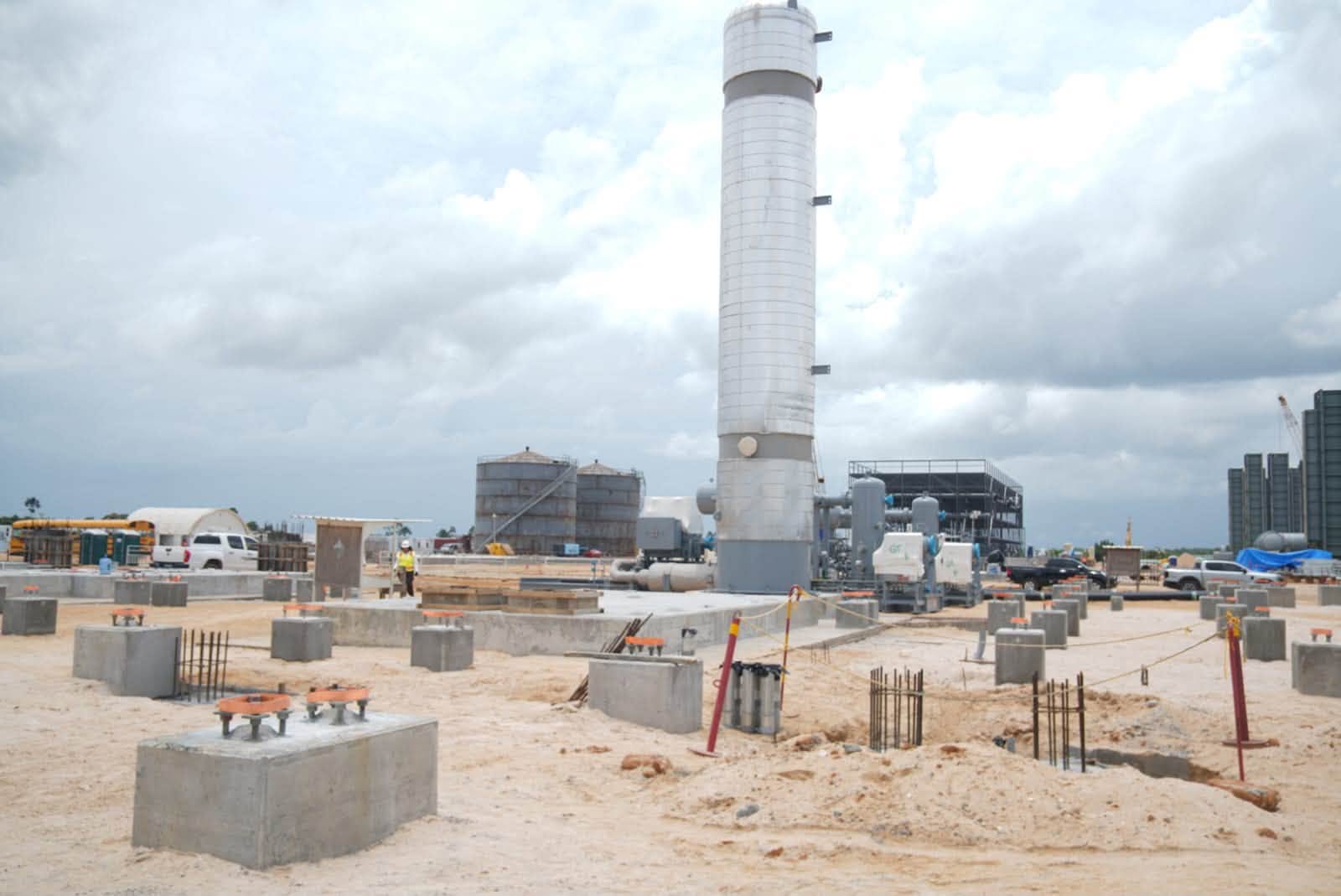
Wales gas-to-energy plant for testing in another three months
Guyana’s landmark Wales gas-to-energy facility is moving full speed ahead toward its first operational test, with the initial turbine firing scheduled to take place between December 1 and December 10, 2026, Public Utilities Minister Deodat Indar confirmed in a Facebook video address posted Tuesday. The $759 million integrated energy project is poised to deliver critical new generation capacity to Guyana’s strained national grid, which has faced unprecedented pressure amid an extended, intense El Niño-driven dry season and heatwave that has sent residential and commercial electricity demand soaring.
Once initial testing wraps up, the government expects the first 57 megawatts of power from the plant to enter the national grid, as part of the facility’s total planned 300 megawatt output. Indar explained that the “first-fire” milestone will mark the first time natural gas is fed through the plant’s infrastructure to ignite the first turbine, a critical pre-operational step before full commissioning and handover to the Guyanese government. The minister made the announcement alongside updates from a recent site visit he conducted alongside Prime Minister Mark Phillips, as authorities prioritize accelerating the project’s launch to offset spiking power consumption.
The country’s main power utility, Guyana Power and Light (GPL), confirmed in a briefing Monday that while total generation capacity currently meets baseload demand, peak-time use of cooling equipment such as air conditioners and fans has created unexpected strain on the grid’s transmission feeders. Indar emphasized that this urgent capacity gap is why the government is prioritizing the Wales plant’s progress, noting that daily and monthly demand spikes have become increasingly difficult to manage amid the ongoing heatwave. “People are using a lot more electricity across the country right now, and we have to step up to meet that growing demand,” Indar stated in the 4-minute-47-second video address.
To date, independent media representatives have not been granted access to the construction site on Wales, West Bank Demerara. Guided tours of the facility have been limited exclusively to government officials, private sector leaders, and international visitors. Beyond power generation, the integrated project also includes a purpose-built natural gas liquids plant designed to produce cooking gas for both domestic Guyanese consumers and export markets across the Caribbean. Government officials have also signaled that the project’s natural gas output could pave the way for new downstream industrial investment, particularly in domestic fertilizer production to support Guyana’s growing agriculture sector.
-

Stralende ochtend met kans op regen in de middag
The Meteorological Service of Suriname has released its daily weather forecast for September 8, outlining a day of shifting conditions that starts with warm, sunny weather and ends with scattered severe thunderstorm activity across much of the country.
The day will open with largely dry conditions and abundant sunshine across most regions, though patchy light fog will reduce visibility in some low-lying areas through the early morning. Temperatures will climb rapidly as the morning progresses, reaching between 32°C and 35°C by midday. In direct sunlight, the heat index will push perceived temperatures even higher, hitting roughly 37°C. With the UV index reaching extremely high levels for the day, officials are urging anyone planning to spend extended periods outdoors to apply high-factor sunscreen and take regular breaks in shaded areas to avoid sun damage or heat-related illness.
Winds will be calm through the early part of the day, with a light easterly breeze registering at force 3 or lower on the Beaufort scale.
Starting in the afternoon, the weather pattern will gradually shift. Intense daytime heating of the land surface will create atmospheric instability, creating conditions ripe for localized rain showers and thunderstorms to develop across every region of the country. The national meteorological service warns that some of these storm cells could bring severe conditions, including heavy downpours, frequent lightning, and gusty winds.
Coastal districts including the capital Paramaribo are expected to stay drier than inland areas through the afternoon, but residents there still face a real chance of seeing a passing storm. Inland regions such as Stoelmanseiland and Kabalebo are likely to see the most intense precipitation, while the Langa tabbetje area will see mostly cloudy conditions with a moderate chance of scattered showers.
Overnight after the storms pass, temperatures will cool to between 22°C and 25°C. Thunderstorm activity will gradually move out of the region, but patchy fog is expected to develop in some locations through the overnight hours.
-
$5.2 Million Plan Approved to Protect Belize’s Sugar Industry
In a decisive move to protect one of the nation’s key agricultural sectors, the Government of Belize has greenlit a $5.2 million emergency program designed to combat an expanding mealybug infestation that threatens sugarcane output and the livelihoods of cane farmers across northern Belize.
The cost of the intervention will be split evenly between public and private stakeholders: the government is contributing $2.56 million in the form of a grant, while farming communities will cover the remaining $2.56 million through structured deductions from cane delivery payments spread across four upcoming crop cycles. This shared funding model reflects a collaborative commitment to resolving the crisis that impacts all actors along the sugar supply chain.
Oversight and implementation of the program will be led by the Sugar Industry Research and Development Institute (SIRDI), which has partnered with the country’s four major cane producer associations and Belize Sugar Industries, a subsidiary of the ASR Group, to execute the pest control campaign. The initiative targets a total of 100,000 acres of sugarcane land, encompassing active growing plots, fields slated for imminent harvest, and areas scheduled for replanting.
To maximize effectiveness in slowing the pest’s spread, the treatment will be rolled out in two separate application phases, each covering 50,000 acres. According to official planning, all scheduled pest control treatments are set to be finished within a two-month window. This accelerated timeline is intentional, designed to rapidly contain the infestation before it can spread to additional growing regions and cause irreversible production declines.
This emergency intervention comes amid a period of sustained pressure on Belize’s sugar industry, which has already been grappling with a cascade of challenges including shrinking overall output, recurring pest and disease outbreaks, widespread labor shortages, and steadily rising input and operational costs. Industry analysts have flagged the mealybug infestation as an especially urgent threat, as the pest feeds on sugarcane sap, weakening plants and reducing both yield and crop quality if left untreated.
Government officials emphasize that the primary goals of the emergency program are threefold: eliminate the existing mealybug infestation at scale, preserve the current productivity of Belize’s sugarcane lands, and secure the long-term economic sustainability of the northern region’s sugarcane sector, which supports thousands of livelihoods across rural communities.
-

Banreservas and FAO launch RD$1.18 billion financing program to modernize Dominican agriculture
A landmark new collaboration between three key institutions is set to drive transformative change across the Dominican Republic’s agricultural landscape, launching a $20 million (RD$1.18 billion) targeted financing mechanism to advance sector modernization and resilience. The partnership brings together the Dominican Republic’s central financial institution, Banreservas, the United Nations Food and Agriculture Organization (FAO), and the national Ministry of Agriculture to tackle longstanding challenges and build on the country’s recent progress in food security.
Under the terms of the agreement, each partner brings unique strengths to the initiative: Banreservas will anchor the effort by providing the core financing, the Ministry of Agriculture will ensure all funded projects align with the country’s established national agricultural development priorities, and the FAO will contribute decades of global technical expertise and cross-border best practice. In addition to financial backing, the partnership will grant project stakeholders direct access to FAO’s network of top national and international agricultural specialists, who will deliver targeted technical support across a range of critical areas, including sustainable crop and livestock production, climate-resilient agricultural innovation, and structured agricultural investment planning.
The funding will be allocated to projects that advance a shared set of priorities, with a focus on expanding farm mechanization, scaling next-generation agricultural technologies, improving the efficiency of water and natural resource management, building adaptive capacity to climate change, and boosting overall sector productivity. Eligible project proposals include everything from precision agriculture systems and new productive agricultural infrastructure to advanced water management frameworks, on-farm renewable energy deployment, post-harvest food loss reduction, and end-to-end value chain development – all designed to lift the sector’s competitiveness and operational efficiency. The mechanism is also structured to address pressing systemic challenges facing Dominican agriculture, from widespread labor shortages and growing climate-related disaster risks to the urgent need for broad-based productivity gains.
This investment comes at a pivotal moment for the Dominican Republic, which has already achieved landmark progress in eliminating hunger. According to FAO data, the country cut the prevalence of undernourishment to less than 2.5% by July 2026 – a threshold low enough that the Dominican Republic will no longer be listed on the UN body’s global Hunger Map. The new partnership is designed to lock in these hard-won food security gains while driving long-term sector transformation.
Francisco Oliverio Espaillat Bencosme, the Dominican Republic’s Minister of Agriculture, called the partnership a tangible, game-changing step toward accelerating the modernization and mechanization of the country’s farms. “We are building a more modern, productive, profitable and competitive agriculture,” Espaillat Bencosme noted, adding that expanded access to affordable financing, cutting-edge technology, targeted training, and expert technical support will empower local producers to raise output, cut operational costs, and mitigate the impact of persistent labor shortages. He emphasized that broader technology adoption will also reinforce the country’s ongoing progress in protecting and expanding food security for all Dominican residents.
The financing mechanism launches with an initial allocation of approximately RD$1.18 billion, with built-in flexibility to expand funding in the future to support additional high-impact investments across the country’s agri-food sector. The entire initiative is aligned with the FAO’s globally recognized “Four Betters” framework: better production, better nutrition, a better environment, and a better life. Moving forward, the three partner institutions will work to translate this funding and expertise into tangible, lasting progress, building a more sustainable, efficient, and food-secure future for the Dominican Republic.
-

Bedrijfsleven wil 10 tot 15 MW extra zonne-energie realiseren
Suriname is facing a persistent and worsening national electricity crisis that has forced ongoing rolling blackouts for businesses and households, with peak-hour power deficits exceeding 30 megawatts (MW) amid drought-related strain on hydropower infrastructure. In response to the emergency, the country’s private sector has launched a collaborative initiative alongside financial institutions and the national government to add 10 to 15 MW of new generating capacity, leaning into expanded solar power paired with battery storage to let businesses meet a large share of their own energy demand.
The urgent plan was formally presented during an emergency emergency consultation convened by the Suriname Energy Chamber (SEC) on Thursday at Paramaribo’s Het Park venue. Stakeholders in attendance included representatives from national utility giant N.V. Energiebedrijven Suriname (EBS), energy regulator the Energie Autoriteit Suriname (EAS), private industry associations, civil society groups, organized labor, and independent energy experts.
SEC Chair Orlando Olmberg emphasized that the country’s long-running electricity shortages can no longer be addressed through fragmented, siloed action. He argued that sustained, structural solutions will only emerge from coordinated collaboration between the national government, the formal energy sector, financial institutions, and private industry.
Meeting participants unanimously confirmed that ongoing rolling blackouts have inflicted widespread, significant economic and daily harm to both commercial operations and residential households. In the current crisis, EBS is forced to continuously monitor real-time consumption to prevent the entire national grid from collapsing under unsustainable strain.
A core pillar of the private sector’s proposal is expanding on-site self-generation for businesses, with a primary focus on solar energy integrated with utility-scale Battery Energy Storage Systems. Battery storage allows excess solar power generated during off-peak daylight hours to be stored and deployed during periods of high grid demand, reducing strain on the centralized network. Negotiations with the national government, EBS, and financing partners are now underway to finalize the regulatory and financial terms that will enable the private sector to deliver the targeted 10 to 15 MW of new capacity. The SEC confirmed that multiple private companies have already advanced project planning for an initial pipeline of developments that would deliver roughly 2 MW of capacity in the near term.
EAS representative Anand Kalpoe echoed the broad consensus that rapid expansion of national generating capacity is a non-negotiable priority. Meeting participants also called for the release of reliable, up-to-date, audited data for the entire energy sector, including EBS’s full annual reports and clear disclosures of actual operational generating capacity across the country’s infrastructure. Stakeholders also put forward a proposal to open up more space for private investors to develop power generation from alternative energy sources, under a model that would keep distribution operations under EBS control while allowing multiple independent power producers to supply the national grid. Energy experts noted that any market restructuring would need to account for the country’s existing energy subsidy regime and current tariff structure to avoid unintended harm to consumers.
The urgent push for new capacity is also driven by projected growth in electricity demand that will exacerbate existing shortages without proactive action. Business associations including ASFA, SHATA, AKMOS, KKF, VES, and the Suriname Business Forum have agreed that businesses will share early projections of their future energy needs to support long-term grid planning. Planned tourism development alone, which includes the construction of 6 to 9 new hotels, is projected to require at least 10 MW of additional generating capacity. Without timely, targeted planning, this new demand will only increase pressure on an already overstretched electricity system.
A small technical working group of energy experts has now been convened to assess how the private sector and government can deliver the new capacity in the shortest possible timeline, integrating both near-term business demand projections and the government’s existing long-term structural energy plans into the final framework.
Meeting participants stressed that expanding generation alone will not be enough to resolve the crisis; energy conservation must also be a core component of the national response. The proposal calls for the national government to develop and publish a national energy conservation plan within 2 to 3 months, with regular monitoring to ensure conservation targets are met.
Proposed conservation measures include turning off unnecessary air conditioning units in public and commercial spaces, and outfitting the rooftops of all government buildings with solar panels to offset public sector energy demand. Participants also called on the national government and all parastatal organizations to settle their outstanding unpaid utility debts to EBS, which have strained the utility’s ability to maintain and expand infrastructure. Organized labor additionally called for greater transparency around water management for the key Afobaka Dam, which has seen its hydropower output constrained by ongoing drought that requires careful stewardship of remaining water reserves. Labor has also urged residential consumers to adopt intentional, reduced energy use during peak demand periods to ease strain on the grid.
Short-term emergency measures are designed to lay the groundwork for broader, long-term reform of the entire electricity sector. The SEC confirmed that the government is currently finalizing a national Electricity Sector Plan, which will set a clear strategic direction for the future development of the country’s electricity supply. Olmberg emphasized that the emergency consultation must now be followed up with binding concrete agreements and immediate implementation. The cumulative economic damage caused by repeated rolling blackouts makes it essential, he argued, for government and industry to not only pursue temporary fixes but also invest in sufficient long-term generation capacity to support sustained economic growth.