分类: other

  • Gold Museum in Cotuí advances with US$1.3 million investment from Barrick Pueblo Viejo

    Gold Museum in Cotuí advances with US$1.3 million investment from Barrick Pueblo Viejo

    In the Dominican province of Sánchez Ramírez, a landmark cultural initiative is taking shape: the construction of the Cotuí Gold Museum, a joint project between mining giant Barrick Pueblo Viejo and the Dominican national government, is progressing steadily on schedule. Backed by a total investment of $1.3 million, the project was conceived to fill a long-standing gap in preserving the region’s deep-rooted mining heritage while creating a dynamic educational and cultural hub for both locals and visitors.

    Once completed, the museum will tell the comprehensive story of gold mining in Cotuí, spanning from early extraction practices to modern commercial operations. Exhibits will highlight the region’s extraordinary geological mineral wealth, trace the evolution of mining technology, and examine how mining activity has shaped the social structure and economic trajectory of the province for generations. The initiative aligns with a national strategy to strengthen local cultural identity and expand cultural tourism offerings across the country, and has received formal backing from three key government bodies: the Ministry of Industry, Commerce and MSMEs, the General Directorate of Mining, and the Ministry of Culture.

    Last week, a delegation of senior government officials and Barrick Pueblo Viejo executives conducted an on-site inspection of the construction progress. Both parties commended the construction team for adhering to high quality standards and keeping the project aligned with its original timeline. Project stakeholders project that the museum will become a magnet for cultural tourism, draw visitors from across the Dominican Republic and beyond, serve as a hands-on educational resource for local schools, and drive inclusive, long-term economic growth for the entire Sánchez Ramírez province. According to the current construction schedule, the museum is on track to be finished between mid-December and late December of this year, opening its doors to the public just before the holiday season.

  • WEATHER (6:00 AM, May 13, 2026):

    WEATHER (6:00 AM, May 13, 2026):

    Over the next full day, stable atmospheric conditions will remain the primary driver of regional weather, shaped by a persistent high-pressure system that anchors the overall pattern. As fragmented cloud masses drift with prevailing wind currents, the sky will range from partially overcast to fully cloudy, accompanied by scattered rain showers. Some of these showers may intensify into moderate or even heavy downpours, with the highest concentrations forecast for early morning hours and overnight. For residents living in zones prone to flash flooding, mudslides, and falling rock debris, local weather officials urge constant vigilance and proactive safety measures to avoid risk.

    Later this evening, the region will also see a thin, diffuse plume of dust carried from the Sahara Desert reach the island. While the concentration is not expected to be severe, individuals with pre-existing respiratory conditions or heightened sensitivity to airborne particulates are advised to take appropriate protective steps, such as limiting prolonged outdoor exposure and keeping indoor air filtered.

    Looking at marine conditions, wave heights will stay relatively mild through most of the next 24 hours, ranging from small to moderate across surrounding waters. Off the eastern coastline, waves are projected to build to a maximum of 7 feet, while the western coast will see calmer swells averaging around 3 feet. However, overnight tonight, sea conditions will deteriorate slightly: eastern coast waves are expected to climb to nearly 8 feet, and western coast swells will rise to roughly 5 feet. Operators of small recreational and commercial vessels, as well as people planning to swim in open waters, are advised to maintain extra caution and avoid venturing too far from shore.

    In a separate update on broader Atlantic tropical activity, meteorologists are continuing to track a third tropical wave that is currently moving across the eastern portion of the tropical Atlantic. No immediate development has been projected for the system at this time, but monitoring remains ongoing to track any changes in its strength or trajectory.

  • Classic 1893 UK Grand Piano Donated to Government House Museum

    Classic 1893 UK Grand Piano Donated to Government House Museum

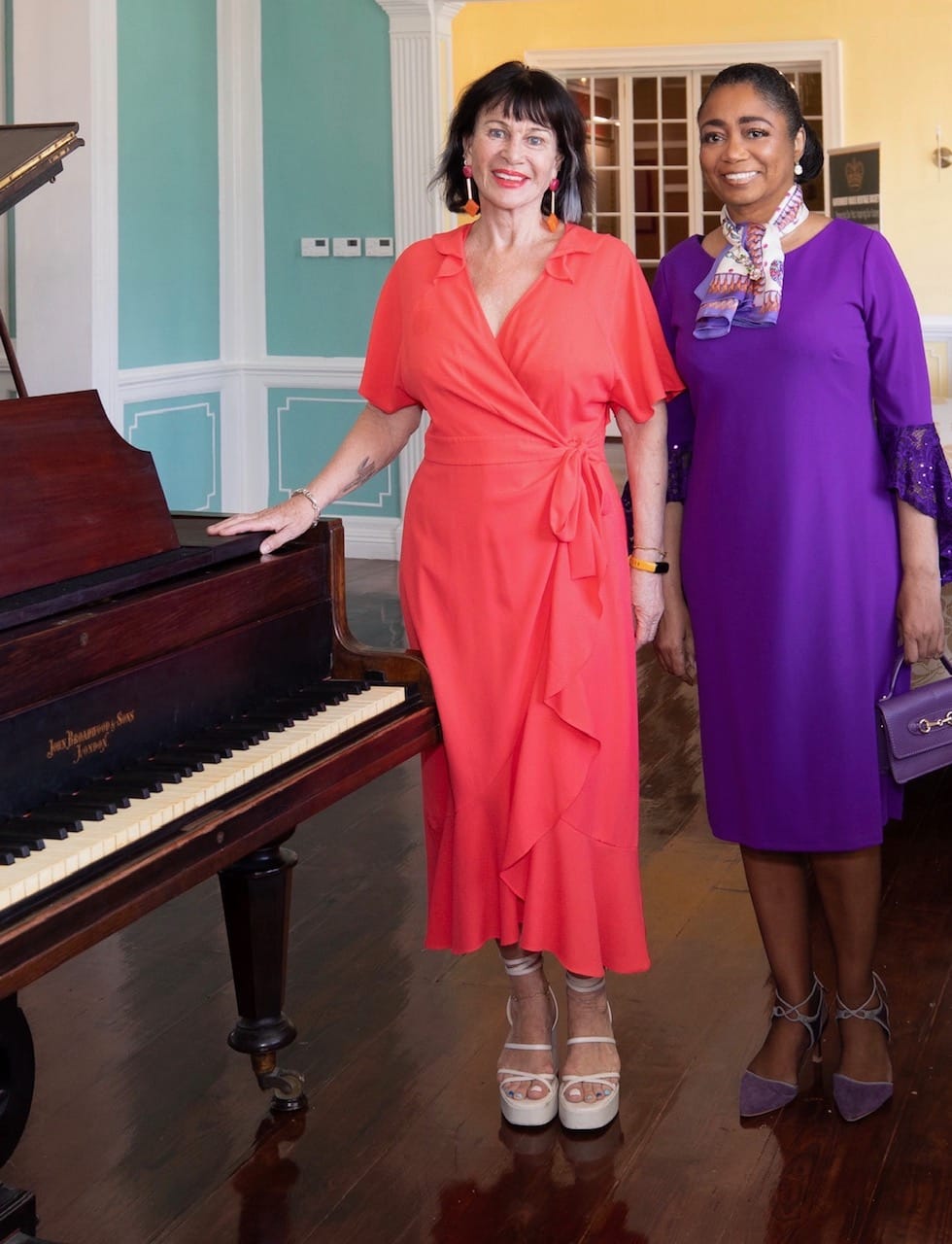
    A rare and exquisitely crafted 1893 mahogany grand piano, built by the world’s oldest continuously operating piano manufacturer, the UK-based Broadway Company (Broadwood), has found a new permanent home at Government House, following a formal donation from local patron Melanie Etherington to Her Excellency Lady Williams. The instrument joins the venue’s expanding curated display of Georgian-era furniture and historical artifacts, deepening the collection’s ability to tell the story of the period’s material culture.

    This donation carries far more historical weight than a typical artifact gift, as it connects to a centuries-old legacy of artistic collaboration between the Broadwood firm and some of the world’s most iconic composers. The company’s storied lineage of instrument making includes pivotal encounters with musical legends: a matching Broadwood concert grand, built around the same era as Frédéric Chopin’s 1848 tour of the British Isles, was personally commissioned for the composer’s historic performances across the country. Decades earlier, in 1818, company founder Thomas Broadwood personally gifted Ludwig van Beethoven a six-octave grand piano crafted from the same premium Spanish mahogany used for the 1893 instrument now entering Government House’s collection. Beethoven himself wrote in a letter to Broadwood that the instrument immediately sparked new creative inspiration, a testament to the deep, long-standing symbiosis between master piano builders and the composers who rely on their craft.

    Accepting the donation on behalf of Government House, Her Excellency Lady Williams expressed sincere gratitude for Etherington’s generosity and thoughtful contribution to preserving historical context. “We are extremely thankful to thoughtful donors like Ms. Etherington, who help us to build the narrative about what type of period furniture would have populated Government House centuries ago,” she said during the handover ceremony.

    Documentation provided by the donor confirms that the piano remains fully functional today, while retaining its original refined aesthetic that made it a standout luxury item when it was first sold. At the time of its original construction, the piano was purchased for £110 — a substantial sum equivalent to well over £10,000 in modern currency, a clear marker of its premium quality and high status when it was new.

    The donation comes as the Government House Museum, which recently held a soft opening to the public following extensive renovations, continues to build out its carefully assembled collection of period pieces in the beautifully restored historic building. This rare piano adds not just a piece of furniture, but a tangible link to global musical history that will be preserved and accessible for future visitors to experience.

  • Scholar-poet to headline Grenada Ifa Festival Symposium

    Scholar-poet to headline Grenada Ifa Festival Symposium

    As the countdown begins to the 2026 Grenada Ifa Festival, a leading Caribbean-born scholar and poet is amplifying a urgent, resonant call for people of African descent across the Caribbean and diaspora to reclaim their sacred ancestral heritage — one rooted in Indigenous African philosophies and spiritual practices that have survived centuries of colonial erasure.

    Liseli A. Fitzpatrick, PhD, a Trinidadian professor of Africana Studies at Wellesley College in Massachusetts, will take the stage as a keynote presenter at the festival’s symposium, hosted by the Shrine of the Seven Wonders of Africa Inc. Scheduled for July 2026, the gathering is already projected to draw hundreds of participants from across the Caribbean region and around the globe, united around the symposium’s core theme: Ancestral Wealth, Inheritance, and Abundance.

    For Fitzpatrick, this theme is not just an academic topic — it is the backbone of her life’s work. In an interview ahead of the event, she framed ancestral wealth not in material terms, but as the collective capacity of African people to reconnect with, embody, and grow the sacred wisdom, legacy, and gifts left by their ancestors, forged through centuries of love, intellectual labor, and unthinkable sacrifice.

    Fitzpatrick described her upcoming trip to Grenada as more than a professional engagement: it is a spiritual homecoming and act of reverence. “I feel a strong sense of spiritual obligation and oneness,” she explained, noting that the island nation holds immense, multilayered ancestral power — some acknowledged, some still waiting to be uncovered, that carries both weight and blessing for the diaspora.

    Fitzpatrick’s scholarly and creative practice is deeply integrated, rooted in African cosmology, ancestral knowledge, and the shared experience of diasporic identity. She argues that the most precious inheritance passed down to modern people of African descent is not material, but the sacred philosophies and communal practices that center self-worth, collective care, and stewardship of the natural world and the continuity of life.

    When asked what barriers still block the Caribbean from fully reclaiming these foundational traditions, Fitzpatrick pointed to ongoing reliance on Western political frameworks and the unaddressed intergenerational trauma of chattel slavery and colonialism. “The West was fabricated on and thrives off the disempowerment and disenfranchisement of African peoples, starting with the desecration of our sacred cosmologies,” she said. Western institutional structures, she argues, were intentionally designed to obstruct African self-determination and collective spiritual power, leaving many disconnected from their heritage.

    Yet Fitzpatrick remains steadfast in her belief in the resilience of African spiritual identity. Speaking at the 2023 second convening of the United Nations Permanent Forum on People of African Descent, she asserted, “you can shackle the body, but you cannot shackle spirit. The African spirit is unconquerable and ubiquitous.”

    To move forward, Fitzpatrick advises regional heritage practitioners to build deeper collaborative networks focused on collective reclamation. She calls for new, emancipatory education initiatives rooted in sensory, community-centered learning that fosters healing and awareness tied to ancestral traditions. Echoing activist and writer Audre Lorde, Fitzpatrick emphasizes that “the master’s tools will never dismantle the master’s house.” Western modes of thinking and education, she argues, cannot undo the harm Western colonial systems created — making a return to Indigenous epistemologies non-negotiable.

    Central to Fitzpatrick’s work is the blurring of lines between academia and art, which she says are inseparable. “Everything I do is intellectually and intuitively creative — born from the same source with the sole purpose of inspiring life,” she said. “As a Diasporic Trinidadian poet and professor of Africana Studies, there is a natural synergy between who I am and what I do. The two are inseparable.”

    Her work centers African cosmology, which she defines as the Indigenous framework African peoples on the continent and across the diaspora developed to make meaning of the world through lived sensory experience. Rooted in ecological balance and interconnectedness, cosmology ties the spiritual and physical realms inextricably together, she explains. “In every sense, I teach what I live and live what I teach, where art is intrinsic. African art is intellectual. Art articulates life. Black art is Black life.”

    Fitzpatrick also offers a sharp rebuke of Western definitions of wealth and success, which she calls exploitative, soulless, and rapacious, built on violent consumerism and extractive capitalism. In contrast, she notes, African cosmological perspectives frame abundance as wholeness, collective well-being, and alignment with the equitable natural order of life.

    Fitzpatrick’s forthcoming book, *Slavery and the Dis-Ori-entation of the African*, expands on this framework, exploring the deep spiritual and psychological disruption caused by chattel slavery through the lens of Yoruba philosophy. In Yoruba cosmology, *Ori* encompasses both the inner spiritual head (*ori inu*) and outer physical head (*ori ode*) — it is a person’s origin, compass, destiny, and core consciousness. Balance and goodness (*Iwa pele*) is only achieved when inner and outer Ori are aligned. When this alignment is broken by trauma, people lose their sense of purpose, direction, and self.

    Fitzpatrick coins the term “Dis-Ori-entation” to describe the widespread misalignment of spiritual and physical identity caused by the violence of slavery and its ongoing colonial legacies. Even so, she stresses that ancestral knowledge was never fully destroyed: “All was not lost or thrown overboard; our ancestors left us a rich inheritance — they found ways to preserve our sacred practices and persevere through their sheer ingenuities, Love, and indomitable spirits.”

    To heal this disconnection, Fitzpatrick advocates for what she calls “Re-Ori-entation”: a process of realignment rooted in ancestral knowledge and intentional self-reflection. Drawing on the Akan principle of Sankofa, which encourages communities to return to the past to retrieve wisdom for the future, she explains that this process requires both individual commitment and collective action, rooted in open-mindedness and radical vulnerability.

    Oral culture, language, storytelling, and poetry remain central to this work of reclamation, Fitzpatrick argues. When enslaved African people were forbidden from learning to read and write in the colonizer’s language, they turned to their traditional gift of orality, creating new languages, music, movement, and poetic forms that affirmed their humanity and preserved their heritage against all odds. Today, these practices remain critical tools for rebuilding collective consciousness and identity across the African diaspora.

    Moving beyond mere survival, Fitzpatrick calls for a full return to foundational ancestral values, rooted in love, wisdom, compassion, reverence, and harmony with nature. This, she says, is the only path to true collective abundance and alignment.

    For attendees of the 2026 symposium, Fitzpatrick has a clear message: our ancestors left a legacy of wisdom and sacred practice that we are entrusted to steward, not squander. As organizers prepare for the event, Fitzpatrick’s keynote is already expected to be a defining contribution to the festival’s mission of exploring African heritage, spiritual renewal, and collective empowerment across the diaspora.

  • Local and Caribbean Bishops Conclude Rome Pilgrimage and Annual Plenary Meeting

    Local and Caribbean Bishops Conclude Rome Pilgrimage and Annual Plenary Meeting

    Bishops from across the Caribbean region, members of the Antilles Episcopal Conference (AEC), have wrapped up a pivotal 14-day pilgrimage to Rome that merged a mandatory Vatican visit with the organization’s annual governing gathering. Held between April 27 and May 8, the multi-faceted trip brought regional church leaders together for three core objectives: formal meetings with top Holy See officials, collective spiritual renewal, and collaborative conversations about the future trajectory of the Catholic Church across the Caribbean.

    The first five days of the visit, the official Ad Limina Apostolorum, were dedicated to structured engagements with Vatican leadership. During this period, the AEC delegation held an audience with the Holy Father, alongside working sessions with leaders of more than a dozen key Vatican departments and administrative bodies. These discussions covered a wide range of critical church priorities, from clergy formation and educational policy to doctrinal guidance, family ministry, liturgical practice, global human development initiatives, and ecumenical efforts to advance Christian unity. The bishops also met with leadership of two high-priority Vatican bodies: the Pontifical Commission for the Protection of Minors and the General Secretariat of the Synod of Bishops, in addition to holding talks with the Vatican Secretariat of State.

    In an official statement released following the pilgrimage, the AEC highlighted the papal audience as the centerpiece of the entire trip. The conference described the encounter as “profoundly enriching, encouraging, and deeply pastoral,” noting that the meeting strengthened the hierarchical communion between the Caribbean bishops and the Successor of St. Peter. It also reaffirmed the bishops’ shared commitment to expanding evangelization work across every island and community in the Caribbean region.

    Beyond formal diplomatic and administrative meetings, the pilgrimage included extensive spiritual elements. The bishops celebrated Mass at each of Rome’s four historic Major Papal Basilicas, among them the Archbasilica of St. John Lateran, the cathedral of Rome and the official seat of the papacy, and the Basilica of St. Mary Major. At St. Mary Major, the group gathered in prayer at the tomb of the late Pope Francis, while at the tombs of Saints Peter and Paul they participated in a formal ritual to renew their individual and collective vows to apostolic ministry.

    The second week of the pilgrimage shifted focus from Vatican engagements to internal formation and AEC business. Ahead of the Annual Plenary Meeting, bishops joined a specialized workshop on synodal leadership facilitated by Fr. David McCallum, SJ, a guided spiritual retreat directed by Sr. Julie Peters, SSM, and an additional group pilgrimage to the Italian town of Assisi, closely associated with St. Francis of Assisi. Following these formative activities, the bishops convened the official business sessions of the AEC’s annual plenary to conclude the trip.

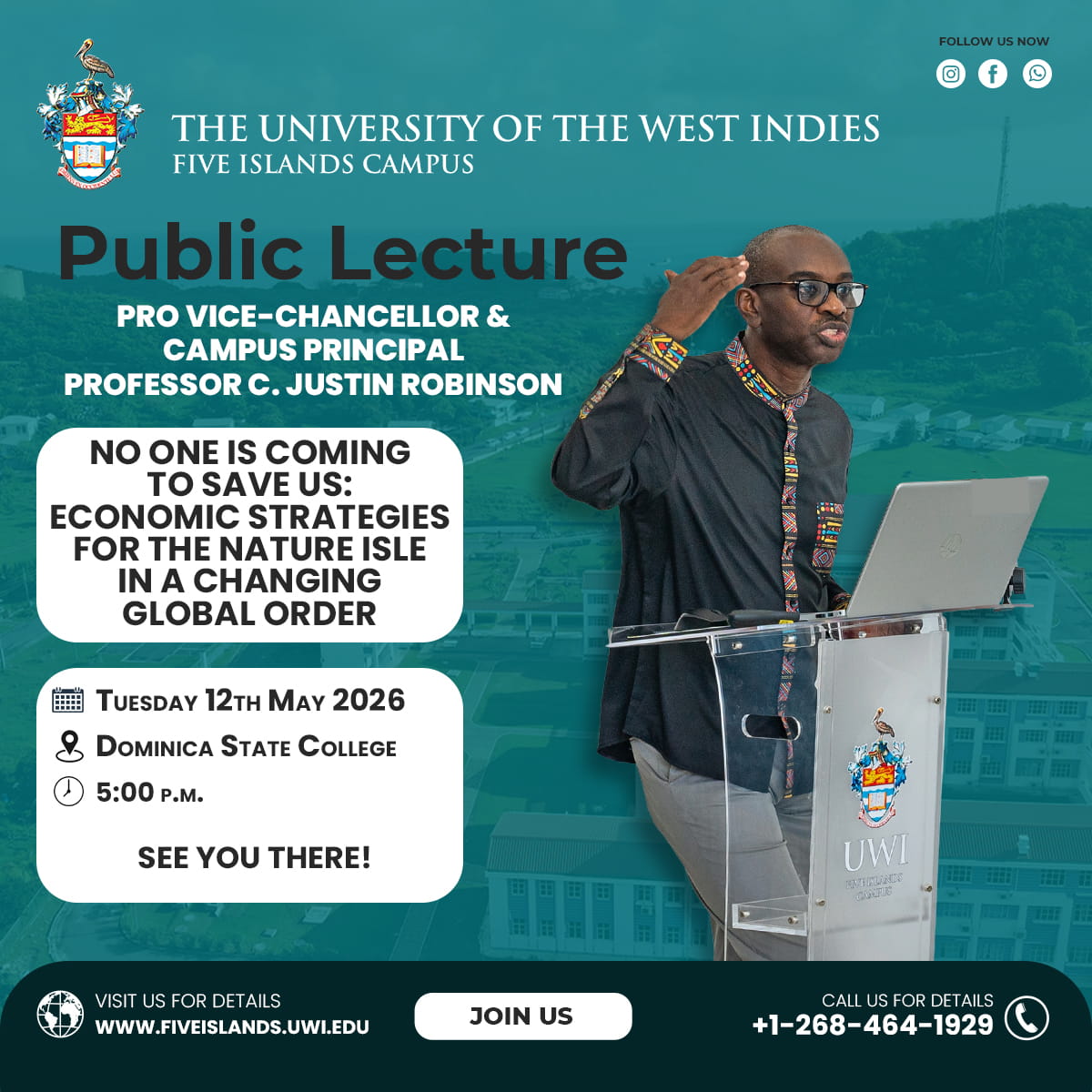
  • Public invitation to UWI Dominica Open House and Public Lecture with with professor C. Justin Robinson

    Public invitation to UWI Dominica Open House and Public Lecture with with professor C. Justin Robinson

    The material submitted for processing only contains two image links and social media sharing buttons, with no complete, verifiable news text included. Without the actual core reporting content, descriptive text, event details, or source information that forms a complete news story, it is impossible to conduct a structured rewrite, in-depth analysis, or detailed contextual expansion. Image links hosted on the specified third-party domain cannot be accessed to extract embedded news content, leaving no substantive journalistic material to work with. This leaves an incomplete submission that lacks all the necessary components for a standard news processing task.

  • LIVE: Ministry of National Security Press Conference 11th May 2026

    LIVE: Ministry of National Security Press Conference 11th May 2026

    The submitted news material only contains social media sharing options (including share, tweet, and pin functions) and a link to an external image, but lacks the complete core text content of the news report that needs to be processed. Without the full descriptive and factual content of the original news, it is impossible to conduct in-depth analysis of core information, background details, or potential impacts of the reported event. No valid news facts, event narratives, or data points are provided in the current submission to support structured rewriting, classification, or sentiment analysis work.

  • LVV  biedt agrariërs snellere resultaten bij bodemonderzoek

    LVV biedt agrariërs snellere resultaten bij bodemonderzoek

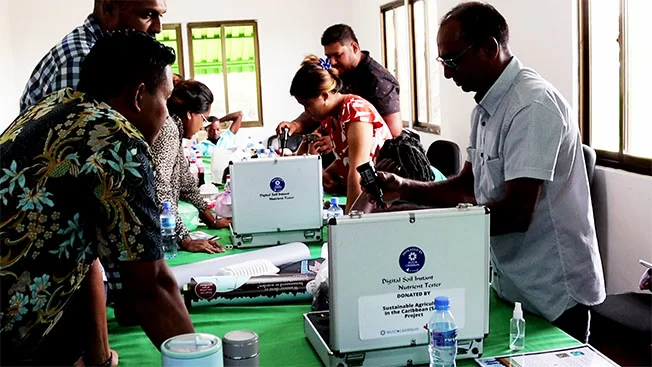
    Suriname’s agricultural sector is stepping into a new era of efficient, data-driven farming thanks to a new initiative rolled out by the country’s Ministry of Agriculture, Livestock and Fisheries (LVV), in partnership with the World University Service of Canada (WUSC). At the heart of the program are portable soil nutrient tester kits that cut down wait times for soil analysis results from months to less than a single working day, bringing life-changing improvements to small-scale and commercial farmers across the country.

    Before the introduction of these portable kits, the process of soil nutrient testing was notoriously slow and cumbersome. Agricultural extension officers based in rural districts across the country, including Nickerie, Coronie, Wanica, and Saramacca, were required to collect soil samples from local farms and ship them all the way to the capital city of Paramaribo for laboratory analysis. According to LVV extension officers, this process could take anywhere from three to six months to complete. By the time the test results were returned, planting seasons had often already passed, farmers had already harvested their crops, or many had moved forward with plans to plant a new crop, rendering the delayed analysis useless for informed decision-making.

    The new portable tester kits eliminate this entire delay. Extension officers can now conduct full nutrient analysis on-site directly after collecting soil samples, sharing accurate, actionable results with farmers the same day. All test findings are officially documented in a personalized agricultural report that is given directly to the participating farmer, and the entire testing and advisory service is provided completely free of charge by LVV.

    Soekarina Ardjosentono, a senior researcher in the Ministry’s Department of Soil Research and Agrohydrology, explained that two key benefits set the new system apart from the old process: unmatched speed and the ability to deliver far more targeted, context-specific advice to farmers. To ensure widespread, consistent use of the new technology, the Ministry has rolled out sequential training programs for extension officers across all regions. Trainings for extension staff in the northern districts of Wanica, Saramacca, and Paramaribo have already been completed, with training for officers in the western districts of Nickerie and Coronie wrapping up just last week.

    William Waidoe, LVV’s Deputy Director for the Western Region, noted that the faster testing framework enables extension officers to guide farmers far earlier in the planning process, before farmers make costly investments in seeds, fertilizer, and new planting. With immediate access to clear data on their soil’s nutrient profile, farmers can make timely, informed decisions about the type and amount of fertilizer to apply at each growth stage of their crops, matching inputs to their soil’s exact needs.

    Netasha Badal, an LVV extension officer based in Nickerie, one of the country’s key agricultural regions, emphasized the practical, on-the-ground difference the kits have made. “Previously, we had no option but to send samples off to Paramaribo. By the time we got the results back, in many cases the farmer had already planted or even harvested their crop,” Badal explained. “Now, we can share results and give targeted advice on appropriate fertilizer in a fraction of the time.”

    Revillio Vriesde, an extension officer and acting district lead for LVV in Coronie, echoed this sentiment, calling the new system a major step forward for the region’s farming community. “Where farmers once waited three to six months for results, they can now get full data the same day we collect their sample,” Vriesde noted.

    The portable soil nutrient tester kits were donated to the Ministry by WUSC as part of the organization’s climate-smart agriculture programming in Suriname. Varsha Boejharat, WUSC’s Climate Smart Agriculture Officer, explained that the donation and accompanying training program were developed in direct response to feedback from local farmers who identified slow soil analysis as a major barrier to more productive, sustainable farming. Accurate, timely soil analysis is foundational to sustainable farming: it gives farmers clear insight into key nutrient levels, including nitrogen, potassium, and phosphorus, that determine crop health and yield. With this data in hand, farmers can not only select the right fertilizer regimen for each growing stage but also decide which crop varieties are best suited to their land, reducing unnecessary input costs and boosting overall productivity.

    The program represents a collaborative effort to bring modern, accessible agricultural technology to rural farmers in Suriname, with the goal of supporting more resilient, productive farming across the country.

  • Ministry of Health, Wellness and Social Services issues public guidance on Hantavirus prevention

    Ministry of Health, Wellness and Social Services issues public guidance on Hantavirus prevention

    The input provided for news rewriting and analysis only contains social media sharing links, an image URL, and a PDF download prompt with a stated file size of 202KB. No actual core news text, event details, background context or relevant factual information about the reported story is included in the user’s submission. Without the full substantive content of the original news piece, it is not possible to conduct a structured rewriting, in-depth analysis of core points, or accurate classification of the story. Receiving incomplete input prevents the completion of the requested news processing task as specified.

  • Garden Mums

    Garden Mums

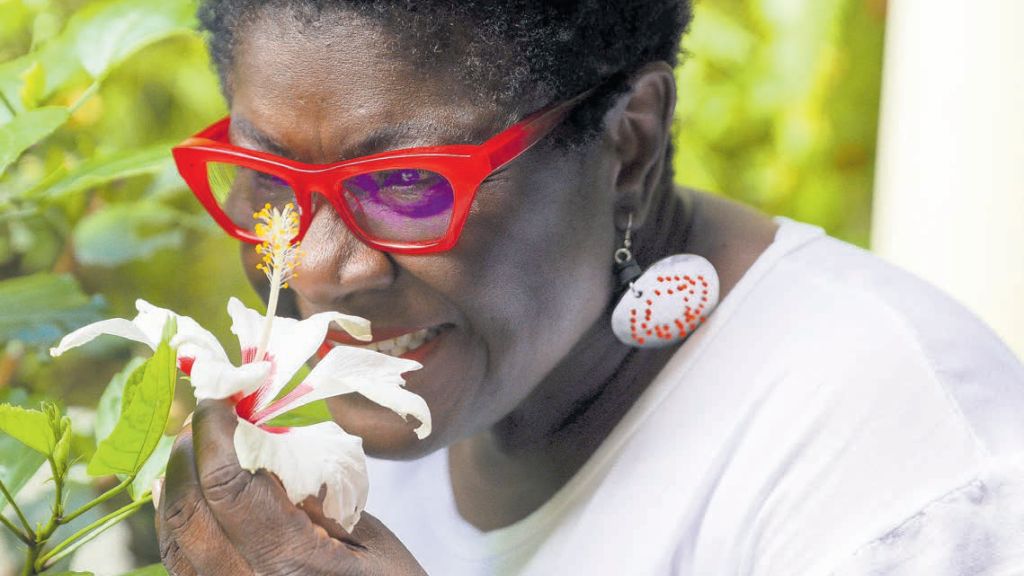
    As 2026’s Mother’s Day approaches, the Style Observer is pausing to honor a remarkable group of women who have turned their lifelong devotion to gardening into a source of ongoing inspiration for readers of the outlet’s popular gardening section. For years, these women have shared their love for cultivating green spaces, weaving warmth, hard-won wisdom, and natural beauty into every page they’ve touched. What started as a quiet personal hobby has blossomed into a way of life that nurtures not only their own well-being, but everyone who steps into their vibrant outdoor sanctuaries. For Janice Grant Taffe, a recently retired former general counsel and corporate secretary of Sagicor Group Jamaica, gardening is both a creative outlet and a path to mindfulness. Her sprawling, lush garden sits perched above the Kingston & St Andrew metropolis, a quiet green escape that offers respite to friends and family weary of the chaotic pace of city life. Born and raised in Manchester, Taffe has carried a love for plants since childhood, but her curated outdoor retreat truly began to take shape eight years ago, when she moved into her current home with her husband Joe and daughter Jada-Rae. During a 2022 visit from the Style Observer team, Taffe described her garden as a living, energetic gathering space where loved ones can come together to mark life’s special moments. Today, the space boasts a stunning array of tropical blooms including dozens of orchid varieties, anthuriums, pink and red gingers, and bromeliads, alongside a dedicated herb section filled with edible staples like mint, thyme, and peppers. Karleen Smith, another lifelong gardening enthusiast, says tending to her plants has been a source of great comfort through every season of her life. When the Style Observer toured her immaculately designed property in 2021, she walked the team through a lush, abundant landscape overflowing with color, fragrance, and life. Her garden is home to an impressive collection of ornamental plants, fruit trees, edible vegetables, and a carefully curated collection of prized orchids. Vibrant swathes of roses, periwinkles, ferns, bougainvillea, 10 o’clocks, and crotons create a rich, textured tapestry across the property, while tropical fruit trees including sweetsop, mango, orange, and June plum infuse the space with distinctly Caribbean warmth. For Smith, the garden is more than just a collection of plants — it is a reflection of the values that define her life: patience, intentional care, and a deep appreciation for the quiet luxury of living surrounded by nature. Jacinth Byles has shared her passion for gardening with her husband for decades. The pair built their first home in Stony Hill, a region whose cool, mild climate proved ideal for growing a wide range of tropical plants. For years, they would spend every Sunday from dawn to dusk tending to their beds, and the satisfying results of their labor turned gardening into a lifelong shared hobby. Though Byles has since relocated from Stony Hill’s salubrious slopes, a 2021 visit to her new property confirmed her passion for cultivating plants remains as strong as ever. While she acknowledges she cannot replicate the perfect growing conditions of her former Stony Hill garden, she has still built a striking, eye-catching outdoor space, focused now primarily on bromeliads and orchids. Hardy, low-maintenance favorites including bougainvillea, periwinkle, areca palms, cascade palms, and multiple other palm varieties round out the lush landscape. For Angie Ammar, a deep love of orchids — particularly the bold, elegant vanda orchids that first caught her eye decades ago — has grown into a decades-long obsession. When the Style Observer caught up with Ammar in 2022, she reflected on the early days of her hobby, when orchid blooms were famously large and vivid, and cross-breeding was far less common than it is today. “They didn’t seem to need much care, as they had their wiry roots just hanging out, so I tried my hand at those,” she recalled of her first foray into orchid growing. Like any passionate hobbyist, Ammar learned through trial and error, and candidly admits she lost several early plants to underwatering. Rather than discouraging her, however, those early setbacks only deepened her fascination with the delicate blooms. Determined to master the art of orchid care, she joined the Jamaica Orchid Society (JOS), attending regular meetings and seeking guidance from experienced veteran growers. She also received invaluable support from family: her uncle, Dr Eddie Valentine, was a founding member of JOS, and his expertise helped nurture her growing passion. “From then, my obsession grew — or rather my addiction,” she laughed. Retired teacher Laurel Green has cultivated her dynamic upper St Andrew garden for more than 50 years, a living tribute to the diverse native flora she fell in love with while growing up in St Mary. When Green invited the Style Observer team to tour her garden in July 2025 for a two-part featured profile, the outlet was greeted with a breathtaking tropical escape brimming with quiet charm and natural beauty. Anchored by a towering, magnificent ficus tree, the garden unfolds in layered, visually stunning displays of orchids, anthuriums, crotons, and vibrant red gingers. Heliconias, monsteras, and blackberry lilies add extra depth and pops of color across the space, while edible produce including breadfruit, pineapples, and strawberries brings a welcoming farm-to-garden appeal that makes the space as functional as it is beautiful. Among the dozens of standout species in Green’s collection, the Floribunda rose and a range of rare orchid hybrids including Vanda Princess Mikasa and Papilionanda have emerged as fan favorites among gardening enthusiasts who have toured the space. Taken together, the gardens of these five extraordinary women are far more than collections of plants. They are spaces of renewal, connection, and joy — a fitting tribute to the nurturing spirit that Mother’s Day celebrates.