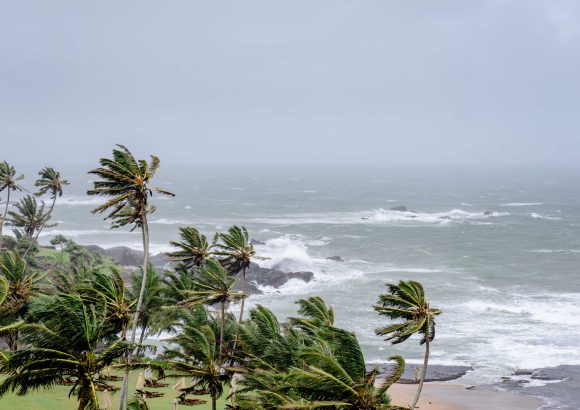
For foreign nationals exploring property purchases or relocation to the Dominican Republic, one question consistently rises to the top of the agenda as Atlantic hurricane season approaches: just how at risk is this Caribbean nation from major hurricane damage? This inquiry is far from unfounded — as an island situated in the Caribbean basin, the Dominican Republic cannot escape the annual reality of hurricane season. However, emerging historical data and geographic advantages tell a more encouraging story: the country has faced far fewer direct hits from powerful major hurricanes than many of its regional neighbors.
### A Quick Guide to the Dominican Republic’s Climate
The Dominican Republic maintains a consistent tropical climate year-round, defined by warm temperatures and abundant sunshine that draw visitors and new residents alike. Coastal regions stay warm and humid through all four seasons, while inland mountain destinations such as Jarabacoa and Constanza offer significantly cooler, more temperate conditions ideal for getaways and permanent residence.
The country’s climate splits into two distinct seasonal periods:
– **Wet Season**: Spanning May through November, this period brings warmer, more humid conditions, with August typically recording the year’s highest temperatures, averaging daily highs around 32°C (90°F).
– **Dry Season**: Running from December through April, this season features milder, more comfortable temperatures with average daytime highs near 26°C (80°F), making it the most popular time for tourism and property purchases.
### Breaking Down Hurricane Season Risks
The official Atlantic hurricane season runs from June 1 to November 30 annually, though the Dominican Republic sees the highest likelihood of tropical system activity between August and October. Like every other Caribbean country, the Dominican Republic is not immune to impacts from tropical storms and hurricanes, but the severity of any storm’s damage depends heavily on its track, intensity, forward speed, and local weather conditions at landfall.
### Geographic Advantages That Reduce Hurricane Impact
One of the Dominican Republic’s greatest natural protections against extreme hurricane damage comes from its unique geography and terrain. The nation occupies the eastern two-thirds of Hispaniola, the Caribbean island that hosts some of the region’s tallest mountain ranges. When hurricanes pass over these rugged, elevated landmasses, their circular wind circulation is frequently disrupted, causing most storms to weaken rapidly after making landfall. In many cases, Category 4 or 5 hurricanes have been reduced to weaker tropical storms before fully crossing the island.
Beyond terrain, broader Atlantic weather patterns often steer hurricanes away from the Dominican Republic: many systems naturally recurve northward long before reaching the island, while others track well south of Hispaniola. While every storm follows an unpredictable path that defies long-term forecasting, this historical trend has drastically cut the number of direct major hurricane strikes on the country. Storms approaching from the east also often weaken after interacting with Puerto Rico’s landmass before reaching the Dominican Republic, though this natural buffering effect is not guaranteed for every system.
### The Primary Hazard: Torrential Rainfall Rather Than Catastrophic Wind Damage
While the Dominican Republic is often spared the most destructive hurricane winds, heavy rainfall remains a consistent hazard worth noting. Even weakened tropical systems can dump extreme volumes of rain over short periods, triggering flash floods, river overflows, and occasional landslides — particularly in mountainous zones and low-lying coastal communities. These impacts are almost always localized, rather than affecting the entire country, but they can cause temporary disruptions to transportation and critical infrastructure. For most residents, the most common inconveniences are temporary power outages, localized flooding, and delayed travel, rather than the widespread catastrophic wind damage seen in harder-hit Caribbean regions.
### Historical Context: Resilience Through Storms
The Dominican Republic has not escaped destructive hurricanes entirely. Past major storms including 1979’s Hurricane David, 1998’s Hurricane Georges, and 2022’s Hurricane Fiona caused significant flooding, infrastructure damage, and agricultural losses across parts of the country. Even so, history is full of examples where neighboring islands suffered devastating destruction while the Dominican Republic walked away with comparatively minor damage.
Take 2017’s Hurricane Irma, for example: the Category 5 storm left catastrophic destruction across Barbuda, the British Virgin Islands, Puerto Rico, the Bahamas, Cuba, and parts of the continental United States. While the Dominican Republic experienced strong winds, rough seas, localized flooding, and scattered power outages, it avoided the total devastation seen across other Caribbean destinations. Just weeks later, Hurricane Maria made landfall as a Category 4 storm and decimated Puerto Rico; in the Dominican Republic, the storm only brought heavy rain, localized flooding, and minor infrastructure disruptions, again sparing the country the extreme destruction faced by its eastern neighbor. These examples drive home a key takeaway: while the Dominican Republic is by no means immune to hurricanes, it has repeatedly avoided the direct hits of the most powerful storms that devastate other regional islands.
### Modern Improvements in Construction and Emergency Preparedness
Since the widespread damage caused by Hurricane Georges in 1998, the Dominican Republic has steadily updated and strengthened its national building codes, especially for new residential developments, condominium complexes, hotels, and tourism infrastructure. Modern reinforced concrete construction, now standard across most of the country, performs exceptionally well during tropical storms and hurricanes when designed and maintained to current standards. Complementing improved construction, modern weather forecasting has grown dramatically more accurate, giving local authorities, residents, and businesses several days of advance notice before a storm makes landfall — more than enough time to implement emergency preparations and evacuation plans if needed.
### Key Takeaways for Prospective Property Buyers
For anyone considering purchasing property in the Dominican Republic, hurricane risk should be framed as a manageable natural hazard, not a reason to abandon investment plans. Just as when buying property in Florida, the U.S. Gulf Coast, or any other coastal hurricane zone globally, prospective buyers simply need to take reasonable precautions: understand the local climate patterns, purchase appropriate storm insurance when available, and prioritize properties built to meet modern construction standards.
Over decades of storm activity, the Dominican Republic has proven it possesses extraordinary natural and institutional resilience. While no Caribbean destination can promise complete immunity from hurricanes, the country’s unique geography, mountainous terrain, and historical storm tracks have consistently reduced the impact of major tropical systems. For most permanent residents, hurricane season is simply a routine part of island life — managed through advance preparation, reliable forecasting, and sensible precautions, rather than fear.