分类: entertainment

  • Grange saddened by passing of gospel singer Kukudoo

    Grange saddened by passing of gospel singer Kukudoo

    Jamaican gospel and revivalist music icon Kukudoo, born David McDermott, has died after a prolonged fight with cancer, passing away on Friday. The news of his death prompted an outpouring of grief from across Jamaica’s cultural and music communities, with Culture Minister Olivia Grange leading tributes to the influential artist.

    In a statement released after the announcement of Kukudoo’s passing, Minister Grange shared that she was deeply saddened by the loss of the groundbreaking performer. She emphasized that Kukudoo was far more than a popular musician: he was a transformative cultural force whose discography and public work centered and celebrated the African-rooted spiritual traditions that form a core part of Jamaican national identity.

    Unlike many artists who find a niche audience limited to one demographic, Kukudoo’s dynamic, powerful stage presence and authentic sound resonated with listeners across multiple generations and all social strata in Jamaica, building a broad and loyal fanbase that endures decades after he first rose to prominence. Minister Grange noted that his death leaves a large gap in Jamaica’s cultural landscape, and that his contributions to the country’s music and cultural heritage will be deeply missed by audiences and fellow artists alike.

  • IShowSpeed livestream in Jamaica amasses over 2.8 million views

    IShowSpeed livestream in Jamaica amasses over 2.8 million views

    A high-profile livestream shot by popular American content creator IShowSpeed from Jamaica’s capital Kingston on Friday has delivered staggering viewership numbers, cementing the broadcast as one of the creator’s most successful on-location productions to date. The stream pulled in more than 2.8 million total views, with a concurrent peak audience of 194,805 live viewers tuning in to watch the creator’s exploration of the island nation. Beyond raw view counts, the interactive stream generated 696,349 live chat messages from engaged audiences around the globe, and earned IShowSpeed more than 34,000 new subscribers in the process. Minutes after the stream wrapped, the creator’s cameraman shared the milestone metrics on the social platform X with a simple, triumphant caption: “Good stream.”

    The Kingston stop is the latest leg of IShowSpeed’s ongoing Caribbean tour, which has focused on highlighting local culture, landmarks and creative communities across the region. During his time in Kingston, the streamer visited a lineup of the city’s most iconic cultural and historical sites, including Emancipation Park, the world-famous Bob Marley Museum, the historic Devon House estate, and Jamaica’s National Stadium.

    The day’s tour opened at Emancipation Park, where former Miss Jamaica Universe Yendi Phillipps led a personalized educational session on Jamaican history. Phillipps walked IShowSpeed through the legacies of the country’s most revered national heroes, giving the creator and his global audience a foundational introduction to Jamaican heritage. The opening event also included a chance for IShowSpeed to join local students in a traditional Kumina dance, an immersive cultural experience that was shared live with his viewers.

    Later in the day, the streamer met with Jamaica’s Culture Minister Olivia Grange, and connected with a roster of the island’s most prominent musical artists, including Jesse Royal, Sean Paul, Beanie Man, Shenseea, Ding Dong, Naomi Cowan and Gyptian. The meetings and casual collaborations gave IShowSpeed’s global audience a front-row look at Jamaica’s world-renowned, vibrant music scene, deepening the creator’s engagement with local cultural stakeholders during his visit. The on-location stream also included special experiences for the creator, including a drone show and a meeting with the viral “Jamaican Spider-Man,” a local personality that gained viral attention online in recent months.

  • Jah Lil: A new voice driven by purpose

    Jah Lil: A new voice driven by purpose

    Against a backdrop of a global music industry increasingly defined by fleeting viral trends and disposable chart-topping moments, emerging Jamaican reggae artist Jah Lil is building a distinct, purpose-driven career rooted in authentic talent and intentional social messaging.

    The rising performer, who describes himself as a natural-born people person and innate leader, says these core traits are not manufactured performative traits for the public eye—they are deeply instinctive parts of who he is, and they have served as the steady engine powering every step of his artistic journey, he told the Jamaica Observer in a recent interview.

    A self-identified humanitarian and peace advocate who also holds firm that personal and family protection is non-negotiable, Jah Lil explains that this careful balance between gentle compassion and quiet, unshakable strength is reflected in the dual nature of his music.

    Music has been woven into the fabric of Jah Lil’s life from early childhood. He cut his teeth performing in church settings and during his time at Jamaica College, where the art form quickly became a central part of his identity. After graduating high school, he explored a series of different professions, but none could hold his attention the way music did. Even before he built a name or secured any industry traction, he knew that music was the only path that aligned with his passion and his sense of purpose. “I love people and creation on a whole and so everything I do is to satisfy this purpose that I have to be a voice for the voiceless. Everything is geared at making the human experience a better one. My music is to bring balance, and as I journey along, the message will always be consistent,” he shared.

    Raised in an underserved, low-income community in Jamaica, Jah Lil credits his challenging formative years with deepening his social awareness and nurturing his capacity for empathy. His childhood experiences did more than shape his worldview—they gave his art a clear mission. “The fact that I was very poor growing up shaped me into the artiste I am — a voice for the people,” he said.

    Drawing inspiration from iconic reggae legends including Bob Marley, Buju Banton, Garnet Silk, and Dennis Brown, Jah Lil views his craft as more than entertainment: it is a vehicle for tangible social change. At a moment when he argues conscious, meaningful messaging is often pushed to the margins of mainstream reggae, his goal extends beyond giving audiences a good time—he wants to uplift marginalized communities and advocate for progress.

    Jah Lil acknowledges that breaking into the local Jamaican industry as a conscious artist comes with unique challenges. He compares his place in the current local landscape to a sunflower growing in a field of roses: while he is committed to restoring balance to the genre, the local industry infrastructure does not currently prioritize the kind of work he creates. Despite that barrier, he has built strong, engaged international fan bases in countries across the globe, including Sweden, Kenya, Belgium, and the United States. He remains optimistic that the tide is turning: as audience demand for more thoughtful, conscious music grows, the industry will shift to create more space for artists like him, making it easier for purpose-driven work to break through.

    Currently signed to an international label and managed out of Portugal, Jah Lil still recognizes the critical importance of growing his profile and connecting with audiences at home in Jamaica. He is gearing up to perform at Di Lot this Thursday, where he plans to bring raw, unfiltered energy to the stage. Far from just delivering a standard set of songs, he aims to create an immersive, memorable experience for attendees. “It’s my show, but I want it to be an experience that people will have in their memories. There’s going to be surprise artistes, a sound system segment… It will be awesome to the point where people will ask, ‘How comes we haven’t heard about him before?’” he said.

  • Gospel singer ‘Kukudoo’ dies after battle with cancer

    Gospel singer ‘Kukudoo’ dies after battle with cancer

    The Jamaican gospel music community is mourning the loss of one of its most beloved stars, David ‘Kukudoo’ McDermott, who passed away after a short battle with non-Hodgkin lymphoma. His family made the official announcement of his death via the singer’s social media channels on Friday, confirming he was 56 years old at the time of his passing.

    “It is with a heavy heart that we, the family of David ‘Kukudoo’ McDermott, have to tell the public that he passed this morning…at this time we ask for grace and respect in our time of grief,” the family’s statement read.

    McDermott only received his diagnosis of the blood cancer in late February this year. According to his long-time manager Nicholas Marks, who has represented the artist since 2018, delays in critical testing and the singer’s declining health left little room for life-saving treatment. Blood samples had been shipped to Florida for analysis to map out the most effective treatment plan, but results never arrived in time to intervene. Too weak to tolerate chemotherapy, McDermott ultimately succumbed to the disease, Marks shared in an emotional interview with Observer Online.

    He leaves behind three children, who alongside fans across the globe, are grieving the loss of the warm, authentic performer.

    Non-Hodgkin lymphoma, the cancer that took McDermott’s life, typically presents with initial symptoms including painless swollen lymph nodes in the neck, armpit or groin, which often feel like firm rubbery lumps under the skin. Additional common signs include ongoing fatigue, severe night sweats, unexplained weight loss and recurrent fever.

    Marks remembered his client as a uniquely genuine and deeply passionate artist, whose commitment to his craft shone through every project he touched. “He was a genuine person and a passionate person, and you could see that…in anything he put his hand on, he put his all in it, and you saw that with his music,” Marks said.

    In the wake of McDermott’s death, Marks is moving forward with plans to release the singer’s final, unfinished body of work: a 10-track album titled *Life’s Journey*. The project had been in development for three years, plagued by repeated delays as McDermott navigated his declining health. The pair initially set out to create a 12-track record, but only 10 songs were completed before his passing. Despite the long set of challenges that have dogged the album’s creation, Marks believes the project holds a deeper meaning. “This album must have some greater purpose. From we decided to do the album, he began to get sick, yu caan tell me it don’t have a purpose!” he said passionately.

    McDermott’s journey to gospel stardom began long before his diagnosis, growing out of humble beginnings. Before launching his full-time music career, he worked as a machine operator at the now-shuttered Bernard Lodge Sugar Estate. He got his start performing at traditional Jamaican nine-night wake events, called “dead yards,” under the early stage name King David.

    His big break came by chance one evening when a church band was performing at a nine-night event. An audio engineer recorded McDermott’s impromptu performance, pressed it to a CD, and within weeks, his tracks *See People Business* and *Leave It Alone* climbed local radio playlists. The songs became ubiquitous across Jamaica, played constantly on public buses and taxis, turning the former factory worker into an overnight star.

    From there, his career grew into a full-time vocation, and he became a staple act at the annual Jamaica Independence Gala. His signature sound, a rousing blend of traditional mento music and heartfelt gospel, won over crowds across the island and beyond. He earned a particularly strong fanbase in the United States, and cemented his place as one of Jamaica’s most notable gospel exports. “As a performer, he was loved by many across the world, one who was notable especially in the United States. When you mention any gospel artiste out of Jamaica, Kukudoo has to be part of the conversation, he has to be mentioned. He was a wonderful performer and a genuine individual,” Marks added.

  • Grenada delegation inspired by powerful Biennale narratives

    Grenada delegation inspired by powerful Biennale narratives

    On the second day of pre-opening explorations at the 60th La Biennale d’Arte di Venezia, the Grenada national delegation toured more than 25 national pavilions hosted in the Giardini, the festival’s historic central venue. Four displays—from Great Britain, France, Germany, and Japan—emerged as the most thought-provoking stops, sparking hours of lively debate and personal reflection among the visiting group ahead of the Grenada Pavilion’s official opening this Friday.

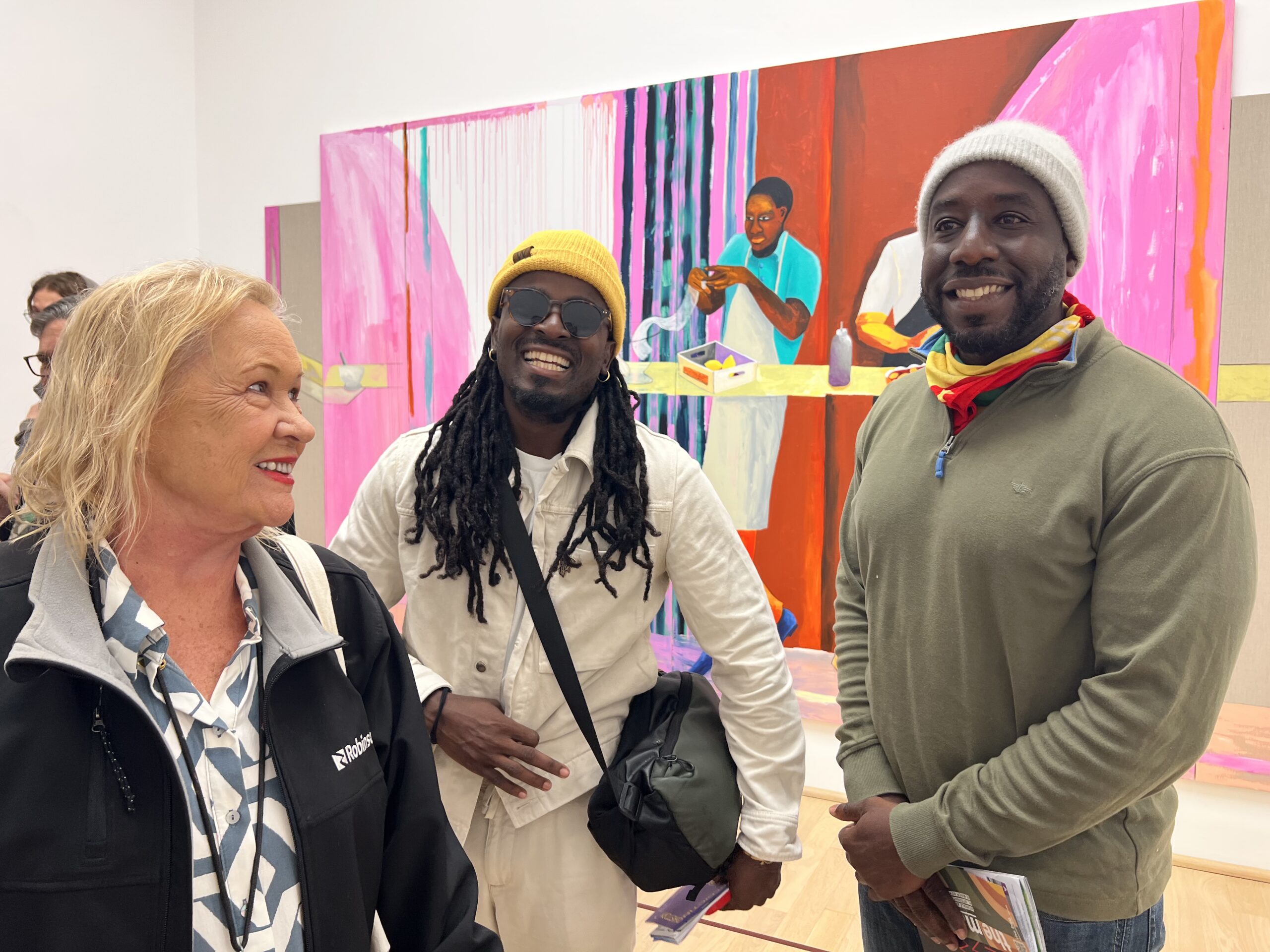
    At the Great Britain Pavilion, Turner Prize-winner Lubaina Himid CBE RA fills the entire venue with vividly colored, large-scale multi-panel canvases that command immediate attention. Standout pieces including *Boatbuilders*, *Gardeners*, and *Chefs* resonated deeply with the Grenada delegation. The works center the overlooked labor of working-class people, framing everyday contributions as sacred, culturally significant work worthy of prominent public space. Delegation members shared personal connections to the themes of the work, deepening their collective engagement with Himid’s practice.

    Over at the French Pavilion, artist Yto Barrada presents *Comme Saturne*, an immersive exhibition rooted in the mythology and imagery of Saturn, the Roman god associated with time, melancholy, and transformation, who also shares his name with the distant sixth planet from the Sun. One of the exhibition’s most memorable sections, the *Melancholy Room*, showcases a striking celestial arrangement of layered color across circular fragments of aged silk, goatskin leather, and repurposed fabric. Though the work draws on the long-held association between Saturn and melancholy—framed both as creative paralysis and a wellspring of artistic genius—the space radiates creativity and dynamic energy, feeling far from somber or mournful.

    Germany’s Pavilion, titled *Ruin*, features a layered, immersive installation by artist Henrike Naumann that draws on the stark architectural aesthetic of abandoned Soviet Army barracks across East Germany. Naumann exaggerates the barracks’ iconic mint-green interior palette to create an unsettling, recognizable environment. Cut chair formations within the installation unexpectedly evoked the ancient petroglyphs of Grenada for the visiting delegation, while frayed damaged curtains and walls layered with discarded everyday objects transform the pavilion into an unconventional museum of lived experience. The work reads as a meditation on ordinary life, exploring how communities adapt and persist amid rapid social and political upheaval. A particularly compelling centerpiece is an upholstered mural depicting everyday workers, a contemporary reimagining of a 1960 mural created by Naumann’s own grandfather.

    The most unforgettable presentation of the day, for many delegation members, came at the Japanese Pavilion, where Ei Arakawa-Nash presents *Grass Babies, Moon Babies*. The sprawling installation features dozens of baby dolls dressed in hand-stitched garments sewn by the artist’s mother and her community of friends, scattered throughout and beyond the pavilion’s walls. Visitors are explicitly invited to pick up, hold, and interact with the dolls, fostering an immediate atmosphere of soft tenderness and collective care. At first glance, the work evokes the warmth of family and the empathy of parental connection, but this gentle comfort is complicated by a hidden, layered detail: beneath every doll’s diaper, a QR code links to a poem written as a gift and a reflection for a future generation. This small discovery recontextualizes the entire installation, shifting it from a playful intimate experience to a haunting, thoughtful meditation on the future we leave for coming generations.

    For the Grenada delegation, this cross-section of contemporary artistic practice—moving fluidly between themes of history, collective memory, labor, family, and social change—sparked far-reaching discussion about the role of art in centering overlooked narratives, challenging dominant historical accounts, and forging unexpected emotional connections between artists and audiences. Across all four pavilions, ordinary materials and everyday lived experiences were elevated into profound reflections on the human condition, reinforcing the idea that contemporary art is most powerful when it invites both personal reflection and open collective conversation.

    With these inspiring explorations complete, the delegation now turns its attention to the official opening of the Grenada Pavilion this Friday, with much more of the Biennale still left to discover.

  • Leisure : Did you know ? #22

    Leisure : Did you know ? #22

    In the world of contemporary fine jewelry, a Haitian creative visionary has redefined what sustainable, culturally rooted luxury can look like, turning a once-overlooked local craft material into a globally celebrated staple of high-end design. Daphnée Karen Floréal, founder of the Haiti-based jewelry brand Bijou Lakay, has centering sustainable, locally sourced horn and bone as the core identity of her brand — a radical departure from the industry standard where these materials are often treated as secondary, decorative accents rather than central design elements.

    Founded in 2005, Bijou Lakay has grown from a small local venture into an internationally recognized name, with Floréal’s collections featured on runways and leading design fairs across North America, Europe, and Africa. What makes Floréal’s work groundbreaking is her innovative approach to working with horn and bone: she has integrated modern manufacturing techniques including precision laser cutting and high-gloss polishing, paired with bold, unexpected material combinations, to elevate these organic Haitian materials to meet the strict quality standards of the global luxury jewelry market.

    This innovative, ethically focused design strategy has earned Floréal a loyal following among discerning international consumers who prioritize sustainable, culturally authentic fashion. Her work stands as a powerful testament to the global competitiveness of Haitian craft and creative talent, opening new doors for other Caribbean designers in the international luxury space.

    This profile of Floréal comes courtesy of the popular QuizHaitiLibre general knowledge quiz platform, operated by Haitian news outlet HaitiLibre. The platform offers a wide range of free, no-registration general knowledge games covering topics from Haitian culture and history to global current events and science, designed to suit a range of audiences and skill levels. All games on the platform are available in both French and English, with three adjustable difficulty tiers: normal, intermediate, and advanced.

    As part of the platform’s May 2026 monthly content update, 30 new quiz games were added to the library on May 4, bringing the total number of available games to 119. New content is added to the platform every month, giving knowledge seekers endless new opportunities to test their skills and learn new facts across a wide range of themes. For casual users testing basic general knowledge and expert learners seeking more challenging topics, the platform caters to all interest levels.

    Users can access the full quiz library, explore the “Did You Know?” series of fun cultural and historical facts about Haiti, and try new games at any time via the official QuizHaitiLibre website.

  • Profanity-laced Jazz performances raise concerns

    Profanity-laced Jazz performances raise concerns

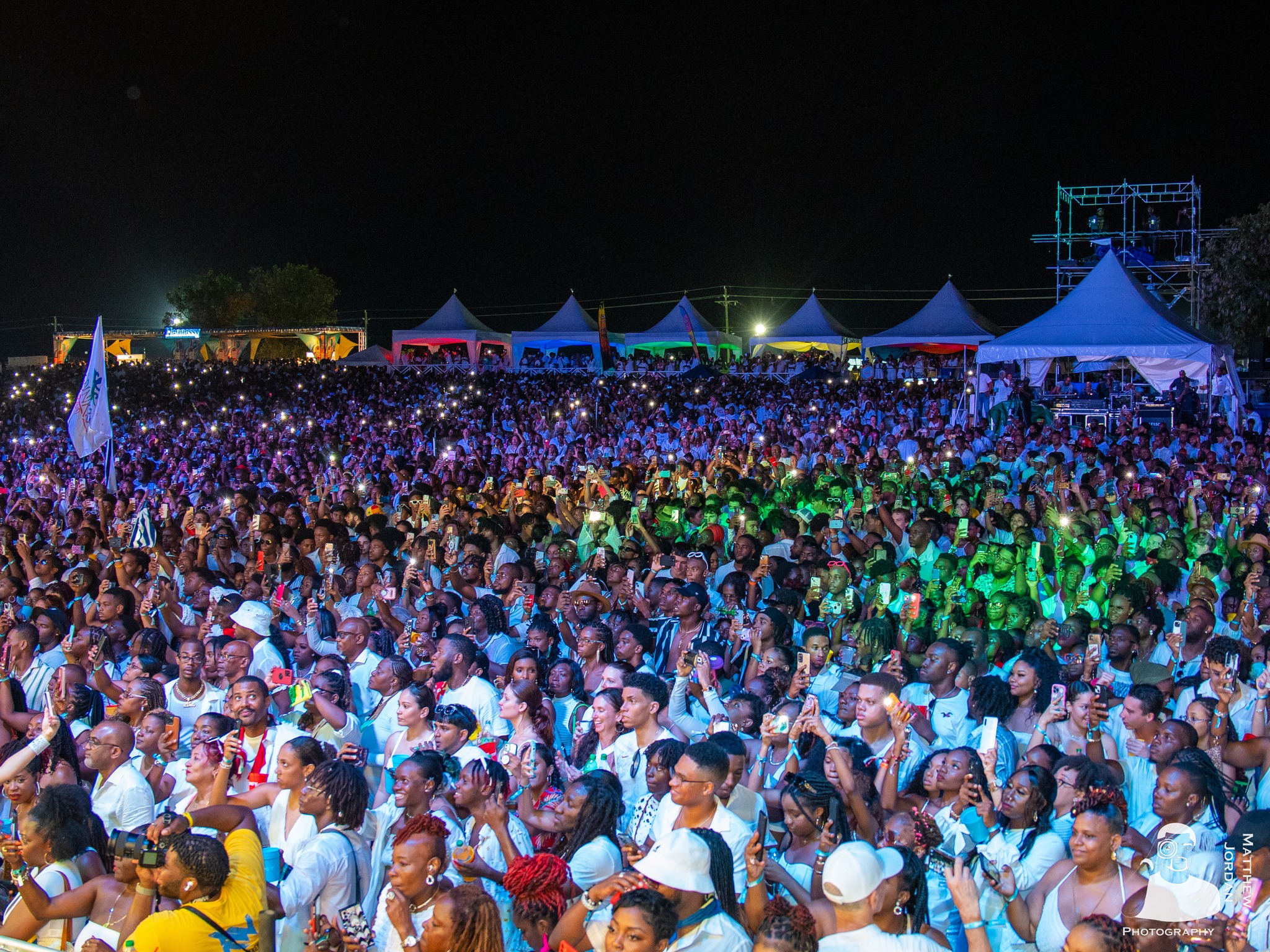
    One of the Caribbean’s most anticipated cultural events, the Saint Lucia Jazz and Arts Festival, has become the center of public debate just days after kicking off its 2026 iteration, after two separate on-stage incidents saw performers using explicit, offensive language in front of mixed audiences that included children and entire family groups.

    The first incident unfolded on the festival’s opening night at the Marchand venue, while a second high-profile incident occurred during a set at Soufriere Jazz. Local artist 1T1 included the unedited version of his popular track *Best Friend*, which features a prominent use of the F-word, as part of his official performance. While the two incidents have been framed as isolated cases to date, they have quickly drawn formal attention from top Saint Lucian tourism and cultural industry leaders, who are now calling for proactive measures to prevent similar missteps in future events.

    Martin James, chief executive officer of the Eastern Caribbean Collective Organisation for Music Rights, was one of the first industry figures to speak out publicly on the issue. James referenced long-standing provisions within Saint Lucia’s Criminal Code — specifically sections 501, 507, and 508 — that outline strict rules for public behavior, extending to performances held at open public events. “These provisions explicitly prohibit the use of profane, indecent, or obscene language, as well as any act or expression that may be deemed offensive in a public setting,” James explained in his remarks. “It is concerning to note that during the opening of Jazz on the 30th, one of the performers openly used profanity as part of his performance delivery.”

    Beyond calling out the incidents themselves, James emphasized that the controversy highlights a critical gap in pre-event preparations: the absence of clear, communicated boundaries for all participating performers. To address this gap, James argued that performance expectations and prohibitions on offensive public conduct must be written directly into performer contracts before artists arrive at the festival, ensuring all participants understand local rules upfront.

    Saint Lucia’s Tourism Minister Ernest Hilaire echoed James’ concerns during a pre-Cabinet press briefing held on Monday, acknowledging the unique challenge of regulating unscripted speech once a performer has taken the stage, while stressing that clear consequence management is non-negotiable for future events.

    “You have to create a culture, a reputation that artistes know that if they behave in a particular way, there are consequences. So other artistes would not want to do it,” Hilaire told reporters. “Now, some of the artists themselves are probably not even aware of what the boundaries are because they perform globally… they perform in settings where they’re allowed that kind of freedom.”

    Hilaire fully aligned with James’ proposed solution, noting that proactive pre-event planning is far more effective than reactive intervention mid-performance. “You can put it in their contracts that if they behave in a particular way, what effect it has, what consequence it would have. And I think that’s as far as you can go. Once somebody’s on stage, it’s very difficult for you to control them thereafter,” he added. The debate comes as the festival continues its run, with organizers expected to update performer agreement guidelines ahead of next year’s event to address the newly raised concerns.

  • Oliver Benoit to headline new UK international residency programme

    Oliver Benoit to headline new UK international residency programme

    UK-based international arts organization Coreset has announced Grenadian contemporary artist Oliver Benoit as the first participant in its brand-new International Residency Programme, an initiative designed to bridge Caribbean artistic expression and broader UK and global creative conversations at a critical moment for decolonial discourse in the arts.

    Headquartered in Newark, UK, Coreset has kicked off its ambitious new program by selecting one of the most impactful Caribbean artists working in the contemporary space. Benoit’s creative practice is built around a rich, multi-layered visual vocabulary that brings together traditional pigment, text, and a range of repurposed materials – from crushed brick and hessian to recycled newsprint – creating dynamic, thought-provoking tension across his canvases. His abstract compositions operate as both sites of conceptual excavation and physical construction, grappling with the tangled interconnected histories of slavery, colonialism, revolutionary struggle, and global migration.

    At the heart of Benoit’s decades-long practice is a consistent, unflinching decolonial inquiry: how collective histories are retained, hidden, and brought back to public consciousness. His paintings work simultaneously as archival documents and critical interventions, spaces where fragmented narratives coexist without forcing a neat, predefined narrative closure. Ordinary, everyday materials are reimagined as carriers of cultural memory, upending traditional hierarchies of artistic value and expanding widely held definitions of what constitutes a monument and what meaning it can hold, both within Caribbean contexts and across the global art landscape.

    The residency is scheduled to launch in June 2026, when Benoit will travel to the UK for an extended period of focused research, new work creation, and cross-cultural creative exchange. Beyond dedicated studio time to develop new pieces, the program will structure a full calendar of professional networking opportunities, curated introductions to leading gallerists, independent curators, and major institutional partners, designed to create long-term opportunities for cross-border collaboration, expanded visibility, and sustained connection between Benoit and UK-based artistic peers and networks.

    The residency will conclude with a public exhibition of all new work developed during Benoit’s stay, opening in mid-July 2026. This showcase will mark the first time this evolving body of work has been presented to a UK audience.

    During his time in the program, Benoit will advance the next phase of his ongoing series *The Path of Fragments*, deepening his longstanding engagement with archival research and site-responsive creative practice. For Benoit, physical place becomes an embedded part of the artistic process, directly shaping both the tangible structure and conceptual direction of each new work.

    Reflecting on the opportunity to join Coreset’s inaugural residency, Benoit shared: “My practice investigates the quiet endurance of materials that hold suppressed or fragmented histories of Grenada, particularly in the aftermath of the Grenadian Revolution. Through layering, concealment and revelation, I allow partial narratives to coexist — without seeking historical closure. This residency offers a critical space for sustained research and experimentation, and for considering how memory operates not only within Grenada but across broader diasporic and post-revolutionary contexts.”

    Rebecca Blackwood, Founder and Director of Coreset, emphasized the timeliness of selecting Benoit for the inaugural spot: “Launching our International Residency Programme with Oliver feels both urgent and necessary. His work holds a rare balance — intellectually rigorous, materially inventive and emotionally resonant. At Coreset, we are interested in practices that do more than reflect the world; they reframe it.”

    Jenni Francis, a leading cultural strategist who works with arts institutions across the UK, US, and Caribbean, added her perspective on the selection: “Oliver Benoit is one of the most significant Caribbean artists working today. His practice holds complexity without resolution, grounded in material intelligence and historical depth. Rooted in the Caribbean, his work sits firmly within urgent global conversations on memory, power and decolonisation.”

    Beyond showcasing Benoit’s work, the inaugural residency lays a strong foundational framework for Coreset’s ongoing international programming, creating a model for connecting artists, ideas, and audiences across geographic divides and cementing the organization’s role as a critical platform for international, process-led contemporary artistic practice.

    Benoit brings an extensive academic and professional background to the residency: he holds a PhD in Sociology from Brandeis University and an MFA from the TransArt Institute in partnership with Plymouth University. His previous exhibition credits include representing Grenada at the Venice Biennale and Expo 2020 Dubai, alongside solo and group shows across the Caribbean, Europe, and the United States.


  • Promoters react as ‘Tipsy’ reschedules amid date issue

    Promoters react as ‘Tipsy’ reschedules amid date issue

    A scheduling shakeup in Barbados’ iconic Crop Over festival season has divided event promoters after one major J’ouvert celebration shifted its date to avoid conflicting with a beloved cultural tradition, only to create a new overlap with a long-running private gathering.

    Organizers of the popular Tipsy J’ouvert Party Experience, produced by Twisted Entertainment, announced they would move the annual event from its original Foreday Morning slot to Sunday, August 2, a decision that has drawn widespread praise from the nation’s traditional Foreday Morning bandleaders. For weeks, public debate had simmered over the original timing of the Tipsy event, which many argued placed a large-scale commercial celebration in direct competition with the decades-old, culturally rooted Foreday Morning procession that forms a core part of Barbadian national identity.

    In a public statement, Twisted Entertainment clarified that the date change was a deliberate choice to honor Barbados’ cultural heritage, rather than undermine it. “From day one, our intention has always been to celebrate J’ouvert culture, not compete with it,” the statement read. “The team made the deliberate decision to move the event out of the Foreday Morning window in order to preserve the integrity of one of Barbados’ most important cultural traditions.”

    That commitment has been well received by the Foreday Morning Band Collective, a group representing the nation’s traditional carnival bandleaders. Bryan Worrell, the collective’s spokesperson and director of Colours Entertainment, noted that the original scheduling had posed an existential threat to the success of smaller, traditional bands, which have anchored the Foreday Morning celebration for more than 30 years.

    “The collective is very happy today that one of the events that was causing a major challenge for us has been moved,” Worrell said. “What we wanted was that the event would be protected to some extent from competition. The same type of event on that same night made it kind of difficult for us to operate and be successful. They had a bigger entertainment package, so it would have been challenging for us to compete with them on the same day.”

    Worrell added that as a staple national cultural institution, Foreday Morning deserves targeted support from the Barbados Ministry of Culture and the National Cultural Foundation (NCF) to ensure all bandleaders and stakeholders can remain financially viable. “We are looking to protect our event and we want to make sure that the stakeholders, which are the bandleaders in Foreday Morning, are operating in a space where they can be successful,” he explained. With the core conflict resolved, the collective confirmed it is now moving forward full steam with preparations for its 2026 productions.

    While traditional bandleaders celebrate the shift, the new August 2 date has created a fresh scheduling conflict with another established private J’ouvert event. Ryan Forde, co-director of the 10-year-running events Stain’d and the Brekfus Experience, confirmed that Tipsy’s new slot falls exactly on the same date as his annual Sunday gathering. Despite the overlap, Forde says his team has no plans to alter their already finalized itinerary, and remains unworried by the new competition.

    “I don’t see it as competition… I think all of us complement the festival,” Forde explained. “For me, the more events and the variety or the different style of events and locations is great for our lovely Crop Over festival. People will go to their event, people will come to our event, and people will love Crop Over. Our focus is just putting on a great event for Barbadians and visitors alike.”

    Twisted Entertainment has echoed that collaborative framing, noting that the rescheduling was designed to create space for Foreday Morning to retain its central role in the festival season, while positioning the Tipsy experience as an added attraction that enhances, rather than detracts from, Barbados’ premier cultural celebration. The organizers reaffirmed that Foreday Morning remains an unshakable cornerstone of Barbadian national culture, and that they fully support its continued prominence on the national events calendar.

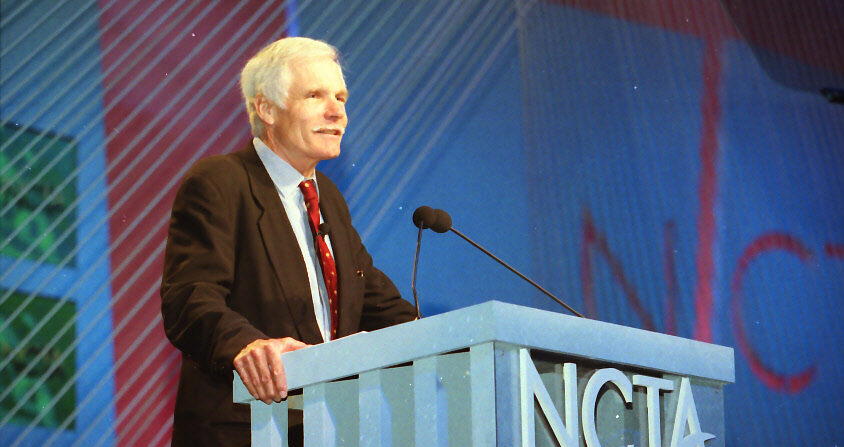
  • Ted Turner, founder of CNN, dies at 87

    Ted Turner, founder of CNN, dies at 87

    Ted Turner, the trailblazing American media entrepreneur who redefined 20th-century global news broadcasting and left an indelible mark on international philanthropy, has passed away at the age of 87. Turner Enterprises, the business mogul’s holding company, officially confirmed his death in a public statement released Wednesday, as first reported by the news network he built from the ground up, CNN.

    Turner’s most transformative contribution to media came in 1980, when he launched CNN – the world’s first 24-hour continuous cable news network. The groundbreaking venture upended the traditional media landscape, forever changing how audiences around the world access and consume news. Before CNN, breaking events were limited to scheduled evening news blocks; Turner’s model brought live, around-the-clock coverage of global happenings directly to viewers’ homes, turning ordinary audiences into real-time witnesses to history.

    Beyond his revolutionizing work in broadcasting, Turner carved out an equally extraordinary legacy in global philanthropy. In 1998, he made international headlines when he committed a $1 billion personal donation to the United Nations – the largest single individual charitable gift recorded in modern history at that time. He used the donation to found the United Nations Foundation, an organization dedicated to bolstering the UN’s ability to tackle pressing global challenges, advance international peace, and drive sustainable development around the world.

    Current United Nations Secretary-General reflected on Turner’s outsized impact, noting that the entrepreneur placed unwavering faith in the UN’s mission at a critical juncture for global cooperation, and backed that belief with unprecedented financial support. “His $1 billion dollar commitment to the United Nations – and subsequent creation of the United Nations Foundation – represented at the time the largest individual philanthropic gift in modern history,” the Secretary-General said.

    Turner’s decades-long business career also included a major industry milestone in the 1990s, when he sold his sprawling media conglomerate, Turner Broadcasting System – which counted CNN, TNT, and Cartoon Network among its core assets – to media giant Time Warner Inc. According to reporting from The Guardian, the deal cemented Turner’s status as one of the most influential media executives of the modern era.

    Throughout his lifetime, Turner’s groundbreaking work earned him widespread acclaim and industry recognition. In 1991, Time magazine named him its Man of the Year, honoring him for reshaping global information flows and turning viewers in 150 countries into instant witnesses to breaking history. He is survived by five children, 14 grandchildren, and two great-grandchildren.