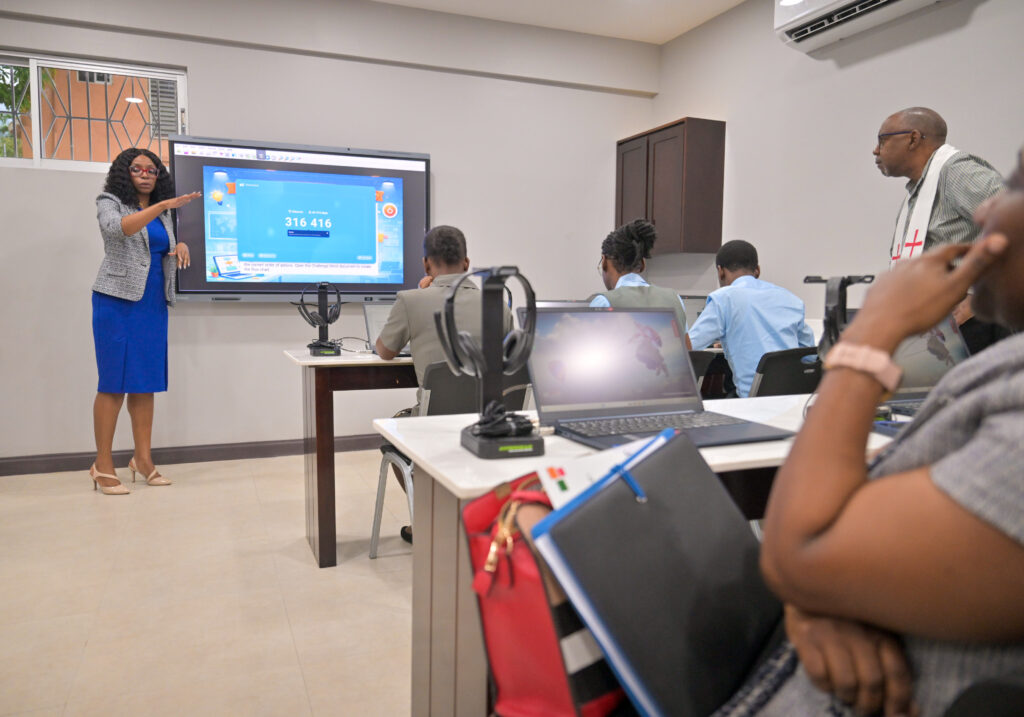
KINGSTON, Jamaica — In a significant move to revolutionize teacher preparation, the Digicel Foundation has inaugurated an advanced US$80,000 Smart Laboratory at Church Teachers’ College in Mandeville. This initiative marks a pivotal step in accelerating digital transformation within Jamaica’s educational framework, directly addressing the need for technologically proficient educators.
The official unveiling ceremony on Tuesday featured prominent education stakeholders who emphasized the strategic importance of the investment. Dr. Tamika Benjamin, Assistant Chief Education Officer for the Tertiary Unit at the Ministry of Education, Skills, Youth and Information, characterized the project as a visionary commitment to national human capital development.
“This initiative transcends the establishment of a physical facility; it embodies a deliberate investment in Jamaica’s educational future,” Dr. Benjamin declared. “By focusing on teacher education, we are fundamentally investing in our students and enabling the comprehensive modernization of pedagogy to align with global digital advancements.”
Dr. Benjamin further elaborated that sustainable educational reform is intrinsically linked to high-quality teacher preparation. She commended the Digicel Foundation for expanding its Smart Lab program—previously implemented in primary and secondary schools—into the tertiary teacher-training sector, calling it a demonstration of exceptional foresight.
“Educators constitute the most critical school-based determinant of student success,” she asserted. “Consequently, the overall caliber of our education system is ultimately bounded by the quality of the teachers we train.”
She charged teacher-training institutions with the national mandate to produce graduates who are not only pedagogically skilled and knowledgeable in their subject areas but also digitally literate, innovative, and adaptable to the needs of 21st-century learners.
Charmaine Daniels, Chief Executive Officer of the Digicel Foundation, outlined that the new lab is a key component of a broader national strategy designed to enhance digital access and foster technological confidence among the teaching community.
Reflecting on the resilience of Jamaican educators, Daniels shared observations from the foundation’s weekly community and school visits following Hurricane Melissa. She praised teachers for their unwavering dedication amidst challenging circumstances.
“Despite damaged classrooms and personal hardships, educators consistently prioritized their students’ learning and Jamaica’s collective future,” Daniels stated, underscoring the rationale behind investing in those who shape the nation’s youth.
— Adapted from JIS reporting