分类: business

  • San Ignacio Vendors Cry Foul After Promoted Festival Falls Apart

    San Ignacio Vendors Cry Foul After Promoted Festival Falls Apart

    Small business owners in San Ignacio are facing significant financial setbacks following the abrupt cancellation of a heavily promoted culinary and music event. The ‘Food and Soca Tour,’ scheduled for March 7-9, 2026, has been indefinitely postponed, leaving over sixty vendors who paid participation fees ranging from $50 to $100 without immediate recourse for reimbursement.

    The event organizer, Trinidadian promoter Irwin Denis—previously associated with the Island Run Delivery app franchise—marketed the festival as a major platform for local business promotion through the digital delivery service. Vendors who invested in the opportunity now find themselves in financial limbo after Denis declared that all funds had been exhausted in preliminary event preparations.

    Complications emerged when vendors raised concerns about venue modifications and questioned whether proper official approvals had been secured. Despite these issues, local authorities have indicated that the dispute may fall under civil jurisdiction rather than criminal misconduct.

    In response to allegations of fraudulent intent, Denis maintains that unforeseen financial constraints necessitated the postponement. He has publicly committed to reimbursing all affected vendors once his organization stabilizes its finances. Nevertheless, many small business operators describe the situation as a devastating blow, with some expressing skepticism about ever recovering their investments.

    The broader implications for vendor participation in externally-organized promotional events remain uncertain. This incident highlights the vulnerabilities small businesses face when engaging with third-party promoters and underscores the importance of financial safeguards in event planning partnerships.

  • Vendors highlight mounting pressures from rent, taxes and unpredictable spending

    Vendors highlight mounting pressures from rent, taxes and unpredictable spending

    Small enterprises in St. Lucia are confronting an escalating operational crisis characterized by unsustainable overhead costs and unpredictable revenue streams, according to extensive testimonies from local vendors. The fragile island economy presents unique challenges that threaten the survival of passionate entrepreneurs despite apparent market demand.

    Commercial rental expenses emerge as the most significant financial burden, typically ranging from two to five times higher than residential rates. Landlords frequently demand substantial upfront payments including two-to-three-month deposits plus first month’s rent. The fixed nature of these payments creates particular hardship during seasonal downturns such as post-Christmas periods or rainy seasons, with tenants possessing minimal protection against sudden rent increases.

    Taxation and regulatory compliance present additional layers of financial pressure. Business owners must navigate a complex web of mandatory payments including business registration fees, trade licenses, Inland Revenue filings, Value Added Tax (where applicable), National Insurance contributions, import duties, customs service charges, and environmental levies. These fixed costs persist regardless of profitability, creating particular strain during periods of low income.

    Import dependency compounds operational challenges for creative industries and retail sectors. Approximately 98% of materials required by artisans and manufacturers must be imported, subjecting businesses to shipping fees, customs duties, service charges, brokerage fees, port handling costs, and storage charges. In numerous instances, these ancillary fees surpass the actual value of imported goods, forcing vendors to either raise consumer prices or accept diminished profit margins.

    The digital marketplace and periodic events have become essential survival mechanisms for many entrepreneurs. Social media platforms enable product promotion and order generation, while organized events by institutions like CDF, Export Saint Lucia, and the Ministry of Commerce provide crucial sales opportunities. This event-driven revenue model creates unpredictable cash flow patterns, with vendors experiencing extended sales droughts followed by intense demand bursts during cultural celebrations like Independence and Jounen Kweyol.

    Customer spending patterns reflect broader economic pressures on the island. While consumer intention to support local businesses remains strong, practical purchasing power is constrained by high living costs, rising utility expenses, and stagnant wages. The tourism sector provides some relief through souvenir purchases, with visitors often preferring authentic artisan products over mass-market alternatives.

    Beyond financial pressures, business owners face significant personal strain from extended working hours, multifaceted role requirements (including marketing, accounting, and production), and constant pricing justification. Many operators supplement business income with personal savings or secondary employment to maintain operations during cash flow shortages.

    The collective testimony reveals an entrepreneurial ecosystem where passion and product quality are insufficient guarantees against structural economic challenges. Vendors have suggested potential mitigation measures including government concessions on imported materials and enhanced support mechanisms to address the fundamental imbalance between fixed costs and variable revenues.

  • African Export–Import Bank raises Caricom financing ceiling to US$5 billion

    African Export–Import Bank raises Caricom financing ceiling to US$5 billion

    The African Export-Import Bank (Afreximbank) has substantially elevated its financial commitment to the Caribbean Community (CARICOM), raising its financing ceiling from $3 billion to $5 billion. This strategic enhancement was unveiled during the 50th Regular Meeting of the Conference of Heads of Government of CARICOM in Basseterre, St. Kitts and Nevis, marking a significant step in fortifying economic collaboration between Africa and the Caribbean. The bank has set an ambitious target to fully deploy this augmented financial capacity within the next three to four years. This expanded initiative is founded upon a robust foundation of over $750 million already disbursed across the region and an active pipeline exceeding $2 billion in transactions currently being executed. The financing is strategically directed towards stimulating value-added production within pivotal sectors such as agriculture and natural resources. Concurrently, it will bolster critical infrastructure development, encompassing power generation and distribution networks, roadways, trade centers, and international conference facilities. A diverse portfolio of projects has been earmarked for development, including the establishment of healthcare facilities in Barbados, Guyana, and Grenada; targeted tourism investments in Barbados, Grenada, the Bahamas, and Antigua and Barbuda; and the development of agro-processing and logistics infrastructure across multiple CARICOM member states. Furthermore, Afreximbank is extending credit lines and specialized on-lending facilities tailored for small and medium-sized enterprises (SMEs) to financial institutions in Suriname, St. Lucia, Grenada, and Dominica. In a coordinated effort with the Eastern Caribbean Central Bank (ECCB), the institution has pledged support for a comprehensive regional development strategy. This strategy aims to double the size of the eastern Caribbean economy within a ten-year framework, with concentrated investments in infrastructure, agricultural modernization, and enhanced processing capabilities. Reinforcing its long-term presence, Afreximbank reaffirmed its plans to establish a permanent African Trade Centre in Bridgetown, Barbados. Work is also progressing on the creation of a dedicated Caribbean Eximbank, designed to mobilize long-term development finance for the region. The institution also expressed strong support for the ongoing development of the CARICOM Payment and Settlement System (CPSS), a mechanism inspired by the successful Pan-African Payment and Settlement System (PAPSS) launched in 2022 to facilitate seamless cross-border trade using local currencies. Headquartered in Cairo, Afreximbank is a premier pan-African multilateral financial institution with a three-decade-long history of financing and promoting both intra- and extra-African trade. It has been instrumental in driving industrialization and fostering regional economic integration, notably through its support for the implementation of the African Continental Free Trade Area (AfCFTA). As of December 2024, the bank reported formidable financial strength with total assets and contingencies surpassing $40.1 billion and shareholder funds standing at $7.2 billion. It maintains investment-grade credit ratings from leading agencies including GCR, Moody’s, China Chengxin International Credit Rating, and the Japan Credit Rating Agency. The Afreximbank Group encompasses the bank itself, the Fund for Export Development in Africa (FEDA) as its equity impact investment arm, and AfrexInsure, its insurance management subsidiary.

  • Afreximbank raises CARICOM financing cap to US$5 billion to accelerate regional transformation

    Afreximbank raises CARICOM financing cap to US$5 billion to accelerate regional transformation

    In a landmark announcement at the 50th CARICOM Heads of Government Conference in Basseterre, African Export-Import Bank (Afreximbank) Executive Vice President Dr. Denys Denya unveiled a substantial expansion of the bank’s Caribbean engagement strategy. The pan-African multilateral institution has elevated its regional financing commitment from $3 billion to $5 billion for implementation over the next three to four years, signaling a profound deepening of Africa-Caribbean economic cooperation.

    This enhanced financial framework builds upon existing disbursements exceeding $750 million across the region and an active pipeline surpassing $2 billion in currently executing transactions. Dr. Denya articulated the bank’s visionary objective to fundamentally transform economic structures through strategic investments in value-added processing of agricultural outputs and natural resources. The comprehensive strategy aims to retain significant economic value within regional economies, generate sustainable wealth creation, stimulate employment opportunities, and enhance livelihoods while producing positive spillover effects on government revenues and investment landscapes.

    The bank’s multidimensional intervention strategy encompasses healthcare facility development in Barbados, Guyana, and Grenada; tourism sector enhancement across Barbados, Grenada, Bahamas, and Antigua and Barbuda; agro-processing projects and logistics infrastructure in Barbados, Guyana, Antigua and Barbuda, and St. Kitts and Nevis; plus critical infrastructure development including power generation, distribution systems, road networks, conferencing facilities, and trade centers throughout Grenada, Jamaica, Bahamas, and Suriname.

    Additional strategic initiatives include specialized financing support for banking institutions in Suriname, St. Lucia, Grenada, and Dominica—featuring SME-focused lending facilities for regional development banks; local content promotion programs in resource-rich nations to maximize value retention through entrepreneurial empowerment; development of sea and air connectivity frameworks to enhance intra-Caribbean movement of goods, services, and investments; and expansion of the Creative Africa Nexus Programme to foster cultural and creative industry development through financing, capacity building, and trade facilitation between African and Caribbean creative sectors.

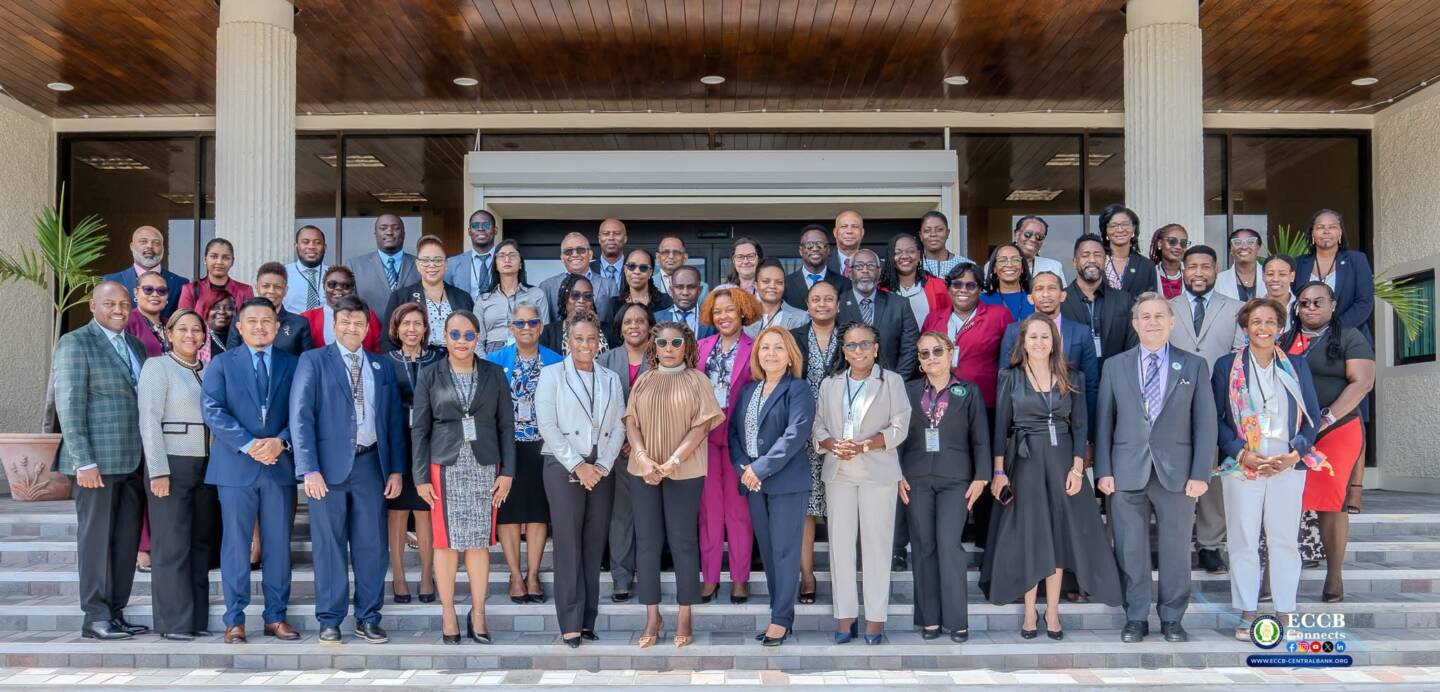
    Following high-level discussions with Eastern Caribbean Central Bank leadership, Afreximbank has committed to supporting implementation of regional development strategies targeting economic doubling within a decade. This collaboration will encompass investments in infrastructure development, power generation and distribution systems, agricultural production, and processing capabilities. The bank is already facilitating African corporate expansion into the region through partnerships with entities including Access Bank, Oando, and Arise Integrated Industrial Platforms, with the latter exploring special economic zone establishment in multiple Caribbean nations.

    Dr. Denya reaffirmed commitment to developing the Afreximbank African Trade Centre in Bridgetown, Barbados, to consolidate institutional presence while advancing establishment of the Caribbean Eximbank as a transformative investment vehicle. The bank welcomed CARICOM Central Bank Governors’ decision to proceed with the CARICOM Payment and Settlement System—modeled after Afreximbank’s pioneering PAPSS system launched in 2022—which will establish a low-cost, real-time cross-border payment system utilizing local currencies to dramatically enhance regional trade integration.

    The conference, conducted under the theme “Beyond Words: Action Today for a Thriving, Sustainable CARICOM” from February 24-27, featured addresses by regional leaders, Commonwealth Secretary-General Dr. Carla Barnett, and Saudi Arabian Minister of State for Foreign Affairs Mr. Adel al-Jubeir. St. Kitts and Nevis is scheduled to host the fifth Africa-Caribbean Trade and Investment Forum (ACTIF2026) in July 2026, featuring panel discussions, business matchmaking sessions, cultural showcases, and significant agreement signings.

  • ‘You left me no choice…’

    ‘You left me no choice…’

    In the realm of employment law, termination doesn’t always arrive with dramatic pronouncements or formal pink slips. A sophisticated legal concept known as ‘constructive dismissal’ represents scenarios where employees are effectively forced to resign due to employer conduct that fundamentally breaches employment contracts.

    The legal threshold for constructive dismissal extends far beyond ordinary workplace dissatisfaction or isolated disagreements. Courts recognize this form of termination when employers commit significant violations that strike at the core of employment agreements, including unauthorized substantial pay reductions, imposed radical changes to work conditions or locations, and documented cases of workplace harassment or bullying.

    These breaches typically involve either explicit contract terms (such as wage agreements) or implied obligations like maintaining mutual trust and confidence. Particularly challenging are situations where employees face ultimatums—resign or face termination—creating legally ambiguous ‘voluntary’ departures that may actually constitute constructive dismissal.

    Employers face substantial financial exposure when constructive dismissal claims succeed. Affected employees retain full rights to pursue unfair termination claims through industrial tribunals, potentially resulting in significant compensation awards. The distinction between mutually negotiated separations and constructive dismissals requires careful legal navigation, especially when performance issues necessitate employment termination.

    Legal experts emphasize that prudent employers should implement formal processes for addressing employee grievances and separation procedures. Professional legal consultation is recommended when termination considerations arise, as preventive measures prove far more cost-effective than litigation defense. The fundamental principle remains: employer conduct carries consequential legal and financial implications, making workplace compliance both an ethical imperative and economic necessity.

  • Why Caribbean professionals aren’t landing remote jobs — and how to fix It

    Why Caribbean professionals aren’t landing remote jobs — and how to fix It

    A pressing dilemma is emerging across the Caribbean professional landscape as hundreds of qualified individuals report inability to secure remote employment despite strong credentials. Digital strategist Keron Rose, based in Thailand, reveals that PhD holders, master’s graduates, and experienced managers alike are encountering unresponsive applications in the global job market.

    The core issue identified is a fundamental misalignment between traditional job-seeking approaches and contemporary hiring practices. Global companies have shifted from degree-focused recruitment to skills-first evaluation, prioritizing demonstrable capabilities over academic credentials. Modern employers seek professionals who exhibit strong communication, critical thinking, digital literacy, data interpretation skills, and adaptability to new technologies—particularly AI integration for enhanced efficiency.

    Rose outlines six critical strategy adjustments Caribbean professionals must implement:

    1. Market Alignment Over Degrees: Qualifications alone no longer differentiate candidates. Employers require evidence of measurable achievements, digital competence through tool proficiency, and relevant certifications. Professionals must showcase portfolios and case studies demonstrating business impact rather than relying on academic credentials.

    2. Algorithm-Optimized Resumes: Applicant Tracking Systems (ATS) filter applications before human review. Complex designs, graphics, and lack of keyword optimization cause qualified candidates to be automatically rejected. Simple formatting, job description mirroring, and AI-enhanced keyword alignment are essential.

    3. Geographic Filter Awareness: Many professionals inadvertently apply for region-locked positions by leaving location filters set to United States. Targeting “Worldwide,” “Work from Anywhere,” and “Global Remote” listings dramatically increases eligibility.

    4. LinkedIn Necessity: An incomplete or inactive LinkedIn profile renders professionals invisible to recruiters who actively source talent. Optimized profiles require skill-specific headlines, tool enumeration, measurable results, and regular industry engagement.

    5. Systematic Approach: Treating job hunting as a disciplined system rather than occasional activity is crucial. Daily alerts, rapid application submission, tailored materials, and consistent tracking over months are necessary when competing globally.

    6. Digital Footprint Management: Employers routinely review public online presence. Unprofessional content can silently eliminate candidates, requiring careful curation of digital identities that convey maturity and professionalism.

    Rose emphasizes that Caribbean professionals possess inherent advantages including strong English proficiency and cultural alignment with major markets. Success requires strategic adaptation to modern hiring realities through updated skills, algorithm awareness, intentional filtering, and disciplined execution in the global remote workforce ecosystem.

  • US Treasury chief says 15% global tariff likely to be implemented this week

    US Treasury chief says 15% global tariff likely to be implemented this week

    WASHINGTON — United States Treasury Secretary Scott Bessent announced on Wednesday that the Trump administration is preparing to implement a sweeping 15% global tariff this week. This move represents a strategic pivot in the president’s trade policy after the Supreme Court delivered a significant legal setback to his previous tariff framework last month.

    The Supreme Court’s ruling invalidated the country-specific tariffs that President Trump had imposed on both allies and economic competitors, striking a blow to his cornerstone economic initiative. In response, the administration has utilized Section 122 of the Trade Act of 1974 to enact a new 10% duty, which Bessent confirmed would be elevated to 15% imminently.

    According to Bessent, this tariff authority provides a 150-day window for implementation unless extended by Congressional approval. During this five-month period, the administration plans to conclude multiple investigations into national security concerns and unfair trade practices that could justify additional, more permanent tariff measures.

    Bessent expressed confidence that tariff rates would return to their previous levels within this timeframe, noting that the legal authorities underpinning these investigations have withstood over 4,000 legal challenges and represent a more methodical though robust approach to trade enforcement.

    The court’s decision did not affect sector-specific tariffs on goods such as steel and automobiles, nor earlier tariffs on China that followed extended investigation periods. The administration continues to pursue investigations into various sectors including imported pharmaceuticals and drones, as well as China’s compliance with existing trade agreements.

    The previously invalidated tariffs, implemented under emergency economic powers, had generated approximately $130 billion in government revenue by late 2025. The court ruling has initiated complex litigation regarding refunds, with a federal appeals court recently rejecting the administration’s attempt to delay these proceedings.

  • Irie Rock broadens skincare portfolio beyond acne as brand scales

    Irie Rock broadens skincare portfolio beyond acne as brand scales

    Seventeen-year-old Jamaican skincare manufacturer Irie Rock has strategically expanded its product offerings with the introduction of three specialized facial cleansers, marking a significant diversification beyond its core acne treatment business. The expansion addresses growing consumer demand for targeted skincare solutions across multiple skin conditions.

    Managing Director Racquel Brown revealed that this new line represents a natural evolution from the brand’s established tea tree and witch hazel acne system, which has historically driven the company’s revenue growth and market presence. “Our acne line enabled us to build a loyal customer base that supported the subsequent launch of our glycolic products and serums, and now our fresh cleanser line,” Brown explained in an interview with the Jamaica Observer.

    The Kingston-based company, which maintains distribution through over 200 retail outlets across Jamaica, has simultaneously developed robust international export channels. Through its proprietary e-commerce platform and Amazon storefront, Irie Rock now directly supplies customers in the United States, United Kingdom, and Cayman Islands.

    The newly launched cleanser range, first unveiled at Expo Jamaica last year, features three scientifically formulated products targeting specific dermatological concerns. The portfolio includes a Vitamin C Glow Cleanser infused with glutamine and perilic acid designed for dull or aging skin; a Brightening Cleanser containing kojic acid, arbutin and lactic acid to address hyperpigmentation and uneven skin tone; and a Hydrating Gentle Cleanser with glycerin specifically formulated for sensitive or barrier-damaged skin.

    Brown emphasized the strategic gap these products fill in Irie Rock’s portfolio: “We identified a significant unmet need for consumers struggling with eczema, damaged skin barriers, or sensitivity issues. These formulations represent our commitment to providing targeted solutions for every skin type.”

    The company has gained notable traction with its existing glow serum and vitamin serum products, which have earned recommendations from dermatologists. According to Brown, the new cleansers continue this clinical approach: “Each formulation is precisely engineered to address specific skin conditions at their root cause.”

    Founded from Brown’s personal struggle with acne-related challenges, Irie Rock has grown from homemade formulations to a comprehensive range of over 60 skincare products. The managing director highlighted the emotional dimension of skincare: “Skin concerns often carry profound emotional and confidence implications. Discovering effective solutions provides tremendous psychological relief beyond physical improvement.”

    The company maintains a deliberate, phased approach to product development, particularly in the Jamaican market where consumer adoption of local products requires strategic patience. While the new cleansers are available through Irie Rock’s website and retail network, the company continues to monitor market response while intensifying marketing efforts.

    “Quality remains our uncompromising priority,” Brown asserted. “We invest substantial time in testing and formulation to ensure every product we launch delivers measurable results and customer satisfaction.”

  • Results from Jamaica’s offshore oil survey to become available within next three months — Vaz

    Results from Jamaica’s offshore oil survey to become available within next three months — Vaz

    KINGSTON, Jamaica — Preliminary findings from a comprehensive surface geochemical survey conducted in Jamaican waters are anticipated within the next 60 to 90 days, according to Energy Minister Daryl Vaz. The announcement was made during a formal post-Cabinet press briefing held this Wednesday.

    The extensive offshore exploration initiative, executed by United Oil and Gas, concluded successfully on February 28th after a 34-day operational period. Minister Vaz reported an impeccable safety record throughout the project, highlighting the absence of any environmental mishaps, safety-related incidents, or disputes with local fishing communities.

    Detailing the technical scope of the mission, Vaz outlined the collection of critical geological data. Operations included acquiring 1,189 line kilometres of multibeam echosounder data to meticulously chart the seafloor topography. Furthermore, heat flow probe measurements were taken to assess subterranean temperature gradients. The most pivotal component involved extracting piston cores from 42 strategically chosen locations across the Walton and Morant basins. These sediment samples are now en route to a specialized laboratory in the United States for exhaustive analysis to detect direct evidence of oil and gas reserves.

    Minister Vaz underscored that this endeavor transcends a mere technical exercise, representing a significant advancement in evaluating the nation’s geological prospects. ‘The sophisticated data acquired will be instrumental in guiding evidence-based policy decisions regarding Jamaica’s energy trajectory,’ he stated.

    Reaffirming the government’s stance, Vaz emphasized a commitment to a prudent, scientifically-grounded strategy. He clarified the administration’s position by distinguishing between exploration and exploitation, noting, ‘Exploration is fundamentally about fact-finding, data analysis, and making judicious choices for Jamaica’s benefit. It does not imply proceeding with extraction without implementing rigorous safeguards.’

    The forthcoming results are poised to shape the future of Jamaica’s energy sector and its strategic policy decisions.

  • Hurricane recovery sales drive growth for Omni

    Hurricane recovery sales drive growth for Omni

    OMNI Industries Limited concluded its 2025 fiscal year with exceptional financial performance, achieving a significant 14% surge in annual revenue driven by post-hurricane reconstruction demands and sustained construction sector activity. The thermoplastics manufacturer reported total revenue of $2.19 billion, marking a substantial increase from the $1.92 billion recorded in the previous year.

    The company’s strategic foresight in modernizing manufacturing facilities and controlling operational costs proved instrumental when Hurricane Melissa, a Category 5 storm, struck Jamaica on October 28, 2025. Despite the devastation that left thousands homeless in western regions, OMNI’s Twickenham Park operations remained largely unaffected, enabling the company to resume full production capacity within days of the disaster.

    Managing Director Patrick Kumst emphasized that beyond the $10 million allocated for direct relief aid, the company’s most valuable contribution was maintaining operational continuity to supply essential construction materials. The manufacturer significantly increased production and distribution of critical building components, including zinc roofing and PVC piping systems, to accelerate national recovery efforts.

    The fourth quarter particularly demonstrated the impact of reconstruction activities, with revenue soaring to $616 million—a remarkable 50% increase compared to the same period in 2024. This growth was primarily fueled by heightened domestic orders for infrastructure rehabilitation projects.

    Financial metrics revealed strengthened profitability, with gross profit climbing to $891 million and net profit jumping 34% to $169.9 million. These improvements reflected enhanced production volumes and more efficient absorption of fixed manufacturing costs as plants operated near maximum capacity.

    Strategic capital investments, including the integration of advanced injection moulding machinery, contributed to a 37% expansion in property, plant and equipment, which reached $603 million by year-end. Concurrently, OMNI pursued geographic diversification, successfully entering new Caribbean markets including Dominica, St. Lucia, Barbados, and Guyana.

    The company maintained strategic inventory levels of $826.8 million to support ongoing recovery demands, while total assets grew to $1.85 billion. Despite facing global logistics disruptions, foreign exchange volatility, and elevated import costs throughout the year, OMNI’s operational resilience and timely investments positioned it for sustained growth.

    Looking forward, management outlined plans for continued capacity expansion, enhanced export readiness, and ongoing support for national rebuilding initiatives, expressing confidence in further business development across Jamaica and the wider Caribbean region.