
In a significant move to uphold fair competition, the European Union has levied fines totaling over €157 million ($182 million) against luxury fashion giants Gucci, Chloe, and Loewe for engaging in resale price-fixing practices. The European Commission, following surprise raids in April 2023 and a formal antitrust investigation launched in July 2024, found that the brands had restricted independent retailers from setting their own prices both online and in physical stores. This anticompetitive behavior, according to the EU, not only inflated prices but also limited consumer choice.
分类: business
-

Budget shifts gear on auto sector
The 2025/2026 national budget of Trinidad and Tobago has been hailed as ‘for the people’ by Visham Babwah, president of the TT Automotive Dealers Association (TTADA). The budget introduces significant policy shifts aimed at making vehicle ownership more affordable while addressing loopholes that have allegedly drained foreign exchange reserves. Finance Minister Davendranath Tancoo announced a series of tax reforms in the automotive sector, balancing environmental responsibility, economic prudence, and public accessibility. One of the most notable changes is the introduction of new taxes on luxury electric vehicles (EVs), effective January 1, 2026. Tancoo emphasized the government’s support for EV adoption to reduce carbon emissions but highlighted the misuse of tax exemptions for high-end models. Under the new regime, EVs with a cost, insurance, and freight (CIF) value exceeding $400,000 will attract a ten per cent customs duty, a 12.5 per cent VAT, and a tiered motor vehicle tax, expected to raise $40 million annually. Mid- and lower-priced EVs will continue to benefit from tax relief, promoting clean energy alternatives for the average citizen. Additionally, tax concessions for returning nationals, including exemptions from motor vehicle tax, VAT, and customs duty, will be removed, aligning them with other vehicle importers. The government also revised the age limit on used car imports, increasing the permissible age for private vehicles from three to six years and for light commercial vehicles from seven to ten years. Babwah welcomed these changes, noting they followed detailed consultations with TTADA. The budget also introduced increased fines for road safety and environmental protection, including higher penalties for careless driving and driving under the influence. While no new investments were made in compressed natural gas (CNG), Babwah cautioned against revisiting past initiatives that failed to yield long-term benefits. He also welcomed the government’s $1 reduction in the price of super gasoline, highlighting past unfulfilled promises to reverse fuel price hikes. Babwah described TTADA’s engagement with the government as collaborative, emphasizing their commitment to policies supporting the automotive industry, consumer protection, and environmental sustainability.
-

Business chambers welcome budget presentation
In the wake of the 2025/2026 budget presentation, Dianne Joseph, President of the TT Coalition of Services Industries (TTCSI), emphasized the need for the government to prioritize implementation over mere promises. While applauding initiatives such as the removal of VAT on basic food items and the establishment of a $1 billion National Investment Fund Holding Company Ltd, Joseph cautioned that past governments have struggled with execution. She stressed that without the right teams and strategies in place, the budget’s ambitious goals may remain unfulfilled. Joseph highlighted ongoing issues with online business registration, noting that despite promises, many members still face bureaucratic hurdles. She called for accountability and strategic planning to ensure the budget’s success. The American Chamber of Commerce of TT (Amcham TT) and other business associations welcomed aspects of the budget, particularly enhancements to the Customs and Excise Division and potential reforms to the VAT system. However, they emphasized the importance of inter-agency coordination and the establishment of oversight mechanisms to ensure lasting impact. Kiran Singh, President of the San Fernando Chamber of Commerce, praised the reduction in super gas prices, which he said would benefit the MSME sector by reducing transportation costs. However, concerns were raised about proposed rental taxes and electrical surcharges, which could increase costs for landlords and tenants. The TT Chamber of Industry and Commerce also highlighted measures to boost non-energy exports, including investment in agriculture and the establishment of an Export Academy. Overall, while the budget has been well-received, business leaders are calling for effective implementation to translate promises into tangible benefits.
-

Tancoo: New board will revamp CAL
In a significant move to address long-standing financial mismanagement, Caribbean Airlines (CAL) has appointed a new board of directors tasked with rectifying what Finance Minister Davendranath Tancoo described as ‘criminal negligence’ under the previous administration. During the 2025/2026 budget presentation in Parliament on October 13, Tancoo revealed that CAL had spent over $60 million on audits conducted by Ernst & Young and PriceWaterhouseCoopers (PwC) but failed to submit audited financial statements for nearly a decade. Despite this lack of transparency, the former finance minister repeatedly approved funding for CAL between 2017 and 2025 to cover operational pressures. Tancoo condemned this as a failure of governance, stating that the airline had descended into inefficiency and fiscal indiscipline. The new board, appointed by the Ministry of Finance, is expected to implement stringent measures to restore accountability and modernize governance standards. This includes updating the outdated State Enterprise Performance Monitoring Manual to align with international best practices in corporate governance, transparency, and fiscal responsibility. The leadership transition also saw the immediate resignation of CEO Garvin Medera, who was replaced by Chief Operating Officer Nirmala Ramai. Medera expressed gratitude to employees, partners, and customers for their support during his tenure. Under Ramai’s leadership, CAL will focus on five key initiatives: enhancing employee and stakeholder communication, improving operational efficiency, elevating customer experience, developing a sustainable growth plan, and conducting comprehensive audits to strengthen governance and accountability. The airline remains committed to its full schedule and aims to prioritize internal talent development for career advancement opportunities.
-

Tancoo defends projected US$73 oil price
Trinidad and Tobago’s Minister of Finance, Davendranath Tancoo, has justified the government’s decision to base its fiscal 2026 budget on an oil price of US$73.25 per barrel and natural gas at $4.25 per million British thermal units (MMBtu). The announcement was made during a post-budget forum organized by the TT Chamber of Industry and Commerce on October 14 in San Fernando. The event saw Tancoo addressing concerns raised by Nalini Ramkissoon, the business development manager at Heritage Petroleum Ltd, regarding the rationale behind the selected prices. Tancoo explained that the figures were derived from projections by the Ministry of Energy and Energy Industries, which utilized a ‘basket of prices’ methodology developed under the previous administration. The projections included optimistic, pessimistic, and moderate estimates, with the government opting for the middle figure to ensure realism. Tancoo acknowledged that this approach might differ from other metrics, such as the Brent crude oil price. He also emphasized that the budget incorporates various contingencies to account for potential fluctuations in oil and gas prices. The US Energy Information Administration (US EIA) has forecasted a decline in oil prices, with Brent crude expected to drop to US$52 per barrel by early 2026. Similarly, natural gas prices are projected to average US$3.90/MMBtu in 2026. Tancoo’s maiden budget, presented on October 13, outlined expenditures of $59.2 billion and revenues of $55.4 billion, resulting in a $3.9 billion deficit. Oil revenue is anticipated to contribute $11.254 billion, while non-oil revenue is forecasted at $43.402 billion, with capital revenue expected to reach $0.711 billion.
-

OPINION: What cannabis legislation can teach us about foreign direct investment (Part 2)
In the competitive landscape of foreign direct investment (FDI), Saint Lucia and other Caribbean nations offer substantial tax concessions to attract investors. These incentives include VAT relief on building materials, income tax exemptions, property tax waivers, and customs duty exemptions on imports. Such measures are part of a broader strategy to stimulate economic growth and job creation. However, the International Monetary Fund (IMF) has raised concerns about the sustainability of these incentives, noting that the cost per job in the formal sector can be as high as $2,500. Research also indicates that some countries forfeit up to 16% of their annual GDP through tax incentives, with limited tangible benefits. Despite these criticisms, proponents argue that without such incentives, investment and job creation would stagnate. To address these challenges, the Regulated Substance Authority (RSA) and other stakeholders are focusing on sector-specific incentives that prioritize corporate social responsibility, environmental protection, and compliance with national and international laws. Additionally, efforts are underway to improve the ease of doing business in Saint Lucia, addressing issues such as limited access to financing, weak insolvency mechanisms, and high energy costs. The RSA is also working to integrate traditional communities, such as the Rastafari, into the burgeoning cannabis industry, ensuring that development does not displace local stakeholders. The consultative process undertaken by the RSA serves as a model for broader legislative and policy initiatives, emphasizing public engagement and transparency. As Saint Lucia navigates the complexities of FDI, balancing economic growth with sustainable development remains a critical challenge.
-

Blue Ocean Dredging Equipment En Route to Antigua
In a significant move to bolster coastal resilience and infrastructure development, Antigua and Barbuda has acquired a state-of-the-art dredging excavator and barge. Prime Minister Gaston Browne confirmed that the equipment, purchased by the government for Blue Ocean, has been disassembled and shipped from the Port of Holland to Antigua and Barbuda. This acquisition positions the government as the majority shareholder in Blue Ocean, marking a strategic investment in the nation’s future. The heavy-duty machinery is set to play a pivotal role in dredging, beach replenishment, and land reclamation projects, which are essential for mitigating coastal erosion and enhancing environmental sustainability. The initiative underscores the government’s commitment to safeguarding the nation’s coastline and fostering long-term economic growth. Additionally, the government has emphasized the importance of such infrastructure projects in attracting tourism and supporting local industries. The move is part of a broader strategy to strengthen Antigua and Barbuda’s resilience against climate change and natural disasters, ensuring a sustainable future for its citizens.
-
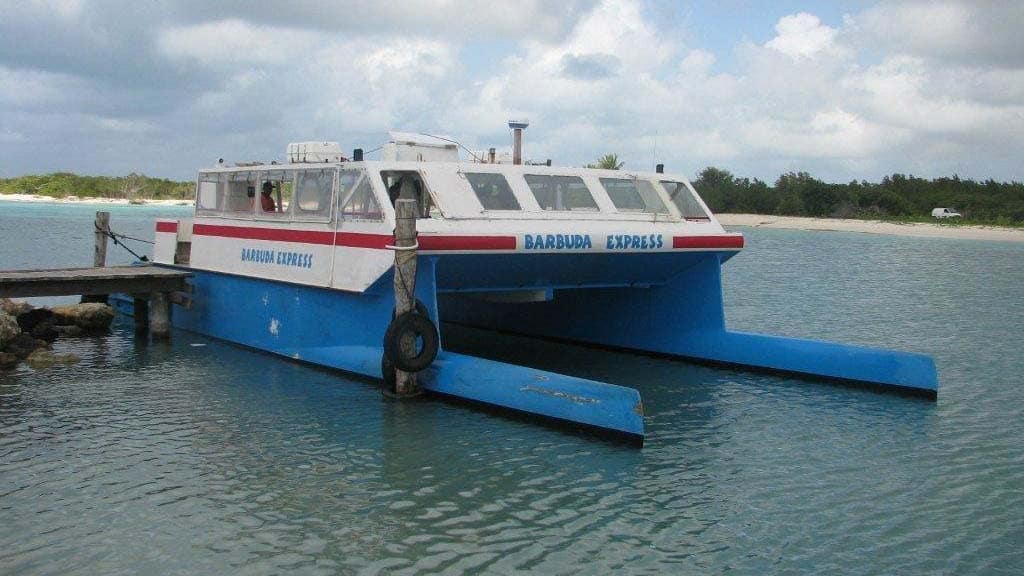
Government Moves Forward with New Port in Barbuda for Trade and Tourism
The government of Antigua and Barbuda has announced significant progress in its plans to construct a new port in Barbuda, aiming to enhance the island’s trade and tourism sectors. During a post-Cabinet press briefing on Thursday, Maurice Merchant, the Director General of Communications, revealed that a potential site for the port has been identified after extensive discussions. Merchant emphasized the necessity of the project, stating, ‘There is a clear need for a new port in Barbuda to improve trade and tourism, particularly for the docking of yachts and other vessels.’ Senior government officials recently visited the proposed site to evaluate its suitability, with a comprehensive report expected shortly. The new port is expected to bolster Barbuda’s rapidly growing tourism industry, which has seen a surge in investment in recent years. Merchant highlighted, ‘Barbuda has been developing rapidly, and tourism remains one of its key economic drivers.’ Once the site assessment is finalized, the Cabinet will review design and construction proposals before proceeding with the project. This initiative is part of the government’s broader strategy to strengthen Barbuda’s economic foundation through enhanced maritime infrastructure and improved regional trade connections.
-

Wijnerman woont jaarvergadering IMF/Wereldbank bij
The 2025 Annual Meetings of the International Monetary Fund (IMF) and the World Bank commenced on Monday, October 13, in Washington, D.C., and will continue through Saturday, October 18. Suriname’s Minister of Finance & Planning, Adelien Wijnerman, is leading a delegation to participate in this pivotal global event. The meetings serve as a critical platform for discussions on pressing economic issues, including debt reform, climate action, development strategies, macroeconomic policies, and financial stability. The Surinamese delegation is set to engage in bilateral talks, attend plenary sessions, and participate in key agenda items such as the Development Committee and International Monetary and Financial Committee meetings, regional briefings, and press conferences. Suriname, having recently completed an IMF Extended Fund Facility (EFF) program, aims to focus on institutional strengthening, securing investment flows, promoting sustainable growth, and monitoring external risks during the meetings. The outcomes of these discussions could significantly influence future financing opportunities, international partnerships, and policy support for Suriname amidst a rapidly evolving global economic landscape. Minister Wijnerman anticipates providing further updates as the week progresses.
-

Economy : 3.7 billion from the Public Treasury to support the purchasing power of families
In a significant move to bolster economic stability, the Haitian government has unveiled a $3.7 billion gourdes initiative under the Multisectoral Emergency Program (PUM). Spearheaded by Prime Minister Alix Didier Fils-Aimé, this financial package aims to enhance the purchasing power of Haitian families while stimulating national economic recovery. The program targets 286,833 households, focusing on those most impacted by the ongoing economic crisis. Between September and October 2026, three key groups will benefit: parents of schoolchildren (70%), vulnerable households (19%), and workers in the textile and domestic production sectors (11%). Cash transfers, facilitated through Mon Cash and Nat Cash, will provide approximately 15,000 gourdes per recipient, with the government covering all withdrawal fees. Workers will receive their support either through employers or directly into their bank accounts. As of October 11, 2025, over 94,000 transfers had been processed within 48 hours, demonstrating the program’s rapid implementation. The identification of beneficiaries relies on robust databases and institutional partnerships, including SIGE (MENFP) for parents of schoolchildren, SIMAST (MAST) for vulnerable households, and ADIH and labor unions for industrial sector employees. Prime Minister Alix Didier emphasized the moral and national responsibility to support Haiti’s most vulnerable populations, stating, ‘Education remains the cornerstone of development and the pathway to a brighter future for our beloved Haiti.’