分类: business

  • Feinsteins Take Atlantic Bank to Court Over Stake Bank Cruise Project

    Feinsteins Take Atlantic Bank to Court Over Stake Bank Cruise Project

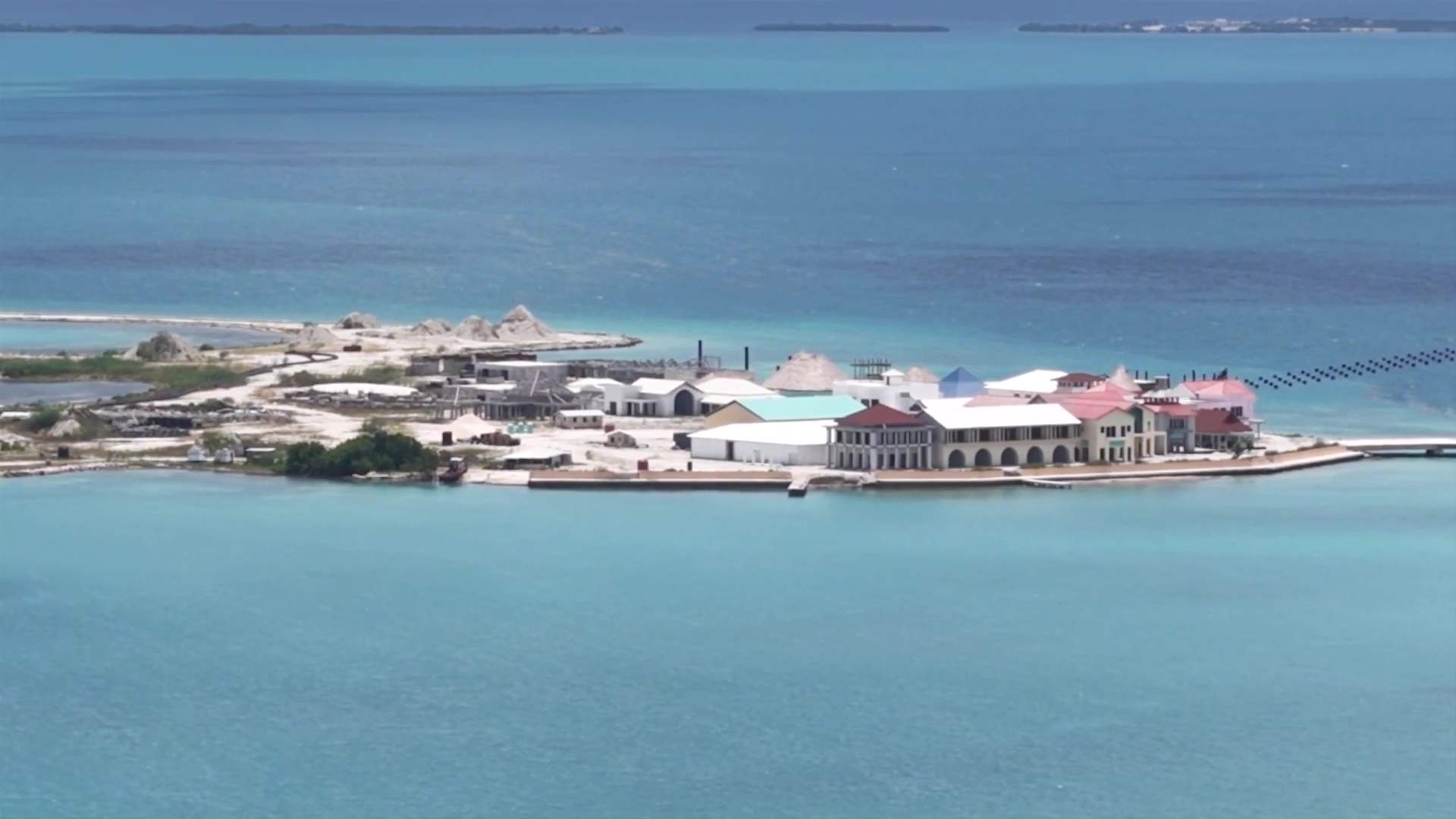
    Prominent Belizean developers Michael and Melita Feinstein have initiated legal proceedings against Atlantic Bank Limited (ABL), Honduran construction firm OPSA, and court-appointed receiver Marlowe Neal, alleging an unlawful corporate takeover of their $250 million Stake Bank cruise port development. The lawsuit, filed in Belize’s Supreme Court, centers on ABL’s controversial declaration of loan default in March 2024, which enabled the installation of a receiver to assume control of Stake Bank Enterprises Ltd.

    The plaintiffs contend the bank acted without legal justification, asserting their project remained financially solvent and current on obligations. Court documents reveal the Feinsteins allege ABL systematically failed to apply available project funds toward loan payments before declaring default. Furthermore, the mortgage debenture instrument used to justify the receivership is described as improperly stamped and legally unenforceable under Belizean law.

    The comprehensive claim outlines what developers characterize as a coordinated conspiracy between banking and construction entities to deliberately oust them from one of Belize’s most significant tourism infrastructure projects. The defendants stand accused of multiple violations including breach of fiduciary duty, violation of Belize’s banking regulations, and reneging on $75 million in committed financing agreements.

    The Feinsteins seek judicial intervention to immediately remove the receiver, restore their operational control of the cruise port development, and award substantial damages for financial losses incurred since the takeover. The case represents a critical test for Belize’s financial governance and foreign investment protection frameworks, with potential implications for major infrastructure projects throughout the Caribbean region.

  • Caribbean Airlines to end Dominica–Puerto Rico flights, restructure Barbados hub

    Caribbean Airlines to end Dominica–Puerto Rico flights, restructure Barbados hub

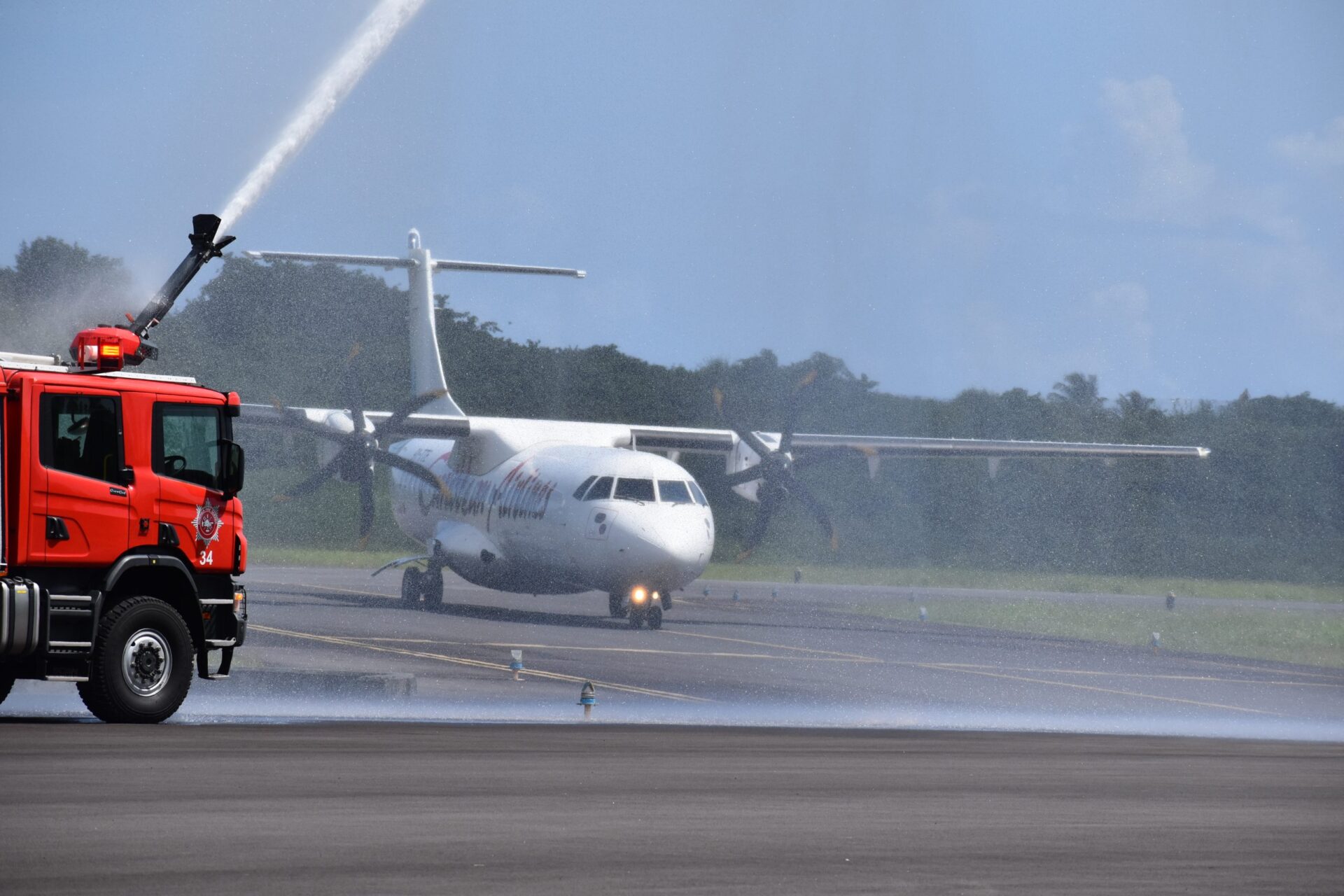
    Caribbean Airlines has unveiled significant operational changes that will sever vital air connections within the Eastern Caribbean starting January 2026. The carrier confirmed it will terminate its Roseau-San Juan service effective January 10, 2026, eliminating a crucial link that facilitated connections between Dominica and North American destinations.

    The discontinued flights, designated BW 296 (Trinidad–Dominica–Puerto Rico) and BW 297 (Puerto Rico–Dominica–Trinidad), represented a key transportation artery for regional travelers. The airline has initiated direct communication with affected passengers holding reservations beyond the termination date, guaranteeing full refunds where applicable.

    This route suspension forms part of a comprehensive network optimization strategy that extends beyond Dominica. Caribbean Airlines will completely withdraw from both its Tortola, British Virgin Islands and San Juan, Puerto Rico routes, simultaneously discontinuing flights BW 292 (Trinidad–Barbados–Tortola–Puerto Rico) and BW 293 (Puerto Rico–Tortola–Barbados–Trinidad).

    In a parallel restructuring move, the airline announced it will reconfigure its Barbados hub operations beginning February 2026. Aircraft and crew currently stationed in Barbados will be relocated to Trinidad, while maintaining continued service to and from Barbados under a revised flight schedule. Company officials emphasized that these operational shifts will preserve seamless connectivity throughout the Northern and Eastern Caribbean regions.

    Acting CEO Nirmala Ramai characterized these measures as essential components of the airline’s strategic plan to enhance service reliability while optimizing resource allocation. ‘These adjustments are critical to delivering reliable service while managing our resources responsibly,’ Ramai stated, underscoring the airline’s dual commitment to maintaining regional connectivity while ensuring long-term operational sustainability and competitive positioning.

    The Trinidad-based carrier expressed gratitude to customers for their understanding during this transitional period, reaffirming its dedication to providing dependable air service across its network as it implements these structural changes to strengthen its overall travel offerings.

  • Tourism Top Producers from around the globe gather in Antigua and Barbuda for Black Pineapple Awards

    Tourism Top Producers from around the globe gather in Antigua and Barbuda for Black Pineapple Awards

    The Caribbean nation of Antigua and Barbuda is set to celebrate its most productive travel industry partners during the prestigious 2025 Black Pineapple Awards ceremony. Organized collaboratively by the Ministry of Tourism and the Antigua and Barbuda Tourism Authority (ABTA), this gala event acknowledges the exceptional contributions of travel professionals from key source markets who have significantly driven tourism growth to the twin-island destination.

    Approximately seventy elite travel advisors from the United States, United Kingdom, Europe, Canada, the Caribbean, and Latin America will converge at Sandals Grande Antigua Resort and Spa on December 5, 2025, for the honors ceremony. These distinguished agents have demonstrated remarkable success in promoting Antigua and Barbuda as a premier travel destination.

    The Honourable Charles Fernandez, Minister of Tourism, emphasized the importance of these partnerships, stating: ‘The Black Pineapple Awards represent our profound gratitude for the excellence and experiences delivered by our travel advisors. Each recommendation they make directly contributes to our destination’s prosperity, and such dedication deserves proper recognition.’

    Colin C. James, CEO of ABTA, highlighted the successful collaboration: ‘Our travel agent partners have developed a genuine affinity for Antigua and Barbuda, which has translated into outstanding sales performance across all markets. Their investment in promoting our destination matches our own commitment, and we take pride in celebrating their achievements.’

    Accompanying the honorees will be the Directors of Tourism for each region—Dean Fenton (USA), Cherrie Osborne (UK and Europe), Charmaine Spencer (Caribbean and Latin America), and Tameka Wharton (Canada)—alongside Business Development Managers from respective markets.

    The awards ceremony will feature several distinguished categories, including the Director’s Award for exceptional room night sales, the CEO’s Award for market-specific booking performance, the Minister’s Award for consistent destination promotion, and the Prime Minister’s Global Award—the highest honor presented to the top-performing advisor across all markets for extraordinary annual revenue generation. The global award winner will receive a unique artisan-crafted wooden sculpture depicting the twin islands featuring the iconic Antigua Black pineapple.

    Beyond the awards gala, recipients will experience an exclusive curated itinerary showcasing Antigua and Barbuda’s premier attractions. The program includes accommodations at luxury resorts such as Blue Waters Resort, Galley Bay Resort and Spa, and Royalton Chic, complemented by activities ranging from welcome receptions at Tamarind Hills to comprehensive land and sea tours. Cultural highlights include visits to the UNESCO World Heritage Site at Shirley Heights, the Frigate Bird Sanctuary, and the picturesque Princess Diana Beach in Barbuda.

  • Johan Sandie benoemd tot directeur van SLM

    Johan Sandie benoemd tot directeur van SLM

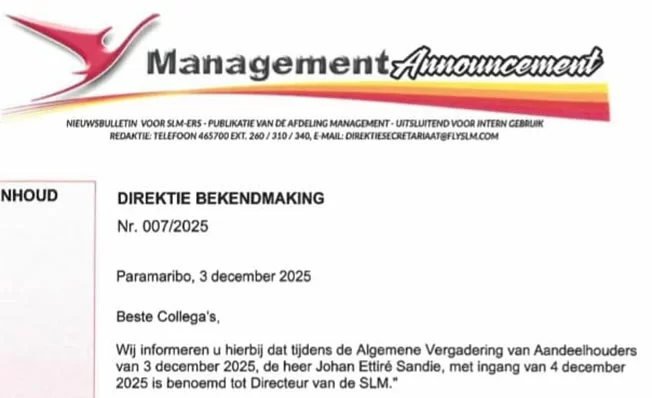
    PARAMARIBO – Surinam Airways (SLM) has announced a significant leadership transition with the official appointment of Johan Etiré Sandie as its new Managing Director. The decision was formally ratified during the General Shareholders’ Meeting on December 3rd, 2025, with Sandie’s tenure commencing effective December 4th, 2025.

    This appointment concludes the interim leadership of Steven Gonesh, who had been serving as acting director during the transition period. Gonesh will remain with the national carrier in a key operational capacity, assuming the role of Deputy Director of Operational Affairs & Accountable Manager, ensuring continuity in the airline’s critical functions.

    The Board of Commissioners expressed formal gratitude to Gonesh for his stewardship and contributions while leading the company on an interim basis. In an official communiqué, the board extended a warm welcome to Sandie, conveying their confidence in his leadership and wishing him both success and wisdom as he undertakes this pivotal executive role.

    The official announcement was formally endorsed by Marlon Telting, President-Commissioner of Surinam Airways. This leadership change comes at a crucial time for the aviation industry as carriers worldwide navigate post-pandemic recovery and operational challenges. Sandie’s appointment signals a new strategic direction for the state-owned airline as it seeks to strengthen its market position and operational efficiency.

  • Roadmap for building Trinidad and Tobago’s innovation ecosystem

    Roadmap for building Trinidad and Tobago’s innovation ecosystem

    A recent study tour to Manizales, Colombia has provided Trinidad and Tobago with a strategic blueprint for developing a robust national innovation ecosystem. Led by Vashti Guyadeen of the Trinidad and Tobago Chamber of Industry and Commerce, the delegation examined Colombia’s successful Triple Helix model that integrates academia, industry, and government collaboration to accelerate entrepreneurship and economic growth.

    The research identified five foundational pillars essential for innovation ecosystem development: coordinated national governance to align ministerial initiatives, integrated programming across accelerator programs and university initiatives, accessible infrastructure including prototyping labs and research facilities, capacity development through entrepreneurship training, and data-driven decision making using systematic innovation metrics.

    Educational alignment emerged as a critical success factor, with recommendations for cross-disciplinary entrepreneurship education, enhanced research commercialization pathways through innovation vouchers and matching grants, strengthened internship programs, and shared infrastructure agreements among tertiary institutions modeled after Colombia’s SUMA alliance.

    The proposed institutional architecture calls for a National Innovation Partnership comprising senior leaders from public, private, academic, financial, and civil society sectors to set strategic priorities and oversee funding allocations. This co-ownership model reduces government dependency while increasing sustainability.

    Priority sectors identified for diversification include technology (fintech, cybersecurity, energy tech), advanced manufacturing utilizing Industry 4.0 technologies, agriculture technology with climate-smart farming approaches, and creative industries leveraging global demand for music and digital content.

    Strategic infrastructure requirements encompass enhanced accessibility to Cariri’s existing facilities, purpose-built innovation hubs, structured national mentorship networks, and continuously coordinated accelerator programs. Financing mechanisms should include a National Innovation Fund, private sector venture arms, diaspora engagement for investment and technical capacity, and risk mitigation instruments like credit guarantee schemes.

    Accountability measures propose transparent tracking through key indicators: new firm creation, SME scale-up performance, research commercialization outputs, non-energy job creation, venture capital investment levels, and Global Innovation Index performance, with annual Innovation Report Cards to monitor national progress.

    The Manizales case study demonstrates that formalized governance, integrated programming, and shared accountability create successful innovation ecosystems, offering Trinidad and Tobago a proven framework for economic diversification and resilience building.

  • Collapse of BWIA’s deal with Canada

    Collapse of BWIA’s deal with Canada

    In 1967, the Trinidad and Tobago government faced a critical crossroads in preserving its national airline, BWIA, after the collapse of a highly anticipated Canadian rescue plan. Despite prolonged diplomatic efforts, Canada’s Air Canada partnership proposal foundered due to one fundamental requirement: the unwillingness of other Caribbean governments to join a regional consortium.

    Canadian Prime Minister Lester B. Pearson conveyed the setback with diplomatic nuance in correspondence with TT’s leadership, noting, ‘In a matter as complex as this… reactions have not been forthcoming quickly, or in a clear-cut fashion. What information we have received has not in fact been uniformly encouraging.’ This diplomatic phrasing masked the stark reality that regional cooperation efforts had failed.

    Simultaneously, an alternative proposal emerged from New York investment firm R.W. Pressprich & Co. International Ltd. and Trans World Airlines (TWA). Their July 1967 proposition outlined a radical restructuring: a multinational Caribbean carrier with 60% government ownership (TT, Barbados, Guyana, Jamaica) and 40% private investment, though profit distribution would favor investors at 60%.

    Initially skeptical due to previous regional disappointments, the TT government found Pressprich unexpectedly flexible. By August 29, the firm amended its proposal to invest directly in BWIA’s existing structure without requiring prior commitments from other governments. The revised terms exempted TT from additional capital injection while maintaining existing debt guarantees and offering appropriate economic incentives.

    A significant sweetener emerged in the form of a proposed Hilton hotel development at Rocky Point, Tobago, recognizing the symbiotic relationship between airline seats and hotel beds. This tourism infrastructure component, backed by TWA’s technical expertise, added considerable appeal to the package.

    After intensive negotiations throughout September and October 1967, a memorandum of understanding was accepted by the TT government on December 5. This led to the formation of Caribbean International Ltd. as Pressprich’s investment vehicle, while TWA commenced comprehensive operational studies under the direction of senior aviation experts.

    The culmination arrived on May 24, 1968, with signed agreements between the TT government, BWIA, and Caribbean International Ltd., concluding a complex nine-month negotiation that salvaged the national airline through transatlantic investment rather than regional cooperation.

  • TT Stock Exchange introduces AI chatbot

    TT Stock Exchange introduces AI chatbot

    The Trinidad and Tobago Stock Exchange (TTSE) has unveiled a groundbreaking artificial intelligence-powered chatbot designed to transform how investors and market participants access financial information. Named TOBI (TTSE Online Bot Interface), the innovative tool now operates on the exchange’s official website, providing continuous automated assistance for various market-related inquiries.

    This advanced digital assistant represents a significant leap in the exchange’s technological capabilities, offering instant responses to frequently asked questions regarding trading activities, corporate listings, dividend distributions, and settlement procedures. The system serves both TTSE operations and services managed by the Trinidad and Tobago Central Depository (TTCD), creating a unified information gateway for all market participants.

    TOBI’s implementation caters to a diverse user base, from novice investors taking their first steps in capital markets to experienced brokers and corporate representatives. The AI-driven interface provides automated guidance on initiating trading activities, navigating online platforms, and accessing critical documents including account statements and corporate announcements.

    Exchange officials emphasized that TOBI’s deployment aligns with broader strategic initiatives to modernize the nation’s capital market infrastructure. “We remain focused on enhancing transparency, accessibility, and investor engagement,” stated TTSE representatives. “This launch demonstrates our ongoing commitment to market modernization and ensuring stakeholders can access necessary information promptly.”

    The chatbot introduction follows years of progressive digital transformation at TTSE, which has included substantial upgrades to its trading portal and electronic document management systems. TOBI’s adaptive functionality includes personalized responses to market queries, step-by-step guidance for trading processes, and seamless navigation support for TTSE and TTCD digital platforms.

    This technological advancement forms part of a comprehensive long-term digitalization strategy aimed at strengthening market infrastructure through technology-driven solutions. Exchange leadership confirmed that additional technological enhancements are planned to further improve user experience across the capital market ecosystem.

    Currently accessible through the TTSE website, TOBI provides 24/7 information access as Trinidad and Tobago’s capital markets continue their evolution toward increasingly automated, technology-enhanced services.

  • Financial checks every family should do before the new year

    Financial checks every family should do before the new year

    As the calendar year draws to a close amidst seasonal celebrations and holiday spending, financial experts emphasize the critical importance of year-end financial assessments. This period offers a strategic window for families to evaluate their fiscal health and implement protective measures for the coming year.

    Financial advisors recommend five fundamental checks to ensure financial stability entering 2026. First, insurance policies require comprehensive review, particularly following life events such as marriages, career changes, or income fluctuations. Coverage adequacy for health, life, and critical illness insurance must be assessed relative to age and family medical history to prevent potential financial vulnerabilities.

    Second, beneficiary designations demand verification—a frequently neglected yet crucial task. Ensuring accurate spelling and intended recipient listing in all policies can prevent protracted legal complications and unnecessary expenses. This simple five-minute verification process offers disproportionate long-term protection.

    Third, emergency fund evaluation remains paramount. Households should maintain minimum three-month expense reserves, assess any current-year withdrawals, and plan necessary replenishments for early 2026. Financial stability fundamentally depends on robust emergency preparedness.

    Fourth, debt audit procedures require systematic implementation. Listing all outstanding obligations—credit cards, loans, hire purchases—enables identification of high-interest liabilities. Developing strategic reduction or elimination plans for 2026 forms the foundation of financial liberation.

    Fifth, budgetary analysis provides critical insights. Examining actual versus projected expenditures helps distinguish necessary expenses from emotional spending patterns. Adjusting future budgets to align with financial objectives represents one of the most effective wealth-building strategies.

    These year-end financial rituals transform seasonal festivities into opportunities for creating family security and economic confidence. Professional financial guidance is recommended for policy reviews and goal establishment, providing families with protective assurance and financial clarity as they transition into the new year.

  • The saga of CL Financial

    The saga of CL Financial

    The protracted liquidation saga of Caribbean conglomerate CL Financial has reached a critical juncture, with mounting calls for restoring shareholder governance after more than a decade under court-appointed supervision. The company’s dramatic collapse in 2009 during Trinidad and Tobago’s liquidity crisis created one of the region’s most complex corporate failures, prompting unprecedented state intervention that continues to reverberate through Caribbean financial markets.

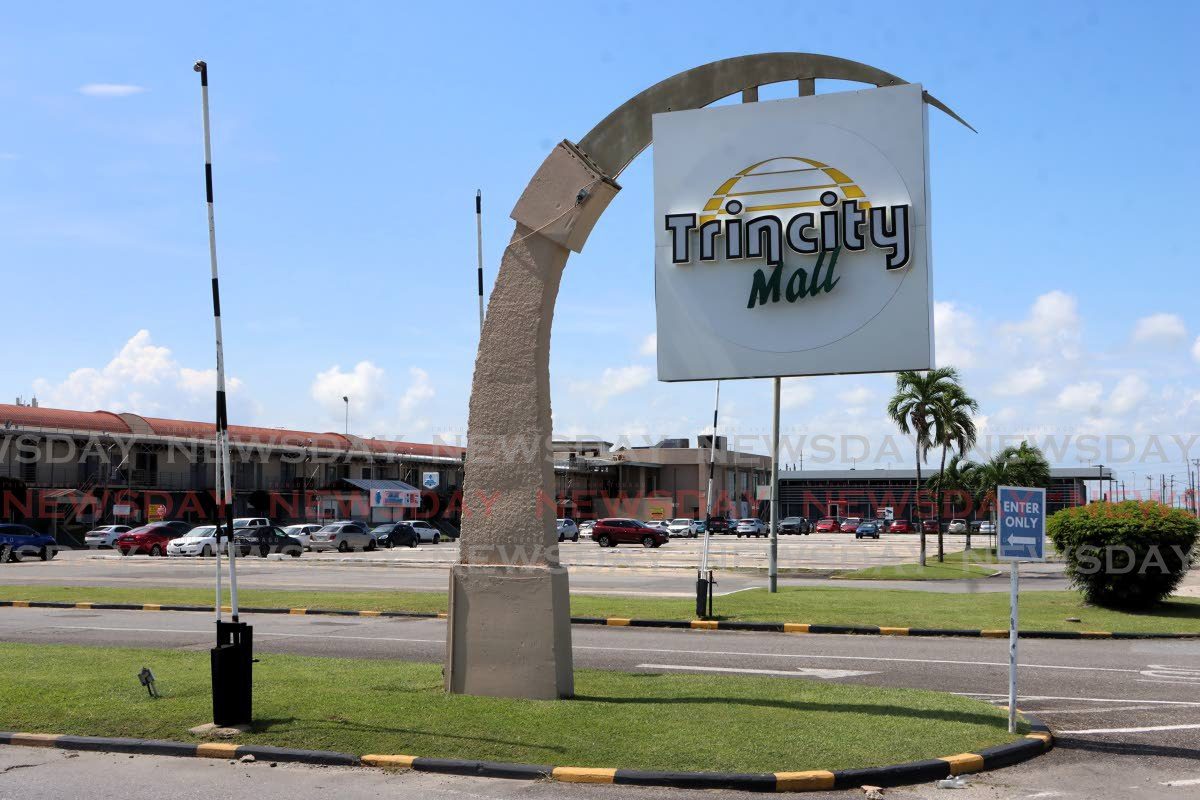
    Since January 2009, CL Financial has operated under the control of liquidators who have managed asset dispositions and operational decisions. However, growing concerns about transparency, accountability, and shareholder rights have sparked legal challenges and intensified demands for governance normalization. Recent developments, including the abandoned sale of Trincity Mall after shareholder legal intervention, highlight the escalating tensions between current oversight and ownership rights.

    Three fundamental arguments drive the movement for governance restoration. First, the extraordinary duration of liquidation—exceeding fifteen years—represents an unreasonable suspension of democratic corporate governance. Second, multiple court cases have revealed concerning transparency gaps, including questions about liquidators’ remuneration and asset valuation methodologies. Third, shareholder groups led by major stakeholders like Dalco Management have demonstrated increasing capacity and willingness to assume governance responsibilities.

    The case for shareholder restoration hinges on fundamental corporate principles: capital providers should retain governance rights through elected directors. While the initial crisis justified extraordinary measures to protect depositors and policyholders, the current phase requires normalized governance structures. A transition plan could maintain liquidators for asset realization while empowering shareholder-elected boards for strategic oversight, balancing creditor protection with ownership rights.

    Critics who cite ongoing stability concerns must acknowledge that perpetual external control undermines market confidence and corporate recovery prospects. The Caribbean financial ecosystem deserves resolution mechanisms that respect both crisis management necessities and long-term governance norms. CL Financial’s path forward should embrace modern corporate governance, independent auditing, and transparent operations to restore market confidence and enable strategic repositioning.

    This governance transition represents more than procedural change—it signifies the restoration of fundamental investment principles and offers a template for resolving complex corporate failures while respecting shareholder rights across emerging markets.

  • Fair trade body should get its act together

    Fair trade body should get its act together

    A critical examination of Trinidad and Tobago’s pharmaceutical sector reveals systemic challenges in market competition, with the Fair Trading Commission (FTC) facing intense scrutiny for its perceived inactivity. Despite receiving $11.4 million in taxpayer funding over five years, the regulatory body has demonstrated remarkable reluctance to address market concentration concerns, as revealed during recent parliamentary committee disclosures.

    The core issue stems from fundamental market distortions created by state-subsidized healthcare systems, which have systematically shifted consumer behavior from local pharmacies toward large chains offering significantly lower prices. This transition has created an environment where a handful of major distributors dominate the market, particularly those securing lucrative government contracts for supplying public healthcare facilities.

    Recent developments highlight the FTC’s operational paralysis. In 2024, the Private Pharmacy Retail Business Association filed a formal complaint alleging monopolistic practices within the drug sector. Rather than initiating investigation procedures, the FTC dismissed the submission on technical grounds, requesting additional documentation instead of addressing the substantive concerns. Compounding this regulatory inertia, FTC executive director Bevan Narinesingh revealed the commission’s hesitation to pursue matters without a fully constituted board—an explanation that raises questions about the organization’s operational capacity.

    The political dimension has further complicated the situation. Prime Minister Kamla Persad-Bissessar has drawn parallels between pharmaceutical market concerns and previous allegations about foreign exchange cartels, accusing previous administrations of enabling monopolistic practices that benefit privileged interests. However, market analysis suggests the situation involves more complex structural factors rather than simple monopolistic exploitation.

    Contrary to conventional economic theory suggesting monopolies inherently drive prices upward, some major distributors actually offer common medications like Panadol at reduced prices. This apparent paradox underscores the market’s unique dynamics, where state procurement practices create economies of scale for selected distributors while simultaneously delaying payments to suppliers—creating a contradictory environment of both advantage and financial strain.

    The fundamental concern remains the FTC’s failure to provide transparent market data and timely regulatory intervention. Without authoritative analysis from the designated regulatory body, the pharmaceutical market continues operating amid uncertainty regarding competition, pricing structures, and market fairness—leaving both consumers and smaller market participants without clear guidance or protection.