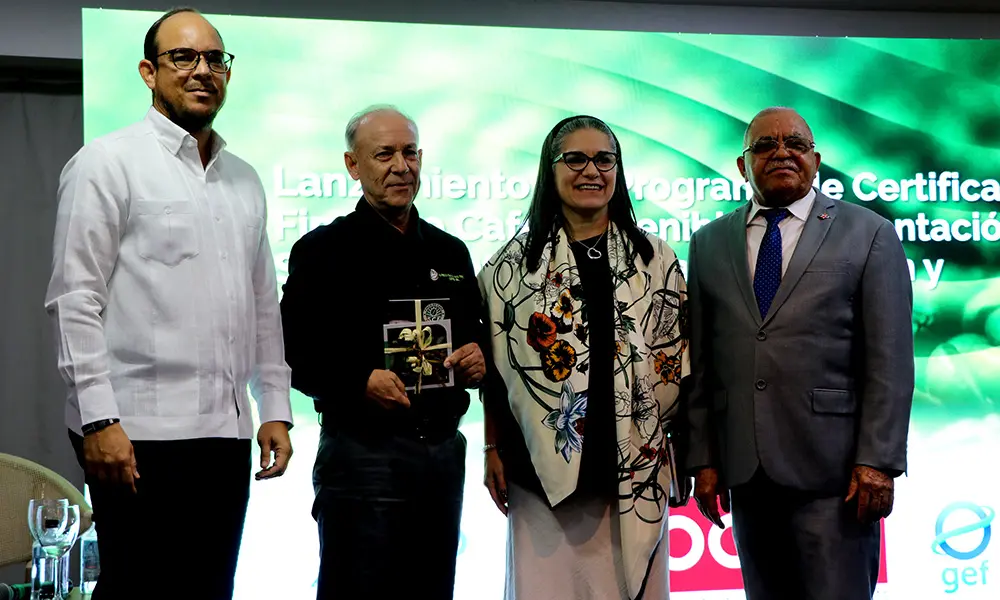
Santo Domingo – In a significant move to enhance the competitiveness and sustainability of its coffee sector, the Dominican Coffee Institute (Indocafe) has unveiled two groundbreaking initiatives: the Sustainable Coffee Farm Certification Program (SCF) and the Integrated Coffee Information and Services System (Siisec). These programs aim to position the Dominican Republic as a leader in sustainable coffee production while addressing global market demands. The SCF, developed under the Biodiversity in Productive Landscapes Project (BPP), marks a historic achievement as the first national certification for sustainable coffee farms in the Dominican Republic and the broader Caribbean region. This certification underscores the potential to harmonize agricultural productivity with biodiversity conservation and sustainable economic development. Meanwhile, Siisec is designed to improve traceability and quality assurance, particularly for exports to the European Union. During the launch event, the National Office of Industrial Property (ONAPI) officially awarded Indocafe the ‘Sustainable Coffee Farm’ accreditation mark, and the United Nations Development Programme (UNDP) presented the first promotional kit to producer Alfredo Díaz. Indocafe’s Executive Director, Leónidas Batista Díaz, highlighted the transformative impact of these initiatives, emphasizing their role in fostering a more resilient and globally competitive coffee industry.
分类: business
-

BTL Must Pay Severance to All Retirees; Pension Doesn’t Replace Legal Rights
In a groundbreaking decision, the Caribbean Court of Justice (CCJ) has ruled that Belize Telemedia Limited (BTL) must pay severance benefits to all former employees, regardless of their retirement status. This landmark case, decided on November 5, 2025, marks a significant victory for ten retirees who argued that severance pay is a legal right under the Labour Act, even after receiving pension benefits. The CCJ’s ruling overturns BTL’s long-standing practice of substituting severance with pension benefits, a policy the company had implemented since the 1990s. Senior Counsel Eamon Courtenay, who represented the retirees, explained that the case involved three categories of employees: those who resigned, those who retired voluntarily, and those who reached the mandatory retirement age of fifty-five. Initially, the Court of Appeal had ruled that only those who resigned were entitled to severance, but the CCJ’s unanimous decision extends this right to all retirees. The court emphasized that severance is a statutory entitlement that cannot be waived or replaced by pension benefits. This ruling sets a precedent for labor rights in the Caribbean and ensures that employees are fairly compensated upon leaving their jobs.
-
Court Reinforces Workers’ Rights Under Labor Act
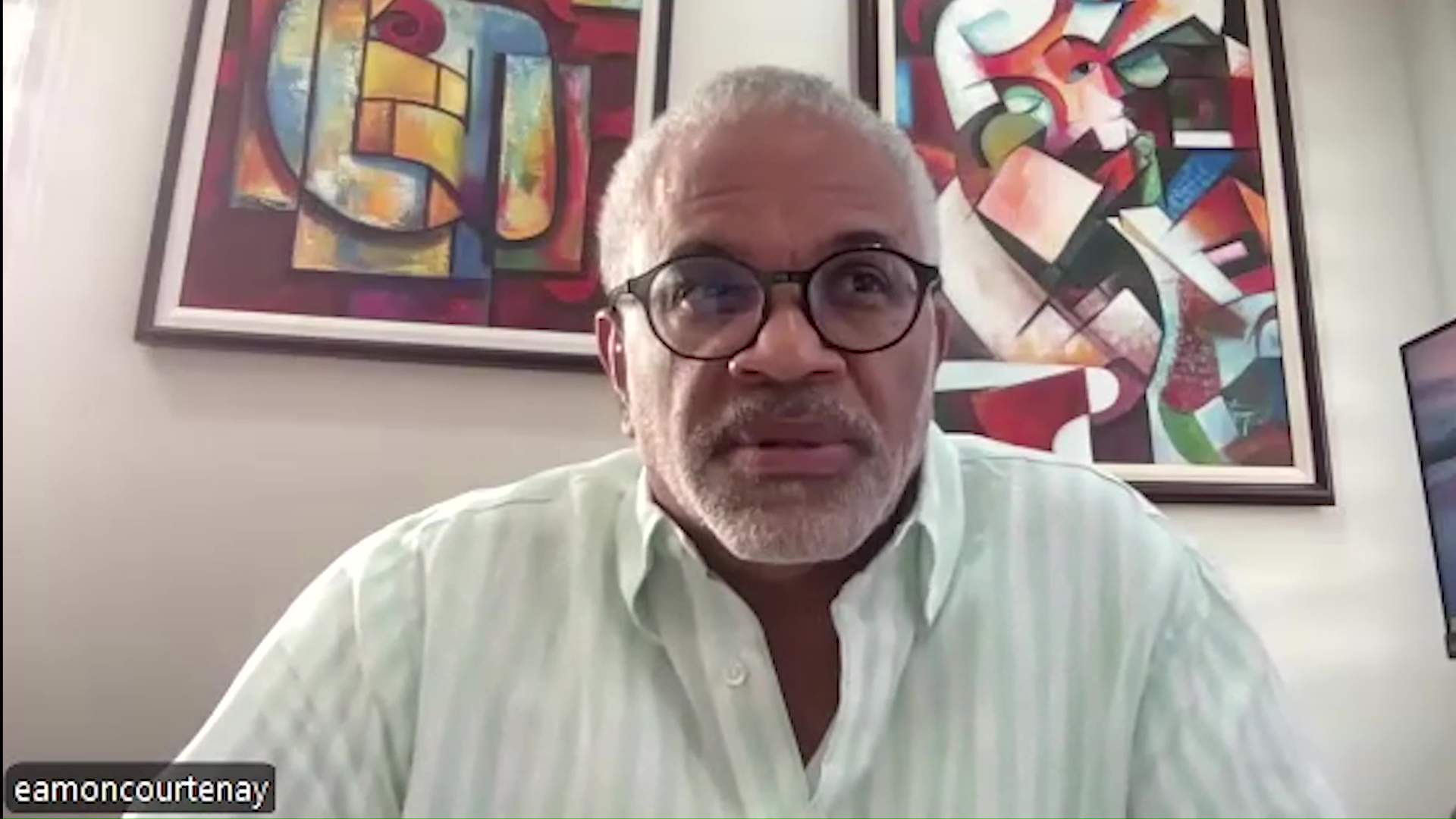
In a landmark ruling on November 5, 2025, the Caribbean Court of Justice (CCJ) reinforced the rights of workers under Belize’s Labor Act, emphasizing that severance pay cannot be replaced by pension benefits. The case centered on Belize Telecommunications Limited (BTL), which had ceased paying severance to employees since 1994-95, arguing that its pension scheme fulfilled the obligation. The court, however, ruled that severance is a distinct entitlement earned through service, not contributions, and must be paid regardless of pension arrangements. This decision underscores the Labor Act’s role as social justice legislation aimed at protecting workers, not employers’ financial interests. BTL is now required to compensate affected employees, with costs awarded to the appellants. Eamon Courtenay, SC, a prominent attorney, highlighted that pension plans must account for severance benefits, ensuring workers receive both entitlements. This ruling sets a precedent for labor rights in Belize and reaffirms the importance of severance as a fundamental worker protection.
-

BTL Employees Owed Severance Despite Pension Plans
In a landmark development, Belize Telemedia Limited (BTL) employees, both current and former, may now be entitled to severance pay despite their participation in pension schemes that previously excluded such benefits. Senior Counsel Eamon Courtenay highlighted the significant challenge this poses for BTL and other companies, as they must retroactively assess years of service and calculate severance entitlements for employees upon retirement or resignation. This ruling extends to former employees who only received pension benefits, potentially allowing them to claim severance pay retroactively. The judgment, which could have a ripple effect across Belize, raises critical questions about how companies will adapt and what this means for workers nationwide. Courtenay emphasized that companies with pension schemes lacking severance provisions must now accrue severance benefits from the start of employment, ensuring compliance with the Caribbean Court of Justice’s (CCJ) decision. This development underscores a pivotal shift in employee rights and corporate obligations in Belize.
-

Belize Jungle Retreat Turns Legal Battleground
A once-promising partnership to develop a luxury jungle retreat in Belize has devolved into a bitter legal battle, raising questions about financial transparency and accountability. The project, Howler Jungle House and Cabanas, was initiated by Dr. Sade Thompson, an American investor, in collaboration with Belizean couple Kenny and Shanna Williams. The venture aimed to create high-end accommodations for tourists seeking to experience Belize’s natural beauty. However, the dream quickly turned sour as costs ballooned and allegations of financial mismanagement emerged. Initially, Dr. Thompson was quoted $80,000 for a two-bedroom unit, but the price escalated to $124,000 without clear justification. Despite receiving detailed invoices, Thompson and her partners grew suspicious of where their funds were allocated. Attorney Andrew Bennett, representing the Williamses, countered that the investors received exceptional value for their money, citing the property’s eco-friendly features and prime location. The dispute deepened as Thompson revealed additional expenses, including rent and contractor fees, which were not initially disclosed. Consultant Jazmynn Tillett, brought in to assess the situation, accused the Williamses of exploiting the investors and failing to provide accountability. The conflict has now escalated to legal action, with both sides disputing ownership and financial control. The case highlights the challenges of cross-border investments and the importance of clear agreements in business partnerships.
-

Transporting Vehicles More Dangerous Than Ever
The lucrative business of transporting used vehicles from the United States to Belize is facing unprecedented challenges, as car dealers report escalating dangers and extortion fees along Mexican highways. While the trade has historically been profitable, with dealers earning thousands of dollars per vehicle, the rising risks are forcing many to reconsider their involvement. Dealers are required to pay legal fees at the Mexican border and a protection fee, known as a pedimento, to cartels for safe passage. However, these payments no longer guarantee security, as extortion points manned by armed civilians have become increasingly common. Robert McClaren, a seasoned car dealer, shared his harrowing experiences, detailing how each trip has become more perilous and costly. He recounted paying thousands in extortion fees at multiple checkpoints, often just minutes after crossing the border. The situation has created significant obstacles for dealers, threatening the viability of this once-thriving trade.
-

PROSPER Brings Jobs, Hope to Toledo and Stann Creek
In a significant move to bolster economic resilience and create sustainable opportunities, the PROSPER initiative was officially launched in Belize’s Toledo and Stann Creek districts. The event, held at Toledo Bible College in Yemeri Grove, brought together key stakeholders, including representatives from the International Labour Organization (ILO), the European Union, and the Government of Belize. PROSPER, which stands for Participation, Ownership, and Sustainable Progress for Economic Resilience, is a four-year project with a budget of nearly nine million Belize dollars. It aims to empower local communities by fostering entrepreneurship, generating employment, and enhancing social inclusion, particularly among youth, women, and indigenous groups. ILO Deputy Director Noortje Denkers underscored the initiative’s alignment with Belize’s Decent Work Country Program, emphasizing the organization’s dedication to job creation and rural development. Leroy Martinez from the Ministry of Economic Transformation reiterated the government’s commitment, while Minister Florencio Marin Jr. highlighted PROSPER’s integration into the broader national agenda under Plan Belize. This initiative marks a transformative step toward building stronger, more resilient communities in southern Belize.
-

FLASH : IBC Air’s inaugural Miami-Les Cayes passenger flight
In a groundbreaking development for Haiti’s aviation sector, IBC Air has officially announced the launch of its new passenger flight route connecting Miami, Florida, to Antoine-Simon International Airport in Les Cayes. The announcement was made by Dumitrie Fouchard, the Haitian representative for the American airline, in a formal letter addressed to the Regional Coordinator. The inaugural flight is set to take off on Monday, November 10, 2025, marking a significant milestone in regional air travel. Following the launch, IBC Air will operate regular flights on Mondays, Wednesdays, and Fridays, with arrivals scheduled for 9:30 a.m. and departures at 10:30 a.m. To accommodate passengers during the initial phase, the departure lounge at Antoine-Simon International Airport will be temporarily housed in a tent, as authorized by relevant authorities. This interim solution will remain in place until the construction of a permanent departure lounge is completed. The new route is expected to enhance connectivity between Haiti and the United States, fostering economic and cultural exchanges while providing a vital link for travelers.
-

CCJ Rules Bank of Nova Scotia Liable for Withholding Tax on Cross-Border Payments
In a landmark ruling, the Caribbean Court of Justice (CCJ) has determined that the Bank of Nova Scotia is legally responsible for withholding tax on cross-border payments. The decision, which carries significant implications for international banking operations, underscores the growing scrutiny of tax compliance in global financial transactions. The case originated from allegations that the bank failed to adhere to tax regulations when processing payments across borders, leading to potential revenue losses for the involved jurisdictions. The CCJ’s verdict emphasizes the importance of financial institutions maintaining rigorous compliance with tax laws, particularly in an era of increasing cross-border economic activities. This ruling is expected to set a precedent for similar cases, prompting banks to reassess their tax withholding practices and ensure adherence to international tax standards. Legal experts suggest that the decision could lead to heightened regulatory oversight and potential reforms in cross-border payment systems.
-

New Rules for Mailing to the U.S.
Starting November 2025, individuals and businesses in Belize planning to send packages to the United States must adhere to a new customs declaration process. The Belize Postal Service has introduced the Customs Declaration System (CDS), requiring all senders to complete a detailed form before mailing goods to the U.S. This change follows the U.S. government’s Executive Order 14324, issued in July 2025, which eliminated the “duty-free de minimis” rule that previously allowed goods valued under $800 to enter the U.S. tax-free. Now, every package must declare its contents, value, and country of origin, and all are subject to applicable tariffs. To ensure public compliance, the Belize Postal Service has launched a nationwide roadshow to educate customers on the updated requirements. The CDS, developed by the Universal Postal Union, enables electronic transmission of customs data to U.S. Customs and Border Protection. While Belize temporarily suspended U.S. mail services to align with the new regulations, officials anticipate resuming shipments by the end of November. Importantly, regular postage fees remain unchanged, with only the added customs duties mandated by the U.S. government. These duties are calculated based on the item’s origin and the corresponding tariff rate, payable at the time of shipment.