分类: business

  • Anya Schnoor retiring from Scotia Group board

    Anya Schnoor retiring from Scotia Group board

    Scotia Group Jamaica Limited (SGJ) is undergoing significant leadership changes as board chair Anya Schnoor announces her retirement to dedicate her expertise exclusively to expanding Scotiabank’s global insurance strategy. Schnoor will conclude her five-year tenure as director by not seeking re-election at the upcoming annual general meeting scheduled for March 4th.

    This transition marks the end of a groundbreaking chapter for Jamaican corporate leadership, as Schnoor made history in December 2022 by becoming the first Jamaican woman to chair Scotia Group’s board. Her banking career with Scotiabank Jamaica began in May 2006, culminating in her November 2024 appointment as Executive Vice-President of global insurance.

    Vernon Douglas, current chair of The Bank of Nova Scotia Jamaica Limited, will assume the SGJ chairman role following Schnoor’s departure. This promotion triggers subsequent leadership adjustments, with Audrey Richards—currently chairing both Scotia Investments Jamaica Limited and Scotia Jamaica Life Insurance Company Limited—prepared to succeed Douglas at Scotiabank Jamaica.

    The corporate reshuffling occurs as Scotia Group Jamaica prepares to host its annual meeting at Montego Bay’s Iberostar Selection Rose Hall, notably shifting from its traditional Kingston venue. This geographical change reflects the financial conglomerate’s commitment to supporting western Jamaica’s recovery efforts following the devastating impact of Hurricane Melissa.

    In her departure statement, Schnoor reflected on her career origins: “I started my career with Scotiabank here in Jamaica and have been proud that the first home for Scotiabank outside of North America continues to set the bar for financial performance and good corporate governance in the local market.” She expressed full confidence in the institution’s continued excellence for decades to come.

  • Liberty Caribbean: ‘Translate connectivity into prosperity’

    Liberty Caribbean: ‘Translate connectivity into prosperity’

    At the CANTO Connect 2026 conference, Liberty Caribbean CEO Inge Smidts delivered a powerful address challenging Caribbean leaders to harness the region’s digital infrastructure for measurable economic advancement. Speaking as head of the telecommunications giant operating Flow, Liberty Business and BTC services, Smidts presented a strategic framework for converting connectivity into concrete opportunities.

    With the conference theme ‘Elevate the Caribbean — From Connectivity to Global Competitiveness’ as backdrop, Smidts outlined three critical priorities: embedding technology within Caribbean cultural identity, constructing people-centered intelligent networks, and accelerating telecom companies’ evolution into technology platforms that generate local opportunities.

    “Our foundation of connectivity is established,” Smidts declared. “The pressing question now is what we will build upon it. Combining Caribbean creativity with reliable connectivity and intelligent policy unlocks jobs, services, and businesses capable of competing internationally.”

    The CEO emphasized Liberty Caribbean’s commitment to leading this transformation through investments in human capital, strategic partnerships, and technological platforms. She called for enhanced public-private collaboration models extending beyond financing to include co-regulation, regulatory sandboxes, and shared governance structures.

    “Public-private partnership serves as the engine for progress acceleration,” Smidts explained. “Governments provide vision and legitimacy, industry contributes scale and technical capability, while universities and civil society offer scrutiny and social purpose. Aligned incentives produce tangible impact.”

    Liberty Caribbean demonstrated its commitment through concrete offers to connect investors with developers, align government programs with cloud infrastructure, and expand apprenticeship pipelines to empower Caribbean entrepreneurs and technologists.

    Smidts highlighted the company’s practical initiatives including the JUMP inclusion program, which provides subsidized access, devices, training, and entrepreneurial support to households and microentrepreneurs. She stressed that intelligent connectivity must address authentic local needs while engineered for resilience in a disaster-prone region.

    “In hurricane zones, active fault lines, and volcanic regions, connectivity becomes lifesaving rather than optional,” Smidts noted. “Our emergency response work proves that industry collaboration with satellite providers and governments can restore critical communications within hours instead of days.”

    The address specifically acknowledged Trinidad and Tobago’s progress driven by policy initiatives including the Blueprint Revitalisation Plan, successful investor engagement, and a $1 billion bond roadshow. National digital projects such as the ANANSI digital assistant, UNESCO/UNDP AI assessment collaboration, OpenAI partnerships for education transformation, and the Developers’ Hub for SME-government co-creation received particular emphasis as examples of the nation’s ambitious digital transformation.

  • Bad Dawg marks 14 years as street-food brand expands vendor network and retail presence

    Bad Dawg marks 14 years as street-food brand expands vendor network and retail presence

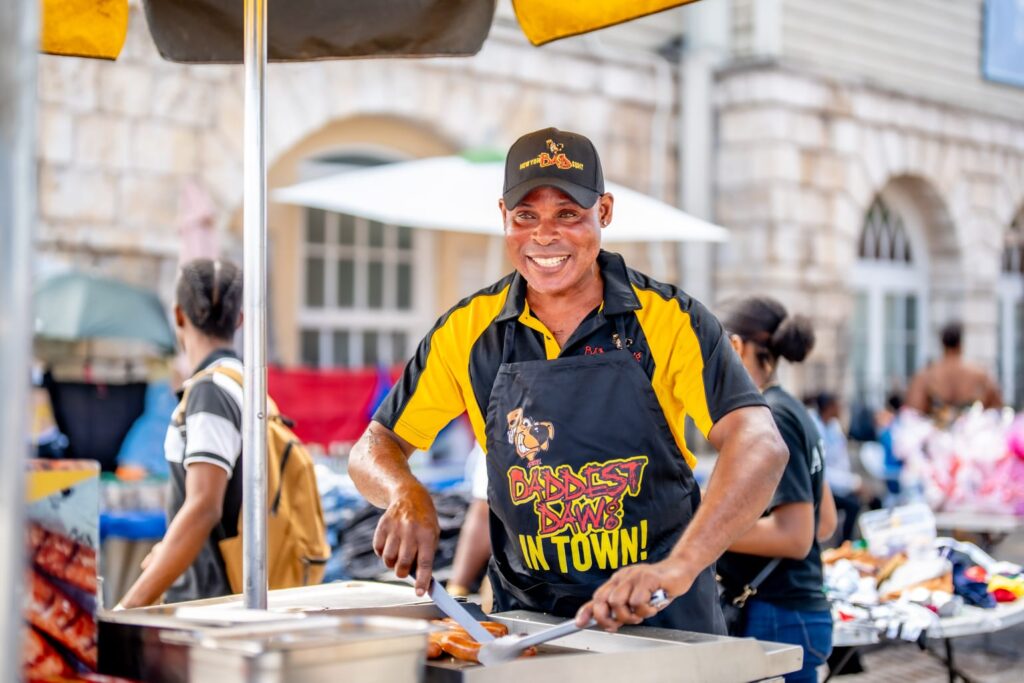
    KINGSTON, Jamaica — Celebrating its 14th anniversary, Jamaican street-food phenomenon Bad Dawg is executing a dual expansion strategy that simultaneously grows its mobile vendor network while establishing a formal retail presence across the island nation.

    The brand, originally launched as a job-creation initiative by CB Group, has evolved from its humble sausage cart beginnings into a multifaceted food enterprise. What began as a program to empower small entrepreneurs with low startup costs has matured into a hybrid business model featuring over 18 independent vendors operating islandwide, consistent presence at major public events, and supermarket distribution channels.

    Alicia Bogues, CB Group’s Head of Regional Development, explained the brand’s foundational philosophy: “Bad Dawg was intentionally designed as an entrepreneurial opportunity platform, enabling individuals to become their own bosses with minimal initial investment.” This approach has not only created employment but also cultivated a devoted customer base that associates the brand with Jamaica’s vibrant social gatherings and cultural events.

    The brand’s product innovation has kept pace with its operational expansion. While maintaining its signature sausage offerings, Bad Dawg has introduced streaky bacon to its portfolio, strategically broadening its culinary applications across different meal occasions.

    The vendor success story of Alicia Newman and her husband exemplifies the brand’s impact. Starting with one cart three years ago as supplementary income alongside their full-time jobs, the couple now operates two carts, employs six people, and plans to launch a third unit—demonstrating the scalability of the Bad Dawg model.

    Moiya Chin-Lyn, Channel Manager for Retail Experience at CB Foods, highlighted the strategic thinking behind the retail expansion: “Our move into formal retail channels allows consumers to enjoy our distinctive flavors at home while preserving the authentic street culture that established our brand identity.”

    This fourteen-year journey reflects the ongoing commercialization of Jamaica’s informal food sector, with Bad Dawg successfully bridging the gap between traditional street vending and modern retail distribution without compromising its original community-oriented values.

  • Fitch affirms Jamaica’s ‘BB-’ rating, outlook remains ‘stable’

    Fitch affirms Jamaica’s ‘BB-’ rating, outlook remains ‘stable’

    KINGSTON, Jamaica — In a significant endorsement of Jamaica’s economic resilience, Fitch Ratings has maintained the nation’s sovereign credit rating at BB- with a stable outlook. This decision comes despite the catastrophic impact of Hurricane Melissa, which struck the island nation in October 2025, causing an estimated $8.8 billion in damages equivalent to 40% of GDP.

    The rating agency specifically acknowledged the government’s unwavering commitment to macroeconomic stability while confronting one of the most devastating natural disasters in Jamaica’s modern history. The hurricane particularly devastated western regions, prompting massive reconstruction efforts that Fitch projects will cause temporary economic contractions of 1.5% in 2025 and 2.6% in 2026.

    Critical to maintaining the rating was Jamaica’s demonstrated financial preparedness, which Fitch characterized as ‘robust.’ The nation’s multi-layered risk management framework includes over $6.0 billion in concessional multilateral loan packages, approximately $250 million in government insurance and contingency reserves, additional credit lines, a $150 million catastrophe bond facility, and substantial anticipated private insurance disbursements.

    The agency further noted the government’s pragmatic fiscal response, including the temporary suspension of the Fiscal Responsibility Law to facilitate urgent reconstruction spending. While fiscal balances are expected to enter deficit territory during the 2025-2026 period, primary surpluses are projected to return by fiscal year 2027, keeping the government on track to reduce debt-to-GDP ratios toward 60%.

    Finance Minister Fayval Williams welcomed the rating affirmation, stating that Fitch’s recognition of Jamaica’s ‘strong decade-plus track record of adhering to a solid fiscal framework’ validates the government’s fiscal discipline and the sacrifices made by the Jamaican people.

  • ‘Shocked & disappointed’

    ‘Shocked & disappointed’

    A significant accounting failure at Jamaica Broilers Group (JBG) has triggered a financial crisis for one of its largest institutional investors, Mayberry Jamaican Equities Limited (MJE), erasing nearly $1 billion in portfolio value and contributing to one of the worst annual performances in MJE’s history.

    The scandal emerged from JBG’s U.S. operations, where accounting irregularities necessitated a massive $46 billion restatement of its 2024 audited financial statements. This restatement, primarily involving overstated inventories and biological assets, precipitated a catastrophic 53% plunge in JBG’s stock price throughout 2025.

    For MJE, the collapse was devastating. The investment firm recorded an $899 million unrealized loss on its JBG holdings, forming part of a broader $4.93 billion net loss for the year. MJE Chairman Chris Berry expressed profound shock and disappointment during an investor briefing, stating, “We still don’t really understand how it happened, why it happened… It’s a great tragedy for Jamaica, the Jamaica Stock Exchange, and for the company.”

    The fallout continues as accountability remains unclear. When questioned about remedial actions at JBG’s U.S. operations, Berry declined to elaborate. MJE’s exposure to JBG grew substantially over several years, with investments exceeding $1 billion since 2022, making MJE JBG’s fifth-largest shareholder before the collapse.

    JBG has implemented sweeping reforms including management overhaul, strengthened financial controls with IBM’s assistance, appointment of a new U.S. auditor, and a $24 billion refinancing package. The company’s audit committee is pursuing an electronic communication search requested by auditor PwC Jamaica, which issued a qualified opinion due to the absence of this investigation.

    Despite these measures, uncertainty persists. Bruce Bowen, chairman of JBG’s audit committee, revealed no intention to pursue further recovery actions related to the U.S. operations at this time. The company continues negotiations to resolve approximately $120 million in U.S.-related debt while implementing governance reforms including a comprehensive review by Cube Corporate Support Limited.

    The scandal has eroded investor confidence significantly, with JBG shares losing $22.45 billion in market capitalization during 2025, highlighting the profound impact of accounting governance failures on market stability and investor trust.

  • Chicken & Tings kicks off 2026 with staff appreciation celebration

    Chicken & Tings kicks off 2026 with staff appreciation celebration

    KINGSTON, Jamaica — In a significant investment in human capital, popular Jamaican restaurant chain Chicken & Tings commenced 2026 with an elaborate Staff Appreciation Day, temporarily suspending operations across all locations on January 26 to honor its workforce. The comprehensive celebration unfolded at Puerto Seco Beach Club followed by an exclusive dinner gathering at Plantation Smokehouse, assembling 120 employees from diverse branches and operational shifts.

    The event transcended conventional corporate gatherings through curated entertainment featuring performances by dancehall luminaries Skeng, Bishop Escobar, and Ding Dong with his Ravers group. The agenda incorporated team-building games, gourmet catering, and musical festivities designed to foster camaraderie beyond workplace formalities.

    Founder Emelio Madden articulated the philosophical underpinnings of this initiative to Observer Online: ‘Recognition transcends operational mechanics—it acknowledges that our enterprise thrives through people, not protocols. This ceremonial commencement establishes our annual tone: every team member represents a growth partner, not merely schedule filler.’

    Madden characterized the preceding year as a ‘transformative challenge,’ citing operational hurdles, expansion difficulties, and recovery from extreme weather events. These trials underscored critical lessons in structural reinforcement, transparent communication, and systemic accountability, ultimately demonstrating organizational resilience.

    For 2026, Chicken & Tings prioritizes dual objectives: corporate stabilization with planned expansion, coupled with enhanced employee development programs. Madden emphasized ‘stronger systems, advanced training, and clear career progression pathways’ as fundamental to cultivating workforce pride, security, and motivation.

    The proprietor directly linked staff morale to operational excellence, noting: ‘Valued employees manifest elevated engagement, superior collaboration, and deepened loyalty. This positive dynamism functionally advances corporate targets—inspired teams deliver exceptional outcomes.’

    When encapsulating the annual outlook, Madden elected ‘focused’ as the defining motif: concentration on growth benchmarks, quality standards, collaborative synergy, and collective advancement beyond prior achievements.

  • Antigua and Barbuda Among Six CARICOM States Now Classified as High-Income

    Antigua and Barbuda Among Six CARICOM States Now Classified as High-Income

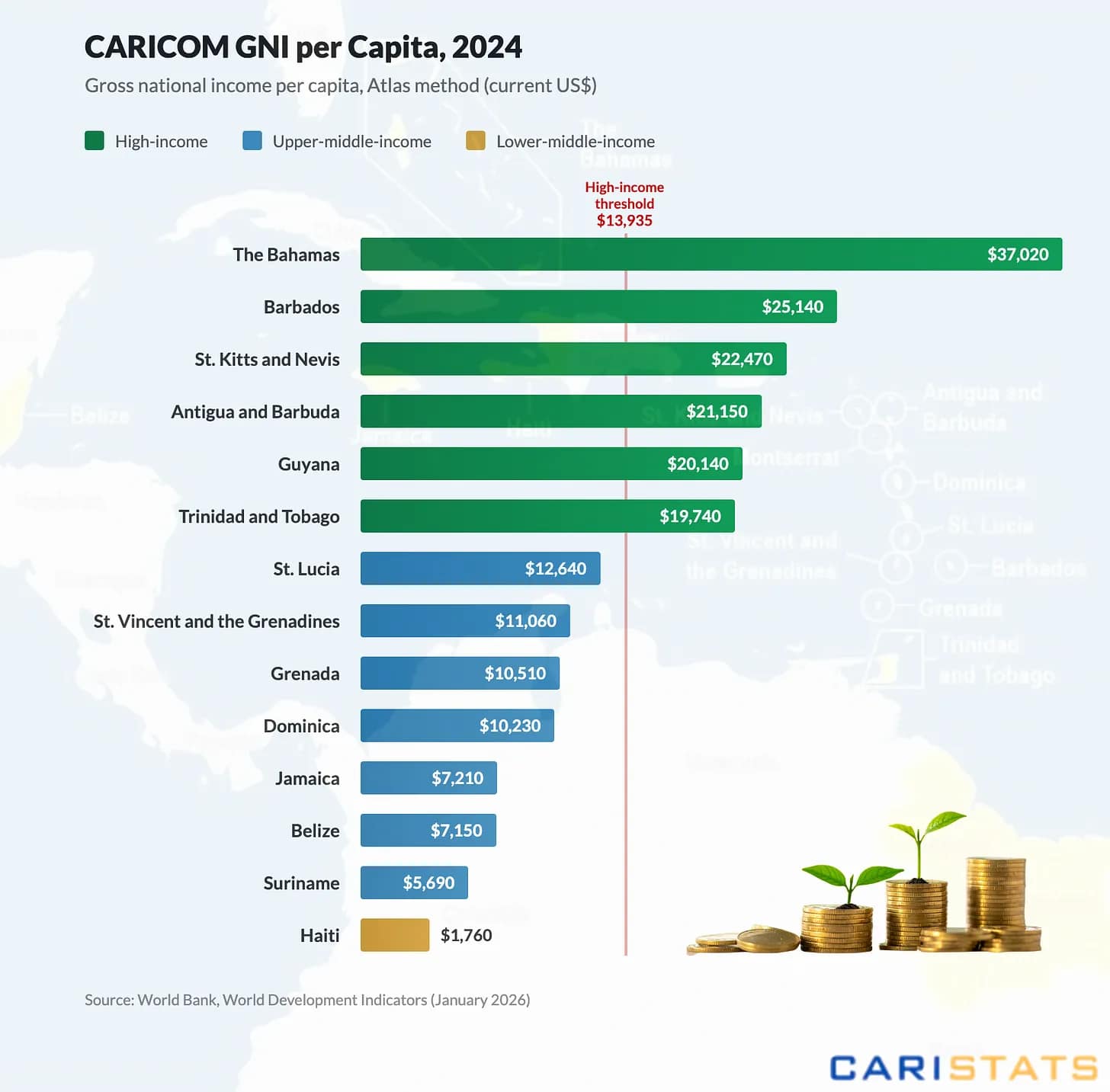
    A recent analysis of economic data reveals profound income disparities across the Caribbean Community (CARICOM), with per capita GDP figures painting a picture of regional economic diversity. According to the World Bank’s World Development Indicators (January 2026), The Bahamas emerges as the regional economic leader with a substantial per capita GDP of $37,020, significantly surpassing the World Bank’s high-income threshold of $13,935.

    The economic landscape shows Barbados maintaining a strong position at $25,140, followed closely by the dual-island nation of St. Kitts and Nevis at $22,470. Antigua and Barbuda recorded $21,150, while Guyana’s rapidly growing economy reached $20,140, and Trinidad and Tobago registered $19,740. These six nations collectively represent the Caribbean’s high-income economies.

    Seven CARICOM members fall within the upper-middle-income category, with St. Lucia’s $12,640 positioning it nearest to crossing into high-income status. Suriname anchors the lower end of this group at $5,690, while Jamaica ($7,210) and Belize ($7,150) occupy the middle range of this economic tier.

    The most striking contrast emerges with Haiti, which stands as the region’s sole lower-middle-income economy at just $1,760 per capita—the only CARICOM member state below the $5,000 mark. This vast economic chasm between The Bahamas and Haiti, representing a ratio of approximately 21:1, underscores the dramatic economic diversity within the regional bloc. The disparity highlights the varying economic foundations across the Caribbean, which encompass tourism-dependent island nations, hydrocarbon-exporting economies, and one of the Western Hemisphere’s most impoverished nations.

  • At Global Summit, Browne Outlines High-Value Tourism Strategy for Antigua

    At Global Summit, Browne Outlines High-Value Tourism Strategy for Antigua

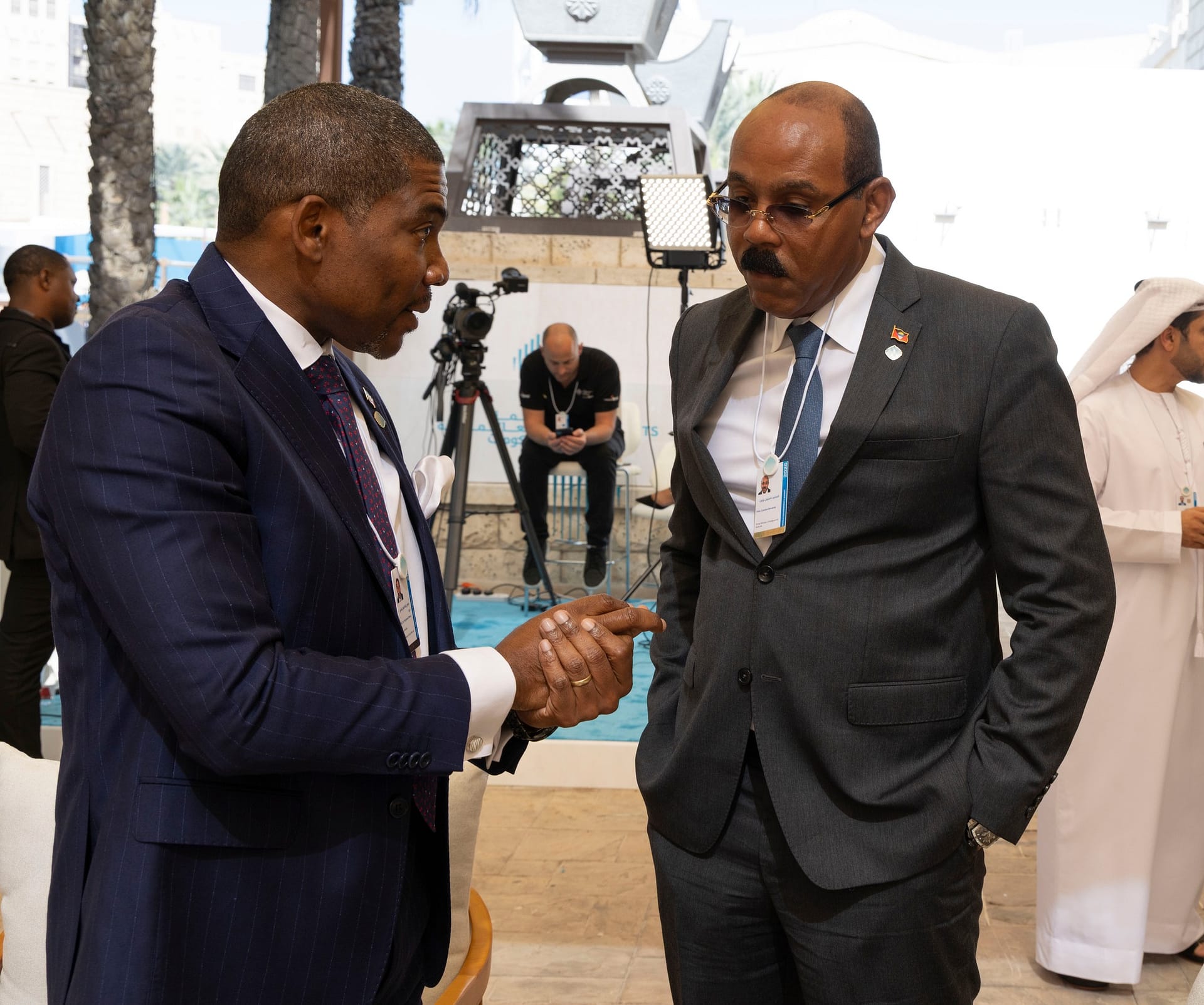
    In a significant policy address at the World Government Summit in Dubai, Prime Minister Gaston Browne unveiled a transformative national strategy to fundamentally reposition Antigua and Barbuda’s tourism industry. Moving beyond traditional metrics of success, the government is implementing a comprehensive overhaul designed to convert tourism into a powerful engine for inclusive economic development.

    Browne critically assessed the historical shortcomings of the tourism sector, describing it as operating too long as an ‘enclave industry’—successful in generating visitor arrivals and revenue but remaining critically disconnected from the broader national economy. This approach, while profitable for some, failed to deliver widespread benefits to the population.

    The new vision centers on creating a high-value tourism model with intentional linkages across multiple economic sectors. Strategic connections to construction, agriculture, creative industries, transportation, financial services, and small business development form the cornerstone of this initiative. This integrated approach aims to ensure that more Antiguans and Barbudans can participate meaningfully and benefit substantially from the tourism economy.

    Success indicators will be radically redefined under this new framework. Rather than focusing primarily on arrival numbers, the government will prioritize outcomes including increased domestic ownership, expanded entrepreneurship opportunities, livable wages for workers, higher visitor spending patterns, enhanced foreign exchange earnings, and more equitable tax revenue distribution.

    As part of this strategic pivot, the administration is actively courting luxury tourism investments while simultaneously encouraging existing all-inclusive properties to upgrade their offerings. This dual approach seeks to establish Antigua and Barbuda as a premier high-end destination while elevating standards across the entire industry.

    Browne emphasized that these transformative benefits will not materialize automatically. They require what he termed a ‘national reset’ of the tourism sector, supported by deliberate policy choices, targeted infrastructure investment, and comprehensive human capital development programs. The Prime Minister framed tourism not merely as an economic activity but as an overarching national development strategy touching all aspects of society—from physical infrastructure and cultural preservation to environmental stewardship and skills development.

    This strategic repositioning addresses what Browne identified as the central challenge facing small island states: designing tourism-driven economies capable of delivering resilient growth, shared prosperity, and long-term sustainability amid ongoing global economic, environmental, and technological changes.

  • Factory setbacks, market woes could delay sugar crop

    Factory setbacks, market woes could delay sugar crop

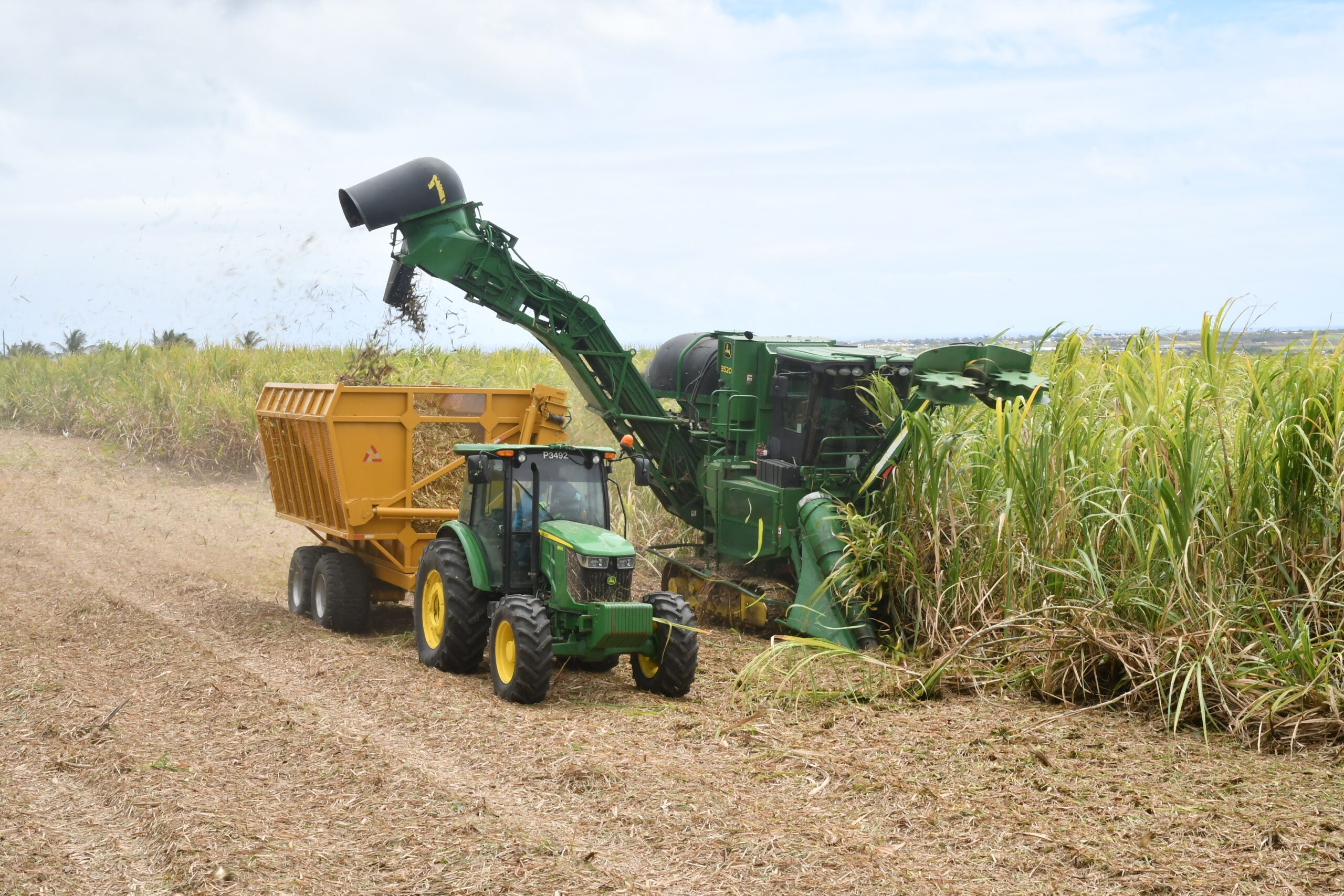
    Barbados’ historic sugar industry confronts mounting uncertainty as the 2026 harvesting season faces significant operational delays. Multiple industry sources confirm that Portvale Factory, the nation’s sole sugar processing facility, remains unprepared to receive sugarcane, casting doubt on previously anticipated February start dates.

    Technical assessments reveal substantial maintenance requirements still underway at the manufacturing plant. Dwight Millar, President of the Sugar Industry Staff Association (SISA), indicated that extensive equipment repairs and system upgrades must be completed before operations can commence. “Based on current progress indicators,” Millar stated, “a mid-February initiation appears highly improbable, with more realistic projections pointing toward early March.”

    The factory’s operational timeline faces additional complications awaiting critical agricultural data. Industry professionals await the annual brix report, which measures sucrose concentration in standing cane, to determine optimal harvesting conditions. Simultaneously, purchasing numbers for the season require finalization before processing can begin.

    Market dynamics further complicate the situation. Significant sugar inventories from the 2025 harvest remain unsold, reportedly due to competition from imported Jamaican sugar within CARICOM markets. This surplus storage issue creates logistical challenges for the upcoming season’s production cycle.

    Industry representatives have expressed grave concerns about external market pressures. Mark Sealy, Chairman of Barbados Sugar Industry Limited, highlighted how non-CARICOM brown sugar imports “directly compete with local production, essentially undermining domestic agricultural sustainability.” Producers argue these imports threaten the entire industry’s viability, potentially causing collapse within months without regulatory intervention.

    Management transitions have introduced additional complexity. Since January 2024, Co-op Energy has overseen sugar operations through subsidiaries BESCO Ltd (factory management) and Agricultural Business Company Ltd (farmland oversight), following government divestment of the Barbados Agricultural Management Company.

    Despite these challenges, private farmers maintain readiness to deliver cane once the factory announces operational dates. However, with general elections approaching next Wednesday and former agriculture minister Indar Weir pledging to address the situation, the industry’s future remains entangled in both operational and political dimensions.

  • IMF Welcomes Launch of Regional Credit Bureau in Antigua and Barbuda

    IMF Welcomes Launch of Regional Credit Bureau in Antigua and Barbuda

    The International Monetary Fund (IMF) has formally commended the governments of the Eastern Caribbean Currency Union (ECCU) for a significant stride in financial modernization: the establishment of a regional credit bureau, with its operational headquarters launched in Antigua and Barbuda. This initiative, long in development, represents a foundational shift in the region’s approach to financial risk management and credit accessibility.

    Traditionally, lending institutions across the eight ECCU member states have operated with limited visibility into borrowers’ complete financial histories, constraining their ability to accurately assess risk. The new bureau will act as a centralized repository for credit data, systematically collecting and distributing information on loans, repayment histories, and outstanding liabilities from commercial banks, credit unions, and other financial entities.

    IMF analysis underscores that this enhanced data transparency is critical for fostering a more robust and inclusive financial sector. By enabling lenders to make more informed, risk-based decisions, the bureau is projected to reduce non-performing loans and lower borrowing costs for credible borrowers. Concurrently, it empowers consumers and small-to-medium enterprises (SMEs) by allowing them to build a verifiable credit identity, thereby improving their access to capital for personal advancement or business expansion.

    The launch is viewed as a pivotal component of a broader structural reform agenda championed by the ECCU and supported by international financial institutions. It is anticipated to stimulate private sector growth, enhance economic resilience, and deepen the integration of the regional financial market. The IMF’s public endorsement signals strong international confidence in the project’s potential to catalyze economic development and stability throughout the Eastern Caribbean.