分类: business

  • Private sector urged to stay resilient in 2026

    Private sector urged to stay resilient in 2026

    In a comprehensive year-end address, Barbados Private Sector Association (BPSA) Chairman James Clarke delivered a dual message of cautious optimism and urgent preparedness for the coming year. The prominent business leader emphasized that Barbados’ economic stability during global uncertainties will depend heavily on the private sector’s adaptive capacity and collaborative spirit.

    Clarke reaffirmed the business community’s steadfast commitment to national development objectives outlined in the Mission Barbados framework. He highlighted ongoing cooperative efforts with government authorities to implement essential reforms, particularly through Business Barbados initiatives and operational enhancements at the Bridgetown Port. These structural improvements, he noted, are fundamental for increasing productivity, reducing operational expenses, and strengthening the international competitiveness of Barbadian enterprises.

    The BPSA chairman issued sobering warnings about multiple external threats, citing escalating geopolitical conflicts both regionally and internationally alongside increasing vulnerabilities to climate-related disruptions. Clarke stressed that business continuity planning must evolve beyond theoretical documents to regularly tested protocols, noting that organizational resilience has become critical for long-term viability in the face of potential crises.

    Regarding economic projections, Clarke revealed a significant discrepancy between official forecasts and current indicators. While the BERT 3.0 framework anticipates 5% growth for 2026, real-time data suggests expansion closer to 2.7%. Achieving the higher target, he cautioned, would require substantial effort and continued cultivation of a business-friendly environment that encourages cross-sector diversification.

    Although construction and tourism remain primary economic drivers, Clarke expressed optimism about growth potential in agriculture, manufacturing, renewable energy, and small business enterprises. He additionally addressed contemporary operational challenges, including adaptive responses to regulatory changes, escalating cybersecurity threats, and the transformative impact of artificial intelligence on business processes.

    The BPSA will meticulously monitor how minimum wage increases and persistent inflation affect business sustainability and living costs. Beyond economic matters, Clarke emphasized the private sector’s vital role in addressing social challenges, specifically identifying gun violence reduction, substance abuse prevention, non-communicable disease management, and mental health advocacy as priority areas for corporate social responsibility initiatives, particularly those focused on youth development.

  • New policy ‘would safeguard livelihoods, cover cost gaps’

    New policy ‘would safeguard livelihoods, cover cost gaps’

    Barbados’s fishing industry faces a critical insurance crisis as commercial operators navigate costly coverage gaps that leave vessels and livelihoods unprotected. Moonesh Dharampaul, leader of the Black Fin Fleet association formed after Hurricane Beryl, is urgently advocating for a national commercial fishing policy to establish proper insurance frameworks and vessel protections.

    Dharampaul revealed that despite negotiations with the General Insurance Association of Barbados achieving a 3% comprehensive rate arrangement, current insurance products remain fundamentally inadequate for commercial fishing operations. “The insurance sector in Barbados is not fit for purpose,” he stated. “Their policies do not cover commercial fishing activities, creating unacceptable risks for our fishers.”

    The coverage deficiencies are substantial: fishing gear worth thousands of dollars remains unprotected during operations, and vessels traveling beyond Barbados’s 200-mile economic zone into international waters lose all insurance protection. Approximately four insurance companies offer marine policies locally, but none at a commercially viable level for professional fishers.

    Dharampaul emphasized that developing proper insurance mechanisms represents essential evolution for the industry. Fisherfolk have presented their case to the World Bank, insurance representatives, and government officials, highlighting how a tailored commercial policy would account for seasonal variability and climate change impacts – critical considerations as fishermen increasingly experience entire seasons without catch income.

    Trust deficits complicate negotiations, with apprehension on both sides. Dharampaul expressed concern that without collective action, fishermen risk becoming “victims” of poorly implemented regulations. He appealed for reasonable implementation timelines alongside infrastructure improvements, noting that promised haul-out facilities and slipways should materialize by next May or March, coinciding with breakwater completion at fishing complexes.

    The push for specialized commercial fishing insurance reflects Barbados’s broader transition to republic status, which Dharampaul characterized as “new territory” requiring collaborative solutions between industry and insurers to ensure adequate coverage for those risking their livelihoods at sea.

  • New U.S. Remittance Tax to Hit Belizean Families Starting Friday

    New U.S. Remittance Tax to Hit Belizean Families Starting Friday

    A significant shift in U.S. fiscal policy is poised to directly impact thousands of Belizean families beginning January 1st, 2026. The controversial provision embedded within President Trump’s comprehensive legislative package, colloquially termed the ‘One Big Beautiful Bill,’ mandates a uniform 1% taxation on specific international money transfers originating from the United States.

    This regulatory change will apply to prevalent remittance channels including wire services like Western Union and traditional money orders. While the tax levy occurs at the source within U.S. jurisdiction, the economic repercussions will resonate profoundly within Belize, where remittances constitute an essential economic backbone for numerous households.

    Financial analysts project that the seemingly modest one percent deduction will accumulate substantially given the volume of transactions. These funds traditionally cover critical living expenses such as nutritional needs, housing costs, educational expenditures, and healthcare services for recipients.

    The macroeconomic implications extend beyond individual families, potentially affecting national economic stability. Current data from the Inter-American Development Bank reveals that Belize received approximately $173 million in remittances through November 2025, with an overwhelming 84% originating from U.S. sources. Transaction volumes typically surge during the holiday season, amplifying the potential aggregate impact of the new tax implementation.

    This policy transformation raises important questions about the intersection of domestic fiscal strategy and international economic relationships, particularly for nations like Belize where diaspora support mechanisms play a crucial role in socioeconomic sustainability.

  • BEL Warns of Financial Strain Despite Tariff Increase

    BEL Warns of Financial Strain Despite Tariff Increase

    Belize Electricity Limited (BEL) has received regulatory approval for increased electricity tariffs effective January 1st, yet company officials warn the approved rates fall significantly short of addressing their financial challenges. The Public Utilities Commission authorized a rate increase of 3 cents per kilowatt-hour to be implemented over a thirty-month period, substantially less than the nearly 5 cents over twenty-four months that BEL had requested.

    The discrepancy between requested and approved rates creates a projected $19 million shortfall for the utility company. BEL’s financial statements reveal mounting pressures including substantial debts to power producers, increasing local liabilities, and over $80 million in emergency expenditures for gas turbines deployed to prevent widespread blackouts.

    According to company statements, these emergency measures prevented potentially severe service interruptions that could have resulted in up to two hours of daily power outages across Belize. Meanwhile, delays in solar energy projects have cost consumers approximately $53 million in lost potential savings according to company estimates.

    While BEL has committed to enhanced operational controls and greater transparency, the utility reserves the right to pursue additional cost recovery mechanisms in the future. The situation presents an ongoing challenge for Belize: balancing reliable electricity service with affordability for consumers amid rising infrastructure costs and transition to renewable energy sources.

  • Staatsolie behaalt doelen in 2025 en verstevigt basis voor offshore-toekomst

    Staatsolie behaalt doelen in 2025 en verstevigt basis voor offshore-toekomst

    Suriname’s state-owned oil company, Staatsolie Maatschappij Suriname N.V., concluded 2025 with exceptional financial and operational results, demonstrating robust performance across both onshore and emerging offshore sectors. The energy enterprise successfully met all production targets while laying foundations for sustainable growth in the nation’s burgeoning oil and gas industry.

    The company reported impressive financial metrics for the year, with projected revenues reaching approximately $802 million and pre-tax profits totaling $418 million. Production figures revealed 6.35 million barrels of oil extracted, exceeding established targets. The refinery operations outperformed expectations, generating 3.1 million barrels of diesel and gasoline combined. A significant milestone was achieved with the inaugural commercial production and subsequent delivery of sulfuric acid to Suralco.

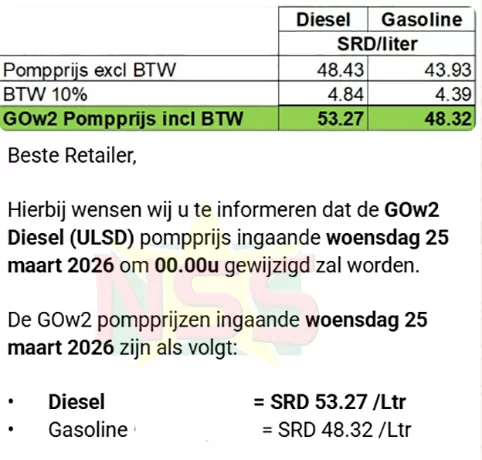
    Through its subsidiary Staatsolie Power Company Suriname (SPCS), the corporation supplied approximately 1.37 million MWh of electricity, accounting for 69% of power distributed through the EPAR network to Paramaribo and surrounding districts. Infrastructure development continued with GOw2’s modernization initiative, which completed two upgraded pumping stations and established a new facility in Saramacca.

    Staatsolie’s contribution to national finances proved substantial, injecting an estimated $387 million into state coffers through taxes, dividends, and royalty payments. This represented approximately 32% of total government revenues and accounted for nearly 9% of Suriname’s gross domestic product.

    Offshore developments marked particularly significant progress throughout 2025. The GranMorgu project in Block 58 advanced according to schedule, achieving 25% overall completion with the floating production storage and offloading (FPSO) vessel halfway constructed. First oil production remains anticipated for 2028. Additionally, the company granted commercial approval for the Sloanea-1 gas field in Block 52, representing a crucial step toward offshore gas production pending final investment decision in 2026.

    To finance its 20% participation in the GranMorgu venture, Staatsolie secured over $2 billion through a successful bond issuance and international bank loan, demonstrating strong investor confidence in Suriname’s energy prospects.

    The corporation maintained its commitment to social responsibility, channeling $2.7 million into community projects through the Staatsolie Foundation supplemented by an additional $3 million allocation commemorating the company’s 45th anniversary.

    Despite global oil market uncertainties, Staatsolie approaches 2026 with confidence, supported by solid financial positioning, strategic partnerships, and continued dedication to creating lasting value for Suriname’s economy and society.

  • New U.S remittance tax could impact Dominican families in 2026

    New U.S remittance tax could impact Dominican families in 2026

    Beginning January 1, 2026, a significant policy shift will affect thousands of Dominican families who depend on financial support from relatives working in the United States. The U.S. government will implement a 1% tax on specific categories of international money transfers, particularly those funded through cash, money orders, or cashier’s checks sent to foreign destinations.

    This fiscal measure applies universally, regardless of the sender’s immigration status—impacting U.S. citizens, permanent residents, and undocumented workers equally when utilizing these payment methods. For Dominica, where remittances constitute a vital economic lifeline, this development carries substantial implications. These funds are instrumental in supporting daily household expenses, post-hurricane reconstruction efforts, educational costs, and healthcare needs.

    Economic analysts emphasize that remittances represent more than individual financial support—they serve as a critical component of the nation’s economic ecosystem. The circulation of these funds through local communities sustains small businesses, supports service providers, and fuels rural development initiatives. Even marginal reductions in transfer volumes could trigger noticeable effects on local spending patterns and commercial vitality.

    Notably, the regulation contains a crucial exemption: electronic transfers initiated directly from bank accounts, debit/credit cards, or digital remittance applications remain exempt from the additional levy. Financial experts are actively encouraging Dominican households to advise their overseas relatives to transition toward these digital channels to preserve the full value of their transfers.

    With the United States serving as Dominica’s primary source of remittance income, and billions of dollars flowing annually throughout the Caribbean region, this policy change underscores how U.S. financial regulations can produce immediate socioeconomic repercussions across neighboring economies. As 2026 approaches, Dominican communities are preparing through increased awareness, technological adaptation, and strategic financial planning to ensure that essential overseas support reaches beneficiaries without unnecessary reduction.

  • Goddard Enterprises records profits following cocoa business turnaround

    Goddard Enterprises records profits following cocoa business turnaround

    Barbados-based conglomerate Goddard Enterprises Limited (GEL) has announced a substantial financial upswing for its fiscal year ending September 30, with net profits climbing to $76.8 million—marking a $24.3 million increase compared to the previous year. This impressive performance was largely driven by a dramatic reversal in its cocoa processing operations in Ecuador.

    The company’s earnings per share rose to 27.9 cents, and shareholders are set to receive a final dividend of three cents per share in late February. Chairman Charles Herbert and Managing Director Anthony Ali attributed the strong results primarily to improved manufacturing performance, particularly highlighting the remarkable recovery of their Ecuadorian subsidiary, Ecuakao.

    Ecuakao, which had suffered significant losses of $21.2 million the previous year, generated a robust profit of $16.7 million this fiscal period. Company leadership cited increased cocoa production volumes, expanded sales, and favorable pricing for raw cocoa beans as key factors behind this turnaround. The manufacturing division’s return to profitability was largely contingent on Ecuakao’s recovery.

    Despite these gains, the company incurred substantial costs associated with its financial strategy. GEL allocated $8.5 million for protective measures related to cocoa futures trading and provisioned $4.1 million for potentially irrecoverable customer debts.

    The conglomerate’s consumer products joint venture with Trinidad and Tobago’s Agostini Limited, Acado Limited, delivered another strong performance, with most markets showing positive results despite operational challenges in St. Lucia.

    Goddard Catering Group reported solid revenue growth but faced profitability pressures due to losses at associate companies in Costa Rica. The group recorded $10.8 million in expected credit loss provisions from two associates and wrote down $5.4 million in goodwill from its Panama catering business, which has been struggling with intensified competition at the country’s main international airport.

    The building supplies division achieved an 8.5% revenue increase while maintaining operating profits consistent with the previous year, though higher interest and tax expenses reduced net profits from this segment.

    Conversely, the automotive division experienced a challenging period with weak vehicle sales in Barbados and Jamaica, inventory reduction efforts, increased financing costs related to the GAC brand launch, and a $1.3 million property revaluation loss in Barbados.

    The smaller shipping and services division performed in line with management expectations, according to company officials.

  • Camper & Nicholsons Marinas vacancy: Accounting Officer

    Camper & Nicholsons Marinas vacancy: Accounting Officer

    Port Louis Marina, operated by Camper & Nicholsons Marinas, has announced an opening for an Accounting Officer position to strengthen its financial operations team. The role represents a strategic career opportunity within Grenada’s marine services sector.

    The primary objective of this position involves providing comprehensive support for daily accounting functions, encompassing accounts payable and receivable management, bank reconciliation procedures, and facilitation of tax audit processes. The successful candidate will assume responsibility for reviewing and reconciling daily financial transactions while maintaining accurate accounting records.

    Key responsibilities include conducting thorough bank reconciliations, overseeing the allocation and approval processes for sales and purchase transactions, and performing detailed marina revenue analysis and processing. The Accounting Officer will also play a critical role in supporting annual external audit activities and managing all accrual entries.

    The position requires active management of customer debt collection and assistance in preparing both interim and annual budget forecasts. Additional duties involve organizing complex financial data into actionable information, preparing electronic payments, monitoring online receipts, and maintaining the company’s asset register with associated depreciation records.

    The Accounting Officer will be tasked with maintaining accounting policies and procedures aligned with organizational targets while ensuring full compliance with Grenada’s financial regulations. The role may encompass additional operational duties as assigned by the General Manager.

    Applicants must possess a minimum of five years’ professional experience in accounting, with at least two years’ proficiency in Sage or comparable accounting software. Essential qualifications include advanced computer skills, particularly advanced Excel capabilities for spreadsheet management, chart creation, and complex formula implementation.

    The ideal candidate will demonstrate comprehensive knowledge of bookkeeping principles, accounting regulations, and exceptional analytical skills for managing substantial datasets. Critical attributes include meticulous attention to detail, effective prioritization abilities, strict timekeeping discipline, and maintained confidentiality in all professional dealings.

    Educational requirements include a Bachelor’s degree in Accounting or Finance, with professional accounting certifications (such as Chartered Accountant, Certified Management Accountant, or Certified Public Accountant) considered advantageous.

    Compensation will be commensurate with qualifications and experience. Interested candidates should submit applications to the Human Resource Manager at Camper & Nicholsons Grenada Services Ltd., Port Louis Marina, MB9012, Kirani James Boulevard, St George’s, or via email to hr.gd@cnmarinas.com. The application deadline is January 15, 2026.

    The selection process will involve rigorous screening, with only shortlisted candidates receiving communication for interview arrangements. This recruitment initiative underscores the marina’s commitment to maintaining financial excellence and regulatory compliance within Grenada’s growing marine tourism industry.

  • From Elite Military Service to Global Business Vision: The Journey of Alfonso Magaña

    From Elite Military Service to Global Business Vision: The Journey of Alfonso Magaña

    A remarkable transformation from military excellence to business leadership is unfolding in Belize through the journey of Alfonso Magaña, whose elite Special Forces background now fuels one of the nation’s most dynamic luxury real estate ventures.

    Magaña’s path to entrepreneurship began with one of Belize’s most rigorous selection processes. Of approximately 40 candidates entering the Belize Defence Force officer selection, only three succeeded—Magaña among them. His military career became a testament to exceptional performance, ranking first academically and across multiple performance metrics during intensive recruit training that tested physical endurance, mental fortitude, and leadership capabilities.

    His distinguished service earned him placement at the prestigious Royal Military Academy Sandhurst, where he trained alongside international officers and further honed strategic thinking and adaptive leadership skills. Upon returning to Belize, Magaña joined the elite Belize Special Forces, spending approximately one year operating in high-stakes environments that demanded precise judgment and absolute accountability.

    The transition to civilian life marked not an abandonment of military principles but their strategic application. In 2025, Magaña founded Alpha Real Estate, leveraging the same discipline, risk assessment methodologies, and execution excellence that defined his military career. The company has rapidly emerged as a dominant force in Belize’s luxury property market, specializing in premium residential, commercial, and resort properties while also facilitating large-scale development projects.

    Beyond domestic operations, Alpha Real Estate now represents high-value Belizean assets in international markets, positioning the country within global investment conversations. Magaña attributes his business success directly to military values: “My background taught me that results come from discipline and clarity under pressure. Whether in the military or in business, excellence is never accidental.”

    His journey represents a growing trend of elite military professionals transitioning their leadership skills to the business sector, demonstrating how specialized training in high-pressure environments can create competitive advantages in civilian entrepreneurship. The company continues to expand with a focus on global competitiveness while maintaining roots in Belizean leadership standards and trusted execution.

  • Old Year’s night bookings surge along the south coast

    Old Year’s night bookings surge along the south coast

    Coastal restaurants along Barbados’s southern shoreline are experiencing unprecedented reservation patterns for Old Year’s Night celebrations, with many establishments reporting complete sell-outs months ahead of the traditional holiday period. Industry professionals note a significant shift in booking behaviors and consumer preferences during this year’s festive season.

    At Champers Restaurant in Worthing, proprietor Chiryl Newman observes exceptionally robust demand that surpasses previous years’ performance metrics. ‘Our reservation system reached capacity considerably earlier than historical patterns would indicate,’ Newman disclosed to Barbados TODAY. ‘While we traditionally maintain full bookings, this year’s pace has been remarkably accelerated with patrons securing tables as early as July and August.’

    The tourism sector appears to be driving this anticipatory reservation trend, with international visitors accounting for the majority of advanced bookings. This contrasts with the more spontaneous dining patterns typically demonstrated by local residents.

    Buzo Osteria Italiana in Hastings mirrors this commercial success, with General Manager Danny Mansour reporting consistently strong performance throughout the entire holiday period. ‘The Christmas season demonstrated remarkable stability without the customary fluctuations between peak and off-peak periods,’ Mansour explained. ‘Our local clientele has maintained steady support while international visitors complement our business foundation.’

    The establishment has strategically opted to maintain its traditional à la carte service model rather than implementing special holiday menus, responding to customer preferences for authentic dining experiences over curated holiday offerings. Service will conclude at 9:00 PM to accommodate guests’ subsequent celebration plans.

    Conversely, Bubbas restaurant in Worthing has adopted an alternative operational strategy. Owner Adrian Jones has prioritized staff welfare over potential revenue generation, choosing to close early on New Year’s Eve to allow employees to participate in holiday celebrations. ‘Our team deserves opportunity to enjoy seasonal festivities after their dedicated service throughout the year,’ Jones affirmed.

    The locally-focused establishment reports sustained success through its community-oriented approach, with plans underway to commemorate three decades of operation in April 2026. Jones attributes this longevity to consistent local patronage and maintained service quality.