
The closure of Standard Distributors, a long-standing retail giant in Trinidad and Tobago, marks the end of an era for traditional brick-and-mortar home furnishings and electronics stores. Simultaneously, American Stores, a family-run competitor, has opened a new branch in Arima, symbolizing the shifting dynamics in the local retail market. The contrasting events highlight the challenges faced by traditional retailers in adapting to online competition, squeezed profit margins, and evolving consumer preferences. Standard Distributors, founded in 1945 and acquired by the Ansa McAL Group in 1967, officially closed its doors on November 1, 2025. Its operations have been sold to Term Finance (TT) Ltd, a regional fintech company, which plans to rebrand the business as Standard Credit, focusing on credit and e-commerce services. Sarah Inglefield, Ansa McAL’s head of marketing, emphasized that the divestment aligns with the group’s strategic growth priorities, allowing it to focus on high-growth sectors. Meanwhile, American Stores, founded in 1950, is reclaiming its position in the market. The company, now led by the third generation of the Hosein family, has opened a new branch in Arima, replacing a smaller, congested location. COO Tana de Freitas highlighted the company’s resilience and commitment to customer service, despite challenges such as foreign exchange shortages and shipping costs. While Standard Distributors’ closure reflects the harsh realities of traditional retail, American Stores’ expansion demonstrates the enduring potential of family-owned businesses in a rapidly changing market.
分类: business
-

TTMA unveils plans for convention centre, exports, SMEs
The Trinidad and Tobago Manufacturers’ Association (TTMA) recently hosted its annual President’s Dinner and Awards at the Hyatt Regency in Port of Spain, celebrating the resilience, innovation, and economic contributions of the nation’s manufacturing sector. The event, held on November 5, 2025, highlighted the industry’s pivotal role in national development, with TTMA President Dale Parson emphasizing its employment of over 60,000 people and its status as a key economic stabilizer. Parson also revealed that the TTMA, in partnership with the government, raised over $5 million in goods and cash within 24 hours to support Jamaica’s recovery efforts following Hurricane Melissa. The manufacturing sector accounts for approximately 18% of Trinidad and Tobago’s Gross Domestic Product (GDP), making it the second-largest employer after the state. Small and medium-sized enterprises (SMEs) were recognized as the backbone of the industry, comprising nearly 65% of manufacturers nationwide. Parson outlined initiatives to enhance SME export readiness, including participation in trade conventions, international missions, and collaboration with the Eximbank. Looking ahead, the TTMA has proposed redeveloping the Caroni Racing Complex into a world-class convention center, aiming to position Trinidad and Tobago as a regional manufacturing and trade hub. The event also featured calls for deeper bilateral collaboration between Trinidad and Tobago and Guyana, with Guyana Manufacturing and Services Association President Rafeek Khan urging the resolution of trade barriers to unlock regional opportunities. Trade Minister Satyakama Maharaj commended manufacturers for their role in economic diversification, announcing ambitious targets to expand exports by $5 billion and attract $9 billion in investments over the next five years. The evening concluded with awards recognizing industry leaders, including Angostura Ltd, which won Exporter of the Year (Large Category), and Novo Farms Ltd, honored as Manufacturer of the Year (Medium Category).
-

Is AI taking our jobs or not?
The rise of artificial intelligence (AI) is fundamentally transforming the global workforce, challenging traditional job structures and reshaping industries. While the phrase ‘AI won’t take your job – but someone using AI will’ offers a sense of optimism, the reality is far more complex. Companies worldwide are increasingly citing AI as a reason for cutting thousands of white-collar roles. Amazon’s CEO, Andy Jassy, recently highlighted that AI enables teams to achieve more with fewer people, signaling a shift in workforce dynamics.
Jobs are not monolithic but rather collections of tasks. Research from McKinsey & Company reveals that AI can perform 30 to 70 percent of these tasks, altering the economic viability of many roles. When AI handles half of a job’s workload more efficiently, companies face three choices: eliminate the role, merge it with another function, or redesign it into an AI-assisted position. This gradual erosion of tasks is particularly evident in routine cognitive work, such as data entry, report writing, and document review, which AI now manages with near-professional precision.
Gartner predicts that by 2026, 20 percent of organizations will use AI to flatten their hierarchies, eliminating half of their middle-management layers. AI systems are now capable of handling coordination, analytics, and communication—functions traditionally overseen by managers. This shift is creating what McKinsey terms the ‘agentic organization,’ where small human teams supervise networks of AI agents, resulting in leaner companies and faster decision-making.
While AI is automating many tasks, it is also driving job transformation. In medicine, surgeons use AI to enhance decision-making during operations. In law, AI tools save lawyers an estimated 240 hours annually by handling contract analysis and legal research. In marketing, generative AI has reduced content creation costs by 30 to 50 percent. AI acts as a copilot, handling repetitive work so humans can focus on creativity and judgment. However, companies often fail to replace eliminated tasks with new creative roles, leading to workforce reductions.
AI is also reshaping income distribution. According to PwC’s Global AI Jobs Barometer (2025), industries like finance, IT, and professional services are experiencing productivity growth five times faster than sectors like manufacturing or transport. Workers with advanced AI skills command a 56 percent wage premium, while routine professional roles face decline. This dynamic is compressing the middle class and rewarding those who can direct, train, or govern AI systems.
One of the most pressing concerns is the hollowing-out of the career ladder. AI is automating entry-level tasks that once provided young professionals with learning opportunities. Simultaneously, firms are adopting ‘AI-first’ hiring policies, deploying automation before opening new roles. This trend raises questions about how the next generation of managers and specialists will be trained.
Governments are responding differently to these challenges. The European Union’s AI Act classifies workplace AI as ‘high-risk,’ demanding transparency and safety protocols, which slows innovation but protects workers. In contrast, Singapore is rapidly building an AI-fluent workforce through national upskilling initiatives and a government-backed ethics framework called AI Verify.
In conclusion, AI is not eliminating all jobs but is dismantling the structure of work as we know it. Tasks are being automated, hierarchies flattened, and entry points erased. The future will favor individuals and nations that master AI literacy, creative judgment, and the ability to design systems rather than merely operate within them. As companies in the Caribbean and beyond adopt digital tools more aggressively, the question is no longer if AI affects our jobs, but how quickly we adapt. When half of your tasks vanish, what remains is a test of the true value of the human element in your work.
-

First Citizens doubles Neo Achievers student awards
First Citizens Bank has recently celebrated the academic excellence of 16 young achievers through its Neo Education Awards. This annual event, held to honor student account holders nationwide, underscores the bank’s dedication to fostering youth empowerment and financial literacy. The Neo account, a savings product tailored for individuals from birth to age 25, aims to instill sound financial habits early in life. This year, the bank doubled the number of awardees from eight in 2024 to 16, reflecting its growing commitment to education and youth development. Recipients received cash prizes directly deposited into their Neo accounts, ranging from $1,000 for Secondary Entrance Assessment (SEA) achievers to $6,000 for top tertiary-level performers. CSEC and CAPE students were awarded $2,500 and $3,000, respectively. Lyndon Balkran, Acting Senior Manager for Market Development, Intelligence, and Promotions, praised the awardees, emphasizing the bank’s belief in nurturing a financially confident generation. Parents and students expressed gratitude, viewing the ceremony as both a celebration of academic success and a motivation to pursue excellence. The Neo Education Awards are a key component of First Citizens’ strategy to promote lifelong financial awareness, bridging academic achievement with responsible money management.
-

The struggles to establish a regional air carrier
In a decisive move to safeguard over 700 jobs and maintain vital air connections across the Caribbean and the eastern United States, the Trinidad and Tobago (TT) government, under the leadership of Premier Dr. Eric Williams, took control of British West Indian Airways (BWIA) in 1961. This action was prompted by the British Overseas Airways Corporation’s (BOAC) proposed austerity measures, which threatened significant staff retrenchments and disruptions to regional air services. Premier Williams, addressing the House of Representatives on March 23, 1962, highlighted the government’s intervention to acquire BWIA, emphasizing the need to preserve employment and sustain air links. BOAC, in a letter dated June 16, 1961, valued BWIA at £1,034,036 (BWI$5,445,726), but independent technical advice was sought to facilitate negotiations. The TT government engaged C.S. Sundaram, a consultant from the International Civil Aviation Organisation (ICAO), whose report on September 27, 1961, influenced the decision to acquire BWIA on October 3, 1961. The TT government’s acquisition plan included purchasing BWIA as a going concern, negotiating pooling arrangements with BOAC, and offering BOAC a 20% equity stake. The final agreement, concluded on October 7, 1961, saw BOAC agree to the acquisition for $2.5 million, less than half the initial valuation. This strategic move underscored the TT government’s commitment to regional connectivity and employment stability, independent of broader federal plans.
-

Rural Real Estate: Vacancy – General Manager
Rural Real Estate Inc., a prominent player in Grenada’s property market, is on the lookout for a General Manager to spearhead its operations and foster growth. Based in Grenville, St. Andrew, Grenada, this role demands a dynamic and results-oriented leader who can oversee daily activities and propel the company to new heights. The ideal candidate will embody entrepreneurial spirit, organizational prowess, and a passion for unlocking the business’s full potential. Key responsibilities include managing sales, administration, and marketing operations, expanding property listings and sales, leading and motivating staff, and cultivating robust client and partner relationships. Applicants must possess a Bachelor’s Degree in Business, Marketing, or Hospitality (preferred), along with a minimum of five years of experience in real estate, sales, or business management. Proven leadership, exceptional communication skills, and familiarity with AI tools, digital marketing, and CRM systems are essential. A valid driver’s license and reliable vehicle are also required. This is primarily an in-office position with limited remote work flexibility. Interested candidates are encouraged to submit their CV and cover letter to [email protected] or contact +1 473 438 4438 for further details. The application deadline is November 15, 2025. NOW Grenada is not responsible for the opinions, statements, or media content presented by contributors. In case of abuse, click here to report.
-

Staatsolie verstevigt internationale partnerschappen in offshoresector
Suriname has taken a significant step forward in its offshore oil and gas exploration efforts with the signing of Production Sharing Contracts (PSCs) for Blocks 9 and 10. The contracts were formalized by Staatsolie, the state-owned oil company, in collaboration with international operators Petronas Suriname E&P B.V. (Block 9) and Chevron Suriname Exploration Limited (Block 10).
In Block 9, Petronas Suriname will serve as the operator, partnering with Chevron Suriname Exploration Ltd., QatarEnergy International E&P LLC, and Paradise Oil Company (POC). The ownership distribution in this block is as follows: Petronas Suriname holds 30%, Chevron 20%, QatarEnergy 20%, and POC 30%. For Block 10, Chevron assumes the role of operator, with Petronas Suriname, QatarEnergy, and POC as partners. The ownership breakdown here is Chevron 30%, Petronas Suriname 30%, QatarEnergy 30%, and POC 10%.
The PSCs grant the involved parties exclusive rights for exploration, development, and production in their respective blocks. The initial exploration phase, spanning three years, will focus on collecting and processing 3D seismic data to map subsurface structures and identify potential oil and gas reserves.
Speaking at the signing ceremony, Patrick Brunings, Suriname’s Minister of Oil, Gas, and Environment, emphasized the country’s commitment to sustainable development. ‘We will continue to attract companies to invest in our basin and use the revenues to make Suriname greener and more sustainable—what we call Suriname 3.0,’ he stated.
The contracts, valid for thirty years, were signed by Annand Jagesar (General Director of Staatsolie), Danny Tan (Country Head of Petronas Suriname), Ali Al-Mana (Manager of Upstream International at QatarEnergy), Andrew Deighan (Americas Exploration Director at Chevron), and Rekha Bissumbhar (Director of POC). The event was attended by Minister Brunings and David Abiamofo, Minister of Natural Resources.
Blocks 9 and 10 are located in shallow waters approximately 50 kilometers off the coast of Saramacca. Block 9 covers an area of 2,674 km², while Block 10 spans 2,972 km², with water depths reaching up to 50 meters.
Minister Abiamofo praised the negotiation team and highlighted the government’s support for the initiative. ‘The success of Blocks 9 and 10 will not only drive economic development but also create opportunities for capacity building, employment, and community development,’ he remarked.
This milestone underscores Staatsolie’s strategy to responsibly develop Suriname’s offshore oil and gas potential in partnership with renowned international entities. The agreements mark a pivotal step in positioning Suriname as a key player in the global exploration and production sector.
-

Minister: Fund Access, Trust Loans reforms coming
In a bold move to revitalize the financial landscape for micro, small, and medium-sized enterprises (MSMEs), the Barbadian government has unveiled plans for a comprehensive restructuring of Fund Access and Trust Loans by 2026. Business Minister Senator Lisa Cummins announced the initiative during her keynote address at the Innovation Growth Market (IGM) 200 Conference, held at the Hilton Barbados Resort. The reform aims to address the limitations of the current debt-financing model, which Senator Cummins described as ‘outdated’ and ill-suited for modern enterprises.
-

Court blocks bank from collecting EC $800K from elderly couple who guaranteed their children’s business loan
The High Court has delivered a landmark ruling against FirstCaribbean International Bank, mandating the withdrawal of its claim against an elderly couple who guaranteed an EC $800,000 loan for their children’s business. The court found that the bank failed to ensure the couple fully understood the risks associated with the agreement. Justice highlighted that Alburn and Veronica Samuel were not advised to seek independent legal counsel before signing as guarantors for Tyrells A1 Building Centre in 2010. The judge emphasized that the parents’ relationship with their children established a “relationship of influence,” which should have prompted the bank to exercise greater caution. The court noted that FirstCaribbean provided no evidence that it adequately explained the agreement to the couple or encouraged them to obtain legal advice, rendering their guarantees invalid. While the ruling dismissed the bank’s claim against the parents, it upheld its right to recover approximately EC $3.8 million in loans from the business partnership itself. Additionally, other relatives, whose properties were used as collateral, were absolved of liability after the court determined that the bank altered the loan terms without their consent. These relatives were awarded roughly EC $96,000 in damages and EC $10,000 each for defamation due to incorrectly published auction notices. FirstCaribbean was also ordered to pay the Samuels EC $7,500 in legal costs, with an additional EC $166,000 awarded to other defendants.
-
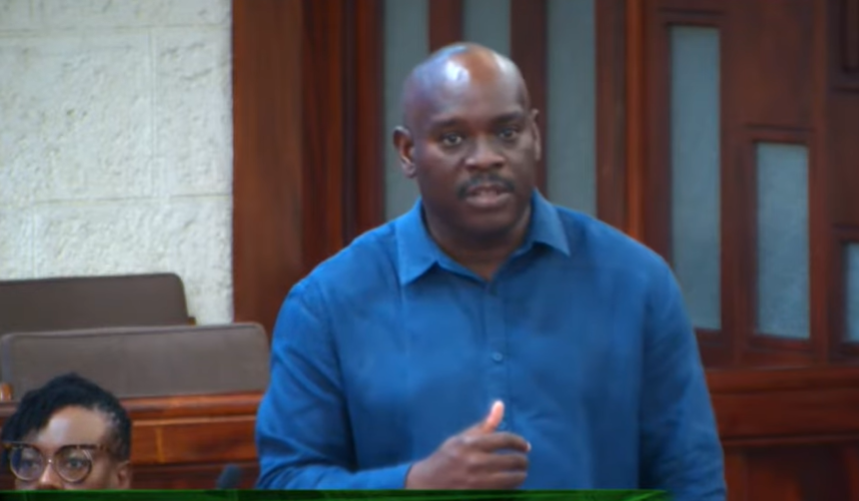
Straughn to private sector: Seize opportunities with CAF membership
Barbadians are being encouraged to capitalize on investment opportunities across the Caribbean and Latin America as Barbados prepares to become a full member of the Development Bank of Latin America and the Caribbean (CAF). Finance and Economic Affairs Minister Ryan Straughn emphasized this vision during the introduction of the Development Bank of Latin America and the Caribbean Bill in Parliament on Tuesday. The bill, which seeks to elevate Barbados’ membership status, will unlock access to up to US$18 billion in concessional financing for the government, local businesses, and individuals. Straughn highlighted that this financial access will empower Barbadians to acquire businesses regionally and beyond, fostering economic growth and integration. He urged a shift in mindset from concerns about foreign ownership to proactive regional investment by Barbadian enterprises. Straughn also called on local credit unions to innovate and support this vision, enabling Bajan companies to expand their reach. As the smallest member of CAF, Barbados will join a prestigious group of regional economies, marking a significant milestone in its financial and economic integration with Latin America and the Caribbean.