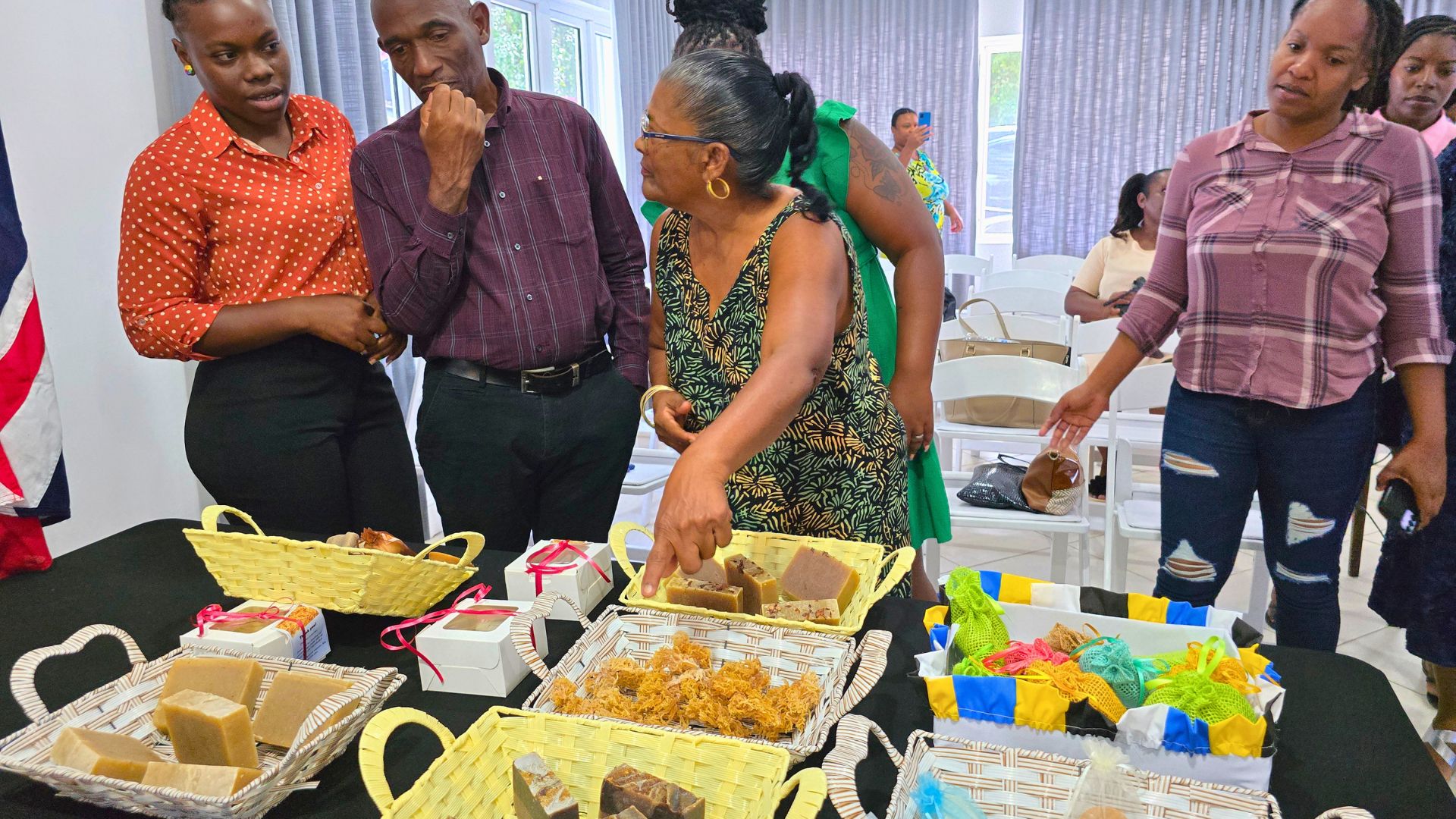
Across Saint Lucia, a transformative development initiative focused on expanding inclusion and economic growth in the local seamoss industry has wrapped up its implementation, leaving lasting positive change for marginalized groups including women and young people.
Named the Empowering Youth and Women in the Seamoss Industry project, the effort was financed by the British High Commission and brought to life through on-the-ground coordination by the Eau Piquant Seamoss Farmers Association. A core priority of the program was upskilling local women to convert raw seamoss into high-value, natural skincare goods, creating new income streams that align with the growing global demand for plant-based personal care products.
For many participants, the project has already reshaped their professional and personal lives. Claudia Clovis-David, a stay-at-home mother who previously worked as a seamoss farmer before a hemorrhagic stroke forced her to step back from active harvesting, is one of the program’s success stories. After mastering the process of crafting soap from seamoss and other natural ingredients, she now has a flexible work model that fits her family responsibilities.
“It’s something that’s flexible, allowing me to be with my family and generate an income at the same time,” Clovis-David shared in an interview with St. Lucia Times. “I enjoy working with seamoss. It has a lot of great benefits, so I’m happy for this opportunity to interact with seamoss again.”
Beyond supporting adult women entrepreneurs, the initiative also made long-term investments in youth engagement through partnerships with local secondary education institutions. Working alongside Beanfield Secondary School, the project organizers introduced third-form students to modern marketing strategies for seamoss-derived products, culminating in a student competition to design original logos for upcoming product lines. Organizers note that this early exposure is designed to spark lasting interest in the sector, paving the way for greater youth participation in Saint Lucia’s seamoss economy in coming years.
The project also addressed longstanding accessibility barriers that have excluded many community members from seamoss farming. To make the work safer and more comfortable for people who cannot swim, the initiative funded the installation of purpose-built resting stations in ocean waters adjacent to active farming zones.
Brian Walker, vice president of the Eau Piquant Seamoss Farmers Association, highlighted that the project’s participatory design was key to its strong outcomes. Unlike many externally funded initiatives that leave local communities out of planning, this program embedded the association in both the development and execution phases, fostering a shared sense of ownership over the work. “This project allowed us to be directly involved in the implementation and planning stage where funding monies were used, and that gives us a level of ownership of what we do and appreciation for the industry as a whole,” Walker explained, before extending gratitude to the British High Commission for its support.
Doyin Adele-Shiyanbola, resident British Commissioner, echoed that praise, noting she was particularly impressed by how quickly participants have turned their new skills into active businesses. “I heard about how some of the women are already selling their products, and how they wanted to take it to a different level and market it not just in Saint Lucia but globally. I found that really inspiring,” she said.
Looking ahead, program participants are now preparing to scale their new ventures, with plans to pursue regional and international market opportunities for their seamoss-based products as they launch their small businesses.