
Fitch Ratings has adjusted Jamaica’s credit outlook from positive to stable, effectively halting any near-term upgrade prospects, following the severe economic damage inflicted by Hurricane Melissa. The agency reaffirmed the country’s ‘BB-’ rating, signaling a pause in the momentum that had previously pointed toward an improvement. A stable outlook indicates that Fitch expects Jamaica’s credit rating to remain unchanged over the next one to two years, contrasting with a positive outlook, which would have suggested potential upgrades if economic conditions continued to strengthen. The government’s preliminary estimates place the storm’s damage at approximately 30% of Jamaica’s GDP, equating to roughly US$6 billion to US$7 billion. This aligns with earlier assessments from the World Bank and Inter-American Development Bank, which estimated physical damage at a record US$8.8 billion. Fitch forecasts a 1.5% economic contraction in 2025, followed by a modest recovery of 1.8% in 2026. The agency highlighted prolonged adverse effects on key sectors like tourism, agriculture, and mining, with tourism receipts projected to decline by 15% in both 2025 and 2026. Before the storm, tourism accounted for nearly 20% of Jamaica’s GDP. The current account is expected to slip into a deficit in 2026 after posting a surplus of 3.1% of GDP in 2024, reflecting increased spending on imports and external payments. However, rising remittances are anticipated to mitigate the impact. Jamaica’s foreign exchange reserves remain robust at US$6.2 billion, covering nearly seven months of external payments—well above the ‘BB’ country median of 4.8 months. In response to the crisis, the government will suspend the Fiscal Responsibility Law for two years, leading to a sharp shift in public finances. The general government balance is projected to move from a 0.2% surplus in 2024 to a 3.2% deficit in 2025, potentially pushing the debt-to-GDP ratio to 68% by the end of 2026. This reverses a years-long downward trend that had reduced debt from 135% in 2012. Despite these challenges, Jamaica enters the recovery period with significant financial buffers, including US$250 million in contingency funds, US$384 million in multilateral credit lines, and an estimated US$1 billion to US$2.5 billion in private insurance inflows. These resources provide short-term liquidity and support reconstruction efforts without immediate financing stress. Fitch emphasized that Jamaica’s ‘BB-’ rating is bolstered by strong performance on the World Bank Governance Indicators, which measure factors like government effectiveness, rule of law, and control of corruption. The agency warned that larger-than-expected economic losses or a slower recovery could lead to a negative rating action, while a renewed decline in the debt-to-GDP ratio could eventually support a positive rating action. Fitch believes the government remains committed to its fiscal framework and will actively seek to reduce its debt burden once reconstruction efforts advance.
分类: business
-

Address Nutrien fallout more robustly
The recent closure of Nutrien’s operations in Trinidad has sent shockwaves through the local economy, leaving at least 600 workers unemployed. The global chemicals producer had been a cornerstone of the Point Lisas industrial estate for nearly 30 years, serving as a significant foreign exchange generator. The shutdown, while disheartening, has revealed a complex web of consequences and opportunities. Gerald Ramdeen, Chairman of the National Gas Company (NGC), highlighted a silver lining during a November 17 interview, noting that other producers at Point Lisas are benefiting from the redistribution of resources. ‘Almost all plants on the estate are exceeding their daily contractual quantities due to this redistribution,’ he stated. However, Ramdeen’s optimism is tempered by the challenges he faces, such as securing alternative carbon dioxide supplies for the food and beverage industry. Companies like Proman have stepped in to fill the gap, but the long-term implications remain uncertain. The fallout stems from a contentious $500 million invoice issued by an NGC subsidiary for port and pier fees, a move that has been criticized for its lack of transparency and prior warning. This abrupt action has raised concerns about the government’s approach to managing longstanding business relationships. Energy Minister Roodal Moonilal’s earlier statements about revitalizing strategic partnerships with Nutrien contrast sharply with Ramdeen’s current stance, highlighting a lack of cohesion among officials. Moving forward, a clearer roadmap for Point Lisas post-Nutrien is essential to restore confidence and ensure economic stability.
-

Agostini announces 5th extension in share swap offer
Agostini has announced its fifth extension of the closing date for its takeover bid of Prestige Holdings, pushing the deadline to January 20, 2026. The extension was disclosed in a notice issued to the Trinidad and Tobago Stock Exchange on November 18, which was subsequently published on the exchange’s website and in local newspapers. The delay is attributed to the pending approval of regulatory bodies, including the TT Fair Trade Commission, which is reviewing the merger application. Agostini’s share-swap offer, which proposes acquiring Prestige Holdings by trading one Agostini share for every 4.8 Prestige Holdings shares, will remain open until the new deadline. The company has assured shareholders that it will acquire and pay for all deposited shares within the timeframe mandated by securities law. Initially set to close on July 20, the offer has seen multiple extensions, with previous deadlines extended to August 5, September 5, October 21, and November 18. Despite securing the minimum required shareholding on September 10, Agostini continues to navigate regulatory hurdles to finalize the acquisition.
-

War and the impact on Trinidad and Tobago’s SMEs
The deployment of the USS Gerald R Ford, one of the world’s largest aircraft carriers, to the Caribbean has heightened tensions in an already militarized region. This move, coupled with rising US-Venezuela tensions and global shipping instability, has significant implications for Trinidad and Tobago’s economy, particularly its small and medium enterprises (SMEs).
Over the past few months, the southern Caribbean has become a hotspot for military activity, with US naval vessels operating near local waters. This escalation, combined with ongoing global conflicts, has disrupted shipping routes and increased freight costs. For SMEs in Trinidad and Tobago, which rely heavily on imported goods, these developments pose a serious threat to their operations and profitability.
The vulnerability of Trinidad and Tobago’s SMEs stems from their business model: importing goods from abroad, shipping them in, and selling them locally. While this model works well in stable times, it becomes precarious when global events disrupt supply chains. The COVID-19 pandemic offered a glimpse of what can happen when supply chains break down, with skyrocketing freight costs, delayed shipments, and unpredictable lead times. Geopolitical tensions and military conflicts can cause similar, if not more severe, disruptions.
For instance, when an area becomes militarized or classified as high-risk, several consequences follow: freight costs increase due to war-risk premiums, shipments become unpredictable as vessels are rerouted or delayed, marine insurance premiums rise, and consumer behavior shifts as households prioritize essential spending over non-essential goods. These changes create immediate pressure on SMEs, affecting their cash flow, sales, and long-term viability.
Trinidad and Tobago’s SMEs face additional challenges, including persistent foreign exchange shortages, high dependence on imports, thin profit margins, and long supply chains. These factors make the sector highly sensitive to global shocks. The COVID-19 pandemic revealed how quickly things can fall apart, and a major geopolitical event could have even more severe consequences.
To mitigate these risks, SMEs must adopt more resilient business models. This includes diversifying their offerings, reducing dependence on distant supply chains, building hybrid digital and service-based businesses, strengthening regional or local sourcing, and creating more forex-generating enterprises. Resilience is no longer optional in an increasingly volatile global environment.
The decision to pause a promising business venture in light of these risks underscores the need for SMEs to pay attention to the broader environment, not just the strength of their ideas. As the backbone of Trinidad and Tobago’s economy, SMEs must rethink how they build and protect their businesses to survive in an unpredictable world.
-

It’s that Simplex: Automotive Arts, Massy promote new refinishing products for cars
Automotive Art, in partnership with Massy Distribution, is revolutionizing the car refinishing industry with its innovative Simplex line of products. The company is leveraging hands-on training sessions to demonstrate the versatility and efficiency of its paints, targeting end-users directly. Erik Bishop, Business and Product Development Manager at Automotive Art, emphasized the importance of practical demonstrations to gain market trust. ‘The easiest way to advertise the product is by showing it in action,’ he stated during a training session at Massy Distribution in Morvant. Automotive Art, celebrating its 35th anniversary, operates in over 70 countries, including the US, Canada, and the Caribbean. The company specializes in refinishing systems, using advanced European manufacturing techniques to produce durable and UV-resistant paints. Their products, including the 82-400, 82-1600, and 92-2008 clear coats, have undergone rigorous testing in simulated environments, ensuring longevity and high performance. Bishop highlighted the synergy between Automotive Art and Massy, noting their complementary roles in the automotive market. ‘They have the market, and we have the product offering,’ he said, underscoring the strategic partnership.
-

Strengthening the village that supports Trinidad and Tobago small businesses
Small and micro-businesses are the lifeblood of Trinidad and Tobago, driving innovation and sustaining communities. Yet, these enterprises often operate with minimal support, bearing immense responsibilities. Lara Dowell, a Committee Member at NOVA SME Development, highlights the challenges faced by entrepreneurs during the TT Chamber of Industry and Commerce’s 2025 Champions of Business gala. This year’s Global Entrepreneurship Week theme, ‘Together We Build,’ underscores the need for a collaborative approach to bolster small businesses. Entrepreneurs in TT juggle multiple roles—from operations to compliance—while navigating unclear regulations and securing financing. The journey of a small business owner is not one of failure but of resilience in a system that demands too much from individuals. Dowell emphasizes the importance of professional networks, large institutions, and community support in creating a robust entrepreneurial ecosystem. Professional networks provide shared knowledge and mentorship, while large institutions offer procurement power and market access. Communities and families form the emotional backbone, celebrating small wins and offering encouragement. Leadership development is crucial for business sustainability, as emotionally intelligent leaders foster resilient teams. Public-private collaboration is essential to simplify regulations, improve access to financing, and support digital transformation. Dowell calls for a national effort to strengthen the village around small businesses, ensuring their growth and success. By standing together, we can build a future where every entrepreneurial idea has the opportunity to thrive.
-
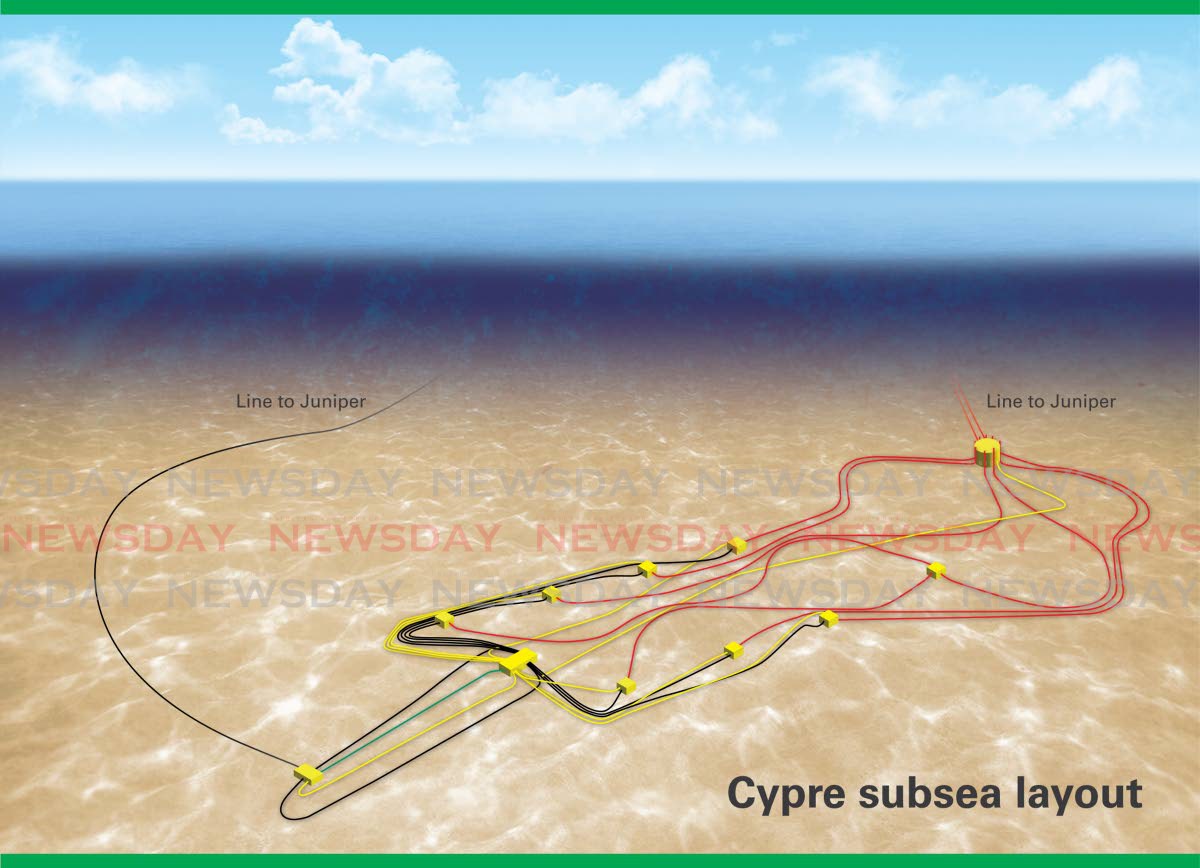
bpTT completes Cypre project, ready to ‘unlock TT’s energy future’
BP Trinidad and Tobago (bpTT) has announced the successful completion of its Cypre gas field development, marking a significant milestone in the region’s energy sector. The project, which involved drilling seven wells tied back to the existing Juniper platform, achieved first gas delivery in April 2025. The final three wells were drilled, completed, and commissioned recently, bringing the entire development to fruition. At its peak, Cypre is expected to produce approximately 45,000 barrels of oil equivalent per day, equivalent to 250 million standard cubic feet of gas daily. This makes Cypre bpTT’s third subsea development. David Campbell, bpTT president, emphasized the project’s success as a testament to the company’s commitment to maximizing production from the Columbus Basin and its ongoing investment in Trinidad and Tobago’s energy sector. The Cypre gas field, located 78 kilometers off the southeast coast of Trinidad in the East Mayaro Block, is entirely owned by bpTT, a joint venture between bp (70%) and Repsol (30%). Former Energy Minister Stuart Young lauded the project’s completion, highlighting its importance in offsetting the natural gas decline in the region. The development, negotiated between 2017 and 2023, underscores bpTT’s dedication to unlocking Trinidad and Tobago’s energy future.
-

LETTER: Caribbean Banks – Shot In The Foot
In a striking revelation, the Cayman Islands, one of the Caribbean’s most prominent financial hubs, lacks any form of bank deposit insurance, leaving customers vulnerable in the event of a banking crisis. This oversight stands in stark contrast to neighboring nations like the British Virgin Islands, Bahamas, and Jamaica, which offer varying levels of deposit protection. The absence of such safeguards in the Cayman Islands has raised concerns, particularly in light of recent global banking turmoil, such as the Silicon Valley Bank collapse.
-

CPSO welcomes removal of US tariffs on key Caricom exports
The Caricom Private Sector Organisation (CPSO) has lauded the United States’ decision to eliminate tariffs on critical export sectors within the Caribbean Community (Caricom), marking a significant relief for regional industries. These tariffs, initially imposed in April 2025 and later updated in August 2025, had severely impacted Caricom’s export revenues, particularly in the Base Metals, Agriculture & Food, and Chemicals sectors. The CPSO had previously estimated that the reciprocal tariffs would result in an annual loss of US$653.6 million in export revenue for Caricom Member States. The Agriculture & Food and Chemicals sectors bore the brunt of these tariffs, with projected annual losses of US$117.7 million and US$86.1 million, respectively. The removal of these tariffs, enacted through an Executive Order on 14 November 2025 by President Donald Trump, is expected to stabilize key agricultural and agroprocessing supply chains across Caricom and enhance the competitiveness of Trinidad and Tobago’s chemical exports, including fertilizers and related products. Dr. Patrick Antoine, CPSO Chief Executive Officer and Technical Director, emphasized the pivotal role of coordinated advocacy by Caricom Heads of Government, including Jamaica’s Prime Minister Andrew Holness, Trinidad and Tobago’s Prime Minister Kamla Persad Bissessar, Guyana’s President Mohamed Irfaan Ali, and The Bahamas’ Prime Minister Philip Davis, in securing this outcome. The US remains Caricom’s principal trade partner, and the tariff removal is anticipated to strengthen the US-Caricom trade relationship. The CPSO continues to work towards eliminating remaining tariffs affecting Caricom’s exports to the US, reinforcing its commitment to advancing trade facilitation, competitiveness, and long-term economic resilience.
-
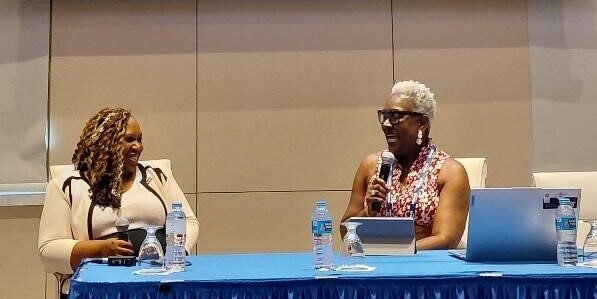
GHTA CEO shines as key panellist at CHTA CHIEF conference
Arlene Friday, CEO of the Grenada Hotel & Tourism Association (GHTA), emerged as a pivotal figure at this year’s Caribbean Hospitality Industry Exchange Forum (CHIEF) conference. As a key panellist on the forum titled ‘Tourism for Us,’ Friday captivated attendees with her profound insights and actionable strategies on community tourism across the Caribbean region. Her address underscored the indispensable role of local communities in crafting authentic and sustainable tourism experiences. She urged Caribbean communities to reclaim their narratives, ensuring that their unique histories, traditions, and voices remain central to tourism development. ‘Communities are not just part of the tourism product — they are the heartbeat of it,’ Friday asserted. ‘When we empower our people to tell their own stories and create genuine connections with visitors, tourism becomes not only sustainable but transformative.’ Friday also emphasized the importance of fostering stronger linkages between hospitality stakeholders and local communities. She highlighted that such collaborations not only drive economic opportunities but also preserve cultural identity. Her message of empowerment and inclusion resonated deeply with industry professionals, policymakers, and delegates, all of whom are committed to a more community-centred approach to tourism. The CHIEF Conference continues to serve as a dynamic platform for tourism leaders to connect, share innovations, and chart the future of the region’s hospitality sector. Arlene Friday’s contributions at the conference reinforce the critical importance of placing people and place at the heart of tourism growth throughout the Caribbean.